Van's Air Force

The definitive Van's Aircraft support community! Buying, building or flying an RV? Join our exclusive family of mentors and enthusiasts!

Oil cooler and oil Temperature issues update

flysrv10

Well Known Member
Patron
Previous thread (https://vansairforce.net/threads/13-row-oil-cooler-inlet-exit.228040/):

I have some update that I hope someone can help me diagnose my high oil temps. 200 deg during cruise at 55% power. My neighbors Pawnee that tows gliders at 65 KTS and has a small oil cooler cannot get the temp past 140 deg.

-Started with oil cooler and plenums as standard Van's setup. The IO540 is also all standard, no piston squirters and no high compression cylinders.

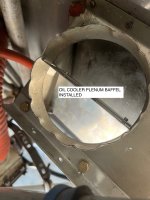
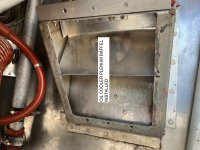
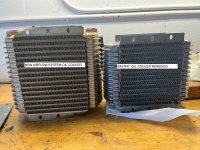
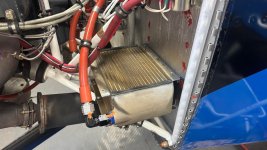
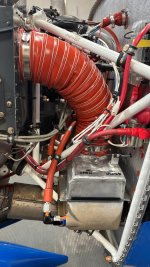
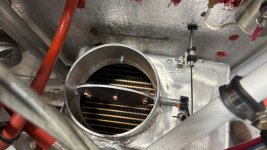
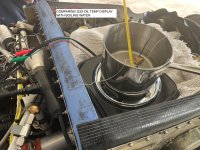
-I have checked the oil pickup tube in the sump, the Vernatherm for proper extension and wear sign on the cone, replaced the oil lines, replaced the oil cooler to Pacific Oil Cooler and then to Airflow performance 13 row oil cooler with their modification that includes enlarging the oil cooler plenum and installing a baffle in the plenum. I have made these changes one at a time to pinpoint the cause but no appreciable changes noted at each step.

-I have checked the oil temp probe and wiring and found a bad connection that improved my oil temp indication by 10 deg. I also checked the oil temp within the sump immediately after shutdown and found it to be within one degree of the Display temps (I know it is supposed to be hotter but not on my engine). I see 200 deg at 55% power during cruise flight. CHT temps climb to 400-420 in a long climb but settle to 360-380 during cruise.

-I have made sure that all my baffles are good by looking through the joints with a flash light. I have had others check my baffles too.

-I replaced the 90 deg oil cooler adopter with Lycomig's original design to eliminate any Vernatherm misalignment with the sealing surface.

I am at the end of my rope!

Pete Howell, on this Forum, loaned me a bluetooth temp recorder. (thank you Pete). I ran a test yesterday and I have attached the results. It looks like my oil cooler drops the temps up to 35 Degrees during climb but only 10 deg during cruise. Pete thinks it has to do with the airflow. Makes sense but I appreciate another set of eyes.

Sorry for the long post. I hope someone that loves to look at data will chime in. Thank you in advance.

Rob.
 

Attachments

  • OIL TEMP PROBE RESULTS.pdf
    OIL TEMP PROBE RESULTS.pdf
    277.6 KB · Views: 38
  • IMG_3152.jpeg
    IMG_3152.jpeg
    3.2 MB · Views: 139
  • IMG_3172.jpeg
    IMG_3172.jpeg
    3.1 MB · Views: 139
  • IMG_3173.jpeg
    IMG_3173.jpeg
    3 MB · Views: 128
  • IMG_3174.jpeg
    IMG_3174.jpeg
    3.6 MB · Views: 136
Rob,

Have you tried removing your damper door? Sounds like it could be blowing closed with higher speed air? That's where I'd start.

Roy
 
I’ve been in the same situation. For a while, I was seeing oil temperatures as high as 220F or even 225F during summer climbouts with the standard VANs oil cooler. I tried several solutions, but none really worked until I made a series of improvements that finally got things under control.

First, I focused on improving the baffles. I went through them multiple times, each time improving a little more. Good baffles, with minimal pressure loss on top, made a big difference. I must say HUGE difference. Work on each and every spot with red RTV, dozen of small holes brings huge pressure loss.

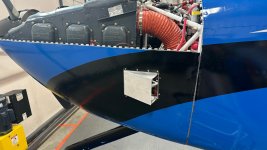
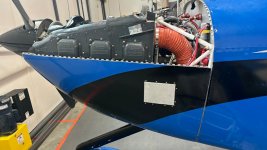
Second, I upgraded the oil cooler and installed one about 30% larger than the original VANs cooler and mounted it at a 90 degree angle to the firewall. I built a welded aluminum housing for it and added a butterfly valve. I also installed cowl flaps.

All these changes together brought my oil temps down from 220F to around 170-180F after climb. On takeoff, I often keep the butterfly valve for oil cooler shut, climb to cruise, and then open it when the oil hits around 200°F and it cools down extremely fast. I close the butterfly initially to make sure cylinder 6 gets as much cooling air as possible, since it’s the hottest cylinder.

I’ve attached a couple of pictures for you to check out.
 

Attachments

  • oil cooler2.jpg
    oil cooler2.jpg
    170.3 KB · Views: 95
  • oil cooler1.jpg
    oil cooler1.jpg
    521.3 KB · Views: 94
  • oil cooler 3.jpg
    oil cooler 3.jpg
    179.2 KB · Views: 94
Rob,

Have you tried removing your damper door? Sounds like it could be blowing closed with higher speed air? That's where I'd start.

Roy
If you are referring to the baffle, it is secured by stainless wires. I had the issue when I did not have that baffle. Is that what you mean by damper door?
 
I’ve been in the same situation. For a while, I was seeing oil temperatures as high as 220F or even 225F during summer climbouts with the standard VANs oil cooler. I tried several solutions, but none really worked until I made a series of improvements that finally got things under control.

First, I focused on improving the baffles. I went through them multiple times, each time improving a little more. Good baffles, with minimal pressure loss on top, made a big difference. I must say HUGE difference. Work on each and every spot with red RTV, dozen of small holes brings huge pressure loss.

Second, I upgraded the oil cooler and installed one about 30% larger than the original VANs cooler and mounted it at a 90 degree angle to the firewall. I built a welded aluminum housing for it and added a butterfly valve. I also installed cowl flaps.

All these changes together brought my oil temps down from 220F to around 170-180F after climb. On takeoff, I often keep the butterfly valve for oil cooler shut, climb to cruise, and then open it when the oil hits around 200°F and it cools down extremely fast. I close the butterfly initially to make sure cylinder 6 gets as much cooling air as possible, since it’s the hottest cylinder.

I’ve attached a couple of pictures for you to check out.
Airflow Systems is supposed to make an installation like yours. I am waiting to hear back from them.

Do you have a pic of your cowl flaps?
 
Airflow Systems is supposed to make an installation like yours. I am waiting to hear back from them.

Do you have a pic of your cowl flaps?
Yes sure here we go.
 

Attachments

  • cowl flaps1.jpg
    cowl flaps1.jpg
    130.8 KB · Views: 127
  • cowl flaps2.jpg
    cowl flaps2.jpg
    135.4 KB · Views: 126
  • cowl flaps3.jpg
    cowl flaps3.jpg
    199.1 KB · Views: 127
No, I did not take photos of the thermocouple installation. I wanted to send the equipment back as soon as I could and we had WX coming so my test window was narrow.

I use a SS tie-wrap and mounted them to the oil cooler elbow fittings. I think they gave me valid data as my G3X reading closely matched the thermocouples.
 
. I also checked the oil temp within the sump immediately after shutdown and found it to be within one degree of the Display temps (I know it is supposed to be hotter but not on my engine). .
.

Rob.
i would start with checking or replacing the temp sensor. Your test at shut down is a little flawed, but pointing in this direction.

The OT sensor is seeing oil straight from the cooler, so it should be 10-20 degrees cooler than the oil in your sump at cruise speeds. However, the oil may have heated up there during taxi and the time necessary to check sump temp.

Pull the sensor still connected and put it in boiling water. Compare water temp to what ems says.
 
i would start with checking or replacing the temp sensor. Your test at shut down is a little flawed, but pointing in this direction.

The OT sensor is seeing oil straight from the cooler, so it should be 10-20 degrees cooler than the oil in your sump at cruise speeds. However, the oil may have heated up there during taxi and the time necessary to check sump temp.

Pull the sensor still connected and put it in boiling water. Compare water temp to what ems says.
Given what you found with the wiring, I would ohm out the wires from sensor terminal to the ems dsub pin. Any resistance here will provide readings higher than actual.
 
If you are referring to the baffle, it is secured by stainless wires. I had the issue when I did not have that baffle. Is that what you mean by damper door?
Robert,

Apologies, your pics were not coming up for me, and on my read through i assumed what you called and baffle was more akin to what Vlad showed in his pics, and as you were referencing airflow, that's what I was referring to pulling. As you are not setup that way, please disregard my suggestion.

I too have a plenum and have it setup as a mix between what you are running now, stock oil cooler location with the 1 row upsized oil cooler, but instead of a baffle, I have the damper like Vlad for the air prior to it going through the cooler, it has worked adequately for me. The one downside is that for whatever reason, all that air moving towards #6 keeps that cylinder especially cool (my coldest by about 20 degrees) compared to my hot cruise cylinder #5.

I had thought about trying to shape the air under the cowl towards the exit, which I think im seeing with your baffle, but haven't had the need.

I'm with the rest of the guys, verify you are getting good temp info and then move to the airflow and oil flow if you continue to see better cooling at slower speeds, vice cruise.

One thing I did do, because I had a concern about how hot the air was getting on the upper portion of my firewall, was I added another temp sensor that measures air temp on the right side of my firewall close to where I mounted my fuses coming from my alternators. I have found that generally, this temp is approximately 5-10 degrees less than my oil temp (but slower to indicate), which makes sense as my cooling air doesn't pull from up there and that would be close to block temp. It has helped me troubleshoot a bad oil temp sensor that was giving erroneous info from a bad connection in the past. I also wyed my heater lines so that they dump close to cowl exit when the heater is not in use (which dropped the temp of the air on my firewall down to that ambient block temp.

Just another thought as I write this, are you seeing normal oil pressures during climb and cruise settings? Oil pressure can be greatly effected by temperature, and if you know what you normally have, or should have, it can help troubleshoot erroneous temp indications. I can't say specifics for your engine, but I know what to look for on mine. Could be a trend indicator that helps during troubleshooting.

Best,

Roy
 
Given what you found with the wiring, I would ohm out the wires from sensor terminal to the ems dsub pin. Any resistance here will provide readings higher than actual.
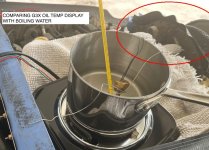
I am 100% sure that my wiring and the display is working. in one my pictures, you will see that I tested the "system" in boing water to compare the display with the glass thermometer.
 
Good


Don't need a flashlight for this one. My guess is deltaP is poor.

View attachment 92382
My baffles and cowling is the same as my neighbor's RV10. His engine runs too cold. I have consistent marks on the cowl showing that the baffle is sealing. All other Lycoming prefab baffles are installed under the cylinders.

However, I will chase down a P sensor with bluetooth and perform a test.

Do you have any comment regarding the oil cooler dropping the temp 35 degrees during climb? That drop would be perfect in cruise. My theory is that at nose High attitude, the oil cooler air duct opening is more aligned with the cowl inlet. Am I looking for excuses?
 
Robert,

Apologies, your pics were not coming up for me, and on my read through i assumed what you called and baffle was more akin to what Vlad showed in his pics, and as you were referencing airflow, that's what I was referring to pulling. As you are not setup that way, please disregard my suggestion.

I too have a plenum and have it setup as a mix between what you are running now, stock oil cooler location with the 1 row upsized oil cooler, but instead of a baffle, I have the damper like Vlad for the air prior to it going through the cooler, it has worked adequately for me. The one downside is that for whatever reason, all that air moving towards #6 keeps that cylinder especially cool (my coldest by about 20 degrees) compared to my hot cruise cylinder #5.

I had thought about trying to shape the air under the cowl towards the exit, which I think im seeing with your baffle, but haven't had the need.

I'm with the rest of the guys, verify you are getting good temp info and then move to the airflow and oil flow if you continue to see better cooling at slower speeds, vice cruise.

One thing I did do, because I had a concern about how hot the air was getting on the upper portion of my firewall, was I added another temp sensor that measures air temp on the right side of my firewall close to where I mounted my fuses coming from my alternators. I have found that generally, this temp is approximately 5-10 degrees less than my oil temp (but slower to indicate), which makes sense as my cooling air doesn't pull from up there and that would be close to block temp. It has helped me troubleshoot a bad oil temp sensor that was giving erroneous info from a bad connection in the past. I also wyed my heater lines so that they dump close to cowl exit when the heater is not in use (which dropped the temp of the air on my firewall down to that ambient block temp.

Just another thought as I write this, are you seeing normal oil pressures during climb and cruise settings? Oil pressure can be greatly effected by temperature, and if you know what you normally have, or should have, it can help troubleshoot erroneous temp indications. I can't say specifics for your engine, but I know what to look for on mine. Could be a trend indicator that helps during troubleshooting.

Best,

Roy
My oil pressure moves consistent with oil temps. 70-75 at startup and lower, sometimes to 65 when oil temp is 200. I purposely lower the pressure to eliminate the possibility of high oil pressure cracking the vernatherm seal. It was just grabbing for anything I could.

I will have to search for Vlad's setup and compare.
 
My baffles and cowling is the same as my neighbor's RV10. His engine runs too cold. I have consistent marks on the cowl showing that the baffle is sealing. All other Lycoming prefab baffles are installed under the cylinders.

However, I will chase down a P sensor with bluetooth and perform a test.

Do you have any comment regarding the oil cooler dropping the temp 35 degrees during climb? That drop would be perfect in cruise. My theory is that at nose High attitude, the oil cooler air duct opening is more aligned with the cowl inlet. Am I looking for excuses?
I have never done testing with thermocouples like you have. However, in my experience, any high oil temps, over 185, I have are always in the climb and never in cruise. I have however noticed on a handful of occasions the oil temps will go to 190+ when level, doing extended slow flight.
 
Last edited:
Do you have any comment regarding the oil cooler dropping the temp 35 degrees during climb? That drop would be perfect in cruise. My theory is that at nose High attitude, the oil cooler air duct opening is more aligned with the cowl inlet. Am I looking for excuses?
Oil flow is proportional to engine RPM. Are you, by chance, running a higher RPM during the climb than at cruise?
 
No, I did not take photos of the thermocouple installation. I wanted to send the equipment back as soon as I could and we had WX coming so my test window was narrow.

I use a SS tie-wrap and mounted them to the oil cooler elbow fittings.

I tried something like this at first, but the measurements seemed to be quite affected ambient engine bay temperature. What worked better for me was to put the probes right against the body of the oil cooler: I used kapton tape both to insulate and to attach them, and then covered them with a square of fiberfrax and aluminum tape to insulate them from ambient heat.
 
My baffles and cowling is the same as my neighbor's RV10. His engine runs too cold. I have consistent marks on the cowl showing that the baffle is sealing. All other Lycoming prefab baffles are installed under the cylinders.

Rob, in a previous thread you posted a photo showing the forward center seal installed bass ackwards. When it was pointed out, you reported "Reversed the seal. Test flight showed no improvement in oil temps." Frankly, I now think why is obvious, but hey, I'm at long distance, and you know what they say about opinions.


The same set of photos shows the scat duct inlet located very low behind the exhaust side of cylinder #6, I assume to clear the adjacent motor mount tube. As a result, I would expect reduced pressure at the duct inlet, and increased air temperature. Measure them, and if true, a relocated, reshaped entry is an easy project.

Increased supply air temperature is no small thing. Between the cowl inlet and a duct entry behind #3 (note, right side of the engine, so the cold side of the cylinder), I have measured an air temperature rise of approximately 15 to 20 F. Put another way, if OAT is 80F, the oil cooler is being supplied with air at 95F or more. So, consider; heat transfer is a function of deltaT. If the oil is at 200F and the air is at 95, adding just 10 additional degrees is a 10% loss of deltaT.

However, I will chase down a P sensor with bluetooth and perform a test.

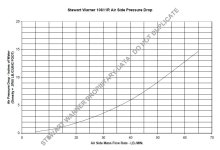
Two sensors, one at the cooler face, on at the aft face. The pressure drop tells lbs/min mass flow.

ScreenHunter_2877 Jul. 13 09.33.jpg

Do you have any comment regarding the oil cooler dropping the temp 35 degrees during climb? That drop would be perfect in cruise. My theory is that at nose High attitude, the oil cooler air duct opening is more aligned with the cowl inlet. Am I looking for excuses?

Well, something like that....likely prop outflow aligned with the RV-10's left cowl inlet.

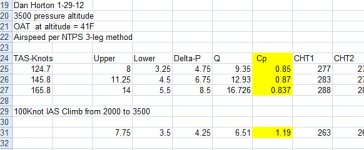
Coefficient of pressure (effectively the percentage of available dynamic pressure converted to upper plenum static pressure) is significantly increased by propeller outflow when the engine is at high RPM and forward airspeed is low. In real numbers, based on forward cruise velocity, you're shooting for 0.8 or more. At WOT in climb, propeller outflow is much higher than forward velocity, so the upper plenum pressure is higher than what is possible based on dynamic pressure from forward velocity alone, often a Cp well above 1.

Here's a snip from the wayback machine..

ScreenHunter_2876 Jul. 13 09.18.jpg
 
Last edited:
I Appreciate all the comments I have received. I had an unplanned trip that I have to complete before responding thoughtfully to your questions and suggestions. I will post some thought and answers soon.

Thank you everyone.
 
When you get back from your trip, you'll probably have more feedback awaiting you. Just a few more thoughts to throw into the ring...

As one other person said, 200 degree oil isn't crazy hot, especially for Florida in the summer. CHTs aren't really off the chart, either. Yeah, I like to see both of those temps a little lower as well, but don't get wrapped around the axle with those numbers.

I'm having a little trouble getting my head wrapped around the "oil cooler plenum baffles". What exactly are we looking at? Is that an inlet or an outlet? Is the oil cooler missing in those pics? Can you get a pic or two from just a little further back? It's possible that something there is causing turbulence and affecting air flow, but it's hard to tell from those pics.

And if you have the luxury of comparing your setup to your neighbor's RV-10, look hard at that. Dan pointed out the potato chip looking baffle seals at the front, but you said they're good. Are they? Put the top cowling on and look around with a light. Use a borescope if you need to. Something is different between those two planes. Has your neighbor looked at your setup for differences? Pete said he thinks it has to do with airflow. Pete may be right. Sometimes having another set of eyes on it will see something you didn't think was important.
 
The next obvious reason could be that you have moved the cowl vent from the bottom of the cowl to the sides. I have both my vents per the plans, with the ability to cover each one, or both for winter operations. When I cover the left side it always results in an oil temp increase. Just a suggestion
 
I tried something like this at first, but the measurements seemed to be quite affected ambient engine bay temperature. What worked better for me was to put the probes right against the body of the oil cooler: I used kapton tape both to insulate and to attach them, and then covered them with a square of fiberfrax and aluminum tape to insulate them from ambient heat.
mbrurch, Can you tell me or link me to the probes you used. I will double check my findings with new probes. Thank you for your input.
 
Rob, in a previous thread you posted a photo showing the forward center seal installed bass ackwards. When it was pointed out, you reported "Reversed the seal. Test flight showed no improvement in oil temps." Frankly, I now think why is obvious, but hey, I'm at long distance, and you know what they say about opinions.


The same set of photos shows the scat duct inlet located very low behind the exhaust side of cylinder #6, I assume to clear the adjacent motor mount tube. As a result, I would expect reduced pressure at the duct inlet, and increased air temperature. Measure them, and if true, a relocated, reshaped entry is an easy project.

Increased supply air temperature is no small thing. Between the cowl inlet and a duct entry behind #3 (note, right side of the engine, so the cold side of the cylinder), I have measured an air temperature rise of approximately 15 to 20 F. Put another way, if OAT is 80F, the oil cooler is being supplied with air at 95F or more. So, consider; heat transfer is a function of deltaT. If the oil is at 200F and the air is at 95, adding just 10 additional degrees is a 10% loss of deltaT.


Two sensors, one at the cooler face, on at the aft face. The pressure drop tells lbs/min mass flow.

View attachment 92397


Well, something like that....likely prop outflow aligned with the RV-10's left cowl inlet.

Coefficient of pressure (effectively the percentage of available dynamic pressure converted to upper plenum static pressure) is significantly increased by propeller outflow when the engine is at high RPM and forward airspeed is low. In real numbers, based on forward cruise velocity, you're shooting for 0.8 or more. At WOT in climb, propeller outflow is much higher than forward velocity, so the upper plenum pressure is higher than what is possible based on dynamic pressure from forward velocity alone, often a Cp well above 1.

Here's a snip from the wayback machine..

View attachment 92396
I appreciate your detailed responses. Mulling over my next step.
 
The next obvious reason could be that you have moved the cowl vent from the bottom of the cowl to the sides. I have both my vents per the plans, with the ability to cover each one, or both for winter operations. When I cover the left side it always results in an oil temp increase. Just a suggestion
My vents are on the bottom of the cowl. Thanks.
 
When you get back from your trip, you'll probably have more feedback awaiting you. Just a few more thoughts to throw into the ring...

As one other person said, 200 degree oil isn't crazy hot, especially for Florida in the summer. CHTs aren't really off the chart, either. Yeah, I like to see both of those temps a little lower as well, but don't get wrapped around the axle with those numbers.

I'm having a little trouble getting my head wrapped around the "oil cooler plenum baffles". What exactly are we looking at? Is that an inlet or an outlet? Is the oil cooler missing in those pics? Can you get a pic or two from just a little further back? It's possible that something there is causing turbulence and affecting air flow, but it's hard to tell from those pics.

And if you have the luxury of comparing your setup to your neighbor's RV-10, look hard at that. Dan pointed out the potato chip looking baffle seals at the front, but you said they're good. Are they? Put the top cowling on and look around with a light. Use a borescope if you need to. Something is different between those two planes. Has your neighbor looked at your setup for differences? Pete said he thinks it has to do with airflow. Pete may be right. Sometimes having another set of eyes on it will see something you didn't think was important.
The oil cooler plenum baffle is something Airflow-systems suggested and has published on their website. It has not helped.

I have visually and tactilely checked the baffle seals above the plenum. While on the ground, I have good seals.

My neighbor has checked an compared my install with his and he concluded that they are both the same. So I am puzzled as to the temp differences. perhaps his oil temp is not accurate.
 
My wife and I just bought a 10 and are having oil temp “issues.” Cylinder temps all well below 400 in all phases but oil temp in Las Vegas heat stabilizes at around 225 while in the pattern or during climb. It’s 205 - 215 in cruise. I called Lycoming technical support and was told not to worry at all unless it gets to 245. There is no caution zone. The technician actually said he would expect those temperatures in this summer heat.

I ordered two anti splat cowl flaps but the bottom of our cowl is fairly rounded and has exhaust pipes close to where the actuators would be. I suppose I’m just going to live with the higher temps in the summertime. If anyone has any ideas I’m all ears…
 
I’m absolutely the newbie here but if your described cruise is higher 10,000’ there might be an issue.
I flew our -10 in AZ (PHX) for 11 years and saw your same climb/pattern temps, but I never recall seeing a stabilized cruise oil temp over 200F when over 10K’ in summer. Stock Vans 2008 cowl, baffles, etc. I run 9qts.
🤷‍♂️
 
My wife and I just bought a 10 and are having oil temp “issues.” Cylinder temps all well below 400 in all phases but oil temp in Las Vegas heat stabilizes at around 225 while in the pattern or during climb. It’s 205 - 215 in cruise. I called Lycoming technical support and was told not to worry at all unless it gets to 245. There is no caution zone. The technician actually said he would expect those temperatures in this summer heat.

I ordered two anti splat cowl flaps but the bottom of our cowl is fairly rounded and has exhaust pipes close to where the actuators would be. I suppose I’m just going to live with the higher temps in the summertime. If anyone has any ideas I’m all ears…
Check your baffle seals. You can stick your phone/camera through the oil door in the cowl to see if you have gaps and puckering where they rest against the cowl. After that, check the inlets to make sure things seal well there. Finally, make sure your air intake seal to the airbox does a good job. If any of those 3 areas have gaps, you need to correct those. Beyond that, you may be looking for an oil cooler upgrade.
 
Back
Top