That's an hypothesis, but I see two problems here. First, the *assumption* that the other models "must have had egregious departures from the flight envelope". It may be likely, but there's zero evidence one way or the other, so any analysis after that is contingent upon that assumption. That's the null hypothesis, in statistics-speak.
Second, I don't think anyone knows *what* the flutter margins are on any of the models, do they? That's the *designer's* realm, the engineer's, not the pilot's.
In the end, does it really matter for the cases discussed here? Does anyone think a plane that is upside-down, headed downhill at 10,000 fpm, doing 244 knots and rapidly increasing *isn't* going to break up pretty damned soon, *regardless* of margin? If the flutter onset speed is 250 knots, or 260, or 270, would it really have made any difference?
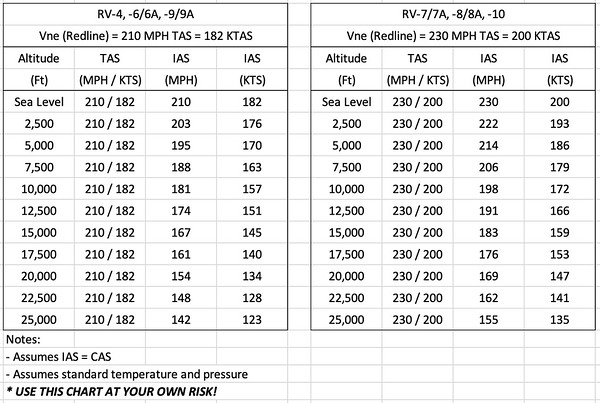
And if you're under control and going balls-out at nearly 250 knots, you are *well* beyond Vne and should question how you got there and why. 205, heck, I can see that, but by the time you get to 20% over Vne, you've made some serious mistakes, and counting on "more margin" to save your bacon is, IMO, illogical and foolish.
Show me a case of a 7 breaking up 210 due to flutter, I'll listen. Keep bringing cases of pilots exceeding Vne by 20% or more, VFR into IMC or aerobatics they shouldn't have been doing, and I'm off to bar for a beer instead.