Van's Air Force

The definitive Van's Aircraft support community! Buying, building or flying an RV? Join our exclusive family of mentors and enthusiasts!

...

Any luck Bill.

When the insurance company asks if the -7 was built with any non Vans approved mods, it would be helpful to say no.

I never heard about Vans approving any mod. They recommend, suggest, discourage, encourage or they are just quite about a mod, but I never saw the word "approved".

Oliver
 
I never heard about Vans approving any mod. They recommend, suggest, discourage, encourage or they are just quite about a mod, but I never saw the word "approved".

Oliver

Well, technically most service bulletins are mods, the forward access hatch is a mod they started selling, the -9 rudder on a -7 is a mod they gave away...so I think approved mod is the correct term.
 
Last edited:
Can someone with the RV-8 rudder drawing send me a pdf of it (drop me a PM and I'll send my email address)? Maybe I missed it in this massive thread. Would like to get the part numbers off of it. Thanks!

These are the part numbers in the 8 rudder kit sold by Vans. I noticed the price went up $20 in the past week. $395 now.

• (2) AN365-1032 view
• (2) AN509-10R16 view
• (1) BAG 402-1 view
• (1) BAG 405 view
• (1) BAG 410 view
• (1) E-614-020 view
• (3) K1000-6 view
• (2) NAS1149F0363P view
• (1) R-405PD view
• (1) R-411 view
• (1) R-606PP view
• (1) R-607PP view
• (1) R-608PP view
• (1) R-703 view
• (1) R-704 view
• (1) R-710 view
• (1) R-713 view
• (1) R-801PP view
• (1) R-802PP view
• (1) R-809 view
• (2) R-815BDE view
• (2) R-815CGA view
• (1) R-815FH view
• (1) AS3-032X1 1/8X40 view
 
These are the part numbers in the 8 rudder kit sold by Vans. I noticed the price went up $20 in the past week. $395 now.

• (2) AN365-1032 view
• (2) AN509-10R16 view
• (1) BAG 402-1 view
• (1) BAG 405 view
• (1) BAG 410 view
• (1) E-614-020 view
• (3) K1000-6 view
• (2) NAS1149F0363P view
• (1) R-405PD view
• (1) R-411 view
• (1) R-606PP view
• (1) R-607PP view
• (1) R-608PP view
• (1) R-703 view
• (1) R-704 view
• (1) R-710 view
• (1) R-713 view
• (1) R-801PP view
• (1) R-802PP view
• (1) R-809 view
• (2) R-815BDE view
• (2) R-815CGA view
• (1) R-815FH view
• (1) AS3-032X1 1/8X40 view

Thank you! Ya I don't think the price increase is just for the rudder parts. I noticed the RV-10 emp went up $100 too.
 
I'm seriously considering switching to the 8 rudder for my 7A. I built the rudder that came with my kit, but the whole time I was building it, I didn't think it felt very robust. Then I stumbled on this thread and it made more sense. I'm sure the factory rudder is fine. But if I can improve my safety margin for $395, then it's worth it. I'm an average recreational pilot and although I'd like to think I won't accidentally do something dumb in flight, it happens. Plus, for what it's worth...I think it looks better, lol.
 
Last edited:
Look at the information blocks. They are all the same. I was not impressed with the Vans (publicly available) drawing history control, but it may have been by design for reverse engineering purposes.
Well, the files were on different drives and in different folders... But yeah, same date, same everything else. That's pretty poor document management.
 
These are the part numbers in the 8 rudder kit sold by Vans. I noticed the price went up $20 in the past week. $395 now.

• (2) AN365-1032 view
• (2) AN509-10R16 view
• (1) BAG 402-1 view
• (1) BAG 405 view
• (1) BAG 410 view
• (1) E-614-020 view
• (3) K1000-6 view
• (2) NAS1149F0363P view
• (1) R-405PD view
• (1) R-411 view
• (1) R-606PP view
• (1) R-607PP view
• (1) R-608PP view
• (1) R-703 view
• (1) R-704 view
• (1) R-710 view
• (1) R-713 view
• (1) R-801PP view
• (1) R-802PP view
• (1) R-809 view
• (2) R-815BDE view
• (2) R-815CGA view
• (1) R-815FH view
• (1) AS3-032X1 1/8X40 view

Also, don't forget to order VS-809 as the VS tip is shorter with the -8 rudder.
 
Then just say no. But making the prove-in-court case is a little more difficult.

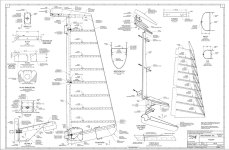
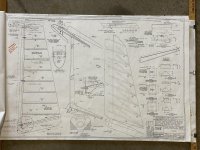
Attached is a general fuselage drawing of the early 7. One is with the originally shipped short rudder and the other the replaced tall rudder. Look at the information blocks. They are all the same. I was not impressed with the Vans (publicly available) drawing history control, but it may have been by design for reverse engineering purposes. I have all the other dwg's at the airport and have the short rudder information. The timeline is that the 6 came first. It progressed to a counterweighted rudder with .020 skin. That was the last 6 rudder sold, and the first 7 rudder sold. To actually prove they are the same requires a list of detail dimensions, and materials, and is not available. So you might say the 8 rudder is really the late 6 rudder. I will post the 7PP, 7 and the 6 drawing if I have them.

All straight now?

View attachment 30481

View attachment 30482

Bill, do you have a photo of this sheet of the early -7/7a rudder?
 

Attachments

  • _8-rudder.jpg
    _8-rudder.jpg
    194.3 KB · Views: 287
Just for you Michael:

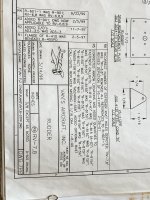
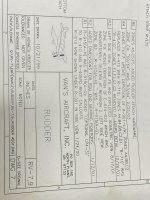
The first drawing says RV7,8 in the title block. A change notes it once said 7,8,9!!

IMG_6659.jpg

IMG_6660.jpg

IMG_6661.jpg
 
Last edited:
hey guys is it just the fibreglass top different on the VS if i fit an 8 rudder to my 7...i have not yet done the fibreglass top of the VS. Im seriously considering getting the entire 8 rudder to build and just using the 7 rudder as practice. I personally think it looks better on the 7 and not worried about spin recovery...I dont intend to spin it or get into inadvertent spins anyway. Plus its obviously stronger and lighter.....for me its a no brainer....I understand the 9 rudder is on a lot of 7's and is absolutely fine....i'm not trying to re invent the wheel or distrust the manufacturers design skills...just reading between the lines and seeing wind damage, the look of the rudders on the 7 and anecdotal evidence of the strength difference tips me toward the 8 rudder.
 
After reading through the multitude of pages, I am quite interested in all the information, knowledge and thought processes. It has definitely been a good learning and thought invoking read. Questions raised as I was reading; does anyone know the process used to “bond” the trailing edge wedge before riveting and/or if there was a strobe light installed in the rudder fairing of the accident aircraft? My thought is if there was proseal used along with RTV at the stiffeners, this with a possible OG strobe light installed, all at the far rear of the rudder, this would exacerbate the flutter potential of an already (collective opinion) slim margined rudder. How well were the rivets set along the edge ? Could this be part of or THE reason Vans now recommends using the VHB tape?

Just thoughts that arose while reading and thinking, thanks for entertaining my brain. Haha
 
I have used VHB tape a lot….but no way I’d use it in the trailing edge. It assumes you get the pieces aligned perfectly prior to the tape touching. If you are out a smidge and the skins touch the tape it can stick immediately. I have built a trailer for gokarting and used tape exclusively to stick the sides and top on etc….it’s truly amazing stuff….so incredibly strong….but I wrecked one panel not getting it aligned correctly and trying to remove it….
 
I have used VHB tape a lot….but no way I’d use it in the trailing edge. It assumes you get the pieces aligned perfectly prior to the tape touching. If you are out a smidge and the skins touch the tape it can stick immediately. I have built a trailer for gokarting and used tape exclusively to stick the sides and top on etc….it’s truly amazing stuff….so incredibly strong….but I wrecked one panel not getting it aligned correctly and trying to remove it….

I used it and didn’t have any issues… the tape they recommend has a cure time and you can peel it back up if you don’t get it exact. I was comfortable using it over pro seal because it isn’t “suppose” to have anything to do with the final bond.
 
I used it and didn’t have any issues… the tape they recommend has a cure time and you can peel it back up if you don’t get it exact. I was comfortable using it over pro seal because it isn’t “suppose” to have anything to do with the final bond.

That’s good to know. How thick is it? Most VHB tapes have a structural strength and the stuff I used was a pressure sensitive tape but still stuck immediately it touched. You peel it off it stretched and would not go back down flat so had to start again. Important not to stretch it and I’m imagining if you put it on with more tension on one side than the other it might like to “bend” things? Also how did you cut holes in it? Just interested to know your experience with it. Cheers
 
Last edited:
F/A-18E/F's use Scotch VHB tape to hold composite cuffs on the trailing edges of the rudders. They look similar to taco shells.

That VHB tape does have an expiration date, and I remember it having a fairly short shelf life.
 
That’s good to know. How thick is it? Most VHB tapes have a structural strength and the stuff I used was a pressure sensitive tape but still stuck immediately it touched. You peel it off it stretched and would not go back down flat so had to start again. Important not to stretch it and I’m imagining if you put it on with more tension on one side than the other it might like to “bend” things? Also how did you cut holes in it? Just interested to know your experience with it. Cheers

It’s very thin, I’d say no more that 1-3 thousandths, pretty much just adhesive layers. As for the holes, you simply just poke the clecos through it. Use a long piece of angle to keep things nice and straight and then rivet away.
 
Im seriously considering getting the entire 8 rudder to build…not worried about spin recovery...I dont intend to spin it or get into inadvertent spins anyway.

And even if you were worried, posts like the following anecdotally show the smaller rudder is just fine wrt spins.

I have a RV-7 with the small rudder…
I did my spin and aerobatic testing with an aerobatic/unusual attitudes instructor on board…We both did left and right spins, up to three an a half turns. My instructor was very happy with how it behaved and the rate at which it recovered. He even said “this thing recovers almost as fast as my Pitts”.
 
Last edited:
It’s very thin, I’d say no more that 1-3 thousandths, pretty much just adhesive layers. As for the holes, you simply just poke the clecos through it. Use a long piece of angle to keep things nice and straight and then rivet away.

Thanks for the info. Very different stuff than I have used in the past. I think the stuff I used was construction tape. It’s pressure sensitive and has small cells in it. When pressured the cells break causing the glue inside to “mix” and bond the surfaces with an epoxy like bond. Or something like that.
 
RV7/7A

So what appears to be hidden in this thread is that the concern is really only on the RV7/7A planes.

I am a 9A builder, I assume there are no more than a few, if any, 9/9A's that have had a similar failure??

In addition, the 9/9A needs the larger rudder due to the longer wings, so we all have no choice in tails.
 
So what appears to be hidden in this thread is that the concern is really only on the RV7/7A planes.

I am a 9A builder, I assume there are no more than a few, if any, 9/9A's that have had a similar failure??

In addition, the 9/9A needs the larger rudder due to the longer wings, so we all have no choice in tails.

The 9 is not the same aircraft and has a different operating envelope more suited to the rudder that has been designed for it. The rudder has been retrofitted to the 7.
 
There's more margin in the RV9, The VNE for the RV9 is 210mph TAS and the RV7 is 230mph TAS. Thanks for catching that Carl.
 
Last edited:
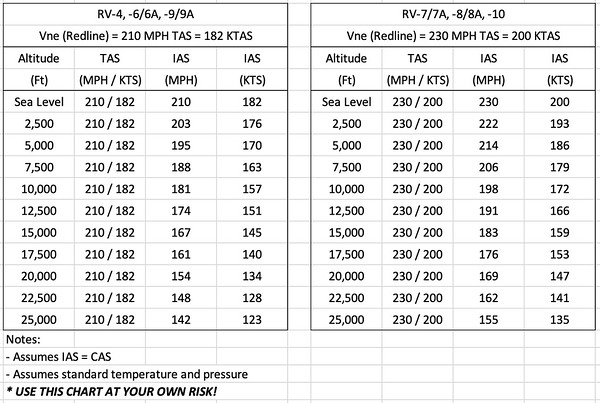
For those with steam gages, and those with EFIS' that have not set Vne in terms of TAS.

i-t32pVQR-M.jpg

Does this chart factor in the standard decline in temperature with altitude?
 
Steam Gage IAS if rudder has narrow Vne margin for error

For those with steam gages, and those with EFIS' that have not set Vne in terms of TAS.

i-t32pVQR-M.jpg

Thanks for the reminder Carl, I was aware of this but was previously less concerned with it, until this thread & learning of the possible -9 rudder's narrow margin for error with respect to -7's Vne. I suppose if I do decide to keep my -9 rudder on my -7 then probably should consider having an EFIS -and with a good audible alert.

I wonder if anybody knows of Van's position on this issue yet?
My instinct is to stick with what they provide, but if the -8 rudder on a -7 was at least an option that they endorsed then I'd be more likely to consider it.

Thanks again, and I REALLY appreciate all the input this thread is drawing, yay for VAF!
 
I wonder if anybody knows of Van's position on this issue yet?
Unfortunately, I think Van's will continue to remain silent about the -7/-9 rudder, whether it's flutter margin or using the -8 rudder, until/unless there's concrete evidence that a problem exists within the -7's cleared operating envelope. As far as I can tell from the US and Australian accident investigations that Carl is tracking, that evidence doesn't exist. Someone please correct me if I'm wrong.

Back in 1998 when a factory demonstrator RV-8 (N58RV) experienced a wing structural failure during a demo flight, Van's went to great lengths to test the -8 wing and show that it was sound, then shared all the information they had to maintain confidence in their product. For the same reason, given the questions in this thread and elsewhere over the -7 tail/-9 rudder combination I think it's time for Van's to address the question as they did with the -8 wing.

ds
 
Last edited:
Vans

I think it's way past time for Vans to reveal just what testing was done with the RV9 rudder and provide more specifics on the spin testing with the original rudder.
 
I think it's way past time for Vans to reveal just what testing was done with the RV9 rudder and provide more specifics on the spin testing with the original rudder.

What other kit manufacturers publish their testing methods and specifics on each model?
 
Large rudder

The large rudder and vertical stab structure was designed for the RV9 with a maneuvering speed of 118 mph. Remember that when you are trying to do
a slow roll or knife edge with lots of rudder input at higher speeds. Maybe a hammerhead that turns into a tail slide....or ???
 
The spreadsheet in post #1 has been updated to add the link to the Australian Transport Safety Bureau Final Report for the RV-7A (VH-XWI) accident that occurred on 4/23/2021.

Thanks for adding the link Carl.

I believe we’re allowed to talk about the VH-XWI accident now that the final report is out. WOW, that’s some description of get there itis.
 
Autopilot

The lesson to be learned from the Australian accident is to know how to use the autopilot and if conditions dictate use the autopilot to get out of trouble.
 
The spreadsheet in post #1 has been updated to add the link to the Australian Transport Safety Bureau Final Report for the RV-7A (VH-XWI) accident that occurred on 4/23/2021.

At the last recorded GPS position (0952:04), the aircraft was at a recorded altitude of about 6,000 ft, where it had rolled 165° to the left and pitched down 41°. It was descending at more than 10,000 ft/min at an indicated airspeed of 224 kt and was accelerating at 15 kt/s

Why are we even talking about "in-flight break-ups" here? This was going to end badly regardless, at this point. In excess of Vne, likely *well* in excess, some sort of structural failure seems almost inevitable here.

Same lesson as before about not exceeding the envelope, with the additional lesson that *keeps being repeated* about how deadly continued VFR flight into IMC is.
 
Just me

I have noticed that when things get tense, people will drive faster , etc, just to get it over with. Seems to be what happened here and to Kobe Bryant. A lesson we seem to keep on re-learning
 
Why are we even talking about "in-flight break-ups" here? This was going to end badly regardless, at this point. In excess of Vne, likely *well* in excess, some sort of structural failure seems almost inevitable here.

Same lesson as before about not exceeding the envelope, with the additional lesson that *keeps being repeated* about how deadly continued VFR flight into IMC is.

You're certainly correct that this flight seemed destined to end badly.

But the inflight break-up is relevant because the -6/6A, -7/7A (original small rudder) and -8/8A most certainly must have had egregious departures from the flight envelope but yet do not end up with flutter. So some of us have postulated the -7/7A with the -9/9A rudder may not have the same flutter margins as the rest of the Vans fleet.
 
Last edited:
You're certainly correct that this flight seemed destined to end badly.

But the inflight break-up is relevant because the -6/6A, -7/7A (small rudder) and -8/8A most certainly must have had egregious departures from the flight envelope but yet do not end up with flutter. So some of us have postulated the -7/7A with the -9/9A rudder may not have the same flutter margins as the rest of the Vans fleet.

That's an hypothesis, but I see two problems here. First, the *assumption* that the other models "must have had egregious departures from the flight envelope". It may be likely, but there's zero evidence one way or the other, so any analysis after that is contingent upon that assumption. That's the null hypothesis, in statistics-speak.

Second, I don't think anyone knows *what* the flutter margins are on any of the models, do they? That's the *designer's* realm, the engineer's, not the pilot's.

In the end, does it really matter for the cases discussed here? Does anyone think a plane that is upside-down, headed downhill at 10,000 fpm, doing 244 knots and rapidly increasing *isn't* going to break up pretty damned soon, *regardless* of margin? If the flutter onset speed is 250 knots, or 260, or 270, would it really have made any difference?

And if you're under control and going balls-out at nearly 250 knots, you are *well* beyond Vne and should question how you got there and why. 205, heck, I can see that, but by the time you get to 20% over Vne, you've made some serious mistakes, and counting on "more margin" to save your bacon is, IMO, illogical and foolish.

Show me a case of a 7 breaking up 210 due to flutter, I'll listen. Keep bringing cases of pilots exceeding Vne by 20% or more, VFR into IMC or aerobatics they shouldn't have been doing, and I'm off to bar for a beer instead. :)
 
That's an hypothesis, but I see two problems here. First, the *assumption* that the other models "must have had egregious departures from the flight envelope". It may be likely, but there's zero evidence one way or the other, so any analysis after that is contingent upon that assumption. That's the null hypothesis, in statistics-speak.

Second, I don't think anyone knows *what* the flutter margins are on any of the models, do they? That's the *designer's* realm, the engineer's, not the pilot's.

In the end, does it really matter for the cases discussed here? Does anyone think a plane that is upside-down, headed downhill at 10,000 fpm, doing 244 knots and rapidly increasing *isn't* going to break up pretty damned soon, *regardless* of margin? If the flutter onset speed is 250 knots, or 260, or 270, would it really have made any difference?

And if you're under control and going balls-out at nearly 250 knots, you are *well* beyond Vne and should question how you got there and why. 205, heck, I can see that, but by the time you get to 20% over Vne, you've made some serious mistakes, and counting on "more margin" to save your bacon is, IMO, illogical and foolish.

Show me a case of a 7 breaking up 210 due to flutter, I'll listen. Keep bringing cases of pilots exceeding Vne by 20% or more, VFR into IMC or aerobatics they shouldn't have been doing, and I'm off to bar for a beer instead. :)

Your absolutely correct that this is just a hypothesis and there may be other forces at work.

But I know one thing, if I’m flying a -7/7a with an original small (RV-8/8A) rudder, I’m flying an aircraft with no history of breaking up in flight.

Vans approves the smaller rudder, the smaller rudder -7/7A has never broken up as far as we know and the difference in spin characteristic is trivial. So for some of us, that’s enough.
 
Last edited:
I'll just stay below Vne regardless of rudder size. Others can tempt fate as they wish.
I think it's safe to say that none of the pilots in Carl N's list of accident reports launched with the intention of going past Vne. But whether it was from inattention, lack of aerobatic skill/training or spatial disorientation, they did. We're kidding ourselves if we think it couldn't happen to us.

ds
 
Last edited:
Given the low absolute numbers of occurrences there’s little basis to assume that the result would have been different with the smaller rudder. Or an RV6/8/9/10/14.
Is there an unreported series of small rudder planes split S-ing out of the clouds intact having run 30+ knots through VNE?
 
Last edited:
Given the low absolute numbers of occurrences there’s little basis to assume that the result would have been different with the smaller rudder. Or an RV6/8/9/10/14.
Is there an unreported series of small rudder planes split S-ing out of the clouds intact having run 30+ knots through VNE?

You have of course highlighted one of the many problems with statistics in general. Anyone that has done this is highly unlikely to put it into any kind of database.

One place to find this might be the savvyaviation.com data - there's a lot of info there, and if they chose to release anonymous raw data I think we could learn some interesting things.
 
Given the low absolute numbers of occurrences there’s little basis to assume that the result would have been different with the smaller rudder. Or an RV6/8/9/10/14.
Flipping that around, is it reasonable to believe that -7s are any more likely to be exposed to speeds past Vne than other aerobatic RV models? I don't think so.

I think it *is* reasonable to assume that single- and tandem-seat RVs are favored by aerobatic pilots and folks looking for a fighter-like experience, and to me that makes them more likely to be flown past Vne and so exposed to the risk of structural failure. And we don't see similar failure modes in other RV models as far as I know. If someone is tracking this question I'd love to see your data.

Leaving aside statistics and small sample sizes, the only thing that can be stated with some certainty from at least three of Carl's accident reports is that there's a flutter-induced failure mode in big-rudder -7s and -9s somewhere past Vne. Three of the reports imply that it's *well past* Vne, which is comforting, although the ATSB report isn't really clear about how they determined when the flutter event happened.

This is E-AB after all, and I guess it's up to each of us. Are we ok with a cliff at that point past Vne, or do we want a more gradual failure in the event of an inadvertent large airspeed excursion? I vote for the latter, and that's why I'm strongly considering putting the -8 rudder back on my -7. I think Van's wants a different failure scenario as well, given the updated internal structure on -10 and -14 rudders.

ds
 
Last edited:
torsional stiffness

Well, I witnessed first hand some of those nicely bent -14 rudders at KOSH this Summer. Not being an Engineer, I would of course not pronounce myself...
 
Atlantic City RV7

This would be a good time for an in depth review of the Atlantic City RV7A accident. The pilot was clearly trying to learn to do aileron rolls on his own.
Some of the previous attempts resulting in loss of control had been witnessed by a pilot in another airplane who had been "coaching" the accident pilots attempts.
That RV7 had incurred wind damage to the rudder while parked outside. The rudder was repaired by the pilot who was not the builder.
The pilot had been in a previous accident that resulted from fuel exhaustion in a non EAB.
I had many aerobatic students who had no previous aerobatic experience. Early on their first lesson I was successful in talking most of them thru their first attempt at aileron rolls. I did not demonstrate the maneuver first and rarely had to touch the controls.
 
Well, I witnessed first hand some of those nicely bent -14 rudders at KOSH this Summer. Not being an Engineer, I would of course not pronounce myself...

Yes, and a number of 10's, 7A's, 9A's...

It would be an interesting exercise to devise a test/rig to apply a twisting moment to each rudder and measure the amount of deformation and yield at failure (unzip).
 
I think it *is* reasonable to assume that single- and tandem-seat RVs are favored by aerobatic pilots and folks looking for a fighter-like experience, and to me that makes them more likely to be flown past Vne and so exposed to the risk of structural failure.

Or, those aerobatic pilots are properly trained and *less* likely to exceed Vne by 20% or more because they've been *taught* how to do aerobatics within the envelope?

Are we ok with a cliff at that point past Vne, or do we want a more gradual failure in the event of an inadvertent large airspeed excursion?

Isn't flutter onset essentially *always* a "cliff"? What makes you think there's some gradual onset of failure at 245 knots or more that you can then pull out of a 10000 fpm accelerating downward flightpath and not tear the airplane apart?
 
Back
Top