Van's Air Force

The definitive Van's Aircraft support community! Buying, building or flying an RV? Join our exclusive family of mentors and enthusiasts!

Garmin AXIS, Next Generation Integrated Flight Display

Walt already spelled it out but here's what I'd consider:

PFD (1) - GTX45R

PFD (2) -GTN
PFD (3) - MFD (1)
GTR205R- MFD (2)
MFD (3) -GTN
GTX45R - GTN
 
@g3xpert

Really appreciate you taking to time to answer all these questions, and the new displays look awesome!

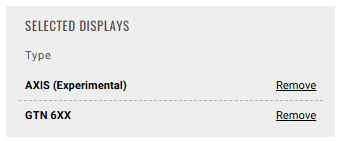
I did notice the set up below on your website. Do you have any info on it?
 

Attachments

  • IMG_3034.jpeg
    IMG_3034.jpeg
    522.6 KB · Views: 61
Walt already spelled it out but here's what I'd consider:

PFD (1) - GTX45R

PFD (2) -GTN
PFD (3) - MFD (1)
GTR205R- MFD (2)
MFD (3) -GTN
GTX45R - GTN

Thank you. Does CAN bus serve as a backup path for data if I lose one of the screens?

1) I lose transponder connection if I lose the PFD. I think that means the transponder would lose airspeed data without a CAN backup. But traffic would still be available on the GTN and the transponder can still get GPS data from the GTN.

2) I lose my GTR205 connection if I lose my MFD. But I can still use it locally since it's panel mount.

Just trying to understand the failure modes of my setup and whether or not I need to connect CAN to the radio and transponder.
 
The 3D SafeTaxi is really, really cool. A much better way to visualize what’s going on. Kudos to the Garmin folks who dreamed that up.

I saw a demonstration of a very similar 3D taxi format in the lab and on a flight test aircraft well over 10 years ago. It was not a Garmin system so Kudos for the dream may be misplaced.
 
Justin/G3Xpert -

Would it be possible for yall to post more photos of N70SH?

There's a few photos of other RVs, but 70SH appears to be the closest configuration to what I would ultimately choose.

Thanks in advance
 
To clarify some of the requests regarding database levels and subscriptions with the AXIS displays:

Even though there are configuration modules for each display in an AXIS installation, the system still operates on a single system ID. Therefore, one database subscription is purchased for one system ID. This is true for past G3XT installations and current AXIS installations. For IFR equipped panels, you would typically have one system ID for the flight displays, and one system ID for the IFR navigator(s) due to these products requiring different levels of navigation databases (VFR or IFR), along with optional charting packages. In these installs you would have the choice to purchase only the required IFR navigation database subscription for the IFR navigator(s), and the charts (or not...), for the GDUs or other charting source (EFBs like Garmin Pilot/ForeFlight, or your classic paper printouts).

When there are multiple IFR navigators and PFD/MFDs in modern IFR aircraft and owners desire 'all available data on all available screens/units', the OnePak offerings are a great option to cover this need, because the a la carte priced options then become a costlier selection at that point.

Added layers of data requirements take place when we start combining IFR navigation units into PFDs along with adding expanded features like full control of flight plans from PFDs to external IFR navigators via HSDB. (Example: you can now fully control the flight plan, load and activate approaches on a GNX375 or GPS175 completely from a base experimental AXIS GDU due to this HSDB interface and one source flight plan.) This capability creates a requirement that the PFD and external IFR navigator share a consistent IFR level navigation database, so they agree on what they are actually controlling/modifying.

Now that that's out of the way, let's break down some examples. For simplicity and a much shorter post I input packages for the US.

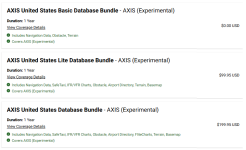
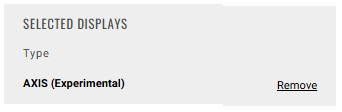
Please visit the FlyGarmin.com aviation database pricing page and input all installed equipment to receive available packages and other a la carte pricing. That will look like the below for the provided example groups following.
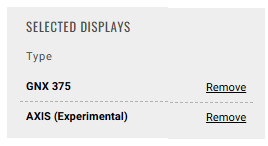
1783698327280.png1783699764355.png1783699800097.png

Navigation Database = All GPS waypoint information data meeting either VFR or IFR level requirements (there are different levels for these use cases)
VFR/IFR Charts = VFR Sectionals and IFR Enroute (High/Low) Charts
FliteCharts = Garmin Terminal Procedure Charts (Arrival/Departure Procedures and Approach Plates)


Basic AXIS Display Installation (VFR) - GDU 116Bx
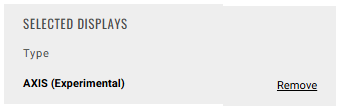
One system ID and subscription, no matter how many displays are installed. These include options for (free) VFR level basic Navigation Data, or options with advanced features like SafeTaxi, VFR sectionals, and Airport Facilities Directory.

1783700281472.png


IFR AXIS Installation - Federated Panel (PFD + Traditional Radio Stack) - GDU 116Bx + External Navigator

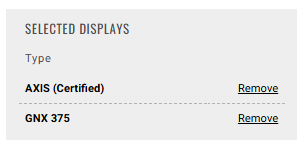
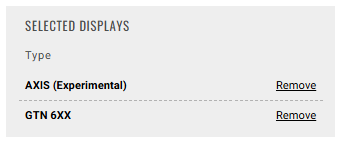
In a common base GDU (116Bx) + non-chart displaying IFR navigator install (GNX375 or GTN650Xi), there are 2 system IDs. It was previously common to update the IFR Navigation Database only on the navigator and chart packages on the PFD/MFD (previously $299 + $199), but with these systems now connected via HSDB and utilizing a one source flight plan, all units need to have an agreeing IFR level navigation database subscription (including the PFD, even if an experimental base unit). The below database package was created for this need. This provides all required IFR level navigation databases and listed information on the display and non-chart displaying navigator.

1783696994687.png

If you had a chart displaying navigator like a GTN750Xi and desired FliteCharts on that GPS/MFD unit as well, you would likely be selecting a OnePak, similar to the next IFR example below. This would give you all available services on all units, although it would still be an option to only update the basic level navigation database and not have the mapping/charting availability (uncommon on GTN750Xi installs, but more frequent on GPS (175/375) and GTN650Xi installs).


IFR AXIS Installation - Integrated Panel (PFD acting as the IFR Navigator, one system ID, all displays) - GDU116 C/NC

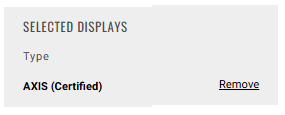
These are the wholly TSO certified flight displays, so the entire unit is a certificated piece of equipment but installed in an EAB aircraft (just like your previous GPS/GTN Xi unit was). You will need to input these devices in FlyGarmin as AXIS (Certified) units to receive proper database selections. Databases can still be a la carte for these displays, but when adding desired features together (like all IFR navigation databases and mapping/charting capability in one single display) the OnePaks are the best pricing option. The AXIS (Certified) display models that include the integrated IFR GPS capabilities do not accept the AXIS (Experimental) bundles. However if you had a supplemental GDU 116Bx experimental display installed, it's services would be included under this package.

1783697517418.png

We will have members of our Database Sales Team/Pilot Ops group available at OSH to talk through these many options for your aircraft to equip you with the best available option for your desired mission.

 

Attachments

  • 1783699105169.png
    1783699105169.png
    5.8 KB · Views: 6
  • 1783698315626.png
    1783698315626.png
    4.3 KB · Views: 4
  • 1783698268065.png
    1783698268065.png
    6.1 KB · Views: 3
  • 1783698243081.png
    1783698243081.png
    6.1 KB · Views: 4
  • 1783698056151.png
    1783698056151.png
    59.4 KB · Views: 5
Last edited:
I saw a demonstration of a very similar 3D taxi format in the lab and on a flight test aircraft well over 10 years ago. It was not a Garmin system so Kudos for the dream may be misplaced.
Fair enough! It was just the first time I had seen something like that deployed. It seems like a meaningful improvement over the geo-referenced airport diagram (which was itself a total game changer).
 
So if I buy two basic screens with only three HSDB connections each, I'm short one connection per screen. How can/should I wire that?
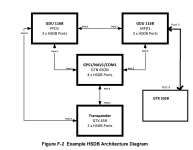
F.2.5.2. and Figure F-2 show the interlink for HSDB for your particular devices (which incidentally match mine).
 
Last edited:
F.2.5.2. and Figure F-2 show the interlink for HSDB for your particular devices (which incidentally match mine).
Ok it's clear to me that I'm going to connect some items to some screens via HSDB. But for anything with only one HSDB connection to one screen, that screen becomes a single point of failure.

Does it make sense to also wire CAN bus to my transponder and radio as a backup to the HSDB connections? Will the CAN bus allow communication to the remaining display if the display with the HSDB connection is down?
 
Ok it's clear to me that I'm going to connect some items to some screens via HSDB. But for anything with only one HSDB connection to one screen, that screen becomes a single point of failure.

Does it make sense to also wire CAN bus to my transponder and radio as a backup to the HSDB connections? Will the CAN bus allow communication to the remaining display if the display with the HSDB connection is down?
I'm not so sure about your failure mode effects analysis.

See attached.

In most reasonable cases, assume you can fail 1 connection aka, cross out 1 arrow and that's what broke.

There is a redundant data path, or capability, for each device.

The limiting case would be a failure of the GTR205, but who cares since you have the GTN?
 

Attachments

  • snip HSDB.png
    snip HSDB.png
    100.6 KB · Views: 19
There is a redundant data path, or capability, for each device.

The limiting case would be a failure of the GTR205, but who cares since you have the GTN?
I think what I wasn't grasping is that the HSDB connection to the transponder can pass through the GTN to/from the screens. If that's true then I am good with this setup (even without redundancy to the GTR). I also think that means I can eliminate CAN bus at least to the transponder.
 
I'm not so sure about your failure mode effects analysis.

See attached.

In most reasonable cases, assume you can fail 1 connection aka, cross out 1 arrow and that's what broke.

There is a redundant data path, or capability, for each device.

The limiting case would be a failure of the GTR205, but who cares since you have the GTN?
I think what I wasn't grasping is that the HSDB connection to the transponder can pass through the GTN to/from the screens. If that's true then I am good with this setup (even without redundancy to the GTR). I also think that means I can eliminate CAN bus at least to the transponder.
Good callouts...I also realize that I have a GAD 29 providing some redundancy as well in my stack.
 
Back
Top