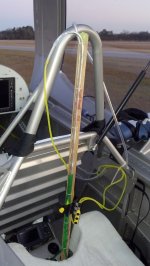
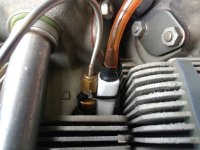
Wide range of choices. The measurement device can be as simple as a length of vinyl tubing and a yardstick. Add water, a few drops of food coloring, and one drop of Dawn detergent.
View attachment 73899
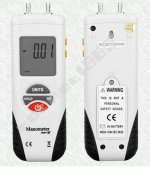
Handheld electronic. Quite a few of these floating around in VAF land Available from Amazon, along with a whole lot of newer choices. They were about $35. Put a restrictor in the lines.
View attachment 73900
One of our folks recently tried a bluetooth manometer with good results. More expensive, but eliminates running vinyl tubing from the engine compartment to the cockpit.
You want the probes to pick up static pressure while ignoring dynamic pressure. For an oil cooler pressure reading, two aquarium bubble rocks should do the job, one at the face of the cooler and another on the back side. Or just wrap the ends of the tubes in a tight little wad of cloth.
Here is a bubble rock I was using to look at static pressure near a nozzle air bleed.
View attachment 73901
With deltaP in hand, consult oil cooler performance charts for airflow in lbs per time period. Stewart Warner/Meggitt charts here:
https://www.danhorton.net/Misc/SW Oil Cooler Specifications.pdf
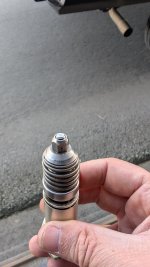
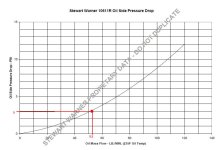
Nope. The tip of the vernatherm sees differential pressure, not system pressure. The deltaP is the difference between pressure at the vernatherm tip (flow direct from the pump) and pressure in the oil cooler return flow. The cooler's deltaP is often available on charts like the SW data linked above. Single pass coolers are low drop, and get lower as cooler size and oil temperature is increased. How low? For example, I run a SW 10611. 7 gallons per minute is the assumed pump rate for a Lyc, so at 7.5 lbs per gallon we have 53 lbs. The chart says pressure drop is 3 psi at 235F. To be precise, there would also be some additional drop due to the hoses and fittings, but the total would not be significant if the hose diameter is large enough.
View attachment 73902
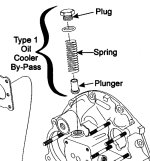
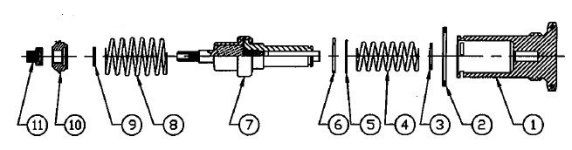
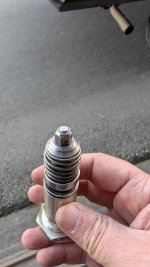
BTW, your thinking isn't way off the mark. There is a specified "cracking pressure" for the vernatherm, which defines the psi at which the relief spring would allow the conical tip to push up off its seat. The Rosta spec sheet says it is 60 to 80 psi. If the oil cooler circuit should become blocked (for example, congealed oil on an Arctic flight), deltaP would become full system pressure. This relief is assumed to provide enough to oil flow to keep the engine alive.



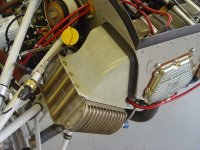
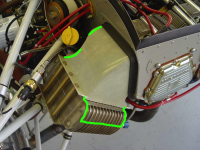
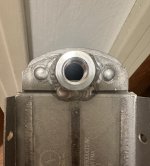
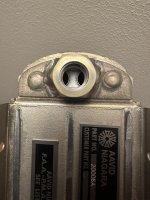 Since I’m still waiting on my engine parts for my Lycoming IO-360, I decided to upgrade a few things. Going from an 11 row to a 13 row oil cooler seems to be a good idea. The cooler I received from Vans wasn’t what I was expecting when it comes to increasing cooling efficiency. Is it me, or is this a lot of obstruction of flow on both ends? The 11 row cooler doesn’t have the same construction.