Van's Air Force

The definitive Van's Aircraft support community! Buying, building or flying an RV? Join our exclusive family of mentors and enthusiasts!

13 row oil cooler inlet/exit

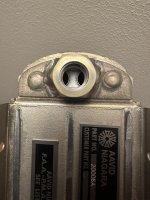
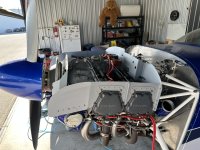
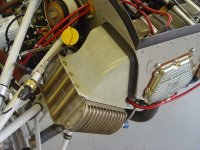
IMG_7941.jpegSince I’m still waiting on my engine parts for my Lycoming IO-360, I decided to upgrade a few things. Going from an 11 row to a 13 row oil cooler seems to be a good idea. The cooler I received from Vans wasn’t what I was expecting when it comes to increasing cooling efficiency. Is it me, or is this a lot of obstruction of flow on both ends? The 11 row cooler doesn’t have the same construction.
 
The first indication of a problem is the word “Niagra”

Do yourself a favor and source a real oil cooler from SW/Troy/Meggitt or, failing that, an HE series from Aero Classics.
 
In a related post,


There's 2 SW/meggit coolers called out, a 1694 and a 1649. The 1649 appears to be an 11 row mostly equivalent to the 13 row 2006x series. The 1694 is rumored to be a dual pass setup, but the linked technical document doesn't open for me and none of the websites I can find it on have any details listed. My 370 with a 2006x continues to have oil temp issues. Hoping to find a direct replacement with better cooling. Can anyone provide any more detailed info?
 
A SW/Meggitt 8406R fed by a 3.5” - 4” duct is sufficient for an IO-360-Axxx, -Cxxx (Angle Valve, Piston squirter equipped). SW 10599R fed by 3” duct is great, 4” even better, SW 10610R, 10611R are more than necessary…

real world - I am flying my second IO-360-A1B6 RV-7 with 3” duct feeding an SW 10599R in central Texas (hot) -- OT is 185-190F at 170Ktas/75F oat/7500msl.
 
My 370 with a 2006x continues to have oil temp issues. Hoping to find a direct replacement with better cooling. Can anyone provide any more detailed info?

The SW/Meggit equivalent is the 10611R. On a side note; if you can't cool a 370 oil with a 2006X there's something else wrong -- either the air side isn't flowing (leaks around the end-tanks, duct is small, duct is lossy, transition from duct to OC face is lossy, exit is restricted, entrance is blocked, (deltaP is waay to low) etc.) or the oil side is messed up (small hoses, vernatherm is inop, etc.)

Attached is the SW/Meggitt performance/dimensional documentation:
 

Attachments

The SW/Meggit equivalent is the 10611R. On a side note; if you can't cool a 370 oil with a 2006X there's something else wrong -- either the air side isn't flowing (leaks around the end-tanks, duct is small, duct is lossy, transition from duct to OC face is lossy, exit is restricted, entrance is blocked, (deltaP is waay to low) etc.) or the oil side is messed up (small hoses, vernatherm is inop, etc.)

Attached is the SW/Meggitt performance/dimensional documentation:
I've tried everything I could and I can't get it to stay cool. My plenum is new and well sealed (low 320ish CHT LOP cruise with 230 degree oil temps). I've tried remote mounting the cooler with a 4" duct and couldn't climb above 2500 ft before the oil temp got over 220. We moved it back onto the show planes motor mount setup and it cools better, but I still had to pull it back from 70% power cruise the other day due to oil temps climbing through 230. I've replaced the vernatherm with a new one. The oil lines are from TS, -8 lines and were new at install. The cooler is mounted with the exits pointed up (opposite of what show planes shows in the installation) in order to let any air out of the system. I've tried everything except a different oil cooler.

I'm at the point where either the Stewart or aero classic solves my problem, or I'm going to have to install multiple coolers. The Stewart coolers do appear to have a less restricted air side than the 2006x while having similar performance in other areas. So for any given point in flight, it does appear the Stewart will have better cooling, but only by a small margin.
 
Last edited:
I've tried everything I could and I can't get it to stay cool. My plenum is new and well sealed (low 320ish CHT LOP cruise with 230 degree oil temps). I've tried remote mounting the cooler with a 4" duct and couldn't climb above 2500 ft before the oil temp got over 220. We moved it back onto the show planes motor mount setup and it cools better, but I still had to pull it back from 70% power cruise the other day due to oil temps climbing through 230. I've replaced the vernatherm with a new one. The oil lines are from TS, -8 lines and were new at install. The cooler is mounted with the exits pointed up (opposite of what show planes shows in the installation) in order to let any air out of the system. I've tried everything except a different oil cooler.

I'm at the point where either the Stewart or aero classic solves my problem, or I'm going to have to install multiple coolers. The Stewart coolers do appear to have a less restricted air side than the 2006x while having similar performance in other areas. So for any given point in flight, it does appear the Stewart will have better cooling, but only by a small margin.
Got pics?
 
I haven't tried the viscosity valve. I did a little research into it but never pulled the trigger. Maybe ill give that a shot before pulling the trigger on a different cooler.

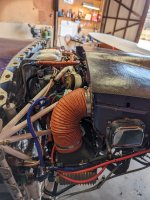
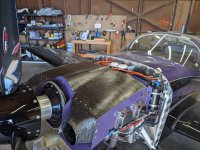
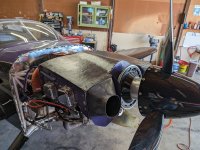
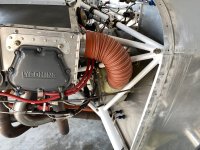
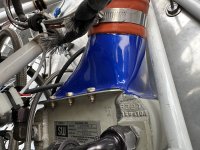
This was the 4" scat tube setup that overheated in climbout. The plenum is piano hinge along the sides and back for sealing, and a long the front it's well sealed with red RTV. I've done a couple sessions with a dark hanger and lights inside the plenum to seal anything I can find for leakage around the baffles. Don't have pics with the cooler back on the show planes mount, but it seems to be the best solution so far for getting airflow to the cooler.
 

Attachments

  • PXL_20240317_212157693.jpg
    PXL_20240317_212157693.jpg
    2.8 MB · Views: 245
  • PXL_20240317_212221192.jpg
    PXL_20240317_212221192.jpg
    3.7 MB · Views: 244
  • PXL_20240317_212230015.jpg
    PXL_20240317_212230015.jpg
    3.4 MB · Views: 242
I haven't tried the viscosity valve. I did a little research into it but never pulled the trigger. Maybe ill give that a shot before pulling the trigger on a different cooler.

This was the 4" scat tube setup that overheated in climbout. The plenum is piano hinge along the sides and back for sealing, and a long the front it's well sealed with red RTV. I've done a couple sessions with a dark hanger and lights inside the plenum to seal anything I can find for leakage around the baffles. Don't have pics with the cooler back on the show planes mount, but it seems to be the best solution so far for getting airflow to the cooler.

I can see a couple of opportunities:

1. The duct has a fairly tight bend in it; > 90° and is SCAT I think. Reduce the duct size and type -- use SCEET and 3" to help reduce that bend radius. Increase the length of the diffuser walls between the duct and the OC face.
2. Maybe add a bit of tilt into the oil cooler so any trapped air in the oil has a place to go.

See attached - maybe will stir the creative juices:

IMG_4262.jpegIMG_1795.jpegIMG_4938.jpeg
 
Thanks everyone for the suggestions. Since I’m already out $800 plus dollars, I’ll give this cooler a try. The oil flow rate through the cooler was my biggest concern, but the Texas heat will test it out, especially during the break in period. I’ll supply air with a 4 inch aluminum tube instead of scat hose to avoid the slowing affect of the corrugated hose. I’ll also be building a valve into it for my winter trips to Colorado. IMG_7950.jpeg
 
I can see a couple of opportunities:

1. The duct has a fairly tight bend in it; > 90° and is SCAT I think. Reduce the duct size and type -- use SCEET and 3" to help reduce that bend radius. Increase the length of the diffuser walls between the duct and the OC face.
2. Maybe add a bit of tilt into the oil cooler so any trapped air in the oil has a place to go.

See attached - maybe will stir the creative juices:

View attachment 65927View attachment 65928View attachment 65929
Current setup looks like the attached pic, except I put the fittings up instead of down so here no trapped air. Still overheats.
 

Attachments

  • image2.jpg
    image2.jpg
    106.2 KB · Views: 204
Current setup looks like the attached pic, except I put the fittings up instead of down so here no trapped air. Still overheats.
FWIW, here's 1 data point.
I have the ShowPlanes engine mount + 2006X 13 row cooler just like the picture you posted + the butterfly.
IO-375
Zero oil temperature issues.
In fact, I would suggest that it cools TOO MUCH...
Let's say 25°C during climb, half open butterfly is fine and I rarely see above 200F, in cruise 3/4 closed to keep at 180F.
Winter, it's completely closed most of the time.
Cyloinder cooling is pretty good also, I must have good/sufficient cowling airflow.
 
@agent4573 Paul,

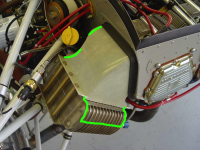
I made a couple of tweaks ( in green), DanH also suggested this a while back.

One more consideration is pay attention to the fin pitch instead of the # of "rows" -- you'll see that the SW/Troy/Meggit/HE uses a very fine pitch vs the NDM/Airflow X stuff. This equates to greater surface area for the heat exchange => more efficiency. Additionally, the construction of the SW/et al uses a closed end tank, so the seals over the ends aren't necessary.
image2.png
 
Paul,

I saw that you replaced the vernatherm - by any chance did you test either of them to observe correct function? Also, it could be a bit of trash is lodged at the seat area keeping the vernatherm from sealing off the bypass passage. Usually a quick visual check of the "cone" will show a witness mark. No witness mark visible, then it might be time to borescope/measure the seat depth and see what's going on.

Agree with Eric - the big/giant airflow performance diffuser along with a 13 row "any brand" should cool the dickens out of the oil -- too much maybe. Time to start looking at other areas.

Is the oil temp sensor calibrated correctly - boiling water test (sea level = 212°F), ice cube, etc. report as expected on the G3X?
 
Last edited:
@agent4573 Paul,

I made a couple of tweaks ( in green), DanH also suggested this a while back.

One more consideration is pay attention to the fin pitch instead of the # of "rows" -- you'll see that the SW/Troy/Meggit/HE uses a very fine pitch vs the NDM/Airflow X stuff. This equates to greater surface area for the heat exchange => more efficiency. Additionally, the construction of the SW/et al uses a closed end tank, so the seals over the ends aren't necessary.
View attachment 65934
I think a simple idea to help the situation would be to use something (even RTV) to block the air exit path Brian highlighted in this photo. I expect you're losing a lot of air through those openings. Air is going to take the path of least resistance, and that's it...
 
I put a strip down each side of the diffuser when installing it because I noticed the gap near the ends of the tank. I'll have to go back and look next weekend to see if air can escape from anywhere else without going through the cooler. I definitely didn't do the gaps between the flat part and the bellow looking part on the end. I feel like I'm chasing issues that most people don't even think about just to get average cooling though.

I did test the new vernatherm before install and it worked fine in the pot of hot oil, so that is calibrated correctly. Not sure what the tip of the old looked like exactly, but it didn't have any damage that I noted when I removed it. We just got a call from the airport a lot closer to our new place, so hopefully I can pull the sensor out in a week or two and verify that's reading correct with the ice water/boiling water test once it's settled into the new hanger.
 
I looked up the parts to install the viscosity valve instead of the vernatherm. According to service instruction 1008C, the plunger is part number 62415 and sells for ~$40, the spring is part number 69436 and sells for ~$220 on spruce. Any chance someone has an old one laying around they don't need anymore?
 
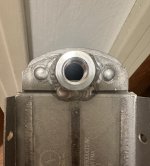
Afternoon, a friend is replacing his oil cooler and went with a Aero Classic 13 row. No doubt about it, big difference in flow restriction compared to the Niagra
IMG_8180.jpeg
 
Afternoon, a friend is replacing his oil cooler and went with a Aero Classic 13 row. No doubt about it, big difference in flow restriction compared to the Niagra
View attachment 67491
I didn't sleep in a Holiday Inn last night but been around a fair number of heat exchangers (air to oil and oil to water) just looking at the entrance port or exit you have no idea of the pressure drop (flow rate) going through the heat exchanger. MIGHT be better but might not. What does row 2-12 look like?
 
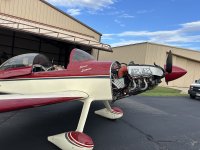
Ok, the newly overhauled engine plus up grades have been installed and test flown.
Despite an 85 degree day and breaking in a newly overhauled engine with a couple of cylinders over 410 degrees for about 15 minutes, the hottest the oil got was 210.
Once the cylinders got below 390 degrees, the oil was steady at 185-190 at 75% power@150 ROP.
More mods to come to control the airflow to the oil cooler.
 

Attachments

  • IMG_8481.jpeg
    IMG_8481.jpeg
    2.7 MB · Views: 57
There's 2 SW/meggit coolers called out, a 1694 and a 1649. The 1649 appears to be an 11 row mostly equivalent to the 13 row 2006x series. The 1694 is rumored to be a dual pass setup, but the linked technical document doesn't open for me and none of the websites I can find it on have any details listed. My 370 with a 2006x continues to have oil temp issues. Hoping to find a direct replacement with better cooling. Can anyone provide any more detailed info?

Those model numbers are unfamiliar. I've put an SW/Meggitt tech catalog here for download:


An 8432 is the dual pass cooler, same size as a 10599 and slightly more efficient. However, see the charts. I don't recommend an 8432 because of the pressure drop on the oil side at our 50 lbs per minute rate...more pressure at the vernatherm tip.
 
Those model numbers are unfamiliar. I've put an SW/Meggitt tech catalog here for download:


An 8432 is the dual pass cooler, same size as a 10599 and slightly more efficient. However, see the charts. I don't recommend an 8432 because of the pressure drop on the oil side at our 50 lbs per minute rate...more pressure at the vernatherm tip.

Those are Aero Classics HE Part numbers. See https://www.aero-classics.com/find-a-cooler/

The 80001694 is the equivalent of the SW 8432 -- dual pass, ports on the top in opposition. The 80001602 is the equivalent of the SW 8406R -- single pass, ports on the side/top & bottom.
 
Those model numbers are unfamiliar. I've put an SW/Meggitt tech catalog here for download:


An 8432 is the dual pass cooler, same size as a 10599 and slightly more efficient. However, see the charts. I don't recommend an 8432 because of the pressure drop on the oil side at our 50 lbs per minute rate...more pressure at the vernatherm tip.
What does "more pressure at the vernatherm tip" mean for oil cooling?
 
What does "more pressure at the vernatherm tip" mean for oil cooling?
As I understand it, the vernatherm expands with increasing temp, closing the bypass and forcing the hot oil out to the oil cooler. More pressure may force
the vernatherm to open the bypass and this will result in less cooling of the oil.

Good luck
 
Can I then conclude that an airflow 2006x, which I think is a single pass cooler, should give me cooler oil on hot days in the SW than my 8432R?
 
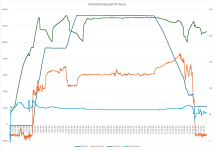
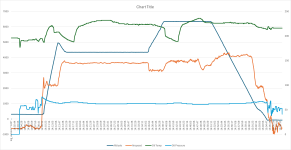
Adding my latest data log to this just for extra sets of eyes. There's 3 times in the flight where the oil temperature acted contrary to expectations. During the climb, the oil temp always spikes to ~230 before immediately dropping back to ~205, then cooling off once I level the climb. It cools to 189 degrees, then spikes and continues increasing to ~230 degrees. Once I started another climb, this cycle repeated with the cooling to 189 degrees before spiking back up to 230. In the descent, the same thing is happening where it will cool to 189 degrees, then spike back up. Previous flights it will cycle between 189 and ~230 fairly regularly, but on this flight, it only did it on the climbs/descents. Oil pressure does indeed change with temperature, indicating that the temperature rise is real. There appears to be plenty of cooling to keep the oil <190, but something in the system isn't allowing it. Vernatherm is brand new and checked in an oil bath to be opening at ~180 degrees.

Edit: The orange line is airspeed, labelled it wrong on the chart.

Picture1.png
 
Final bit of information for anyone interested. I swapped out the vernatherm yesterday for a viscosity valve. In a check flight today I flew around the airport for a bit at ~70% power and 60F OAT. Oil temperature never exceeded 165 degrees (a roughly 60-70 degree drop). Since I've already replaced the vernatherm before with a bench-checked new unit, I've concluded that something must be wrong with the machined seat in the oil filter adapter. At this point, I'll add back in the electronic controlled butterfly valve controlling airflow going to the oil cooler in order to get the temperature back up if it gets too cold. At the next engine overhaul, I'll consider replacing the oil filter adapter and trying another vernatherm, but for now the issue hopefully appears solved.
 
Final bit of information for anyone interested. I swapped out the vernatherm yesterday for a viscosity valve. In a check flight today I flew around the airport for a bit at ~70% power and 60F OAT. Oil temperature never exceeded 165 degrees (a roughly 60-70 degree drop). Since I've already replaced the vernatherm before with a bench-checked new unit, I've concluded that something must be wrong with the machined seat in the oil filter adapter. At this point, I'll add back in the electronic controlled butterfly valve controlling airflow going to the oil cooler in order to get the temperature back up if it gets too cold. At the next engine overhaul, I'll consider replacing the oil filter adapter and trying another vernatherm, but for now the issue hopefully appears solved.
Glad you got a fix, and a little jealous.

Could you post a list of parts and sources to make the change to a viscosity valve? Maybe approximate costs too.

Thanks in advance
 
...I've concluded that something must be wrong with the machined seat in the oil filter adapter.

Paul, do you have a right angle filter adapter, like B&C or ECI/Titan? The four mounting holes are oversize, so the adapter body can easily be mounted with the vernatherm port not aligned with the port in the accessory case. Known issue.

Matt Burch recently made a nice alignment tool to ensure concentric mounting.

Could you post a list of parts and sources to make the change to a viscosity valve? Maybe approximate costs too.

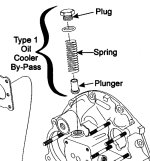
69436 spring, substitute Superior:

62415 plunger, substitute Superior:


Lycoming Oil Cooler Bypass Plunger.jpg
 
Paul, do you have a right angle filter adapter, like B&C or ECI/Titan? The four mounting holes are oversize, so the adapter body can easily be mounted with the vernatherm port not aligned with the port in the accessory case. Known issue.

Matt Burch recently made a nice alignment tool to ensure concentric mounting.


69436 spring, substitute Superior:

62415 plunger, substitute Superior:


View attachment 73720
I am about to order these items. I have the exact situation and similar temperatures as described by everyone her.

So what happens to the Vernatherm when the plunger is installed?

Thank you.
 
I am about to order these items. I have the exact situation and similar temperatures as described by everyone her.

So what happens to the Vernatherm when the plunger is installed?

Thank you.
It should be removed, The vernatherm will restrict the movement of the plunger preventing it's bypass function in the event of an oil cooler restriction. Good Luck, Mahlon
 
So what happens to the Vernatherm when the plunger is installed?
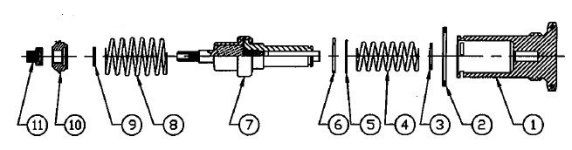
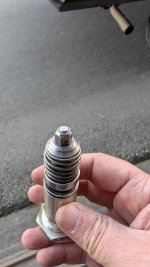
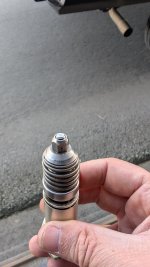
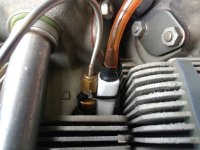
Unscrew it. Remove the wire retainer (#6), allowing the vernatherm unit and associated parts to fall out of the adapter cap (#1). Screw the cap back into the hole as a plug. Easy to reassemble later if desired.

ScreenHunter_2483 Nov. 06 11.22.jpg
 
I have a Superior SL2157 adapter, which has the oil filter coming straight back, and the vernatherm installed vertically. This type shouldn't be affected by the misalignment referenced in the other thread. The wear ring on the vernatherm isn't totally concentric though. There is a full wear pattern. But it rides higher on one side of the plunger than the other.

Can confirm the parts above. The Lycoming spring was ~$250, the superior one was <25. The plunger assembly I got the Lycoming one and it was I think $40, so the swap cost me about $75 with tax and shipping.
 

Attachments

  • PXL_20241101_204033097.jpg
    PXL_20241101_204033097.jpg
    1 MB · Views: 30
  • PXL_20241101_204036996.jpg
    PXL_20241101_204036996.jpg
    1.1 MB · Views: 32
Last edited:
So I also am having the same issues with my IO-540. I have the 5” duct and the 2008x oil cooler.

Where can I find the alignment tool?

If I pull the vernatherm and install the viscosity valve does it auto regulate like the vernatherm? Or is all oil temperature now manually controlled?
 
Where can I find the alignment tool?

I'm not aware of one readily available for purchase. It's DIY tool manufacturing.

If I pull the vernatherm and install the viscosity valve does it auto regulate like the vernatherm? Or is all oil temperature now manually controlled?

No regulation. A viscosity valve merely allows some oil to bypass the cooler circuit if the viscosity is high. When the oil is hot, i.e. low viscosity, all the flow goes through the cooler.

No pilot control unless you also install a ball valve or similar in one of the oil cooler lines.
 
When using a viscosity valve, what are the relative effects on getting warmer oil in winter, if using a ball valve on the oil line vs. an air shutter at the oil cooler?
 
So I also am having the same issues with my IO-540. I have the 5” duct and the 2008x oil cooler.

Where can I find the alignment tool?

If I pull the vernatherm and install the viscosity valve does it auto regulate like the vernatherm? Or is all oil temperature now manually controlled?
loosely install the oil filter assembly. Heat the Vernatherm and quickly insert it in the oil filter adopter. Tighten the vernatherm and then oil filter adopter bolts. A trick mentioned here at VAF. I just did this and will be test flying today. Will report back, if it improves the temps.

Thanks Mahlon and DanH for answering my question.
 
loosely install the oil filter assembly. Heat the Vernatherm and quickly insert it in the oil filter adopter. Tighten the vernatherm and then oil filter adopter bolts. A trick mentioned here at VAF. I just did this and will be test flying today. Will report back, if it improves the temps.

Thanks Mahlon and DanH for answering my question.
Please do.
 
loosely install the oil filter assembly. Heat the Vernatherm and quickly insert it in the oil filter adopter. Tighten the vernatherm and then oil filter adopter bolts. A trick mentioned here at VAF. I just did this and will be test flying today. Will report back, if it improves the temps.

Thanks Mahlon and DanH for answering my question.
I just took a test flight with the "aligned" vernatherm installation. I found no change in cooling. At 7000', my oil temp was 210. The temps do not recover once level. Feels like the oil cooler is not getting any flow. My oil cooler is only two years old. It is a Pacific brand.

I will be testing the viscosity valve next.
 
I just took a test flight with the "aligned" vernatherm installation. I found no change in cooling. At 7000', my oil temp was 210. The temps do not recover once level. Feels like the oil cooler is not getting any flow. My oil cooler is only two years old. It is a Pacific brand.

I will be testing the viscosity valve next.
Removed Vernatherm and installed Viscosity plunger and spring. Did the same test to 7000 and saw oil temp at 206. Leveling off, the temps will not recover and stays at 206 for a long time. Will be looking at oil cooler issue but not hopeful that I will find anything wrong. It is only two years old.
 
There is an oil side, an air side, and a heat transfer capacity based on those parameters and exchanger size. Put another way, you've ensured all oil flow is passing through the heat exchanger. Next you look at deltaP available. If there is good delta available, you look at exchanger size and efficiency.
 
Thank you DanH and agent4573 for your comments.

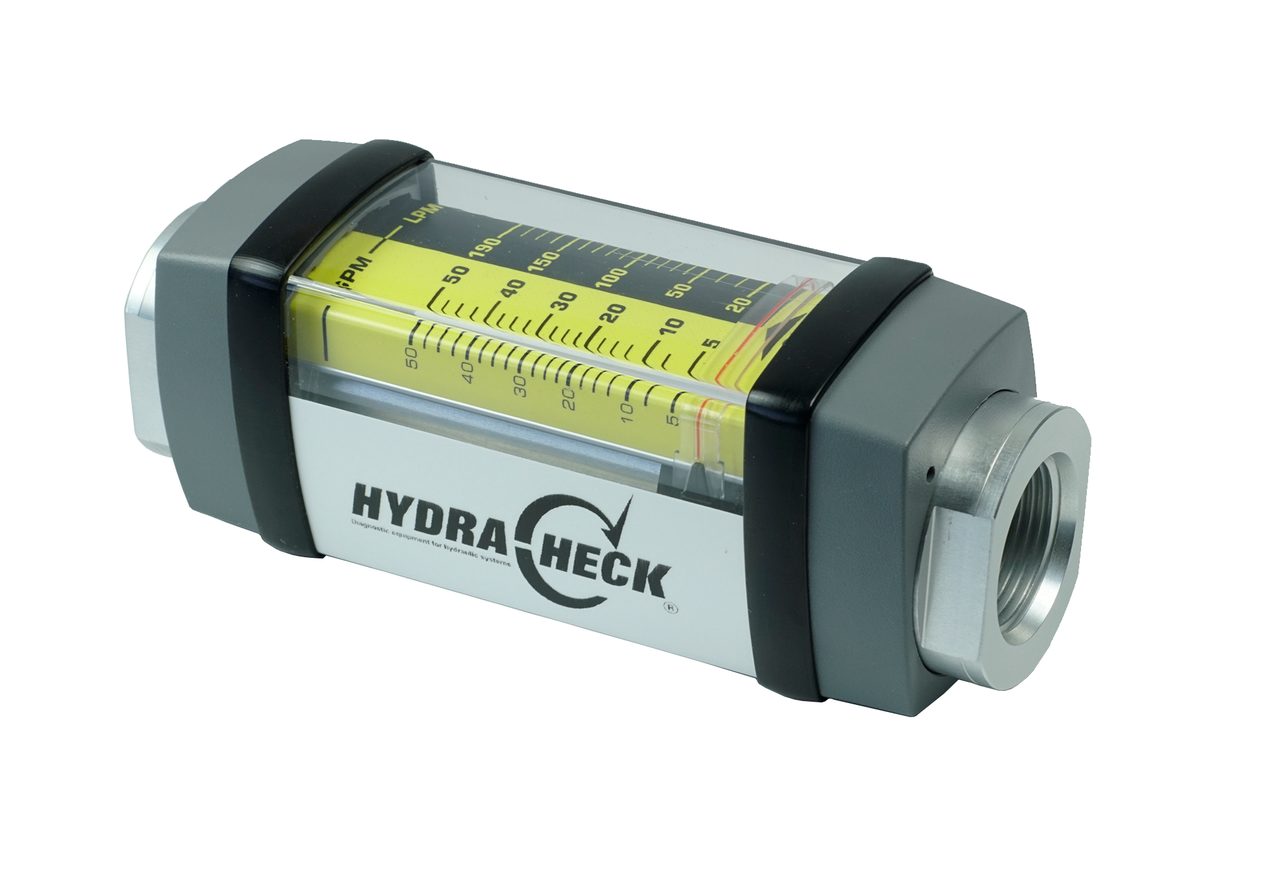
I think there are alternative to the $277 Hydracheck. It is great idea to run on the ground but I wish a Bluetooth model was available so I could check in flight.

DanH, any suggestions on measuring Delta P?
There is an oil side, an air side, and a heat transfer capacity based on those parameters and exchanger size. Put another way, you've ensured all oil flow is passing through the heat exchanger. Next you look at deltaP available. If there is good delta available, you look at exchanger size and efficiency.
How about oil pressure? Is there possibility that my near 80 PSI oil pressure at cruise is keeping the vernatherm open all the time? Can't find the spec for the spring pressure on Vernatherm.
 
I tried to find a cheap alternative but everything <$100 is only rated to like 150F. You might be able to find a sensor-only that outputs pulses and tie it into a Garmin or dynon display as a fuel flow reading.
 
DanH, any suggestions on measuring Delta P?

Wide range of choices. The measurement device can be as simple as a length of vinyl tubing and a yardstick. Add water, a few drops of food coloring, and one drop of Dawn detergent.

Manometer.jpg

Handheld electronic. Quite a few of these floating around in VAF land Available from Amazon, along with a whole lot of newer choices. They were about $35. Put a restrictor in the lines.

ScreenHunter_2492 Nov. 09 06.58.jpg

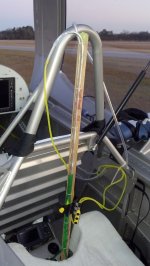
One of our folks recently tried a bluetooth manometer with good results. More expensive, but eliminates running vinyl tubing from the engine compartment to the cockpit.

You want the probes to pick up static pressure while ignoring dynamic pressure. For an oil cooler pressure reading, two aquarium bubble rocks should do the job, one at the face of the cooler and another on the back side. Or just wrap the ends of the tubes in a tight little wad of cloth.

Here is a bubble rock I was using to look at static pressure near a nozzle air bleed.

Bubble Rock.jpg

With deltaP in hand, consult oil cooler performance charts for airflow in lbs per time period. Stewart Warner/Meggitt charts here: https://www.danhorton.net/Misc/SW Oil Cooler Specifications.pdf

How about oil pressure? Is there possibility that my near 80 PSI oil pressure at cruise is keeping the vernatherm open all the time? Can't find the spec for the spring pressure on Vernatherm.

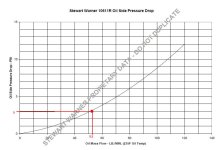
Nope. The tip of the vernatherm sees differential pressure, not system pressure. The deltaP is the difference between pressure at the vernatherm tip (flow direct from the pump) and pressure in the oil cooler return flow. The cooler's deltaP is often available on charts like the SW data linked above. Single pass coolers are low drop, and get lower as cooler size and oil temperature is increased. How low? For example, I run a SW 10611. 7 gallons per minute is the assumed pump rate for a Lyc, so at 7.5 lbs per gallon we have 53 lbs. The chart says pressure drop is 3 psi at 235F. To be precise, there would also be some additional drop due to the hoses and fittings, but the total would not be significant if the hose diameter is large enough.

ScreenHunter_2493 Nov. 09 07.21.jpg

BTW, your thinking isn't way off the mark. There is a specified "cracking pressure" for the vernatherm, which defines the psi at which the relief spring would allow the conical tip to push up off its seat. The Rosta spec sheet says it is 60 to 80 psi. If the oil cooler circuit should become blocked (for example, congealed oil on an Arctic flight), deltaP would become full system pressure. This relief is assumed to provide enough to oil flow to keep the engine alive.

 
Last edited:
Wide range of choices. The measurement device can be as simple as a length of vinyl tubing and a yardstick. Add water, a few drops of food coloring, and one drop of Dawn detergent.

View attachment 73899

Handheld electronic. Quite a few of these floating around in VAF land Available from Amazon, along with a whole lot of newer choices. They were about $35. Put a restrictor in the lines.

View attachment 73900

One of our folks recently tried a bluetooth manometer with good results. More expensive, but eliminates running vinyl tubing from the engine compartment to the cockpit.

You want the probes to pick up static pressure while ignoring dynamic pressure. For an oil cooler pressure reading, two aquarium bubble rocks should do the job, one at the face of the cooler and another on the back side. Or just wrap the ends of the tubes in a tight little wad of cloth.

Here is a bubble rock I was using to look at static pressure near a nozzle air bleed.

View attachment 73901

With deltaP in hand, consult oil cooler performance charts for airflow in lbs per time period. Stewart Warner/Meggitt charts here: https://www.danhorton.net/Misc/SW Oil Cooler Specifications.pdf


Nope. The tip of the vernatherm sees differential pressure, not system pressure. The deltaP is the difference between pressure at the vernatherm tip (flow direct from the pump) and pressure in the oil cooler return flow. The cooler's deltaP is often available on charts like the SW data linked above. Single pass coolers are low drop, and get lower as cooler size and oil temperature is increased. How low? For example, I run a SW 10611. 7 gallons per minute is the assumed pump rate for a Lyc, so at 7.5 lbs per gallon we have 53 lbs. The chart says pressure drop is 3 psi at 235F. To be precise, there would also be some additional drop due to the hoses and fittings, but the total would not be significant if the hose diameter is large enough.

View attachment 73902

BTW, your thinking isn't way off the mark. There is a specified "cracking pressure" for the vernatherm, which defines the psi at which the relief spring would allow the conical tip to push up off its seat. The Rosta spec sheet says it is 60 to 80 psi. If the oil cooler circuit should become blocked (for example, congealed oil on an Arctic flight), deltaP would become full system pressure. This relief is assumed to provide enough to oil flow to keep the engine alive.

Thank you DanH for the wealth of information and references. I will try reducing oil pressure since it is the easiest thing to do now. Will report back if there is anything worthwhile to share.
 
Thank you DanH for the wealth of information and references. I will try reducing oil pressure since it is the easiest thing to do now. Will report back if there is anything worthwhile to share.
Leave it alone. "Near 80 psi" is perfectly ok.
 
Back
Top