Van's Air Force

The definitive Van's Aircraft support community! Buying, building or flying an RV? Join our exclusive family of mentors and enthusiasts!

Want to build an electric plane mover (tug?) for my RV10

andrewfranke

I'm New Here
I sold my last plane (a cherokee six) three years ago and recently finished my RV10 (man what a plane!). I was quickly reminded of the herniated disc in my lower back when I started moving a plane in and out of the hanger again.

I know there are a lot of commercially available electric tugs out there that look great, but the costs are more than I'm willing to pay. My bank account was able to finish my plane, but I'd rather use what's left for fuel than a fancy tug. So I'm wondering if anyone out there has rolled their own? We are builders right? :D

I purchased three retired grocery store electric shopping carts that I can use some parts from but wanted to see if anyone else out there has something cool they would like to share. I'll likely build something soon and happy to share what I build as well.

Thanks!
Happy 2024!!!
Andrew
 
I sold my last plane (a cherokee six) three years ago and recently finished my RV10 (man what a plane!). I was quickly reminded of the herniated disc in my lower back when I started moving a plane in and out of the hanger again.

I know there are a lot of commercially available electric tugs out there that look great, but the costs are more than I'm willing to pay. My bank account was able to finish my plane, but I'd rather use what's left for fuel than a fancy tug. So I'm wondering if anyone out there has rolled their own? We are builders right? :D

I purchased three retired grocery store electric shopping carts that I can use some parts from but wanted to see if anyone else out there has something cool they would like to share. I'll likely build something soon and happy to share what I build as well.

Thanks!
Happy 2024!!!
Andrew
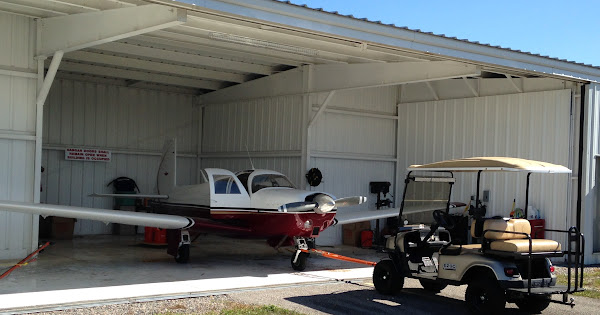
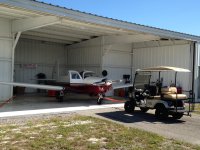
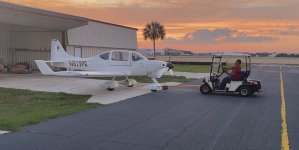
Some of the best best money I even spent was buying used golf cart and putting tow hitches on it. My tug is not a single use tool; but a capable runaround for the airport as well.


Protect that back (L4/5 x2 myself). Get a tug. Save money elsewhere.
 
I bought an old Craftsman riding mower without the mower deck for $150. Has a hole on the back for mounting a hitch. Maybe you could find something similar.
danny
 
My needs are complicated by the need for a tug that will haul my airplane on bare asphalt as well as snow and glare ice. There are a lot of gonzo/Dogpatch solutions to tugs out there and I've tried several of them over the years. Finally, out of frustration, I bought at Best Tug Alpha2 (you'd want the Alpha 3 for your RV-10 I'm guessing). Buying that well-engineered and well-built tug solved all of my frustrations.
 
I have wanted to build a tug for a while. My friend uses a lawn tractor, as I will for the 9A. The 4 is a little more difficult. My hangar is downhill a bit from the runway surface and nothing to push on, on it. I was donated an old electric wheel chair. I have only got so far as to strip the seat off of it, leaving the base, motors, wheels but I think it will work. I have the tailwheel axle from flyboyaccessories to connect to with mods to the wheelchair base. Your 10 being so big, I would think the lawn tractor is your best option. I don't know how much mass or "oomph" the electric grocery carts drive system have.
 
I purchased three retired grocery store electric shopping carts that I can use some parts from but wanted to see if anyone else out there has something cool they would like to share. I'll likely build something soon and happy to share what I build as well.

Thanks!
Happy 2024!!!
Andrew

Can you just use one of the shopping carts as is, adding a tow bar?
 
One of multiple threads on building your own electric tug:

 
When I was in a hangar with a sloped floor, I taxiied the RV-9A into the hangar. It was easy to push out, downhill. As I got proficient, I could park with an offset no more than six inches from desired centerline. Of course, I had plenty of wingtip clearance.
Your mileage will undoubtedly vary...
 
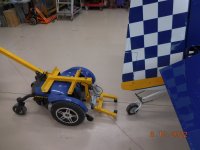
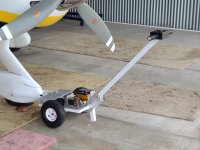
This was my simple solution for a tug. I found a slightly used wheel chair on Craigslist and removed the seat. And with two 12 volt linear actuators off eBay and some aluminum angle and square tubing built this tug. All the directional controls (joy stick) are from the original wheel chair and two toggle switches were added to control the tow bar. It would be easy to extend the tow bar and make it for nose wheels aircraft.

Chuck Brietigam
RX-6XXL


DSCN1331.jpeg
 
I bought an old Craftsman riding mower without the mower deck for $150. Has a hole on the back for mounting a hitch. Maybe you could find something similar.
danny
Buddy and I built a lawnmower race cart once. Yep. Its a thing. Almost too much fun. One of those "hold my beer and watch this" things. I like the retired handicap cart idea.
Side note. A family member passed long ago. He had a really nice mobility chair. We couldn't give it away. Even Goodwill didn't want it. Wish I had kept it now.
 
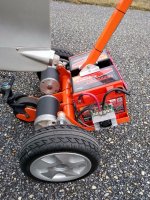
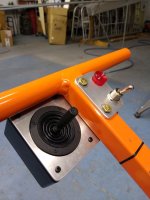
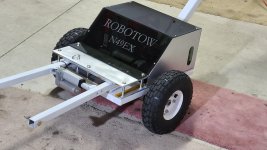
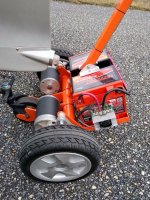
Absolutely the best thing I built last year. Maybe a little over the top...fingertip joystick control and a regenerative motor controller. I have components for a couple more. Anybody want one?
Not only yes, but hell yes! Put me on the list. Plans, parts or complete build!
 
Absolutely the best thing I built last year. Maybe a little over the top...fingertip joystick control and a regenerative motor controller. I have components for a couple more. Anybody want one?

Wow, very nice! Can you provide parts list, I would build one. Knowing what kind of motors/gear box, motor controller, and joystick you got would be a big help. Of course, if you have CAD of the metal parts, that would make thing even better!
 
I’d be interested in a parts kit with plans. I can build stuff but not much of a fabricator
 
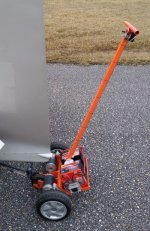
I built this after seeing a friend’s tug. It’s still in the prototype stage and needs to be finished. It works well although backing up a nose wheel RV takes some practice.
IMG_2988.jpegIMG_2989.jpeg
 
Dan, I’m looking for one like this also! Looks like a great project.
Absolutely the best thing I built last year. Maybe a little over the top...fingertip joystick control and a regenerative motor controller. I have components for a couple more. Anybody want one?
I would buy one for nosewheel.
Based on responses, I think you have a market. Build it for PC680 batteries and we have a second life fir retired batteries!
 
This is one I built for the RV6A. some have modified this for the RV-10.

Plans info are available through the provided links.

Hi Dan

This look fantastic. I am curious though why you chose to use the nose wheels bolt/nut to attach to rather than the more forward tow bar lugs. I'm guessing experimentation suggested this location gave better control?

Thanks.

Michael B.

C-FWMB
RV-9A
 
Hi Dan

This look fantastic. I am curious though why you chose to use the nose wheels bolt/nut to attach to rather than the more forward tow bar lugs. I'm guessing experimentation suggested this location gave better control?

Thanks.

Michael B.

C-FWMB
RV-9A
The RV- 6A is different than the -9. The nose wheel on the -6A uses the axle points for the tow bar.
 
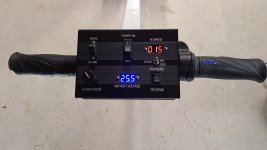
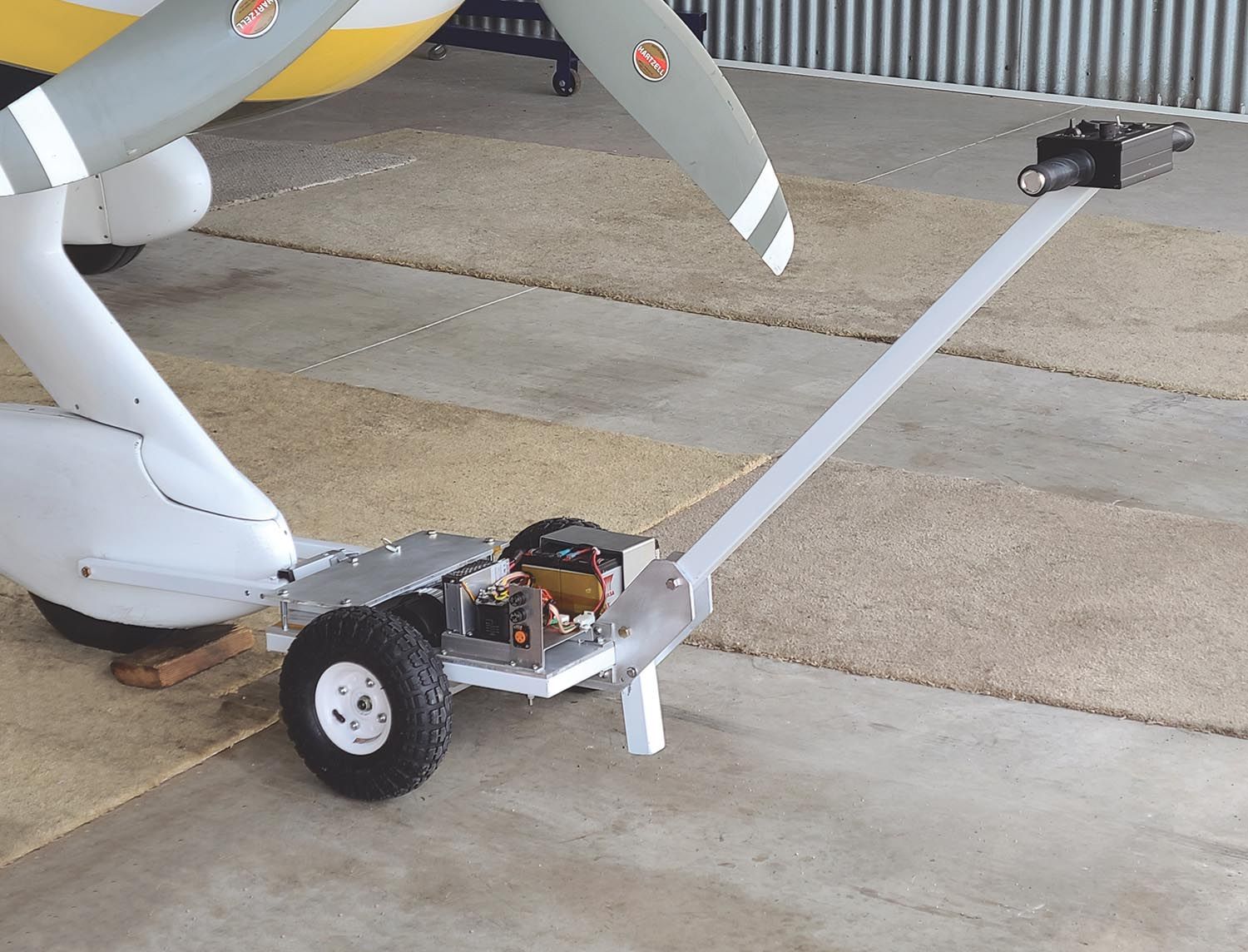
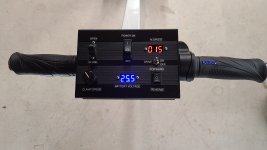
I have an article on building a tug coming out in the April issue of Kitplanes, which comes out 3/13. Pictures in the previous post (Learning the new picture process and accidentally sent them out first). Article includes all details for building, including parts list with links to parts sources. Control includes a linear actuator for gripping/releasing plane attachment, twist throttle, reversing control, battery voltage monitor.

Reinhard M.
 
Buddy and I built a lawnmower race cart once. Yep. Its a thing. Almost too much fun. One of those "hold my beer and watch this" things. I like the retired handicap cart idea.
Side note. A family member passed long ago. He had a really nice mobility chair. We couldn't give it away. Even Goodwill didn't want it. Wish I had kept it now.
Funny. Was it very fast? Mine has six speeds...from slow to slowest.
I have a taildragger and can pull it outside before the tractor is in gear. And did I mention it's slow?
 
I have an article on building a tug coming out in the April issue of Kitplanes, which comes out 3/13. Pictures in the previous post (Learning the new picture process and accidentally sent them out first). Article includes all details for building, including parts list with links to parts sources. Control includes a linear actuator for gripping/releasing plane attachment, twist throttle, reversing control, battery voltage monitor.

Reinhard M.
Does your "tug" have differential steering or is it "skid" steer - thank you.
One more - is your "controller" custom or "off the shelf"?

HFS
 
Last edited:
Does your "tug" have differential steering or is it "skid" steer - thank you.
One more - is your "controller" custom or "off the shelf"?

HFS

Hi Dave. It has differential steering, left/right/forward/backward, by joystick. The controller is an off the shelf 60A Sabertooth, which offers custom stick response programming in all four directions.

"maybe a little over the top" !!?? When has that ever been attributed to you. :)

Hey, got any spare plutonium ?
 
Does your "tug" have differential steering or is it "skid" steer - thank you.
One more - is your "controller" custom or "off the shelf"?

HFS
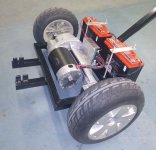
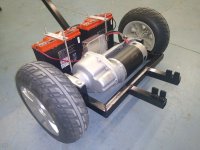
The motor drive unit is an integrated motor/axle that includes a differential. In addition, the plane engaging fork section is on a pivot with a pin so it can be locked straight or pivot. I use it in pivot mode to pull the plane out and locked to push straight back in. Of course, it can be in pivot mode for pushing as well - just takes a bit of practice, like pushing a shopping cart backwards! It has a ton of power, and in top speed can drag your butt across the tarmac with vigor! The motor/drive axle assembly is from the wheelchair/small cart market and is readily available. The controller is a 50 amp unit also readily available on Amazon, as is the wrist-twist throttle control, which works directly with the controller, also from the eBike market, and is cheap! All parts are pretty much Amazon/McMaster/Harbor Freight/hardware store, except the axle, which is either eBay or AliBaba. My total cost was about $400, and the article will detail all of it.

Reinhard
 
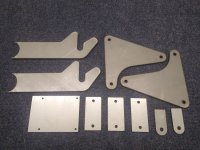
All right, I just ordered six sets of the laser cut parts (yeah, yeah, 1/4" mild steel, no problem), and I'll see about putting together a component list and some plans. Watch this space.
I want one!! I would prefer the powder coat to be more of a Crimson color though ;)

Suggested company name - Hortons Haulers
 
Some of the best best money I even spent was buying used golf cart and putting tow hitches on it. My tug is not a single use tool; but a capable runaround for the airport as well.


Protect that back (L4/5 x2 myself). Get a tug. Save money elsewhere.

I bought an old Craftsman riding mower without the mower deck for $150. Has a hole on the back for mounting a hitch. Maybe you could find something similar.
danny
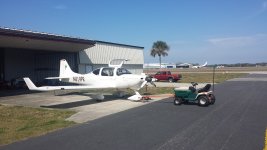
I did both. First was an old "Montgomery Ward" riding mower I got for $100, added a tow hitch and some lights. It worked so well another pilot offered me $900 for it so I sold it.
Plane and Tug.jpg
Then I bought an old EZ-Go golf cart for $750 and did the same.
34 Using the tug.jpg
These are best tugs I have ever had for my airplane. Significantly cheaper than other commercial tugs and a fun, easy airport project.
 
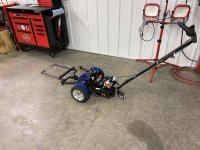
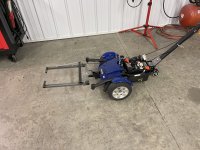
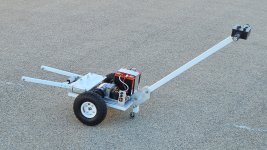
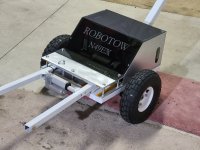
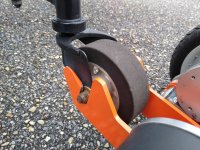
My buddy Stan is creeping up on 80 and has two metal knees in his landing gear, so pushing his S-7 is not an option anymore. Finally wore out the drill-powered snowblower based tug I built him years ago, so it was time for a new one. Goal here was "How simple can it be?", rather than the dual motors, differential steering, and regen braking done previously. This one uses a single motor unit with a differential, on a very basic 1" square tube frame. Cheap PWM controller with a twist grip, on-off-and forward-reverse. No way to tell about reliability other than to run it a while, but it seems to work well.

Left.jpg
Right.jpg

Still have a few sets of laser cut parts for the fancy dual motor joystick tug. PM if you want one.

Towbot.jpgTowbot II.jpg

Laser Cut Tug Parts.jpg
 
My buddy Stan is creeping up on 80 and has two metal knees in his landing gear, so pushing his S-7 is not an option anymore. Finally wore out the drill-powered snowblower based tug I built him years ago, so it was time for a new one. Goal here was "How simple can it be?", rather than the dual motors, differential steering, and regen braking done previously. This one uses a single motor unit with a differential, on a very basic 1" square tube frame. Cheap PWM controller with a twist grip, on-off-and forward-reverse. No way to tell about reliability other than to run it a while, but it seems to work well.

View attachment 62726
Source and part # for motor/drive unit, also PWM control, please?
 
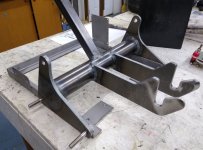
Got in another batch of laser cut parts for the dual motor tailwheel tug kits. Plans for the simple single motor transaxle tug are still free. See post #38 above for both.

Also have one dual motor frame welded and ready to go. Fork width fits a tailwheel with flat sheet steel arms, like the JD Air below. Pretty sure a Vans is the same.

Hooks.jpg

Welding.jpg
 
My needs are complicated by the need for a tug that will haul my airplane on bare asphalt as well as snow and glare ice. There are a lot of gonzo/Dogpatch solutions to tugs out there and I've tried several of them over the years. Finally, out of frustration, I bought at Best Tug Alpha2 (you'd want the Alpha 3 for your RV-10 I'm guessing). Buying that well-engineered and well-built tug solved all of my frustrations.
An Alpha 2 works fine for an RV10. It is rated to 2,600 lb, and while the RV10 has a gross weight of 2,700 lb, you'll never be towing it at gross weight. Adding the empty weight of an RV10 plus full fuel, you're generally around 2,000 lb total weight that you will be towing. I recently bought a hangar that came with an Alpha 2. The previous owner used it to tow his RV10 in and out with ease. I find I don't need the Alpha 2 to move my RV8A in and out, so it is available for sale if anyone's interested.
 
An Alpha 2 works fine for an RV10. It is rated to 2,600 lb, and while the RV10 has a gross weight of 2,700 lb, you'll never be towing it at gross weight. Adding the empty weight of an RV10 plus full fuel, you're generally around 2,000 lb total weight that you will be towing. I recently bought a hangar that came with an Alpha 2. The previous owner used it to tow his RV10 in and out with ease. I find I don't need the Alpha 2 to move my RV8A in and out, so it is available for sale if anyone's interested.
I am interested, DM me on [email protected]
 
An Alpha 2 works fine for an RV10. It is rated to 2,600 lb, and while the RV10 has a gross weight of 2,700 lb, you'll never be towing it at gross weight. Adding the empty weight of an RV10 plus full fuel, you're generally around 2,000 lb total weight that you will be towing. I recently bought a hangar that came with an Alpha 2. The previous owner used it to tow his RV10 in and out with ease. I find I don't need the Alpha 2 to move my RV8A in and out, so it is available for sale if anyone's interested.
Did you sell your Tug?
 
I'm working with an adaption of the single motor/transaxle concept. In this case the motor is rated at 800 watts, rather than the 400 watt unit Reinhard specified in his well done Kitplanes article.

One key to the frugal design is the PWM speed controller available from Amazon. It's rated at 60A with a max of 100A. There is also a slightly more expensive version with a cooling fan.

Check me please. If run at the 800 watt rating in a 24V system, I assume current would be 33 amps. However, I think the critical issue is stalled rotor current, given the goal is to start moving a heavy airplane from rest. Am I correct in thinking stalled rotor current for a brushed DC motor is a simple Ohms Law function? If yes, resistance measured at the motor leads is 0.2 ohms, so 24/0.2 = 120 amps at full throttle. Obviously that exceeds the controller's claimed capacity.

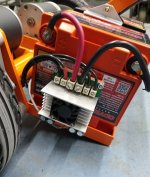
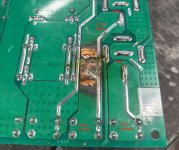
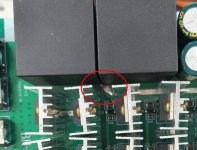
I was testing at the airport yesterday. I wanted something heavier than an RV, so I hitched up an A36. Full throttle from rest did indeed allow the magic smoke to escape. This is the bottom of the controller board. The copper foil seems to have melted like a fuse:

Bottom side.jpg

There was no evident damage to components on the top side of the board, with the exception of a possible hot spot at the base of what I assume to be a forward/reverse relay:

Topside.jpg

I know nothing about circuit board design or manufacture. As a noob, I've always assumed components burned, not boards.

Am I mistaken? Does a board failure like this one suggest manufacturing error, or does this sort of thing happen all the time?

Anyone spotted a better speed controller, perhaps more max capacity?
 
I'm working with an adaption of the single motor/transaxle concept. In this case the motor is rated at 800 watts, rather than the 400 watt unit Reinhard specified in his well done Kitplanes article.

One key to the frugal design is the PWM speed controller available from Amazon. It's rated at 60A with a max of 100A. There is also a slightly more expensive version with a cooling fan.

Check me please. If run at the 800 watt rating in a 24V system, I assume current would be 33 amps. However, I think the critical issue is stalled rotor current, given the goal is to start moving a heavy airplane from rest. Am I correct in thinking stalled rotor current for a brushed DC motor is a simple Ohms Law function? If yes, resistance measured at the motor leads is 0.2 ohms, so 24/0.2 = 120 amps at full throttle. Obviously that exceeds the controller's claimed capacity.

I was testing at the airport yesterday. I wanted something heavier than an RV, so I hitched up an A36. Full throttle from rest did indeed allow the magic smoke to escape. This is the bottom of the controller board. The copper foil seems to have melted like a fuse:

View attachment 98561

There was no evident damage to components on the top side of the board, with the exception of a possible hot spot at the base of what I assume to be a forward/reverse relay:

View attachment 98562

I know nothing about circuit board design or manufacture. As a noob, I've always assumed components burned, not boards.

Am I mistaken? Does a board failure like this one suggest manufacturing error, or does this sort of thing happen all the time?

Anyone spotted a better speed controller, perhaps more max capacity?
Not sure it happens "all the time" but every one of those little copper traces can act like a fuse if too much current is applied to the individual trace. Apparently, you found the weakest trace for the amount of current supplied to that trace.

It would be interesting to measure the cross section of the burned trace to see what its max current was...
 
I'm working with an adaption of the single motor/transaxle concept. In this case the motor is rated at 800 watts, rather than the 400 watt unit Reinhard specified in his well done Kitplanes article.

One key to the frugal design is the PWM speed controller available from Amazon. It's rated at 60A with a max of 100A. There is also a slightly more expensive version with a cooling fan.

Check me please. If run at the 800 watt rating in a 24V system, I assume current would be 33 amps. However, I think the critical issue is stalled rotor current, given the goal is to start moving a heavy airplane from rest. Am I correct in thinking stalled rotor current for a brushed DC motor is a simple Ohms Law function? If yes, resistance measured at the motor leads is 0.2 ohms, so 24/0.2 = 120 amps at full throttle. Obviously that exceeds the controller's claimed capacity.

I was testing at the airport yesterday. I wanted something heavier than an RV, so I hitched up an A36. Full throttle from rest did indeed allow the magic smoke to escape. This is the bottom of the controller board. The copper foil seems to have melted like a fuse:

View attachment 98561

There was no evident damage to components on the top side of the board, with the exception of a possible hot spot at the base of what I assume to be a forward/reverse relay:

View attachment 98562

I know nothing about circuit board design or manufacture. As a noob, I've always assumed components burned, not boards.

Am I mistaken? Does a board failure like this one suggest manufacturing error, or does this sort of thing happen all the time?

Anyone spotted a better speed controller, perhaps more max capacity?
Hi Dan

I don't think there's anything wrong with your math but yes, both components and PCB will get damaged from inadequate design. With a copper trace like this (I'm assuming the first image is as manufactured) it's pretty clear someone was trying to bolster the thickness of the copper trace by adding solder on top. So they have found this out the hard way in the past already. This can work but it has obvious limits. One of the limits is that such a thin trace won't simply be overloaded by the current alone but the heat load adds further resistance, and you end up with this copper/solder goop. In circuits that are so heavily overloaded / drastically undersized for the task (which I have seen from what I would have expected to be credible manufacturers) my approach has been to bypass the trace for the high current loads and use a copper wire soldered directly to each end. You'll have to take a look where those loads are because obviously they have loaded on solder to every trace I see.
And just as a side note, I don't think overloading by forcing a stall is a valid test, but it certainly lets you know where the weakness is. Those areas should be protected; meaning, somewhere along the way there should have been circuit protection, such as inline to the motor to prevent it from cooking the board. A cheap current limiter comes to mind.

Hope that perspective helps.
 
Thanks Michael, certainly does help. I didn't realize the purpose of the solder strips was to boost capacity.

I admittedly ran this one hard, about 100 yards at a fast walk, no load, followed by several starts with 2000+ lbs of Bonanza. The big mass means every start from rest is essentially a stalled rotor for some small length of time. Still, maybe these controllers are just too cheap.

The Dimension Engineering controller I use on the dual motor tugs offers 60A per motor channel, max 120A per channel for a few seconds, with both thermal and overcurrent protection. They also offer a single channel controller rated at 50A, 100A max, with adjustable current limiting and regen. I'm leaning that way.
 
I'm working with an adaption of the single motor/transaxle concept. In this case the motor is rated at 800 watts, rather than the 400 watt unit Reinhard specified in his well done Kitplanes article.
I'm planning to take the RV-10 to SERFI in a couple of weeks, so if you wanna fix the tug and try it on my -10, we can make that happen.
 
Back
Top