Placed this in General for wider exposure. Although this was found on an RV-10, perhaps this has been seen on other 10's and other RVs as well.
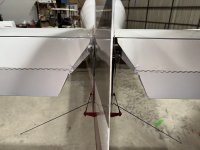
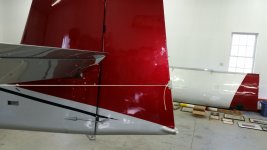
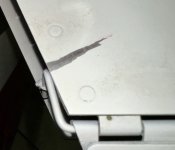
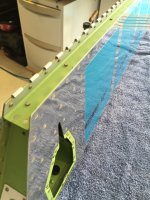
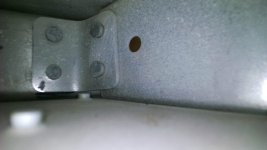
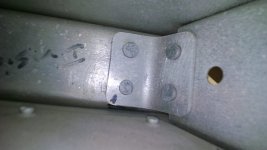
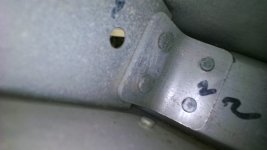
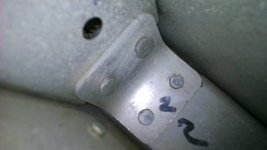
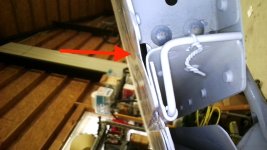
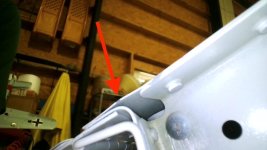
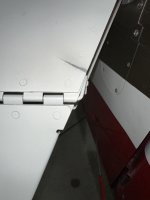
While assisting a friend on his RV-10 Condition Inspection, the following wrinkles were noted on the inboard, upper elevator skins. There do not appear to be cracks in the skin, but the flex in the skin has caused the paint crack away. We'll be sanding some paint away to inspect further. His call to Van's yielded a "not something to be concerned about" reply, but we're not sure the pictures he sent in shared the issue well enough (he sent closer up photos than what I'm posting, which showed the interior, by the rear elevator spar, the elevator root rib, and trim tab "spar" all appearing normal...no odd wear, and looks to be built per plans...owner was not the builder).
Please see further discussion below photos, with possible hypothesis, and request for any feedback...or any experience with the same phenomenon.
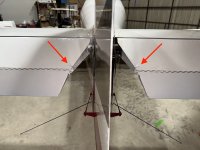
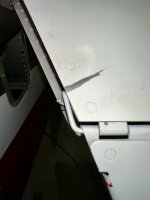
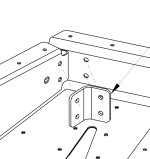
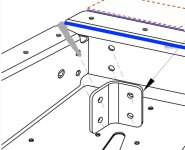
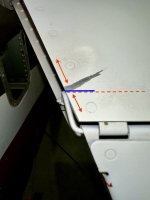
In the next photo, the dotted red line represents the front face/web of the elevator rear spar, and the solid blue line represents the small gap between the front face of that spar web, and the aft edge of the elevator root rib. There is no metal that ties those last two rivets together, other than the skin itself. The root rib is under the rivets forward of the blue line, and the rear spar flange is under the last rivet on the elevator skin. That appears to be in sync with the plans, so that is not an arrow fired at the design. It is very interesting that the small creases are very symmetrical. The owner has hypothesized that the aerodynamic forces on the elevator and the trim tab may be acting to alternatively stretch, then compress the elevator skin...somewhat along the axis of the double-sided red arrows. I watched the skin and the creases carefully as he actuated full up and down trim, and saw no flexing. I tried to simulate aero loads on the tab and the elevator with my hands, and saw no flex. We bounced around the idea of adding a thin doubler to span that gap between the last two rivets, but that will make the skin uneven, or may create unintended structural consequences. We're also hesitant to work the area back to flat, for fear of work-hardening, and likely follow-on cracking.
Any other experience with this in the field? Thanks!
Cheers,
Bob
While assisting a friend on his RV-10 Condition Inspection, the following wrinkles were noted on the inboard, upper elevator skins. There do not appear to be cracks in the skin, but the flex in the skin has caused the paint crack away. We'll be sanding some paint away to inspect further. His call to Van's yielded a "not something to be concerned about" reply, but we're not sure the pictures he sent in shared the issue well enough (he sent closer up photos than what I'm posting, which showed the interior, by the rear elevator spar, the elevator root rib, and trim tab "spar" all appearing normal...no odd wear, and looks to be built per plans...owner was not the builder).
Please see further discussion below photos, with possible hypothesis, and request for any feedback...or any experience with the same phenomenon.
In the next photo, the dotted red line represents the front face/web of the elevator rear spar, and the solid blue line represents the small gap between the front face of that spar web, and the aft edge of the elevator root rib. There is no metal that ties those last two rivets together, other than the skin itself. The root rib is under the rivets forward of the blue line, and the rear spar flange is under the last rivet on the elevator skin. That appears to be in sync with the plans, so that is not an arrow fired at the design. It is very interesting that the small creases are very symmetrical. The owner has hypothesized that the aerodynamic forces on the elevator and the trim tab may be acting to alternatively stretch, then compress the elevator skin...somewhat along the axis of the double-sided red arrows. I watched the skin and the creases carefully as he actuated full up and down trim, and saw no flexing. I tried to simulate aero loads on the tab and the elevator with my hands, and saw no flex. We bounced around the idea of adding a thin doubler to span that gap between the last two rivets, but that will make the skin uneven, or may create unintended structural consequences. We're also hesitant to work the area back to flat, for fear of work-hardening, and likely follow-on cracking.
Any other experience with this in the field? Thanks!
Cheers,
Bob