Van's Air Force

The definitive Van's Aircraft support community! Buying, building or flying an RV? Join our exclusive family of mentors and enthusiasts!

Random thud, getting worse

Good advice here. Will add one point. If this is the whole engine stopping power production for less than a secobd with an immediate return to normal and assuming it is, based on you barely recognizing that it is happening, that usually points to ignition. Fuel problems rarely come and go in an instant and same with compression issues. Cannot explain how all ignition can fail at the same time and don’t have a lot of answers here. Airflow issues, like scott mentioned are certainly possible with thi type of symptom. Definitely a complex diagnostic situation. However, i agree that handing this over to your avg mechanic is going to be slow and costly. Also agree that plug swapping is a waste of time and indicates the mechanic is not the best diagnostician.

I would be considering bypassing the ignition switch for testing purposes. These are known to fail intermittently and it could be grounding both mags for a split second due to vibration. It would explain the symptoms, including the progressively worsening occurrence rate. Research folks bumping up on their rev limiter/spark cut. Very similar symptoms; engine cuts out for a split second and comes right back.
This makes a lot of sense. I will suggest it to the FBO.
 
I’m curious if anyone has checked valves? A valve sticking in the guide can definitely give the sensation of a jolt or stumble…it’s a bit of a pain in the butt…but even so, one of the not too expensive things to rule out…I agree with Larry on the direction of magneto, but usually they don’t self heal….meaning once they start, they don’t stop. If your problem is only happening after warming up….i’d evaluate the valves.

Most of the time when I’ve seen a mag failure, it will present on the ground as soon as you bring up a bit of load on the engine….as in…mag check, prop cycle etc…pretty easy to identify and isolate.

I’m gonna get some flack for this….but I have successfully used Marvel Mystery Oil, as a means of troubleshooting sticking valves, more times that I care to count…

Two cups in the oil and a cup in one tank of fuel.

I generally take off on the clean tank, then once the stumble presents itself switch tanks to the MMO side. If the problem subsides, it is extremely likely you’ve found a sticky valve, which then you can tear everything apart and very easily diagnose and remedy, which one….or…maybe more?

I had an IO-360 with very few hours, under 200 since a reputable overhaul…and found three sticking valves and that engine after 20 minutes in the air, warmed up…ran like crap! Easily fixed wi’th the reamer and cleanup.

Not so bad ones, I’ve had just a tone change….but BAD ones have presented pretty scary feeling surges, sound changes and even pops, rumbles and occasionally a bang.

Not sure where the line exists from pop, to thump, to BANG…

Sorry I can’t help with your data….travelling with my iPad only.

I’d rule this out before proceeding….and I’d keep those new plugs till you have this all sorted out.
 
I zipped the file and the forum was able to upload it. Please let me know what you think.
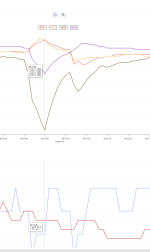
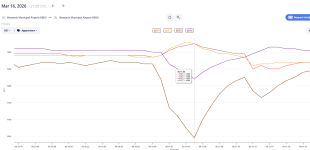
Others will chime in but look at 11:05. With power remining fairly consistent cylinders 3 and 4 seem erratic. 3 loses over 200 F while 1 and 2 tick up. EGT sudden drop occurs several times during the flight. I am not a user of your fuel or ignition system, so others need to review. Savoy is a nice tool to analyze flight data; I typically review every flight. Wobble test might be in order. Not the first time a IO390 has succumb to a valve issue with low hours. (Not saying this is the issue)

Screenshot 2026-03-19 044333.png
 
Last edited:
I changed the oil at 112TT and sent in my first oil sample to black-stone labs before I left for the long cross country. The only thing they commented on was chrome levels being a touch higher than normal. The random thud was happening before the oil change, but less frequent. At that point, I thought it was just the way the airframe was reacting to certain cross wind conditions in flight. When this first started presenting itself, the only time myself or my passenger noticed any thud was in a strong quartering headwind (over 40kts).
 

Attachments

I had somewhat similar thing happen to my Carbon Cub but completely different engine. Several have suggested this may be the start of stuck valve or it's fully present. In my case it got worse the longer I flew and the hotter it got. In my case, I hardly ever fly the Cub in "cruise" since its a lot of low and slow flying, landing, taking off, etc. Most of the time the engine gets hotter the longer I fly/play and it doesn't have time to get cooled off in cruise, so it got worse the more I flew. Then finally #4 got stuck after a shut down and next time I started I knew immediately. This was over 2 days so I didn't do a ton of troubleshooting but similar to your situation, the plane felt like it would randomly lose power for a split second and a small thud. checking the valves should not be that big of a deal and is mainly labor cost. If it turns out to be fine, at least you know your valve guides are within spec.
 
I had somewhat similar thing happen to my Carbon Cub but completely different engine. Several have suggested this may be the start of stuck valve or it's fully present. In my case it got worse the longer I flew and the hotter it got. In my case, I hardly ever fly the Cub in "cruise" since its a lot of low and slow flying, landing, taking off, etc. Most of the time the engine gets hotter the longer I fly/play and it doesn't have time to get cooled off in cruise, so it got worse the more I flew. Then finally #4 got stuck after a shut down and next time I started I knew immediately. This was over 2 days so I didn't do a ton of troubleshooting but similar to your situation, the plane felt like it would randomly lose power for a split second and a small thud. checking the valves should not be that big of a deal and is mainly labor cost. If it turns out to be fine, at least you know your valve guides are within spec.
I never would have expected this synptom from stuck valves. Good data point here. If the guides are tight enough to be causing this, you can get away without the test tool. You will be able to tell if they are tight enough to cause this problem just by manipulating them with your fingers. Will need some type of tool to remove the springs though. 130 SNew is a suspicious though, especially considering this started at 90 hours. Pretty uncommon for them to load up that fast, though possible the guides weren't done correctly at mfr and started out too tight.

You or someone should really go through the data from that grd run where you replicated the problem. Understanding exactly what was happening to engine parameters and how it presents can really help narrow this down. That would be my first step.
 
Last edited:
My $.02. Reviewing the data, there is an "event" at at 11:00; it's more than a sound, as there is a divergence in Lateral Acceleration as well as the EGT's.

As Dwight pointed out EGT 3&4 fall off while 1&2 increase slightly. Immediately prior to the event, there is an increase in AMPS (7 to 20), and again during the event (7 to 20) -- suggestive of the boost pump being cycled -- the fuel pressure is varying wildly before, during and after this event. The decline in MAP is matched by the steadily increasing ALTGPS, indicating that the aircraft was configured for climb at WOT during the event.

At approximately 13:11, the OP/PIC pulls the aircraft into a ~2G, 5000FPM climb, followed by a ~.5G push over into a 3000FPM descent. At approximately 13:13 there is another asymmetric divergence of the EGT's coincident with a rapid reduction in MAP, RPM, Fuel Flow, Altitude, and an increase in Fuel Pressure w/out a change in Amps, at least initially -- OP/PIC chopped the throttle and headed downhill.

Ok - what causes EGT's to rise?
1. Delayed combustion - due to leaning mixture (fuel delivery, air delivery)
2. Delayed combustion - mis-/not-firing spark plugs

..and to fall?
1. No combustion - Stuck/Open exhaust valve
2. Mixture enrichment (too much fuel, not enough air)

Soooooooo...what to do. Since we now understand (thanks @rvbuilder2002 - Scott) that the servo used (FM-200) can be sensitive to flow field disturbances which will affect fuel delivery, I would try two things and see if the reproduction of the event changes -- take a couple of flights with the cowl door left open, then similarly, remove the air filter for a couple of flights (with the cowl door closed) -- change one thing at a time.

As an aside - It would be helpful to understand the Amp excursions - is the OP/PIC manipulating the fuel boost pump or other high draw appliance (pitot heat, flaps, ldg/taxi lights); just looking for correlation here.

 
Definitely more data needed
My $.02. Reviewing the data, there is an "event" at at 11:00; it's more than a sound, as there is a divergence in Lateral Acceleration as well as the EGT's.

As Dwight pointed out EGT 3&4 fall off while 1&2 increase slightly. Immediately prior to the event, there is an increase in AMPS (7 to 20), and again during the event (7 to 20) -- suggestive of the boost pump being cycled -- the fuel pressure is varying wildly before, during and after this event. The decline in MAP is matched by the steadily increasing ALTGPS, indicating that the aircraft was configured for climb at WOT during the event.

At approximately 13:11, the OP/PIC pulls the aircraft into a ~2G, 5000FPM climb, followed by a ~.5G push over into a 3000FPM descent. At approximately 13:13 there is another asymmetric divergence of the EGT's coincident with a rapid reduction in MAP, RPM, Fuel Flow, Altitude, and an increase in Fuel Pressure w/out a change in Amps, at least initially -- OP/PIC chopped the throttle and headed downhill.

Ok - what causes EGT's to rise?
1. Delayed combustion - due to leaning mixture (fuel delivery, air delivery)
2. Delayed combustion - mis-/not-firing spark plugs

..and to fall?
1. No combustion - Stuck/Open exhaust valve
2. Mixture enrichment (too much fuel, not enough air)

Soooooooo...what to do. Since we now understand (thanks @rvbuilder2002 - Scott) that the servo used (FM-200) can be sensitive to flow field disturbances which will affect fuel delivery, I would try two things and see if the reproduction of the event changes -- take a couple of flights with the cowl door left open, then similarly, remove the air filter for a couple of flights (with the cowl door closed) -- change one thing at a time.

As an aside - It would be helpful to understand the Amp excursions - is the OP/PIC manipulating the fuel boost pump or other high draw appliance (pitot heat, flaps, ldg/taxi lights); just looking for correlation here.

i didn’t think to ask this before…but did the mechanic at the fbo pull the spark plugs and find them all lead spalled? Attempt to clean them, re-install and test run? Or what type spark plugs?


Someone else mention After-firing, as in sounds like a back fire, but un-burnt fuel in the exhaust tubes…igniting

Definitely worth checking and to the point that it’s also worth considering ignition sources.

Definitely a guessing game at this point, but the hint from Scott may also be right on track.
 
take a couple of flights with the cowl door left open, then similarly, remove the air filter for a couple of flights (with the cowl door closed) -- change one thing at a time
Flying it at this point would be waaaaay beyond my risk tolerance. I'd keep making it thump on the ground until I knew what was causing it.
 
I am having these same anomalies with my IO-375-M1S on my -7. The plane has only flown for about 13 hours and the symptoms have gotten worse quite quickly. I have not noticed any issues while on ground/run up. I will say, it is very unnerving while in flight.
 
The FBO replaced the spark plugs, cleaned the injectors, then flow tested each injector. They also spaced out the ignition wires better (some were closer than 1/4"). After a run up on the ground, they gave me the all clear for a test flight. Picked up the airplane today and circled the field up to 12,000' under a full power climb. Engine ran great, so I took it home. Cross country cruise was normal. Once I got over my home field, I did another full power climb and everything sounded good, no more thud or power loss. Here is the log from the trip back. I will also send to Savvy to make sure they are good with it.

Thanks to all of the pilots/builders on here for the great advice! It takes time to help someone out of a jam and I appreciate it.
 

Attachments

As an aside - It would be helpful to understand the Amp excursions - is the OP/PIC manipulating the fuel boost pump or other high draw appliance (pitot heat, flaps, ldg/taxi lights); just looking for correlation here.

The amp draw confuses me as well. I do not cycle the boost pump, pitot heat, or flaps, during cruise or climb. The only switches that I have on are Master, Avionics, Strobes, and Autopilot for any of these flights.
 
The FBO replaced the spark plugs, cleaned the injectors, then flow tested each injector. They also spaced out the ignition wires better (some were closer than 1/4"). After a run up on the ground, they gave me the all clear for a test flight. Picked up the airplane today and circled the field up to 12,000' under a full power climb. Engine ran great, so I took it home. Cross country cruise was normal. Once I got over my home field, I did another full power climb and everything sounded good, no more thud or power loss. Here is the log from the trip back. I will also send to Savvy to make sure they are good with it.

Thanks to all of the pilots/builders on here for the great advice! It takes time to help someone out of a jam and I appreciate it.
I see two issues still-

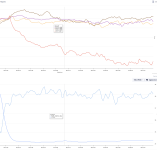
@00:19:12 another asymmetric divergence in EGTs, this time it's #3 that decides to go cold.
-and-
slide out to 00:50:19, and again at 00:53:24; EGT #1 falls off - bad EGT probe/wire connection, or clogged injector, stuck exh. valve, both plugs going bad.

The Amps display is non-sensical -- do you know where the shunt or Hall effect sensor is located ("B" wire from alternator, Battery + lead to master relay, elsewhere)?
 
The amp draw confuses me as well. I do not cycle the boost pump, pitot heat, or flaps, during cruise or climb. The only switches that I have on are Master, Avionics, Strobes, and Autopilot for any of these flights.
Appears there is still a significant drop-off in number 1 when power is pulled. I know before we had engine monitors this never would have been seen.

Screenshot 2026-03-23 160357.png
 
Agree with others. Changing plugs and separating wires doesn’t fix much of anything. Cleaning injectors was a good step, but seems that was not the issue. Data shows problems still exist, just haven’t yet shown their ugly side. Once one cylinder gets lean enough, it will start misfiring, then you can get afterfires, that are explosions in the exhaust that could be perceived as thuds. Ignition misfiring can do the same, but data above seems to point to fuel.
 
Agree with others. Changing plugs and separating wires doesn’t fix much of anything. Cleaning injectors was a good step, but seems that was not the issue. Data shows problems still exist, just haven’t yet shown their ugly side. Once one cylinder gets lean enough, it will start misfiring, then you can get afterfires, that are explosions in the exhaust that could be perceived as thuds. Ignition misfiring can do the same, but data above seems to point to fuel.
Do you think I should run lean of peak or rich of peak? If I am on a short hop, with plenty of fuel, I run about 40 degrees rich of peak. If I am on a long cross country, like a 4 hour trip, I will run 40 degrees lean of peak. My FBO prefers me to run rich of peak. Lots of pilots say lean of peak is better for the engine. Who is right? Especially with the issues I have been having, fuel is cheap.
 
Looking through all the posts on here, I don't see where you say why kind of magnetos you have, but the fact that the FBO had to special order spark plus instead of just having them on hand, plus one their troubleshooting steps was to separate the plug wires makes me think that they might be Pmags?

It's buried in one of the appendixes in the Pmag manual that because their plug wires aren't shielded, you can get interference between them if they're run too close together. The recommend a minimum separation is 1/4". Also, Pmags fire the plugs as a set. 1&2 fire together and 3&4 fire together.

Up in post #53, it looks like 3&4 are dropping out at the same time, which would make me think that an inductive coupling of the plug wires or intermittent misfire on the Pmag coil that drives those plugs is at least something to consider. I'm not smart enough to know if that could cause your random simultaneous amperage excursions, but it at least seems possible.

Again, this is assuming that you have Pmags
 
Do you think I should run lean of peak or rich of peak? If I am on a short hop, with plenty of fuel, I run about 40 degrees rich of peak. If I am on a long cross country, like a 4 hour trip, I will run 40 degrees lean of peak. My FBO prefers me to run rich of peak. Lots of pilots say lean of peak is better for the engine. Who is right? Especially with the issues I have been having, fuel is cheap.
You have to do the research and decide. I run LOP at all times, excluding TO and climb and ocassionally in climb when trying to stretch range. Most who say LOP is badhave no idea what they are talking about. Not a car on the road today that is not running LOP, or at least peak, in appropriate modes. That said, you can get in trouble doing it in the wrong situations, so LOP=safe is absolutely not universal.

As to your current problem, it appears there is a decent chance that cylinders are leaning out uncommanded. Therefore running ROP will reduce the incidence of having issues from it. On the other hand, running LOP will likely force the problem into noticeable symptoms, which may help in diagnosis.

Best thing you can do is begin studying those charts after every flight and look for when things are doing what they are not supposed to.
 
Last edited:
Do you think I should run lean of peak or rich of peak? If I am on a short hop, with plenty of fuel, I run about 40 degrees rich of peak. If I am on a long cross country, like a 4 hour trip, I will run 40 degrees lean of peak. My FBO prefers me to run rich of peak. Lots of pilots say lean of peak is better for the engine. Who is right? Especially with the issues I have been having, fuel is cheap.
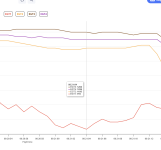
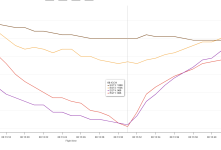
Mike, not sure it makes a difference but/if when a EGT drops (LOP or ROP) occurs might give you a clue. Normally if it was the same EGT or same 2 one might think it's electronic related (bad EGT or wire) but this does not seem to be the case. On the same flight one or two dropped out but different EGT's? Again, my experience is with EFI systems so not much help, but it seems your engine monitor is talking to you.

Screenshot 2026-03-24 090022.pngScreenshot 2026-03-24 085954.pngScreenshot 2026-03-24 085931.png
 
Do you think I should run lean of peak or rich of peak? If I am on a short hop, with plenty of fuel, I run about 40 degrees rich of peak. If I am on a long cross country, like a 4 hour trip, I will run 40 degrees lean of peak. My FBO prefers me to run rich of peak. Lots of pilots say lean of peak is better for the engine. Who is right? Especially with the issues I have been having, fuel is cheap.
Your FBO says rich of peak because Lycoming says rich of peak. Lots of guys run lean of peak with no problems, but you're going against the manufacturer's guidance and if you're at a high power setting with timing too far advanced you can run into detonation issues
 
Looking through all the posts on here, I don't see where you say why kind of magnetos you have, but the fact that the FBO had to special order spark plus instead of just having them on hand, plus one their troubleshooting steps was to separate the plug wires makes me think that they might be Pmags?

It's buried in one of the appendixes in the Pmag manual that because their plug wires aren't shielded, you can get interference between them if they're run too close together. The recommend a minimum separation is 1/4". Also, Pmags fire the plugs as a set. 1&2 fire together and 3&4 fire together.

Up in post #53, it looks like 3&4 are dropping out at the same time, which would make me think that an inductive coupling of the plug wires or intermittent misfire on the Pmag coil that drives those plugs is at least something to consider. I'm not smart enough to know if that could cause your random simultaneous amperage excursions, but it at least seems possible.

Again, this is assuming that you have Pmags
I have two EI systems in my planes and the wires are tightly bundled together and my coils are definately stronger (more sparg energy) than the EDIS coils that I believe pmag uses. Have never had a misfire in almost 2000 hours across the planes. Not saying this can't be it, but cross coupling typically does not cause a plug to not fire; It causes the wrong plug to fire, which often creates very odd symptoms. Also, the data highlighted by matt and brian would seem to indicate a fuel flow issue vs ignition. The falling EGTs look like a cylinder is progressively leaning out; though still unclear as to why.
 
This may be a bit of a stretch, but I'm wondering if there isn't a "G" sensitivity in the fuel delivery system - servo & distribution. Going back to the older data, I see the "burp" - EGT fall off coincident with a ~2G excursion. Similarly, with the most recent logs at the 19:14 mark.
 
Back
Top