Van's Air Force

The definitive Van's Aircraft support community! Buying, building or flying an RV? Join our exclusive family of mentors and enthusiasts!

Random thud, getting worse

RV-14A, 130 hoursTT. About thirty hours ago (two months) I noticed a random infrequent thud at cruise speed. I only noticed it crabbing into a 40 knot quartering headwind. Passenger feels the thud in their feet, I feel it with my left knee on the fuselage. Sometimes it happens once every few minutes, sometimes it happens multiple times every minute. If I slow down, it goes away.

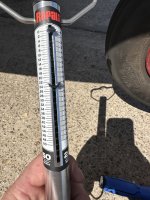
I’ve been on a long cross country this week across the US and it is getting worse. Headwind, tailwind doesn’t matter. I lifted the nose, checked the breakout force of the caster, 24lbs. Motor mounts good, no side slop in the leg. I can lift the leg up and down 1/2 an inch with force. The four elastomer pads look tight. When I have a guy pull up and down on the leg, the center rod does not move up through the pads. I checked the lock nut and tightened it up one flat, and that took considerable force to tighten that little bit. The vans plans say torque the nut, but no torque specs.

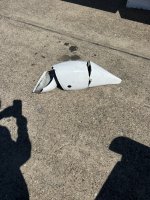
I lost my nose wheel pant in Corpus Christi yesterday. Flew NE up the coast for a two hours at cruise and no more thud. Then I turned North and the thud came back more frequent, but still random. Thud is about 50% as hard without the wheel pant. Spent the rest of the day in Shreveport trying to figure this out, talked to A&P’s and RV builders, but we are all stumped.

Put everything back together, took it for a test flight with speed dives, turns, anything else that I could do to generate that thud to no avail. I’m going to continue on home to ND and slow down if the thud comes back. I’ll send videos to Vans on Monday.
 

Attachments

  • IMG_7179.jpeg
    IMG_7179.jpeg
    3.7 MB · Views: 340
  • IMG_7173.jpeg
    IMG_7173.jpeg
    1.6 MB · Views: 346
  • IMG_7177.jpeg
    IMG_7177.jpeg
    3.8 MB · Views: 310
  • IMG_7171.jpeg
    IMG_7171.jpeg
    1.6 MB · Views: 385
Last edited:
Hi Mike, I entered exactly what you wrote into Grok AI and it seems to be a well-known problem due to in-flight aero/rotating imbalance and suggests you rebalance or replace your tires before you next flight. Here's the output:

This sounds like a classic nose gear resonance issue triggered by the nose wheel spinning in the slipstream at cruise, combined with a slight (or developing) tire/wheel imbalance or out-of-round condition. The random, infrequent "thud" (felt through the floor and fuselage) matches the structural transmission of fore-aft oscillation in the nose gear leg when the imbalance excites the leg's natural frequency at specific airspeeds and relative airflow angles. It disappears when you slow down because the resonance RPM match no longer occurs. The crab/quartering headwind condition changes the effective slipstream angle and airflow over the exposed gear, making it trigger more readily—that's why it was first noticeable then and varies with heading/wind now. Your nose wheel pant loss fits perfectly as a consequence of the same vibration (it's loosened hardware on multiple RVs before). Flying without the pant temporarily altered the airflow (the pant normally shields most of the wheel and changes vortex shedding/spin rate), so the thud vanished for that hour on the coast heading. Turning north changed the relative wind or exact TAS/RPM match, bringing it back—now weaker (50% intensity) and still random because the excitation is marginal without the pant's damping effect. The ½" vertical play you feel with force (and no side slop) is worth double-checking against the top gear leg attachment bolt in the engine mount socket—Van's specifically flags loose play there as a contributor on higher-time airframes (you're at 130 TT, still early but worth it). Your 24 lb breakout force is right in the normal 22–25 lb range, so that's fine. This is not standard ground shimmy (which Van's FAQ addresses with tire pressure 25–35 psi, balancing, etc.). It's an in-flight aero/rotating imbalance resonance that's well-documented on RVs (including RV-14/10-style gear and similar older models). It often feels like a thud or strong intermittent thump in the floor/firewall area exactly as you and your passenger describe, and it can start subtly then worsen over hours as the tire wears or imbalance shifts. Ground the airplane immediately—don't continue the cross-country. Vibration like this can fatigue the gear leg, engine mount, or cowl attachments and risks more parts departing. You're already stumped local A&Ps and builders, so here's the targeted next steps (all standard RV community fixes that have resolved identical cases):
  1. Rebalance the nose wheel + tire assembly (static or dynamic). Multiple identical reports resolved completely after a tire change without rebalancing or when a flat spot/out-of-round developed. Do this first—it's quick and cheap at any shop with a balancer.
  2. Inspect/tighten the nose gear leg attachment bolt at the top (engine mount/firewall socket). Check for any fore-aft or vertical play in the mount. Van's recommends this on annuals; a loose bolt allows exactly the movement you're feeling and amplifies resonance.
  3. Check nose wheel axle nut/bearing preload per the RV-14 manual (typically 7–10 in-lbs torque on the axle). Too loose = free spinning in flight (confirmed on RV-14s). Don't overdo it or you'll feel it on rollout.
  4. When you replace the nose pant, inspect the bracket, screws, and nutplates for cracks/looseness (the vibration almost certainly loosened them). Consider adding a simple drag device inside the pant opening (small felt strip, brush, or baffle that lightly rubs the tire—allows 2–3 hand spins on ground but stops freewheeling in flight). This is a common fix that eliminates the spin-induced resonance without affecting ground handling.
  5. Extra checks while the cowl is off:
    • Engine/motor mounts (you already did—good).
    • Gear leg for cracks.
    • Any cowl baffles, intersection fairings, or hoses that could transmit or contribute to the thud.
    • Prop/engine balance if it hasn't been done recently (less likely but can excite the leg).
  6. Diagnostic flight test option (after the above, with A&P sign-off): Have a chase plane fly formation and video the nose gear at cruise in the same crab/wind conditions. You'll see the fore-aft wiggle if it's still there. Or temporarily fly without the pant bracket entirely (if structurally safe) to confirm the airflow change eliminates it.
This matches reported RV-14/RV-10/RV-7A cases exactly—including pant departure from the vibe, speed-specific onset, heading/wind sensitivity, and the exact feel/location. Fix the balance + attachment play and it should disappear permanently. Contact Van's support or an Anti-Splat Aero rep (they specialize in RV nose gear) if you want parts or further mods—they see this often.Get it sorted before flying more—better safe than chasing a worsening resonance across the US. If you share what the A&P finds after balancing and the bolt check (or any new symptoms), I can refine this further. Fly safe!
 
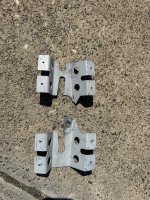
Looks like a bunch of fretting where the 3/8 bolt holds the braket on, implying rotation or movement. Also see wallowing where the slot rides on the axle bolt. First guess is that there was too much movement there and some unique aerodynamic thing is causing excessive movement. Several folks have had issues with this bracket due to this play. Do you remember how loose that was? How much movement if you pulled up and down on the tail of the fairing? Was the washer stack on the axle bolt correct, so that there was little to no side to side play of the bracket?

Why does one bracket have an extra slot in it? Can't tell if thjat is wear or poor grinding. Is one braket mounted differently than the other?

Did the problem start after a removal and reinstallation of the pant? Possible it got installed with the slot outside if its place between the washers. Seems clear there was stress on the brackets forward attach point.
 
Thanks!
I will have to try Grok AI for future problems, that was an incredible response.
I will start with that top linkage bolt and move on to tire balancing. I like the idea of a felt friction devise in the next wheel pant.
 
Several folks have had issues with this bracket due to this play. Do you remember how loose that was? How much movement if you pulled up and down on the tail of the fairing?
I was able to remove the bracket bolt with a plyers. Which surprised me. Maybe this is torqued light because it’s threaded into the aluminum fork.
I’d say the rear of pant had two inches of vertical movement. I just had it off the plane two weeks ago to enlarge the tow bar holes for various FBO equipment on this trip.


Was the washer stack on the axle bolt correct, so that there was little to no side to side play of the bracket?

Why does one bracket have an extra slot in it? Can't tell if thjat is wear or poor grinding. Is one braket mounted differently than the other?
Washer stack is correct to the plan set. I was not the builder, so I am not sure why the extra slot. Both brackets looked to be mounted identical when I had the pant off two weeks ago.


Did the problem start after a removal and reinstallation of the pant? Possible it got installed with the slot outside if its place between the washers. Seems clear there was stress on the brackets forward attach point.
No, the problem started two months ago on a separate cross country. There were a couple of FBO’s that could not get their forks into my wheel pant on that trip so I took the pant off and enlarged the access holes before this trip. I was also trying to see if there was anything about the pant that could be causing that random thud. I worked the pant every direction and couldn’t make it hit anything.

I am leaning toward that top linkage bolt being loose/worn or wheel imbalance, or even not enough preload on the wheel bearings.
 
I was able to remove the bracket bolt with a plyers. Which surprised me. Maybe this is torqued light because it’s threaded into the aluminum fork.
I’d say the rear of pant had two inches of vertical movement. I just had it off the plane two weeks ago to enlarge the tow bar holes for various FBO equipment on this trip.
2" is WAY more than mine or any that I have ever seen. No real surprise the fairing bracket failed when exposed to flutter like resonance. Something was likely done incorrectly when it was initially set up at build time. They should have very limited movement when done correctly. All that movement would loosen the bolt you found loose.
 
I am leaning toward that top linkage bolt being loose/worn or wheel imbalance, or even not enough preload on the wheel bearings.
I don't think taht is the problem. The fairing cannot be allowed to move. If it does, it will fail eventually. That fact that it broke off / failed, pretty much confirms that.
 
Good luck with your troubleshooting. You may want to start the Grok AI query yourself and then continue to refine it as you learn more during your inspection or with great suggestions from folks like Larry. You can even take photos of your tires and input that into Grok for analysis. It's a wonderful tool that I have used frequently for assisting in diagnosis. The more info you feed it the better the results.
 
I don't think taht is the problem. The fairing cannot be allowed to move. If it does, it will fail eventually. That fact that it broke off / failed, pretty much confirms that.
I’m glad the pant failed. Now that the thud hits 50% as hard, it finally confirms that the problem is in the nose gear. A lot of different people had wild and expensive theories other than nose gear.
 
I’m glad the pant failed. Now that the thud hits 50% as hard, it finally confirms that the problem is in the nose gear. A lot of different people had wild and expensive theories other than nose gear.
Definately interesting that it still does it without the pant. must be either 2 things going on or the pant just agravated the problem..
 
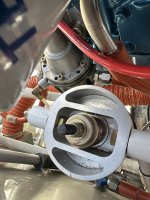
I'd be interested in seeing all sides of how the lower nose wheel yoke assembly is connected to the arm to compare that to plans. A thud implies something hitting a stop. What is hitting what? If it happens with the pant and its hardware off the wheel then the pant may have just been the victim of the real problem.
 
Don't rule out "oil canning" of an airframe panel -- not uncommon, especially when they're newer. My rudder skin did that for the first 200 hours just after landings. That nose gear might just be a "red herring". Exhaust pipes can also hit the bottom of the firewall flange, causing "thumps in the night".
 
I checked the lock nut and tightened it up one flat, and that took considerable force to tighten that little bit. The vans plans say torque the nut, but no torque specs.
Please carefully examine your mechanical abilities. The FAA says anyone can work on an EAB, but that doesn’t mean it’s a great idea. Every bolt should be tightened with a torque wrench. If the plans don’t specify a torque Vans expects you to use the standard published torques. Over torquing may be just as bad as under. Get the proper tools. I cringed when I read ‘bolt removed with pliers’.
 
The nut holding the nose gear elastomer stack is supposed to be bottomed out on the threads to hold adequate compression on the spring.
Where did you get this information?

That’s not what my 14 plans have, “fully torque” means it’s torqued to a standard airframe value, mine is to 14ft/lbs., not bottomed out.
 
Important to note. Should the nut bottom on the threads before compressing the spring, an additional Elastomeric Spacer needs to be installed, up to a maximum of three (?). The idea is for the spring to be in compression so the gear doesn't flop around.
Please review the plans to be certain.
 
Don't rule out "oil canning" of an airframe panel -- not uncommon, especially when they're newer. My rudder skin did that for the first 200 hours just after landings. That nose gear might just be a "red herring". Exhaust pipes can also hit the bottom of the firewall flange, causing "thumps in the night".
I agree with the exhaust pipes hitting. If I pull out the throttle faster than normal, I can hear and feel the pipes hitting the cowling. This is separate from the random thud that I am currently chasing down.

I considered oil canning, but after losing the wheel pant, I am more confident in the nose being the cause. Especially now that the pant is gone the thud hits 50% as hard.

I’m heading north tomorrow morning. 1,000 miles should tell me if the adjustments made had any affect.
 
Please carefully examine your mechanical abilities. The FAA says anyone can work on an EAB, but that doesn’t mean it’s a great idea. Every bolt should be tightened with a torque wrench. If the plans don’t specify a torque Vans expects you to use the standard published torques. Over torquing may be just as bad as under. Get the proper tools. I cringed when I read ‘bolt removed with pliers’.
I think the Allen head bolts may have loosened themselves with the excessive travel of the pant vertically. (Around 2” at the trailing tip). These bolts only serve as the towbar mounts/wheel pant fastener. It just surprised me during disassembly on an airport ramp with my handful of tools that a small pair of plyers was all that I needed to unthread them from the aluminum casting of the fork.
 
Those are large screws/bolts with a hex head, and it can happen that the aluminum yoke can get cross threaded so be very aware of that when you reinstall them. But if the pant is off, and the yoke exposed, you could fly with them out and see how that goes.

The way the pant bracket fits over those screws is very finicky and it is easy to get it looking right when in reality the bracket is not under the screw. No idea if that happened to you, but the way the picture of failure looks it could be the case that one side was not properly retained before it failed, and the side that failed was the retained side getting flexed.

If you still have a thud with the pant and the brackets off, then I'd compare the yoke assembly and stop to the plans very very carefully.
 
RV-14A, 130 hoursTT. About thirty hours ago (two months) I noticed a random infrequent thud at cruise speed. I only noticed it crabbing into a 40 knot quartering headwind. Passenger feels the thud in their feet, I feel it with my left knee on the fuselage. Sometimes it happens once every few minutes, sometimes it happens multiple times every minute. If I slow down, it goes away.

I’ve been on a long cross country this week across the US and it is getting worse. Headwind, tailwind doesn’t matter. I lifted the nose, checked the breakout force of the caster, 24lbs. Motor mounts good, no side slop in the leg. I can lift the leg up and down 1/2 an inch with force. The four elastomer pads look tight. When I have a guy pull up and down on the leg, the center rod does not move up through the pads. I checked the lock nut and tightened it up one flat, and that took considerable force to tighten that little bit. The vans plans say torque the nut, but no torque specs.

I lost my nose wheel pant in Corpus Christi yesterday. Flew NE up the coast for a two hours at cruise and no more thud. Then I turned North and the thud came back more frequent, but still random. Thud is about 50% as hard without the wheel pant. Spent the rest of the day in Shreveport trying to figure this out, talked to A&P’s and RV builders, but we are all stumped.

Put everything back together, took it for a test flight with speed dives, turns, anything else that I could do to generate that thud to no avail. I’m going to continue on home to ND and slow down if the thud comes back. I’ll send videos to Vans on Monday.
Last year you reported an emergency landing at 45 hours TT due to an exhaust weld failure. Now this issue and getting ready to continue a long cross country after losing your front wheel pant. Hopefully you had a comprehensive inspection when you purchased the airframe at 45 hours. (Was it a true Phase 1 fly-off?) Early on an older much wiser builder told me you "might" know your new airframe at 100 hours, after 4 experimental he was correct. Be safe !

 
Last edited:
Last year at 45 hours you reported an emergency landing at 45 hours TT due to an exhaust weld failure. Now this issue and getting ready to continue a long cross country after losing your front wheel pant. Hopefully you had a comprehensive inspection when you purchased the airframe at 45 hours. (Was it a true Phase 1 fly-off?) Early on an older much wiser builder told me you "might" know your new airframe at 100 hours, after 4 experimental he was correct. Be safe !

Yes, my transition trainer and I did a full prebuy/condition inspection last year at purchase. I had my FBO perform an annual inspection in October with 112TT. The exhaust was sent to Vetterman after the emergency landing due to the flange failure at 45 hours. Vetterman strengthened the exhaust manifolds with better welds and added steel at the flanges. 90 hours on the reinforced manifolds and no more issues.

Coincidentally, I toured the Velocity plant at Sebastian FL six weeks ago and their exhaust manifolds are beefed up just like Vetterman did for me.
 
Don't rule out "oil canning" of an airframe panel -- not uncommon, especially when they're newer. My rudder skin did that for the first 200 hours just after landings. That nose gear might just be a "red herring". Exhaust pipes can also hit the bottom of the firewall flange, causing "thumps in the night".
That's what we've got on our 14A with about 250hrs TT. It's happening just aft of the luggage area bulkhead sometimes happens after takeoff in the climb and sometimes on descent. I purchased some noise insulation that has an adhesive on one side like what you'd use in restoring a car and plan to install it before SNF this year. It definitely gets your attention when it happens.
 
Don't rule out "oil canning" of an airframe panel -- not uncommon, especially when they're newer. My rudder skin did that for the first 200 hours just after landings. That nose gear might just be a "red herring". Exhaust pipes can also hit the bottom of the firewall flange, causing "thumps in the night".
The thuds may indeed be gear-related but I still wonder if oil canning is involved. The removal of the gear fairing may have modified airflow across the belly of the airframe and changed the occurrence of the noise you are hearing. Keep an open mind, I can't tell you the number of times I've chased problems in the wrong direction due to tunnel vision. :)
 
Keep an open mind, I can't tell you the number of times I've chased problems in the wrong direction due to tunnel vision. :)
Yes. Tunnel vision. I flew for 8 hours today. The first four I probably felt the thump twice. Stopped for fuel and the thump came back. Got more frequent as I went along. Circled over a quiet airfield to test different scenarios. Climbed high under full power and the thump got worse. Dived down under idle and 160kts to simulate cruise speed. No thump. Power at 50%. 130kts, 2400 rpm and I could still feel it very slightly. Still random.

Continued on at 50% power and landed at my FBO. Took my mechanic up for full power climbs at 90kts. We can both feel it. Parked on the ramp, full power. Thump is loud and proud. Both mags or either mag. Worse running one mag and not both. In flight or on the ground, none of the engine instruments have ever shown a sign of the engine stumbling.

The thump has always felt as if there was added drag for a moment. Barely perceivable until today. Kind of like I imagined a nose wheel caster flopping randomly would feel like. It was never the nose wheel. Losing the pant was a separate issue. Tunnel vision. I will know more in a couple of days.
 
Last edited:
Yes. Tunnel vision. I flew for 8 hours today. The first four I probably felt the thump twice. Stopped for fuel and the thump came back. Got more frequent as I went along. Circled over a quiet airfield to test different scenarios. Climbed high under full power and the thump got worse. Dived down under idle and 160kts to simulate cruise speed. No thump. Power at 50%. 130kts, 2400 rpm and I could still feel it very slightly. Still random.

Continued on at 50% power and landed at my FBO. Took my mechanic up for full power climbs at 90kts. We can both feel it. Parked on the ramp, full power. Thump is loud and proud. Both mags or either mag. Worse running one mag and not both. In flight or on the ground, none of the engine instruments have ever shown a sign of the engine stumbling.

The thump has always felt as if there was added drag for a moment. Barely perceivable until today. Kind of like I imagined a nose wheel caster flopping randomly would feel like. It was never the nose wheel. Losing the pant was a separate issue. Tunnel vision. I will know more in a couple of days.
"Thump on the ground"? Rules out a wheel imbalance. Sticking valve maybe?
 
Parked on the ramp, full power. Thump is loud and proud. Both mags or either mag. Worse running one mag and not both.
so, if it also happens on the ground, it can’t really be the nose gear. My mind has been going to something engine related. Not necessarily the engine running, but something hitting something else, from a sharp vibration. Running on one mag will make more vibrations and this could explain what you experienced. Just an idea. The mag thing could take you to something going on inside the engine, but there is not really much that can make a loud thud every once in awhile. Things like that are typically followed by a major component failure. Hard to diagnose without hearing the noise first hand.
 
In the full power climbs at 90kts, we could feel the airplane lurch back with every thud. Pretty sure it’s intermittent power loss now. We can’t localize it to either mag. We can duplicate it on the ramp with full power, full prop. Way worse when running only one mag. FBO will start on it today.
 
In the full power climbs at 90kts, we could feel the airplane lurch back with every thud. Pretty sure it’s intermittent power loss now. We can’t localize it to either mag. We can duplicate it on the ramp with full power, full prop. Way worse when running only one mag. FBO will start on it today.

Got data?
 
In the full power climbs at 90kts, we could feel the airplane lurch back with every thud. Pretty sure it’s intermittent power loss now. We can’t localize it to either mag. We can duplicate it on the ramp with full power, full prop. Way worse when running only one mag. FBO will start on it today.
To my mind this just became a much more serious, safety-of-flight issue. Would encourage you to resolve before further flight if at all possible. Sounds like you are thinking same. As Brian asked above, do you have an engine monitor? If so, download data—any anomalies should show up, probably pretty obviously.

Good luck.
 
Last edited:
Do you see any after-fire out of the exhaust when it happens on the ground? The power loss/lurch and thud sounds engine related. (those exhust pipes are right under your feet)
Spark/air/fuel. Ignition/valves. (probably not fuel as that would not be so abrupt)
Could even be as simple as the ignition switch. Easy enough to check that, just switch it off momentarily (on the ground!) and see if the result matches.

Good luck!
 
In the full power climbs at 90kts, we could feel the airplane lurch back with every thud. Pretty sure it’s intermittent power loss now. We can’t localize it to either mag. We can duplicate it on the ramp with full power, full prop. Way worse when running only one mag. FBO will start on it today.
If the plane lurchs, then yes definately an intermittent power interuption. Any chance the thud is an afterfire (explosion in exhaust pipe)?
 
In the full power climbs at 90kts, we could feel the airplane lurch back with every thud. Pretty sure it’s intermittent power loss now. We can’t localize it to either mag. We can duplicate it on the ramp with full power, full prop. Way worse when running only one mag. FBO will start on it today.
Post your CSV files. There are a lot of very smart builders who know what to look for in the file. If it's a combustion issue my guess, is you would be able to see something in the file.
 
Yes. Tunnel vision. I flew for 8 hours today. The first four I probably felt the thump twice. Stopped for fuel and the thump came back. Got more frequent as I went along. Circled over a quiet airfield to test different scenarios. Climbed high under full power and the thump got worse. Dived down under idle and 160kts to simulate cruise speed. No thump. Power at 50%. 130kts, 2400 rpm and I could still feel it very slightly. Still random.

Continued on at 50% power and landed at my FBO. Took my mechanic up for full power climbs at 90kts. We can both feel it. Parked on the ramp, full power. Thump is loud and proud. Both mags or either mag. Worse running one mag and not both. In flight or on the ground, none of the engine instruments have ever shown a sign of the engine stumbling.

The thump has always felt as if there was added drag for a moment. Barely perceivable until today. Kind of like I imagined a nose wheel caster flopping randomly would feel like. It was never the nose wheel. Losing the pant was a separate issue. Tunnel vision. I will know more in a couple of days.
Does your airplane have the EXP119 engine with the airflow performance fuel injection system, and the later style cowl with the cockpit controllable cowl flap?
 
Does your airplane have the EXP119 engine with the airflow performance fuel injection system, and the later style cowl with the cockpit controllable cowl flap?
Looks like the EXP119...note cowl exhaust "bumps"

Screenshot 2026-03-17 at 4.16.24 PM.png

Skybolts/Camlocs too.

Pitot is on the wrong side...
 
Looks like the EXP119...note cowl exhaust "bumps"

View attachment 112653
With that being the case, the described symptom sounds suspiciously similar to something that we experienced on the prototype while developing the EXP119 engine installation.

We were never able to reproduce the problem just running on the ground, but it sounds like the identical symptom in flight.

What it turned out to be was an extremely short duration shut down of the engine.
In this particular case, it would only happen at normal cruise power settings, or higher. If the engine was throttle back to a very low throttle setting, it didn’t occur, and as mentioned already, we weren’t ever able to reproduce the problem during ground runs.

This may get a little long, but some people may find it interesting to look inside what is involved with prototyping sometimes, and when things happen that don’t make sense during that process.

Because the EXP engine has the Airflow Performance throttle body which dimensionally is a bit different than the traditional Bendix/Precision version, a new induction snorkel design was needed for the installation of that engine.
I made an initial prototype for flight testing by cutting the lower section off of the original version and re-molding it to fit onto the new style throttle body, which requires it to just slip over the inlet of the throttle body, unlike the Bendix/precision style, which has a flange that bolts up to a flange on the throttlebody.
All of the initial flight testing was done with this modified/prototype snorkel and data was showing performance was really good.
While doing final preparations of the airplane for its reveal at Oshkosh with the new firewall forward design and pending release of the new firewall forward kit, all of the kit version parts were installed on the airplane, including the production version of the induction snorkel, which had been made from the new production mold that was developed based on the shape of the hand built production version.

We went back to flying the airplane and soon discovered that very occasionally there was a very disconcerting boom noise that initially none of us were able to zero in on a cause.
It didn’t take long though, for it to seem obvious that it was engine related, so we started trying a bunch of different things, including getting another throttle body from Don at airflow performance.
We made a lot of different changes and nothing we did made any difference, and the problem had seemed to be getting worse.
To the point that when doing flight tests, I was staying directly over the airport.

On one of those flight tests, I accidentally made an odd discovery….
I could make the problem stop anytime I wanted, by fully opening the cowl flap🤔

Strange, but at least we now had something that was relatable.
The only thing that made any sense for having an influence on engine operation would be that varying the volume of airflow through the cowl was somehow having an influence on the airflow into the engine induction system.

So the most logical thing at this point was to put the prototype induction snorkel back on the airplane and do a test flight.
We probably should have done that as one of the other remedies since it was a part that was changed, but to the best we knew it was identical to the prototype version other than it being a bit more cleaned up on the interior surface since it was produced on a production mold.

You can probably guess at this point that the engine ran fine with the prototype induction snorkel.

So we immediately sent the production version off to Don for him to run on his flow bench. He reported back that it was not very good.

After some very detailed comparing between the prototype and the production version, it was found that the bend radius of the turn in the snorkel to redirect the flow aft into the throttle-body, was just very slightly a smaller radius than the prototype one was. I mean, very slight, though I don’t remember specific numbers at this point.

So some rework was done on the production mold, and another part sent off to Don for testing, which he said was a huge improvement.

A bit of a sidenote… the bend radius on the EXP snorkel is actually bigger than what it was on the legacy snorkel that was used for the Bendix/Precision style throttle body.

We came to realize in this whole process that because of the different air metering designs that each throttle-body has, one of them may work fine with a specific inlet flow, when the other just plain won’t. The airflow performance has a single Venturi type port (for a lack of any better way I can think of describing it, though I don’t think it is actually Venturi) centered in the middle of the inlet of the throttle body. So it is doing all of the inlet flow measurement at that one single point, and if there is a flow disturbance at that single point of the inlet, it will have an influence on the metering performance of the throttle body.
The Bendix/Precision style has four metering tubes distributed around the perimeter of the inlet. So it seems that if there is a flow disturbance on a portion of the inlet, the remaining metering tubes are still getting valid flow info and the throttle body still performs normally.

Having said all that, I have not heard of any other instance of an RV having the type of issue that we experienced, but maybe there is something about this particular airplane that is making it experience the same problem.
Perhaps something that the builder did with the induction snorkel, such as modifying the shape to clear a different starter motor or something they did for clearing the oil drain back tube, etc., that is causing a downstream flow disturbance.🤷🏼

I hope you figure it out. Believe me, I know very well how unnerving it is.

 
Post your CSV files. There are a lot of very smart builders who know what to look for in the file. If it's a combustion issue my guess, is you would be able to see something in the file.
My FBO sent the log file from my SD card, but I cannot upload it to this forum. It appears to be an excel spreadsheet. I was able to watch the flight on fly.garmin.com by uploading the file. I've never done this before and AI is failing to explain this to me.

My FBO ordered new spark plugs and they get here tomorrow. Had to start somewhere I guess.
 
I’m not thinking spark plugs are going to make much sense here…what Scott is suggesting is a much more complex thing to diagnose…if you are going to trust your local FBO to work on your plane and work this out for you, just be prepared to write a blank check, if you’re going to begin by replacing things item by item…

So plugs probably aren’t a great investment.

If the problem is global…meaning all four cylinder and/or both mags…meaning things don’t present worse on one mag than the other….the most likely culprit is going to relate to a common direction. fuel injection is definitely high on the list of global problems to troubleshoot.

Checking injectors, checking the servo…checking your fuel pump…all for output per spec makes sense. Posting your log on here would really help to see what’s actually going on, EGT, fuel flow, timing…etc

For my two cents worth….I wouldn’t spend any more money replacing things till you can get logs posted whatever that takes….if you can’t…find a buddy nearby on here, who can help. Then we can look at what the engine is doing and go from there.

What Scott is outlining, could become catastrophic if not figured out and fixed,
 
Having said all that, I have not heard of any other instance of an RV having the type of issue that we experienced, but maybe there is something about this particular airplane that is making it experience the same problem.
Perhaps something that the builder did with the induction snorkel, such as modifying the shape to clear a different starter motor or something they did for clearing the oil drain back tube, etc., that is causing a downstream flow disturbance.🤷🏼

I hope you figure it out. Believe me, I know very well how unnerving it is.

I bought the airplane with 38 hours on it. Flew it with my transition trainer who has over 6,000 hours on RV's. We were flying the airplane together for at least twenty hours over the course of two months. Never noticed a thump or power loss. This problem started off slow and barely noticeable about 30 or 40 hours ago. If it was an air induction issue, or problems with the build, I would think we would have noticed it right away. I personally don't think plugs are going to fix it, but I don't know where else to go besides what my FBO suggests we do.
 
I bought the airplane with 38 hours on it. Flew it with my transition trainer who has over 6,000 hours on RV's. We were flying the airplane together for at least twenty hours over the course of two months. Never noticed a thump or power loss. This problem started off slow and barely noticeable about 30 or 40 hours ago. If it was an air induction issue, or problems with the build, I would think we would have noticed it right away. I personally don't think plugs are going to fix it, but I don't know where else to go besides what my FBO suggests we do.
Since you hadn’t shared any expanded details up to the point of my post, but it seemed like it was probably a relatively new airplane, I threw it out there in case it might point you towards a possible cause.
Particularly since it seemed you were tracking towards it being related to the landing gear or other things.
 
I’m not thinking spark plugs are going to make much sense here…what Scott is suggesting is a much more complex thing to diagnose…if you are going to trust your local FBO to work on your plane and work this out for you, just be prepared to write a blank check, if you’re going to begin by replacing things item by item…

So plugs probably aren’t a great investment.

If the problem is global…meaning all four cylinder and/or both mags…meaning things don’t present worse on one mag than the other….the most likely culprit is going to relate to a common direction. fuel injection is definitely high on the list of global problems to troubleshoot.

Checking injectors, checking the servo…checking your fuel pump…all for output per spec makes sense. Posting your log on here would really help to see what’s actually going on, EGT, fuel flow, timing…etc

For my two cents worth….I wouldn’t spend any more money replacing things till you can get logs posted whatever that takes….if you can’t…find a buddy nearby on here, who can help. Then we can look at what the engine is doing and go from there.

What Scott is outlining, could become catastrophic if not figured out and fixed,
Good advice here. Will add one point. If this is the whole engine stopping power production for less than a secobd with an immediate return to normal and assuming it is, based on you barely recognizing that it is happening, that usually points to ignition. Fuel problems rarely come and go in an instant and same with compression issues. Cannot explain how all ignition can fail at the same time and don’t have a lot of answers here. Airflow issues, like scott mentioned are certainly possible with thi type of symptom. Definitely a complex diagnostic situation. However, i agree that handing this over to your avg mechanic is going to be slow and costly. Also agree that plug swapping is a waste of time and indicates the mechanic is not the best diagnostician.

I would be considering bypassing the ignition switch for testing purposes. These are known to fail intermittently and it could be grounding both mags for a split second due to vibration. It would explain the symptoms, including the progressively worsening occurrence rate. Research folks bumping up on their rev limiter/spark cut. Very similar symptoms; engine cuts out for a split second and comes right back.
 
Last edited:
Pp
Maybe paying Savy Aviation and uploading the data file would be worth it. From there, both Savy and VAF engine gurus can analyze and possibly identify the issue. Beats throwing money at the FBO. If nothing else, you get a one year membership for the future.
I did not know this service existed. I signed up for the $189/year plan tonight, sent the data file, and started a ticket. Thank you for letting me know.
 
Back
Top