Van's Air Force

The definitive Van's Aircraft support community! Buying, building or flying an RV? Join our exclusive family of mentors and enthusiasts!

Open Source EI for Lycoming??

petehowell

Well Known Member
Patron
~$2600 for one PMag? I've got an old one and like it, but maybe it's time to discuss an open source DIY ignition project - Dan, Larry and others have provided all the info in the MegaJolt thread previously. We could have a very simple, variable timing(2 setting), user maintainable Electronic ignition for less than an AMU. This is not original thinking by me.

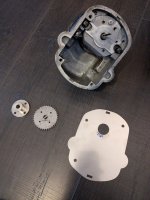
The only really hard part (IMO)is the trigger - and I'm betting that we could crowd source a good design for that with all the smarts we have here on VAF - for either a mag hole or crankshaft trigger. We need a solution for those that don't have access to a lathe and machine tools, or a vendor to make those parts. Services like Send Cut Send allow you to order parts to assemble - we just need a design. Maybe something could be done with an old magneto - it has a housing and a shaft. Would just need to mount a trigger wheel and the VR sensors inside the mag case (it would be tight)

As for functionality, you have 2 switches - one for power and one to switch the VR sensor(effectively switching timing) ROP takeoff timing at ~22deg btdc and LOP cruise timing at ~32deg btdc) - could change the values via a bit of clocking of the trigger at install. . That may be plenty for many people. The only electronic component is the EDIS module - it can, and should, be mounted on the cold side of the firewall. They seem pretty robust. The wiring is dead simple. Want to keep the spark if the alternator dies? - pair it with a Trad Mag or install a backup battery.

Costs:

Trigger - big unknown200-400
Switches30
EDIS Module 150
EDIS Coil150
Plugs, wires, adapters200
Misc70
Total800-1000

Let me know what I am missing here - probably a lot. Once again - this has all been covered before, but as costs get crazy, it makes more and more sense. If you need a 10x10 timing table, add $300- 400 for a MegaJolt or MegaSquirt. For $ 15 more, get a cockpit display you can build yourself - I know a guy.........

I'll toss out a quick and dirty block diagram. Discuss amongst yourselves - tell me how wrong I am. Fire suit on - I am ready for the abuse. Don't let the PE Bros win!


AP1GczMljjfZA3qMMAhoH13uKdU4wpa7B_xkDH5u93WohUOdM7ZgEKFX2TlIoPMIAITc6r_BeEAYIGoDpV_RoOEwWR5QEBiQ7bs9A6aBOVDvNrmttxgQ5MfGSOeERzNXAs44tFC8EiGQNzxkoLJBQGEBfsNxUA=w875
 
I understand the desire to be experimenters and you guys are some of the best. That being said, there is already a well-proven system available with a lot more features at a reasonable increment over the home brew system you are considering. So why not just buy an SDS CPI instead?
 
I understand the desire to be experimenters and you guys are some of the best. That being said, there is already a well-proven system available with a lot more features at a reasonable increment over the home brew system you are considering. So why not just buy an SDS CPI instead?
Hi Krea-

Ross does great stuff - I could not find a current price for the CPI or CPI2 - do you know what it is? I imagine tariffs are now part of the equation too.
 
Hi Krea-

Ross does great stuff - I could not find a current price for the CPI or CPI2 - do you know what it is? I imagine tariffs are now part of the equation too.
Send Ross and Barry an email, they will respond usually within 24 hrs.
I have been running Dual CPI (CPI2 was not available back then) in my RV-10 since 2016 and now have over 1000hrs on the ignition system and the ONLY maintenance item is to replace the NGK plugs every Annual Inspection.
The more modern CPI2 with its Back up Battery is a clear winner with ZERO pilot interaction required if your aircraft looses power.

Next to Flyleds for your Led Lights, SDS CPI is one of the "Best Bang for Bucks" in experemental Aviation.


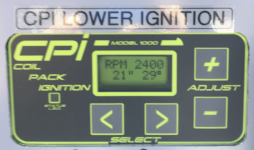
CPI Install RV-10
 

Attachments

  • 1773438409323.png
    1773438409323.png
    468.2 KB · Views: 29
Last edited:
View attachment 112319

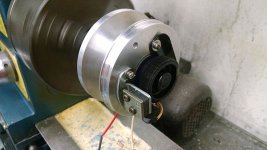
Trigger wheel, flange to hold / stabilize the trigger wheel, and plate for mounting the trigger sensor to.
I made one of those for my first attempt. Ended up failing, but a design issue on my part. For the 6, i machined up a mag hole unit similar to the lightspeeds designs as well as dans creation, though i used hall effect instead of VR. 1200 hours on it now with no issues; unfortunately outside the reach of most, as you need a lathe and some experience. On my 10, I made little brass dowels with magnets epoxied in and pressed them into the 12 holes in the ring gear support. Then just fabbed up a thick aluminum holder for the hall effect sensor that bolts on using the two 3/8” bolts in the case. While i used a mill the make that part, it could be done without one. Only issue is that i think the megajolt only supports VR sensors, via the edis box, not Hall effect, my systems are traditional megasquirt. They are actually less expensive, but require soldering the board together and the programming is more involved, though not difficult.

One could replicate the ring gear approach by designing a 36-1 or 60-2 trigger wheel that bolts on with rhe 12 holes. Send cut send to make it. Then make a mount like mine for the VR sensor. Wish i had a pic to share. Sensor doesn’t have to point parallel to the teeth, as shown in petes pic. It can be mounted on the side of the wheel.
 
Last edited:
I made one of those for my first attempt. Ended up failing, but a design issue on my part. For the 6, i machined up a mag hole unit similar to the lightspeeds designs as well as dans creation, though i used hall effect instead of VR. 1200 hours on it now with no issues; unfortunately outside the reach of most, as you need a lathe and some experience. On my 10, I made little brass dowels with magnets epoxied in and pressed them into the 12 holes in the ring gear support. Then just fabbed up a thick aluminum holder for the hall effect sensor that bolts on using the two 3/8” bolts in the case. While i used a mill the make that part, it could be done without one. Only issue is that i think the megajolt only supports VR sensors, not Hall effect, my systems are traditional megasquirt. They are actually less expensive, but require soldering the board together and the programming is more involved, though not difficult.
I should mention that i made two of these mag hole units and only used one. I could make an alternate plate for it to support VR if anyone is interested. I now have a rotary table, so can make any tooth count you want. Or you could buy a toothed wheel and rivet it to the current blank plate. It is morse taper for the gear, but I don’t have a key slot cutter, si it doesn’t have woodruff key support, though it doesn’t needed imo.

Had been meaning to sell it, but never got around to it.
 
Highly recommend the little ND pickups for a reluctor type trigger. They were very common in Japanese ignitions before the rush to Hall effect.

Spin Test.jpg

This gear (with one tooth removed to trigger an EDIS based system) matches the pickup perfectly.

Gear.jpg
 
I've been contemplating the same thing, but I have a Bendix dual mag, so I need the pickup on the front of the case and the toothed wheel inside the flywheel. I know there are dims on the toothed wheel for the flywheel, but does anybody have dims on the pickup holder?
 
I checked and it was som
Ross does great stuff - I could not find a current price for the CPI or CPI2 - do you know what it is? I imagine tariffs are now part of the equation too.
they recently quote me 2,8k +shipping and up to 50% tarrifs not sure if they have figured out how to avoid that yet.
 
We could have a very simple, variable timing(2 setting), user maintainable Electronic ignition for less than an AMU. This is not original thinking by me.
I absolutely love this idea. I had read a bunch about it here but I like many cant really figure out the trigger. Id be all over this if we could come up with a group effort solution. I really like the idea of setting the timing on a spreadsheet like dan describes in another thread…
 
Personally I like the idea of 2 timing pick ups lets say one at a mag and one at the flywheel this would make them truly independent and eliminate the single failure point…
 
I checked and it was som

they recently quote me 2,8k +shipping and up to 50% tarrifs not sure if they have figured out how to avoid that yet.
I believe that is for a dual ECU, dual coil pack system.

Haven’t the tariffs been eliminated?
 
I absolutely love this idea. I had read a bunch about it here but I like many cant really figure out the trigger. Id be all over this if we could come up with a group effort solution.
Ok, so set the trigger aside. if it's a group effort, let someone else worry about that part. Fundamentally they need only know if you're going magnetic pickup or Hall effect.

What do you have in mind for electronics, i.e. signal processing, coil type, etc? I imagine everyone would want waste spark or coil-on-plug, no distributor rotor.
 
I absolutely love this idea. I had read a bunch about it here but I like many cant really figure out the trigger. Id be all over this if we could come up with a group effort solution. I really like the idea of setting the timing on a spreadsheet like dan describes in another thread…
Suggest checking out the SDS CPI I, I'm very happy with the ones I've installed including on my own bird.
Having a high compression engine, I wasn't going to install anything with 'canned' timing curve.
 
Here are my thoughts on design. I am open to discussion. I am not an expert by any stretch.

Main Design Goals
  • Better spark/performance than Trad Mags
  • Cheaper than COTS aircraft EI solutions
  • User maintainable - no more $500 rebuilds/checkups
  • Variable timing (High/Low) via cockpit switch
  • Electronics on the cold side of the firewall
  • Simple to wire and understand
  • Parts available into the future
Secondary Design Goals
  • Programmable timing by RPM/MAP table
  • Data output
  • Data display

Coil -
  • EDIS (or other) wasted spark dumb coil
    • Pros -
      • Lots of Lycoming experience on PMAGS, Megajolt and others
      • Available
      • Inexpensive
      • Many "dumb" coil choices available
    • Cons
      • Odd EDIS connectors
      • Future EDIS availability
      • Needs coil drivers in the electronics

Electronics -
  • EDIS and MegaJolt
    • Pros -
      • Works great
      • Simple
      • Inexpensive
      • I am working on a Home-brew Megajolt.- Very doable
    • Cons
      • Future availability
  • EDIS Alone
    • Pros
      • Dirt simple - no programming
      • Cheap
    • Cons
      • Future availability
      • Trigger is a more complex
I'd vote to keep it simple and go with what we know. Those with hall effect experience - chime in on how/why it might be better - I'd love to learn. I know Larry built a MegaSquirt - more complex, but way more flexible - that might be a great choice too.

If you gave me a plug and play VR 36-1 trigger - I'd use one of the EDIS modules and figure out the variable timing.

Thanks to everyone for chiming in - I think this could be a lot of fun and could do a bit to bring down acquisition and maintenance costs.
 
Here are my thoughts on design. I am open to discussion. I am not an expert by any stretch.

Main Design Goals
  • Better spark/performance than Trad Mags
  • Cheaper than COTS aircraft EI solutions
  • User maintainable - no more $500 rebuilds/checkups
  • Variable timing (High/Low) via cockpit switch
  • Electronics on the cold side of the firewall
  • Simple to wire and understand
  • Parts available into the future
Secondary Design Goals
  • Programmable timing by RPM/MAP table
  • Data output
  • Data display

Coil -
  • EDIS (or other) wasted spark dumb coil
    • Pros -
      • Lots of Lycoming experience on PMAGS, Megajolt and others
      • Available
      • Inexpensive
      • Many "dumb" coil choices available
    • Cons
      • Odd EDIS connectors
      • Future EDIS availability
      • Needs coil drivers in the electronics

Electronics -
  • EDIS and MegaJolt
    • Pros -
      • Works great
      • Simple
      • Inexpensive
      • I am working on a Home-brew Megajolt.- Very doable
    • Cons
      • Future availability
  • EDIS Alone
    • Pros
      • Dirt simple - no programming
      • Cheap
    • Cons
      • Future availability
      • Trigger is a more complex
I'd vote to keep it simple and go with what we know. Those with hall effect experience - chime in on how/why it might be better - I'd love to learn. I know Larry built a MegaSquirt - more complex, but way more flexible - that might be a great choice too.

If you gave me a plug and play VR 36-1 trigger - I'd use one of the EDIS modules and figure out the variable timing.

Thanks to everyone for chiming in - I think this could be a lot of fun and could do a bit to bring down acquisition and maintenance costs.
VR is much more sensitive than hall effect. Both at the pickup point and with the wiring. I added mega squirt to my old 911 that had VR in place and I didn’t want to add new. Had a whole bunch of issues untill I installed shielded twisted pair wiring. You have to worry about interference entering the wiring due to the very low voltage. The sensor also has tighter tolerances for distance to the teeth. Finally, the VR signal is traditional sinusoidal, so a little more work in tuning them. The megasquirt had two different pots that had to be tweaked to get a strong reliable signal.

The Hall effect is a transducer with a square wave 5 volt signal and offers a wide tolerance for distance from the magnets. It still has a rise and fall curve, but much tighter, taller and more compressed.

VR works, ,but Hall effect is all around a better solution. Sometimes applications dictates. Toothed wheels are still used in auto applications, as it is easy to integrate into the flywheel or damper, as well as adding a toothed spur to a cam or crank. So, for fully integrated solutions, vr is great. But for add on solutions, hall effect is easier and simpler.

Does the megajolt now support Hall effect? I thought it didn’t when i looked at it 8 years ago.
 
Last edited:
Here are my thoughts on design. I am open to discussion. I am not an expert by any stretch.

Main Design Goals
  • Better spark/performance than Trad Mags
  • Cheaper than COTS aircraft EI solutions
  • User maintainable - no more $500 rebuilds/checkups
  • Variable timing (High/Low) via cockpit switch
  • Electronics on the cold side of the firewall
  • Simple to wire and understand
  • Parts available into the future
Secondary Design Goals
  • Programmable timing by RPM/MAP table
  • Data output
  • Data display

Coil -
  • EDIS (or other) wasted spark dumb coil
    • Pros -
      • Lots of Lycoming experience on PMAGS, Megajolt and others
      • Available
      • Inexpensive
      • Many "dumb" coil choices available
    • Cons
      • Odd EDIS connectors
      • Future EDIS availability
      • Needs coil drivers in the electronics

Electronics -
  • EDIS and MegaJolt
    • Pros -
      • Works great
      • Simple
      • Inexpensive
      • I am working on a Home-brew Megajolt.- Very doable
    • Cons
      • Future availability
  • EDIS Alone
    • Pros
      • Dirt simple - no programming
      • Cheap
    • Cons
      • Future availability
      • Trigger is a more complex
I'd vote to keep it simple and go with what we know. Those with hall effect experience - chime in on how/why it might be better - I'd love to learn. I know Larry built a MegaSquirt - more complex, but way more flexible - that might be a great choice too.

If you gave me a plug and play VR 36-1 trigger - I'd use one of the EDIS modules and figure out the variable timing.

Thanks to everyone for chiming in - I think this could be a lot of fun and could do a bit to bring down acquisition and maintenance costs.
I would consider making a Hall effect kit at the ring gear if the megajolt supports it. It would need to support hall efect, as well as either a 6-1 or 12-1 toothed wheel. The mag hole pickups are too much work to make for the time that i have. They are also more reliable. Would possibly consider a VR kit. Problem there is the sensor size. The hall effect is tiny and easy to pot in the robust aluminum mount. VR is much bigger and difficult to imbed. Due to the damage from a thrown belt, everything needs to be integrated into a thick metallic mount. You could literally lift the engine with the mount i made. It also has channels to bring the wire down to a safe spot underast the alternator, free from belt damage. These wires also need protection from thrown belts.

It would have 2 HE sensors in it to support dual setups that are redundant. It would be a bolt on affair with no major installation work.

If the MJ only supports 32-1, it probably needs to be done with VR.

Once you have your own pickup, you don’t need edis anymore. Pretty sure the mj has BIP mosfets to control the coils like ms and the mj can take the trigger feed directly. Would just need to buy an off the shelf high performance 4 port coil (wasted spark) from a hot rod shop, like summit. If the mj has only low current coil control, you just add off the shelf coil igniters like sds uses.

I could possibly assemble a whole kit with all that stuff included and tested, minus the mj and wires, plugs, etc. and include mj config instructions to make it all work.

Let me know if there is interest in that.
 
Last edited:
Some personal angle here:
I have an h2ad... that has the famous dual magneto.
I've replaced that with a custom bendix single mag, and a Lightspeed which uses hall triggering on magnets which are mounted to a ring inside the flywheel pulley.

The h2ad doesn't have the same mag drive as typical 4 cylinder mags... it is like a 6 cylinder unit (so I've been told, IIRC).

At some point the Lightspeed may give up, and I'd like something that could replace it, so I'd like hall sensor, and free to use something other than 36-1 timing. I can easily put magnets in the existing ring for something like 12-1.

Note that since the Magneto drive isn't typical o-320, a PMag won't work, nor any of the other boxes that go into a mag hole.

At the time I was looking into this (late 2024), it looked to me like the MicroSquirt and LS4 'coil near plug' was the most cost effective option, and it penciled out as follows:


Parts needed: 2024 prices...

MicroSquirt controller (a lower capability / cost version of MegaSquirt) $388

Sensor $200 ballpark – can support other than 36-1. Note both VR and Hall are supported

MAP sensor $40 [obviously not needed if you don't want any vacuum advance curve]

LS2 coils (D585 style) --- logic level drive (x4) $160

HV Wiring (Kit, assemble to needed lengths) $42 for 8 cyl from Accel

Spark Plug Adapters https://www.aircraftspruce.com/catalog/pnpages/08-06753.php $90

Spark Plugs $50 (for 4)

Misc, wire, circuit breaker, switch… $100

==================================
$1070
 
Last 2 posts were great - maybe we combine them into a solution.

Larry -MegaJolt is VR only. I'm happy to move to hall effect - the only downside I have read about is heat sensitivity, but I have not heard that being an issue when used in our application.

A HE crank pickup kit would be great. Low/no maint/moving parts.

Bryan - I like the Microsquirt - looks good for our application - comes nicely packaged too. VR or HE capable.
  • Microsquirt supports timing curve switching (switching between different spark tables or ignition parameters)
    primarily through Table Switching based on inputs like a toggle switch (TPS, digital input) or Dual Table setups. This allows for different timing strategies, such as pump gas vs. race gas, or nitrous/boost-activated timing curves. - Perfect
  • Do the LS2 coils have the drivers/igniters so they hook up directly to the MicroSquirt?

Good stuff here - So a Microsquirt with a HE crank trigger is a candidate. I could work on a display/control unit. I certainly think there would be interest. We could come up with some conservative base timing curves and instructions - I'd be in to help with that.

Keep the discussion going!
 
Last 2 posts were great - maybe we combine them into a solution.

Larry -MegaJolt is VR only. I'm happy to move to hall effect - the only downside I have read about is heat sensitivity, but I have not heard that being an issue when used in our application.

A HE crank pickup kit would be great. Low/no maint/moving parts.

Bryan - I like the Microsquirt - looks good for our application - comes nicely packaged too. VR or HE capable.
  • Microsquirt supports timing curve switching (switching between different spark tables or ignition parameters)
    primarily through Table Switching based on inputs like a toggle switch (TPS, digital input) or Dual Table setups. This allows for different timing strategies, such as pump gas vs. race gas, or nitrous/boost-activated timing curves. - Perfect
  • Do the LS2 coils have the drivers/igniters so they hook up directly to the MicroSquirt?

Good stuff here - So a Microsquirt with a HE crank trigger is a candidate. I could work on a display/control unit. I certainly think there would be interest. We could come up with some conservative base timing curves and instructions - I'd be in to help with that.

Keep the discussion going!
The HE modules I used were auto grade and rated for either 125 or 150 C. The module in my 6 has probably 1300 hours on it now.
 
Last 2 posts were great - maybe we combine them into a solution.

Larry -MegaJolt is VR only. I'm happy to move to hall effect - the only downside I have read about is heat sensitivity, but I have not heard that being an issue when used in our application.

A HE crank pickup kit would be great. Low/no maint/moving parts.

Bryan - I like the Microsquirt - looks good for our application - comes nicely packaged too. VR or HE capable.
  • Microsquirt supports timing curve switching (switching between different spark tables or ignition parameters)
    primarily through Table Switching based on inputs like a toggle switch (TPS, digital input) or Dual Table setups. This allows for different timing strategies, such as pump gas vs. race gas, or nitrous/boost-activated timing curves. - Perfect
  • Do the LS2 coils have the drivers/igniters so they hook up directly to the MicroSquirt?

Good stuff here - So a Microsquirt with a HE crank trigger is a candidate. I could work on a display/control unit. I certainly think there would be interest. We could come up with some conservative base timing curves and instructions - I'd be in to help with that.

Keep the discussion going!
So, I looked and microsquirt uses logic level coil drivers; No surprise, given the small package size. The BIP mosfets used in the megasquirt need a significant heat sink. So, smart coils (logic level input with driver built in), like the LS are options, as are stand alone coil driver modules and a std coil. Several options here. The microsquirt only has 2 ign drivers, so even if 4 LS coils are used, it will still run in wasted spark mode. This limitation makes it unviable for 6 cyl engines.
 
Last edited:
So, I looked and microsquirt uses logic level coil drivers; No surprise, given the small package size. The BIP mosfets used in the megasquirt need a significant heat sink. So, smart coils (logic level input with driver built in), like the LS are options, as are stand alone coil driver modules and a std coil. Several options here. The microsquirt only has 2 ign drivers, so even if 4 LS coils are used, it will still run in wasted spark mode. This limitation makes it unviable for 6 cyl engines.
Hey just found you can modify the micro squirt for 6 cylinder ops and get a 3rd ignition output for wasted spark.

Based on MicroSquirt hardware documentation, Terminal 28 on the 35-pin AMPSEAL connector is designated for
Ignition Module 3 or Spark C output, which is crucial for 3-coil wasted spark setups on 6-cylinder engines.

Key Details for 6-Cylinder Ignition (Terminal 28)
  • Terminal 28 Function: Spark C (WLED is Spark A, ALED is Spark B).
  • Application: When running a 6-cylinder engine in wasted spark mode (requiring 3 coil triggers), terminal 28 is used alongside other ignition outputs to drive the ignition module.
  • Hardware Setup: In many applications, this signal requires a 1,000-ohm resistor connected to a 5V power source.
  • Coil Driver Module: Microsquirt provides a 0-5V logic signal, so a high-current ignition module (like a Quadspark or dual Bosch modules)is necessary to fire the actual coils.
This is still a good candidate.

 
Last edited:
I'm reading that some folks use the "VW/Audi 2.0" ignition coil
Cheaper, more compact. $ 78
I think I turned away from it because it appears to be a single point of failure... unless the whole thing is two boxes in one.
I have the massive VW Jetta 2001-2010 Service Manual (with about an inch of pages of just wiring diagrams) if we want to dig further.
 
Why would you want to fool with a MegaSquirt application when MegaJolt, the ignition-only derivative, already exists?
 
Hi Dan-

Allows use of Hall Effect sensor and does not require an EDIS module. It's a candidate. I agree it may be more complex.
 
Why would you want to fool with a MegaSquirt application when MegaJolt, the ignition-only derivative, already exists?
I believe the microsquirt uses the megasquirt code base or at least a portion of it. One large benefit, if it does, is variable advance. I installed a pot into the IAT input to create variable IAT's (not generally used for ign, only FI) I then set up timing advance / retard via IAT temp tables. This gives me a linear -4 / +5 adjustment to whatever settings are active in the two advance tables. I use that function all the time when cruising up high; Just dial in best speed. I also have a retard switch wired into the knock sensor input. I use the knock retard table to perform the function. My chts start to climb when I get to around 7-8K when ROP due to the MAP advance. The retard switch lets me pull 5* without otherwise contaminating my tables. End of climb, just flip the switch.

Nothing wrong with the MJ, just more difficult to create a VR pickup arrangement at the ring gear. A box like you and I made a no issue, but a challenge for most folks. Magnets in the ring gear is dead simple.

Pete, know that the only way to change advance settings in megasquirt is through a Burn function. This creates a system reset and will experience a bump in the engine (about 1 Sec) each time you do it. No harm and I do it when testing my tables. The two things i mentioned above do not require that.
 
Last edited:
Pete, know that the only way to change advance settings in megasquirt is through a Burn function. This creates a system reset and will experience a bump in the engine (about 1 Sec) each time you do it. No harm and I do it when testing my tables. The two things i mentioned above do not require that.

Google AI may be hallucinating, but it says

Microsquirt supports selectable alternate ignition timing maps through TunerStudio using the Table Switching feature. By configuring a digital input (e.g., JS4/Launch) to ground via a toggle switch, you can swap between two 12x12 spark tables. This allows for different timing strategies, such as switching between pump gas and race fuel maps, or a high-torque vs. high-RPM map.

How to Set Up Alternate Ignition Timing (Table Switch) in MicroSquirt
  • Configure Inputs: Go to "Table Switching" in TunerStudio under "Basic/Load Settings." Set "Table Switch Source" to an available input (e.g., JS4 or Table Switch on V3).
  • Create Switch: Wire a physical toggle switch to ground the designated digital input pin.
  • Configure Tables: Activate "Primary" and "Secondary" Ignition Tables (Table 1 and Table 2) in the settings.
  • Tune Tables: Edit the secondary ignition map with your alternate timing values.
  • Test Switch: Verify in TunerStudio that the active table changes when you flip the switch.
 
Allows use of Hall Effect sensor and does not require an EDIS module. It's a candidate.

It's not practical for 95% of the potential users. Nor is it what the bulk of potential users really want.

The #1 reason so many currently pick a p-mag is self-generation.

Most users couldn't care less about advance. Most would sweat bullets if forced to fill in a matrix timing map. And going forward, the major market looks to be angle valve, where advance has very limited value.

I'd start an open source DIY project with self-generation and fixed timing as cornerstones, with an eye toward developing an advance option later as a board change.
 
Google AI may be hallucinating, but it says

Microsquirt supports selectable alternate ignition timing maps through TunerStudio using the Table Switching feature. By configuring a digital input (e.g., JS4/Launch) to ground via a toggle switch, you can swap between two 12x12 spark tables. This allows for different timing strategies, such as switching between pump gas and race fuel maps, or a high-torque vs. high-RPM map.

How to Set Up Alternate Ignition Timing (Table Switch) in MicroSquirt
  • Configure Inputs: Go to "Table Switching" in TunerStudio under "Basic/Load Settings." Set "Table Switch Source" to an available input (e.g., JS4 or Table Switch on V3).
  • Create Switch: Wire a physical toggle switch to ground the designated digital input pin.
  • Configure Tables: Activate "Primary" and "Secondary" Ignition Tables (Table 1 and Table 2) in the settings.
  • Tune Tables: Edit the secondary ignition map with your alternate timing values.
  • Test Switch: Verify in TunerStudio that the active table changes when you flip the switch.
yes, that is all typical with megasquirt code, which i believe microsquirt uses. tuner studio is the s/w you use to program/configure. megalog viewer is the s/w used to capture and analyze data output.
 
I'd start an open source DIY project with self-generation and fixed timing as cornerstones, with an eye toward developing an advance option later as a board change.

I agree with Dan here, and as I was reading this, my thought was: What the world needs is a Monkworks-style unit that mounts on a mag pad and provides self-generation plus a timing signal to the EI module of your choice...
 
It's not practical for 95% of the potential users. Nor is it what the bulk of potential users really want.

The #1 reason so many currently pick a p-mag is self-generation.

Most users couldn't care less about advance. Most would sweat bullets if forced to fill in a matrix timing map. And going forward, the major market looks to be angle valve, where advance has very limited value.

I'd start an open source DIY project with self-generation and fixed timing as cornerstones, with an eye toward developing an advance option later as a board change.
i am not sure building an EI system with a built in generator is easilly achievable. That doesn't sound like something guys can easilly build in their garage. Lots of folks buying surefly these days, as well as SDS, and neither of those have self-generation. I think petes goal was to put EI in the hands of everyone without large complexities or cost. Those attracted to the simplicity and electrical safety of pmags are likely not the target audience here. Very easy to have fixed timing in the mega/micro squirt sytem.
 
Most users couldn't care less about advance. Most would sweat bullets if forced to fill in a matrix timing map.
yet those same users accept the timing map setup in the pmag that generates all sorts of issues from being over advanced. I suspect there is a decent percentage of folks that would like to take control and build their own. Lots of folks buy SDS and that requires users to map themselves; clearly there is a market, albeit smaller than the pmag market.
 
I agree with Dan here, and as I was reading this, my thought was: What the world needs is a Monkworks-style unit that mounts on a mag pad and provides self-generation plus a timing signal to the EI module of your choice...
Sadly there are no ei options that take a simple rpm signal. These are all built on algorithems that use a toothed signal, with a missing tooth at a reference point. it is the only reliable standardized way to indentify both rpm and crank position. You can't fire a spark unless you know where tdc is and how many degrees you are from it at any given microsecond. certyainly possible for monk to put a toothed wheel and sensor in his product, but is that an better or cheaper than installing magnets in the ring gear? Accy case devices are also driven by a plastic shear coupling. not sure i want that on my ignition pick up.

Some propritary systems, like sds, use something different than a toothed wheel but provides similar info to identify either crank position or ign firing position..
 
Last edited:
Sadly there are no ei options that take a simple rpm signal. These are all built on algorithems that use a toothed signal, with a missing tooth at a reference point. it is the only reliable standardized way to indentify both rpm and crank position.

Sorry I wasn't clear - that's the type of signal I was talking about.
 
Does anyone have a lightspeed
I'd like to have a programable ignition with switchable advance maps (for LOP) using my existing Lightspeed mini sensors. They have trigger points at 0* and 39* BTDC.
Ed
I'm in a similar boat with the Lightspeed. However, the usual supported timing teeth values are things like "36-1". That's a 36 tooth wheel, with 1 missing tooth. The missing tooth allows the system to determine TDC (by knowing the location of the missing tooth). Other wheels are things like the 60-2. More teeth allows greater timing precision, particularly as the engine accelerates. [Not a big deal in our application I know].

My current thinking is to either add magnets to the wheel, making it a 12-1, or it may work with a 4-1 --- or clone the wheel with holes where we want. If someone has a loose wheel to send me I can CAD up a design with holes where we want them. SendCutSend cost to cut the wheel is probably $40 for one (including shipping). You'd need to press in your own magnets, but those tiny magnets are inexpensive when I was looking in 2024.
 
It's not practical for 95% of the potential users. Nor is it what the bulk of potential users really want.

The #1 reason so many currently pick a p-mag is self-generation.

Most users couldn't care less about advance. Most would sweat bullets if forced to fill in a matrix timing map. And going forward, the major market looks to be angle valve, where advance has very limited value.

I'd start an open source DIY project with self-generation and fixed timing as cornerstones, with an eye toward developing an advance option later as a board change.
When i started researching engine options at the start of my build, I had no idea about advance angle and all that. But what I did understand is the built in generation that the PMAGs offered. that was THE selling point for me (at the time). Now that I'm flying and messing around a bit with advance timing and such, i'm doing a bit more reading and learning, and the built in generation is not even an afterthought, since its just there.

If i were to do it all over again, I would still start with the self generation as the primary, and all the other aspects that the PMAGs offer as secondary
 
  • Like
Reactions: pjc
When i started researching engine options at the start of my build, I had no idea about advance angle and all that. But what I did understand is the built in generation that the PMAGs offered. that was THE selling point for me (at the time). Now that I'm flying and messing around a bit with advance timing and such, i'm doing a bit more reading and learning, and the built in generation is not even an afterthought, since its just there.

If i were to do it all over again, I would still start with the self generation as the primary, and all the other aspects that the PMAGs offer as secondary
I did the same research at the start of my build, but reliability was the primary thing, not self generation. In that case, I was more compelled by the SDS products because the only mechanical part is the magnet spinning past the hall effect sensor. With a p-mag you have electronics bolted to the hot vibrating thing, bearings, and in the case of the 6 cyl version a set of internal gears.

If I couldn't completely eliminate the mechanical failure modes or change the timing, I'd probably just stick with mags.
 
I understand self generation, and like it on my Pmag, but it is a step-up in complexity. I was really thinking simple and cheap. If someone knows how to package a 12v gen in a mag hole with a trigger - let's discuss - I mean we know PMag did it. Feels like a driven stepper motor.

How about some other ideas on ways to generate electrons.
  • Simple little battery - you can run these ignitions for hours on a small battery - some wiring complexity, but not too expensive, easy to verify using Dan's circuit. lifepo4 battery 4ah = ~1lb
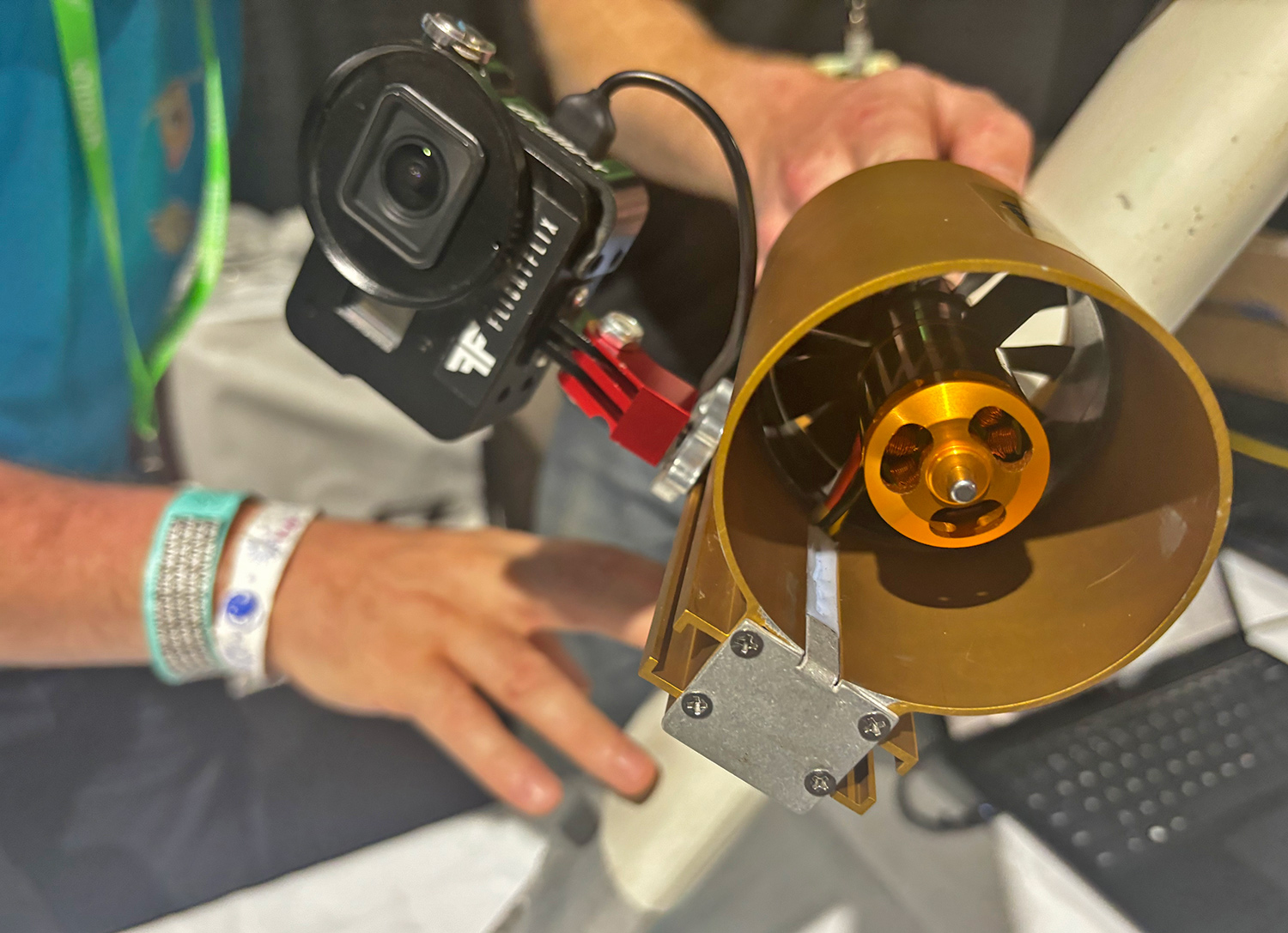
  • A Micro RAT - a small slipstream powered backup - Just like a Triple-7 or https://flybreezy.com/ but for 12 volts pic below
  • A simple mini Monk on the vac pad for EI Only - this might get expensive
  • Small NASA surplus radioisotope thermoelectric generators - they can go for hours.......
  • Toss out other real ideas........
IMG_1458.jpg
 
How about some other ideas on ways to generate electrons.
  • Simple little battery - you can run these ignitions for hours on a small battery - some wiring complexity, but not too expensive, easy to verify using Dan's circuit. lifepo4 battery 4ah = ~1lb
  • A Micro RAT - a small slipstream powered backup - Just like a Triple-7 or https://flybreezy.com/ but for 12 volts pic below
  • A simple mini Monk on the vac pad for EI Only - this might get expensive
  • Small NASA surplus radioisotope thermoelectric generators - they can go for hours.......
  • Toss out other real ideas........

My 0.02 is self generation feels like scope drift. Perfect the enemy of good, etc.
That said, flexible solar panels in the (aft part) canopy?

One thing made me comfortable on my Slick mag wheel modification (post 3 or so..) ... the spinning guts were mostly SLICK. Housing, shaft, etc.
How do we all feel about inserting our own design widget into the MAG hole? And making that widget design available for others to use?
 
OK, sorry! I continue to spam this thread. For internal power...
Gee, I yanked that big coil out of the SLICK magneto...
If I put it back in... the unit already has a spinning magnet... The coil is 375uH if that helps anyone estimate how much power is available.
 
Back
Top