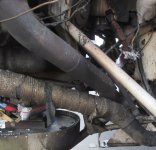
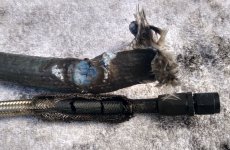
So I did something stupid. I know. Fortunately, this one did not cause any incident. But I'll admit my mistake, so others can learn as well. It's easy to be in a certain mindset when working on an aircraft, and forget that everything is connected. A change in one area can cause a change in another area. In this case, I was in the mindset of replacing brittle zip-ties and gathering the PN/SN of the fuel transducer that was missing from my components spreadsheet -- and forget that everything is connected. I was not in the mindset of heat, fuel lines, fire safety, etc.
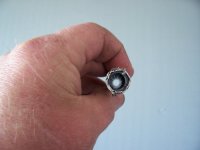
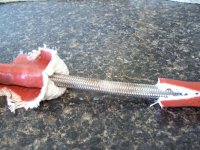
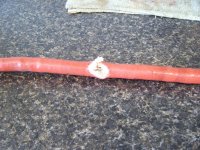
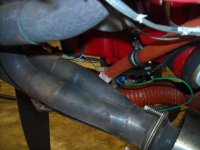
Apparently, while replacing the zip-ties, I shifted the fuel transducer clamp along the engine mount tube and pushed the main fuel line against the Cyl #4 exhaust tube. After 7 flight hours with the main line pressed firmly against the exhaust, the heat melted right through the heat shield. The next layer appears to be woven / fiberglass, and it looks intact. No idea if the heat caused any damage to the rubber hose core.
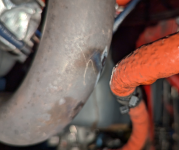
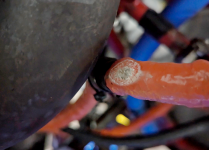
I have since done the following:
Apparently, while replacing the zip-ties, I shifted the fuel transducer clamp along the engine mount tube and pushed the main fuel line against the Cyl #4 exhaust tube. After 7 flight hours with the main line pressed firmly against the exhaust, the heat melted right through the heat shield. The next layer appears to be woven / fiberglass, and it looks intact. No idea if the heat caused any damage to the rubber hose core.
I have since done the following:
- Loosened the fuel line at the carburetor, rotated the line to face the melted spot away from the exhaust, tightened up the connection. Leak checked.
- Moved the fuel transducer clamp to provide several inches of clearance between exhaust and fuel line now.
- Added RTV over the melted spot to provide (I know, RTV isn't really a heat shield).







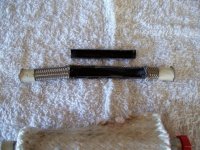

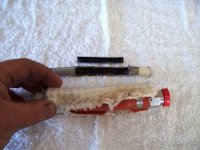
 I'll add a short TS Flightlines replacement hose to my next ACS order (