Van's Air Force

The definitive Van's Aircraft support community! Buying, building or flying an RV? Join our exclusive family of mentors and enthusiasts!

Notam / Lesson learned - Fuel line touching the exhaust

kenpilot

Well Known Member
Friend
So I did something stupid. I know. Fortunately, this one did not cause any incident. But I'll admit my mistake, so others can learn as well. It's easy to be in a certain mindset when working on an aircraft, and forget that everything is connected. A change in one area can cause a change in another area. In this case, I was in the mindset of replacing brittle zip-ties and gathering the PN/SN of the fuel transducer that was missing from my components spreadsheet -- and forget that everything is connected. I was not in the mindset of heat, fuel lines, fire safety, etc.

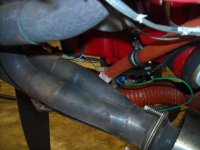
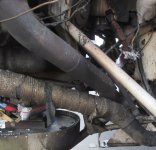
Apparently, while replacing the zip-ties, I shifted the fuel transducer clamp along the engine mount tube and pushed the main fuel line against the Cyl #4 exhaust tube. After 7 flight hours with the main line pressed firmly against the exhaust, the heat melted right through the heat shield. The next layer appears to be woven / fiberglass, and it looks intact. No idea if the heat caused any damage to the rubber hose core.
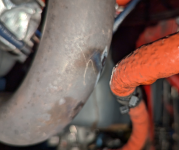
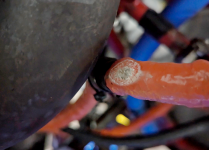
1736531081451.png1736531139512.png

I have since done the following:
  1. Loosened the fuel line at the carburetor, rotated the line to face the melted spot away from the exhaust, tightened up the connection. Leak checked.
  2. Moved the fuel transducer clamp to provide several inches of clearance between exhaust and fuel line now.
  3. Added RTV over the melted spot to provide (I know, RTV isn't really a heat shield).
However, I'd like the community's opinion on this: Would it be better to just replace this 11-inch section of hose entirely?
 
TS flightlines will make you a new one for less than the cost of 10 gallons of 100LL. It wouldn't even be a question for me.

I'd also put a heat shield on that exhaust pipe where it runs past
 
So I did something stupid. I know. Fortunately, this one did not cause any incident. But I'll admit my mistake, so others can learn as well. It's easy to be in a certain mindset when working on an aircraft, and forget that everything is connected. A change in one area can cause a change in another area. In this case, I was in the mindset of replacing brittle zip-ties and gathering the PN/SN of the fuel transducer that was missing from my components spreadsheet -- and forget that everything is connected. I was not in the mindset of heat, fuel lines, fire safety, etc.

Apparently, while replacing the zip-ties, I shifted the fuel transducer clamp along the engine mount tube and pushed the main fuel line against the Cyl #4 exhaust tube. After 7 flight hours with the main line pressed firmly against the exhaust, the heat melted right through the heat shield. The next layer appears to be woven / fiberglass, and it looks intact. No idea if the heat caused any damage to the rubber hose core.

View attachment 78150View attachment 78151

I have since done the following:
  1. Loosened the fuel line at the carburetor, rotated the line to face the melted spot away from the exhaust, tightened up the connection. Leak checked.
  2. Moved the fuel transducer clamp to provide several inches of clearance between exhaust and fuel line now.
  3. Added RTV over the melted spot to provide (I know, RTV isn't really a heat shield).
However, I'd like the community's opinion on this: Would it be better to just replace this 11-inch section of hose entirely?
The fire sleeve isn’t heat shield either.
It is for fire protection, hence the name.
For the most part, it will heat soak and transfer the external heat to the hose inside.

In my opinion, the exhaust pipe at that point should have an actual metal heat shield on it. This will actually shield the hose from the radiant heat of the pipe, and it probably would have prevented the damage that occurred to the fire sleeve.
 
The fire sleeve isn’t heat shield either.
It is for fire protection, hence the name.
For the most part, it will heat soak and transfer the external heat to the hose inside.

In my opinion, the exhaust pipe at that point should have an actual metal heat shield on it. This will actually shield the hose from the radiant heat of the pipe, and it probably would have prevented the damage that occurred to the fire sleeve.
Hmm. I've always conflated the two concepts. So fire sleeve is to ensure an active fire in the engine compartment doesn't quickly burn right into the hose end dump fresh fuel on the fire. Heat shield is to block radiant heat, to reduce damage like what I experienced.

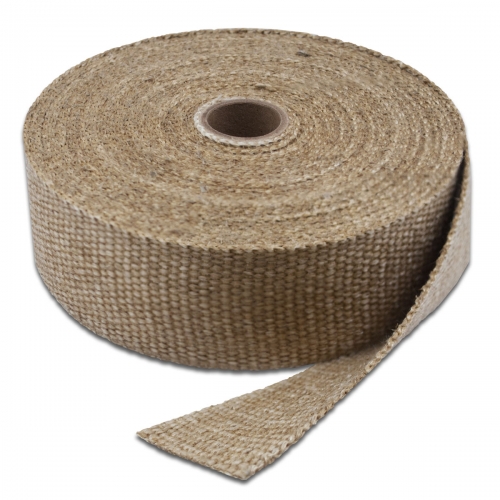
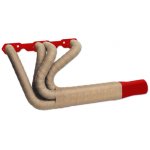
So maybe I should wrap the upper sections of my exhaust tubes with something like this? That way, I block radiant heat to all the other stuff too (ignition wires), not just the fuel line in this one corner of the cowl.
1736537518354.jpeg
 
maybe I should wrap the upper sections of my exhaust tubes with something like this?
VAF consensus is that this is a bad idea. And not needed. Heat shields are easy to install, very inexpensive (or you can make your own), and easy to inspect. These wraps can hide corrosion, leaks, and actually cause cracks on the exhaust, according the Mr. Vetterman, one of the main suppliers of RV exhaust systems.
 
Hmm. I've always conflated the two concepts. So fire sleeve is to ensure an active fire in the engine compartment doesn't quickly burn right into the hose end dump fresh fuel on the fire. Heat shield is to block radiant heat, to reduce damage like what I experienced.

So maybe I should wrap the upper sections of my exhaust tubes with something like this? That way, I block radiant heat to all the other stuff too (ignition wires), not just the fuel line in this one corner of the cowl.
View attachment 78157
Not a good idea. Larry Vetterman, long time aircraft exhaust expert, has always recommended against using exhaust wrap as it contributes to premature failure of the exhaust system.
 
Hmm. I've always conflated the two concepts. So fire sleeve is to ensure an active fire in the engine compartment doesn't quickly burn right into the hose end dump fresh fuel on the fire. Heat shield is to block radiant heat, to reduce damage like what I experienced.

So maybe I should wrap the upper sections of my exhaust tubes with something like this? That way, I block radiant heat to all the other stuff too (ignition wires), not just the fuel line in this one corner of the cowl.
View attachment 78157
Veterman exhaust has always recommended that pipe wrap never be used because it can cause early failure of the thin stainless pipes used on aircraft exhaust systems because of the resultant higher operating temp of the pipe (trapping more of the heat inside).
Not to mention it makes it much harder to inspect for cracks (an important detail that should be done very regularly... I do it at every oil change)
This is why if you look at photos of RV engine installations you will pretty much never see wrapping tape on the exhaust.
The best standard practice is to use a localized heat shield for items that have to be located close to the exhaust.
There is a dramatic drop in radiant heating influence for anything located beyond 6 inches or so.

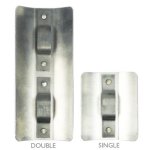
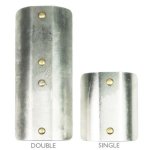
Here is one that is commonly used for this type of thing
https://store.vansaircraft.com/clamp-on-exhaust-heat-shield-ea-lv-1-heat-shield.html
 
Got it! It never ceases to amaze me how an idea can sound good from a certain perspective but have all sorts of unintended consequences. Then I'll see what sort of heat shield I can find. ACS has a simple one, probably better than what I can make anyway.
1736539126101.jpeg1736539162300.jpeg
 
The heat transfer in this case is not intuitive. Insulation is not very effective with radiant heat transfer which dominates (beside it actually touching).
DanH has written extensively on this. It turns out putting shiny metal in between the cold and hot part is most effective.

 
Last edited:
Just a data point, and confirmation. The Biplane had exhaust wrapped by prior owner. It failed. I had the best welder in the business, Russ McKutcheon, try to repair the crack. It was not weld able. The stainless had changed.
Luckily, we have resources! The exhaust went to Larry and they copied it. Well, they copied it to fit but their flange welding is far better. I didn’t have to file down washers anymore.
 
Got it! It never ceases to amaze me how an idea can sound good from a certain perspective but have all sorts of unintended consequences. Then I'll see what sort of heat shield I can find. ACS has a simple one, probably better than what I can make anyway.
View attachment 78161View attachment 78162
Heat shields definitely. Exhaust wrap nope. As for the hose, the damage shown on the firesleeve is just at the outer High temp silicone. It down to the fiberglass weave. Most likely ( from experience) its transfered heat to the hos and liner, creating a hot spot. That area will be like a blister, think of burning your arm with spattered grease, and eventually it will fail. Rubber hose, like 303 and 701, dont have the temp rating that teflon does, so changing to teflon is recommended. But whatever you do, maintain a significant distance from high heat sources.
 
Heat shields definitely. Exhaust wrap nope. As for the hose, the damage shown on the firesleeve is just at the outer High temp silicone. It down to the fiberglass weave. Most likely ( from experience) its transfered heat to the hos and liner, creating a hot spot. That area will be like a blister, think of burning your arm with spattered grease, and eventually it will fail. Rubber hose, like 303 and 701, dont have the temp rating that teflon does, so changing to teflon is recommended. But whatever you do, maintain a significant distance from high heat sources.
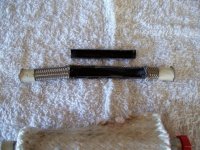
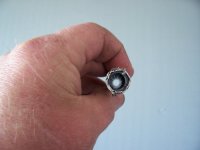
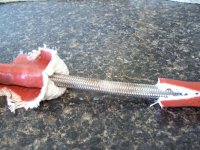
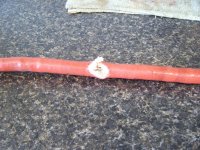
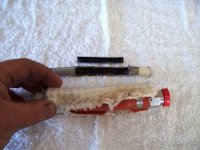
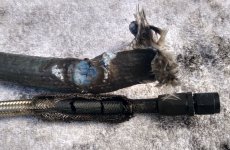
Here are a few pics from several years ago. High profile client, had a firesleeved teflon fuel hose misrouted, and it layed against the exhaust for 'quite some time' before being discovered. Yes, inquiring minds wanted to know, so we did an examination. First, we pressure tested the assembly 'as is' to check the integrity. Yep, 2000 psi, confirmed the hose was intact. We then removed the damaged firesleeved section to reveal the hose area. Brown heat discoloration. We then sectioned the hose so we could view the liner---didnt see any abnormalities. So we sectioned the liner and opened it up. The was no damage to the liner. I attributed that to the high temp characteristics of teflon,, vs a rubber liner.
So---you may wonder why we only build teflon assemblies? This is as good a reason as any.
 

Attachments

  • liner cross section.JPG
    liner cross section.JPG
    216.6 KB · Views: 77
  • inside teflon liner.JPG
    inside teflon liner.JPG
    113.6 KB · Views: 78
  • Hose heat damage.JPG
    Hose heat damage.JPG
    219.9 KB · Views: 71
  • Firesleeve heat damage.JPG
    Firesleeve heat damage.JPG
    221.6 KB · Views: 65
  • firesleeve damage inside.JPG
    firesleeve damage inside.JPG
    208.5 KB · Views: 60
  • Damaged hose components.JPG
    Damaged hose components.JPG
    208.3 KB · Views: 61
  • Burnedfuelline.jpg
    Burnedfuelline.jpg
    56.1 KB · Views: 67
No idea if the heat caused any damage to the rubber hose core.

This one burned, same cause, firesleeved hose against an exhaust pipe.

Hose Routing.jpg

The rubber liner baked until it was hard and brittle.

Buy Tom's teflon hoses. Rubber hoses need to come off on some regular basis for a Rice Krispies test (remove, flex, listen for snap, crackle, pop).

Baked Hose.jpg
 
Back
Top