Van's Air Force

The definitive Van's Aircraft support community! Buying, building or flying an RV? Join our exclusive family of mentors and enthusiasts!

Learning to fly my RV-8

Gino230

Well Known Member
Patron
This airplane is new to me (non builder and first time RV owner. I'm a high time airline pilot but prior to 3 months ago, I hadn't done much light airplane flying in the last 20+ years. Once a year or so I'll go play in my buddy's Extra 300 but realistically that's it. I have about 15 hours in taildraggers over the last 15 years or so, mostly in the Extra 300, Pitts S2B, and more recently a Citabria where I brushed up my tailwheel skills before I took delivery of this airplane.

There isn't much of a POH (as in none) so I've been using the flight test cards as a way to get to know my airplane and how it handles in different conditions. I've got about 3.5 hours in it now and am pleased with the handling. It's very docile in stalls (recovers easily and instantly) slow flight handles well. It probably needs a trim tab, as even in cruise rudder is about 1/2 ball out to the right.

The last two flights were with 100lb ballast in the rear seat and 40lb in the rear baggage. I want to get used to more weight and aft CG as I work my way up to taking passengers. For reference, that puts me about 1600 LB and 84.2" CG. Well within the envelope, but more difficult to land than my first 2 flights at 1450 LB and 80.3

I've found that wheel landings seem to be the way to go, when I try to three point it bounces right back up in the air. So wheelies it is. Kind of strange for me to land with the stick forward, but the way I'm looking at it, it's almost like you're trying to make a low pass down the runway (with the throttle idle of course). I've been doing power on approaches until I get this touchdown thing locked in- I have done some power off 180s at various configurations and some tight patterns so I know I can make the runway if needed, and eventually I'll fly that way traffic permitting (in S Florida it usually doesn't permit).

I'm having a great time, once I get over the pucker factor of turning final 3/4 mile out and 400'. I can't believe I used to teach kids how to do this?

Anyway here's a video of my last 2 days. The second attempt I bounced pretty high and just went around. 3rd was the day before coming to the home airport Any tips would be appreciated.

It's great to have a new challenge after 30 years in the air.

 
release, not really push, backpressure as soon as you feel the wheels touch. that will stop the bouncing right after touchdown if your on speed. It looks funny but push the nose down just a bit after it's stable and get the weight on the wheels.
you're going to love the thing.

Have fun
As Stein used to say, just my .02 cents worth and it's worth just what you paid for it.

I'm right at 3300 hours in my 8.
 
Awesome video! Thanks for sharing. Building mine now so I hope to be up there with you soonish.
It sounds like (and looks like) you are doing everything right and getting a handle on how the -8 flies. I was in your position 2 years ago (minimal tailwheel time, transitioning to an -8 I didn’t build) although I had 800+ hours in an RV-10 I built. The transition to the -8 was humbling. I went from VERY comfortable in the -10 to quite unsettled in the -8. Landings suddenly required 100% attention and 3 points were, like you said, sporty and clearly not ideal compared to wheel landings. Folks told me it would take ~100 hours before the -8 felt second nature and they were right. I now have 300 hours in the -8 (250 in the last 12 months) and she is a blast to fly. I still have to respect her each time…and I have met my crosswind limit 😬 but I grin ear to ear each time I get in/out of her. As far as tips go, service your tailwheel every 25 hours or so and make sure the rigging is right. I just changed from an old “silver bullet” (similar to the rocket steering arm that Flyboys sells) back to the cables/springs and found her A LOT nicer to handle on the ground but that might come down to preference. Try both and see what you like. Otherwise, just put time in and she will fit like a glove soon!
 
I don't remember who said this on VAF, when the RV8 does a little bounces at touch down, tilt the wing to the left or right and let it land on one wheel and the bounces will damp out. I do this when it got a bit bouncy on my landings and tilting the airplane to one direction will soften the landing.
 
Last edited:
I've found that wheel landings seem to be the way to go, when I try to three point it bounces right back up in the air. So wheelies it is. Kind of strange for me to land with the stick forward, but the way I'm looking at it, it's almost like you're trying to make a low pass down the runway (with the throttle idle of course). I've been doing power on approaches until I get this touchdown thing locked in- I have done some power off 180s at various configurations and some tight patterns so I know I can make the runway if needed, and eventually I'll fly that way traffic permitting (in S Florida it usually doesn't permit).


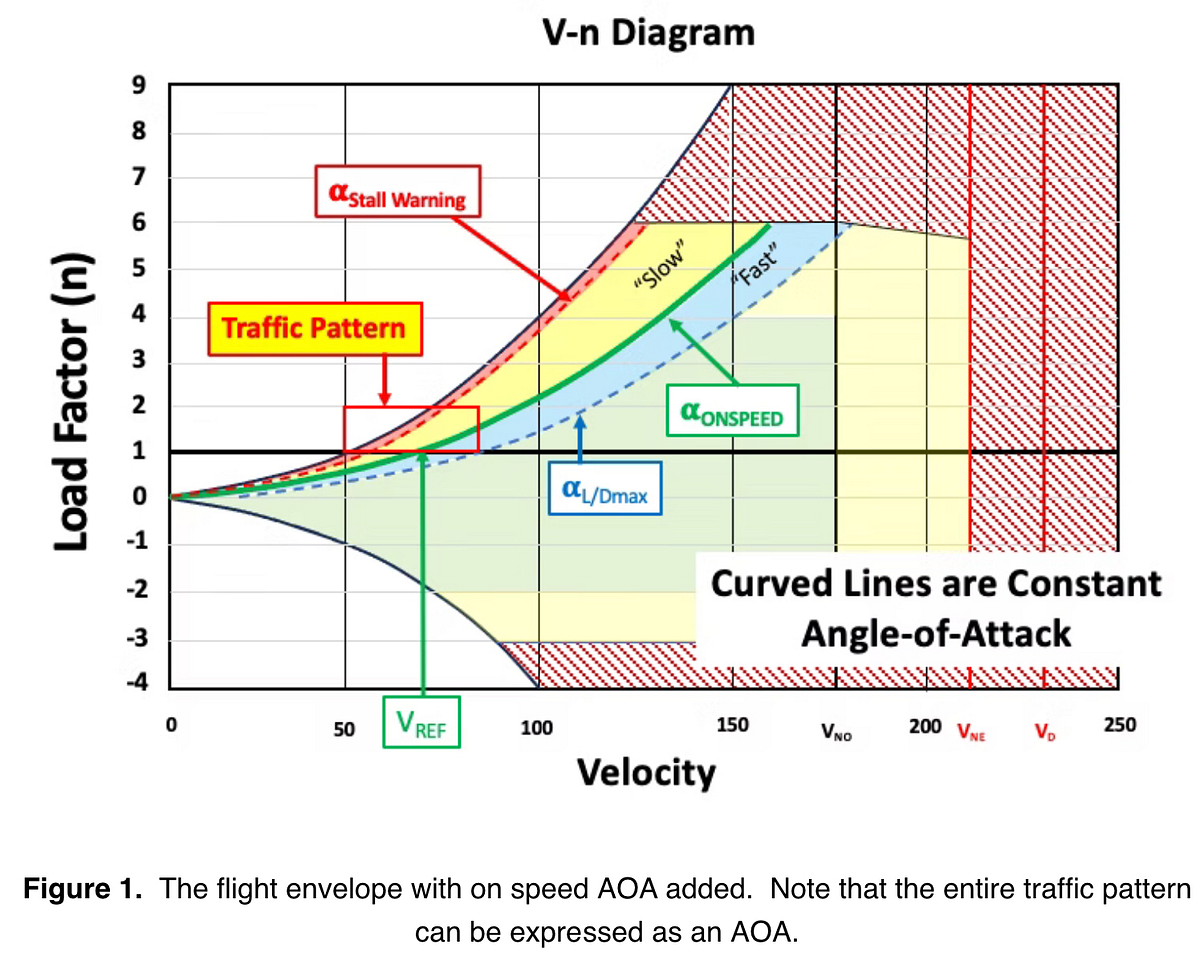
Do you have AOA? How about a radar altimeter, there are inexpensive options now. Note the RV is a non-stalled 3-pt lander, hence if you’re just a bit off, you will get the momentum tail drop increase in lift… you could try a slightly tail first attitude then work it ever so faster after getting it this way. With the AOA, you could set the attitude and drive it in with power. Work on flaring it out later. Though, yes, ultimately I think wheel are better. As for that wheel landing, rather than thinking ‘push the stick,’ I merely think ‘hold the tail’ as it is a “light” plane with so little cg-cp arm.
 
I don't remember who said this on VAF, when the RV8 does a little bounces at touch down, tilt the wing to the left or right and let it land on one wheel and the bounces will damp out. I do this when it got a bit bouncy on my landings and tilting the airplane to one direction will soften the landing.
Most of my landings have been with a little crosswind, and I have been a little late putting some stick into the wind after touchdown. I tend to "just fly it" without overthinking it too much, but in that one clip you can see there's some side load going on because of the crosswind.
Do you have AOA? How about a radar altimeter, there are inexpensive options now. Note the RV is a non-stalled 3-pt lander, hence if you’re just a bit off, you will get the momentum tail drop increase in lift… you could try a slightly tail first attitude then work it ever so faster after getting it this way. With the AOA, you could set the attitude and drive it in with power. Work on flaring it out later. Though, yes, ultimately I think wheel are better. As for that wheel landing, rather than thinking ‘push the stick,’ I merely think ‘hold the tail’ as it is a “light” plane with so little cg-cp arm.
No AOA but I believe the old Dynon D10A supports it. Would be cool to put a little AOA indicator in there- At this point I'm spending as much time tinkering as I am flying. There's alot of little projects to mess with to make it "right" in my eyes. Anyway, thanks for the input- I'll research it!
 
I’m just at ~650 hours on my RV-8. I’m still learning. The hard part is making the landing process repeatable.

I have given up on three point landing unless there is a passenger in the back. Even then the landings tend to be “tail low wheelies”. A little bit of power helps in most cases.

I limit the rear passenger to 180 pounds (passenger plus luggage). My limit reflect my comfort zone, not what the airplane can do.

I can tell you to check the gear leg bolt torques at least once a year. I checked at the 50 hours point when the plane developed a mind of its own to head for the right runway edge. Torquing the bolts ended that - the plane lands straight now.

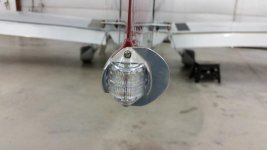
On the rudder trim I suggest you fly without wheel pants or gear leg fairings. Is the ball still out? If so then you can experiment with a rudder trim tab. The photo shows a simple one that you can add to your tail light (assuming you have one). Use a scrap piece of ~0.040” aluminum. Check that the tail light screws into some substantial (as in other than just a thin piece of fiberglass). If not, I have a easy way to fix that problem.

Carl
 

Attachments

  • IMG_0569.jpeg
    IMG_0569.jpeg
    53 KB · Views: 110
SuzieQ is a -4 and she LOVES tail-low wheel landings! Here is something I posted on a previous thread that might have some things that are helpful....

From an RV-4 pilot who had instructions from VANS:

Here's what he taught me - in a quick nutshell;
1) - entering the circuit on the downwind - reduce to idle and maintain circuit height - allow the plane to slow to 120MPH on the downwind - maintain that with 1800RPM once you reach 120MPH.
2) on the base - before final - reduce power again - slow to 100 MPH - maintain with 1200RPM - don't give up too much ALT yet .
3) ADD FLAPs to 50% or about 20 degrees on the base.
4) turning final - cut throttle to idle and apply full flaps.- trim for about 75 MPH in your plane - maintain a glide path that will ENSURE you will make the numbers on the runway - so if you need to add power - add power - if you are a bit high side slip to get back on the appropriate glide path - maintain 75MPH.
5) once you have reached the numbers over the tarmac - and at about 10- 15ish feet above the tarmac - LEVEL off. don’t' fully round out - LEVEL OFF - and hold that - THROTTLE AT IDLE - very important.
6) Looking down the far end of the runway - not in front of the nose - or beside by the wheels etc... looking way down the runway - this is the trick he taught me and believe it or not works like a dream - start adding back pressure on the stick - once you start - continue to feed more and more - while watching the end of that runway or a point near the end.
7) It will come down nicely like this - usually no bounce- as long as your control inputs are smooth and solid - not jerky - and continue to maintain full back pressure - and stay off the brakes until it's slowed some and you know that tail's firmly on the ground. then add in brakes evenly- and maintain the AC down the middle centerline using differential braking and or rudder inputs as needed but with finesse - what he likes to call Happy feet - it's being light but quick on the rudder controls. Mine has a locking tail wheel so it tracks nice and straight.

This will help, almost guaranteed.......


Yes this was for a -4 specifically but applies to an -8 and other tail draggers as well!

PRACTICE PRACTICE PRACTICE!! Have FUN as well..........
 
Couple of thoughts for you….
1) Transition training isn’t just for low-time pilots! Low Pass is now doing RV-8 transition training n the Houston area, and if you’re still airline, or retired airline, you can probably get there for nothing. Learning to fly on the internet isn’t the same as having an experience instructor in the airplane with you!
2) Tail-low wheel landings are the way I land my RV-8 95% of the time - no bounce, no funky controllability.
3) Add a touch of power at touchdown to cushion and prevent the negative stick force gradient that comes from rapid deceleration - particularly with weight in the back seat.
4) Good on you for sneaking up on aft CG’s - with a constant speed prop, the airplane decelerates very quickly once past the threshold and you’ll end up pushing forward to prevent over-flare (with aft CG’s.

That’s 2500 hours of RV-8 experience in four bulletin points for you…..😉
 
No AOA but I believe the old Dynon D10A supports it. Would be cool to put a little AOA indicator in there- At this point I'm spending as much time tinkering as I am flying. There's alot of little projects to mess with to make it "right" in my eyes. Anyway, thanks for the input- I'll research it!

Dynon does support with a combo Pitot-AOA probe. While I have had the Lift, I had a rudimentary pitot and wanted heat, so now my D10A also gives AOA. I use it in audio only as I don’t like how they do a reverse fill display. But that is ok, when my tone starts, that is right about the 3-pt squat. Though I usually do wheel. Kept the Lift in place so have a prominent front and center visual.
 
Not sure what is meant by ‘tail-low wheel landings,’ presume such means at to slightly faster than 3-pt but pushing it forward; this brings a good point: 3-point landings are an aircraft attitude but wheel landings are a mental attitude (as wheel landings are a set of aircraft pitches starting at 3-pt to anything faster). (Tail first would be anything slower than 3-pt all the way to not quite stall.) If you’re planning a 3-pt but a bit fast, you’ll probably be late trying to save it by switching to wheel.
 

Thread from back in the day with a lot of useful info. David-aviator (RIP) really documented his landings in his 8.
Should be good reading for you.
A
 
I don't remember who said this on VAF, when the RV8 does a little bounces at touch down, tilt the wing to the left or right and let it land on one wheel and the bounces will damp out. I do this when it got a bit bouncy on my landings and tilting the airplane to one direction will soften the landing.
That was Dan....

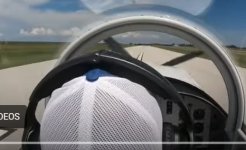
BTW... Remove that button on the top of your cap.... That, can be very painful if you hit the canopy. You may even break the canopy.
Just snip it off with some dykes..
button.jpg
 
Everyone else has given you lots of good advice but I noticed your tailwheel bounced a few times on one of your landings. I have found this can be irritating and seems to continue if not addressed. Either, relax back pressure slightly to allow the tail to come down on its on or bury the stick in your lap (what I usually do if this starts to happen) to help the tailwheel remain on the ground. Of course, you need to be slow enough to ensure you don't takeoff again in ground effect (that's when releasing a little pressure is better) but that probably means you landed too fast. Approaching too fast was my biggest problem. I started at 80+ kts, dropped to 75 kt, and now I like to cross the fence 65-70 kts. Seems to work out much better. I also had trouble maintaining control when the tailwheel planted until I aligned my mains. That was a game changer.
 
I also find the one wheel first “feeler” method is useful for many spring gear aircraft. An RV-4 driver showed me that trick a long time ago and it tamed my vicious Hiperbipe. Another thing not mentioned is to trim slightly nose heavy across the fence. Nose heavy at touchdown and a one wheel first method means you simply relax the stick at the first contact. No heroic well timed “pushing” the stick needed…. Just wait for the chirp and relax.
 
This airplane is new to me (non builder and first time RV owner. I'm a high time airline pilot but prior to 3 months ago, I hadn't done much light airplane flying in the last 20+ years. Once a year or so I'll go play in my buddy's Extra 300 but realistically that's it. I have about 15 hours in taildraggers over the last 15 years or so, mostly in the Extra 300, Pitts S2B, and more recently a Citabria where I brushed up my tailwheel skills before I took delivery of this airplane.

I've found that wheel landings seem to be the way to go, when I try to three point it bounces right back up in the air. So wheelies it is. Kind of strange for me to land with the stick forward, but the way I'm looking at it, it's almost like you're trying to make a low pass down the runway (with the throttle idle of course). I've been doing power on approaches until I get this touchdown thing locked in- I have done some power off 180s at various configurations and some tight patterns so I know I can make the runway if needed, and eventually I'll fly that way traffic permitting (in S Florida it usually doesn't permit).

I'm having a great time, once I get over the pucker factor of turning final 3/4 mile out and 400'. I can't believe I used to teach kids how to do this?

Anyway here's a video of my last 2 days. The second attempt I bounced pretty high and just went around. 3rd was the day before coming to the home airport Any tips would be appreciated.

It's great to have a new challenge after 30 years in the air.

Too much energy, she'll bounce right back up into the air. Reduce your speed and you'll get better. As some have mentioned, flying AOA is a great help. The ONLY thing that flying airliners and flying an RV-8 have in common is to fly your target speed. That forward bump on the stick just before touchdown will help. Here's a couple of articles about landing RV's straight from the man himself.
 

Attachments

I appreciate all of the. Replies. Regarding transition training, I'm not being hard headed about this. I do plan to go to Houston, I did fly 3 different tailwheel airplanes with CFIs in the last few months getting ready for all of this, Houston was part of the plan but then the airplane got here and well.....no excuses, I was pumped to fly it!

Carl, I was considering taking off my wheel pants to hit the grass strip later this month anyway, so maybe this is an opportunity to check the rudder trim this way as well.
Everyone else has given you lots of good advice but I noticed your tailwheel bounced a few times on one of your landings. I have found this can be irritating and seems to continue if not addressed. Either, relax back pressure slightly to allow the tail to come down on its on or bury the stick in your lap (what I usually do if this starts to happen) to help the tailwheel remain on the ground. Of course, you need to be slow enough to ensure you don't takeoff again in ground effect (that's when releasing a little pressure is better) but that probably means you landed too fast. Approaching too fast was my biggest problem. I started at 80+ kts, dropped to 75 kt, and now I like to cross the fence 65-70 kts. Seems to work out much better. I also had trouble maintaining control when the tailwheel planted until I aligned my mains. That was a game changer.
This has happened to me twice now, it's on rollout after the tail is down and I realized it occurs when I'm crossing intersecting runways at the home airport- so there's a hump there that sets is bouncing. But I was curious should I leave the stick neutral or bury it and put that load on the tailwheel.

Excuse book 101- blame all crummy landings on mysterious runway humps. :p Although we do have some famous ones in our system.
 
Not sure if this will apply to the 8, but in my 6 with forward cg, full flap wheelies work great. As the cg moves aft, wheelies start to look a lot like your symptoms. A notch up to 30 deg.’ish, and she lands like butter.
You’re doing great learning your machine, so you might play with your flap settings as a learning exercise. Good to practice no flaps as that is a possibility.
 
SuzieQ is a -4 and she LOVES tail-low wheel landings! Here is something I posted on a previous thread that might have some things that are helpful....

From an RV-4 pilot who had instructions from VANS:

Here's what he taught me - in a quick nutshell;
1) - entering the circuit on the downwind - reduce to idle and maintain circuit height - allow the plane to slow to 120MPH on the downwind - maintain that with 1800RPM once you reach 120MPH.
2) on the base - before final - reduce power again - slow to 100 MPH - maintain with 1200RPM - don't give up too much ALT yet .
3) ADD FLAPs to 50% or about 20 degrees on the base.
4) turning final - cut throttle to idle and apply full flaps.- trim for about 75 MPH in your plane - maintain a glide path that will ENSURE you will make the numbers on the runway - so if you need to add power - add power - if you are a bit high side slip to get back on the appropriate glide path - maintain 75MPH.
5) once you have reached the numbers over the tarmac - and at about 10- 15ish feet above the tarmac - LEVEL off. don’t' fully round out - LEVEL OFF - and hold that - THROTTLE AT IDLE - very important.
6) Looking down the far end of the runway - not in front of the nose - or beside by the wheels etc... looking way down the runway - this is the trick he taught me and believe it or not works like a dream - start adding back pressure on the stick - once you start - continue to feed more and more - while watching the end of that runway or a point near the end.
7) It will come down nicely like this - usually no bounce- as long as your control inputs are smooth and solid - not jerky - and continue to maintain full back pressure - and stay off the brakes until it's slowed some and you know that tail's firmly on the ground. then add in brakes evenly- and maintain the AC down the middle centerline using differential braking and or rudder inputs as needed but with finesse - what he likes to call Happy feet - it's being light but quick on the rudder controls. Mine has a locking tail wheel so it tracks nice and straight.

This will help, almost guaranteed.......


Yes this was for a -4 specifically but applies to an -8 and other tail draggers as well!

PRACTICE PRACTICE PRACTICE!! Have FUN as well..........
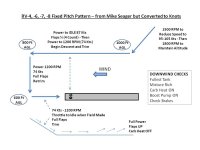
This is text book Mike Seager. He even did a sketch that shows this exact procedure. It’s in my “Operstions Manual”, so to speak…..
This was for the 7 (6).
Good stuff.
 
The gear on the 8 is very different from the 6 or 7. It is stiffer, and for me, much easier to wheel land without all the push or release back pressure required on a 6 or 7. Tail low wheel landings work best for me but 3 point is almost impossible without 40 or 50 lbs in the back seat.
 
They teach them young in Canada.....
Actually what I took away from this video is that I'm envious at how nice his baggage door is fitted!

I had a beautiful landing yesterday thanks to tips from VAF and one of my old buddies who text me some inside info when he saw this post. I figure about 100 more hours before I'm ready to go to any fly-ins and have my landings judged. If anyone wants to set up a 737 landing competition I will gladly compete for first place. :ROFLMAO:

I'm quite grateful for VAF and the Vans community, without this place and the people in it, I would have never bought this airplane.
 
Last edited:
This is how it's done. Great airspeed/energy control. 3-point is clearly impossible without fastback and Grove gear. ;)

 
Don't forget the CS prop and grass strip. Probably cheating with 20 psi in the tires, too.
Grass can help a bit, the CS prop doesn't though since CG is more forward. Point is most RV pilots tend to fly down to the runway and level off with excess speed and then play this game of trying to bleed speed and reach a 3-point attitude before accidently letting the mains touch first which causes the dribbling down the runway. The landing in the video managed his descent and attitude such that he arrived at runway height at 3-point attitude with no potential to dribble the airplane.
 
Gino,
Cudos to you for taking the right approach - using test cards to define capabilities, and also sneaking up on aft CG flight characteristics. There’s a lot of good advice here, but realize that’s after looking at only two of your landings early on - not a very good pool of information to make a judgement. You’re a pro, and with that right approach, you’ll figure it out. The airplane will eventually grow on you and it will be like you’re wearing it. As far as a POH goes, use those test cards to define necessary data, and write your own POH. It’s not required, but it’s a good idea. There are plenty of templates for that on this website. That way, you’ll know everything and you can trust it because you are the one that did it.

Congrats on your new airplane. I’m sure you’ll love it.
 
Update, I'm up to about 10 hours now- Landings have really started to click the last few days, even with a little crosswind. Haven't tried 3 pointing yet, and I'm still mastering energy management in the pattern (I would like to be able to use idle on speed to the numbers but I usually end up low- it doesn't help that I fly out of a busy airport so no 2 approaches are the same, and touch and goes are not allowed.)

As part of my aft CG "training" I've been using 80lb ballast (dumbbells in a bag strapped to the seat) and a 40lb tool bag in the aft baggage. With full fuel that puts me around 1625 gross and 83.6 CG, with GC migrating aft as the fuel burns off to about 84". While the tail definitely feels heavier and the pitch force lighter, it's manageable. Although solo (1500# 80.3 CG) is certainly more pleasant.

Recall that I'm working up to taking my pilot brother in back, he's 200lb.

I'm not comfortable putting 200lb ballast in the back seat. #1 I don't own that many dumbbells and don't feel comfortable enough with a method to secure them. So my thought was to increase the passenger seat ballast to around 110 lb using some soft scuba weights in addition to my dumbbell bag, and increase the aft cargo to 65lb using a case of water bottles. That puts me at 1675 and 85.1 CG.

That is almost identical CG wise to just me up front and my brother in the back seat, but about 25 lb lighter.

Once I get the hang of this, I can start flying with a passenger. The CG will be the same and could even be improved if I put something in the forward baggage, which is likely how he and I will fly on the occasions we go together.

My philosophy has always been that aircraft limitations exist for a reason and that a competent pilot should have the ability to fly their aircraft to the numbers. It may not be fun to do it every day, but I won't feel I know the airplane completely until I do.

I finally got around to centering the stick by adjusting the control rods, the airplane seems to need a little left stick to fly straight and level, and the stick being displaced to the left made it even worse from a comfort position. I will check the flap rigging next using Carl's level method.
 

Attachments

  • IMG_0530.jpg
    IMG_0530.jpg
    700.4 KB · Views: 28
This airplane is new to me (non builder and first time RV owner. I'm a high time airline pilot but prior to 3 months ago, I hadn't done much light airplane flying in the last 20+ years. Once a year or so I'll go play in my buddy's Extra 300 but realistically that's it. I have about 15 hours in taildraggers over the last 15 years or so, mostly in the Extra 300, Pitts S2B, and more recently a Citabria where I brushed up my tailwheel skills before I took delivery of this airplane.

There isn't much of a POH (as in none) so I've been using the flight test cards as a way to get to know my airplane and how it handles in different conditions. I've got about 3.5 hours in it now and am pleased with the handling. It's very docile in stalls (recovers easily and instantly) slow flight handles well. It probably needs a trim tab, as even in cruise rudder is about 1/2 ball out to the right.

The last two flights were with 100lb ballast in the rear seat and 40lb in the rear baggage. I want to get used to more weight and aft CG as I work my way up to taking passengers. For reference, that puts me about 1600 LB and 84.2" CG. Well within the envelope, but more difficult to land than my first 2 flights at 1450 LB and 80.3

I've found that wheel landings seem to be the way to go, when I try to three point it bounces right back up in the air. So wheelies it is. Kind of strange for me to land with the stick forward, but the way I'm looking at it, it's almost like you're trying to make a low pass down the runway (with the throttle idle of course). I've been doing power on approaches until I get this touchdown thing locked in- I have done some power off 180s at various configurations and some tight patterns so I know I can make the runway if needed, and eventually I'll fly that way traffic permitting (in S Florida it usually doesn't permit).

I'm having a great time, once I get over the pucker factor of turning final 3/4 mile out and 400'. I can't believe I used to teach kids how to do this?

Anyway here's a video of my last 2 days. The second attempt I bounced pretty high and just went around. 3rd was the day before coming to the home airport Any tips would be appreciated.

It's great to have a new challenge after 30 years in the air.

I feel your pain. I had the same background and situation. Landings got a lot better once I got the proper over the fence speed figured out. I was using a speed that was too high and you can't make an RV land when it dosen't want to.
 
I'm not comfortable putting 200lb ballast in the back seat. #1 I don't own that many dumbbells and don't feel comfortable enough with a method to secure them. So my thought was to increase the passenger seat ballast to around 110 lb using some soft scuba weights in addition to my dumbbell bag, and increase the aft cargo to 65lb using a case of water bottles. That puts me at 1675 and 85.1 CG.

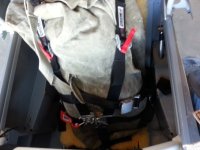
I used sand bags in a dufflebag and then the seat belts to secure. Was able to get up to 240 lbs, seemed to be secure.

20200217_105116.jpg
 
Hey Gino, if you want to get into deep analysis of your landings, give FlySto.net a try. I enjoy comparing what I think is a good landing to what this software says.
 
Hey Gino, if you want to get into deep analysis of your landings, give FlySto.net a try. I enjoy comparing what I think is a good landing to what this software says.

I think you’d be better processing your own data. You’ll more readily find what you think important whereas others may program things as important that really are not.


Back
Top