Well, okay, that was the groundspeed on base with a nice tailwind, but when ATC asked for maximum forward speed to get us in ahead of two regional jets, the RV-9A was up to the task. And we were VFR, so we could be aggressive in our speed management.
The fun started maybe 15 miles from the Initial Approach Fix, IIRC, 1200 feet above the crossing altitude, and well off the final approach course. 24" of manifold pressure and a slight descent quickly had us at 155-160 KIAS, top of the green and tickling the yellow. I let the autopilot do the flying, and I concentrated on the power management, airspeed, and descent. The turbulence was "light," meaning we still got beat up some, especially at those speeds, and there was one feisty gust that hit us from the side.
ATC wanted maximum forward speed to a five mile final, i.e., the final approach fix. That's where I started a gradual slowdown from 155 KIAS, almost as if nursing a turbocharged big Continental instead of a bulletproof O-320. Everything was well under control, and two miles out, we were at 100 KIAS. Flap speed came soon, and we were at minimums at the desired 80 KIAS -- fast enough to allow the autopilot to easily TOGA if we needed to, but slow enough that full flaps were available and would easily get us onto any instrument runway. If this had been actual IFR, I could have been less aggressive in keeping the speed up.
Right over the runway, there were considerable gusts and, to use the Navy phrase, I was killing snakes (moving the stick vigorously), keeping the plane exactly over the centerline and compensating for the gusts till a very gentle touchdown on the mains. However, I forgot that I'd asked for a long landing, but there was plenty of time to get to the turnoff most of the way down the runway.
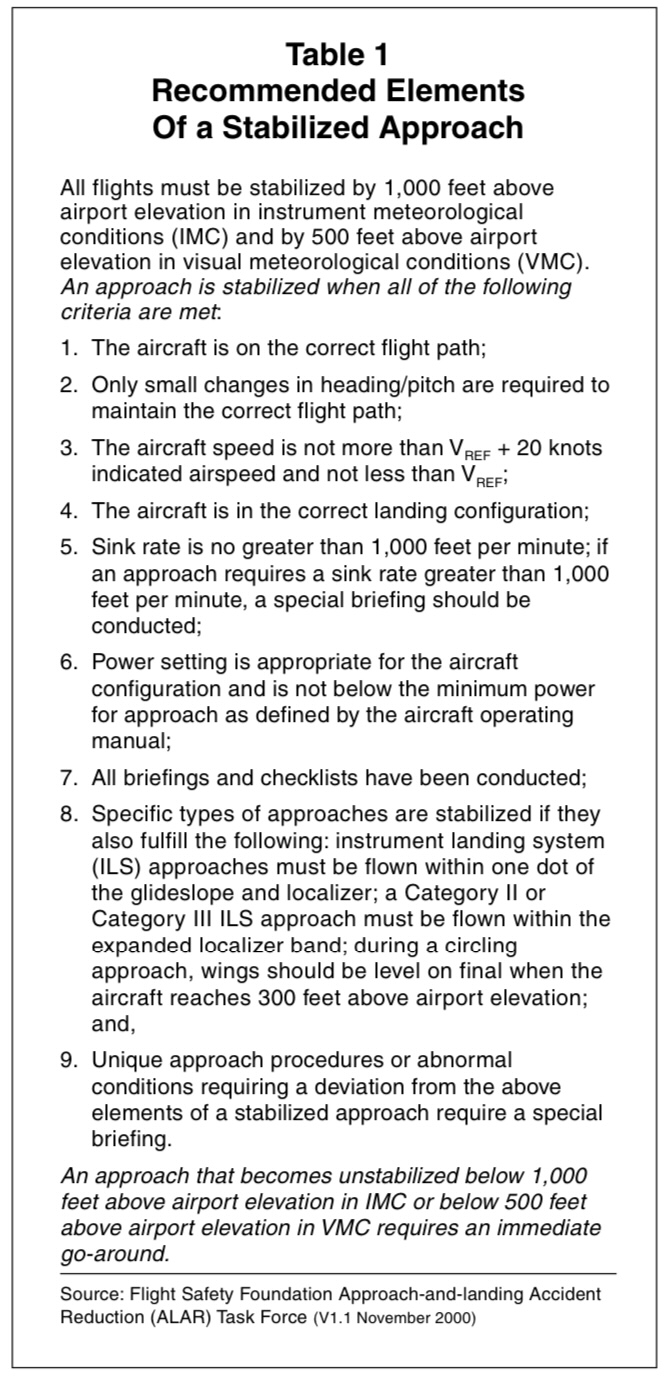
So everything was well under control on the approach. Even if this didn't meet the airline definition of "stable approach," it met those same objectives. Along those lines, Rod Machado has a fun read about CFIs who try to teach their students to fly light planes as if they were jets.
My young CFI had never seen some of what we used to fly, so earlier in the flight I showed her a Lazy 8 with 60° banks. I'd not done a Lazy 8 for forty plus years, and never in the RV. It was smooth and easy, maybe 1.5 G, but my wind compensation was absent. Still, she enjoyed seeing something more than a Lethargic 8 as currently taught.
As for my recovery from two surgeries last year and a heart attack, and only ten hours (dual) during that time, several questions are answered. Yes, I can still fly reasonably well and yes, I still enjoy it. The one remaining question is how much endurance I'll have in the cockpit, if six hour trips are still doable or if my body only wants to fly one hour per day, despite all the rehab. Meanwhile, I'm still waiting for the Special Issuance Third Class medical...
It's too soon to advertise the RV-9A for sale.
The fun started maybe 15 miles from the Initial Approach Fix, IIRC, 1200 feet above the crossing altitude, and well off the final approach course. 24" of manifold pressure and a slight descent quickly had us at 155-160 KIAS, top of the green and tickling the yellow. I let the autopilot do the flying, and I concentrated on the power management, airspeed, and descent. The turbulence was "light," meaning we still got beat up some, especially at those speeds, and there was one feisty gust that hit us from the side.
ATC wanted maximum forward speed to a five mile final, i.e., the final approach fix. That's where I started a gradual slowdown from 155 KIAS, almost as if nursing a turbocharged big Continental instead of a bulletproof O-320. Everything was well under control, and two miles out, we were at 100 KIAS. Flap speed came soon, and we were at minimums at the desired 80 KIAS -- fast enough to allow the autopilot to easily TOGA if we needed to, but slow enough that full flaps were available and would easily get us onto any instrument runway. If this had been actual IFR, I could have been less aggressive in keeping the speed up.
Right over the runway, there were considerable gusts and, to use the Navy phrase, I was killing snakes (moving the stick vigorously), keeping the plane exactly over the centerline and compensating for the gusts till a very gentle touchdown on the mains. However, I forgot that I'd asked for a long landing, but there was plenty of time to get to the turnoff most of the way down the runway.
So everything was well under control on the approach. Even if this didn't meet the airline definition of "stable approach," it met those same objectives. Along those lines, Rod Machado has a fun read about CFIs who try to teach their students to fly light planes as if they were jets.
My young CFI had never seen some of what we used to fly, so earlier in the flight I showed her a Lazy 8 with 60° banks. I'd not done a Lazy 8 for forty plus years, and never in the RV. It was smooth and easy, maybe 1.5 G, but my wind compensation was absent. Still, she enjoyed seeing something more than a Lethargic 8 as currently taught.
As for my recovery from two surgeries last year and a heart attack, and only ten hours (dual) during that time, several questions are answered. Yes, I can still fly reasonably well and yes, I still enjoy it. The one remaining question is how much endurance I'll have in the cockpit, if six hour trips are still doable or if my body only wants to fly one hour per day, despite all the rehab. Meanwhile, I'm still waiting for the Special Issuance Third Class medical...
It's too soon to advertise the RV-9A for sale.