Van's Air Force

The definitive Van's Aircraft support community! Buying, building or flying an RV? Join our exclusive family of mentors and enthusiasts!

IO-540 D4A5 mag drive bearing failed - advice for finding the missing bits?

GyroF-16

Well Known Member
Patron
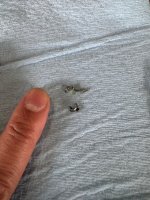
Did an oil change on my F1 Rocket this week, and found some metal bits in the oil sump screen.
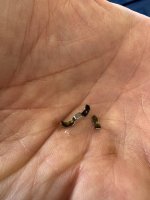
IMG_5279.jpeg

After some consulting, we concluded that they were parts of the bearing cages from the magneto drive bearing in the accessory case.
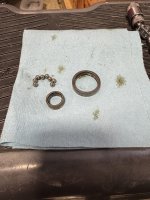
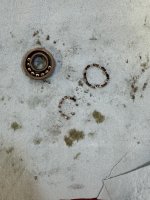
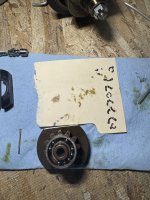
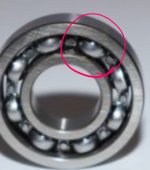
Pulled the left mag (the right mag is a Lightspeed, and there’s no drive gear on that side), and can see the bearing in the accessory case - all 8 balls are still in the ring, but they’re bunched together in the bottom 60% of the circle, instead of looking like an intact bearing like the picture with the red circle.

So it appears that the bearing cages have failed and fallen out of the ring. And at least two small bits made their way to the sump screen.

Unfortunately, I’ve had this airplane for 6 months, and there’s no record of the sump screen being cleaned in the last 15 years / 340 tach hours.
The original owner/builder (not the one I bought it from) cleaned the screen twice in the first 260 hours, and never found anything. All that to say, I don’t know how long ago the bearing cages failed, or how long those bits have been in the sump screen.

My instinct is to find as many of the broken bits as possible. The plan is to use a borscope and magnet through the oil drain ports and the sump screen ports to look in the oil pan. Then look down from the open holes where the mags go to try to find some more bits.

Thoughts from the group? What should I be concerned about, and how can I mitigate the risk of one of those missing pieces damaging something?

Thanks!
 

Attachments

  • 1000026066.jpeg
    1000026066.jpeg
    89.1 KB · Views: 63
The sump and screen are where you’ll find the big bits. The risk is that the bearing parts damage the gear train in the accessory case. Been there, done that. The screen and filter should have protected the crank and its bearings.
 
Bore scope and magnet is a good plan.
The big bits won’t get past the screen. It’s likely that there are not any bits small enough to have gotten past the screen.
When you get all the bits out, assemble them carefully to account for 100% of the bearing.
I believe the biggest issue is getting the rest of the cage, race, and balls out without any more shrapnel falling into the sump.
 
I would of start with screen, probably remove sump..and flush 5 gallons of stoddard solution through the engine, letting it drain through sump drain…I fill the engine completely with stoddard solution, after getting big stuff out, then re-assemble and rotate by hand a bunch of time…drain…repeat..and flush till solution is clean. Let it sit overnight, re-assemble, fill will new oil, and do an immediate oil change 2hours or so of run time,

In the big picture, a filter and oil are cheap throw aways…
 
Bore scope and magnet is a good plan.
The big bits won’t get past the screen. It’s likely that there are not any bits small enough to have gotten past the screen.
When you get all the bits out, assemble them carefully to account for 100% of the bearing.
I believe the biggest issue is getting the rest of the cage, race, and balls out without any more shrapnel falling into the sump.
Thanks!
Got the race rings and ball bearings out this morning.
No sign of any of the cage bits.
Inspected the gears in the accessory case via borescope - no evident damage.
Now to figure out how to find the remaining fragments.
If there are any remaining fragments. If they came out during previous oil changes (before my time), they could already be gone.

Any thoughts on how long that bearing could function without the cages there to keep the ball bearings spaced correctly?IMG_9276.jpeg
 
Last edited:
I bet the other parts of the cage are right near where the screen sits and just stayed behind when the screen was pulled.
Did you strain the oil you removed in case pieces came out with the oil?
Fish straight down below the mag. You can remove the plate on your EI side and fish from there, too.
Remove all plugs from the sump and you’ll be able to reach most of the sump area.
Edit: If you have a quick drain pull it and make sure no pieces of cage are hung up in it.
 
Any thoughts on how long that bearing could function without the cages there to keep the ball bearings spaced correctly?
Don't have a time / hour estimate, but if you have confirmed a new bearing has 8 balls, same as the one in your engine, I think you are OK. What happens when the cage is missing is that the balls migrate around (as you have seen) and rub against each other. Taken to extremes, this can wear the balls generating swarf, cause the bearing to sieze or cause the balls to escape the races. With so little load on a mag bearing, the cage failure is likely due to an installation error (damaging the cage with an incorrect driver) than an overload / or overspeed.
 
I bet the other parts of the cage are right near where the screen sits and just stayed behind when the screen was pulled.
Did you strain the oil you removed in case pieces came out with the oil?
Fish straight down below the mag. You can remove the plate on your EI side and fish from there, too.
Remove all plugs from the sump and you’ll be able to reach most of the sump area.
Edit: If you have a quick drain pull it and make sure no pieces of cage are hung up in it.
Thanks for the ideas.
I didn’t strain the oil coming out (since I didn’t find the pieces in the sump screen until after draining oil). But it did drain onto a flat catch pan before in flowed to some holes where the oil was collected. I’m pretty confident I’d have seen metal on the horizontal surface, and it’s not likely pieces were carried by a flow of oil only 1/16” deep at most.
 
Don't have a time / hour estimate, but if you have confirmed a new bearing has 8 balls, same as the one in your engine, I think you are OK. What happens when the cage is missing is that the balls migrate around (as you have seen) and rub against each other. Taken to extremes, this can wear the balls generating swarf, cause the bearing to sieze or cause the balls to escape the races. With so little load on a mag bearing, the cage failure is likely due to an installation error (damaging the cage with an incorrect driver) than an overload / or overspeed.
Thanks - that’s good food for thought. The magneto was removed and overhauled about 70 tach hours ago.
I was wondering if the drive bearing was somehow damaged during the reinstallation of the mag (maybe putting excessive force along the axis of rotation), damaging the cage and causing it to fail. There’s no other record in the logs of a maintenance action that would involve potential stress on the drive bearing since the engine was overhauled in the year 2000, 609 tach hours ago.
 
A thread drift but relevant:
Is your mag an impulse coupled Slick? If so they are prone to come apart and I believe have an AD for 250 hr inspections when on a 540.
Now would be a good time to swap out for a non-impulse coupled unit or upgrade to a P-mag. I believe it will play nice with the Lightspeed.
My hope is that you have a non-impulse coupled unit or a Bendix so this doesn’t turn into an EI debate…
If it does I apologize in advance.
 
A thread drift but relevant:
Is your mag an impulse coupled Slick? If so they are prone to come apart and I believe have an AD for 250 hr inspections when on a 540.
Now would be a good time to swap out for a non-impulse coupled unit or upgrade to a P-mag. I believe it will play nice with the Lightspeed.
My hope is that you have a non-impulse coupled unit or a Bendix so this doesn’t turn into an EI debate…
If it does I apologize in advance.
This was <apparently> a bearing failure, not a mag failure. So whether you're flying a pMag or any other type of gear driven ignition, that doesn't eliminate the bearing issue. A flywheel based electronic ignition would be the way to remove the bearing from the equation.
 
My post had nothing to do with his present failure. I was only pointing out that the impulse coupled slicks had another issue worth considering since he has it all apart.
 
Just to be clear, the bearing in question is the lightspeed side? In other words, they left the bearing in the case when the magneto was removed?
 
I would remove the accessory case and inspect everything including the oil pump.. If you don't find all the missing pieces then remove the oil sump and inspect. You don't want a missing piece go thru the oil pump, that will make for a very bad day. Keep in mind a lot of bearing cages are riveted together with stainless rivets so a magnet may not help.
 
If you fly at night, over large cities, over water, over mountains, with passengers, or ever want to sleep at night and/or sell the airplane some day…
I would call Rhonda at Barrett and have a tear down inspection. As a buyer, I would value such an entry into your logbook as a testament to your integrity and the airplane’s proper care. Maybe worth at least half of the cost of the inspection. Maybe more.
You may be able to find every damaged piece but you’ll never know if you’ve found the damage they may have caused on their journey.
A tiny scrap of thread tape brought down an RV-10 and killed people on board.
I admire your openness but since you asked for recommendations, remember that insurance agents, future buyers, and federal authorities read these threads.
 
Last edited:
Just to be clear, the bearing in question is the lightspeed side? In other words, they left the bearing in the case when the magneto was removed?
Negative. The bearing that failed is the left side, that drove the Slick mag.
The bearing on the right is absent .
 
If you fly at night, over large cities, over water, over mountains, with passengers, or ever want to sleep at night and/or sell the airplane some day…
I would call Rhonda at Barrett and have a tear down inspection. As a buyer, I would value such an entry into your logbook as a testament to your integrity and the airplane’s proper care. Maybe worth at least half of the cost of the inspection. Maybe more.
You may be able to find every damaged piece but you’ll never know if you’ve found the damage they may have caused on their journey.
A tiny scrap of thread tape brought down an RV-10 and killed people on board.
I admire your openness but since you asked for recommendations, remember that insurance agents, future buyers, and federal authorities read these threads.
Thank you for the ONLY correct information in the otherwise BAD information. Complete teardown is the only safe option.
 
Why is a complete tear down the only safe option?

Any cage pieces are likely to have been caught in the strainer, or left in the sump. There is almost zero chance that a piece that large will have got to the oil filter, let alone been pumped past it.

I think there is a risk that parts are still in the sump, but even then you can inspect fairly well with a Borescope. Unfortunately removing the sump is problematic on a 540 since the lower engine mounts bolt to it.
 
Update: using borescope and magnet, recovered about 85% of the bearing cages in multiple pieces. All the parts were in the oil sump, with the exception of the two pieces originally found in the sump screen. As an aside, one speck of ferrous material was found in the oil filter folds - something barely large enough to be visible, and too tiny to pick up, except with a magnet. I’m talking 0.1 mm or less in the largest dimension. No telling whether that speck came from the cages, or something else.
IMG_9279.jpeg
 
Last edited:
At this point…you still have 10-15% unaccounted for. Flushing forward and backwards is worth the time, if you’re not going to dis-assemble.

You can flush stoddard solvent everywhere throughout the whole engine. I’ve made a few fitting adaptors to flush backward from the prop governor line, and the same for any oil supply or return fitting. I flushed the heck out of an O-360 a few years back and found a surprising amount of metal and tracked it down to its source in the accessory drive.

I start with about 5 psi and raise it up to 30psi or so…anything sitting or slightly wedged should come loose and end up in the sump or screen.
 
Unfortunately, I’ve had this airplane for 6 months, and there’s no record of the sump screen being cleaned in the last 15 years / 340 tach hours.
The original owner/builder (not the one I bought it from) cleaned the screen twice in the first 260 hours, and never found anything. All that to say, I don’t know how long ago the bearing cages failed, or how long those bits have been in the sump screen.

My instinct is to find as many of the broken bits as possible. The plan is to use a borscope and magnet through the oil drain ports and the sump screen ports to look in the oil pan. Then look down from the open holes where the mags go to try to find some more bits.
Is it possible that the other bits are at the oil recycling center? I can see a situation where the previous owner drained the oil, and some of the bits flowed out with the old oil, and they didn't notice.
 
Is it possible that the other bits are at the oil recycling center? I can see a situation where the previous owner drained the oil, and some of the bits flowed out with the old oil, and they didn't notice.
Entirely possible. There were 3 oil changes between the left magneto being removed and overhauled and the oil change where I found the pieces in the sump screen. It is entirely plausible that some smaller bits came out with the oil. The previous owner used a section of tubing from the oil drain to a Lowe’s 5 gal bucket to collect the oil, effectively eliminating any opportunity to see something in the oil.
 
Two things normally lead to pressed metal cage failure
1. Lack of lubrication, don't think this is the case here.
2. Vibration.

On the out side it could be a poor assembled bearing but these are extremely rare.

just my 2p worth.

Rob
 
That’s good insight.
Since the failure occurred sometime in the 70 tach hours after the overhaul of the left magneto, can you imagine a scenario where the bearing was damaged during the removal of, or (more likely) reinstallation of the magneto?
 
I don’t agree on the bearing failure. I own a lot of large CNC equipment and presses and all kinds of industrial stuff…bearing failure are almost always attributable to a manufacturers flaw. Something minor…cages seem to fail when cracks propagate from a deburred edge not being smoothed properly, or excessive heat…but the number one killer of bearings I’ve seen over many years, is when something else breaks first, wedges itself into a bearing and boom! Bearing goes,

My concern, from reading your post was just that…something else initially causing this. It doesn’t take much. We had a large 7 axis cnc lathe puke a bearing after a teflon lined hose failed and some of the stainless outer lining made its way into the oil system, when the new hose was installed. Some of the threads worked past a filter screen and into a bearing that two days after the hose repair started squealing. Found one cage blue and in thirds, from heat all the balls present, other cage intact.

I’d want to err to the smart side…wouldn’t be too hard to pull the engine and remove the accessory case….even a cylinder or two…

But to put it back together, assuming low oil…or damage from a mag install…my experience installing mags, is that they drop in easy and we always handle them carefully…so I doubt damage from install. You could hit that bearing with a 5 pound sledge and it would run fine.

My gut feel is foreign object damage. Either the cage is a manufacturer defect…one in ten thousand…or possibly something got dropped in the hole when the mag was off inadvertently…or any of a million possibilities.

I’d inspect for further damage if it were mine.

Worst you waste is a couple days…
 
I don’t know the configuration of your engine. But on my IO-360A1A, once I remove the fuel servo and the intake pipes, I can see and access everything in the sump. Just a thought.
 
Justa6ereh
As I said (normally), and agree with you on external damage during install etc.

Sorry forgot to mention I’m an exbearing engineer part of whose day job was analysing failures, and the failure modes I mentioned are the classic modes that’s why I said normally. One mode to cause this type of failure would be misalignment but I did not think this would happen in this case that’s why I didn’t mention it.

I agree with you I would want to put the accessory housing as well.

Best regards
Rob
 
I had a teardown after suffering a prop governor failure die to a balance weight change from being drilled and pinned to being welded. The weight broke off and became a defacto lathe bit inside the prop gov chamber until it breached the case and allowed high pressure oil to escape.
During the teardown they found metal in all kinds of places that they didn't expect.
They also found that my spinner disc had a crack at its base on the crank which resulted in a crank swap. They could never determine if the spinner crack was a result of the prop going to the feathered position at high power, or if it was a totally separate occurrence.
Nevertheless, it was a ticking bomb that was only discovered because of the teardown inspection.
 
I had a teardown after suffering a prop governor failure die to a balance weight change from being drilled and pinned to being welded. The weight broke off and became a defacto lathe bit inside the prop gov chamber until it breached the case and allowed high pressure oil to escape.
During the teardown they found metal in all kinds of places that they didn't expect.
They also found that my spinner disc had a crack at its base on the crank which resulted in a crank swap. They could never determine if the spinner crack was a result of the prop going to the feathered position at high power, or if it was a totally separate occurrence.
Nevertheless, it was a ticking bomb that was only discovered because of the teardown inspection.
You’re talking about a major failure and oil loss event. The OP’s situation is very different.
 
Why is a complete tear down the only safe option?

Any cage pieces are likely to have been caught in the strainer, or left in the sump. There is almost zero chance that a piece that large will have got to the oil filter, let alone been pumped past it.

I think there is a risk that parts are still in the sump, but even then you can inspect fairly well with a Borescope. Unfortunately removing the sump is problematic on a 540 since the lower engine mounts bolt to it.
I would agree. On a 540 with those bearings, they will fall out and go right down the backside of the engine into the pan. Possible chance they could land in the fuel pump, which is under that bearing. But is not much else there on a 540. You can pull the mags and covers and inspect the gear teeth to make sure there is no chipped tooth or damage. Any gear teeth damage will require a replacement. The camshaft is probably up too high but who know how things get tossed around in the back of an engine. I've had this bearing fail on my 540 when I bought the engine and the guy was still running the plane. I found all the parts in the sump. There is no way the metal can get through the screen and get up into the pump unless its got a big hole in it. However, I would at least drop the sump and check for all parts that will not flow out the oil drains. There are too many crevices to hid in around the internal of the sump with the tubes and updraft intake.
 
I would agree. On a 540 with those bearings, they will fall out and go right down the backside of the engine into the pan. Possible chance they could land in the fuel pump, which is under that bearing. But is not much else there on a 540. You can pull the mags and covers and inspect the gear teeth to make sure there is no chipped tooth or damage. Any gear teeth damage will require a replacement. The camshaft is probably up too high but who know how things get tossed around in the back of an engine. I've had this bearing fail on my 540 when I bought the engine and the guy was still running the plane. I found all the parts in the sump. There is no way the metal can get through the screen and get up into the pump unless its got a big hole in it. However, I would at least drop the sump and check for all parts that will not flow out the oil drains. There are too many crevices to hid in around the internal of the sump with the tubes and updraft intake.
But, since the lower engine mount attachment points are on the sump, dropping the sump means pulling the engine.
Did you find all those parts in the sump by pulling the engine to drop the sump, or did you find them with a magnetic (as in my case), or flushing (as I plan to do next)?
 
But, since the lower engine mount attachment points are on the sump, dropping the sump means pulling the engine.
Did you find all those parts in the sump by pulling the engine to drop the sump, or did you find them with a magnetic (as in my case), or flushing (as I plan to do next)?
Is there the possibility to lift the engine by the lifting lug, loosen the upper mounts and remove the lower mounts to pull the sump? You might be able to do that without unhooking much at all.

Just a thought.
 
But, since the lower engine mount attachment points are on the sump, dropping the sump means pulling the engine.
Did you find all those parts in the sump by pulling the engine to drop the sump, or did you find them with a magnetic (as in my case), or flushing (as I plan to do next)?
The engine was pulled off for a complete overhaul. I bought the plane and everything in an estate sale. When I found the bearings and looked at the log books, it was apparent that he was flying with this in the engine for a while and didn't know it. I pulled the sump off and found all the parts laying in the sump and it was there, which means if they drained the oil, they never got anything out the two holes in the sump to indicate there was an issue. Quick drains won't allow much to pass through the small holes. I put a magnetic plug in all my airplanes to make sure I pick up anything ferrous.
 
But, since the lower engine mount attachment points are on the sump, dropping the sump means pulling the engine.
use a hoist to lift the engine enough to get the bottom two bolts out. Lift just a bit more (loosen top bolts first) and remove pan. No dowels on the pan interface, so it can slide fwd.

I am in the camp that anything of decent size that falls in the sump will stay in the sump. That said, there is always a risk that parts can clog up the two holes where oil flows to the strainer cavity and that would be BAD. Don’t forget rtv on the two intersections with the accy case gasket on reassembly
 
Last edited:
I don’t know the configuration of your engine. But on my IO-360A1A, once I remove the fuel servo and the intake pipes, I can see and access everything in the sump. Just a thought.

I think you can see and access the intake plenum which is underneath the oil sump, but not access the actual oil sump itself.

Skylor
 
FOD is FOD and to my knowledge, there is no established limit of FOD allowed for.
The engine is built from hard metals and soft metals. When conflicted, hard always wins.
The engine is lubricated by two primary means…oil pressurized through tiny channels by the pump and certain other areas like bearings that push oil via mechanical motion…and an internal deluge of oil picked up by the rotating lower end and the slinger and tossed randomly throughout the internal engine cavity bouncing off each other into a mist. That's how unwanted debris can end up in unwanted places and do unwanted things, especially when the oil is cold and viscous.
A box end wrench left in the sump is potentially safer than tiny bits, flakes, and BB’s.
 
I’d have had the engine off and accessory case off and back on probably by now…it’s SO not hard to remove and re-install your engine.
Peace of mind son…get r’ done!!!!!!
 
I think you can see and access the intake plenum which is underneath the oil sump, but not access the actual oil sump itself.

Skylor
You are correct. I don’t know what I was thinking. I wish I could blame lack of coffee or too much alcohol on my statement, but neither was the case.
 
You are correct. I don’t know what I was thinking. I wish I could blame lack of coffee or too much alcohol on my statement, but neither was the case.
I just pulled my O-360 sump due to excessive oil leaks. The pan gasket was broke in 4 places and the oil was running through the cracks. It took me two days but there were not full days. 540 is a little more work with the mounting ears and more intake pipes to pull. You will feel better getting it done right.
 
Did an oil change on my F1 Rocket this week, and found some metal bits in the oil sump screen.
View attachment 109814

After some consulting, we concluded that they were parts of the bearing cages from the magneto drive bearing in the accessory case.
Pulled the left mag (the right mag is a Lightspeed, and there’s no drive gear on that side), and can see the bearing in the accessory case - all 8 balls are still in the ring, but they’re bunched together in the bottom 60% of the circle, instead of looking like an intact bearing like the picture with the red circle.

So it appears that the bearing cages have failed and fallen out of the ring. And at least two small bits made their way to the sump screen.

Unfortunately, I’ve had this airplane for 6 months, and there’s no record of the sump screen being cleaned in the last 15 years / 340 tach hours.
The original owner/builder (not the one I bought it from) cleaned the screen twice in the first 260 hours, and never found anything. All that to say, I don’t know how long ago the bearing cages failed, or how long those bits have been in the sump screen.

My instinct is to find as many of the broken bits as possible. The plan is to use a borscope and magnet through the oil drain ports and the sump screen ports to look in the oil pan. Then look down from the open holes where the mags go to try to find some more bits.

Thoughts from the group? What should I be concerned about, and how can I mitigate the risk of one of those missing pieces damaging something?

Thanks!
Hi Gyro-F16
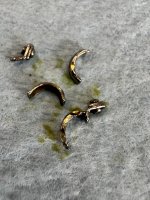
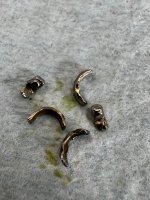
What happen with your situation? I just found the following in my oil sump screen yesterday during my condition inspection. I suspect it's a mag gear bearing but I have not pulled anything a part yet. RV-10, IO-540 230Tach hours.
 

Attachments

  • pic102.jpg
    pic102.jpg
    1.5 MB · Views: 24
  • pic103.jpg
    pic103.jpg
    1.4 MB · Views: 24
  • pict101.jpg
    pict101.jpg
    2.5 MB · Views: 24
Hi Gyro-F16
What happen with your situation? I just found the following in my oil sump screen yesterday during my condition inspection. I suspect it's a mag gear bearing but I have not pulled anything a part yet. RV-10, IO-540 230Tach hours.
Not Gyro, but...

I had the same failure 2 years ago with a 167 hour engine. No damage to internals other than a couple of the accessory case gears that were cracked by debris from the bearing or the mag cotter pin. The crankcase recess where the failed bearing sat was damaged which required splitting the case (checking the crank bearings in the process) and welding and re-machining that recess.
 
Hi Gyro-F16
What happen with your situation? I just found the following in my oil sump screen yesterday during my condition inspection. I suspect it's a mag gear bearing but I have not pulled anything a part yet. RV-10, IO-540 230Tach hours.

I’m hoping you consider the aircraft “grounded” until you figure out what’s going on?
 
Hi Gyro-F16
What happen with your situation? I just found the following in my oil sump screen yesterday during my condition inspection. I suspect it's a mag gear bearing but I have not pulled anything a part yet. RV-10, IO-540 230Tach hours.
Yes- those certainly look like bearing cage parts. 😳
In my case - I pulled the engine, then removed the accessory case cover and dropped the sump. Inspected every surface of every gear tooth in the accessory case. Fortunately found no damage to the gears.
Then cleaned the sump, and found one more “crescent” segment of a bearing cage.
Engine is now back on the Rocket.
I also took the opportunity to upgrade the alternator to a 60A B&C unit, and am adding a Monkworkz generator… so the wiring from those additional jobs is still ongoing. (Day job keeps interfering with working on the “fun airplane”).
Bottom line- I didn’t find any (additional) damage that resulted from the magneto bearing cage failing. But I felt obligated to give it a thorough look, as my wife or sons will be flying in the back seat periodically, and I needed to address the “known unknown” aspect of potential damage in the accessory drive.

I also found this document helpful in determining a way forward.

Good luck!

Gyro


Edited to add: I also added a magnetic drain plug on the right drain. Going forward, I’ll check that plug during oil changes, as well as the sump screen. (And document both checks in the log!).
 

Attachments

Last edited:
Yes- those certainly look like bearing cage parts. 😳
In my case - I pulled the engine, then removed the accessory case cover and dropped the sump. Inspected every surface of every gear tooth in the accessory case. Fortunately found no damage to the gears.
Then cleaned the sump, and found one more “crescent” segment of a bearing cage.
Engine is now back on the Rocket.
I also took the opportunity to upgrade the alternator to a 60A B&C unit, and am adding a Monkworkz generator… so the wiring from those additional jobs is still ongoing. (Day job keeps interfering with working on the “fun airplane”).
Bottom line- I didn’t find any (additional) damage that resulted from the magneto bearing cage failing. But I felt obligated to give it a thorough look, as my wife or sons will be flying in the back seat periodically, and I needed to address the “known unknown” aspect of potential damage in the accessory drive.

I also found this document helpful in determining a way forward.

Good luck!

Gyro
Ok thanks for the details. I pulled my left mag (slick impulse) and the earring cage was missing, found all the bits in the sump. Inspected the gears with a camera and did not see any sings of tooth damage.
 

Attachments

  • IMG_6911.jpeg
    IMG_6911.jpeg
    2.1 MB · Views: 28
Did an oil change on my F1 Rocket this week, and found some metal bits in the oil sump screen.
View attachment 109814
there’s no record of the sump screen being cleaned in the last 15 years / 340 tach hours.

That seems outrageous to me. I was under the assumption that the screen is cleaned at each oil change. It only takes a few minutes. In addition to the current problem, I would be concerned about what other basic maintenance wasn’t done.
 
That seems outrageous to me. I was under the assumption that the screen is cleaned at each oil change. It only takes a few minutes. In addition to the current problem, I would be concerned about what other basic maintenance wasn’t done.
Outrageous, but it happens more than it should. I even recall an NTSB report on a certified aircraft crash which had "failure to clean the sump screen" as a cause for engine stoppage.
 
Back
Top