I bought an RV-10 in May 2022 with a Lycoming IO540 C4B5 with about 840 hours tach time SMOH. It had been IRAN'd by a major engine shop in 2017 at about 540 hours tach time by the previous owner due to corrosion on the cams/lifters (he had bought it from the builder who stored it 100 yards away from Chesapeake Bay and it had not flown much in the previous 7 years). It was based in Albuquerque (which is very dry) since 2017 and was flown about 75 hours a year by the previous owner. The cylinder boroscope inspection done during the pre-buy showed up clean.
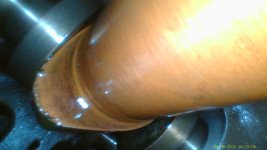
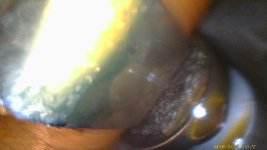
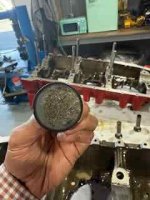
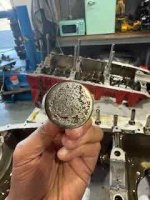
Metal was discovered in the filter during the oil change in Nov 2024 and again at the annual condition inspection in March 2025. After getting a tip on how to do it from one of the techs at Savvy Aviation, my A&P took boroscope images of some of the cams and lifters. The net of it is that there was significant spalling on two of the lifters and damage to some cam lobes . It looks like there was also increased corrosion in the cylinders over the past 12 months. A teardown was recommended by my A&P. There is an engine shop at my airport (KRHV) with a pretty good reputation so I decided to have them do the teardown. They indicated that an IRAN was possible but given that the engine had been IRAN'd less than 600 tach hours previously even though it had only about 1150 hours SMOH, I decided to get it overhauled
 .
.
I have flown the plane 140-150 hours each year since I bought the plane and it is based in the SF Bay Area (which is not very humid). The plane was typically flown 1-2 times per week other than a couple of 2-3 week intervals when I went to India. I have used Camguard (most recently with Phillips 20W50 but I just switched to Aeroshell W100). A lot of my flights have been relatively local - typically 1-2 hours. I did my commercial and CFI training in this plane over the last 2 years. I typically ran the engine LOP at about 50% power in cruise for the very local flights (like a Bay Tour) and at 60% for the longer flights.
Ever since I bought the plane in May 2022 (my first plane), I have voraciously consumed information relating to how best to run the engine and have tried to follow best practices. Given the fact that the plane has been flown a lot and it is not in a very humid area, I am extremely puzzled about why there would be corrosion and I am looking for ideas from the VAF braintrust on what I need to do differently after the engine is overhauled to avoid being in this situation again.
Could the training flights (typically flown at lower power) have caused increased blow-by being deposited on the cams/lifters which resulted in corrosion?
Could the couple of 2-3 weeks of inactivity when I did my India trips have caused the corrosion process to get started?
There were some clues that everything wasn't right as you can see from detailed timeline of events for the plane/engine below - chiefly the increased oil consumption. Should I have had the #2 cylinder pulled when I first saw the oil fouled spark plug in June 2023?
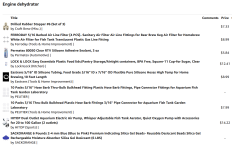
I am planning to invest in a dehumidifier/dehydrator - any thoughts on how much it might help?
Thanks,
Vas
2009 - plane's first flight. The engine had been removed from a Piper twin in 2007 with about 350 hours tach time SMOH and installed in the RV-10
2016 - plane bought by previous owner and moved to Albuquerque
2017 - previous owner discovered corrosion in the cams/lifters and had the engine IRAN'd by a major engine shop
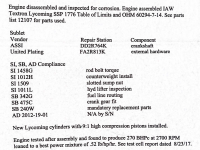
May 2022 - I bought the plane after a pre-buy which included boroscope images that showed cylinders in good shape. For the first year, things seem stable. I used Phillips Victory 20W50 with Camguard and the engine consumed 1 qt of oil about every 8-8.5 tach hours
May 2023 - started training for my commercial checkride (which was completed in July). Right after I started doing commercial training flights, oil consumption increased dramatically to 1 qt every 4.5-5 tach hours
Jun 2023 - noticed that the B#2 plug was significantly oil-fouled
Sep 2023 - on the recommendation of an A&P friend (also an RV-10 owner), we did an oil control ring solvent flush on cylinder #2 after which things seemed to improve and the oil consumption decreased to 1 qt every 7-7.5 tach hours
Jun 2024 - started training for my CFI checkride and the oil consumption went back up again
Nov 2024 - metal found in the oil filter (AvLab report is attached); attached are the cylinder images from then. I also have attached images from the annual in Feb 2023. Here's what Lycoming tech support said after I sent the AvLab report to them: "A minor amount of low alloy steel chips made of AMS6270/6272 – that’s a widely used alloy. We mainly use it for carburized (case hardened) parts such as the camshaft, most gears, gear-shafts, rockers, rocker shafts, piston pins, push-rod ball-ends. A trace amount of low alloy steel chips made of AMS6414/6415 – that’s less widely used, but all uses are important: crankshaft, counterweight bodies, some conn-rods (depends mostly on age, with the newer ones made of this alloy), conn-rod bolt nuts, some crankcase through-studs, and one of the components inside our most common tappet hydraulic lifters."
Dec 2024 - The oil consumption was still high so I had another oil control ring flush done for all cylinders but it didn't seem to have much of an impact on oil consumption
Mar 2025 - Metal again discovered in the filter (similar looking as earlier) as part of the annual condition inspection
Apr 2025 - My A&P followed instructions and took boroscope images of some of the cams and lifters which showed enough damage to warrant a teardown
Attachments:
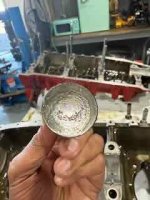
-Three of the lifters after the engine was torn down
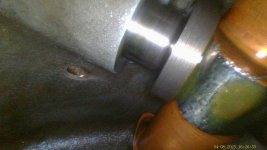
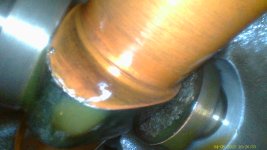
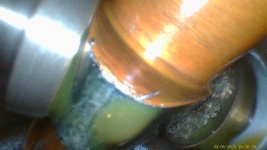
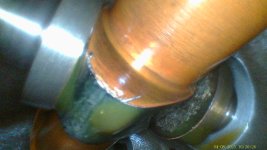
-Boroscope images of the cams/lifters for some of (likely) #3, #4, #5 cylinders
-Boroscope images of the cylinders from Feb 2024 (the previous CI) as well as from Dec 2024 after the metal was discovered in the filter
-Oil filter analysis after metal was found in the filter in Nov 2024
Metal was discovered in the filter during the oil change in Nov 2024 and again at the annual condition inspection in March 2025. After getting a tip on how to do it from one of the techs at Savvy Aviation, my A&P took boroscope images of some of the cams and lifters. The net of it is that there was significant spalling on two of the lifters and damage to some cam lobes . It looks like there was also increased corrosion in the cylinders over the past 12 months. A teardown was recommended by my A&P. There is an engine shop at my airport (KRHV) with a pretty good reputation so I decided to have them do the teardown. They indicated that an IRAN was possible but given that the engine had been IRAN'd less than 600 tach hours previously even though it had only about 1150 hours SMOH, I decided to get it overhauled
.I have flown the plane 140-150 hours each year since I bought the plane and it is based in the SF Bay Area (which is not very humid). The plane was typically flown 1-2 times per week other than a couple of 2-3 week intervals when I went to India. I have used Camguard (most recently with Phillips 20W50 but I just switched to Aeroshell W100). A lot of my flights have been relatively local - typically 1-2 hours. I did my commercial and CFI training in this plane over the last 2 years. I typically ran the engine LOP at about 50% power in cruise for the very local flights (like a Bay Tour) and at 60% for the longer flights.
Ever since I bought the plane in May 2022 (my first plane), I have voraciously consumed information relating to how best to run the engine and have tried to follow best practices. Given the fact that the plane has been flown a lot and it is not in a very humid area, I am extremely puzzled about why there would be corrosion and I am looking for ideas from the VAF braintrust on what I need to do differently after the engine is overhauled to avoid being in this situation again.
Could the training flights (typically flown at lower power) have caused increased blow-by being deposited on the cams/lifters which resulted in corrosion?
Could the couple of 2-3 weeks of inactivity when I did my India trips have caused the corrosion process to get started?
There were some clues that everything wasn't right as you can see from detailed timeline of events for the plane/engine below - chiefly the increased oil consumption. Should I have had the #2 cylinder pulled when I first saw the oil fouled spark plug in June 2023?
I am planning to invest in a dehumidifier/dehydrator - any thoughts on how much it might help?
Thanks,
Vas
2009 - plane's first flight. The engine had been removed from a Piper twin in 2007 with about 350 hours tach time SMOH and installed in the RV-10
2016 - plane bought by previous owner and moved to Albuquerque
2017 - previous owner discovered corrosion in the cams/lifters and had the engine IRAN'd by a major engine shop
May 2022 - I bought the plane after a pre-buy which included boroscope images that showed cylinders in good shape. For the first year, things seem stable. I used Phillips Victory 20W50 with Camguard and the engine consumed 1 qt of oil about every 8-8.5 tach hours
May 2023 - started training for my commercial checkride (which was completed in July). Right after I started doing commercial training flights, oil consumption increased dramatically to 1 qt every 4.5-5 tach hours
Jun 2023 - noticed that the B#2 plug was significantly oil-fouled
Sep 2023 - on the recommendation of an A&P friend (also an RV-10 owner), we did an oil control ring solvent flush on cylinder #2 after which things seemed to improve and the oil consumption decreased to 1 qt every 7-7.5 tach hours
Jun 2024 - started training for my CFI checkride and the oil consumption went back up again
Nov 2024 - metal found in the oil filter (AvLab report is attached); attached are the cylinder images from then. I also have attached images from the annual in Feb 2023. Here's what Lycoming tech support said after I sent the AvLab report to them: "A minor amount of low alloy steel chips made of AMS6270/6272 – that’s a widely used alloy. We mainly use it for carburized (case hardened) parts such as the camshaft, most gears, gear-shafts, rockers, rocker shafts, piston pins, push-rod ball-ends. A trace amount of low alloy steel chips made of AMS6414/6415 – that’s less widely used, but all uses are important: crankshaft, counterweight bodies, some conn-rods (depends mostly on age, with the newer ones made of this alloy), conn-rod bolt nuts, some crankcase through-studs, and one of the components inside our most common tappet hydraulic lifters."
Dec 2024 - The oil consumption was still high so I had another oil control ring flush done for all cylinders but it didn't seem to have much of an impact on oil consumption
Mar 2025 - Metal again discovered in the filter (similar looking as earlier) as part of the annual condition inspection
Apr 2025 - My A&P followed instructions and took boroscope images of some of the cams and lifters which showed enough damage to warrant a teardown
Attachments:
-Three of the lifters after the engine was torn down
-Boroscope images of the cams/lifters for some of (likely) #3, #4, #5 cylinders
-Boroscope images of the cylinders from Feb 2024 (the previous CI) as well as from Dec 2024 after the metal was discovered in the filter
-Oil filter analysis after metal was found in the filter in Nov 2024
Attachments
-
 IMG_2249.jpeg11.8 KB · Views: 208
 -
KETAV-L878348-Monday, December 9, 2024.pdf87.7 KB · Views: 23
-
N649BG-Cylinder Images after metal in oil -2024-12-13 Srinivas Ketavarapu.pdf1.2 MB · Views: 19
-
N649BG-Cylinder images - Condition Inspection-2024-03-01 Srinivas Ketavarapu.pdf3.1 MB · Views: 15
-
 IMG_0059.JPG132.5 KB · Views: 193
 -
 IMG_0058.JPG133 KB · Views: 185
 -
 IMG_0057.JPG118 KB · Views: 176
 -
 IMG_0056.JPG131 KB · Views: 172
 -
 IMG_0055.JPG108.5 KB · Views: 162
 -
 IMG_0054.JPG93 KB · Views: 171
 -
 IMG_2247.jpeg12 KB · Views: 184
 -
 IMG_2248.jpeg12.6 KB · Views: 227