Van's Air Force

The definitive Van's Aircraft support community! Buying, building or flying an RV? Join our exclusive family of mentors and enthusiasts!

How do I avoid a premature engine teardown again 😭??

vas4vans

Well Known Member
Friend
I bought an RV-10 in May 2022 with a Lycoming IO540 C4B5 with about 840 hours tach time SMOH. It had been IRAN'd by a major engine shop in 2017 at about 540 hours tach time by the previous owner due to corrosion on the cams/lifters (he had bought it from the builder who stored it 100 yards away from Chesapeake Bay and it had not flown much in the previous 7 years). It was based in Albuquerque (which is very dry) since 2017 and was flown about 75 hours a year by the previous owner. The cylinder boroscope inspection done during the pre-buy showed up clean.

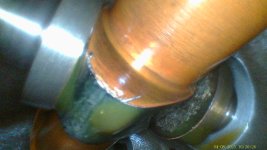
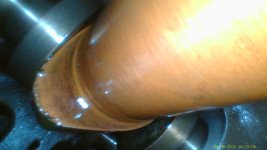
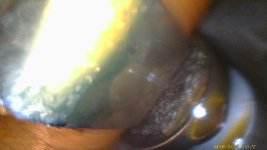
Metal was discovered in the filter during the oil change in Nov 2024 and again at the annual condition inspection in March 2025. After getting a tip on how to do it from one of the techs at Savvy Aviation, my A&P took boroscope images of some of the cams and lifters. The net of it is that there was significant spalling on two of the lifters and damage to some cam lobes . It looks like there was also increased corrosion in the cylinders over the past 12 months. A teardown was recommended by my A&P. There is an engine shop at my airport (KRHV) with a pretty good reputation so I decided to have them do the teardown. They indicated that an IRAN was possible but given that the engine had been IRAN'd less than 600 tach hours previously even though it had only about 1150 hours SMOH, I decided to get it overhauled 💸😭.

I have flown the plane 140-150 hours each year since I bought the plane and it is based in the SF Bay Area (which is not very humid). The plane was typically flown 1-2 times per week other than a couple of 2-3 week intervals when I went to India. I have used Camguard (most recently with Phillips 20W50 but I just switched to Aeroshell W100). A lot of my flights have been relatively local - typically 1-2 hours. I did my commercial and CFI training in this plane over the last 2 years. I typically ran the engine LOP at about 50% power in cruise for the very local flights (like a Bay Tour) and at 60% for the longer flights.

Ever since I bought the plane in May 2022 (my first plane), I have voraciously consumed information relating to how best to run the engine and have tried to follow best practices. Given the fact that the plane has been flown a lot and it is not in a very humid area, I am extremely puzzled about why there would be corrosion and I am looking for ideas from the VAF braintrust on what I need to do differently after the engine is overhauled to avoid being in this situation again.

Could the training flights (typically flown at lower power) have caused increased blow-by being deposited on the cams/lifters which resulted in corrosion?

Could the couple of 2-3 weeks of inactivity when I did my India trips have caused the corrosion process to get started?

There were some clues that everything wasn't right as you can see from detailed timeline of events for the plane/engine below - chiefly the increased oil consumption. Should I have had the #2 cylinder pulled when I first saw the oil fouled spark plug in June 2023?

I am planning to invest in a dehumidifier/dehydrator - any thoughts on how much it might help?

Thanks,
Vas

2009 - plane's first flight. The engine had been removed from a Piper twin in 2007 with about 350 hours tach time SMOH and installed in the RV-10
2016 - plane bought by previous owner and moved to Albuquerque
2017 - previous owner discovered corrosion in the cams/lifters and had the engine IRAN'd by a major engine shop
May 2022 - I bought the plane after a pre-buy which included boroscope images that showed cylinders in good shape. For the first year, things seem stable. I used Phillips Victory 20W50 with Camguard and the engine consumed 1 qt of oil about every 8-8.5 tach hours
May 2023 - started training for my commercial checkride (which was completed in July). Right after I started doing commercial training flights, oil consumption increased dramatically to 1 qt every 4.5-5 tach hours
Jun 2023 - noticed that the B#2 plug was significantly oil-fouled
Sep 2023 - on the recommendation of an A&P friend (also an RV-10 owner), we did an oil control ring solvent flush on cylinder #2 after which things seemed to improve and the oil consumption decreased to 1 qt every 7-7.5 tach hours
Jun 2024 - started training for my CFI checkride and the oil consumption went back up again
Nov 2024 - metal found in the oil filter (AvLab report is attached); attached are the cylinder images from then. I also have attached images from the annual in Feb 2023. Here's what Lycoming tech support said after I sent the AvLab report to them: "A minor amount of low alloy steel chips made of AMS6270/6272 – that’s a widely used alloy. We mainly use it for carburized (case hardened) parts such as the camshaft, most gears, gear-shafts, rockers, rocker shafts, piston pins, push-rod ball-ends. A trace amount of low alloy steel chips made of AMS6414/6415 – that’s less widely used, but all uses are important: crankshaft, counterweight bodies, some conn-rods (depends mostly on age, with the newer ones made of this alloy), conn-rod bolt nuts, some crankcase through-studs, and one of the components inside our most common tappet hydraulic lifters."
Dec 2024 - The oil consumption was still high so I had another oil control ring flush done for all cylinders but it didn't seem to have much of an impact on oil consumption
Mar 2025 - Metal again discovered in the filter (similar looking as earlier) as part of the annual condition inspection
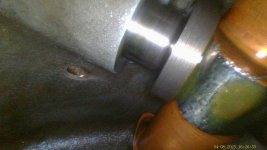
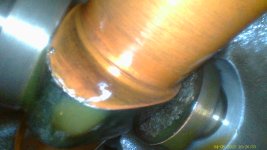
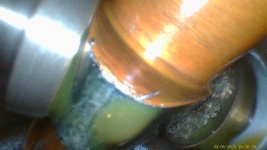
Apr 2025 - My A&P followed instructions and took boroscope images of some of the cams and lifters which showed enough damage to warrant a teardown

Attachments:
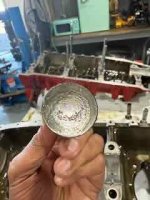
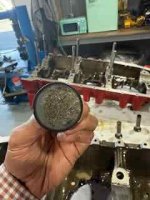
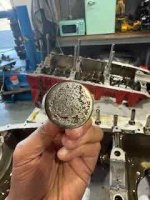
-Three of the lifters after the engine was torn down
-Boroscope images of the cams/lifters for some of (likely) #3, #4, #5 cylinders
-Boroscope images of the cylinders from Feb 2024 (the previous CI) as well as from Dec 2024 after the metal was discovered in the filter
-Oil filter analysis after metal was found in the filter in Nov 2024
 

Attachments

I’d say the big question is, do you have the records from the 2017 IRAN? Did they replace all the lifters and the cam? Lifters are surface-hardened, and the first signs of corrosion (tiny spot) can be hard to see. But as it progress into the metal underneath the hardened surface starts coming off in chunks, just like your photos.
I wouldn’t blame training flights or 3 weeks of inactivity for this.
 
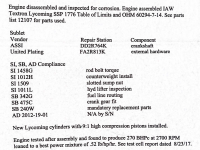
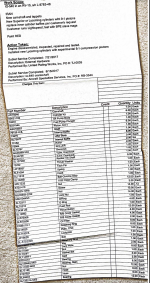
I have attached screenshots of the report from that IRAN. I have removed the part that had the name of the shop. It looks like the cylinders were new as well as the camshaft. I now see that there are only 8x Lifter Body - I believe there are 12 lifters, correct? Does that mean that they reconditioned 4 of the lifters?

It looks like the replacement lifters that are going to be installed as part of the overhaul are the DLC 15B26262 HYRAULIC TAPPET (https://www.aircraftspruce.com/catalog/eppages/lycomingseatvalve_07-14516.php) which are apparently much more resistant to spalling.

Vas
 

Attachments

  • Screenshot 2025-05-23 at 12.23.20 AM.png
    Screenshot 2025-05-23 at 12.23.20 AM.png
    1.2 MB · Views: 37
  • Screenshot 2025-05-23 at 12.22.45 AM.png
    Screenshot 2025-05-23 at 12.22.45 AM.png
    1.7 MB · Views: 39
Perhaps those failed lifters where not replaced during the IRAN? Bob has a good point. You are flying in an area close to a salt water coast & doing area tours. Are these tours low level along the bay coastline? I get that from pilots here in SE Florida. They like to take passengers for low level [1,000 ft] along the Atlantic coast and are surprised when they get airframe and/or engine corrosion. I spent 16 years living on the coast here. If I left my car parked outside in the driveway over night, the next day my brakes would make noise for the first 4 or 5 stops due to the rapid corrosion of the brake rotors. That salt water gets into the air and is carried upward and inland.
 
You are correct, per that parts list, only half the lifter bodies were replaced. First, per the photos you have posted, I note that the lifter body shown on left looks extremely clean, like it was a new part. However, it's mate on the right, has some light oil varnish on the large circumference, suggesting that it was not replaced [or even likely resurfaced, as it would have been cleaned at that time] during the IRAN. These lifers share a camshaft lobe. If there was microscopic damage to the lifter on the right, which has since progressed, it would damage the shared cam lobe and the new lifter body on the left. Is your engine a narrow deck or wide deck? Wide deck engines serial numbers end with the letter A. The cylinders are also secured to the crankcases with standard "hex" style nuts. The part number SL72877 indicates that the replacement lifters were made by Superior, not Lycoming. From the photos of the crankcases in the background, they look to me like narrow deck units.
 
Last edited:
I would guess whatever conditions that caused the spalling the first time did the same after the tear down. This sometimes moves slowly at first, especially if not flown a lot. So, po developed some corrosion on lifters, but doesn’t fly enough for it to progress. You buy the plane and start pouring on the hours and it develops into what you have now. Don’t think it started under your flying conditions. However, we don’t fully understand exactly what conditions causes this to start. Generally engines runn often get it at a much lower incidence than those that aren’t. However, that is not universal.

The decision to use dlc lifters is wise, as they are coated to prevent this, though unsure exactly how successful they are. Lyc says they should end the problem.

Corrosion in the cylinders is a bit surprising given your active flying, so no real guess as to why it developed. It seems plausible that the cylinder corrosion started under th po and the person didn’t understand what they were seeing through the camera. Also possible that it is not now corrosion, but wear from all of the metal being thrown via the oil due to the spalling problem. This makes more sense, as the oil burn didn’t increase until a year in. Also possible that all the metal is collecting in the oil ring ring land and preventing the oil control rings from doing their job. This may be why the ring flush improved things for a bit. It would take pretty heavy corrosion to up consumption to 4 hours per qt.
 
Last edited:
I would guess whatever conditions that caused the spalling the first time did the same after the tear down. This sometimes moves slowly at first, especially if not flown a lot. So, po developed some corrosion on lifters, but doesn’t fly enough for it to progress. You buy the plane and start pouring on the hours and it develops into what you have now. Don’t think it started under your flying conditions. However, we don’t fully understand exactly what conditions causes this to start. Generally engines runn often get it at a much lower incidence than those that aren’t. However, that is not universal.

The decision to use dlc lifters is wise, as they are coated to prevent this, though unsure exactly how successful they are. Lyc says they should end the problem.

Corrosion in the cylinders is a bit surprising given your active flying, so no real guess as to why it developed. It seems plausible that the cylinder corrosion started under th po and the person didn’t understand what they were seeing through the camera. Also possible that it is not now corrosion, but wear from all of the metal being thrown via the oil due to the spalling problem. This makes more sense, as the oil burn didn’t increase until a year in. Also possible that all the metal is collecting in the oil ring ring land and preventing the oil control rings from doing their job. This may be why the ring flush improved things for a bit. It would take pretty heavy corrosion to up consumption to 4 hours per qt.
Just looked at the cyl pics and definitely some relatively deep pitting. Sorry, but no real idea how it developed, but it is significant enough that it should have been caught during your prebuy, so likely it developed under your ownership.
 
Honestly the horror stories about lifter spalling and cam wear/corrosion have given me a very negative impression of Lycoming reliability, even in the setting of frequent flying and regular oil changes on engines built by the factory or a top tier engine shop.

Design, metallurgy, or preventive maintenance should have solved these problems decades ago, and the fact that we have a fleet of Schrödinger's camshafts that can't even be inspected without risking mx-induced failure is appalling to me.

I wish Rotax had made a turbo 6 and Deltahawk had produced an experimental-only version of their engine instead of pursuing all-or-nothing certification for the last 20 years. We needed more modern, more reliable, less expensive alternatives to lycosaurus near the turn of the century, not a quarter century later.
 
You said the Bay Area is not very humid... I don't agree. Current conditions at SFO: 56% humidity. And worse yet, the humidity is from ocean salty air. It isn't hot+humid like Florida, but there's still humidity.

Yep.

After you get the plane back in service, you might consider an engine dehydrator setup. Hopefully you have a hangar and it has electric power.
 
Honestly the horror stories about lifter spalling and cam wear/corrosion have given me a very negative impression of Lycoming reliability, even in the setting of frequent flying and regular oil changes on engines built by the factory or a top tier engine shop.

Design, metallurgy, or preventive maintenance should have solved these problems decades ago, and the fact that we have a fleet of Schrödinger's camshafts that can't even be inspected without risking mx-induced failure is appalling to me.

I wish Rotax had made a turbo 6 and Deltahawk had produced an experimental-only version of their engine instead of pursuing all-or-nothing certification for the last 20 years. We needed more modern, more reliable, less expensive alternatives to lycosaurus near the turn of the century, not a quarter century later.
It’s easy (and understandable) how folks get those kind of impressions, but there are just so many variables involved in each engine that has problems to pin it on “all those Lycosauruses are unreliable”. The truth is that when I started flying over half a century ago, every pilot in the hangar lounge had a story of landing in a corn field with a dead engine - they were that unreliable. But millions of hours of engine operation later, the basic core Lycoming has been improved with better metallurgy (mostly) to the point where the majority of folks run them without a problem for as long as an individual owns them. Remember that what you see on the internet are failures - few people post that their engine isn’t having a problem on a daily basis.

A lot has to do with the fact that parts float around forever, and there are so many bad ideas out there. For instance, it used to be common for small shops to resurface lifters by grinding them smooth…. “Don’t they look pretty?!” Well…you just removed the hardened layer - that thing is going to spall/fail in a hundred hours! But the owner went there for a cheap overhaul because he doesn’t fly all that much, and it becomes the next guy’s problem. A narrow deck engine is more likely to have these kind of issues because they are - by definition - much older than wide-decks, as are the parts in the field.

The truth is that if you fly your Lycoming a couple of times a week, it is hard to do anything in normal operations to trash it - and corrosion is not going to come into play because you get lubricant spread around frequently. Leaving it sit for three weeks? Also unlikely to be the cause of a major problem. Leave it for a month, fly it for twenty minutes, then leave it for another month….and keep repeating that? Yeah…if you don’t live in the desert, you are probably shortening the life of the motor with very occasional running. In that case, a dehydrator or other system is worth considering if you live in a humid environment.

My experience is that if you have a good new engine, or a quality overhaul, and fly the engine regularly, you are unlikely to have any problems - statistically speaking. Yes, there are always going to be outliers, and it sucks to have one of them. These are dirt simple engines, but if you make something idiot proof, nature invents a better idiot, so bad rebuilders can cause problems…choose wisely. Internal engine problems are rarely the fault of what the pilot does on a given flight (in my experience).
 
A lot has to do with the fact that parts float around forever, and there are so many bad ideas out there. For instance, it used to be common for small shops to resurface lifters by grinding them smooth…. “Don’t they look pretty?!” Well…you just removed the hardened layer - that thing is going to spall/fail in a hundred hours! But the owner went there for a cheap overhaul because he doesn’t fly all that much, and it becomes the next guy’s problem.
I'm wondering if this is exactly what happened to me.
 
Design, metallurgy, or preventive maintenance should have solved these problems decades ago, and the fact that we have a fleet of Schrödinger's camshafts that can't even be inspected without risking mx-induced failure is appalling to me.
In fairness to lyc, they did develop the DLC lifters with a coating to prevent this and seem to have good results. Lyc swears the problem will not reappear with those, but unsure what validation was done.. Problem is few seem to be aware of them and are not installing them. I put them on my 540 that I overhauled. They were not that expensive.
 
Yep.

After you get the plane back in service, you might consider an engine dehydrator setup. Hopefully you have a hangar and it has electric power.
That's a fair point about humidity in the Bay Area - I did some digging and it looks like it ranges from 55% to 90% over the course of the year so I am definitely planning on investing in a dehydrator when the engine is back.

I had been using Phillips 20W50 XC with Camguard - the Savvy folks strongly believe that a single-weight oil like Aeroshell W100 tends to stick to the various surfaces for longer and they recommend it for personal planes (along with Camguard) in non-frigid climates so I am planning to run that combo. If I am already using Camguard, will Aeroshell W100 Plus have any additional value in corrosion protectIon?

Thanks for all the responses.
 
No mention of oil temperatures. Minimum oil temp for burning off water, etc is 165. I use 180 and try to maintain that for 30 minutes min. Another issue not mentioned is the habit of some pilots to run the engine around 1500 r/m following a cold start. (a cold temeperature issue)
My personal belief is that Lycomings don't like low power cruise on a regular basis.
Personal experience with a 0 360 parallel valve in a Pitts
Chrome cylinders
cam reground by Lycoming
300 hours at 3600 r/m for all acro flights
300 to 1000 hours with prop that limited r/m to 3300
No oil filter, oil change every 25 hours
Aeroshell 100 for break in then 100W
Airplane sat for the winter in unheated hangar with no special preparation
The airplane flew for 11 years after I sold it, the last owner exceeded his resume.
 
That's a fair point about humidity in the Bay Area - I did some digging and it looks like it ranges from 55% to 90% over the course of the year so I am definitely planning on investing in a dehydrator when the engine is back.

I had been using Phillips 20W50 XC with Camguard - the Savvy folks strongly believe that a single-weight oil like Aeroshell W100 tends to stick to the various surfaces for longer and they recommend it for personal planes (along with Camguard) in non-frigid climates so I am planning to run that combo. If I am already using Camguard, will Aeroshell W100 Plus have any additional value in corrosion protectIon?

Thanks for all the responses.
I agree with Savvy. W100 with Camguard.
 
Hydraulic lifter BODY is the part in contact with the cam lobe. Hydraulic lifter plunger is the operating spring/socket component inside the body. I believe the camshaft and lifter bodies should be replaced whenever the case halves are parted. Tiny pitting almost invisible to the naked eye rapidly becomes destructive spalling. Yes this is slightly more of a Lycoming issue. I say that after 50yrs of wrenching and bleeding over Continentals, Lycomings, Franklins, Pratt & Whitney radials.. there are protocols listed in this thread that enable many years of trouble free cam and lifter body service
 
One additional question - could the oil fouled spark plug have been an indicator that more blow-by was escaping past the rings (maybe because of an issue with the oil control ring) and could that have been the catalyst for the spalling to start? And is that more likely at lower power settings?

Thanks.
 
One additional question - could the oil fouled spark plug have been an indicator that more blow-by was escaping past the rings (maybe because of an issue with the oil control ring) and could that have been the catalyst for the spalling to start? And is that more likely at lower power settings?

Thanks.
Oil fouled plugs are a sign of problems with the interface of the oil control rings and the cylinder wall. Problem is usually with the walls and not the rings. Typical are corrosion and glazing. Though on some occasions, the oil ring lands get filled with carbon deposits and this prevents the rings from doing their job well. This is what a ring flush addresses. Blowby is an issue with the compression rings or how they sit in the pistons ring land. The catalyst for kicking off the spalling problem is corrosion on either the lifter face or the cam lobe. Even tiny corrosion pitting can start this due to the heavy pressure placed on a rotational interface. Many different things can cause this corrosion, but common ones are letting the engine sit long enough that the oil drips off , exposing the steel to the environment and the other is letting water mix in with the oil. Now you have tiny water droplets being held in place by the oil and act upon the steel. A whole nother discussion on how this happens and how to prevent it. Blowby, in and of itself doesn’t cause this, though Blowby does move moisture into the crankcase environment. More blowby, more water. That said, EVERY engine has blowby and most engines don’t have lifter spalling.
 
Last edited:
So, my questions:
Roller lifters were supposed to have been the magic fix for the cam spalling problem back in 2006 when I ordered my Mattituck engine. That's nearly 19 years ago. Has anyone here on VAF who is running one of these had a cam spalling issue? I believe Divco can or could machine a case for roller lifters. Am I mistaken? Why isn't everyone going this route when they O'H. Are we moving away from roller engines and going to DLC for some reason I haven't heard about?

Thanks,

Joe
 
So, my questions:
Roller lifters were supposed to have been the magic fix for the cam spalling problem back in 2006 when I ordered my Mattituck engine. That's nearly 19 years ago. Has anyone here on VAF who is running one of these had a cam spalling issue? I believe Divco can or could machine a case for roller lifters. Am I mistaken? Why isn't everyone going this route when they O'H. Are we moving away from roller engines and going to DLC for some reason I haven't heard about?

Thanks,

Joe
Cost.

Lyc is VERY proud of those lifters and charge accordingly, way more than the dlc. You also need a different cam. Must buy new, as not a lot of reworked out there and those are also more expensive. Roller are definitely the way to go, though not really sure that fully elimates the corrosion issue, but that corrosion shouldn’t lead to spalling as the lobes don’t scrape across the lifter base. They also should net a couple of ponies, as the friction load is much less. This is why the auto industry went that way in their ongoing quest fot fuel efficiency.

When i did my 540 oh, a yellow tagged cam was$700 and the dlc $70 each. Going roller would have added $1000’s for me and decided to roll the dice with dlc
 
Last edited:
I asked about the roller lifters and I was told that my narrow deck 540 cannot accommodate them. I didn't realize that a new case could be machined.

In my digging on the topic, this thread https://www.pilotsofamerica.com/com...e-cure-for-the-lycoming-achilles-heel.132312/ implies that if the DLC tappets had been around earlier, Lycoming would not have had to switch to roller lifters.

This was another interesting thread about the benefits of the DLC lifters - https://mooneyspace.com/topic/44112-lycoming-dlc-lifters/
 
I asked about the roller lifters and I was told that my narrow deck 540 cannot accommodate them. I didn't realize that a new case could be machined.

In my digging on the topic, this thread https://www.pilotsofamerica.com/com...e-cure-for-the-lycoming-achilles-heel.132312/ implies that if the DLC tappets had been around earlier, Lycoming would not have had to switch to roller lifters.

This was another interesting thread about the benefits of the DLC lifters - https://mooneyspace.com/topic/44112-lycoming-dlc-lifters/
They definitely can’t be added with your case as it is. I thought cases could be worked to accommodate rollers, but certainly possible that the narrow decks have some inherent limitations that prevent it. Never really looked into it. A good question for divco. I have found that if there is not enough case meat to do something, they will just weld on more metal.

To have this done, the case needs to go out for work. I am sure that would be at least $2500 with today’s insanely high shipping.
 
The engine had 9:1 compression pistons. My home airport does not offer 100LL. Even though it offers G100UL (there's a long thread on that in the California group for anyone that's interested), I am very hesitant to use it based on some of the issues that have been reported. UL94 is also available.

I am thinking of having the engine rebuilt with the standard 8.5:1 compression pistons. Will these pistons allow for the use of UL94 in my 540 engine?
 
The engine had 9:1 compression pistons. My home airport does not offer 100LL. Even though it offers G100UL (there's a long thread on that in the California group for anyone that's interested), I am very hesitant to use it based on some of the issues that have been reported. UL94 is also available.

I am thinking of having the engine rebuilt with the standard 8.5:1 compression pistons. Will these pistons allow for the use of UL94 in my 540 engine?
Lots of folks using UL94 with std CR engines, myself included. Given everything going on with fuel now, I would give strong consideration to std CR. My fear is that these new fuels could possibly end up being very expensive once it all settles out, and many of us may end up looking for ways to be using mogas and that geta harder when dealing with higher CR. A CR decrease of .5 isn't costing you mich in performance. Then again, 9:1 may run fine on 94, but have no experience to help with that. Where I live, I can still get 93 octane auto fuel, but wonder if that is available in CA. The higher the CR, the smaller the detonation margins become, so the more you want a higher octane.

Just one mans opinion and I haven't played much with higher CRs, so not the best to answer what a 9:1 engine can live with re octane. I would start a new thread on that as a lot of guys here have played with mogas and can share experience.

Based upon what I have read, I wouldn't touch G100UL with a 10' pole.
 
Last edited:
#16 has some excellent ideas. Lycoming recommends a minimum oil temperature to evaporate any moisture out of the oil. Ideally around 180 for an hour once a week. If your oil temperature isn’t getting high enough then this can cause problems. Also you need to make sure that the engine case is breathing properly and that the moisture can escape.
So short runs with cold oil can cause problems or long periods of inactivity are also bad. Lycomings don’t seem to like low power settings. I always run mine at 65-75% with cruise descents reducing power once at pattern altitude.

Regards Peter
 
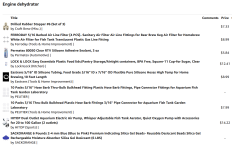
investing in a dehydrator

Some go with the dry-bot (nice but $$$)
Or you can DIY for under 100 from amazon certified parts.
here is my list . this plastic container fits 3 lbs of desiccant.. you can adjust the vessel size to taste.
I also added the X-sense IoT temp/hygrometer kit to monitor the state of beads and hangar humidity from home.

1748110402113.png
 
I asked about the roller lifters and I was told that my narrow deck 540 cannot accommodate them. I didn't realize that a new case could be machined.

In my digging on the topic, this thread https://www.pilotsofamerica.com/com...e-cure-for-the-lycoming-achilles-heel.132312/ implies that if the DLC tappets had been around earlier, Lycoming would not have had to switch to roller lifters.

This was another interesting thread about the benefits of the DLC lifters - https://mooneyspace.com/topic/44112-lycoming-dlc-lifters/
Vas, roller followers are the design answer to this age-old design issue. Paul has outlined operational success with slipper followers, but the chilled iron follower has always been at its limit. In the early 80's I had design control for and I-4 engine with slippers. A colleague in my section had the v-8 version and commissioned valve train work to quantify the life difference between slippers and rollers for an upgrade on turbocharged versions. Used/dirty oils and several durability and abuse tests were run. The rollers pass all tests with a 4-5X life improvement as I recall. So - yes this was solved in the engine world decades ago. Consequently, I did not buy an engine with slippers - I got the rollers.

DLC is another thing. If the slippers are not hard enough then it is like putting diamond coating on top of foam rubber. The rollers are more robust from a design standpoint.

Again - purge your crankcase when hot with a filtered blower ~15 LPM (5min), then dry with a desiccant at 1.5-3 LPM for crankcase corrosion - it will do little to nothing for your cylinders, only flight frequency or a more elaborate dehumidifier (with a HEPA filter!!) to pass dry air from the intake to exhaust sides via open valves. I don't use these . . . a PITA, just fly.
 
You said the Bay Area is not very humid... I don't agree. Current conditions at SFO: 56% humidity. And worse yet, the humidity is from ocean salty air. It isn't hot+humid like Florida, but there's still humidity.
I love all the Florida owners here who say I don't worry about salt air because I don't live near the coast. Yet they will take guests up and down the coast at 1,000 feet to show them the shoreline, or fly to the Florida Keys. Summer in south Florida is 90+ degrees with 90% humidity. Folks living in the southwest, Colorado or other dry states are thinking, "what the h3ll are they talking about, corrosion? What is corrosion?
 
Wouldn’t operating the engine cause the water to be purged since it will turn to vapor and be expelled from the crankcase?
 
Wouldn’t operating the engine cause the water to be purged since it will turn to vapor and be expelled from the crankcase?
Operating the engine produces more water as a byproduct of combustion. If the metal parts are relatively cool, or the oil is cold, more of it likely condenses and stays in the crankcase vs being pushed out the breather as water vapor.
 
Of course. I was referring to continuing to fly it after, say, a flight down the humid coastline. The air ingested by the engine is higher in water content, but if you fly for another half hour with oil at operating temperature, is the water vapor not being burned off?
 
Of course. I was referring to continuing to fly it after, say, a flight down the humid coastline. The air ingested by the engine is higher in water content, but if you fly for another half hour with oil at operating temperature, is the water vapor not being burned off?
Ron, you are correct. However, in a humid climate, after shutdown, after the engine cools, the humidity in the air inside the crankcase under certain conditions can condense and can form water on the internal parts like cam and lifters. Think of a glass full of very cold ice tea on a hot, humid day. The outside of the glass will become covered in water droplets, due to condensation. The humid air contacts the cold glass then the humidity in the air turns from a gas to a liquid. Same thing can happen inside the engine after a cool night. The air may heat up quicker than the metal inside your engine.
 
Last edited:
Of course. I was referring to continuing to fly it after, say, a flight down the humid coastline. The air ingested by the engine is higher in water content, but if you fly for another half hour with oil at operating temperature, is the water vapor not being burned off?
Ambient humidity really has nothing to do with anything when the engine is running. One of the chemical byproducts of mixing hydrocarbons with air and combusting it is H2O. The exhaust contains a decent percentage of water, though typically in the vapor state. Because this gas is so hot, it can hold a LOT more water than ambient air. When the exhaust pipes are cool, the vapor does condense and that is why you see water pouring out of someone’s tailpipe when they are still warming up. 99.9% of the combustion byproducts go out the exhaust, but the rings leak just a bit so the crankcase is also filled with this combustion byproduct and not ambient air. This is constantly replenished and why we have a breather to let it out and not create positive pressure.
 
Last edited:
Back
Top