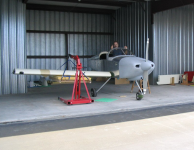
I do aircraft structural repair for a living, and have done a few RV repairs. Vans matched hole tooling makes repairing their airplanes very simple!
Others have given you good advice on the insurance end, and it sounds like you are on a good path for that.
I would get a local IA to very carefully inspect the fuselage structure where the wing bolts up and the surrounding area. Look for ripples in the skin, popped rivets, oil canning, etc... Obviously you can do this too, but the point is you want a second set of trained eyes. It's not uncommon to see RV's with wing prangs also have damage to the aft fuse area. Also, carefully look at the spars. Send a borescope in there if necessary. Again, looking for sheared rivets, oil canning, etc... Finally, I would replace the mounting bolts, and maybe dye pen the holes, as well as check them for elongation.
All this may sound like overkill, and it probably is. But it's a peace of mind thing. You mentioned the damage history may diminish the value (more on that later), and that you yourself were concerned about flying the repair afterwards. One of the ways you diminish this is by going to extra mile. When you explain to the buyer "yes it was pranged, but we did this and this and this...." it quickly overwhelms their concern.
Assuming the spars are good (if not it's a no brainer, just build a new wing) and the fuse is good, then just order the replacement parts (skins, ribs, tip, etc..) from Vans and repair it. As others have mentioned, drilling out rivets goes quickly once you get into the rhythm. You are looking at a couple hours. Use new, sharp bits, good light, glasses if you need them, center punch the dimples first, and just start drilling. On -3 rivets I like to use a 3/32 bit instead of #40 as there's a slight less chance of opening up the original hole. After the head is snapped off DO NOT punch the rest of the rivet out. The rib flanges are too soft and not supported, you'll just bend them. Wait until you get the skin off then remove the tails with a side cutters, vampliers, or drill them the rest of the way out. Quite frankly this is the putzy part.
Wing on or wing off is sort of personal preference. Obviously it would be easier if the wing was off, but you have to weigh that with the hassle of R and R'ing the wing, and the Waddington Effect. If you do it wing on you'll need a million clecos as the wing may sag and you need the skins the pull it back into shape. I would probably do it wing on. The build manual and plans can help on the reassembly, but you'll likely be installing parts out of sequence so won't have step by step instructions. Expect to spend a few hours just looking at the plane and thinking about things. It's "gonna take sum figurin". For me anyway, this is the fun part, and quite frankly where I make my money. (Fixing things other people can't figure out how to fix.)
For the insurance estimate (again, assuming the fuse is good) I would price out a wing kit and the labor to build it. That's the worst case scenario. What you don't want to happen is to assume just a tip repair, get the insurance payout, and then find out as you open it up and get into it that the spar is indeed damaged or something like that. I do insurance estimates all the time, and the insurance company expects the worst case scenario, factory new parts.
Residual value with damage history. This is a tough one, especially for me as I live it. Properly done repairs that return the plane to original (or often times better) condition should not affect value....but it does. To be honest, most of these repairs are way less invasive than an engine overhaul, or a panel redo (think about how many critical systems a glass panel install touches!!). However buyers don't usually understand structural repairs and as a result it's a red flag. As mentioned above you can alleviate some of that with thorough repairs and excellent documention. Also, time heals all wounds, in this case literally. One year from now if you sell the plane, you'll take a hit 10-20%. 10 years from now, probably not but it will be a discussion, and 20 years from now it will be a glance over in the logs.
Finally, no shame if you decide to flip this one to a pro. You built the airplane and have the capability to repair it, but that doesn't mean you have to. If someone else touches your plane the fingerprints will polish out quickly and no one will ever know he was there.