Van's Air Force

The definitive Van's Aircraft support community! Buying, building or flying an RV? Join our exclusive family of mentors and enthusiasts!

Guidance Needed for Serious Hangar Rash

alpinelakespilot2000

Well Known Member
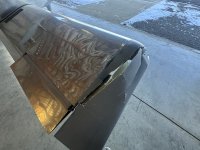
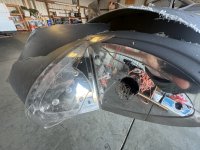
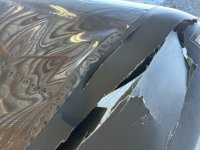
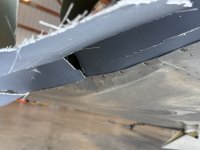
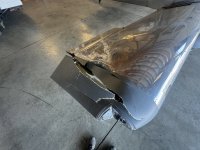
Unfortunately, after 14 years of trouble- and largely maintenance-free flying, my RV-9 got some serious hangar rash a couple days ago. Long story short, my hangar mate pushed my plane out to get her plane out, got it out on the apron, then for some reason got into her truck forgetting my plane was on the ramp and backed into my starboard wing. It appears the right back corner of the truck backed into the center of the wingtip and pushed the wingtip straight in. I wasn’t there, so I don’t know the specifics, but the damage is much more than the typical hangar rash. Since this is not a scenario I’ve ever experienced, or even imagined happening, I’m at a bit of a loss for how to proceed from here and am hoping the community can give me some tips.

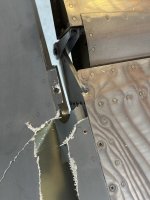
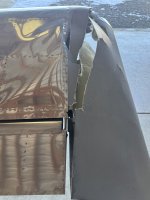
Preliminary Assessment of Damage/Condition (see pics):
1. Clearly the wingtip, including its 2 internal ribs and nav light lens are trashed.
2. The outboard aft rib is severely distorted.
3. The outboard aft top skin is significantly wrinkled at/near the outboard rib.
4. The outboard aft bottom skin is significantly wrinkled at/near the outboard rib.
5. Upon brief inspection, the leading edge is largely undamaged and not sure about any damage to the spar, front or back. The right aileron appears to be good shape.

Major Questions:
1. Structural: Based on pics, what do you see and what would be of concern to you? What’s my best strategy for assessing damage and repair? While I built the plane, I don’t know what I don’t know about potential hidden damage. I’m presuming I’m going to need to find someone more knowledgeable than I to inspect. Any tips on finding that someone?
2. Repair options: The wingtip and aft outboard rib are likely relatively easy (if time consuming) to repair. However, if I need to replace the outboard wing skins, I’m not sure I’m up for that. Drilling out that many rivets without underlying damage to the ribs (primarily in the way of enlarging rivet holes) is of significant concern.
3. Financial: I’m friends with my hangar mate, know that it was just an unfortunate accident, so I want to work this out as amicably as possible while also not coming out at too much of a loss. I’m already realizing that I can now probably never sell the plane without it having “damage history,” and thus it’s a loss I’ll never be able to fully recover, but any suggestions here? How do I arrive at a fair dollar amount? It sounds likely her automobile policy will cover the damage assuming she doesn’t want to just pay out of pocket. If so, any tips for how/when to address this with insurance?

Obviously, I’m disappointed. The plane was a pleasure to build, a pleasure to fly, and I’m not sure I’ll trust it going forward as completely as I have in the past, but in the end it’s just a thing to figure out and move on from. If anyone has any suggestions about how I do that/where I go from here, I’d really appreciate them.

Happy New Year!
IMG_7278.JPGIMG_7277.JPGIMG_7276.JPGIMG_7271.JPGIMG_7267.JPGIMG_7265.JPGIMG_7264.JPG
 
Last edited:
You'll (and we) will be able to assess it much better once you pull the wingtip off.
Good news: no paint to match / cry over.
From what I can see the spars *should* be fine, front and rear. Easier to tell once the tip is off.

So, the outer aft rib, upper and lower rear skins....
As you said, drilling out all those rivets is not fun, but it can be done. Easier on an unpainted plane than one that had too many layers of paint.

If the spars are fine, and you replace the upper and lower skins, I don't think the value should be affected in any significant way. Take pics to show how the damage was completely removed.

Lastly, if it is as I think --- there is no way that I 'wouldn't "trust" the plane'.
 
Last edited:
I agree with Jon
I have removed numerous outboard top or bottom skins.
I can do it in about an hour. I am probably a bit more experienced than most people so figure on somewhere between two and three.
Thanks Scott. Can aft outboard wing skins be replaced on the plane without worry of introducing significant twist?

Any suggestions for someone in PNW who I could get to do a paid inspection for an insurance cost estimate?
 
Can aft outboard wing skins be replaced on the plane without worry of introducing significant twist?
All -9's were prepunched, right? That being the case, twist shouldn't be a problem after rebuild. However, I'd look at the leading edge D cell for any wrinkling, aft spar for any damage, and the aft spar attach point. Might as well check for sweep while you're there. My guess is the damage is limited to the skins and tip, but you never know.
 
Everyone has already given good advice.

1. Given the pics shown, there does not appear to be any serious structural damage. Of course inspection of the wing attach points at the spar carry through should be done as mentioned. If the plane was not twisted or jammed against something else it may not have any damage with the spar.

2. Drilling out rivets will not really be a difficult task. Take your time and be deliberate about using good technique on every rivet and they will come out quickly. It should not be necessary to remove the wing.

3. Financially, your hangar mate’s insurance should cover all replacement costs including labor costs, even if you do the labor. Most insurance adjusters want three estimates. You can get estimates from local A&P shops to get an idea of costs. Vans can provide prices for parts costs.

There should be no need to worry about flying the plane afterwards. It does not appear there is any structural damage. As long as inspection reveals no damage to the spar, there should be no structural damage that replacement parts would not fully repair internal to the wing (i.e. replacement of ribs). The wingtips are not structural. My opinion, if damage is documented in the logs, and all repairs are done well, this should not affect the value of the plane very much.
 
Thanks Scott. Can aft outboard wing skins be replaced on the plane without worry of introducing significant twist?

Any suggestions for someone in PNW who I could get to do a paid inspection for an insurance cost estimate?
There are steps that could be done that would help avoid inducing a twist, but you would want to implement them whether you removed the wing for the repair or not.
Having the wing removed from the airplane while riveting, the new skins provides enough benefits that the extra time of taking the wing off and reinstalling, it would be way worth it in my opinion and it is definitely what I would do if I was doing the repair. Particularly when it comes to drilling off the bottom skin. With the wing removed, you can flip the wing over and be working on the bottom, as the top surface.
I don’t have any suggestion to offer, regarding getting a repair estimate done.
 
What a hard call to get from your hangar mate. I bet it was equally as hard to make it.
Good luck on the repair. Im sure it will go well. The bad part is not being able to fly for a while!
 
Don't do anything until her insurance company inspects and get some quotes from the local AP/IA for repair costs.
So, I wonder if typical automotive insurance will cover aircraft collision damage that occurs on an airport ramp? Also, if you live in a "no-fault" state (like WA for example), then you would then deal with your own insurance company, which would probably map back to your hull damage aircraft insurer. And, if you built the aircraft yourself (like me), then you might want to just work something out with your hangar mate and fix it together since you will probably need a "bucking buddy" anyway. (y):cool:(y)
 
Last edited:
You might think about making an offer yourself, since you built it.

Once the tip is off, you’ll have a better clear pic of extent of damage. Right out at the tip, those loads are pretty small…you could choose to not replace entire skin and just a splice and internal doubler. Done well…it would be perfectly safe…you would always know it was there and it would reduce value if you were to sell.

By far the easy way to fix is pull the wing, jig for assured straightness and re-skin one skin at a time.

That could easily be done in a week. But even if it took you; 3-4 weeks…you’re not missing out on much flying with this crappy weather…me, being me….id ask the young lady to buy new parts and assist the repair herself.

Thousands of dollars could be exchanged for a few hundred and a couple weeks worth of healing, teaching and maybe comraderie…I love to build…and taking a broken airplane and returning it to life is spiritually rewarding…

Almost no one on earth gets to do that.

I have a spare wingtip for the right you can have for free, if you’d like it.
 
Now, if it were me and my airplane, especially not being painted yet, I would consider building a new basic wing structure, and reusing the undamaged fuel tank, alerion and flap, which are the harder parts to build anyway. A basic wing structure could be built during the winter season and flying by late spring. But, I like things perfect myself!
 
This should be a no-brainer. Her liability insurance should buy you a new right wing, including labor.
Don’t forget to inspect the wing attach bolts and spar carry thru structure for hidden damage.
No way imo. They will spring for a new wingtip, rib, material for a patch and labor to do it. Possibly they would spring for a new skin or two.

Insurance never gives you what you wnat. Only what the industry considers standard repairs. Guessing many shops would use a skin patch or graft with doubler instead of a new skin. They could just remove and replace skin material in the outer bay and overlap the skin on the next rib or butt it with a doubler. You are kind of at the mercy of what the shops propose/qoute to the ins co.
 
Last edited:
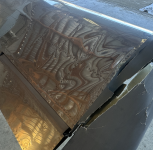
This photo especially indicates there is likely considerable internal structural damage.

1767327755326.png
 
Now, if it were me and my airplane, especially not being painted yet, I would consider building a new basic wing structure, and reusing the undamaged fuel tank, alerion and flap, which are the harder parts to build anyway. A basic wing structure could be built during the winter season and flying by late spring. But, I like things perfect myself!
Since wing spars are (or at least were) match-drilled with the center section at the factory, I don’t think I could build a new wing and expect it to perfectly match my center section.
 
This photo especially indicates there is likely considerable internal structural damage.

:
Yes, I’ll need to open it up to assess more accurately. Fortunately some of what looks like distortion is just reflection of the hangar roof and trusses. Fingers crossed that’s all. I have not wanted to open things up yet, not only because it’s pretty cold this week, but because I want to make sure I’ve got what the insurance company might need to see first. Still figuring out how/when to begin talking to them.
 
Since wing spars are (or at least were) match-drilled with the center section at the factory, I don’t think I could build a new wing and expect it to perfectly match my center section.
That might be true, but Vans must have used a common jig for match drilling the main spar and carry-through wing bolt holes. I have heard of folks doing this, and the holes matched the new wing spar. However, that would be something to discuss with Van's product support before considering this approach.
 
A complete detailed inspection of course needs to be done,but from what I have seen so far, I don’t think the damage will come anywhere close to justifying building an entire new wing.
A skin only needs to displace a very small amount to have enough extra skin volume to make it look quite rippled and wavy.
This repair should be quite straightforward and if completed correctly the wing should e exactly as it was before this misfortune.
 
So, I wonder if typical automotive insurance will cover aircraft collision damage that occurs on an airport ramp? Also, if you live in a "no-fault" state (like WA for example), then you would then deal with your own insurance company, which would probably map back to your hull damage aircraft insurer. And, if you built the aircraft yourself (like me), then you might want to just work something out with your hangar mate and fix it together since you will probably need a "bucking buddy" anyway. (y):cool:(y)
It is what liability insurance is for whether your hangar mate hit another car, took out a power pole or a store front, that all comes under liability.
 
Yes, I’ll need to open it up to assess more accurately. Fortunately some of what looks like distortion is just reflection of the hangar roof and trusses. Fingers crossed that’s all. I have not wanted to open things up yet, not only because it’s pretty cold this week, but because I want to make sure I’ve got what the insurance company might need to see first. Still figuring out how/when to begin talking to them.
Yesterday!
 
Vans has told me in the past that there is an RV-8 flying with one wing the original and one wing the newer Dash-1 wing. Your new wing will fit the center section carry through if you choose to replace it.
 
I think it would be easier to pull the wing and work it on a jig or benches. A lot of rivet tails to vacuum out. I've drilled apart my HS for the SB. It is surprisingly fast if done methodical.
Punch every rivet
Drill with tiny bit like #50
Drill heads with #40 and drill stop
Punch the ones that don't fall out.
Might as well install the Aileron Hinge SB if not done.
Yes, you could just drill since the skin is damaged, but maybe the ribs are ok. A little care might save some usable parts.
 
I have ground-not-in-motion coverage on my plane, with Gallagher as the broker. Even though the fault is clearly with the other party, should I be getting in touch with my insurance carrier and/or Gallagher as well? (Perhaps a dumb question, but I’ve never dealt with aviation related claims before, and this one’s mixing in with automotive.)
 
I have ground-not-in-motion coverage on my plane, with Gallagher as the broker. Even though the fault is clearly with the other party, should I be getting in touch with my insurance carrier and/or Gallagher as well?
Why wouldn’t you?
I would not file a claim but documenting when this occurred with your agent can’t be a bad idea.
 
You might consider contacting Synergy in Eugene OR. I had them repair a hangar rash elevator when I didn’t have time to do it myself. Expensive but they did good work. It might even be worth pulling the wing and driving it down to them.
At least you would be dealing with an RV oriented company.
 
You might consider contacting Synergy in Eugene OR. I had them repair a hangar rash elevator when I didn’t have time to do it myself. Expensive but they did good work. It might even be worth pulling the wing and driving it down to them.
At least you would be dealing with an RV oriented company.
Excellent idea. Probably give a really accurate insurance estimate too.
 
I have ground-not-in-motion coverage on my plane, with Gallagher as the broker. Even though the fault is clearly with the other party, should I be getting in touch with my insurance carrier and/or Gallagher as well? (Perhaps a dumb question, but I’ve never dealt with aviation related claims before, and this one’s mixing in with automotive.)
Yes contact them and they will instruct you what to do and make sure that your hangar mate gets in touch with their car insurance company. As I said earlier don't do anything with regards to the repairs till you get permission from the insurance companies.
 
I’ve repaired dozens of GA aircraft and if the damage is confined to what’s in the pics I would call this one a simple repair. A meticulous detailed inspection for other damage is a must. I would also lean towards leaving the wing on the plane. Yes working on the wing would be easier with it removed, but to me the work to remove and reinstall is more trouble than a little more difficulty to repair in place. I say this after doing float bottom skin replacements in place on seaplanes. A floor creeper is probably too low to work from (for me anyway) so I would build a simple wood platform to lay on. After proper repair this plane would be just as structurally sound and safe as before.

Don Broussard
RV9 Rebuild in Progress
57 Pacer
 
A complete detailed inspection of course needs to be done,but from what I have seen so far, I don’t think the damage will come anywhere close to justifying building an entire new wing.
A skin only needs to displace a very small amount to have enough extra skin volume to make it look quite rippled and wavy.
This repair should be quite straightforward and if completed correctly the wing should be exactly as it was before this misfortune.
May be true -- but if you don't get the wing shape as intended by the design, then the aircraft will end-up with a "heavy wing" and likely break to one side during stalls. This is especially true with the RV-9 with it's high aspect-ratio and longer span wings, I've seen several RV-9 builders just get their wing-tip slightly off-angle and then end-up with a very heavy wing as a result -- I helped an RV-9 builder install a new wing-tip last year because of this. I guess it all depends on how picky you are -- I myself am extremely picky about such things. I've even seen type certified aircraft after similar events or very hard landings not fly and stall correctly.

How do you check for proper wing shape in this case, and what do you do if internal ribs, stingers or spars are bent?
 
Last edited:
May be true -- but if you don't get the wing shape as intended by the design, then the aircraft will end-up with a "heavy wing" and likely break to one side during stalls. This is especially true with the RV-9 with it's high aspect-ratio and longer span wings, I've seen several RV-9 builders just get just their wing-tip slightly off-angle and then end-up with a very heavy wing as a result -- I helped an RV-9 builder install a new wing-tip last year because of this. I guess it all depends on how picky you are -- I myself am extremely picky about such things. I've even seen type certified aircraft after similar events or very hard landings not fly and stall correctly.

How do you check for proper wing shape in this case, and what do you do if internal ribs, stingers or spars are bent?
The answer is pretty simple

If substructure parts are found to have damage, but they aren’t replaced during the repair, then a proper repair was not done.
 
I’ve repaired dozens of GA aircraft and if the damage is confined to what’s in the pics I would call this one a simple repair. A meticulous detailed inspection for other damage is a must. I would also lean towards leaving the wing on the plane. Yes working on the wing would be easier with it removed, but to me the work to remove and reinstall is more trouble than a little more difficulty to repair in place. I say this after doing float bottom skin replacements in place on seaplanes. A floor creeper is probably too low to work from (for me anyway) so I would build a simple wood platform to lay on. After proper repair this plane would be just as structurally sound and safe as before.

Don Broussard
RV9 Rebuild in Progress
57 Pacer
For the life of me…I don’t see how you can build a wood scaffold as quick as you can pull the wing…I;ve done that in less than an hour….
 
I'm just curious -- were you the original builder and hold the repairman's certificate? Knowing how the wing went together could be of great value.
 
You might consider contacting Synergy in Eugene OR. I had them repair a hangar rash elevator when I didn’t have time to do it myself. Expensive but they did good work. It might even be worth pulling the wing and driving it down to them.
At least you would be dealing with an RV oriented company.
Hi Jon, I had an appointment with Synergy in Eugene to complete the rear wing spar and rear horizontal stabilizer spar service bulletins on Lee's old RV-4, they even collected the parts from Van's for me, it was scheduled almost a year in advance. One day a box shoed up from Synergy with my parts and the explanation that they were closing their shop in Eugene and would only have the shop in Gorgia. Google maps still show them in Eugene and Synergy website still shows the Eugene phone number, I just tried calling it and got no answer, maybe they're still there, I'm not sure. I ended up having the guys at Aero Maintenance at Pearson Field do the work, they did a very good job.
 
I'm just curious -- were you the original builder and hold the repairman's certificate? Knowing how the wing went together could be of great value.
Yes, and yes. Thoroughly know the plane, built from slow-build kits. Like to think I did a pretty good job. Never had any one else do any work on the plane. Only hesitation in doing any work myself is: (1) The sheer number of rivets that are going to need to be drilled out without doing additional damage; and, (2) whether I have the time or interest to do the repair myself. Just hit retirement and have a lot of (other) things I want to be doing. The rest is just figuring out how to get a good inspection that will support the thoroughness of how I want it to get fixed, how to work through the insurance, and then the best, most efficient means of doing the repair itself— wing on, wing off, etc.
 
Yes, and yes. Thoroughly know the plane, built from slow-build kits. Like to think I did a pretty good job. Never had any one else do any work on the plane. Only hesitation in doing any work myself is: (1) The sheer number of rivets that are going to need to be drilled out without doing additional damage; and, (2) whether I have the time or interest to do the repair myself. Just hit retirement and have a lot of (other) things I want to be doing. The rest is just figuring out how to get a good inspection that will support the thoroughness of how I want it to get fixed, how to work through the insurance, and then the best, most efficient means of doing the repair itself— wing on, wing off, etc.
Might I ask if your hangar mate gave you her insurance carrier information? If so, I would first contact the carrier and make sure the policy covers this type of accident. And if so, ask what they need and expect from here. Please know that we all feel for you in how difficult this must be.
 
So sorry about this unfortunate mishap. I'm only addressing the sub issue of the drivers property damage liability insurance coverage and some relevant information on that you might find helpful up front. By way of background, I spent my career in the insurance and reinsurance claims.

Thoughts:

1. Early on you will want to verify that the driver had valid auto liability coverage in place on the date of the accident.
A. Is the drivers auto policy premium paid up and active/in effect? This can be quickly verified with your phone call to her Insurance Agent of record. Although it is unlikely her policy has lapsed or is not otherwise in place, this is still your first step. If she has no coverage, that will dictate the direction of your next moves.
B. While talking with her Insurance Agent, request the agent provide you with the specific dollar amount of her auto liability insurance coverage. Why do that? If she is carrying only minimum required limits of liability, although she "has coverage" there is a potential for a shortfall of dollars for repair IF the Property Damage Liability sub limit is at the minimum. In this scenario, there could be a top end limit of $10,000 Property Damage Liability. Best to know what you're working with at the front end.

2. Assuming her Auto Liability coverage is in effect, you probably have the name of her Insurance Company. Generally speaking, the bigger National companies may have slightly better resources to handle this claim.
A. It is likely her insurance company may retain an "independent adjuster" (this is a subcontractor) and not assign an employee adjuster to handle the claim. This could turn out to be a good thing, assuming the independent adjuster has experience/knowledge of general aviation field and familiarity with aircraft repairs. In any event, the Independent or Company adjuster will be contacting you.
B. Don't start any work yourself before you get the go-ahead from the adjuster. They may authorize an A&P type (and/or you) to open things to develope the scope of repairs.
C. Don't be shy with getting good photos to document how you / A&P / the Shop developed your scope of repair (this shows damage/ this shows wing ribs in undamaged condition).

3. You have the right to choose who will fix your aircraft. Although an Insurance Co. may get an estimate from a contractor of their choice, you are under no obligation to use that company for the repair. You will, however, need to deal with that companies cost estimate,

4. After all of this, you hopefully will have the SCOPE of repairs agreed with the Insurance company. But you may not have an agreement yet on the price of repaits for the agreed scope.

5. Make your decision on who will do the repair. If it is you or a shop or an A&P, they will have to do the final negotation with the insurance company to arrive at the Agreed Price for repairs.

6. It wouldn't hurt if the final scope and repair document conatins a sentence to two to the effect that "This estimate and scope are based on inspections to date. Both parties agree that further repair cost may be incurred as a part of the ongoing repairs based on damage hidden or not accessible at this time".

Good luck with this process and getting your plane back in top flying condition. If you have questions, let me know, we can do a off line call.

David
 
Might I ask if your hangar mate gave you her insurance carrier information? If so, I would first contact the carrier and make sure the policy covers this type of accident. And if so, ask what they need and expect from here. Please know that we all feel for you in how difficult this must be.
Thanks. Hangar mate has given her auto insurer the heads up, but me talking to them firsthand is probably the next step to learn what they need before I start taking the plane apart for a deeper inspection.

Emailed Gallagher (who handles my a/c and hangar insurance) this morning and, probably no real surprise to most of you here, Kendra phoned me not 10 minutes later(!) to explain how it would work if for any reason my insurance had to get involved. So far just notifying Gallagher is sufficient on my end. If my insurers need to be brought into the issue we will deal with that at that time.

Still working on tracking down a good AP and/or somebody like Synergy to be able to give me a good inspection and/or repair quote. This is all happening in last 48 hours when everything has been closed for the holidays so it’s definitely slow on this front.

Bit closer inspection this morning so far is confirming the original cursory inspection I reported on yesterday morning, with the addition of significant oil canning in second from outboard bay on the top and bottom and possible slight distortion of the next rib inboard.

Thanks for everyone’s tips and encouragement. It is a bummer but, while I love the plane, it’s just an object. This is all just a hassle more than anything.
 
So sorry about this unfortunate mishap. I'm only addressing the sub issue of the drivers property damage liability insurance coverage and some relevant information on that you might find helpful up front. By way of background, I spent my career in the insurance and reinsurance claims.

Thoughts:

1. Early on you will want to verify that the driver had valid auto liability coverage in place on the date of the accident.
A. Is the drivers auto policy premium paid up and active/in effect? This can be quickly verified with your phone call to her Insurance Agent of record. Although it is unlikely her policy has lapsed or is not otherwise in place, this is still your first step. If she has no coverage, that will dictate the direction of your next moves.
B. While talking with her Insurance Agent, request the agent provide you with the specific dollar amount of her auto liability insurance coverage. Why do that? If she is carrying only minimum required limits of liability, although she "has coverage" there is a potential for a shortfall of dollars for repair IF the Property Damage Liability sub limit is at the minimum. In this scenario, there could be a top end limit of $10,000 Property Damage Liability. Best to know what you're working with at the front end.

2. Assuming her Auto Liability coverage is in effect, you probably have the name of her Insurance Company. Generally speaking, the bigger National companies may have slightly better resources to handle this claim.
A. It is likely her insurance company may retain an "independent adjuster" (this is a subcontractor) and not assign an employee adjuster to handle the claim. This could turn out to be a good thing, assuming the independent adjuster has experience/knowledge of general aviation field and familiarity with aircraft repairs. In any event, the Independent or Company adjuster will be contacting you.
B. Don't start any work yourself before you get the go-ahead from the adjuster. They may authorize an A&P type (and/or you) to open things to develope the scope of repairs.
C. Don't be shy with getting good photos to document how you / A&P / the Shop developed your scope of repair (this shows damage/ this shows wing ribs in undamaged condition).

3. You have the right to choose who will fix your aircraft. Although an Insurance Co. may get an estimate from a contractor of their choice, you are under no obligation to use that company for the repair. You will, however, need to deal with that companies cost estimate,

4. After all of this, you hopefully will have the SCOPE of repairs agreed with the Insurance company. But you may not have an agreement yet on the price of repaits for the agreed scope.

5. Make your decision on who will do the repair. If it is you or a shop or an A&P, they will have to do the final negotation with the insurance company to arrive at the Agreed Price for repairs.

6. It wouldn't hurt if the final scope and repair document conatins a sentence to two to the effect that "This estimate and scope are based on inspections to date. Both parties agree that further repair cost may be incurred as a part of the ongoing repairs based on damage hidden or not accessible at this time".

Good luck with this process and getting your plane back in top flying condition. If you have questions, let me know, we can do a off line call.

David
This is REALLY helpful information, David. Thank you so much!
 
Hi Jon, I had an appointment with Synergy in Eugene to complete the rear wing spar and rear horizontal stabilizer spar service bulletins on Lee's old RV-4, they even collected the parts from Van's for me, it was scheduled almost a year in advance. One day a box shoed up from Synergy with my parts and the explanation that they were closing their shop in Eugene and would only have the shop in Gorgia. Google maps still show them in Eugene and Synergy website still shows the Eugene phone number, I just tried calling it and got no answer, maybe they're still there, I'm not sure. I ended up having the guys at Aero Maintenance at Pearson Field do the work, they did a very good job.
Bummer. One less resource…..
Thanks Russ. Hope all is well.
 
I’ve repaired dozens of GA aircraft and if the damage is confined to what’s in the pics I would call this one a simple repair. A meticulous detailed inspection for other damage is a must. I would also lean towards leaving the wing on the plane. Yes working on the wing would be easier with it removed, but to me the work to remove and reinstall is more trouble than a little more difficulty to repair in place. I say this after doing float bottom skin replacements in place on seaplanes. A floor creeper is probably too low to work from (for me anyway) so I would build a simple wood platform to lay on. After proper repair this plane would be just as structurally sound and safe as before.

Don Broussard
RV9 Rebuild in Progress
57 Pacer

Buy once, cry once
 
I have ground-not-in-motion coverage on my plane, with Gallagher as the broker. Even though the fault is clearly with the other party, should I be getting in touch with my insurance carrier and/or Gallagher as well? (Perhaps a dumb question, but I’ve never dealt with aviation related claims before, and this one’s mixing in with automotive.)
If someone hit your parked car, what would you do?

I’d call the insurance yesterday.

But I also don’t think that’s “Hangar Rash”. Hangar rash buffs out.
 
I'm thinking that the wing needs to come off to replace both the top and bottom outboard skins.
Really bad advice. I have replaced outer aft wing skins on Twin Commanche with wing still on airplane. Numerous leading edge skins on Cherokees. They all flew straight. No jigging.
If pre drillled factory skins are not available I could make new skins using only hand tools in 3-4 hours each. Half that time if a foot shear were available.
 
Really bad advice. I have replaced outer aft wing skins on Twin Commanche with wing still on airplane. Numerous leading edge skins on Cherokees. They all flew straight. No jigging.
If pre drillled factory skins are not available I could make new skins using only hand tools in 3-4 hours each. Half that time if a foot shear were available.
Well -- then what your really saying is that Van's instructions for installing these wing skins is "bad advanced" -- I built my RV-9A, and I can see the logic! Why don't you offer to help rebuilt this wing?

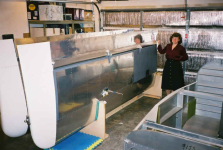
It doesn't take more than a couple of hours to remove an RV-9 wing. And, then simply use the wing cradle you probably built to hold it -- shown below. That way, you don't add stress to the wing structure during wing skin installation -- note, nose skins required the nose-up jig. This is how I install my aft wing skins. (y):cool:(y)

1767392266091.png1767393179183.png
 
Last edited:
Back
Top