Van's Air Force

The definitive Van's Aircraft support community! Buying, building or flying an RV? Join our exclusive family of mentors and enthusiasts!

Do you use electric fuel pump as a backup on takeoff?

Yes, happened to me on Sept. 9, 2024 taking off from Telluride, CO for a simple cruise around the area. 1,000’ AGL, turned the boost pump off, the fuel PSI dropped like a rock, yellow then red flashing light, and the engine quit. And, anyone who’s departed Telluride, at that altitude, knows the options aren’t good. Boost pump on, engine regains, and then it’s back to the airport to change my pants.

That’s on an 800 hr. 0-360 that’s been great. Bottom line, lotsa stuff, including fuel pump failures happen to our planes. THAT’S why we have certain procedures. ;)
Wow. Did you open it up to see what component failed?
 
Wow. Did you open it up to see what component failed?
Hi Don. I did replace the pump (with new one, not overhauled) and all is working well.
And, the old pump is still in the hangar, with the intention of looking at what component failed. Ha, haven't gotten around to it yet!
 
Many posts here regarding fuel pumps that aren't the Facet click-clack pump usually installed in carbed RVs. Facet pumps have been standard equipment as the sole pump in many automotive applications in particular British sports cars. Wait......maybe that isn't a good datapoint! :LOL: But they are designed for continuous use, I had one in a resto-mod S-10 truck and it was still running perfectly when I sold the truck after several years in service. I still have the original Facet pump in my 1999 RV-6.
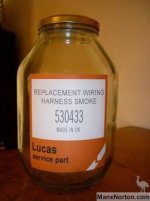
HA! Lucas Electric I have cussed many a time when I was a kid rebuilding british ...
 
I've usually shut down the boost pump when the cows are about this big (thumb and forefinger held 1/8" apart.....). I have to smile when I see us debating what altitude is appropriate for relying on the engine pump......turn the boost pump off when departing the airport environment and turn it back on when approaching the airport. This isn't complicated. ;)
Well Sam, I go a step further. I have my AUX Pump running all the time.
(Yes, I know. I am the contrarian here. :) )

My sequence is somewhat like this ...

AUX Pump ON
Fuel Pressure >25 PSI (Fuel Injected)
AUX Pump OFF
Start Engine
Taxi to runup area using only ENGINE Pump

(At runup area) ...
AUX Pump ON
Runup
Takeoff
Fly
Return
Land
Taxi to hangar
AUX Pump OFF

My logic ...
I think that I read somewhere that the pump is good for "X" thousand hours (more than the engine.)
With the start procedure that I use, I know that the plane will run on the Engine pump alone.
**IF** the Engine pump fails, the AUX pump is ALREADY on. Yes, I may not know that it failed until after I land and try to start again.

**IF** the AUX pump fails, the Engine pump will keep me going. Yes, I may not know it until after I land and try to start again.

When changing tanks, the AUX pump is already on.

All of this takes one extra thing out of the equation if something goes wrong. For that, I am willing to pay for another pump after "y" (let's assume much less than the "X" above) thousand hours.
 
Lucas headlight circuits have 3 positions: Dim, Flicker and Off.
I bought a 1965 MGB when I turned 16... two 6v batteries in series, installed in the cockpit and negative earth... Nothing like getting a jump start from someone and connecting their positive to your negative.

The old joke about Lucas... Why do Brits drink their beer warm? Because Lucas makes refrigerators too!

Sold that car 20 years later to start building my plane.
 
Lucas headlight circuits have 3 positions: Dim, Flicker and Off.
I hate thread drift as much as anyone but I'll respond (since I guess this drift is my fault) due to my experience with the aforementioned British electrics. I presently drive, and thoroughly enjoy, a Triumph TR6 which has a Lucas electrical system which I have refreshed. It is proving to be very reliable since I've paid particular attention to grounds, harness connections and switches. The Lucas architecture wasn't particularly protected from moisture which caused a lot of problems back in the day. Lucas was the low bidder when British Leyland put out bids for electrical stuff.....guess they got what they paid for........ ;)

To make this somewhat RV-related, giving priority to the integrity of grounds and harness junctions will solve many (most?) of the glitches that occur in our systems. This seems to be a global solution to any vehicle with an electrical system.

Now, back to our regular programming.
 
I hate thread drift as much as anyone but I'll respond (since I guess this drift is my fault) due to my experience with the aforementioned British electrics.
I'm familiar...Lucas electrics and SU carburation. Working on my '62 bug-eye Sprite was fun when I was 17. Now...much less interest.
 
That was the Varga Kachina. Which has had a disproportionate number of fuel starvation accidents, but I think that is largely because it is also the only low wing I have flown that has a both position on the fuel selector 😳 but a lack of aux. pump use may be a factor as well.
The Varga has two fuel on/off valves, one for each tank. The electric pump is plumbed in parallel with the engine driven pump. Very funky setup. Fun and unique airplane to fly.
 
I bought a 1965 MGB when I turned 16... two 6v batteries in series, installed in the cockpit and negative earth... Nothing like getting a jump start from someone and connecting their positive to your negative.
The old joke about Lucas... Why do Brits drink their beer warm? Because Lucas makes refrigerators too!
Sold that car 20 years later to start building my plane.
Lucas is now building Vacuum Cleaners. The only product they've ever built that doesn't "suck"!
Sorry, I couldn't resist this one.
 
If the mechanical fuel pump fails on a low wing aircraft there is not enough pressure to continue the feed fuel through the system. High wing aircraft generally do not have the same issue. In flight (low wing) if your engine dies emergency procedures generally include electric fuel pump on, switch to fullest tank, etc. Fuel pump goes on during landings and take offs in case your mechanical pump fails during those critical phases of flight. During your take off and initial climb out shut the boost pump off at a point you feel comfortable handling a sudden engine stoppage, like if your mechanical fuel pump failed.
 
Straight from the horse's mouth:
The conditions under which Lycoming recommends operation of the fuel boost pump are as follows:
1. Every takeoff.
2. Climb after takeoff unless Pilot’s Operating Handbook says it is not necessary.
3. When switching fuel selectors from one separate fuel tank to another, the fuel boost pump should be “on” in the new tank until the operator is assured there will be no interruption of the fuel flow.
4. Every landing approach.
5. Any time the fuel pressure is fluctuating, and the engine is affected by the fluctuation.
6. Hot weather, hot engine ground operation where fuel vapor problems cause erratic engine operation.
7. Some General Aviation aircraft require the use of the fuel boost pump during high-altitude flight. This will be spelled out in the Pilot’s Operating Handbook.
8. If the engine-mounted fuel pump fails.
If the fuel boost pump is used during ground operation, don’t fail to check the condition of the engine-mounted fuel pump before takeoff by turning the boost pump off briefly, and then back “on” for takeoff. If the engine-mounted pump has failed, it would be safer to know that on the ground rather than in the air when the fuel boost pump is turned “off.”
When in doubt, do the safest thing and use the fuel boost pump with Lycoming engines. Don’t be “stingy” with the boost pump. In most cases, they last the overhaul life of the engine, and are then exchanged or overhauled themselves. AS A REMINDER, the airframe Pilot’s Operating Handbook is the authority if boost pump information is spelled out in it.
Lycoming Key Operations document.
 
Can someone help out and look up a statistic? How many accidents have occurred due to the failure of the Lycoming mechanical pump during the first 5 or last 5 minutes of a flight?
 
Can someone help out and look up a statistic? How many accidents have occurred due to the failure of the Lycoming mechanical pump during the first 5 or last 5 minutes of a flight?
Since I think the majority of pilots follow the POH procedures for low wing certificated aircraft and do the same for experimentals, this is not likely something we will ever know.
Even if it is only one per 10 million flight hrs, if yours was the one, you would probably be happy the auxiliary pump was on.

I fail to understand why anyone would advocate for not using it during takeoff or landing. What is the downside?
 
Since I think the majority of pilots follow the POH procedures for low wing certificated aircraft and do the same for experimentals, this is not likely something we will ever know.
Even if it is only one per 10 million flight hrs, if yours was the one, you would probably be happy the auxiliary pump was on.

I fail to understand why anyone would advocate for not using it during takeoff or landing. What is the downside?
I needed a bigger one for your post.

1745877516320.png
 
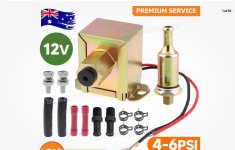
I have recently acquired an RV6 (o-360 carbureted), with a 6psi facet fuel pump (ES-40135). The builder we bought the plane from said to never use the fuel pump on takeoff since it ever so slightly enriches the fuel mixture. However, ever low wing plane I have flown (DA40, Archer) all have you use the electric fuel pump as a backup on takeoff.

Is it common practice for people to use the electric fuel pump on takeoff and landing? Or is the original builder right?
In a carbureted engine, if the mixture becomes richer having the boost pump ON, then you need to replace your carburetor float ASAP because it's probably sinking and has become fuel logged. From actual experience (twice), I HIGHY recommend using the blue epoxy "bullet proof" float -- see link below. If the carburetor doesn't have an "F" stamped on the faceplate, you probably don't have this newer type of float. You always should have the boost pump ON during take-off and landing in the event your mechanical engine driven pump starts to fail. Mechanical pumps become weak when they start to fail and have a harder time pumping fuel to the engine at high deck angles, such as your initial climb. Trust me, having this happen is not fun. 😲

 
Since I think the majority of pilots follow the POH procedures for low wing certificated aircraft and do the same for experimentals, this is not likely something we will ever know.
Even if it is only one per 10 million flight hrs, if yours was the one, you would probably be happy the auxiliary pump was on.

I fail to understand why anyone would advocate for not using it during takeoff or landing. What is the downside?
Totally agree with Scott - no downside at all!

Actual experience - I was climbing out in the -6 a couple of years ago, reached 1,000’ AGL, turned off the boost pump, and the engine started to stumble and lose power. Flipped the boost pump back on, and regained power - returned to the airport. Mechanical pump was old and had done its duty…put a new one on, and as we were tightening it up, Louise says “hey Paul, is this a crack in teh motor mount?” And so began the “tale of the overhaul”……. 🤣

Bottom line - mechanical pumps do fail, and you’ll notice it at high power. Takeoff and land with eh boost pump on if you’re flying a typical Lycoming.
 
Since I think the majority of pilots follow the POH procedures for low wing certificated aircraft and do the same for experimentals, this is not likely something we will ever know.
Even if it is only one per 10 million flight hrs, if yours was the one, you would probably be happy the auxiliary pump was on.

I fail to understand why anyone would advocate for not using it during takeoff or landing. What is the downside?
+1

It is not so much about how often it happens as it is about options. Losing a fuel pump at 200 agl leaves little time to do anything. Many questioning this practice are also only considering a failed fuel pump IMHO. Because the aux pump sucks cool fuel (assuming it is mounted in the cabin) while the eng pumps sucks hot fuel, the aux pump is more resistant to vapor lock. I can say that the number of engine stoppages just after lift off on hot summer days is not zero. We have a little cross at the end of our runway from such an incident. I see these posts once a month - “my fuel pressure is bouncing around and it stops when i turn on the boost pump.” That is often heat related vapor in the pump causing it. Because the aux pump is further back in the circuit, it is pushing vs sucking for more than the engine pump. This makes it more resistant to introducing air from line or hose leaks. Leaks on the suction side pull in air. Leaks on the pressure side leak fuel.
 
Last edited:
Our collective memory is short - we had one of our brothers lose his almost new aircraft due to not running the aux/boost pump less than a year ago. Thankfully he lived to tell the tale, from which I hope we learn. Spoiler alert: run the boost pump close to the ground.
 
Our collective memory is short - we had one of our brothers lose his almost new aircraft due to not running the aux/boost pump less than a year ago. Thankfully he lived to tell the tale, from which I hope we learn. Spoiler alert: run the boost pump close to the ground.
Mickey, do you have a link with the accident report?
 
I'm on my second boost pump in 400 hours (Weldon 8163 on the firewall). That pump, rebuilt from QAA, was a little less than $600 three years ago, now is $1000. I was told that they get hot in continuous operation, although I don't know how hot nor do I know how hot is too hot. Consequently, I only run it for brief periods under the circumstances that Lycoming recommends and have my AG6 annunciator set to send out an audio/headphone alarm after the pump has been running for about 6 minutes. Takeoff, landing, tank switch, and anytime below 1000 ft AGL. I see absolutely no disadvantage to running that pump in those situations. Can't hurt, might help.
 
my only concern would be wear from having the boost pump on continuously, and having it fail when you most need it.

I use for takeoff/climb, landing, and switching fuel tanks.
but which is a bigger concern, total live cycle or total life duty cycles?
 
Mickey, do you have a link with the accident report?
I had a look and cannot find it. We need an AI search engine - something like "an aircraft that crashed, I think it was in Colorado, the aircraft ended up on the side of a taxiway, upside down, and the pilot only had minor injuries, I think it was an RV-7, and the pilot told the story in a very open and honest way, and there was a lot of feedback that ended up concluding that he probably didn't have quite enough fuel in the tanks, and was not running the boost pump"
 
I had a look and cannot find it. We need an AI search engine - something like "an aircraft that crashed, I think it was in Colorado, the aircraft ended up on the side of a taxiway, upside down, and the pilot only had minor injuries, I think it was an RV-7, and the pilot told the story in a very open and honest way, and there was a lot of feedback that ended up concluding that he probably didn't have quite enough fuel in the tanks, and was not running the boost pump"

I think you're thinking of Cal's crash (Montana, a 9A)
His debrief: https://vansairforce.net/threads/my-crash-debriefing.213393/
NTSB final: https://data.ntsb.gov/carol-repgen/api/Aviation/ReportMain/GenerateNewestReport/105366/pdf
 
Yes, for every takeoff and landing. However, my electric fuel pump (supplied with the Vans kit when I built it) puts out a whole lot more than the Facet’s 6 psi. More like around 28 psi. If you took off with that facet pump turned on, and then your engine-driven pump failed, I wonder how much engine power you’d have from only 6 pounds of fuel pressure.if your electric pump output is 28 PSI then you are using a pump designed for a fuel injected engine
 
If your electric pump output is 28psi then you are using a pump designed for a fuel injected engine.
 
Same here. That said, I had a takeoff a couple years ago where the engine began to sputter and quit when I turned the boost pump off after some amount of climb out.. That gets your attention! Turned the boost pump back on, engine sprang back to life, and headed back to the airport, a bit shaken. Turns out the mechanical pump failed some time during the takeoff and climb after having gotten me through the taxi. So, as others have mentioned, taxi with the mechanical (except when hot conditions demand the boost pump), and add the boost during all transitional conditions. And despite their supposed expected lifetime coinciding with engine overhauls, mechanical pumps do fail, sometimes surprisingly soon, perhaps more so in recent times.
Back in the days of all carbureted cars, when a fuel pump started failing, your car would start-up just fine, run perfectly on flat and downhill roads, but when you started to drive uphill, the engine would loose power and start bucking. That's when you would drive to the parts store and buy a new fuel pump. I know -- that ages me, but owning your first set of wheels in the mid 70's was a great experience! You might not know anything is wrong until you rotate your RV and start climbing skyward. So, boost pump ON, especially for takeoffs and go-arounds (best ON for takeoffs and landings).
 
Back in the days of all carbureted cars, when a fuel pump started failing, your car would start-up just fine, run perfectly on flat and downhill roads, but when you started to drive uphill, the engine would loose power and start bucking. That's when you would drive to the parts store and buy a new fuel pump. I know -- that ages me, but owning your first set of wheels in the mid 70's was a great experience! You might not know anything is wrong until you rotate your RV and start climbing skyward. So, boost pump ON, especially for takeoffs and go-arounds (best ON for takeoffs and landings).
Why does the standard for virtually every low wing Lycoming powered type certificated aircraft require a 142 message discussion?
RV fatal in northern CA, engine driven pump failed, electric pump apparently not turned on or restart procedure not followed. RV at Moriarity NM boost pump not on for takeoff, engine driven pump failed, aircraft badly damaged.
Test the engine driven pump after start by turning off the electric pump. Electric pump on for takeoff and landing below 1000 AGL.
 
Why does the standard for virtually every low wing Lycoming powered type certificated aircraft require a 142 message discussion?
RV fatal in northern CA, engine driven pump failed, electric pump apparently not turned on or restart procedure not followed. RV at Moriarity NM boost pump not on for takeoff, engine driven pump failed, aircraft badly damaged.
Test the engine driven pump after start by turning off the electric pump. Electric pump on for takeoff and landing below 1000 AGL.
Totally agree with one nuance -- full fuel tanks, boost pump OFF, level on the ground, a mechanical fuel pump might show acceptable fuel pressure. But, nose-up high climbing, full power and pulling high fuel flow, you might then notice low-fuel pressure from a failing mechanical fuel pump if your boost pump is OFF. Keeping the boost pump ON during takeoffs and landings is really cheep insurance regardless of any wear and tear on the boost pump. (y):cool:(y)

BTW -- given that, I generally keep my boost pump ON under 1000 AGL and always for takeoffs and landings. To test my mechanical fuel pump, I take note of the fuel pressure before turning OFF the boost pump (after 1000 AGL) and then checking again after turning OFF the boost pump but at a safe altitude. On Start-up, I turn ON my boost pump and note the fuel pressure rise (looking for "in the green"), then I turn OFF my boost pump and start the engine. Once the engine is running, I check the fuel pressure of the mechanical fuel pump (looking for "in the green"). During run-up, I again check the fuel pressure. Then, I turn ON the boost pump prior to takeoff, making sure my mixture is set appropriately, too. The check after reaching 1000 AGL but still climbing might just be the most important check for a weak mechanical fuel pump.
 
Last edited:
👍🏻👍🏻


That was the Varga Kachina. Which has had a disproportionate number of fuel starvation accidents, but I think that is largely because it is also the only low wing I have flown that has a both position on the fuel selector 😳 but a lack of aux. pump use may be a factor as well.

Hey Scott…….I have a number of hours in a Varga Kachina……man you gotta admit they are a hoot to fly! 😜😜😜
 
Hey Scott…….I have a number of hours in a Varga Kachina……man you gotta admit they are a hoot to fly! 😜😜😜
I agree
I have some time in both the 150 hp version and 180 hp version.
The 180 version flew the most like an RV of any certified plane I have ever flown.
 
Why does the standard for virtually every low wing Lycoming powered type certificated aircraft require a 142 message discussion?
I guess there are people that were trained from the start to run the boost pump on low wing aircraft, and for us it's second nature. There are others that were not, and they never saw a problem, so they struggle see why we push so hard to run it. The baby duck syndrome strikes again.
 
Always used it on my first 3 Mooneys. The 4th Mooney's recommended practice was not to use it for take off. I was very cognizant of where that switch for the boost pump was in that plane, but true to the owners manual I did not use it on TO. I also do not use it on our Decathlon or RV7 except to prime for start up, but we are "primed" (pun intended) to turn it on immediately should there be an indication of reduction of power.
 
I agree
I have some time in both the 150 hp version and 180 hp version.
The 180 version flew the most like an RV of any certified plane I have ever flown.

Yes they even produce a replica Kachina grin. Last year at Airventure there was a guy with a yellow one parked in the warbird area that I saw while I was walking to the flight line to watch the airplanes come in. I stopped and spoke to him for a while.

I was in the Air Force stationed at Willie in the Phoenix area over by Chandler, Arizona. that was where the Varga Kachina plant was when they were last produced.

When I got out of the Air Force, I stayed in Phoenix and got a job at a machine shop in Chandler is a tool maker. The owner was a former USAF pilot and an aeronautical engineer his business was building the assembly line for making airbags for automobiles for TRW that was located in Mesa, Arizona. He owned a Varga Kachina and using his engineering abilities made into a tail wheel aircraft….. the boss took me to lunch one day from Chandler to deer Valley Airport. It was a real sweet ride………loved it!!! 😃
 
Always used it on my first 3 Mooneys. The 4th Mooney's recommended practice was not to use it for take off. I was very cognizant of where that switch for the boost pump was in that plane, but true to the owners manual I did not use it on TO. I also do not use it on our Decathlon or RV7 except to prime for start up, but we are "primed" (pun intended) to turn it on immediately should there be an indication of reduction of power.
Your Mooney probably had a continental engine.
They use an entirely different fuel delivery system that requires entirely different operating procedures.

Not relevant for the typical Lycoming carbureted or fuel injected fuel delivery system.
 
Hello There...
Very Good Info on Boost Pumps Here...
I NEED YOUR HELP PLEASE.
I purchased an RV-7 with an O-360-A1D...about 3 months ago. I have been getting low fuel pressure warnings... and my DYNON D180 shows down to 0.5 psi at times... sometimes it goes down to 1.5, sometimes 1, sometimes 0.5. when I turn on the boost pump, the pressure does go up, to no more than 4 psi... more like 3 to 4 psi.. and it isn't fast. Since I didn't know how old the fuel pump really is, and nothing about it was mentioned in the logbooks.. I have to assume it is at least 20 years old, as the airplane. Anyways. I did buy a New Tempest fuel pump, and installed it, with the help of some dental floss, and a lot of dexterity and patience. My flight testing seems to indicate the problem is still persisting.
The problem isn't clear cut consistent.

I don't feel engine roughness, and my fuel flow readings on the DYNON D180 seem steady. But having the pressure drop that low is a bit concerning.
The hose to the sensor manifold on the firewall, is plumbed in with a T fitting right at the output of the mechanical fuel pump, but before the Fuel flow sensor, that is just upstream of the carbuerator. Has anyone seen this?
My DYNON D180 has the latest software updates, but he sensor is probably 20 years old also... Since the boost pump improves the pressure when running, I thought the pump may be worn... but I took the old pump apart and didn't see anything obvious.
HOW Can I install a second, or maybe a wireless 0-15 psi sensor or gauge and test this in flight?
BTW... the low pressure doesn't just happen at high or max powers.. it happens in cruise also.. .sometimes even on the ground. Could it be a fuel inlet issue of some type? Has anyone experienced something similar? Tempest specs seem to indicate I should see 4-6 psi... I never see 5 psi or higher...
Since the pressure increases to approx 2.5 to 4 psi, while in cruise, etc... I am wondering if there is a restriction between the fuel selector and mechanical pump inlet?...
On a Car, I would hook up a pressure gauge, close the hood to the first notch and go for a ride... but I am not sure how to plumb in a fuel gauge for testing to verify my pressure warnings.
Also.. when I turn on the boost pump, on the ground, it doesn't have a hum or whine like a normal electric motor. it kinda gargles.. or something. Maybe I could post a video and someone could tell me if they hear that also? ... when I turn on the boost pump on the ground in pre-fligh, I build up to 4psi.
ALso.. since this RV-7 kit was purchased about 2002 or 2003, and completed 2007, is there a reliable way to find out what boost pump was installed on it?

Sorry for my ignorance... I have a lot of car experience, but new to airplanes.. .and I would rather be safe then sorry. And I appreciate the experience I am seeing here.
Thank you in advance :)
 
Back
Top