

Van's Air Force
You are using an out of date browser. It may not display this or other websites correctly.
You should upgrade or use an alternative browser.
You should upgrade or use an alternative browser.
DeltaHawk for RV-14
- Thread starter czechsix
- Start date

Frog Hobson
Active Member
I was about to post the same questionAny idea if this cowling will fit the RV-15 and if the inlets are big enough to support the airflow needs of the 235hp DH variant?
Don’t know. Though, I imagine it will be different. The reason is that we’re likely going with the 235hp variant for the RV15. It requires a larger turbocharger and will need a bit more cooling as well.I was about to post the same question

Who’s we? DH recommended the 200 for the 15 and that is what my deposit is on.Don’t know. Though, I imagine it will be different. The reason is that we’re likely going with the 235hp variant for the RV15. It requires a larger turbocharger and will need a bit more cooling as well.
We is collectively me, DH, and Synergy. I’m not aware that any of ‘we’ have taken a definite position just yet - but as I indicated we’re leaning towards the 235hp variant of the engine.Who’s we? DH recommended the 200 for the 15 and that is what my deposit is on.
Up until a few days ago, I wasn’t aware DH was taking deposits for RV15 engines just yet (might have changed since then?).
That aside, let me tell you the primary reason I’m leaning to the 235hp variant.
After seeing the RV15 this year at Air Venture , I was struck with its generous overall size and especially impressively large baggage area - to my eyes it sure seems like in a pinch I could chuck a couple warm bodies or the better part of an elk back there. And, while I’m generally happy with the Io-390 on my RV14 - the baggage capacity in the 14 is nothing compared to the 15. I’d gladly have the extra HP the 235hp DeltaHawk offers in the 15 - especially on a warm day, and even more so if I have a full load.
Just me - but, to my layman’s eyes the 15 looks like it would be happy w a higher powered engine. If the only options to achieve this are moving up to a 6-cylinder Lycoming or the lighter 235hp DeltaHawk, I can see the DH being the obvious choice (not to mention the forced air induction on the DH).
I don’t imagine the cowling will be all that different than the general design for V2 of the 14 we’re currently working on. Maybe the inlets are just a bit larger.
All that said, we’re still quite a ways from making a final decision on the engine model for the 15. Heck, Vans hasn’t even shipped wing kits out yet - let alone all the other component kits. My personal guess is we’re a good two years from a flying model (hope im wrong and it’s sooner).
All that makes sensor. I don’t think you’re wrong.We is collectively me, DH, and Synergy. I’m not aware that any of ‘we’ have taken a definite position just yet - but as I indicated we’re leaning towards the 235hp variant of the engine.
Up until a few days ago, I wasn’t aware DH was taking deposits for RV15 engines just yet (might have changed since then?).
That aside, let me tell you the primary reason I’m leaning to the 235hp variant.
After seeing the RV15 this year at Air Venture , I was struck with its generous overall size and especially impressively large baggage area - to my eyes it sure seems like in a pinch I could chuck a couple warm bodies or the better part of an elk back there. And, while I’m generally happy with the Io-390 on my RV14 - the baggage capacity in the 14 is nothing compared to the 15. I’d gladly have the extra HP the 235hp DeltaHawk offers in the 15 - especially on a warm day, and even more so if I have a full load.
Just me - but, to my layman’s eyes the 15 looks like it would be happy w a higher powered engine. If the only options to achieve this are moving up to a 6-cylinder Lycoming or the lighter 235hp DeltaHawk, I can see the DH being the obvious choice (not to mention the forced air induction on the DH).
I don’t imagine the cowling will be all that different than the general design for V2 of the 14 we’re currently working on. Maybe the inlets are just a bit larger.
All that said, we’re still quite a ways from making a final decision on the engine model for the 15. Heck, Vans hasn’t even shipped wing kits out yet - let alone all the other component kits. My personal guess is we’re a good two years from a flying model (hope im wrong and it’s sooner).
I believe the 15 with the DH200 will perform quite closely to the 215hp 390 in the high density altitude environment it is likely to be operated in.
However, no substitute for HP!
I will be disappointed if the FWF package isn’t compatible with the DH200 as that it is what was recommended to me for the 15 by DH. It also makes sense for the 90% plus times it will be used at much less than full utility. Moose be dammed!
I do understand we are early in the game. I was one of the first to place a deposit with DH for the 15.
Keep up the good work.

I was probably second!All that makes sensor. I don’t think you’re wrong.
I believe the 15 with the DH200 will perform quite closely to the 215hp 390 in the high density altitude environment it is likely to be operated in.
However, no substitute for HP!
I will be disappointed if the FWF package isn’t compatible with the DH200 as that it is what was recommended to me for the 15 by DH. It also makes sense for the 90% plus times it will be used at much less than full utility. Moose be dammed!
I do understand we are early in the game. I was one of the first to place a deposit with DH for the 15.
Keep up the good work.
Just not sure the extra 35 hp is worth $20,000...

I’m with Taz, who can we bump for some insight on an RV-10 fwf? When my deposit went in the -10 I think was holding a comfortable lead.@cjs do you have an insight on the development of the 235hp being offered for the RV10?
Taz-10@cjs do you have an insight on the development of the 235hp being offered for the RV10?
Here’s what I know. Currently, the RV10 is the second priority immediately behind the RV14. DH really wants to get their engines into Vans airframes and from what I’m seeing they are committing a lot of resources to make this happen.
At Synergy Air in Eugene, we already have a partially constructed RV10 just about ready for the development of the FF package for the 235hp engine.
Timing?…well, the priority is to get the V2 of the RV14 completed and flying for AirVenture 2026 (we’re on pace for this). The goal, incidentally, includes having a FF package fully ready for customers to order.
I’d guess development of the FF package on the RV10 would begin in earnest after AirVenture 2026 and would guess (emphasis on guess) there’d be a flying model ready to go at AV 2027. I think the development of the RV10 will benefit from all the work on the RV14, so it shouldn’t take as long as it has w the 14.
Then…on to the 15!
The 15 should be an easier project as the firewall forward is very similar to the 14.Taz-10
Here’s what I know. Currently, the RV10 is the second priority immediately behind the RV14. DH really wants to get their engines into Vans airframes and from what I’m seeing they are committing a lot of resources to make this happen.
At Synergy Air in Eugene, we already have a partially constructed RV10 just about ready for the development of the FF package for the 235hp engine.
Timing?…well, the priority is to get the V2 of the RV14 completed and flying for AirVenture 2026 (we’re on pace for this). The goal, incidentally, includes having a FF package fully ready for customers to order.
I’d guess development of the FF package on the RV10 would begin in earnest after AirVenture 2026 and would guess (emphasis on guess) there’d be a flying model ready to go at AV 2027. I think the development of the RV10 will benefit from all the work on the RV14, so it shouldn’t take as long as it has w the 14.
Then…on to the 15!
Seriously? you are planning to downgrade from a 260HP Lyc to a 235hp diesel?I appreciate the information. I'm a single digit RV10 placeholder for the DH235 and have really enjoyed watching the progress. My IO-540 should keep me going until the RV10 FWF is done.
What are you hoping to gain besides costs and complexity?
I am just curious.
Has DH finalized a price on any of these FW packages?
AeroEngineer
Well Known Member
A 260-horsepower IO-540 (without a turbo) only makes more than 235 horsepower while you're flying it below 3,000~4,000 feet MSL.you are planning to downgrade from a 260HP Lyc to a 235hp diesel?
Also: Lower fuel burn means longer range / more hours between refueling.
And 100LL isn't going to be around for ever. In many places around the world, it's already borderline impractical to get avgas.
(No, I will not try to do the math for how many hours it would take for the engine to pay for itself; I realize it could be more hours than the vast majority of RVs are flown. But that's presumably not the main point for most DH folks).
AeroEngineer is correct.
I'm in Oklahoma and with summer temps here it doesn't take much to get to the 3000 MSL density altitude so I'm not leaving much on the table in terms of takeoff horsepower. I've had a turbocharged airplane before and I miss it terribly for those trips. Once I'm up to altitude the main issue will be to not overspeed and who wouldn't be happy to have to power BACK to stay under 180 knots. That's real travel speed on less fuel.
With the lower fuel burn, it change flight times between refueling from 3 hours to 5 hours as I really don't like going under a hour reserve, especially when flying IFR. That's a big deal for me as we routinely fly Tulsa to Mackinac or Destin or Moab.
I have these dreams of flying outside of the US at some point so the upside of Jet A seems like a win but it's not a big deal for me.
It's mostly for the fuel/CG and also the weight savings and CG. I have a heavy bird, with a parachute and air conditioning which means a naturally aft CT That effectively makes it a 3 person aircraft and not much leeway in terms of offloading fuel. So the DH235 gives me the ability to do that so I can manage landing CG.
I'm ok to add some complexity for the benefit of a modern engine that is turbo/supercharged. I have quite a few hours behind Rotax engines and the benefit of the turbo and fuel injection is frankly awesome. If Rotax made an engine for the RV10 I would be flying behind that.
I understand that cost is an issue but if we're completely honest nobody is flying to save money. We all have a number that is worth it to us to stay in the air and fly what we want (can afford) and for me I'm fine with the cost of the DH. I have friends who fly turbines and they are fine with the cost, it's all relative.
I'm in Oklahoma and with summer temps here it doesn't take much to get to the 3000 MSL density altitude so I'm not leaving much on the table in terms of takeoff horsepower. I've had a turbocharged airplane before and I miss it terribly for those trips. Once I'm up to altitude the main issue will be to not overspeed and who wouldn't be happy to have to power BACK to stay under 180 knots. That's real travel speed on less fuel.
With the lower fuel burn, it change flight times between refueling from 3 hours to 5 hours as I really don't like going under a hour reserve, especially when flying IFR. That's a big deal for me as we routinely fly Tulsa to Mackinac or Destin or Moab.
I have these dreams of flying outside of the US at some point so the upside of Jet A seems like a win but it's not a big deal for me.
It's mostly for the fuel/CG and also the weight savings and CG. I have a heavy bird, with a parachute and air conditioning which means a naturally aft CT That effectively makes it a 3 person aircraft and not much leeway in terms of offloading fuel. So the DH235 gives me the ability to do that so I can manage landing CG.
I'm ok to add some complexity for the benefit of a modern engine that is turbo/supercharged. I have quite a few hours behind Rotax engines and the benefit of the turbo and fuel injection is frankly awesome. If Rotax made an engine for the RV10 I would be flying behind that.
I understand that cost is an issue but if we're completely honest nobody is flying to save money. We all have a number that is worth it to us to stay in the air and fly what we want (can afford) and for me I'm fine with the cost of the DH. I have friends who fly turbines and they are fine with the cost, it's all relative.

Yep. Plenty of places here now where the Avgas/JetA spread is $1 (per L so $4/Gal) or more. That’s if the Avgas is available. That adds up pretty quick.A 260-horsepower IO-540 (without a turbo) only makes more than 235 horsepower while you're flying it below 3,000~4,000 feet MSL.
Also: Lower fuel burn means longer range / more hours between refueling.
And 100LL isn't going to be around for ever. In many places around the world, it's already borderline impractical to get avgas.
(No, I will not try to do the math for how many hours it would take for the engine to pay for itself; I realize it could be more hours than the vast majority of RVs are flown. But that's presumably not the main point for most DH folks).
The performance is a wash. Any low level / hot drawbacks well and truly offset for 90% of the flying most 10s do.
At the rate Lycomings are inflating, it could be a no brainer everywhere if it proves reliable.
Last edited:
Let’s see; simple proven reliable mechanical fuel injection, no vapor lock, no hot start hocus pocus, no ignition or spark plugs, no electronic anything, no valves / valve train, sticky, corroded or otherwise, no worries about detonation or problems with 100LL replacement. If that’s complex I’ll take my chances….
Plus it sounds like a tour bus, kinda appropriate for a -10
Plus it sounds like a tour bus, kinda appropriate for a -10
Some , but not much. We’re waiting for the second DeltaHawk RV14 (V2) to fly to capture (and publish) numbers. V2 is the marketable version that will represent the package DH will be offering to builders. And, it will generate the numbers we think are relevant to those considering the DH package. It should be up flying late Spring - we’re well along on the build right now.Maybe I missed it but has the DH for the 14 performance numbers been published at 10k and above?
Some notable changes impacting V2 are:
1. New lighter block: The new 400 series block (being run through the paces for certification as I write this). The net result of the lighter block and its mods (eg internally run coolant channels, etc.) will be a lighter installation weight. The weight penalty to add a DH will likely be about 30lbs all else being equal (interior, paint, etc).
2. Engine: v2 will have the 200 hp variant of the engine (not the 180hp version in the prototype).
3. New cowl (see prior postings) - which should have an impact on efficiency/speed. For the prototype (v1) DeltaHawk RV14 cowl, very little was addressed other than functionality. The new cowl is much more aerodynamically efficient.
That said - I have published some numbers in the past, and some comparisons to my Lycoming RV14 (IO-390 thunderbolt w compression bumped .5). I’ll reiterate a few of them here:
180hp DH vs 223 hp Lycoming RV14:
ROC - pilot, half tanks, sea-level: DH - 1625fpm, Lycoming 2025fpm. The difference is not surprising considering the 180hp DH in V1 is giving up 43 hp to my bumped Lycoming, and it’s lifting a porkier plane (V2, however, will lose about 50lbs). The 200hp DH in the lighter package will narrow this gap. Frankly, I’m surprised the 180hp DH comps as well as it does, but it is a forced air two-stroke and the torque curve wide and large.
Cruise - 11,500’ msl (same loads): DH: 65in MP (90 inches is full throttle), 172 KTAS, 7.3 gph JetA fuel flow. Lycoming: WOT (just lean of peak), 174 KTAS, 9.9 gph 100LL. The DH is 34% more fuel efficient. And, this is before factoring in that JetA has been running about $1 less per gallon than 100LL on my cross-country trips. We have not ran full throttle at altitude yet. Im dying to do this, but we’re waiting to do so with the 200hp engine and new (more aerodynamic) cowling. However, I can look at the data and make a good guess that at about 12,500 msl even the 180hp DH engine is capable of cruising at the 14’s Vne (200 Kts).
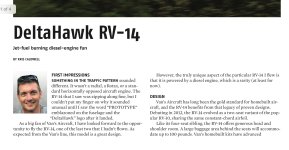
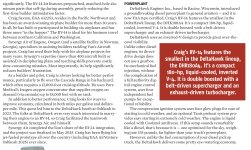
Non sequitur…I took some folks flying in the V1 prototype when we had the plane at the Triple Tree Fly-In in Georgia this September. Kris Caldwell, a free-lance aviation writer was one. Sport Aviation is publishing the article he wrote with his impressions on the plane, engine, etc in the January edition of Sport Aviation magazine due out late December. I’ve seen an advance copy and it’s a nice write-up.

czechsix
Well Known Member
And if any of the candidate 100 octane replacement fuels (GAMI, Swift, etc) ever show up at your local pump, they are likely to be at least another dollar more per gallon than 100LL. So the price delta between unleaded avgas and Jet A may become significant enough to recoup the higher upfront cost of the DeltaHawk engine a lot more quickly than it looks today, and the DH equipped airplane will have higher resale value as well. Assuming of course the engine proves to be reliable and well supported by DH...Plenty of places here now where the Avgas/JetA spread is $1 (per L so $4/Gal) or more.
Last edited:
glider_rider
Well Known Member
I don't get the obsession for 100 octane fuel for the "classic" or unmodified Lycomings we run. From technical point of view those engines run fine on car gas, Electronic ignition / FI and high pressure fuel system only make things better. Abundance of cheap 100LL seems to be limited to the north american continent. Over here, in Europe you are either filthy rich and buy the 100LL or run on whatever the local gas station has available. There are no more options.
Deltahawk posted an interesting article on their News page by the Cessna Pilots Magazine (see attached). This is a more thorough discussion of total cost of ownership as it includes cost impacts of extended time between overhaul and reduced maintenance and repairs between overhauls. No hard data but some reasonable, I think, thoughts on the potential for reduced total cost of ownership of the Deltahawk vs. current gas powered engines.
Attachments
The January article Craig mentioned:
Craig, thanks for all the updates on the encouraging progress. I think someone once posted a question about aerobatics, but I don’t recall seeing an answer. Any issues with the DH power plant and aerobatics? Also, have there been any discussions about a FWF package for the -8?
Brian
Brian
DeltaHawk tells me basic aerobatic maneuvers are fine - loops and rolls. I don’t believe they have explored much, if anything, beyond this so far. I’ve not done either maneuvers in the prototype DH14 - very steep turns were about the most aggressive maneuvers I attempted. It just wasn’t a focus of the Version1 DH14. Later this Spring when the V2 DH14 is flying we’ll expand the envelop of testing to include this. Personally, I expect the DH RV14 to be fine with the basic aerobatic maneuvers a typical RV14 owner would want to do.
LawrenceBE
I'm New Here
Thanks for the info about the aerobatics Craig! Any info/rumor about the RV-8 applicability and potential FWF package development? I will soon start my RV-8 build in Europe and Avgas is here very expensive, supply at risk because of regulation and autogas not available widely on airfields.
The RV8 - my bad, multitasking and neglected to answer this. As of now, no work is being done on the 8. That isn’t to say there will not be at some point. It’s just the 14, 10, and the 15 are the top priorities. I suspect that’ll keep DH busy for a few years.Thanks for the info about the aerobatics Craig! Any info/rumor about the RV-8 applicability and potential FWF package development? I will soon start my RV-8 build in Europe and Avgas is here very expensive, supply at risk because of regulation and autogas not available widely on airfields.
LawernceBE,The RV8 - my bad, multitasking and neglected to answer this. As of now, no work is being done on the 8. That isn’t to say there will not be at some point. It’s just the 14, 10, and the 15 are the top priorities. I suspect that’ll keep DH busy for a few years.
Just curious - where in Europe are you?
Craig
LawrenceBE
I'm New Here
Thanks for the info. I am in southern Belgium, flying out of EBNM where we have Avgas, UL91 and ... Jet-A1 on tap!
czechsix
Well Known Member
I think it will be pretty challenging from a weight perspective to install any Deltahawk engine in the RV-7/8 series. Those airframes are already on the heavy side when using an angle valve IO-360 or 390. We won't know the exact weight difference between the 390 and DHK200 until we get W&B data from Craig's second DHK-powered RV-14 with the final FWF configuration this coming summer, but I expect that installation will be 'several dozen' pounds heavier than the 390. The -10 and -14 which were designed for heavier powerplants from the outset are better able to absorb this weight increase both in terms of overall empty weight and the CG implications. On the -14 for example, you can move the battery back by the elevator bellcrank. On a -7 or -8, you've already moved the battery back there for an angle valve installation, and with DHK you'd probably have to bolt quite a bit of lead to the tail as well. Possible, yes...but certainly a greater compromise of pros/cons to consider.
All good points, but there are AV 390s on -8s and several super 8s with 540s, so you would think it’s doable. You could shorten the engine mount on the -8 to pick up a little, too. Not so on the -7 as it’s already close the the FW. I have a Hartzell CS carbon prop with a PV IO 360 and battery in the lower baggage compartment on my -8, and frankly wouldn’t mind some more weight on the nose. Would love to have centerline seating and a DH!I think it will be pretty challenging from a weight perspective to install any Deltahawk engine in the RV-7/8 series. Those airframes are already on the heavy side when using an angle valve IO-360 or 390. We won't know the exact weight difference between the 390 and DHK200 until we get W&B data from Craig's second DHK-powered RV-14 with the final FWF configuration this coming summer, but I expect that installation will be 'several dozen' pounds heavier than the 390. The -10 and -14 which were designed for heavier powerplants from the outset are better able to absorb this weight increase both in terms of overall empty weight and the CG implications. On the -14 for example, you can move the battery back by the elevator bellcrank. On a -7 or -8, you've already moved the battery back there for an angle valve installation, and with DHK you'd probably have to bolt quite a bit of lead to the tail as well. Possible, yes...but certainly a greater compromise of pros/cons to consider.
Little update…
The DeltaHawk RV14 - v2 - was just loaded and sent off to Racine, WI (DH’s home base) for the installation of the DHK200 engine and firewall forward package (including cowling).

We’re expecting the fuse/engine back in Eugene in April, at which time we’ll begin final assembly.
The Aerotronics avionics/panel is mostly installed (just missing the iPad (right side) and iPhone mount (left side), and sundry knobs).
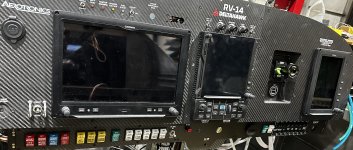
And the canopy, wings and control surfaces are 90% complete - ready to install when the plane returns. Pretty much on pace with last year’s schedule that had us at AirVenture in July. Which means there will not be much to report until we get the plane back in Eugene. But, once here, things should progress quickly.
The DeltaHawk RV14 - v2 - was just loaded and sent off to Racine, WI (DH’s home base) for the installation of the DHK200 engine and firewall forward package (including cowling).
We’re expecting the fuse/engine back in Eugene in April, at which time we’ll begin final assembly.
The Aerotronics avionics/panel is mostly installed (just missing the iPad (right side) and iPhone mount (left side), and sundry knobs).
And the canopy, wings and control surfaces are 90% complete - ready to install when the plane returns. Pretty much on pace with last year’s schedule that had us at AirVenture in July. Which means there will not be much to report until we get the plane back in Eugene. But, once here, things should progress quickly.
I thought this was my tractor for a minute! 
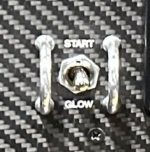
I asked Deltahawk to confirm the Monkworkz MZ-30 will work on the DHK 200. Below is an excerpt from their response. Short answer is yes.
"It mounts to a standard AND20000 accessory pad and is approved for use on Lycoming engines with a 1.3:1 accessory pad ratio, as well as Continental engines with a 1.5:1 ratio.
The unit includes built-in overspeed protection to prevent over-voltage or over-current conditions. For example, on a Lycoming installation the generator will shut down if it exceeds 4,030 RPM, and the unit has an absolute maximum operating speed of 4,600 RPM.
There is also a 28-volt option available, the MZ-17-28, which provides approximately 17 amps at 28 VDC.
Given that the DeltaHawk engine accessory pad operates at a 1.4:1 ratio, and with an engine overspeed limit of 2,860 RPM (resulting in an accessory pad speed of approximately 4,004 RPM), we do not see any issues with operating either the MZ-30 or the MZ-17-28 on the HDK 200.
"It mounts to a standard AND20000 accessory pad and is approved for use on Lycoming engines with a 1.3:1 accessory pad ratio, as well as Continental engines with a 1.5:1 ratio.
The unit includes built-in overspeed protection to prevent over-voltage or over-current conditions. For example, on a Lycoming installation the generator will shut down if it exceeds 4,030 RPM, and the unit has an absolute maximum operating speed of 4,600 RPM.
There is also a 28-volt option available, the MZ-17-28, which provides approximately 17 amps at 28 VDC.
Given that the DeltaHawk engine accessory pad operates at a 1.4:1 ratio, and with an engine overspeed limit of 2,860 RPM (resulting in an accessory pad speed of approximately 4,004 RPM), we do not see any issues with operating either the MZ-30 or the MZ-17-28 on the HDK 200.


DeltaHawk is currently testing this alternator on the Cirrus SR20 test bed, and plans to install it on the RV-14 ship #2 we just sent back to Racine, WI for the firewall foreword installation work. They are not expecting compatibility issues. I’ll let you know how it works when we get the plane up and flying.I asked Deltahawk to confirm the Monkworkz MZ-30 will work on the DHK 200. Below is an excerpt from their response. Short answer is yes.
"It mounts to a standard AND20000 accessory pad and is approved for use on Lycoming engines with a 1.3:1 accessory pad ratio, as well as Continental engines with a 1.5:1 ratio.
The unit includes built-in overspeed protection to prevent over-voltage or over-current conditions. For example, on a Lycoming installation the generator will shut down if it exceeds 4,030 RPM, and the unit has an absolute maximum operating speed of 4,600 RPM.
There is also a 28-volt option available, the MZ-17-28, which provides approximately 17 amps at 28 VDC.
Given that the DeltaHawk engine accessory pad operates at a 1.4:1 ratio, and with an engine overspeed limit of 2,860 RPM (resulting in an accessory pad speed of approximately 4,004 RPM), we do not see any issues with operating either the MZ-30 or the MZ-17-28 on the HDK 200.
DeltaHawk is currently testing this alternator on the Cirrus SR20 test bed, and we plan to install it on the RV-14 ship #2 that we just sent back to Racine, WI for the firewall foreward installation. We’re not expecting any compatibility issues.I asked Deltahawk to confirm the Monkworkz MZ-30 will work on the DHK 200. Below is an excerpt from their response. Short answer is yes.
"It mounts to a standard AND20000 accessory pad and is approved for use on Lycoming engines with a 1.3:1 accessory pad ratio, as well as Continental engines with a 1.5:1 ratio.
The unit includes built-in overspeed protection to prevent over-voltage or over-current conditions. For example, on a Lycoming installation the generator will shut down if it exceeds 4,030 RPM, and the unit has an absolute maximum operating speed of 4,600 RPM.
There is also a 28-volt option available, the MZ-17-28, which provides approximately 17 amps at 28 VDC.
Given that the DeltaHawk engine accessory pad operates at a 1.4:1 ratio, and with an engine overspeed limit of 2,860 RPM (resulting in an accessory pad speed of approximately 4,004 RPM), we do not see any issues with operating either the MZ-30 or the MZ-17-28 on the HDK 200.
Here’s a link to a YouTube video made by the developer/owner of monkworkz in which he describes the product and its operation (he’s an RV guy):
Super information Craig. Keep it flowing!
How is the instrumentation set up to manage power and what do you use when flying to set power? Throttle alone or combination throttle/rpm? Do you use MP or FF as input to set power? How do you manage and balance throttle and rpm settings during the transition from climb to cruise? You've made a couple comments about that above (MP and RPM reference wrt power) and I suppose (hope) you'll be providing some more info as testing progresses.
Have you or you anticipate making any changes to the RV's fuel system (tank-to-engine) beyond those directly part of the Deltahawk engine itself?
The reason for my questions is as follows:
There is an FAA memorandum related to Deltahawk on the DRS website (TC09818EN-E-0-0) which deals with equivalent level of safety (ELOS) for two items: manifold air pressure limitation and fuel intake passage design to limit ice accretion. This talks about how for compression ignition engines these two parameters not being relevant.
At one point you make reference to MP. The above memo indicates that operating limitations must be established related to fuel flow or power-lever angle as a compensating factor in place of MP. With respect to ice accretion, it says that the susceptability is in the fuel similar to turbine engines and therefore the requirements for them are acceptable instead.
Have Deltahawk given you some guidelines on this or are you on your own? They aren't publishing anything publicly (yet).
How is the instrumentation set up to manage power and what do you use when flying to set power? Throttle alone or combination throttle/rpm? Do you use MP or FF as input to set power? How do you manage and balance throttle and rpm settings during the transition from climb to cruise? You've made a couple comments about that above (MP and RPM reference wrt power) and I suppose (hope) you'll be providing some more info as testing progresses.
Have you or you anticipate making any changes to the RV's fuel system (tank-to-engine) beyond those directly part of the Deltahawk engine itself?
The reason for my questions is as follows:
There is an FAA memorandum related to Deltahawk on the DRS website (TC09818EN-E-0-0) which deals with equivalent level of safety (ELOS) for two items: manifold air pressure limitation and fuel intake passage design to limit ice accretion. This talks about how for compression ignition engines these two parameters not being relevant.
At one point you make reference to MP. The above memo indicates that operating limitations must be established related to fuel flow or power-lever angle as a compensating factor in place of MP. With respect to ice accretion, it says that the susceptability is in the fuel similar to turbine engines and therefore the requirements for them are acceptable instead.
Have Deltahawk given you some guidelines on this or are you on your own? They aren't publishing anything publicly (yet).
czechsix
Well Known Member
My understanding (from talking to DeltaHawk at OSH and other published info about the design) is that you can't overboost the DHK engine. The 2-stroke with intake/exhaust ports naturally limits the amount of pressure you can get in the cylinder (with piston at the bottom of the stroke, both intake and exhaust ports are open simultaneously so excess intake pressure is mitigated by more air escaping out the exhaust port). This is fundamentally different from a traditional turbo-charged 4-stroke aircraft engine where a waste gate is needed (sometimes combined with operating limitations) to prevent overboost. The power lever simply meters fuel flow, with the engine designed to safely handle the max fuel flow possible. I think temps are the main thing to monitor, but Craig can chime in if there's any other limitation I've missed.There is an FAA memorandum related to Deltahawk on the DRS website (TC09818EN-E-0-0) which deals with equivalent level of safety (ELOS) for two items: manifold air pressure limitation and fuel intake passage design to limit ice accretion. This talks about how for compression ignition engines these two parameters not being relevant.
At one point you make reference to MP. The above memo indicates that operating limitations must be established related to fuel flow or power-lever angle as a compensating factor in place of MP. With respect to ice accretion, it says that the susceptability is in the fuel similar to turbine engines and therefore the requirements for them are acceptable instead.
Regarding ice, the DHK's intake system isn't susceptible to forming ice (as opposed to a carb setup where ice can form in the right conditions). I believe Craig's 14 has an 'alternate air' control in case the main intake/filter gets blocked by snow, bird ingestion, etc. The other risk with diesel fuel is it can start to gel and/or form ice crystals in cold temps which is why additives are available to prevent this from happening (if you're using Jet A, those additives are already included). One area that DH was still sorting out when I talked to them this past OSH was the fuel filters...I think Craig's airplane has several filters and DH engineering was trying to decide on the best number, filter sizes, locations, service intervals, etc. Those decisions are important because diesel/JetA is more likely to form ice crystals wherever there's a restriction (and filters are restrictions).
Couldn’t have said it better (and, likely not as well). Thanks Czech6My understanding (from talking to DeltaHawk at OSH and other published info about the design) is that you can't overboost the DHK engine. The 2-stroke with intake/exhaust ports naturally limits the amount of pressure you can get in the cylinder (with piston at the bottom of the stroke, both intake and exhaust ports are open simultaneously so excess intake pressure is mitigated by more air escaping out the exhaust port). This is fundamentally different from a traditional turbo-charged 4-stroke aircraft engine where a waste gate is needed (sometimes combined with operating limitations) to prevent overboost. The power lever simply meters fuel flow, with the engine designed to safely handle the max fuel flow possible. I think temps are the main thing to monitor, but Craig can chime in if there's any other limitation I've missed.
Regarding ice, the DHK's intake system isn't susceptible to forming ice (as opposed to a carb setup where ice can form in the right conditions). I believe Craig's 14 has an 'alternate air' control in case the main intake/filter gets blocked by snow, bird ingestion, etc. The other risk with diesel fuel is it can start to gel and/or form ice crystals in cold temps which is why additives are available to prevent this from happening (if you're using Jet A, those additives are already included). One area that DH was still sorting out when I talked to them this past OSH was the fuel filters...I think Craig's airplane has several filters and DH engineering was trying to decide on the best number, filter sizes, locations, service intervals, etc. Those decisions are important because diesel/JetA is more likely to form ice crystals wherever there's a restriction (and filters are restrictions).
Yes, many thanks. That's in line with the FAA memo comments regarding ice not a problem at the cylinder but rather an issue to address in the fuel system itself.
As far as power settings for cruise, you mention in one post Craig that the performance seemed best at around 2300rpm. So for cruise will the procedure be to simply set about 2300rpm and then adjust fuel flow / power lever for either performance/speed or economy/range?
As far as power settings for cruise, you mention in one post Craig that the performance seemed best at around 2300rpm. So for cruise will the procedure be to simply set about 2300rpm and then adjust fuel flow / power lever for either performance/speed or economy/range?
Chflyer,
Short answer - yes.
Longer answer. As the v2 DH RV14 will have the new variant of the engine, and 200 hp vs 180, the rpm numbers likely will be a bit different. DH is also exploring some additional prop choices - so, that could be a factor.
That said - the T/O and cruise procedures were very simple. Full power and max rpm (2600) for take-off, and then reduce rpm and power for cruise.
I don’t have enough data to be completely sure, but 2300-2400 seemed to be the sweet spot for rpm. I was usually looking to balance fuel economy, speed and chts.
Lastly - and this is top of mind as I am flying my Lycoming RV14 frequently as of late - it’s soooo nice not having to deal with a mixture knob in the DH. With the lycoming, a good deal of my vision is directed at the g3x engine monitor dialing in the mixture on climb and during the transition to cruise (I run lop). With the DH, I’m basically looking out the window - probably safer, and definitely more enjoyable.
Short answer - yes.
Longer answer. As the v2 DH RV14 will have the new variant of the engine, and 200 hp vs 180, the rpm numbers likely will be a bit different. DH is also exploring some additional prop choices - so, that could be a factor.
That said - the T/O and cruise procedures were very simple. Full power and max rpm (2600) for take-off, and then reduce rpm and power for cruise.
I don’t have enough data to be completely sure, but 2300-2400 seemed to be the sweet spot for rpm. I was usually looking to balance fuel economy, speed and chts.
Lastly - and this is top of mind as I am flying my Lycoming RV14 frequently as of late - it’s soooo nice not having to deal with a mixture knob in the DH. With the lycoming, a good deal of my vision is directed at the g3x engine monitor dialing in the mixture on climb and during the transition to cruise (I run lop). With the DH, I’m basically looking out the window - probably safer, and definitely more enjoyable.

Craig,
What does the fuel return going back into the fuel tanks require and where is it located on the tank?
I’m building a -15 with hopes of the DH becoming available.
It seems like I will need the dual port fuel selector valve and only use 1 fuel tank at a time instead of running on both tanks like the usual high wing setup.
Did your -14 wing tanks already have the return port included with the kit or did you have to add it? The -15 slow build fuel tank kit does not include a fuel return port.
I need to start building my tanks early in the wing build. Can anyone recommend a fuel return port design that will work? Do you put it at the top or bottom of the tank rib, etc..?
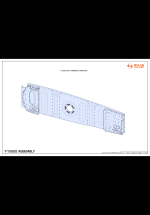
This is what the inboard wing rib looks like:
What does the fuel return going back into the fuel tanks require and where is it located on the tank?
I’m building a -15 with hopes of the DH becoming available.
It seems like I will need the dual port fuel selector valve and only use 1 fuel tank at a time instead of running on both tanks like the usual high wing setup.
Did your -14 wing tanks already have the return port included with the kit or did you have to add it? The -15 slow build fuel tank kit does not include a fuel return port.
I need to start building my tanks early in the wing build. Can anyone recommend a fuel return port design that will work? Do you put it at the top or bottom of the tank rib, etc..?
This is what the inboard wing rib looks like:
Last edited:

Jjackh10
Well Known Member
Could the return line not just be tee'd into the feed line coming from the tank going to the fuel valve?Craig,
What does the fuel return going back into the fuel tanks require and where is it located on the tank?
I’m building a -15 with hopes of the DH becoming available.
It seems like I will need the dual port fuel selector valve and only use 1 fuel tank at a time instead of running on both tanks like the usual high wing setup.

N10KE
Well Known Member
I know that is a bad idea on automotive fuel returns due to aeration, pressure fluctuations, etc. I suspect it's a bad idea here, as well. Additionally, fuel is used for cooling on the DH, so I expect you would want to pump that warmed fuel back to the tank to mix with the cooler fuel in the tank.Could the return line not just be tee'd into the feed line coming from the tank going to the fuel valve?
Jjackh10
Well Known Member
How does it use the fuel for cooling? That's interesting.I know that is a bad idea on automotive fuel returns due to aeration, pressure fluctuations, etc. I suspect it's a bad idea here, as well. Additionally, fuel is used for cooling on the DH, so I expect you would want to pump that warmed fuel back to the tank to mix with the cooler fuel in the tank.
N10KE
Well Known Member
I was told during my tour of DH that fuel is circulated around the injectors to cool them. Hopefully Craig will chime in as he is a lot more familiar with the intimate details of the engine.How does it use the fuel for cooling? That's interesting.
The other risk with diesel fuel is it can start to gel and/or form ice crystals in cold temps which is why additives are available to prevent this from happening (if you're using Jet A, those additives are already included).
No always. The most common you will see is Prist. In general, at the altitudes we fly at, Jet-A will not gel.
Tim
I just found out from the EAA RV-15 webinar the plane will have a header tank.
Rian Johnson recommend that the fuel return run to the header tank.
Rian Johnson recommend that the fuel return run to the header tank.

All 14’s (QB and kits) had a fuel return bung included. See many posts showing this.Did your -14 wing tanks already have the return port included with the kit or did you have to add it? The -15 slow build fuel tank kit does not include a fuel return port.
