Van's Air Force

The definitive Van's Aircraft support community! Buying, building or flying an RV? Join our exclusive family of mentors and enthusiasts!

AntiSplatAero sump heater: One year report

catmandu

Well Known Member
Patron
I installed and used this heater for one full cold weather cycle here in the high desert. I typically preheat the engine at 45F ambient and below, above that I am usually at 90F oil temp by the run up area. It is activated by a smart switch, so I typically turn it on from home the night before, having left a moving blanket over the cowl and the intake ports loosely blocked. I admit to accidentally leaving it on for two full days a couple of times. Depending on ambient temperature, oil temp is 70-80F at engine start, CHT’s and EGT’s in the 60’s.

This past November when I remotely turned it on the first time, I arrived to a cold engine. I checked that everything was working up to the heater plug at the oil door. So I reverted to my ducted milk house heater between the exhaust pipes, putting the sump heater on the oil change todo list.

The oil change finally occurred this week. Upon examination, I found a broken wire right where it transitions into the actual heater.
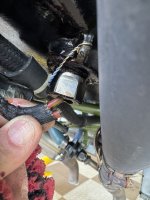
IMG_5129.jpeg

I contacted ASA, they said this has been reported before, and is usually due to an unsupported wire (it was supported as well as the geometry allowed). This is not a field repairable failure, so I purchased a replacement, which they shipped that same morning. When it arrived, I went to remove the broken heater. Upon exposing all seven threads of the heater base, it would not come out of the sump.
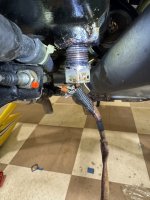
IMG_5136.jpeg

It could wiggle a bit, but almost felt like it was somehow broken, yet still attached. Upon examining the new heater and reassuring myself that it was in fact a single milled piece of aluminum, I applied some brute force to the broken heater and got it out.
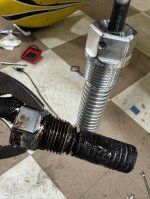
IMG_5137.jpeg

Carbon deposits or coking or whatever the correct technical term is. Nothing magnetic or metallic. Now I knew why it was so difficult to remove. I then took a right angle pick and went up into the plug hole to try and remove any leftovers.
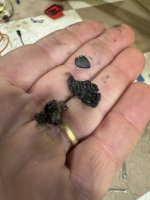
IMG_5142.jpeg

Witness marks show the pieces that fell out had been attached to the top and sides of the heater. None of this stuff had made its way to the suction screen, it was almost spotless the last few oil changes, including this one (we’ll see about the next one). Knowing what I don’t know, I took the heater to my local mechanic for a consultation. After some discussion, it was decided this was something to make note of, but not a huge concern.

I installed the new heater, this time trying for a straighter transition for the wires, which I further reinforced with some high temp silicone.
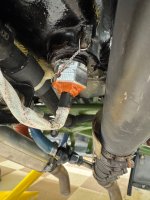
IMG_5139.jpeg

Recent postings had turned me on to the idea of using a lamp dimmer to limit the operating temperature of the heater. Perhaps this will keep the deposits from forming. So I boogied up to the aviation electric aisle at Home Depot and bought myself one. For comparison purposes, I mimicked a prior test that was conducted at full power, heating the sump for 5.5 hours, with an ambient temperature averaging 38F. For my test, I limited amperage to 1.045A, approximately 125 watts.
IMG_5143.jpeg

Sump case at heater 86F
Sump case corner opposite heater 51F
Oil temp top of oil in sump 54F
Oil temp bottom of dipstick 59F

Obviously not enough warmth for my liking, so I will repeat the test again at approximately 175 watts next week, once I return from working on a whole home battery backup at another (warmer!) location.
 
This could show the advantage of a large-area heat application like a silicon external sump pad verses a spot heating solution like this probe. I had similar trouble with one of those dipstick probe type heating elements in a radial engine oil tank (dry sump). I am with ve0kog on this one. If nothing else you are loyal.
 
This could show the advantage of a large-area heat application like a silicon external sump pad verses a spot heating solution like this probe. I had similar trouble with one of those dipstick probe type heating elements in a radial engine oil tank (dry sump). I am with ve0kog on this one. If nothing else you are loyal.
Couldn't agree more. The pads have been around for a long time and proven themselves. I have had the same issues with a dipstick heater as well.
 
I installed and used this heater for one full cold weather cycle here in the high desert. I typically preheat the engine at 45F ambient and below, above that I am usually at 90F oil temp by the run up area. It is activated by a smart switch, so I typically turn it on from home the night before, having left a moving blanket over the cowl and the intake ports loosely blocked. I admit to accidentally leaving it on for two full days a couple of times. Depending on ambient temperature, oil temp is 70-80F at engine start, CHT’s and EGT’s in the 60’s.

This past November when I remotely turned it on the first time, I arrived to a cold engine. I checked that everything was working up to the heater plug at the oil door. So I reverted to my ducted milk house heater between the exhaust pipes, putting the sump heater on the oil change todo list.

The oil change finally occurred this week. Upon examination, I found a broken wire right where it transitions into the actual heater.

View attachment 78013

I contacted ASA, they said this has been reported before, and is usually due to an unsupported wire (it was supported as well as the geometry allowed). This is not a field repairable failure, so I purchased a replacement, which they shipped that same morning. When it arrived, I went to remove the broken heater. Upon exposing all seven threads of the heater base, it would not come out of the sump.

View attachment 78014

It could wiggle a bit, but almost felt like it was somehow broken, yet still attached. Upon examining the new heater and reassuring myself that it was in fact a single milled piece of aluminum, I applied some brute force to the broken heater and got it out.

View attachment 78026

Carbon deposits or coking or whatever the correct technical term is. Nothing magnetic or metallic. Now I knew why it was so difficult to remove. I then took a right angle pick and went up into the plug hole to try and remove any leftovers.

View attachment 78024

Witness marks show the pieces that fell out had been attached to the top and sides of the heater. None of this stuff had made its way to the suction screen, it was almost spotless the last few oil changes, including this one (we’ll see about the next one). Knowing what I don’t know, I took the heater to my local mechanic for a consultation. After some discussion, it was decided this was something to make note of, but not a huge concern.

I installed the new heater, this time trying for a straighter transition for the wires, which I further reinforced with some high temp silicone.

View attachment 78023

Recent postings had turned me on to the idea of using a lamp dimmer to limit the operating temperature of the heater. Perhaps this will keep the deposits from forming. So I boogied up to the aviation electric aisle at Home Depot and bought myself one. For comparison purposes, I mimicked a prior test that was conducted at full power, heating the sump for 5.5 hours, with an ambient temperature averaging 38F. For my test, I limited amperage to 1.045A, approximately 125 watts.

View attachment 78025

Sump case at heater 86F
Sump case corner opposite heater 51F
Oil temp top of oil in sump 54F
Oil temp bottom of dipstick 59F

Obviously not enough warmth for my liking, so I will repeat the test again at approximately 175 watts next week, once I return from working on a whole home battery backup at another (warmer!) location.
Thanks for the post. I like your idea of reducing power. When you find the perfect setting on the dimmer, give us the ohm value
 
Couldn't agree more. The pads have been around for a long time and proven themselves. I have had the same issues with a dipstick heater as well.
I've only used automotive engine block heaters before (not on aircraft). Is there any compelling reason to use a $200-$1200 "aviation" heating pad vs a $30 automotive pad that puts out the same wattage?
 
Thanks for the post. I like your idea of reducing power. When you find the perfect setting on the dimmer, give us the ohm value
It’s an AC circuit, assuming you’re running it on line power, so you’ll want to measure the power/amperage, or voltage. The resistance of the element is fixed.
 
… Recent postings had turned me on to the idea of using a lamp dimmer to limit the operating temperature of the heater…
A diode could be used to cut the voltage in half. I wonder if the power would be more than half with the wire in the heater running cooler and having lower resistance.
 
A diode could be used to cut the voltage in half
iirc the voltage will be the same but power cut in half. It might work.. i would install the diode and a thermal cutoff fuse , which practically all consumers heaters have. they cost only a few cents, eg SF188E rated for something like 100 or 120C. It needs to be mechanically attached to the heater, that can be a challenge.
 
A diode could be used to cut the voltage in half. I wonder if the power would be more than half with the wire in the heater running cooler and having lower resistance.
Voltage is the same - you're just using half the waveform so average power will be half.
 
I wonder if making the heating portion smooth would reduce the chance of buildup? It would reduce the surface area, reducing the heat transfer rate to the oil...
 
I LOVE experimental aviation. Each of us get to make choices about exactly how we want to build and maintain our personal aircraft.
Personal observations here, and this isn’t intended to be a dig or insult on anyone.

I read with great interest the testing results of various oil filters, and then the debate about the permanent filters. Mike Busch knows a thing or two about airplane engines and yet I think the consensus here was he (using a permanent filter) wasn’t conservative enough because the paper filters tested better. Most of us want “the best” for our planes… and we (I am guilty here) think we are doing better than Mike on the filter front.

Then I look at the coking from this oil heater (which is from a respected company and comes from a very real desire to help and simplify) and folks don’t seem to be even pausing to think about what it is doing to the oil. I’m not a chemist, but that deposit is some hydrocarbon being cooked. That can’t be good, and has the potential to be bad (really bad?) for the engine.

I know what I just paid for my Lycoming. I paid a bit more (ok, about 4 times more) for a Tanis heater because I live in Minnesota and because the testing that has been done on the Tanis. The price difference is less than 1% of the price of my engine. Seems like an easy choice for me.
 
I installed and used this heater for one full cold weather cycle here in the high desert. I typically preheat the engine at 45F ambient and below, above that I am usually at 90F oil temp by the run up area. It is activated by a smart switch, so I typically turn it on from home the night before, having left a moving blanket over the cowl and the intake ports loosely blocked. I admit to accidentally leaving it on for two full days a couple of times. Depending on ambient temperature, oil temp is 70-80F at engine start, CHT’s and EGT’s in the 60’s.

This past November when I remotely turned it on the first time, I arrived to a cold engine. I checked that everything was working up to the heater plug at the oil door. So I reverted to my ducted milk house heater between the exhaust pipes, putting the sump heater on the oil change todo list.

The oil change finally occurred this week. Upon examination, I found a broken wire right where it transitions into the actual heater.

View attachment 78013

I contacted ASA, they said this has been reported before, and is usually due to an unsupported wire (it was supported as well as the geometry allowed). This is not a field repairable failure, so I purchased a replacement, which they shipped that same morning. When it arrived, I went to remove the broken heater. Upon exposing all seven threads of the heater base, it would not come out of the sump.

View attachment 78014

It could wiggle a bit, but almost felt like it was somehow broken, yet still attached. Upon examining the new heater and reassuring myself that it was in fact a single milled piece of aluminum, I applied some brute force to the broken heater and got it out.

View attachment 78026

Carbon deposits or coking or whatever the correct technical term is. Nothing magnetic or metallic. Now I knew why it was so difficult to remove. I then took a right angle pick and went up into the plug hole to try and remove any leftovers.

View attachment 78024

Witness marks show the pieces that fell out had been attached to the top and sides of the heater. None of this stuff had made its way to the suction screen, it was almost spotless the last few oil changes, including this one (we’ll see about the next one). Knowing what I don’t know, I took the heater to my local mechanic for a consultation. After some discussion, it was decided this was something to make note of, but not a huge concern.

I installed the new heater, this time trying for a straighter transition for the wires, which I further reinforced with some high temp silicone.

View attachment 78023

Recent postings had turned me on to the idea of using a lamp dimmer to limit the operating temperature of the heater. Perhaps this will keep the deposits from forming. So I boogied up to the aviation electric aisle at Home Depot and bought myself one. For comparison purposes, I mimicked a prior test that was conducted at full power, heating the sump for 5.5 hours, with an ambient temperature averaging 38F. For my test, I limited amperage to 1.045A, approximately 125 watts.

View attachment 78025

Sump case at heater 86F
Sump case corner opposite heater 51F
Oil temp top of oil in sump 54F
Oil temp bottom of dipstick 59F

Obviously not enough warmth for my liking, so I will repeat the test again at approximately 175 watts next week, once I return from working on a whole home battery backup at another (warmer!) location.
Interesting....with the evidence at hand, trying it again to get a different result!!!!
 
Not a fan of putting a 120v metal cased probe up my engine. Make sure you have a GFCI breaker as this is a two wire product with no connection to your house ground except perhaps at your panel bond.
A chafed wire gone unnoticed, or an internal element short could have devastating consequences to you. It also has the potential of doing some serious damage to your 12v electronics.
These are outliers for sure, but…..
 
Like most things, there is probably a middle ground here. The OP has stated that he has left this on for several days at a time on several occasions. In my case, I run it for 2-3 hours before getting to the airport on the coldest days of the year. I have seen zero evidence of any of the oil issues that he has found, over several oil changes and finger screen inspections.
 
I wonder if making the heating portion smooth would reduce the chance of buildup? It would reduce the surface area, reducing the heat transfer rate to the oil...
Nope….the electrical input energy is the same, which leads to a higher delta T (i.e. hotter probe for a given oil temp) and hence would create more potential to coke.
 
I LOVE experimental aviation. Each of us get to make choices about exactly how we want to build and maintain our personal aircraft.
Personal observations here, and this isn’t intended to be a dig or insult on anyone.

I read with great interest the testing results of various oil filters, and then the debate about the permanent filters. Mike Busch knows a thing or two about airplane engines and yet I think the consensus here was he (using a permanent filter) wasn’t conservative enough because the paper filters tested better. Most of us want “the best” for our planes… and we (I am guilty here) think we are doing better than Mike on the filter front.

Then I look at the coking from this oil heater (which is from a respected company and comes from a very real desire to help and simplify) and folks don’t seem to be even pausing to think about what it is doing to the oil. I’m not a chemist, but that deposit is some hydrocarbon being cooked. That can’t be good, and has the potential to be bad (really bad?) for the engine.

I know what I just paid for my Lycoming. I paid a bit more (ok, about 4 times more) for a Tanis heater because I live in Minnesota and because the testing that has been done on the Tanis. The price difference is less than 1% of the price of my engine. Seems like an easy choice for me.
Not at all offensive. I too want “the best” and also agree that sometimes in wanting the best the experimental world goes beyond diminishing returns whereby we add complexity, with the best of intentions, that actually reduce reliability.

I am NOT disparaging Allen and the Crew at Anti Splat, as I run a number of their products, including this heater, in CANADA 🇨🇦 no less, and this one may be a case when long term, “fail safe” and more conservative testing may have been in order.

We all know that many of the standards and requirements embodied in Certification of aircraft, their engines and accessories have come from hard learned, and often fatal, lessons and as a responsible community we need to be cognizant and respectful of that reality.

P.S. please note the use of the term “reality” as opposed to “truth” as truth has become a subjective term in our modern discourse.
 
I've read this thread with significant interest as I've installed one of these devices in my -14. Initially, my main concern was that the housing could come apart and and send pieces through my engine. I learned that the housing is one piece so there is little to no danger of that happening. I also read in earlier posts about the concerns over how much heat this unit puts out.

I work with electric elements in my job so I was very interested in how it was made, output, and watt density. Watt density....what the heck is that? Oversimplified, its a simple concept that tells us how hot an element gets (relative to other elements).

Example: Assume a 12" 4500 watt element (think water heater). The element forms a loop that is 6" long (total of 12"). The watt density would be 375w per inch (4500/12). Now, take that same 4500 watts and put it in a 24" element. The watt density is cut in half (4500/24 = 187.5).....and so is the temperature.

In the example above, the 12" element must get much hotter to produce the 4500 watts than the 24" element. Yes, the 24" element gets only to roughly half the temperature as the 12" element yet puts out the same 4500w.

The potential problem I see with this unit is that its a "high watt density" element. In other words, it's going to get very hot even if it's only 250w. The unit can't be made longer so to produce 250w it's temperature is going to be high.

So what's this got to do with anything? While I've only used it 3 times, like some other users here, I don't like the high temps it produces. Granted I'm in a 65 degree hangar, but I'm breaking in my engine so I'd like to have somewhere in the neighborhood of 100 degrees + at start-up. When this device is plugged in, the oil pan surrounding the element gets hot....quickly. I took a cheap laser reader and got 185 degrees on the outside of the pan in roughly 30 minutes (while in the 65 degree hangar).

What am I going to do? I've purchased a Safety-Heet controller from McFarlane. It's really just a "dimmer" that can handle the 250w. It's a bit of overkill since I could find something off of Amazon for 20% of the price. But I wanted something that was designed for the environment my airplane might see. If we reduce the voltage going to the element, we can reduce the output which will reduce the temp. Should I be in a place with extremely cold temps, I may want that 250w, so I'll just crank the controller up.

Ultimately, the Antisplat Sump Heater is ridiculously simple install. Five minutes at an oil change is all it takes....and most of that 5 minutes is safety-wire. The element goes directly in the oil which is nice, it just gets a bit too hot for my comfort zone. Reducing the voltage and leaving the unit on longer is the proposed solution....for me.

I'll report back after I see if my solution works.
 
Last edited:
This forum is so valuable because of posts like this. Catmandu is to be commended for posting a very detailed and honest evaluation of the ASA oil heater. Those pictures really show some alarming results. I am a BIG fan of ASA and have some of their products as well but not this one. I have the sump pad and the cylinder band external heaters.

After seeing that I would NOT reinstall the same thing that gave this issue in the first place. As Bavafa said in post #15, “Interesting....with the evidence at hand, trying it again to get a different result!!!!

ASA has always been helpful to this community with new and innovative products but this one doesn’t seem to be something we should be using. Sure some folks are having good results and no issues. Yes we fly experimentals but we should think carefully what parts we use and whether you want to use this one or put a cheap $30 auto pad heater from Amazon on your engine.

Post #13 questioned: “I wonder if making the heating portion smooth would reduce the chance of buildup?” That may be a good solution.

Thanks again to Catmandu for posted this valuable insight.
 
Not to disparage Allen and ASA at all - but this is why I prefer the Reiff pads that are epoxied to the sump. The sump takes the heat and spreads it through the metal, then transfers that to the oil at a much lower temperature over a much larger surface area.
 
I installed and used this heater for one full cold weather cycle here in the high desert. I typically preheat the engine at 45F ambient and below, above that I am usually at 90F oil temp by the run up area. It is activated by a smart switch, so I typically turn it on from home the night before, having left a moving blanket over the cowl and the intake ports loosely blocked. I admit to accidentally leaving it on for two full days a couple of times. Depending on ambient temperature, oil temp is 70-80F at engine start, CHT’s and EGT’s in the 60’s.

This past November when I remotely turned it on the first time, I arrived to a cold engine. I checked that everything was working up to the heater plug at the oil door. So I reverted to my ducted milk house heater between the exhaust pipes, putting the sump heater on the oil change todo list.

The oil change finally occurred this week. Upon examination, I found a broken wire right where it transitions into the actual heater.

View attachment 78013

I contacted ASA, they said this has been reported before, and is usually due to an unsupported wire (it was supported as well as the geometry allowed). This is not a field repairable failure, so I purchased a replacement, which they shipped that same morning. When it arrived, I went to remove the broken heater. Upon exposing all seven threads of the heater base, it would not come out of the sump.

View attachment 78014

It could wiggle a bit, but almost felt like it was somehow broken, yet still attached. Upon examining the new heater and reassuring myself that it was in fact a single milled piece of aluminum, I applied some brute force to the broken heater and got it out.

View attachment 78026

Carbon deposits or coking or whatever the correct technical term is. Nothing magnetic or metallic. Now I knew why it was so difficult to remove. I then took a right angle pick and went up into the plug hole to try and remove any leftovers.

View attachment 78024

Witness marks show the pieces that fell out had been attached to the top and sides of the heater. None of this stuff had made its way to the suction screen, it was almost spotless the last few oil changes, including this one (we’ll see about the next one). Knowing what I don’t know, I took the heater to my local mechanic for a consultation. After some discussion, it was decided this was something to make note of, but not a huge concern.

I installed the new heater, this time trying for a straighter transition for the wires, which I further reinforced with some high temp silicone.

View attachment 78023

Recent postings had turned me on to the idea of using a lamp dimmer to limit the operating temperature of the heater. Perhaps this will keep the deposits from forming. So I boogied up to the aviation electric aisle at Home Depot and bought myself one. For comparison purposes, I mimicked a prior test that was conducted at full power, heating the sump for 5.5 hours, with an ambient temperature averaging 38F. For my test, I limited amperage to 1.045A, approximately 125 watts.

View attachment 78025

Sump case at heater 86F
Sump case corner opposite heater 51F
Oil temp top of oil in sump 54F
Oil temp bottom of dipstick 59F

Obviously not enough warmth for my liking, so I will repeat the test again at approximately 175 watts next week, once I return from working on a whole home battery backup at another (warmer!) location.
These types of comprehensive technical posts are very helpful. I look forward to your next installment.
 
Really great writeup. I have one of these installed and it has been very convenient for winter flying. For my peace of mind, I consider it a “must inspect” checklist item at every condition inspection, if not every oil change.
 
I've only used automotive engine block heaters before (not on aircraft). Is there any compelling reason to use a $200-$1200 "aviation" heating pad vs a $30 automotive pad that puts out the same wattage?
Not to be a pessimist, but I like to think that a vendor of aircraft parts sees the potential for lawsuits coming and designs their products and pricing accordingly.
 
I've only used automotive engine block heaters before (not on aircraft). Is there any compelling reason to use a $200-$1200 "aviation" heating pad vs a $30 automotive pad that puts out the same wattage?
The only task we assign to an external sump heater is warm the oil in order to avoid a "cold start". The heater doesn't impact the airworthiness of the aircraft, it just goes along for a ride after it is unplugged. As long as an "automotive" sump heater is thermostatically or power limited so the oil can't be over heated, it executes exactly the same function as the high$$$$$ "aviation" heater. It is easy to check the effectiveness of a sump heater----prior to engine start look at the engine monitor and check the oil and cylinder temps. If they are in the 60-100F range the heater has done its job regardless of how many dollars were needed to acquire it. And since it has been unplugged from the aircraft its impact on flight safety is then nonexistent.

The real issue to consider when deciding whether to run a heater for a short time prior to flight or leave it running 24/7 (as I do) is determining if the entire engine is being brought to a temp above the dewpoint of ambient air. In my case, the RV-6 is in an insulated hangar in a mid-south climate and protected from heat loss from wind. The sump pad I have been using 24/7 for four months out of the year for 23 years warms the entire engine and CHT is equal to oil temp prior to engine start. However, if the plane was based in a colder climate or on a ramp, additional heating would be needed to maintain a constant temp globally. This is why some of the heater vendors recommend cylinder band heating in addition to a sump heater for 24/7 ops so the entire engine is maintained above the dewpoint.

So there is no one-size-fits-all answer to how we apply heat to our engines. It can depend on the type of heater but is especially dependent on the specifics of storage and climate. There will never be consensus on this topic because hard data on the effects of engine heating is extremely scarce and nearly all opinions are based on.......whatever. There are dozens of threads on this topic in our archives and many more will be added in years to come. :)
 
although the stick on pad is external the antisplat is affecting the internal integrity of the engine. the coke is one thing but what about the molecule of engine oil 2 molecules away from the heating element that didn't quite get hot enough to coke but got plenty hot to change its lubrication properties?
 
The real issue to consider when deciding whether to run a heater for a short time prior to flight or leave it running 24/7 (as I do) is determining if the entire engine is being brought to a temp above the dewpoint of ambient air.
The problem is that keeping the engine temp above the dew point only addresses water from condensation. It doesn't affect water from ambient humidity. In fact, warm air will hold more water than cold air. Corrosion will usually start at around 40% - 50% humidity (depending on the paper you read) and increases exponentially with rising humidity. I have nothing against running a heater 24/7 but wouldn't do so unless I was running an engine dehydrator.
 
I am concerned about what a mistake that I made might have caused, and I want to get some opinions. I have the AntiSplat heater installed. I accidentally left it on for about six weeks, as chilly autumn turned to winter in New Jersey. I haven't flown since I put here away in late November. I control the heater with a Switcheon remote cel controller. I am planning to fly this week, and when I went to check the functioning of the Switcheon, I discovered that it was already on, and had been for six weeks, presumably. Lycoming warns of significant corrosion if a heater is left on. What do you all think I should do at this point?
Change the oil before flying? Inspect anything? My engine is a Titan IO360.
Thanks
 
I'm sure no one here has a crystal ball, nothing you can do at this point except change the oil and go fly.
 
I am concerned about what a mistake that I made might have caused, and I want to get some opinions. I have the AntiSplat heater installed. I accidentally left it on for about six weeks, as chilly autumn turned to winter in New Jersey. I haven't flown since I put here away in late November. I control the heater with a Switcheon remote cel controller. I am planning to fly this week, and when I went to check the functioning of the Switcheon, I discovered that it was already on, and had been for six weeks, presumably. Lycoming warns of significant corrosion if a heater is left on. What do you all think I should do at this point?
Change the oil before flying? Inspect anything? My engine is a Titan IO360.
Thanks
What Walt says! And to help with another data point please, while you have the oil drained, pull the heater from the sump, take pics and post here so we have another data point to consider.

I've used the pads epoxied to the sump for nearly 30 years and have been satisfied. In fact, I installed one on my Jeep awhile back. But Sam gives very good advice above. There are likely better choices for different circumstances. I was warned about dipstick heaters decades ago regarding cars and for that reason had concerns with this Anti-Splat. Like many others I also use some of their other products and have been satisfied and wish them success.

As to Flyboy A1's comment about retaliating with a lawsuit... please don't. If we aren't comfortable being responsible for the decisions we make in experimental aviation, we have no business in experimental aviation... Period. No insult intended. Just the way I feel. A few lawsuits and the cost advantages and freedom we enjoy in this amateur built world could disappear in a short time.

I suppose I should don my proximity suit, now.

Thanks,

Joe

 
a couple years ago i put an element heater [heated the water] in the freeze plug hole of my honda engine. i researched honda forums before i did this. the forums said that other than honda oem heaters would burn out. they were $30 less than honda oem so i used one. and it burned out in less than an hour. so then i put in a honda oem heater and have been using it ever since. my point is that these heaters could be electrically built to limit their temp. because of the heating elements small size compared to an external pad though heating time may not be reasonable for a plug and go in an hour situation.
 
Seems to me that Allan's problem must have been creating a heating element that was small enough to fit in through the oil plug fitting and not interfere with crankcase mechanicals. It had to have enough power output that if would effectively heat the oil in an amount of time to make it practical as an airplane preheater but had a low enough heat-watt density that it didn't cause carbonization in a medium (petroleum oil) that is a very poor heat conductor. The OP suggests that Allan missed the mark, but that reported anecdotal experience is at odds with Allan's anecdotal experience from his in-house testing. Bottom line, for serious sump heating needs, it wouldn't surprise me that the only practical solution for the current Anti-Splat heater would be either increasing the surface area of the element or decreasing its power, both of which would limit its practicality.

My pre-heating needs where I live are robust and likely exceed the practical limits of what an internal element-based oil sump heater can accomplish without coking. OTOH, my Rieff sump heater and cylinder bands, at the other end of the heat-watt density spectrum, does a great job. Right tool for the right job, I guess.

 
Last edited:
I am concerned about what a mistake that I made might have caused, and I want to get some opinions. I have the AntiSplat heater installed. I accidentally left it on for about six weeks, as chilly autumn turned to winter in New Jersey. I haven't flown since I put here away in late November. I control the heater with a Switcheon remote cel controller. I am planning to fly this week, and when I went to check the functioning of the Switcheon, I discovered that it was already on, and had been for six weeks, presumably. Lycoming warns of significant corrosion if a heater is left on. What do you all think I should do at this point?
Change the oil before flying? Inspect anything? My engine is a Titan IO360.
Thanks
See if the oil manufacturer is interested in testing the oil, or have an analysis done by a lab. Not a definitive approach but might be interesting data point. Not sure the standard labs test for degradation. Just a thought.
 
RV8JD, how long do you run that for? What is your starting oil temp? I’ve run that system before but added the sump heater because it didn’t get the oil hot enough in the hour or two I preheated.
 
Back when I lived at the base of the Cascades and incandescent light bulbs were still a thing I would see many an aircraft with a drop light (shop light) placed inside the cowling with a blanket on top. Granted Western Washington doesn't have upper midwest frigid temperatures. But it worked in the PNW.
 
Back when I lived at the base of the Cascades and incandescent light bulbs were still a thing I would see many an aircraft with a drop light (shop light) placed inside the cowling with a blanket on top. Granted Western Washington doesn't have upper midwest frigid temperatures. But it worked in the PNW.
I’ve done the same thing for years on a routine basis here at about 43 degrees N latitude where we get down into the teens a few nights a year (not my old Minnesota extreme cold…but chillier than the oil likes). Hard to find incandescent bulbs these days, but you can now buy 150 watt “ reptile ceramic heater elements” on Big A that are relatively cheap and screw into a light-bulb base. I put the Anti_splat heaters on several of our airplanes when they first come out, and have sued them maybe ten times - usually on “away missions” at our mountain cabin hangar, as our home hangar doesn’t get that cold - and they seem to work.

However yesterday I was getting ready to leave a friend’s ranch, where we’d hangared for a few nights, and when it went to plug the A/S heater in, the plug was gone (only the bare wires were there) - jettisoned itself out the exhaust tunnel at some point since I last had the cowl off. Fortunately, my friend had an old drop light sitting on a shelf in a tangle of extension cords, so we got some overnight heat.

The old drop light works well enough that I might just go back to those. And I am thinking external pad-heater on the big flat IO-540 sump for the Rocket……
 
Back when I lived at the base of the Cascades and incandescent light bulbs were still a thing I would see many an aircraft with a drop light (shop light) placed inside the cowling with a blanket on top. Granted Western Washington doesn't have upper midwest frigid temperatures. But it worked in the PNW.
If that's all it takes to keep the engine warm in a given climate then perhaps a better choice (although more expensive) in this era of LED's would be a Twin Hornet heater stuffed into the engine compartment through the oil door. Pretty elegant device. I know that that solution works well as a boat bilge heater in PNW-type climates and I've used it in boat bilges here in Minnesota in the occasionally-overnight-freezing October days before winter when the boats go into storage.

For my part, I want these mundane-but-important chores to be as quick and simple as possible. I acknowledge and appreciate the airplane-builder mindset but complex problem solving and engineering solutions for problems where there are simple solutions isn't part of my personal aviation ethos. The thing I like about my Rieff preheater is that when I'm done flying and ready to go home, I just plug it in to the Switcheon, throw a blanket over the cowl and done. I can see the attraction of a simple heating device like Allan's but I just don't see it as having sufficient capacity to be practical in the harsh winters of Minnesota.
 
Last edited:
I’ve done the same thing for years on a routine basis here at about 43 degrees N latitude where we get down into the teens a few nights a year (not my old Minnesota extreme cold…but chillier than the oil likes). Hard to find incandescent bulbs these days, but you can now buy 150 watt “ reptile ceramic heater elements” on Big A that are relatively cheap and screw into a light-bulb base. I put the Anti_splat heaters on several of our airplanes when they first come out, and have sued them maybe ten times - usually on “away missions” at our mountain cabin hangar, as our home hangar doesn’t get that cold - and they seem to work.

Two of my hanger neighbors that are snowbirds use the ceramic reptile heaters all winter long, 24/7, while they winter in Florida. They built a reflective holder for them and place them in the bottom cowling, put socks of desicant in the exhaust and intake, and blanket the cowling. I check on them regulary to make sure they are still working. It's alway warm in there when I check. I have no idea how quickly they would warm the engine and oil from a cold start to use intermittenly as a preflight warm up. I'll stick to the glue-on pads for my RV-9A controlled by a remote switch.
 
However yesterday I was getting ready to leave a friend’s ranch, where we’d hangared for a few nights, and when it went to plug the A/S heater in, the plug was gone (only the bare wires were there) - jettisoned itself out the exhaust tunnel…..
Wow. I guess if it’s going fail, but that’s.not the failure mode that would concern me. The 120v shorted to your engine case is the scary one, as I have noted previously.
 
Hard to find incandescent bulbs these days,
You can still get chicken brooder lamps pretty affordably at most farm supply stores. They even have a decent spring clamp to position them with. I'm currently running one in the cubby of my ground based RV to keep the pipes from freezing lol.
 
I finally returned from warmer climes to cold weather (but no snow, boo). To address some comments, I am trying this same heater again because:
  1. I had the replacement heater in hand prior to discovering the coking.
  2. Oil analysis, including the most recent one I received yesterday, show no issues.
  3. Experimental, so let's experiment.
One detail I neglected to mention is that I use Phillips XC 20w50 with Camguard.

I did another heating cycle today, 5.5 hours at 1.45 amps, so about 175 watts. Ambient temperature started at 17F, ended at 41F, so let's say 29F average.

IMG_5194.jpg

Sump case at heater 85F
Sump case corner opposite heater 52F
Oil temp top of oil in sump 65F
Oil temp bottom of dipstick 60F

All of the above were taken with a thermocouple. I did do some temperature probing around the plug hole where the heater is installed with the IR temperature reader, and did find spots that read up to 145F. Still not the heating I would like at the cylinders.

I think I will do one more heating cycle at approximately 200 watts. Given the localized elevated temperatures I saw using the IR reader, I am not sure I want to go much above that power setting. Then I will close things back up and heat as I normally would for a full winter cycle at a to-be-determined reduced wattage to see if the buildups come back.
 
The lizard lamps look pretty good for some outside heat. I don’t have a lamp socket so I saw this and it seems all in one:

Lizard lamp

Where can this be safely put with the cowling on? I don’t want to soften anything or cause new problems with the heat?
 
Back
Top