Van's Air Force

The definitive Van's Aircraft support community! Buying, building or flying an RV? Join our exclusive family of mentors and enthusiasts!

AntiSplatAero sump heater: One year report

The lizard lamps look pretty good for some outside heat. I don’t have a lamp socket so I saw this and it seems all in one:

Lizard lamp

Where can this be safely put with the cowling on? I don’t want to soften anything or cause new problems with the heat?
I have two small heaters and I just stuff them between the exhaust pipes. If the heating lamp is not touching the cowl, and just sitting on the exhaust pipes, I doubt you will have any trouble.

 
Out of curiosity, if you're not pre-heating your oil sump (for example, you're on the ramp without a source of heat), is there a minimum temperature below which you are not willing to start your engine? Lycoming says:
"For most Lycoming models, preheat should be applied anytime temperatures are at 10˚ F or lower. The exception to this rule is the 76 series models that include the O-320-H, and the O/LO-360-E. These engines should be preheated when temperatures are below 20˚ F. It is recommended that these guidelines be followed even when multi-viscosity oil is being used."
Which seems pretty darn cold. I was not thrilled about starting mine at 40˚ F when I was away from home.
 
Out of curiosity, if you're not pre-heating your oil sump (for example, you're on the ramp without a source of heat), is there a minimum temperature below which you are not willing to start your engine? Lycoming says:

Which seems pretty darn cold. I was not thrilled about starting mine at 40˚ F when I was away from home.
That is colder than I would want to start as well. It would depend on what oil velocity I was running. Our local flying club wants pre-heat any time temps are below 60F but they are running W100. I would start at lower temps without pre-heat if I was running multi grade. I wonder what Lycoming recommendations are based on.
 
Out of curiosity, if you're not pre-heating your oil sump (for example, you're on the ramp without a source of heat), is there a minimum temperature below which you are not willing to start your engine? Lycoming says:

Which seems pretty darn cold. I was not thrilled about starting mine at 40˚ F when I was away from home.
Mike Busch:

 
i believe in preheating and i do it always. i wonder about mike busch's statement though.did someone do an oil analysis after a cold start? why doesn't it apply to car engines or other engines ?
 
i believe in preheating and i do it always. i wonder about mike busch's statement though.did someone do an oil analysis after a cold start? why doesn't it apply to car engines or other engines ?
I have long had similar questions.

“A single cold start without proper preheating can produce more wear on your engine in less than a minute than 500 hours of normal cruise operation.”

I boldly contend that there is literally zero evidence to support this 500-hour claim. At the very least, the word “can” is doing a lot of work.

I’m not saying cold starts are good. And certainly cold engines can be hard to start, regardless of wear. But 500 hours? Where does that come from?!? Note also that Lycoming’s warning applies only when it is a LOT colder than temps where many people view preheating as mandatory.

I call shenanigans.
 
I have long had similar questions.

“A single cold start without proper preheating can produce more wear on your engine in less than a minute than 500 hours of normal cruise operation.”

I boldly contend that there is literally zero evidence to support this 500-hour claim. At the very least, the word “can” is doing a lot of work.

I’m not saying cold starts are good. And certainly cold engines can be hard to start, regardless of wear. But 500 hours? Where does that come from?!? Note also that Lycoming’s warning applies only when it is a LOT colder than temps where many people view preheating as mandatory.

I call shenanigans.
+100

I live in the midwest and we start our cars 1000s of times with temps below 30*. According to Mike, these egines would only last a year. Oh wait, these are aircraft engines and "they are different" Sorry, but they are the same - cast iron rings dragging on a steel bore. I am a proponent of pre heating below 30* and not questioning the benefit. Just dont like this fear mongering and BS made up hypothesis that Mike likes to use. 1 start at 30* DOES NOT equal 500 hours of use. Though I do agree that the majority of cyl bore wear occurs during the first few seconds after each cold start (not necessarily cold, but having the engine sitting for an extended time). This is a pretty well accepted concept.
 
Last edited:
I have long had similar questions.

“A single cold start without proper preheating can produce more wear on your engine in less than a minute than 500 hours of normal cruise operation.”

I boldly contend that there is literally zero evidence to support this 500-hour claim. At the very least, the word “can” is doing a lot of work.

I’m not saying cold starts are good. And certainly cold engines can be hard to start, regardless of wear. But 500 hours? Where does that come from?!? Note also that Lycoming’s warning applies only when it is a LOT colder than temps where many people view preheating as mandatory.

I call shenanigans.
I have found over the years that both automotive and airplane mechanic discussions are rife with anecdote/opinion and pretty short on objective data.
 
This little 200w desktop heater from amazon slips neatly between the exhaust pipes on my 8 and does a nice job of slowly heating everything fwf over several hours. I plug the inlets and keep the oil door closed. Wouldn't be powerful enough for sub-freezing temps, but adds about 30-40 degrees to ambient temps. Shortens my runup times and battery cranks stronger when warmer.

 
I have used several Anti-Splatt products and have been happy with their performance. However I think that their oil heater is quite crude, a simple heated element with NO thermostat As others have mentioned, coking can become a problem. Years ago an acquaintance left a non thermostat dipstick heater in his engine for several months, it boiled all the oil dry! For $50 bucks more you can get an EZ-Heat 360 sump pad WITH a thermostat.
 
FWIW,
This morning was -22°C ish (-8°F)
Car started, engine warmed up in a few minutes and off we go...
We have that on lots of mornings here, no issues if engine is in proper working condition and if the battery is sufficiently charged.
On average, during 3 months of winter, temperatures are way below 0°C every day.
If "one cold start equals 500 hours of ops", we'd have tons of cars here with very tired engines.
Mine is 11 years old, 200'000 kms and probably 600 very cold starts ??? (20/month x 3/year x 10 ) ???
500 hours x 600 starts = 300'000 hours.
Car computer says that my average speed is ~ 50 KPH (30 MPH)
That sum's up to 15'000'000 kms (9'000'000 miles). I'm impressed...

What is considered a "cold" engine ??
What we, as humans feel ??
The metal doesn't care too much I presume.

While no doubt that pre-heating is favorable when below certain temperatures; easier starting, less stress on the battery, I suggest that it's more a question of oil viscosity, i.e. Lycoming's recommendations.

Straight mineral 100 oil will be a solid block when too cold.
15W50 or 20W50 will have more fluidity but still...
There's were the danger is; no or insufficient oil flow in the first instants.

Worked as a car dealer service manager in a long ago life.
On cold mornings like today, some cars would be towed in because of no start/dead battery.
First thing the mechanic would do was to drain the oil, because of possible gasoline flooding contaminating the oil.
On most occasions, nothing would flow out of the engine. Oil congealed.
Customer would admit that it still was "summer" 20W50 oil in the engine.
Yes, that's before synthetic oils were systematically used in cars. Betrays my age...
Today, there's 0W40 synthetic in my car year long, this morning it turned over (almost) like summer...
YMMV
 
Not sure comparing water cooled auto engines to air cooled aircraft engines gets us anywhere.
I’m no expert but the design differences seem obvious.
 
This little 200w desktop heater from amazon slips neatly between the exhaust pipes on my 8 and does a nice job of slowly heating everything fwf over several hours. I plug the inlets and keep the oil door closed. Wouldn't be powerful enough for sub-freezing temps, but adds about 30-40 degrees to ambient temps. Shortens my runup times and battery cranks stronger when warmer.

How do you slip it in place so it stays vertical?
Maybe it doesn't have trip switches.
 
Not sure comparing water cooled auto engines to air cooled aircraft engines gets us anywhere.
I’m no expert but the design differences seem obvious.
Agreed, but it's generally acknowledged that the stress on the engine is from lack oil distribution (due to viscosity) and from differential rates of metal contraction at the initial startup, at which point the method of cooling seems moot.
 
Not sure comparing water cooled auto engines to air cooled aircraft engines gets us anywhere.
I’m no expert but the design differences seem obvious.
please elaborate on what these differences are. Quite interested to learn as they don't seem obvious to me.

Aluminum piston approximately .004" smaller than steel cyl bore. Identical to small block chevy. Cast iron rings with approx .025" ring gap. Identical to SBC. Cast steel crankshaft with tin/Cu/steel bearings with approx .0025-.003" clearance. Identical to SBC. 20W50 oil vs 10W40 oil in SBC. A clear difference requiring a bit warmer start temp.
 
Last edited:
For $50 bucks more you can get an EZ-Heat 360 sump pad WITH a thermostat.
this seems to address all concerns while producing the same amount of heat as the ASA heater. I like the 3 wire plug but do not see where the ground is bound to the aircraft. easy to fix though with a GFIC outlet or GFIC extension plug (amazon).
 
this seems to address all concerns while producing the same amount of heat as the ASA heater. I like the 3 wire plug but do not see where the ground is bound to the aircraft. easy to fix though with a GFIC outlet or GFIC extension plug (amazon).
The ground wire on my sump pad heater is attached to one of the engine case bolts.
 
Agreed, but it's generally acknowledged that the stress on the engine is from lack oil distribution (due to viscosity) and from differential rates of metal contraction at the initial startup, at which point the method of cooling seems moot.
I’ll buy that. It just seem individual cylinders with individual heads vs an engine block and consolidate head would perform differently, but as pointed out, tolerances are the same as the SBC. That surprises me…..
 
The ground wire on my sump pad heater is attached to one of the engine case bolts.
Your engine block is isolated from ground. No path to a common electrical ground due to the rubber tires. Rubber is an insulator. The whole point of an electrical ground is to create a path back to neutral in order to force the breaker to trip in the case of a fault. With your current setup, If your sump heater shorts to ground, you will have a 120 volt potential on your airframe. once you toch the airframe, you become the path to ground and complete the circuit. IMHO the ground should be bonded to the neutral line or left disconnected, just like a generator. The NEC covers this in great detail.

Suggest you research this further. At a minimum, suggest using a GFCI outlet.
 
Your engine block is isolated from ground. No path to a common electrical ground due to the rubber tires. Rubber is an insulator. The whole point of an electrical ground is to create a path back to neutral in order to force the breaker to trip in the case of a fault. With your current setup, If your sump heater shorts to ground, you will have a 120 volt potential on your airframe. once you toch the airframe, you become the path to ground and complete the circuit. IMHO the ground should be bonded to the neutral line or left disconnected, just like a generator. The NEC covers this in great detail.

Suggest you research this further. At a minimum, suggest using a GFCI outlet.
you got almost everything right, except that there supposed to be a heavy ground strap binding the engine to the airframe. If yours is missing it should be fixed.
 
you got almost everything right, except that there supposed to be a heavy ground strap binding the engine to the airframe. If yours is missing it should be fixed.
That’s his point. The airframe would potentially be hot. Without that ground strap, the airframe may, or may not, be hot depending on a lot of factors in the installation.
If you have the unit on a GFCI, one would hope it would trip and protect you in this scenario. If not, you’re good conductor and standing on earth ground, unless your shoes are really good insulators :)
I brought this up earlier. Don’t like a 120v metal probe stuck up my engine.
 
I should have added, Sam’s case is different. I don’t see an issue as long as it is plugged into a good ground.
 
Your engine block is isolated from ground. No path to a common electrical ground due to the rubber tires. Rubber is an insulator. The whole point of an electrical ground is to create a path back to neutral in order to force the breaker to trip in the case of a fault. With your current setup, If your sump heater shorts to ground, you will have a 120 volt potential on your airframe. once you toch the airframe, you become the path to ground and complete the circuit. IMHO the ground should be bonded to the neutral line or left disconnected, just like a generator. The NEC covers this in great detail.

Suggest you research this further. At a minimum, suggest using a GFCI outlet.
So the three prong plug on the heater which is plugged into a grounded outlet doesn't connect the pad to ground if a short occurs? Wouldn't that trip the breaker on the circuit?
 
So the three prong plug on the heater which is plugged into a grounded outlet doesn't connect the pad to ground if a short occurs? Wouldn't that trip the breaker on the circuit?
The short circuit between heater hot and neutral or ground wires would, but energizing the engine/airplane with the mains voltage may not, without the mains ground bound to the airframe. You fixed that by connecting ground to the engine bolt.

In the OP first post one of the wires is broken off and the second wire is compromised. this is the exact scenario when things can go awry without the plane grounded.
 
Last edited:
So the three prong plug on the heater which is plugged into a grounded outlet doesn't connect the pad to ground if a short occurs? Wouldn't that trip the breaker on the

So the three prong plug on the heater which is plugged into a grounded outlet doesn't connect the pad to ground if a short occurs? Wouldn't that trip the breaker on the circuit?
This really depends on theheater and how you wired it. IF the ground from the pad is bridged between this wire you attached to the engine AND to the third, round prong, assuming your using a three wire ext cord, then all is good. If the ground from the pad ONLY goes to the engine block, thenit will never trip the breaker. We want the ground to wind up back on the neutral line so that when we have a fault, we get electrical flow and trip the breaker. If we don’t do that, we are left with live potential and a human can create the path. That can be life threatening in some cases.

Your post led me to assume the ground went ONLY to the engine block. As long as the ground is going back to the outlet, you are correct. My heater pads were all two prong.
 
Last edited:
The short circuit between heater hot and neutral or ground wires would, but energizing the engine/airplane with the mains voltage may not, without the mains ground bound to the airframe. You fixed that by connecting ground to the engine bolt.

In the OP first post one of the wires is broken off and the second wire is compromised. this is the exact scenario when things can go awry without the plane grounded.
Bonding the engine to the airframe means nothing in this case. Because of the rubber tires, the airframe has no path to an earth ground. This example is pretty much identical to workers using power tools run from a generator. The NEC has a lot to say about this use case. In simple terms, the ground must be bonded to the neutral somewhere in the circuit, typically at the generator. In sams case, it should be bonded at the heater OR the ground returned, via the third prong, back to the outlet. There it will find its way back to the neutral in the main panel and allow a breaker trip in the event of a fault. It is absolutely good practice to also tie the pads ground wire to the engine. You can have a short between the heating element and the block and we would also want this energy potential in the block to flow back to trip the breaker.

To be clear Sam, you can also address this by using a gfci outlet. It senses flow going somewhere other than equally between the hot and neutral, like through you, and trips so quickly it prevents serious injury.
 
Last edited:
I’ll buy that. It just seem individual cylinders with individual heads vs an engine block and consolidate head would perform differently, but as pointed out, tolerances are the same as the SBC. That surprises me…..
To be clear, air cooled and water cooled engines have differences, but mostly related to heat transfer and thermal stability. The moving internal parts are pretty much the same. On the hot side of things, these differences are meaningful and requires different approaches to manage. They also have some unique tendencies . On the cold side of things like starting up at 30*, they are pretty much identical. A VW or porsche boxer engine is almost identical to a lycoming. These air cooled lycoming cousins also thrive in the midwest where thay are routinely started at very cold temps with no preheating. They surprisingly last for more than the handful of starts the mike says should kill them.
 
Last edited:
Bonding the engine to the airframe means nothing in this case. Because of the rubber tires, the airframe has no path to an earth ground.
Sam explained that he had connected the engine case to the mains ground via the ground wire from the heater power cord to the engine bolt, and to the rest of the airframe (via the ground strap). That grounds the entire airplane whenever the heater is plugged in, rubber tires don't come into play. we are probably saying the same thing but differently. 🤝
 
Your post led me to assume the ground went ONLY to the engine block. As long as the ground is going back to the outlet, you are correct. My heater pads were all two prong.
You made an uninformed assumption........... ;)
 
Last edited:
Sam explained that he had connected the engine case to the mains ground via the ground wire from the heater power cord to the engine bolt, and to the rest of the airframe (via the ground strap). That grounds the entire airplane whenever the heater is plugged in, rubber tires don't come into play. we are probably saying the same thing but differently. 🤝
Yes, i assumed the grd wire he was referring to was coming from the heater. If the ground wirehe was referring to was coming from the cord, then i agree that the entire airframe has a good earth ground. I have only seen sump heaters with two wires before, so had no real idea what he meant when he sait “the heater’s ground wire.”
 
My apologies for highjacking again,
Concerning oil viscosity when starting cold and thus debating on the usefulness of pre-heating.
I believe it's important to do so below certain temperatures because of the oil grade used in our Lyco's.

I don't pre-heat as the -8 is in a hangar that's kept at 5°C (41°F).
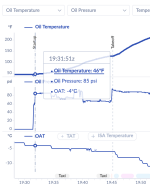
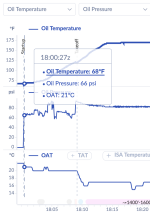
As a data point, for those interested, here are a few snap-shots of starts in August vs December.
Oil used is Philipps 20W50.
Cold oil at 46F = 85 PSI
Warmer oil at 68F = 66 PSI

We all know of course that, at colder temps the oil might not circulate appropriately, thus possibly damaging engine elements.
I would pre-heat with an external heater if parked outside at colder temps.

BTW, -28°C (-18°F) here this morning... :eek:
 

Attachments

  • Capture d’écran, le 2025-01-22 à 10.36.17.png
    Capture d’écran, le 2025-01-22 à 10.36.17.png
    127 KB · Views: 24
  • Capture d’écran, le 2025-01-22 à 10.40.07.png
    Capture d’écran, le 2025-01-22 à 10.40.07.png
    123.1 KB · Views: 24
  • IMG_9645.jpg
    IMG_9645.jpg
    168.3 KB · Views: 24
Yes, i assumed the grd wire he was referring to was coming from the heater. If the ground wirehe was referring to was coming from the cord, then i agree that the entire airframe has a good earth ground. I have only seen sump heaters with two wires before, so had no real idea what he meant when he sait “the heater’s ground wire.”
This conversation is getting confusing. Assuming the sump heater is a two-wire application (as is the case for the device that this thread is about), what I'm reading here is that we would want to use either:
  1. A grounded outlet, with a three prong cord coming from that outlet, and the ground pin from that cord somehow connected to the engine and airframe, or
  2. A GFCI outlet
Is there more to it?

I ask because I have a grounded outlet, but the ground pin on my extension cord is not connected to anything because the heater plug is two pronged. It sounds like I am currently at risk of the various dangerous electrical faults described in this thread.
 
Yes. Replace the two prong plug on the ASA with a 3 prong and bind ground to the frame. Someone did that already, but I dont remember in which thread it was mentioned.

#2 option is a band id to avoid electrocution. probably will not save the avionics from frying.
 
I ask because I have a grounded outlet, but the ground pin on my extension cord is not connected to anything because the heater plug is two pronged. It sounds like I am currently at risk of the various dangerous electrical faults described in this thread.
I note that my Rieff heater is grounded to the frame, with a three-wire male plug for my three-wire extension cord. Seems like a prudent choice, avoiding the possibility that I might become the only path to ground in the event of a short.
 
Last edited:
Lr172…your comparison at cold start between the small block Chevy and the Lycoming is interesting information. Isn’t the Lycoming piston larger slightly (thus greater contraction when cold) and/or different with respect to other geometries, such as pin height, skirt size, etc.? I just wonder if there is a potentially greater propensity for cold-start piston slap in the Lycoming.
 
For those talking about using a dimmer switch to control thermal output, I’d instead recommend using a PID temperature controller. They’re about $60 and can be tuned so you can keep it at whatever temperature you like.
 
I have the AS heater and it has worked well. I also have a small heater I duct into my plenum to heat the top of the engine. I also have a desiccant pump dryer system that I run 24/7. I turn on the heaters with a Stitcheron the night before I plan to fly and have 90 to 100 oil temp in the morning. It has never gotten hotter than 100.

It works well for me.
 

Attachments

  • IMG_8343.jpeg
    IMG_8343.jpeg
    2.9 MB · Views: 49
Lr172…your comparison at cold start between the small block Chevy and the Lycoming is interesting information. Isn’t the Lycoming piston larger slightly (thus greater contraction when cold) and/or different with respect to other geometries, such as pin height, skirt size, etc.? I just wonder if there is a potentially greater propensity for cold-start piston slap in the Lycoming.
To be clear, air cooled and water cooled engines have differences, but mostly related to heat transfer and thermal stability. The moving internal parts are pretty much the same. On the hot side of things, these differences are meaningful and requires different approaches to manage. They also have some unique tendencies . On the cold side of things like starting up at 30*, they are pretty much identical. A VW or porsche boxer engine is almost identical to a lycoming. These air cooled lycoming cousins also thrive in the midwest where thay are routinely started at very cold temps with no preheating. They surprisingly last for more than the handful of starts the mike says should kill them.
All of this and the other related statements aren't wrong; though, probably the one design characteristic that seems to be overlooked is cylinder choke. Lycs have ~ 0.003" choke IIRC. Every start causes wear especially at the top of the cylinders (and related ring wear) so the colder the start, the more this will come into play. Engines that get a lot of cold WX starting or those belonging to unknowing/uncaring operators that start with aggressive power settings tend to wear steps in the tops of their cylinder walls and eventually loose compression -> fail leak/"compression" test.

Was told the air-cooled auto engines do not have cylinder choke but I have no idea if that is accurate or not. It would be surprising if any water cooled engine jugs were choked.

There's your useless drift for the day.
 
All of this and the other related statements aren't wrong; though, probably the one design characteristic that seems to be overlooked is cylinder choke. Lycs have ~ 0.003" choke IIRC. Every start causes wear especially at the top of the cylinders (and related ring wear) so the colder the start, the more this will come into play. Engines that get a lot of cold WX starting or those belonging to unknowing/uncaring operators that start with aggressive power settings tend to wear steps in the tops of their cylinder walls and eventually loose compression -> fail leak/"compression" test.

Was told the air-cooled auto engines do not have cylinder choke but I have no idea if that is accurate or not. It would be surprising if any water cooled engine jugs were choked.

There's your useless drift for the day.
Liquid cooled engines also wear steps in at the top of the cylinder where the top ring stops. Clearance is clearance, And Lyc's have enough clearance at the top to safely start when cold.

Factory auto engine cylinders usually have choke spots way more than 3 thou. Usually at the top and bottom cause the block flexes a bit between when the hone goes by. It takes a skilled machinist on a hone to get the bore gauge needle to hold still while you slide it down the bore.

In all engine types the critical thing is to get everything up to temp before you put much load on it. I'm a fan of pre-heating cause I live in cold climates and it shortens the time it takes to get to temp. Meaning less time sitting in a cold cockpit or truck cab lol.
 
Lr172…your comparison at cold start between the small block Chevy and the Lycoming is interesting information. Isn’t the Lycoming piston larger slightly (thus greater contraction when cold) and/or different with respect to other geometries, such as pin height, skirt size, etc.? I just wonder if there is a potentially greater propensity for cold-start piston slap in the Lycoming.
Piston size varies greatly across many engines. Piston slap is not really from contraction. It is typically due to galling in the piston's pin bore that reduces the free movement of the piston on the pin. The key dimension is the clearance between piston OD and cylinder ID and these clearance are very similar between a lyc 360 and a large bore ols school auto engine.. Regardless, a bit of extra contraction of the piston doesn't create wear. I mentioned that a good chunk of cylinder wear over an engines life occurs during the few post start seconds after each start and this is due to the fact that there is a limited qty of oil available before the pump gets up to normal volume and splash oil makes it to the piston and cyl walls. Thick oil slows down this process, so we want an oil that does not get too thick at whatever temp we choose to start at. This is why you NEVERRRR star an engine with 50 weight oil at 30*. You cab either use multi-viscosity oils with a low 1st number or pre-heat the oil. The key is getting the oil thin enough to flow quickly. Clearly we can lessen the wear created here, but it has nothing to do with aviation vs auto engines. So, in many cases, Mikes advice is solid. It is just his lack of understanding that encourages him to spew nonsense and drive fear un necessarilly
 
Last edited:
Liquid cooled engines also wear steps in at the top of the cylinder where the top ring stops. Clearance is clearance, And Lyc's have enough clearance at the top to safely start when cold.

Factory auto engine cylinders usually have choke spots way more than 3 thou. Usually at the top and bottom cause the block flexes a bit between when the hone goes by. It takes a skilled machinist on a hone to get the bore gauge needle to hold still while you slide it down the bore.

In all engine types the critical thing is to get everything up to temp before you put much load on it. I'm a fan of pre-heating cause I live in cold climates and it shortens the time it takes to get to temp. Meaning less time sitting in a cold cockpit or truck cab lol.
+1

bore choke has nothing to do with any of this discussion. The ring is under considerable out ward tension at all times. Compressing it an additional .003" at the top is insignificant for the purposes of this discussion.
 
....Liquid cooled engines also wear steps in at the top of the cylinder where the top ring stops. Clearance is clearance, And Lyc's have enough clearance at the top to safely start when cold....
+1

bore choke has nothing to do with any of this discussion. The ring is under considerable out ward tension at all times. Compressing it an additional .003" at the top is insignificant for the purposes of this discussion.

Not arguing as I'm even further outside of my briar patch once car stuff starts getting involved but hear me out. Yes, there's enough clearance to safely start but the fact remains that the cylinder walls aren't straight until the jugs have reached their design temperature of 350-375 F. Logically, there will eventually be a step a any point along a surface where a wear pattern starts/stops. That said, starts cause accelerated wear near TDC. Colder starts are worse. The resultant manifests itself at the relative position where the leak-down test is performed thus creating conditions for a "failed" test. Cars have no such concern.

@ Larry. Yes it's only 3 thou but the OEM as attributed ring failure to HCF due to cold starts/operation; rightly or wrongly.
 
There's enough clearance to safely start but the fact remains that the cylinder walls aren't straight until the jugs have reached their design temperature of 350-375 F.
I think the taper isn't a design feature. It's a result of an interference fit between the jug and the head. And I'd wager that even at full operating temp the bore isn't completely straight.
Logically, there will eventually be a step a any point along a surface where a wear pattern starts/stops.
You are correct. Liquid cooled, air cooled, tapered, straight, gas or diesel all form a lip at the top of the bore where the rings stop and reverse travel.
Since the rings are springs, the more you squeeze them the harder they push back. So it stands to reason that in a tapered bore, the tight end would squeeze harder and logically receive more wear. I'd guess if you slid a bore gauge into a really high time cylinder the bore would be straight.
That said, starts cause accelerated wear near TDC. Colder starts are worse. The resultant manifests itself at the relative position where the leak-down test is performed thus creating conditions for a "failed" test. Cars have no such concern.
I'm pretty sure a TDC leak-down check is looking for leaking valves or failed (as in broken) rings. Not looking or going to tell about excessive wear to the bore.
@ Larry. Yes it's only 3 thou but the OEM as attributed ring failure to HCF due to cold starts/operation; rightly or wrongly.
As long as the piston has clearance in the tight spot when cold it's good. It's the compression rings making contact and it's a spring, designed to accommodate variances in bore diameter. Ring failure from a cold start is a dubious claim to me. I don't know the numbers but I'm pretty sure spring steel and cast iron don't get brittle till way below even the worst arctic temps.

Speaking of arctic, how do all those Alaskan and Canadian trappers well into -F, hand prop their ski equipped cubs? Then climb in and fly home from the trapline all winter long without replacing engines like their disposable?
 
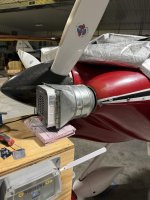
I installed and used this heater for one full cold weather cycle here in the high desert. I typically preheat the engine at 45F ambient and below, above that I am usually at 90F oil temp by the run up area. It is activated by a smart switch, so I typically turn it on from home the night before, having left a moving blanket over the cowl and the intake ports loosely blocked. I admit to accidentally leaving it on for two full days a couple of times. Depending on ambient temperature, oil temp is 70-80F at engine start, CHT’s and EGT’s in the 60’s.

This past November when I remotely turned it on the first time, I arrived to a cold engine. I checked that everything was working up to the heater plug at the oil door. So I reverted to my ducted milk house heater between the exhaust pipes, putting the sump heater on the oil change todo list.

The oil change finally occurred this week. Upon examination, I found a broken wire right where it transitions into the actual heater.

View attachment 78013

I contacted ASA, they said this has been reported before, and is usually due to an unsupported wire (it was supported as well as the geometry allowed). This is not a field repairable failure, so I purchased a replacement, which they shipped that same morning. When it arrived, I went to remove the broken heater. Upon exposing all seven threads of the heater base, it would not come out of the sump.

View attachment 78014

It could wiggle a bit, but almost felt like it was somehow broken, yet still attached. Upon examining the new heater and reassuring myself that it was in fact a single milled piece of aluminum, I applied some brute force to the broken heater and got it out.

View attachment 78026

Carbon deposits or coking or whatever the correct technical term is. Nothing magnetic or metallic. Now I knew why it was so difficult to remove. I then took a right angle pick and went up into the plug hole to try and remove any leftovers.

View attachment 78024

Witness marks show the pieces that fell out had been attached to the top and sides of the heater. None of this stuff had made its way to the suction screen, it was almost spotless the last few oil changes, including this one (we’ll see about the next one). Knowing what I don’t know, I took the heater to my local mechanic for a consultation. After some discussion, it was decided this was something to make note of, but not a huge concern.

I installed the new heater, this time trying for a straighter transition for the wires, which I further reinforced with some high temp silicone.

View attachment 78023

Recent postings had turned me on to the idea of using a lamp dimmer to limit the operating temperature of the heater. Perhaps this will keep the deposits from forming. So I boogied up to the aviation electric aisle at Home Depot and bought myself one. For comparison purposes, I mimicked a prior test that was conducted at full power, heating the sump for 5.5 hours, with an ambient temperature averaging 38F. For my test, I limited amperage to 1.045A, approximately 125 watts.

View attachment 78025

Sump case at heater 86F
Sump case corner opposite heater 51F
Oil temp top of oil in sump 54F
Oil temp bottom of dipstick 59F

Obviously not enough warmth for my liking, so I will repeat the test again at approximately 175 watts next week, once I return from working on a whole home battery backup at another (warmer!) location.

Catmandu,
Good and thorough report.
Daddyman
 
@Jjackh10. Tried to send you a DM as to not continue the drift clutter here but the system wouldn't let me. I'll try again later or try one to me, if you care.
 
Not arguing as I'm even further outside of my briar patch once car stuff starts getting involved but hear me out. Yes, there's enough clearance to safely start but the fact remains that the cylinder walls aren't straight until the jugs have reached their design temperature of 350-375 F. Logically, there will eventually be a step a any point along a surface where a wear pattern starts/stops. That said, starts cause accelerated wear near TDC. Colder starts are worse. The resultant manifests itself at the relative position where the leak-down test is performed thus creating conditions for a "failed" test. Cars have no such concern.

@ Larry. Yes it's only 3 thou but the OEM as attributed ring failure to HCF due to cold starts/operation; rightly or wrongly.
We'll agree to disagree. As Jack said, the ring is sprung, so it quite easilly conforms to variances in bore diameter, the same way that your coils springd conform to variances in road surface. The step formed is found in every reciprocating engine with rings. Naturally the ring sliding up and down the cyl wall billions of times is going to create wear. No one disputes that. FYI, it is called a ring ridge and they make ridge reamers speciffically to get rid off it, as in auto engines, the pistons are removed from the top. In aviation, we don't worry about it, as the pistons come out of the bottom, so the rings don't crack going over it.
 
Back
Top