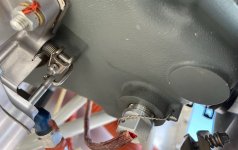
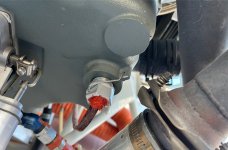
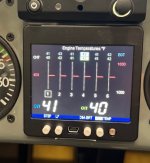
I installed and used this heater for one full cold weather cycle here in the high desert. I typically preheat the engine at 45F ambient and below, above that I am usually at 90F oil temp by the run up area. It is activated by a smart switch, so I typically turn it on from home the night before, having left a moving blanket over the cowl and the intake ports loosely blocked. I admit to accidentally leaving it on for two full days a couple of times. Depending on ambient temperature, oil temp is 70-80F at engine start, CHT’s and EGT’s in the 60’s.
This past November when I remotely turned it on the first time, I arrived to a cold engine. I checked that everything was working up to the heater plug at the oil door. So I reverted to my ducted milk house heater between the exhaust pipes, putting the sump heater on the oil change todo list.
The oil change finally occurred this week. Upon examination, I found a broken wire right where it transitions into the actual heater.
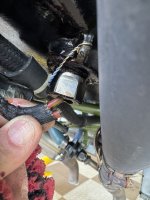
I contacted ASA, they said this has been reported before, and is usually due to an unsupported wire (it was supported as well as the geometry allowed). This is not a field repairable failure, so I purchased a replacement, which they shipped that same morning. When it arrived, I went to remove the broken heater. Upon exposing all seven threads of the heater base, it would not come out of the sump.
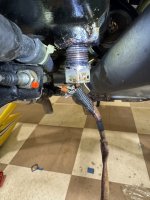
It could wiggle a bit, but almost felt like it was somehow broken, yet still attached. Upon examining the new heater and reassuring myself that it was in fact a single milled piece of aluminum, I applied some brute force to the broken heater and got it out.
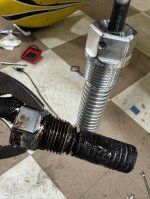
Carbon deposits or coking or whatever the correct technical term is. Nothing magnetic or metallic. Now I knew why it was so difficult to remove. I then took a right angle pick and went up into the plug hole to try and remove any leftovers.
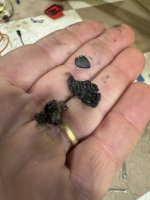
Witness marks show the pieces that fell out had been attached to the top and sides of the heater. None of this stuff had made its way to the suction screen, it was almost spotless the last few oil changes, including this one (we’ll see about the next one). Knowing what I don’t know, I took the heater to my local mechanic for a consultation. After some discussion, it was decided this was something to make note of, but not a huge concern.
I installed the new heater, this time trying for a straighter transition for the wires, which I further reinforced with some high temp silicone.
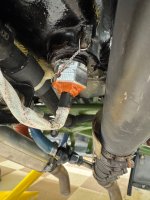
Recent postings had turned me on to the idea of using a lamp dimmer to limit the operating temperature of the heater. Perhaps this will keep the deposits from forming. So I boogied up to the aviation electric aisle at Home Depot and bought myself one. For comparison purposes, I mimicked a prior test that was conducted at full power, heating the sump for 5.5 hours, with an ambient temperature averaging 38F. For my test, I limited amperage to 1.045A, approximately 125 watts.
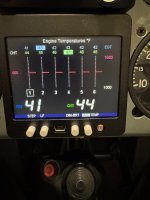
Sump case at heater 86F
Sump case corner opposite heater 51F
Oil temp top of oil in sump 54F
Oil temp bottom of dipstick 59F
Obviously not enough warmth for my liking, so I will repeat the test again at approximately 175 watts next week, once I return from working on a whole home battery backup at another (warmer!) location.
This past November when I remotely turned it on the first time, I arrived to a cold engine. I checked that everything was working up to the heater plug at the oil door. So I reverted to my ducted milk house heater between the exhaust pipes, putting the sump heater on the oil change todo list.
The oil change finally occurred this week. Upon examination, I found a broken wire right where it transitions into the actual heater.
I contacted ASA, they said this has been reported before, and is usually due to an unsupported wire (it was supported as well as the geometry allowed). This is not a field repairable failure, so I purchased a replacement, which they shipped that same morning. When it arrived, I went to remove the broken heater. Upon exposing all seven threads of the heater base, it would not come out of the sump.
It could wiggle a bit, but almost felt like it was somehow broken, yet still attached. Upon examining the new heater and reassuring myself that it was in fact a single milled piece of aluminum, I applied some brute force to the broken heater and got it out.
Carbon deposits or coking or whatever the correct technical term is. Nothing magnetic or metallic. Now I knew why it was so difficult to remove. I then took a right angle pick and went up into the plug hole to try and remove any leftovers.
Witness marks show the pieces that fell out had been attached to the top and sides of the heater. None of this stuff had made its way to the suction screen, it was almost spotless the last few oil changes, including this one (we’ll see about the next one). Knowing what I don’t know, I took the heater to my local mechanic for a consultation. After some discussion, it was decided this was something to make note of, but not a huge concern.
I installed the new heater, this time trying for a straighter transition for the wires, which I further reinforced with some high temp silicone.
Recent postings had turned me on to the idea of using a lamp dimmer to limit the operating temperature of the heater. Perhaps this will keep the deposits from forming. So I boogied up to the aviation electric aisle at Home Depot and bought myself one. For comparison purposes, I mimicked a prior test that was conducted at full power, heating the sump for 5.5 hours, with an ambient temperature averaging 38F. For my test, I limited amperage to 1.045A, approximately 125 watts.
Sump case at heater 86F
Sump case corner opposite heater 51F
Oil temp top of oil in sump 54F
Oil temp bottom of dipstick 59F
Obviously not enough warmth for my liking, so I will repeat the test again at approximately 175 watts next week, once I return from working on a whole home battery backup at another (warmer!) location.


 no less, and this one may be a case when long term, “fail safe” and more conservative testing may have been in order.