Van's Air Force

The definitive Van's Aircraft support community! Buying, building or flying an RV? Join our exclusive family of mentors and enthusiasts!

MoGas STC Question

RogerH

Well Known Member
Patron
Totally confused, I routinely fuel my cars with ethanol-free 91 octane unleaded at a local station. Small cost difference but that's it.

Been looking into the possibility of a Rotax powered aircraft and seeing mention on the Web of paying for an STC to have "permission" to do the same with aircraft????

I'm hoping someone can explain why an STC piece of paper is required, what benefits or protection's does one provide or is this just another bureaucratic FAA paper chase? Sorry if I'm letting my slip show.

Thanks for any explanations.
 
STC is to the best of my knowledge, only for certified aircraft to burn auto fuel. Many various STC out there for certified planes, fuel is only one of them.

Supplemental Type Certificate. Our RVs are not type certificated but experimental.

More than just "permission" as the STC sometimes required changing "O" rings or other parts that were not compatible with auto fuel. Other STC sometimes had a long list of required changes/mods to keep stuff safe.

Pretty deep subject on some STC, others just paperwork only.
 
Last edited:
STC is to the best of my knowledge, only for certified aircraft to burn auto fuel.

Supplemental Type Certificate. Our RVs are not type certificated but experimental.
May have been dated sites I was looking at but there was reference to sourcing the STC from EAA.
 
Yes, the EAA has for years sold STCs (paperwork) to legally allow certified aircraft run car gas. But it’s really more than paperwork. The EAA had to show each fuel system was compatible with car gas, which can have a higher vapor pressure than AvGas. And each engine was okay with the specified car gas. Remember, 91 octane car gas has a Motor Octane (AvGas spec) of about 87.
 
Yes, the EAA has for years sold STCs (paperwork) to legally allow certified aircraft run car gas. But it’s really more than paperwork. The EAA had to show each fuel system was compatible with car gas, which can have a higher vapor pressure than AvGas. And each engine was okay with the specified car gas. Remember, 91 octane car gas has a Motor Octane (AvGas spec) of about 87.
Thanks for that clarification, I saw EAA as the source and hence my confusion. All clear now, glad to have moved to the dark side away from “certified” several years ago, definitely not looking back!
 
We ran 91 no ethanol in my wife's Rans S7/ Rotax 912ULS, until we sold it 700 or so hours later. No problems. I still run it in my RV7, PV Lycoming 180HP IO-360, 8.5 to 1 CR. I did retard the timing -2 degrees to 23, for cooler CHT's and better detonation margins. I have run it this way for over 900 hours. About 1/3 of the hours are on fill ups during trips with 100LL. I have friends who run the same engines at 25 degrees advance timing With no problems (I'm maybe a bit cautious).

I do not run winter blend and carry it into the warmer weather in the spring. It is ok to run summer blend into cooler fall and winter weather.

No STC needed for experimentals , and I doubt you need one on factory builts because Rotax; the engine manufacturer has documented recommendations saying Non ethanol, high octane is best, then E93 is next preferred and 100LL come in last.
 
Last edited:
Warning, there is no such thing as an STC for a certified airplane to run mogas on an injected lycoming. The reason is because of vapor lock on the return less fuel system design and possibility of the engine mounted fuel pump heating the fuel.

Just because Boyd above gets away with it, doesn’t mean you will. In order to run mogas on an injected lycoming, many switch to electronic fuel injection which removes the engine driven pump and pressurizes the fuel system, while others swap to entirely electric pumps for mechanical injection, while others still bleed fuel past the mechanical pump and cool it with blast air.

Obviously the first two options make the engine electrically dependent, and all options are screwing with the fuel system.

Tread lightly if you are going to use mogas with a mechanical fuel pump.
 
Warning, there is no such thing as an STC for a certified airplane to run mogas on an injected lycoming. The reason is because of vapor lock on the return less fuel system design and possibility of the engine mounted fuel pump heating the fuel.

Just because Boyd above gets away with it, doesn’t mean you will. In order to run mogas on an injected lycoming, many switch to electronic fuel injection which removes the engine driven pump and pressurizes the fuel system, while others swap to entirely electric pumps for mechanical injection, while others still bleed fuel past the mechanical pump and cool it with blast air.

Obviously the first two options make the engine electrically dependent, and all options are screwing with the fuel system.

Tread lightly if you are going to use mogas with a mechanical fuel pump.
I have run 100s of hours on mogas in my RV7 with an IO-360 and engine driven pump with no problems whatsoever with just the standard fuel injection system and electronic ignition.
 
I have run 100s of hours on mogas in my RV7 with an IO-360 and engine driven pump with no problems whatsoever with just the standard fuel injection system and electronic ignition.
Type of IO-360, Spark Advance, Piston Compression Ratio?
 
Totally confused, I routinely fuel my cars with ethanol-free 91 octane unleaded at a local station. Small cost difference but that's it.

Been looking into the possibility of a Rotax powered aircraft and seeing mention on the Web of paying for an STC to have "permission" to do the same with aircraft????

I'm hoping someone can explain why an STC piece of paper is required, what benefits or protection's does one provide or is this just another bureaucratic FAA paper chase? Sorry if I'm letting my slip show.

Thanks for any explanations.
For certified aircraft they have a type certificate TC. Every aircraft manufactured must conform to the TC, and continue to conform for its entire lifetime. The TC if you read one is a wealth of information. Airspeed markings ie white, yellow arc, redline that all came from the TC, required placards…you got it TC. (Yes I know ADs can require placards) Approved engine and prop configuration…yup TC. Anything that deviates from the TC makes the aircraft unairworthy. BTW a certified engine has its own TC.
What fuel you can use is on the TC.


The S in STC is for Supplemental. After much testing, proving, and gnashing of teeth the FAA grants the applicant of the aircraft modifications an STC. They now own the STC. BTW it ain’t a cheap process. The sale of STC is hardly a money making scheme, it’s generally a recoup of costs. There are some that are lucrative. It’s hardly a get rich quick scheme.

That STC allows what is essentially an approved addendum to the TC. It’s not a blanket addendum however. The STC owner can keep it all to themselves or they can share it with other aircraft. Usually means selling it to you for a specific aircraft.

You must be in possession of the STC and the installation must conform to the STC. If it doesn’t conform…you guessed it it’s not airworthy.

STC is about an approved modification and the aircraft’s airworthiness compliance.

It’s all about airworthiness.

To answer your question, no it’s not bureaucratic paperwork.
 
Last edited:
Ok, low compression pistons -- what about the spark advance? and what kind of IO-360? -Axxx or -Bxxx/-Mxxx (Angle Valve or Parallel Valve)
I have no idea about the spark advance it is whatever Lightspeed has set in is system for the rpm and mp. It really doesn't matter about the engine model vapor lock occurs in advance of the fuel being injected. I can't remember the model # of the engine as I sold it two years ago and can't look it up.
 
I have run 100s of hours on mogas in my RV7 with an IO-360 and engine driven pump with no problems whatsoever with just the standard fuel injection system and electronic ignition.
Yup, and it just takes one time on a hot day and poor quality fuel for the fan to quit.

If you feel comfortable doing what the certified world wouldn't certify, then great, but I think it's wise to put an additional data point out there for others to consider.
 
I have no idea about the spark advance it is whatever Lightspeed has set in is system for the rpm and mp. It really doesn't matter about the engine model vapor lock occurs in advance of the fuel being injected. I can't remember the model # of the engine as I sold it two years ago and can't look it up.
Understood - but for the record it’s not just vapor lock that’s the cause for concern with mogas. The spark advance, compression ratio, and combustion chamber shape will contribute to the detonation (pre-ignition) margin available with a corresponding change in octane (100 vs 91).
 
Understood - but for the record it’s not just vapor lock that’s the cause for concern with mogas. The spark advance, compression ratio, and combustion chamber shape will contribute to the detonation (pre-ignition) margin available with a corresponding change in octane (100 vs 91).
Well before I started using mogas I ran lot of tests and could find no operational differences in cylinder head temps at low rpm or wide open throttle at 1500 ft and various altitudes up to 17000ft. The biggest difference i found was that the plugs stayed clean and the cylinders looked clean. Each rpm and altitude change was operated on 1000ll for 15 minutes and all temps were recorded then the same tests were done with mogas for 15 minutes. There are a lot of people using mogas in their 360s and mogas 100ll mixes. I haven't heard of an engine being destroyed using mogas. But I am not a scientist or a chemical engineer I can only go by what I experienced and have seen in the last 55 years of flying.
 
Well before I started using mogas I ran lot of tests and could find no operational differences in cylinder head temps at low rpm or wide open throttle at 1500 ft and various altitudes up to 17000ft. The biggest difference i found was that the plugs stayed clean and the cylinders looked clean. Each rpm and altitude change was operated on 1000ll for 15 minutes and all temps were recorded then the same tests were done with mogas for 15 minutes. There are a lot of people using mogas in their 360s and mogas 100ll mixes. I haven't heard of an engine being destroyed using mogas. But I am not a scientist or a chemical engineer I can only go by what I experienced and have seen in the last 55 years of flying.
Perfectly valid points and data — was just trying to tease out some of the other contributing factors so people can better understand the ins/outs of using mogas.
 
The two most discussed problems with mogas is the vastly wide range in RVP and Olefin content. The one elephant in the room is supply chain. That elephant is big and almost invisible.

You can get away with it, until you don't.
 
The two most discussed problems with mogas is the vastly wide range in RVP and Olefin content. The one elephant in the room is supply chain. That elephant is big and almost invisible.

You can get away with it, until you don't.
Indeed, we have to place a lot of trust in our suppliers in every industry with every product. I can imagine that there is a lot of variability in different mogas suppliers, but I'm not aware of any crashes that happened with reasonably fresh mogas. We've all heard of misfueling issues of course, and water in the fuel. I suspect that if the octane were too low, you'd find out quickly due to higher CHTs and would need to richen things up and reduce power. I've tested with normal pump gasoline, premium pump gasoline, mogas from several airfields of unknown provenance, and of course 100LL. Totally non-scientific, but I have not been able to detect a difference in flight. Details of my engine in my .sig, and of course YMMV.
 
I run the Walmart premium, in a 125-gallon stainless tank in my hangar with a 12-volt pump. That fuel is shared with a Bearhawk as well, and rarely lasts 6 weeks between fills, so no chance for it to go stale in my tank. I buy it from Walmart simply because they are a high volume fuel retailer and I figure that's my best chance of not getting old fuel from their tanks.
 
Indeed, we have to place a lot of trust in our suppliers in every industry with every product. I can imagine that there is a lot of variability in different mogas suppliers, but I'm not aware of any crashes that happened with reasonably fresh mogas. We've all heard of misfueling issues of course, and water in the fuel. I suspect that if the octane were too low, you'd find out quickly due to higher CHTs and would need to richen things up and reduce power. I've tested with normal pump gasoline, premium pump gasoline, mogas from several airfields of unknown provenance, and of course 100LL. Totally non-scientific, but I have not been able to detect a difference in flight. Details of my engine in my .sig, and of course YMMV.
All Mogas yields a drop in EGT and rise in CHT. This is because the flame front is faster in the lower octane fuel, you can off set this with spark timing of course. You may not have noticed it, but it does what it does. I am not aware of crashes unlike water in fuel, but rough running engines due boiling carbs is not uncommon. rather inconvenient if you are forced to land in the outback.

My advice above still stands and it comes from working with some of the smartest people in the room, I am the dumbest, but I do learn quick.
 
The majority of engines in our RV's are standard compression 8.5:1 parallel valve and were certified on Avgas 91/96 not 100/130 or 100LL. As 91/96 (91MON) no longer exists, 100LL seems to go on all the data plates nowadays.
As is always the case and has been been very well covered in this thread, doing anything different comes with a potential for risk and everyone's appetite and mitigations will differ. No system, even certified is 100% perfect all the time. While it is some time ago, back in 1999-2000 Mobil contaminated Avgas in this part of the world, it slipped past their QC and wound up causing big problems.

While I have nowhere near the operational experience with mogas as other users here, I've put well over 30,000 litres / 8,000 gals of it (E0) through my IO-360 without concern, no gum, no varnish, much cleaner combustion chambers, cleaner oil, longer lasting plugs, no exhaust corrosion.

In an engine that does not require lead for detonation prevention I see lead as a contaminant & I'd rather take the olefins over the lead and it's combustion by-products.

If/when unleaded Avgas ever comes along, I'll use it.
 
The majority of engines in our RV's are standard compression 8.5:1 parallel valve and were certified on Avgas 91/96 not 100/130 or 100LL. As 91/96 (91MON) no longer exists, 100LL seems to go on all the data plates nowadays.
As is always the case and has been been very well covered in this thread, doing anything different comes with a potential for risk and everyone's appetite and mitigations will differ. No system, even certified is 100% perfect all the time. While it is some time ago, back in 1999-2000 Mobil contaminated Avgas in this part of the world, it slipped past their QC and wound up causing big problems.

While I have nowhere near the operational experience with mogas as other users here, I've put well over 30,000 litres / 8,000 gals of it (E0) through my IO-360 without concern, no gum, no varnish, much cleaner combustion chambers, cleaner oil, longer lasting plugs, no exhaust corrosion.

In an engine that does not require lead for detonation prevention I see lead as a contaminant & I'd rather take the olefins over the lead and it's combustion by-products.

If/when unleaded Avgas ever comes along, I'll use it.

Chris, your typical premium car gas is AKI 93-94 which is about 87MON, a fair way off the min spec 91 that Lycoming and others ask for. There are other criteria also.

As for cleanliness you are spot on, the sooner we get G100UL around the world the better.
 
Chris, your typical premium car gas is AKI 93-94 which is about 87MON, a fair way off the min spec 91 that Lycoming and others ask for. There are other criteria also.

As for cleanliness you are spot on, the sooner we get G100UL around the world the better.
It was my understanding that typical us 91 aki fuel was 87 mon and 95 ron. Therefore 93 aki should be closer to 89 mon. Not fact, juat what i had researched in the past.
 
Perhaps. Considering the reviews of late some questions on G1000UL are swirling around - as well as a cost premium to 100LL.

Carl
Some reviews have been so full of BS it is not funny especially claims of leaking bladders, but when examined up close they were leaking with Avgas for ages prior.

Cost premium, pilots used to say fuels cheap burn heaps 😜
 
It was my understanding that typical us 91 aki fuel was 87 mon and 95 ron. Therefore 93 aki should be closer to 89 mon. Not fact, juat what i had researched in the past.
Yeah and herein lies the details. Different fuel chemistry and different test methods yield small variables at the edges. Some might just make 89MON but most would fall in the 87-88 range. Again a long way from min spec 91 and don’t forget the 96 number. The typical Avgas 100/130 is actually about 101.5 most of the time in order to reach the 130. So while everything here is not linear and easily extrapolated you may be end to be 92MON for example not the 91 and that now gets much further from the 87-88 mogas.

Will it kill you engine ? Probably not, is it harder on it? Yes. Will it matter to you no, not if you adjust timing. Will you suffer RVP or other loosely controlled attributes ? Maybe. The problem is those who have experienced these problems are not coming forward for some reason but I do get the phone calls looking for help and advice and I am willing to speak up.

This anecdote is telling. A friend here is the tech guru for Australia’s only Avgas producer, he is globally recognized as one of the leading experts in aviation fuels. He plays that down very humbly. He loves flying in our RV10 but he made it clear he would never fly in it using any mogas even the Shell V Power 98 that his company produces and if you had 3 hours he could explain it all to you. Obviously I can’t compete with that on a forum post, all I can do is distill down the finer points.

I feel like I am boasting now but if people understood what I have learned in the last 15 years they would think differently.

Cheers 👍
 
Chris, your typical premium car gas is AKI 93-94 which is about 87MON, a fair way off the min spec 91 that Lycoming and others ask for. There are other criteria also.

Lycoming approve 93 AKI for the majority of PV std compression non 'IO-' engines in: SI 1070AB
Mogas STC's specify 91 AKI min for std compression Lycomings.

There is always going to be interest in using Mogas for whatever reason or motivation, having the info to do it safely & without surprises is important.

RVP of Mogas and the risk of vapor lock is a potential risk with an IO- engine, if considering running Mogas it is worth performing the hot fuel test in AC 23.1521-1B, 23.961, 23.955. (docs attached)
Heating the fuel is the biggest challenge, I didn't quite manage to get to 110F/43C, but still well in excess of what I can expect in my climate with white fuel tanks.

There is/was also a decent amount of publicly available data in the FAA archives on unleaded fuel testing over the last 4 decades, DOT/FAA/CT-87/05 is worth a read, I can't find a current link that works so the doc is also attached.
 

Attachments

Last edited:
Yeah and herein lies the details. Different fuel chemistry and different test methods yield small variables at the edges. Some might just make 89MON but most would fall in the 87-88 range. Again a long way from min spec 91 and don’t forget the 96 number. The typical Avgas 100/130 is actually about 101.5 most of the time in order to reach the 130. So while everything here is not linear and easily extrapolated you may be end to be 92MON for example not the 91 and that now gets much further from the 87-88 mogas.

Will it kill you engine ? Probably not, is it harder on it? Yes. Will it matter to you no, not if you adjust timing. Will you suffer RVP or other loosely controlled attributes ? Maybe. The problem is those who have experienced these problems are not coming forward for some reason but I do get the phone calls looking for help and advice and I am willing to speak up.

This anecdote is telling. A friend here is the tech guru for Australia’s only Avgas producer, he is globally recognized as one of the leading experts in aviation fuels. He plays that down very humbly. He loves flying in our RV10 but he made it clear he would never fly in it using any mogas even the Shell V Power 98 that his company produces and if you had 3 hours he could explain it all to you. Obviously I can’t compete with that on a forum post, all I can do is distill down the finer points.

I feel like I am boasting now but if people understood what I have learned in the last 15 years they would think differently.

Cheers 👍
appreciate the insight. With all the folks here having success with mogas, I have to believe the lyc req is very conservative, likely what is necessary to prevent detonation at the max hp, red line torture test with chts at 500*, along with some additional margin to keep the attornies happy. not something most of us would ever see and if we did, simply pulling back to 50% would like stop it.
 
My advice to the OP, listen to the folks who use mogas.
You'll find hundreds of users and seldom if ever a real issue of concern from those who use it on a regular basis.
If you want to keep it simple and before you spend money on the latest and greatest EI,
install a constant flow return line. Cheap ,very simple and very effective.
Ask me how I know.... See tag line.
 
Lycoming approve 93 AKI for the majority of PV std compression non 'IO-' engines in: SI 1070AB
Mogas STC's specify 91 AKI min for std compression Lycomings.

There is always going to be interest in using Mogas for whatever reason or motivation, having the info to do it safely & without surprises is important.

RVP of Mogas and the risk of vapor lock is a potential risk with an IO- engine, if considering running Mogas it is worth performing the hot fuel test in AC 23.1521-1B, 23.961, 23.955. (docs attached)
Heating the fuel is the biggest challenge, I didn't quite manage to get to 110F/43C, but still well in excess of what I can expect in my climate with white fuel tanks.

There is/was also a decent amount of publicly available data in the FAA archives on unleaded fuel testing over the last 4 decades, DOT/FAA/CT-87/05 is worth a read, I can't find a current link that works so the doc is also attached.
Yeah BUT......... and only if.

My advice still stands in general terms because everyone says yeah that's approved by Lycoming and off to the local gas station and we are all good. Read here,

Lycoming's automotive gasoline approval, however, did not allow "pump gas." We simply can't approve "pump gas" for our existing products if the first objective is airworthiness. What we did approve is a fuel from the "pump gas" production sources that is controlled well enough to provide predictable behavior on the engine - "mogas." Airframers would need to do the same. Lycoming believes companies advocating the distribution and use of automotive gasoline in aircraft ought to consider these same controls. Airworthiness by Design.

And here, you will see even more details plus this statement.
Automotive ground transportation fuels available direct to consumers (e.g. “pump gas”) usually do not have labels with sufficient information to identify compliance with the requirements in Table 2. While indicated octane is generally necessary for display at retail points of sale, octane rating methods, fuel vapor pressure and oxygenate content can vary widely and are generally known only at the wholesale terminal.

As they say, you do you Boo.
 
appreciate the insight. With all the folks here having success with mogas, I have to believe the lyc req is very conservative, likely what is necessary to prevent detonation at the max hp, red line torture test with chts at 500*, along with some additional margin to keep the attornies happy. not something most of us would ever see and if we did, simply pulling back to 50% would like stop it.
Hi Larry, just some more insight, and please these comments are strictly in their own context only.

1. A naturally aspirated engine (most RV's) with conforming spark timing and running conforming 100LL is really damned difficult to get detonation, as you say big margins. Change one of the input factors like advanced timing and then have other contributing factors such as IAT, Oil Temp you may get some but drop the MON with any of these and yes you can.

2. A turbo engine with conforming timing and fuel, use the red knob unwisely (think 50dF ROP) and high MAP etc and its easy to start it off.

When doing G100UL and other fuels testing compared to 100LL at GAMI in Ada OK, the engine used is a std compression IO550 with a Turbo Normalised set up, but with the ability to screw up the MAP a bit more. The purpose here is to induce detonation and see how the fuels perform, so don't get all excited about higher than normal MAP on this TN engine, in fact I will not quote the numbers, but it is only a few inches more. So with CHT's in the 420-430 range, oil in the 230+ range and slowly leaning you can get detonation well before peak EGT and the worst of it is at 50-75dF ROP. The performance of say G100UL is far better than 100LL although the old school avgas performs to standard and is considered the benchmark. Lean a bit further to peak and it vanishes and just past peak its all gone.

This demonstrates conforming fuel on our engines are well protected from margins of error. Start changing any number of things and who knows where you end up.

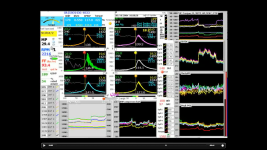
I have just captured screen shots from a TIO540 J2BD engine which is low CR, but turbocharged. Running at a modest 55% power, 29" MAP, 2220 RPM and below you will see even at Oil Temp of 188 and around 150dF ROP (peak was 1600) we have detonation occurring within a minute of switching over from 100LL to 91AKI car gas. You will see C4 is off to the races, 1,2&5 are just a little detonation and 3 hardly anything. That is not unusual at all.

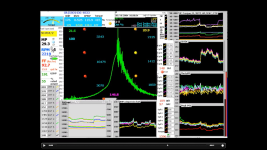
The next image is a close up of that cylinder and all the squiggly lines is the shock waves bouncing around across the cylinder being captured by two probes. The nerds zoom into the data and can calculate the speed of the wave, but let's just say this is why the walls and faces of the surfaces get scrubbed clean. Want to clean crud out of your cylinder without removing, this works a treat :)

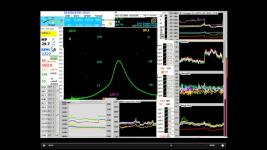
And lastly, after less than 30 seconds for the fuel lines to clean up with 100LL again, it shows a perfectly normal trace.

What are the takeaways here, if you start eroding margins, all bets are off. And will it matter to you, maybe not, but if you do run togas and a few degrees extra advance and that includes any EI even timed at 25 degrees you have 23, then you are raising cylinder pressures well above what otherwise would be. If it's your race plane and you overhaul or replace it every few hundred hours, who cares, but after 2400 hours I removed a perfectly good IO540 and that's how I prefer to live. YMMV of course folks.

One last point of interest, the keen eyes will have spotted in this example the spark timing (factory = 20) was able to be varied either manually or reactively, here is was held in the 22 degree range to simulate a mistimed mag (yes they vary a lot) however later in that dyno run killing off the detonation was possible even running car gas, by altering the "Actual" spark timing down in the 12-13 degree range. The fun you can have with a good test cell hey. I wish I could spend more time there.

 

Attachments

  • Screenshot 2026-06-18 at 2.52.07 pm (2).png
    Screenshot 2026-06-18 at 2.52.07 pm (2).png
    2.1 MB · Views: 12
  • Screenshot 2026-06-18 at 2.52.41 pm (2).png
    Screenshot 2026-06-18 at 2.52.41 pm (2).png
    1.7 MB · Views: 12
  • Screenshot 2026-06-18 at 2.53.52 pm (2).png
    Screenshot 2026-06-18 at 2.53.52 pm (2).png
    1.7 MB · Views: 12
2. A turbo engine with conforming timing and fuel, use the red knob unwisely (think 50dF ROP) and high MAP etc and its easy to start it off.
I find all of your comments interesting and educational, however, the OP specifically asked about an IO-360.
It is certainly clear to me that jumping from NA engines to Turbo charged models will significantly change everything as far as the fuel type and system is concerned.

Reading through your posts, I find your reluctance to depart from Lycoming prescribed fuels and procedures a bit,... shall I say selective.
Most of the readers who know you are aware that you jumped on the LOP bandwagon hook line and sinker. I have no issue with that.
None of those operating procedures are approved or recommended by Lycoming and yet you are not just applying those LOP procedure but are actively pushing the LOP theories and I have no issue with that either.
Sooo, next time you are in CA, I'll give you a ride and we can debate the pros and cons of what does and does not work when it comes to mogas.
 
Ernst, you mitigate a lot of the risks by your system design. Very few have that. Supply chain is always the bigger risk here that you do your best to mitigate, but can not eliminate.

As for the LOP bandwagon, you probably know my colleagues or most of them in the GAMI / Adv Pilot Seminars world. Sadly John and Walter are no longer with us, Andrew Denyer, George Braly, Tim Roehl and staff did not create this bandwagon you mention. Far from it, it was probably Charles Lindbergh who did but you need to have known people that were in that era, all long gone now.

Curtis Wright, and all the airline operators were definitely on that bandwagon back in the 50's and 60's, achieving greater time between overhauls as a result (3500 vs 700hrs). We even have permission to reprint some of the CW manuals for the APS class, describing this bandwagon in great detail. The called it 10% BMEP Drop.

Later Lycomings and TCM's were definitely approved for LOP ops, the problem is on successive pages of manuals and POH's they say one thing then show data and graphs detailing the other. You can't do both at the same time so pick one. We suggest go with the engineering data, but you need to weed out the contradictory stuff. In the APS class manuals we publish dozens of examples. Some of them are hilarious...... "for cabin comfort" being one reason not to use LOP even though they said it was OK. That Cessna manual was compiled by an old guy at an APS class in Ada OK about 20 years ago. He sheepishly stuck his hand up and admitted that was his work during his first months at Cessna. It was all because they couldn't get the engines to run nicely LOP.

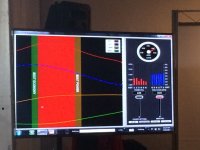
Bill Ross was at TCM in 2013 when I was teaching in a class of March that year, he was seated in the front row. Funny enough he was a student of the science/engineering and wanted to change the narrative at TCM. He spent a lot of time with John Walter and George. Andrew and I just got the masters degree listening to them in breaks and at dinner. Funny enough in 2014, at Oshkosh I wriggled through a crowd to the back of the TCM tent and low and behold Bill Ross is presenting what was at the time a major awakening. I was way deep at the back, oddly enough the CMI IO550 Simulator was being demonstrated. Picture below. For those who have taken an APS class or followed John Deakins writings, you might find the graphics somewhat familiar.

All the best mate.
 

Attachments

  • CMI IO550 Simulator.JPG
    CMI IO550 Simulator.JPG
    842.5 KB · Views: 13
Agreed. It's not a new idea, it can be done in just about any engine if done correctly. When done incorrectly, it contributes greatly to the finances of the rebuild shop, and to the generation of OWT.
 
Back
Top