Van's Air Force

The definitive Van's Aircraft support community! Buying, building or flying an RV? Join our exclusive family of mentors and enthusiasts!

GASCOLATOR????

I tend to think you may be correct…not sure why they installed them on my 185’s, or Aerostars, or R-44 or any others…you’d think if it was worthless…the big dawgs would have deleted them long ago…but who knows.
I don't have any inside information, and all my opinions are my own, but I can tell you, having worked for an OEM for most of my adult life, my observation is that once something is certified, unless there's a compelling reason to change, it tends to stay that way unless there's block point change that overhauls the entire thing. Plus, gascolators on piston airplanes are required in certain countries whether the plane is fuel injection or not and it's easier to have a one size fits all approach.

A parallel example of this is that rotating beacons aren't specifically required in the U.S. for new pt.23 airplanes, but you'll not see a new 172 rolling out of Kansas without one. It's always been that way, rotating beacons are cheaper than the cost of making the change and it's would be more hassle to add one on a plane that sells into South Africa (for example) at the last minute than just shotgun one onto every airplane coming down the line.
 
Last edited:
Discussion makes me appreciate the design elegance of the (former) Aerolab Gascolator.

Serves as both a colator and filter. Sump-able/Serviceable/inspectable from outside the aircraft. 50u mesh with a lot of fouling margin. Not cheap but hopefully somebody will purchase the IP and put back into production.

LINK
 
Discussion makes me appreciate the design elegance of the (former) Aerolab Gascolator.

Serves as both a colator and filter. Sump-able/Serviceable/inspectable from outside the aircraft. 50u mesh with a lot of fouling margin. Not cheap but hopefully somebody will purchase the IP and put back into production.

LINK

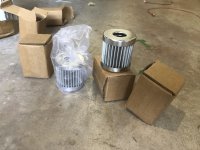
And I still have replacement filter screens available for the Aerolab! $35 ea. plus shipping. Contact me.
IMG_9272.jpeg
 
The standard response would be heat soak or vapor lock or whatever, but honestly, I don't see a down side per se. I just didn't feel like there was enough real world benefit to warrant the additional plumbing complexity plus taking up space on an already crowded firewall.

I have zero problem with somebody installing a gascolator if that's what they want to do, but I've been around airplanes for a long time and think that I have a pretty solid knowledge base on which to formulate my opinion. I simply don't believe that a standard size gascolator is going be able to separate out water at the pressure it's being shoved through there for a fuel injected engine.

I'm happy to change my opinion if somebody wants to set up a bench test rig, shove a mix of water and fuel through a gascolator at 25 psi and see what happens.
I’m ok with 25psi being a good number out of the fuel pump. Is that really the pressure going through your gascolator?
 
I’m ok with 25psi being a good number out of the fuel pump. Is that really the pressure going through your gascolator?
Hey Rocky- Thats a great question, and after thinking about it for a minute, I have to confess that I have no idea.

But, our good friend Mr. Bernoulli would likely posit that if there's a pressure drop, then velocity would increase. It seems to me that if you're speeding up the go juice, there's even LESS of a chance of entrained water settling in the bottom of the bowl before it gets gobbled up by the engine in it's entrained state.

I dunno, this conversation is fun to have but it's gotten awfully far from the OP's question and I feel like I'm a big part of that, so I should probably step back at this point :)
 
I’m ok with 25psi being a good number out of the fuel pump. Is that really the pressure going through your gascolator?
In or out? Either way, roughly 25 psi for well designed/applied components and sized lines. There is flow so there will be losses; however, the velocities are very low assuming your lines aren’t undersized, use a plethora of fittings, or utilize poorly designed componentry. Basically, everything moves at manifold speeds.

Take a look at the doc in the link in post 52, specifically the flow vs loss graph. Obviously taken at new and clean conditions but you get the point.
 
Cindy and I are completely baffled by Van's lack of guidance on this one. The gascolator is a fuel filter. That they call it a gascolator should have been a warning. I can't, for my life, find where the instructions are that outline where this doubler "VA-161" for the 'gascolator' goes and why it's the size and shape it is. Some of the posting and notes seem to treat it as optional. Every A/C I have flown has at least one fuel filter. Even more confusing some of the pictures I find online of completed projects don't show it.
Our engine will be fuel injected and whether it's a tail dragger or tri-cycle seems to matter but exactly how is a mystery. Any guidance is greatly appreciated in advance.
We are making baby steps....:)

Mark/Cindy
RV6 Fuel Injected , Filter near Fuel Pump Assy , no Gascolator , I sump the tanks at the wing root before I fly , no issues in 10 years so far (Plane is Hangared)
You make your own decisions of course
 
Hey Rocky- Thats a great question, and after thinking about it for a minute, I have to confess that I have no idea.

But, our good friend Mr. Bernoulli would likely posit that if there's a pressure drop, then velocity would increase. It seems to me that if you're speeding up the go juice, there's even LESS of a chance of entrained water settling in the bottom of the bowl before it gets gobbled up by the engine in it's entrained state.

I dunno, this conversation is fun to have but it's gotten awfully far from the OP's question and I feel like I'm a big part of that, so I should probably step back at this point :)
The gascolator works, in part, on time, getting the fuel to stay there long enough for separation to occur. Because of this, The pressure is not really relevant, just the flow rate. Its not like the gascolator is atmo and 25 psi of force pushing fuel into it. The entire system downstream from the pump is the same 25 psi, so no velocity increase as it enters the gascolator. At least that is the way it seems.
 
Hey Rocky- Thats a great question, and after thinking about it for a minute, I have to confess that I have no idea.

But, our good friend Mr. Bernoulli would likely posit that if there's a pressure drop, then velocity would increase. It seems to me that if you're speeding up the go juice, there's even LESS of a chance of entrained water settling in the bottom of the bowl before it gets gobbled up by the engine in it's entrained state.

I dunno, this conversation is fun to have but it's gotten awfully far from the OP's question and I feel like I'm a big part of that, so I should probably step back at this point :)
I think a lot of your input has made for a great conversation.
 
Cindy and I are completely baffled by Van's lack of guidance on this one. The gascolator is a fuel filter. That they call it a gascolator should have been a warning. I can't, for my life, find where the instructions are that outline where this doubler "VA-161" for the 'gascolator' goes and why it's the size and shape it is. Some of the posting and notes seem to treat it as optional. Every A/C I have flown has at least one fuel filter. Even more confusing some of the pictures I find online of completed projects don't show it.
Our engine will be fuel injected and whether it's a tail dragger or tri-cycle seems to matter but exactly how is a mystery. Any guidance is greatly appreciated in advance.
We are making baby steps....:)

Mark/Cindy
Good discussion, caused me to think about what I did in my 8, so I asked Vans, "why does the RV14 not have a gascolator?"
Their response:
  • Injected engine.
  • Fuel tanks (and the fuel tank drains) are the lowest points in the fuel system.
  • Fuel is filtered via a fuel filter.
  • Not required. Though some aviation governing bodies outside of the United States may.
 
Good discussion, caused me to think about what I did in my 8, so I asked Vans, "why does the RV14 not have a gascolator?"
Their response:
  • Injected engine.
  • Fuel tanks (and the fuel tank drains) are the lowest points in the fuel system.
  • Fuel is filtered via a fuel filter.
  • Not required. Though some aviation governing bodies outside of the United States may.


OKAY, so riddle me this. RV12iS has no gascolator at all. It has two filters but if you had a fuel cap leak, or as many folk drum car fuel to their planes, a significant quantity of water would potentially fall out in the filters and then pass by them. There is no tank drain at all that I can see. The only drain is in a small manifold in the lowest part of the fuel system and it would collect only a few drops of water, so its sumping value is minimal. I wonder how much water would it take to stop an engine with this system and how would you ever find out there was any water in there or that it was slowly accumulating from either rain or drum events?

Anyone want to try it to find out :-)

I have once found a small amount in our RV10 wing tank draining many years ago. I do not recall if it was condensation or from cap leak. Never seen any since, so it may have been from an Avgas bowser somewhere. Who knows.
 
I'm not posting to anyone in particular here but addressing those who want to learn more. I have a couple of things to add to the discussion and or emphasize. Vented fuel tanks "breath" in moisture from the air due to temperature changes. Have you ever completely topped off your tanks with as much fuel as possible in the cool of the morning and then witnessed the fuel spilling out of the vents later in the day? When temperature later drops the expanded fuel level will drop; pulling in air again along with its moisture. Over time this cycle will pull in measurable amounts of water. We don't need leaks from fuel caps or any other source to contaminate our fuel with water. This temperature cycle has a bigger effect on aircraft not flown frequently of course. Consider this: Your tank on your mogas trailer does the same thing. The fuel farm tank at the airport may have leaks. I once learned of a tank at an airport that had the back plate on a "clock face" style level gauge that had come loose. Rain and moisture from the atmosphere was entering the tank through the back of the gauge and contaminating fuel tank a bit at a time. (Refinery tanks usually are blanketed with nitrogen to lessen the chance of explosion and help prevent moisture intrusion). The links I posted in my earlier post in this thread make it clear water in fuel exists in multiple forms including invisible, until the right conditions come along. Just because you can't see it doesn't mean it's not there. I have witnessed this firsthand.

Food for thought... Have you ever refueled at a private airport? Are fuel tests being done daily. Are records being kept? Ask to see a certificate of analysis from the refinery. Another thing. As someone who spent nine years running fuel tests. We had a load from the refinery fail multiple API gravity tests. I called quality control and after verifying proper procedures, equipment condition, etc. It was found out that the truck had begun loading at the refinery and then had to stop due to a production outage. When the refinery came back online the loading was finished, the truck left the refinery with a COA taken from the refinery tank not the truck's tank; after the outage. When the truck finished loading although the fuel was acceptable it didn't agree with the COA. We caught it at the airport with our tests.

I have plenty of other examples, but this is getting long winded. The NTSB reports are full of fuel contamination issues. Not only water. There is a reason later model Cessna singles had multiple wing drains added after a lawsuit. Be careful out there.
 
The Avgas tanks we installed at our airport have a floating suction to draw fuel from the top of the fuel level. I can't say we have never had water contamination as I don't do the fuel checks, but if any water precipitates out from either rain or condensation, it collects at the bottom of the tank where it can be checked / drained out.
 
The Avgas tanks we installed at our airport have a floating suction to draw fuel from the top of the fuel level. I can't say we have never had water contamination as I don't do the fuel checks, but if any water precipitates out from either rain or condensation, it collects at the bottom of the tank where it can be checked / drained out.
Valid point Terrye. As does our fuel farm that was installed when I was manager. It also has water block filters and water detection probes. The Farm it replaced had none of this. All of these have failure modes, and it all require maintenance, validation testing and servicing that is hopefully being done on a regular schedule. Human factors come into play. As pilots we are the last in that chain of protections. How many swiss cheese holes need to line up before an accident. Just saying...
 
Last edited:
We own a fuel truck on our private airstrip and we sump daily…and there is almost always some water…as previously stated…the air itself makes it so…I also own a Jet A truck…and however bad you think expansion in with 100LL, Jet A is worse…

Evan with all that’s been discussed here…I prefer a gascolater as a final sump location. I have always thought of them as a last chance, for that little bit of water that makes it past sump drains at tanks…never yet seen a sump in actual lowest spot on a tank….just not really viable with our style tanks…so it’s a guarantee you will miss a little water.

For all the worry warts out there…we have long been water injecting into piston engines…and they burn a little water just fine. The key is : not too much and not too fast…
 
I'm not posting to anyone in particular here but addressing those who want to learn more. I have a couple of things to add to the discussion and or emphasize. Vented fuel tanks "breath" in moisture from the air due to temperature changes. Have you ever completely topped off your tanks with as much fuel as possible in the cool of the morning and then witnessed the fuel spilling out of the vents later in the day? When temperature later drops the expanded fuel level will drop; pulling in air again along with its moisture. Over time this cycle will pull in measurable amounts of water. We don't need leaks from fuel caps or any other source to contaminate our fuel with water. This temperature cycle has a bigger effect on aircraft not flown frequently of course. Consider this: Your tank on your mogas trailer does the same thing. The fuel farm tank at the airport may have leaks. I once learned of a tank at an airport that had the back plate on a "clock face" style level gauge that had come loose. Rain and moisture from the atmosphere was entering the tank through the back of the gauge and contaminating fuel tank a bit at a time. (Refinery tanks usually are blanketed with nitrogen to lessen the chance of explosion and help prevent moisture intrusion). The links I posted in my earlier post in this thread make it clear water in fuel exists in multiple forms including invisible, until the right conditions come along. Just because you can't see it doesn't mean it's not there. I have witnessed this firsthand.

Food for thought... Have you ever refueled at a private airport? Are fuel tests being done daily. Are records being kept? Ask to see a certificate of analysis from the refinery. Another thing. As someone who spent nine years running fuel tests. We had a load from the refinery fail multiple API gravity tests. I called quality control and after verifying proper procedures, equipment condition, etc. It was found out that the truck had begun loading at the refinery and then had to stop due to a production outage. When the refinery came back online the loading was finished, the truck left the refinery with a COA taken from the refinery tank not the truck's tank; after the outage. When the truck finished loading although the fuel was acceptable it didn't agree with the COA. We caught it at the airport with our tests.

I have plenty of other examples, but this is getting long winded. The NTSB reports are full of fuel contamination issues. Not only water. There is a reason later model Cessna singles had multiple wing drains added after a lawsuit. Be careful out there.
This is super interesting and useful info - many thanks. I’ll take allegedly “long-winded” but GOOD advice all day long. 🤣
 
Cindy and I are completely baffled by Van's lack of guidance on this one. The gascolator is a fuel filter. That they call it a gascolator should have been a warning. I can't, for my life, find where the instructions are that outline where this doubler "VA-161" for the 'gascolator' goes and why it's the size and shape it is. Some of the posting and notes seem to treat it as optional. Every A/C I have flown has at least one fuel filter. Even more confusing some of the pictures I find online of completed projects don't show it.
Our engine will be fuel injected and whether it's a tail dragger or tri-cycle seems to matter but exactly how is a mystery. Any guidance is greatly appreciated in advance.

Hang around here long enough, and the subject will arise again (and again, and again).

Here's what Don Rivera (Airflow Performance) had to say more than a decade ago. Nothing has changed.
_______________________________________________

This is a letter we wrote to a customer about gascolator use in fuel injected engines.

To fully understand the situation you must first understand why a gascolator was used in the first place. Back when carburetors were the only source of fuel metering on aircraft, water was a detriment to the operation of the engine. Of course water won?t burn but the main reason was that water being heaver than fuel would sink to the bottom of the float bowl. Water also has a higher surface tension than fuel. Since the main jets are located in the bottom of the float bowl and the metering head (the suction created by the venturi to suck the fuel out of the bowl) is low on a carburetor, the water can actually block the flow of fuel through the main jets due to surface tension, thus starving the engine of fuel.

Enter the fuel injection system. There?s no float bowl, the fuel is under pressure (20-30 PSI). So in this case even if there's some water in the system the fuel control will flow the liquid what ever it is. Granted the engine cannot burn water but there will be no interruption of the delivery of fuel to the engine.

One thing that is in the carburetors favor is that with the float bowl, if any foamy fuel or fuel vapor is in the system, the float bowl will vent off the vapor and the main jets are only exposed to liquid fuel. Correct fuel metering in this case is mostly not effected. Unless the engine driven fuel pump or boost pump is vapor locked the engine will get fuel. In this respect, carburetors are less affected by hot operation. More on that subject later.

Now look at the aircraft fuel system. In an RV aircraft the fuel tanks are the lowest point in the fuel system. Water will be in the sumps of the tanks. If water is found during a sumping operation then further investigation should be made concerning the entire aircraft fuel system condition.

1. Installing a gascolator in any other place other than the wing roots would result in the gascolator being higher than the lowest point in the fuel system. Not the place to catch water.

2. Since the RV aircraft can do some aerobatic maneuvers, rolling the aircraft upside down would dump any water into the fuel system if any were held in the gascolator.

3. Since the fuel injection system does not have a float bowl, fuel vapor is a problem and can cause poor fuel metering. Avgas boils at around 130 degrees F at sea level. The boiling point gets lower as altitude increases and also with a decrease in fuel pressure on the suction side of the fuel pump (flow losses in the fuel system). Since the gascolator is typically installed on the firewall, it is subject to a high heat environment. The volume of fuel in the gascolator does not change very fast at low power therefore the fuel in the gascolator picks up heat, which can lead to fuel vapor issues and possible vapor lock of the engine driven fuel pump.

4. Installation of the gascolator on the fire wall though not recommended on this installation can be accomplished by the following:
a. Make sure the gascolator can withstand 30 PSI, as it will be pressurized when the boost pump is on.
b. Install a blast shield over the gascolator and provide blast air to keep the gascolator cool.
c. Understand that having a volume of fuel on the firewall (gascolator) may result in rough engine operation and poor idle, under hot conditions.
d. With fuel injected installations we want to minimize the volume of fuel in the engine compartment as much as possible. This applies to hose routing and components that increase the volume of fuel that can be heated.
 
Zzz
Hang around here long enough, and the subject will arise again (and again, and again).

Here's what Don Rivera (Airflow Performance) had to say more than a decade ago. Nothing has changed.
_______________________________________________

This is a letter we wrote to a customer about gascolator use in fuel injected engines.

To fully understand the situation you must first understand why a gascolator was used in the first place. Back when carburetors were the only source of fuel metering on aircraft, water was a detriment to the operation of the engine. Of course water won?t burn but the main reason was that water being heaver than fuel would sink to the bottom of the float bowl. Water also has a higher surface tension than fuel. Since the main jets are located in the bottom of the float bowl and the metering head (the suction created by the venturi to suck the fuel out of the bowl) is low on a carburetor, the water can actually block the flow of fuel through the main jets due to surface tension, thus starving the engine of fuel.

Enter the fuel injection system. There?s no float bowl, the fuel is under pressure (20-30 PSI). So in this case even if there's some water in the system the fuel control will flow the liquid what ever it is. Granted the engine cannot burn water but there will be no interruption of the delivery of fuel to the engine.

One thing that is in the carburetors favor is that with the float bowl, if any foamy fuel or fuel vapor is in the system, the float bowl will vent off the vapor and the main jets are only exposed to liquid fuel. Correct fuel metering in this case is mostly not effected. Unless the engine driven fuel pump or boost pump is vapor locked the engine will get fuel. In this respect, carburetors are less affected by hot operation. More on that subject later.

Now look at the aircraft fuel system. In an RV aircraft the fuel tanks are the lowest point in the fuel system. Water will be in the sumps of the tanks. If water is found during a sumping operation then further investigation should be made concerning the entire aircraft fuel system condition.

1. Installing a gascolator in any other place other than the wing roots would result in the gascolator being higher than the lowest point in the fuel system. Not the place to catch water.

2. Since the RV aircraft can do some aerobatic maneuvers, rolling the aircraft upside down would dump any water into the fuel system if any were held in the gascolator.

3. Since the fuel injection system does not have a float bowl, fuel vapor is a problem and can cause poor fuel metering. Avgas boils at around 130 degrees F at sea level. The boiling point gets lower as altitude increases and also with a decrease in fuel pressure on the suction side of the fuel pump (flow losses in the fuel system). Since the gascolator is typically installed on the firewall, it is subject to a high heat environment. The volume of fuel in the gascolator does not change very fast at low power therefore the fuel in the gascolator picks up heat, which can lead to fuel vapor issues and possible vapor lock of the engine driven fuel pump.

4. Installation of the gascolator on the fire wall though not recommended on this installation can be accomplished by the following:
a. Make sure the gascolator can withstand 30 PSI, as it will be pressurized when the boost pump is on.
b. Install a blast shield over the gascolator and provide blast air to keep the gascolator cool.
c. Understand that having a volume of fuel on the firewall (gascolator) may result in rough engine operation and poor idle, under hot conditions.
d. With fuel injected installations we want to minimize the volume of fuel in the engine compartment as much as possible. This applies to hose routing and components that increase the volume of fuel that can be heated.

Good info, makes sense. :) I have fuel injection, the airflow performance fuel filter, no gascolator in my 8, and I'm totally happy with it. It's interesting to note the RV14 carburetor plans do not show a gascolator according to Vans tech support. I believe in Vans engineering soundness. :) My question comes from intellectual curiosity- Don's meaning in "block the flow of fuel through the main jets due to surface tension". In a carburetor system with no gascolator, where some random water makes it to the float bowl, are we talking total blockage or a very inefficient suction that eventually clears the bowl? The question doesn't intend to question any particular approach, only to understand the physics of the situation. :)
 
Last edited:
Zzz


Good info, makes sense. :) I have fuel injection, the airflow performance fuel filter, no gascolator in my 8, and I'm totally happy with it. It's interesting to note the RV14 carburetor plans do not show a gascolator according to Vans tech support. I believe in Vans engineering soundness. :) My question comes from intellectual curiosity- Don's meaning in "block the flow of fuel through the main jets due to surface tension". In a carburetor system with no gascolator, where some random water makes it to the float bowl, are we talking total blockage or a very inefficient suction that eventually clears the bowl? The question doesn't intend to question any particular approach, only to understand the physics of the situation. :)

Edit: Considering jet hole delta P, nozzle height (lifting a heavier fluid) and dynamic viscosity, I get a 40% reduction in flow with water versus gasoline. Seems the engine would be capable of clearing the "random" water. It would be interesting to hear of other's actual experience.
I don’t know if the system will eventually clear the water. It would depend upon the pressure in the main circuit. That pressure is sourced in the venturi, so directly related to airflow volume. This is how a carb meters. More airflow reduces pressure relative to the static pressure in the bowl and directly effects how much fluid is pulled up the main circuit. I suspect that at idle, it cannot overcome the tension. Unsure if wot would have enough force. I can tell you it is a finely balanced system and that tension will drastically reduce the amount of water drawn up the main circuit.

Even with the surface tension aside, the carb bowl will allow water to coalesce and move to the bottom, where it draws fuel. I would never run a carb without a gascolator, regardless of van’s recommendation. The above situation will create large slugs of water that us fi users won’t see, as there is no fuel bowl.
 
Except that is NOT the 12iS fuel system at all. It is the ULS.

As Dan Horton points out a small amount of water will get pushed through an injected system. But when there is enough of it....it stops power production and I know of an RV8 built and flown by a LAME (A&P) that had this happen in an IO360. So with the RV12iS I cannot see any way to drain water from the tank or anywhere else.
 
Except that is NOT the 12iS fuel system at all. It is the ULS.

As Dan Horton points out a small amount of water will get pushed through an injected system. But when there is enough of it....it stops power production and I know of an RV8 built and flown by a LAME (A&P) that had this happen in an IO360. So with the RV12iS I cannot see any way to drain water from the tank or anywhere else.

Did he test the tanks before getting airborne?
 
Did he test the tanks before getting airborne?
You know the answer to that question already. ;-) And sure, if there is enough to fill a gascolator and send more forward it matters not, but it may have been the difference. Just like how long is that piece of string.
 
Back
Top