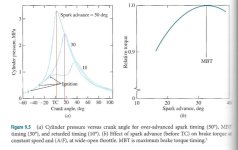
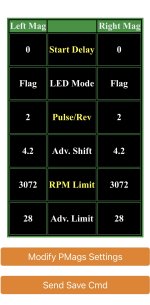
Had a recent conversation with a builder who experienced high temperatures (both CHT and oil) during the first flights of his 390-powered RV-14. Apparently a technician at a well known shop had set P-Mag timing, and had clocked it the wrong way, which means timing was highly advanced. Let's be honest...it's an easy error to make.
The owner's concern was the possibility of damage due to excessive advance. Probably not, given the conditions reported, but clearly something to be avoided.
You'll find a previous explanation of how and why by clicking here.
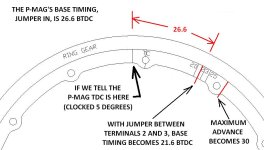
These additional graphics simply illustrate right and wrong. They are views looking at the aft side of the ring gear carrier, with timing marks referenced to the crankcase split line.
Correct. 26.6 less 5 is 21.6, plus 9 for full advance means the maximum is about 30:
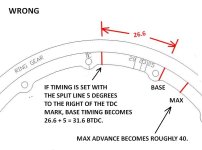
Incorrect. Positioning the ring gear carrier with the crankcase split line 5 degrees to the right of the TDC mark results in base timing of 31.6, even with the jumper installed (Remember, Lycoming specified 20). Maximum advance is about 40 BTDC....way too much.
The owner's concern was the possibility of damage due to excessive advance. Probably not, given the conditions reported, but clearly something to be avoided.
You'll find a previous explanation of how and why by clicking here.
These additional graphics simply illustrate right and wrong. They are views looking at the aft side of the ring gear carrier, with timing marks referenced to the crankcase split line.
Correct. 26.6 less 5 is 21.6, plus 9 for full advance means the maximum is about 30:
Incorrect. Positioning the ring gear carrier with the crankcase split line 5 degrees to the right of the TDC mark results in base timing of 31.6, even with the jumper installed (Remember, Lycoming specified 20). Maximum advance is about 40 BTDC....way too much.