

Van's Air Force
You are using an out of date browser. It may not display this or other websites correctly.
You should upgrade or use an alternative browser.
You should upgrade or use an alternative browser.
How to heat a cold hangar?
- Thread starter RNB
- Start date


Depends on your climate. My needs here in Minnesota are more...robust.I have some help lined up in the cold of February but he wants some heat. What is the safe way to do this?
A few years ago I used a kerosene bullet heater in my unheated/uninsulated t-hangar. It worked OK but the airport management (leaseholder) and local fire marshal freaked about open flame that close to the ground in an airplane hangar. They figured it out since it got the hangar warm enough to melt snow on the roof, drip down, form an ice ridge, and freeze the door shut. Just like that, I became "that guy" with the airport management. I borrowed a heated hangar to complete my project.
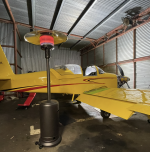
Since then, I use a propane patio heater, move it around to wherever I'm working...cockpit or engine. Works great for those little focused airplane projects like avionics or engine stuff. Those heaters are cheap (about $100 at Costco IIRC) and easy to move around. The air[port had less of a problem given the height off the ground, and propane (less than 300 gallons) is less worrisome than kerosene, apparently and keeps the fire marshall happy. It doesn't heat the whole hangar (which would be pointless to try) but keeps things toasty enough to be comfortable in a localized area like engine compartment.
Last edited:

Ed,I have a diesel/kerosene forced air heater. Fire it up when working in the hangar. Anything above 45 degrees is perfect working weather. 25 degrees not so much….
Hangers can be pretty drafty, yet kerosene/diesel gives off carbon monoxide (CO) and can be in significant concentration.
Daddyman58
I would second Daddyman58's comment. We have to heat welding tents and all kinds of other items for construction and we use a portable monitor in those spaces. It can go off before you even really notice it (headache and sleepy feeling). Be very careful using anything of combustion around your airplane. If I had to get my safety guy in to inspect the setup, with possible Avgas fumes in the space, they would probably not sign off on it. I would get a setup that has the unit outdoors for combustion and blow warm air into the space. Much less chance of getting poisoned or blown up in the process. Be Safe.

IMO in an uninsulated hanger it is much easier to dress for the temperature than to try and change the temperature. Warm boots, overalls, hat, and insulated work gloves. Then put an infrared space heater (electric or propane "sunflower") where you put your tools and where you can take a break to warm up.

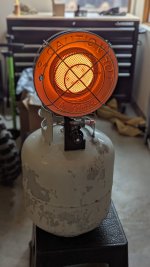
I have two propane heaters. Mr Heater two burner tank mount. They are on either side of the T-hangar. It's tolerable within about 30 min. Never seen any CO on the meter. I have a Mr Heater ceramic propane in my garage.
FYI. Electricity is crazy expensive where we live so we augment heat with a DynaGlo Kerosene and fireplace. Never seen even "1" on the CO detector. No we don't allow it to heat of I am not in the room. For backup, we have two milkhouse heaters on Alexa outdoor switches. If the house hydronic system can't keep up, I turn them on from my phone. Hydronic is great, but it can't keep up below about 20 outside. I wish we hadn't installed it. Cost a fortune too.
FYI. Electricity is crazy expensive where we live so we augment heat with a DynaGlo Kerosene and fireplace. Never seen even "1" on the CO detector. No we don't allow it to heat of I am not in the room. For backup, we have two milkhouse heaters on Alexa outdoor switches. If the house hydronic system can't keep up, I turn them on from my phone. Hydronic is great, but it can't keep up below about 20 outside. I wish we hadn't installed it. Cost a fortune too.
IMO in an uninsulated hanger it is much easier to dress for the temperature than to try and change the temperature. Warm boots, overalls, hat, and insulated work gloves. Then put an infrared space heater (electric or propane "sunflower") where you put your tools and where you can take a break to warm up.
Thanks. If you have an AP license, RV10 experience, and willing to help in February, let me know. Otherwise, I'll make the guy That is helping warm.

Not much help now, but perhaps for next year. See if your FBO will allow for some insulation in your hangar.
Carl
Carl
i live in n wi so it is as cold as it gets. i put up a 10x10 shop with several elect circuits to it. i have a drill press, bandsaw, microwave etc in there. that shop gets used 12 mo/yr. how can you not have a shop? space heaters can warm it up from 0 deg to 65 in less than an hour. not that i work in 0 temps but you can take a lot more cold if you are dressed for it and a warm shop is 10 feet away. i also have a frying pan out next to my work and all tools get tossed in there.warm ratchet or cold makes a big difference.
just a few days ago i took delivery of a 8x8x8 portable greenhouse. i have seen them slipped over a work area and was impressed enough to buy one. electric is not the way to go to heat one of these. elec. puts out 5000 btu and a small propane is at least 10000btu. an elec heater on low setting by the rudder pedals will help you with panel work. and in a week the days will be getting longer!
just a few days ago i took delivery of a 8x8x8 portable greenhouse. i have seen them slipped over a work area and was impressed enough to buy one. electric is not the way to go to heat one of these. elec. puts out 5000 btu and a small propane is at least 10000btu. an elec heater on low setting by the rudder pedals will help you with panel work. and in a week the days will be getting longer!

I've used a couple of different propane models (radiant and forced air) and both had to be turned off after a couple of hours due to overpowering fumes. I'm thinking the ceramic type might be better.I have some help lined up in the cold of February but he wants some heat. What is the safe way to do this?

There are very clean-burning kerosene heaters, but be aware that they put out a lot of water in addition to the heat. I just dress for the cold, with multiple layers from head to toe, and it usually works pretty well. My hangar is as drafty as they get, but it rarely gets below freezing here. The costco outdoor heaters sure look like a good idea for my next winter maintenance session.


Jjackh10
Well Known Member
I have 2 of these in a very unsealed hanger (Like 1"+ gap doors, and eves). They will make it tolerable to work at 30 degrees or so outside (when the TX panhandle wind isn't blowing lol). Very quiet and you can pipe the exhaust outside. Run all day on less than a gallon of diesel.

 www.vevor.com
In your area, if your hanger is closed up, 1 would make it tolerable 2 would make it tee shirt comfortable. Any insulation and 1 is plenty.
VEVOR 5-8KW Diesel Heater, Diesel Air Heater All in One with Remote Control and LCD Screen, Fast Heating Low Noise, Portable Diesel Heater for Truck Van RV Trailer Camper | VEVOR US
Stay warm anywhere with the VEVOR Diesel Heater featuring low fuel consumption, remote control, and quiet operation for trucks, RVs, and camping.
In your area, if your hanger is closed up, 1 would make it tolerable 2 would make it tee shirt comfortable. Any insulation and 1 is plenty.
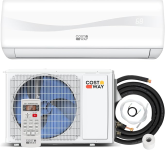
Mini Split. Kept my space at 65 degrees F during a 4 degree day, no problem! Cools even better!
If you can build an airplane, you can install a mini split.
If you can build an airplane, you can install a mini split.

Assuming you have electricity in the hanger I've had good results with a Harbor Freight radiant heater. It will not heat up the hanger overall but put it on high and aim where you are working and it is like standing in front of a small fireplace. No gas, no lit flame in your hanger. Might not be enough for really cold climates but takes the edge off. $40.

 www.harborfreight.com
400/900 Watt Oscillating Parabolic Heater
Amazing deals on this 400/900 Watt Oscillating Parabolic Heater at Harbor Freight. Quality tools & low prices.
The long play is to move the condition inspection to March/April/May or October/November. Those months have plenty of comfortable days where it isn't quite as miserable as doing an inspection in 90 degree heat or 35 degree cold.
Even February should have some decent days if the OP isn't hung up on completing the inspection in a specific 3 (?) day calendar window.
Even February should have some decent days if the OP isn't hung up on completing the inspection in a specific 3 (?) day calendar window.
That's what I did. Much more pleasant to be in the hangar for multiple days in April rather than August. An August condition inspection was brutal. Especially when I would have rather been flying. And November through about February or March here (in the PNW) is a no-go in an unheated (and mostly uninsulated) hangar.The long play is to move the condition inspection to March/April/May or October/November. Those months have plenty of comfortable days where it isn't quite as miserable as doing an inspection in 90 degree heat or 35 degree cold.
Even February should have some decent days if the OP isn't hung up on completing the inspection in a specific 3 (?) day calendar window.

Good advise. I have an insulated hangar with a full sized forced air home furnace and I moved my CI out of the coldest months. We don’t run the heat when not there so concrete floor and tools get cold soaked and just as much an issue of giving you the chills as air temp.The long play is to move the condition inspection to March/April/May or October/November. Those months have plenty of comfortable days where it isn't quite as miserable as doing an inspection in 90 degree heat or 35 degree cold.
Even February should have some decent days if the OP isn't hung up on completing the inspection in a specific 3 (?) day calendar window.
(Anybody know of a place to buy a heated toolbox?)

How big is the toolbox? I wonder if one of these would help?Good advise. I have an insulated hangar with a full sized forced air home furnace and I moved my CI out of the coldest months. We don’t run the heat when not there so concrete floor and tools get cold soaked and just as much an issue of giving you the chills as air temp.
(Anybody know of a place to buy a heated toolbox?)
Gun safe heater
I built what is essentially a guard shack 4x6’ and insulated. It’s on wheels. Fits neatly in the back of the hanger. I can escape to it for relief and to warm up, in addition I can fiddle with small parts in there too. 24sqFt heats up pretty quickly with a small electric space heater.

Boy is that true. Back when I was using a kerosene bullet heater, the airplane would end up literally dripping water off the wings from condensation, especially over the fuel tanks, as the localized dew point crossed the ambient temp.There are very clean-burning kerosene heaters, but be aware that they put out a lot of water in addition to the heat. I just dress for the cold, with multiple layers from head to toe, and it usually works pretty well. My hangar is as drafty as they get, but it rarely gets below freezing here. The costco outdoor heaters sure look like a good idea for my next winter maintenance session.
All of these portable propane or kerosene heaters and space heaters use an open flame and by their own warning labels specifically warn against use in any enclosed area where fuel vapors might be present. In a leased hangar, I'd be amazed if ignition sources like these would be allowed by the fire marshall or the terms of the lease.
Thats a good idea. I use those suits when spraying larger automotive or airplane paint jobs; Learned that a large portion of the dust collected on fresh paint is coming off the operator and not the environment. Man do they make you sweat in the summer. Never connected the dots to think of this for winter use.The guy that did my pre-buy inspection in North Carolina in December wore a tyvek suit. He said it keeps him warm and his clothes clean. I’m going to get one from HF and use it during my condition inspection in February.
Jjackh10
Well Known Member
I've worn them many times for work, winter and summer. They just block air moving in or out (like wearing a trashbag). Short duration in the winter they might help. But after an hour or so you end up sweating and cold.Thats a good idea. I use those suits when spraying larger automotive or airplane paint jobs; Learned that a large portion of the dust collected on fresh paint is coming off the operator and not the environment. Man do they make you sweat in the summer. Never connected the dots to think of this for winter use.
Have you looked at borrowing or renting space in a heated hanger on the airport for the few days you will be working? Before I had my heated hanger I did this a few times and found the other hanger owners accommodating. Now I have a big hanger that I heat daily (I run a commercial shop), and frequently offer space to others on the airport if they need to do something for a day or two. It's good karma.

Back when I had a Warrior and no Reif, I preheated with a ceramic heater and some ducting. Fire inspector threw a fit when he saw it! He likely would have dropped dead if I had been using fuel/open flame.In a leased hangar, I'd be amazed if ignition sources like these would be allowed by the fire marshall or the terms of the lease.


The problem with infra red heaters is they also heat the fuel inside the wings and cause venting of gas fumes. The new hangars being built at Patey Aviation (SPK) were going to supply those in our new hangars until that became known and they switched to forced air natural gas heaters. Those gas heaters require automatic exhaust fans and combustion (make-up) air however, which really jacks the installation cost. Omitting those required items can be hazardous to your health.Before I had forced air systems, I used electric Infra Red heaters suspended from the ceiling over the work area. They only heat you and the objects within their range. They don’t heat the air.
They work but use a lot of electricity.
In the past I have used a swap- meet canopy with sheet plastic sides to put around the work area (like FWF), then an electric heater (s) to warm the small area. The canopy can be outfitted with castors on the legs and then can easily be moved around by one person.
In the summer you just swap out the heaters for a portable air conditioner.
Or just build in Maui

bt3vex
Active Member
DeWalt 60000 Btu/h 1500 sq ft Forced Air Propane Portable Heater Mfr# F340751 - Ace Hardware
The DXH65FAV forced air propane heater burns at 65,000 BTU/HR and can be adjusted down to 35,000 BTU/HR. Equipped with Quiet Burner Technology this heater operates with 50% less noise than standard units of similar size. Includes a 20 feet hose and regulator and is manufactured with a large...
Construction crews use things similar to this up in Montana. Safe, Easy, Relatively Cheap.
note the "well ventilated area" requirement in the product descriptionDeWalt 60000 Btu/h 1500 sq ft Forced Air Propane Portable Heater Mfr# F340751 - Ace Hardware
The DXH65FAV forced air propane heater burns at 65,000 BTU/HR and can be adjusted down to 35,000 BTU/HR. Equipped with Quiet Burner Technology this heater operates with 50% less noise than standard units of similar size. Includes a 20 feet hose and regulator and is manufactured with a large...www.acehardware.com
Construction crews use things similar to this up in Montana. Safe, Easy, Relatively Cheap.
Don't think a closed hangar counts as well ventilated
Anyway, many airports prohibit such heaters.
I tried that type but found it noisy and needs to be plugged in. Now using theDeWalt 60000 Btu/h 1500 sq ft Forced Air Propane Portable Heater Mfr# F340751 - Ace Hardware
The DXH65FAV forced air propane heater burns at 65,000 BTU/HR and can be adjusted down to 35,000 BTU/HR. Equipped with Quiet Burner Technology this heater operates with 50% less noise than standard units of similar size. Includes a 20 feet hose and regulator and is manufactured with a large...
Construction crews use things similar to this up in Montana. Safe, Easy, Relatively Cheap.
Mr. Heater 80000 -BTU Outdoor Portable Convection Propane Heater
Model #MH80CVX
(Looks like a small trash can).
Still an open flame and CO source.....
Edit: looking at that model more closely, and it says 50% quieter. Might be a lot better than the one I used.
Last edited:
That doesn't make any sense to me. Infra red heaters heat entirely by radiation, so the heat will be absorbed mostly by the skin of the airplane. Any heating of the fuel would only occur by what little conduction could be mustered from the skin after it's heated sufficiently.The problem with infra red heaters is they also heat the fuel inside the wings and cause venting of gas fumes. The new hangars being built at Patey Aviation (SPK) were going to supply those in our new hangars until that became known and they switched to forced air natural gas heaters. Those gas heaters require automatic exhaust fans and combustion (make-up) air however, which really jacks the installation cost. Omitting those required items can be hazardous to your health.
Last edited:
Would never be allowed by most hangar leasing terms nor most fire codes.DeWalt 60000 Btu/h 1500 sq ft Forced Air Propane Portable Heater Mfr# F340751 - Ace Hardware
The DXH65FAV forced air propane heater burns at 65,000 BTU/HR and can be adjusted down to 35,000 BTU/HR. Equipped with Quiet Burner Technology this heater operates with 50% less noise than standard units of similar size. Includes a 20 feet hose and regulator and is manufactured with a large...
Construction crews use things similar to this up in Montana. Safe, Easy, Relatively Cheap.
Money money money or seal up the holes and save a bunch of Money in what ever system you choose.I have some help lined up in the cold of February but he wants some heat. What is the safe way to do this?
My luck varies FIXIT
220K BTU fuel heater. It runs on mixed used engine oil, and avgas (80/20). I may add jetfule if temperatures are in the single digits.
The heater is placed outside the hangar but ducted in using a 12 inch industrial ducting. It works best if you have a man-door and can cut a hole or access through it. I have also placed it in the hangar without issues. Just make sure the heater is tuned properly and burns clean. I have ran this setup for hours on end without issues. The CO2 meter placed at the door only registered onshutdown and that was because the fan on the older units don't purge. The newer units will run for a while to purge the air.
Overall, about the cheapest and safest solution I have found.
The heater is placed outside the hangar but ducted in using a 12 inch industrial ducting. It works best if you have a man-door and can cut a hole or access through it. I have also placed it in the hangar without issues. Just make sure the heater is tuned properly and burns clean. I have ran this setup for hours on end without issues. The CO2 meter placed at the door only registered onshutdown and that was because the fan on the older units don't purge. The newer units will run for a while to purge the air.
Overall, about the cheapest and safest solution I have found.
from AI:That doesn't make any sense to me. Infra red heaters heat entirely by radiation, so the heat will be absorbed mostly by the skin of the airplane. Any heating of the fuel would only occur by what little conduction could be mustered from the skin after it's heated sufficiently.
Infrared heaters directly heat people, aircraft, and floors, not just the air, providing efficient warmth in large, drafty spaces with high ceilings, unlike convection heaters that lose heat upwards; they come in low-intensity (tube) or high-intensity (overhead) types, are energy-efficient, and must be installed according to aviation safety standards like NFPA 409, ensuring heat isn't spilled onto aircraft wings or sensitive areas.
Fire marshals take the infrared venting problem seriously, even if it doesn't make sense to you, and can prohibit it's use in hangars with fueled airplanes.
The forced air gas heater installed in my insulated hangar can raise the hangar temp to 75 degrees with a 1 hour recovery time. Open the big door and let in the freezing air and then close the door and an hour later the hangar will be recovered to 75 degrees.
I would talk to my hangar liability insurance provider before doing anything that involves heat in a hangar. Burning down a row of hangars full of jets could get spendy.
I agree....infra red heaters heat the skin of the airplane, little or no effect on fuel contained inside or the air around it. Because it doesn't heat the air, infra red is pretty much only good for people or objects within its radiation field. The source of energy that generates the infra red is another matter and that's the component that a fire marshal is likely going to have an opinion on.from AI:
Infrared heaters directly heat people, aircraft, and floors, not just the air, providing efficient warmth in large, drafty spaces with high ceilings, unlike convection heaters that lose heat upwards; they come in low-intensity (tube) or high-intensity (overhead) types, are energy-efficient, and must be installed according to aviation safety standards like NFPA 409, ensuring heat isn't spilled onto aircraft wings or sensitive areas.
Fire marshals take the infrared venting problem seriously, even if it doesn't make sense to you, and can prohibit it's use in hangars with fueled airplanes.
The forced air gas heater installed in my insulated hangar can raise the hangar temp to 75 degrees with a 1 hour recovery time. Open the big door and let in the freezing air and then close the door and an hour later the hangar will be recovered to 75 degrees.
I would talk to my hangar liability insurance provider before doing anything that involves heat in a hangar. Burning down a row of hangars full of jets could get spendy.

sansoneservices
Well Known Member
I use the 2 burner Mr. Heater that mounts on top of the 20# portable propane tanks that are available for quick exchange everywhere. Still dress warm naturally, and easy to move the heater to wherever you're working. Just remember it's capable of catastrophic fire if you're working with combustiblesI mostly dress for the weather, but these small propane radiant heaters are pretty effective at taking the edge off when set up behind you a few feet, even with the hangar door open.
Are we in analysis paralysis here. Basically it sounds like nothing can be used to heat a hangar without starting a nuclear holocaust.
Driving along any row of hangars on a warm day, I see all manner of heating devices in every hangar from infrared, natural gas, torpedo, propane & kerosene. I assume they get used when it gets cold. Doors are closed. Any one of them would ignite fumes. How the heck do FBOs heat. It reeks in most FBO hangars. So back to the OP's question.
How to safely heat a hangar?
Driving along any row of hangars on a warm day, I see all manner of heating devices in every hangar from infrared, natural gas, torpedo, propane & kerosene. I assume they get used when it gets cold. Doors are closed. Any one of them would ignite fumes. How the heck do FBOs heat. It reeks in most FBO hangars. So back to the OP's question.
How to safely heat a hangar?

This was due to the amazing foresight that the airport board and insurance company had in predicting the extreme A&P shortage - they didn't want him to drop out of the labor market due to smoking-related illness!I'm reminded of an old A&P I once knew that complained that the airport board and insurance would not let him smoke in his hangar.
They had no problem with him firing up a welding torch and repairing an airframe.

The fuel is important. Kerosene has sulfur and since all combustion produces water (with sulfur=acid), it will condense on anything cold and corrode. Like tools, etc. I used kerosene heater near some chrome plated wire shelving and it was all eaten off. I have switched to propane only. Moisture is still there but not the sulfuric acid. Low sulfur diesel can yield some aggressive aldehydes and is bad on the lungs, so be sure the combustion is clean. (avoid if possible) Take that from a life long tail pipe sniffer.
Norman CYYJ
Well Known Member
What about wearing electrically heated clothing, the heat goes where you go and would use less energy.The fuel is important. Kerosene has sulfur and since all combustion produces water (with sulfur=acid), it will condense on anything cold and corrode. Like tools, etc. I used kerosene heater near some chrome plated wire shelving and it was all eaten off. I have switched to propane only. Moisture is still there but not the sulfuric acid. Low sulfur diesel can yield some aggressive aldehydes and is bad on the lungs, so be sure the combustion is clean. (avoid if possible) Take that from a life long tail pipe sniffer.
sansoneservices
Well Known Member
My airport doesn't allow storage of liquid combustibles of ANY kind. My "bucket of bolts" stores 50 gallons of 100LL and that's ok with them 
sansoneservices
Well Known Member
Norman I'm going to look into your idea. Never thought of that, thanksWhat about wearing electrically heated clothing, the heat goes where you go and would use less energy.
i have a 60000 btu kerosene bullet heater. while it works, it really gulps fuel (kerosene is expensive!) and heats up a volume of air which raises quickly while the ground level stays cold. i may be sweating while standing on the wing and chilly at the floor level. it's also noisy (airpods pro help). on the plus side if properly adjusted it creates zero PPM carbon monoxide and the kerosine odor is tolerable.
i think an infrared propane heater others mentioned would be a better option since it delivers energy to where it needs to be instead of brute forcing the entire hangar space.
i think an infrared propane heater others mentioned would be a better option since it delivers energy to where it needs to be instead of brute forcing the entire hangar space.
Last edited:
