

Van's Air Force
You are using an out of date browser. It may not display this or other websites correctly.
You should upgrade or use an alternative browser.
You should upgrade or use an alternative browser.
Denso Alternator dropping offline
- Thread starter Mconner7
- Start date


What parameter/indication are you using to determine alternator condition?My 200 hour Denso alternator drops offline line when I am at full RPM. It seems to work fine when I pull the prop below 2500. Ideas?

200 hours implies you haven't checked or reset belt tension since installation. Could be too loose, and if it's been slipping, the belt could be glazed by now too.My 200 hour Denso alternator drops offline line when I am at full RPM. It seems to work fine when I pull the prop below 2500. Ideas?
New V-belts almost always require re-tensioning after a few hours of use. Once you do that, the tension will remain constant.
As to why only over 2500 rpm; the faster it rotates, the more centrifugal force on the belt (pulls away from the pulley, reducing tension a bit). Plus, due to bearing friction, rotor windage and fan drag, it probably takes more power to spin faster.

Mconner7
Well Known Member
That was my first move, the belt needed some tension but that didn’t fix it. It seems to cycle on and off until the rpm is reduced.200 hours implies you haven't checked or reset belt tension since installation. Could be too loose, and if it's been slipping, the belt could be glazed by now too.
New V-belts almost always require re-tensioning after a few hours of use. Once you do that, the tension will remain constant.
As to why only over 2500 rpm; the faster it rotates, the more centrifugal force on the belt (pulls away from the pulley, reducing tension a bit). Plus, due to bearing friction, rotor windage and fan drag, it probably takes more power to spin faster.

When the belt was off, did you examine the feel of the pulley? Loose bearings could potentially cause something like this.That was my first move, the belt needed some tension but that didn’t fix it. It seems to cycle on and off until the rpm is reduced.
Gerhardt beat me to it. First suspect a slipping belt. A glazed belt needs to be replaced. Tightening a glazed belt is like peeing into the wind. Second would be a poor electrical connection exterior to the alternator. Extra vibration at full power might cause to much vibration on a less than proper wire connection.200 hours implies you haven't checked or reset belt tension since installation. Could be too loose, and if it's been slipping, the belt could be glazed by now too.
New V-belts almost always require re-tensioning after a few hours of use. Once you do that, the tension will remain constant.
As to why only over 2500 rpm; the faster it rotates, the more centrifugal force on the belt (pulls away from the pulley, reducing tension a bit). Plus, due to bearing friction, rotor windage and fan drag, it probably takes more power to spin faster.
Mconner7
Well Known Member
When the belt was off, did you examine the feel of the pulley? Loose bearings could potentially cause something like this.
The belt seems fine, I replaced it at overhaul, 130 hours ago. It was just a little less than optimum tension but that didn’t change anything. A friend suggested the internal regulator in the alternator may be failing and sensing over voltage.When the belt was off, did you examine the feel of the pulley? Loose bearings could potentially cause something like this.
+1Since the OP didn't indicate what "offline" meant, we're left to guess :/
My guess, after dissecting a few of these things, is a broken field and/or sense wire. (Or fretted/fractured connection thereto).
I wasn’t referring to the belt. I meant yank the pulley around to determine the condition of the bearings supporting the main shaft. You can tell pretty easily if there is a problem.The belt seems fine, I replaced it at overhaul, 130 hours ago. It was just a little less than optimum tension but that didn’t change anything. A friend suggested the internal regulator in the alternator may be failing and sensing over voltage.
Mconner7
Well Known Member
I am here, you can speak to the OP directly. Offline meaning it is charging fine until I apply takeoff power. It then stops charging and the bus voltage drops to loaded battery volts. Staying at full rpm, it will cycle online (charging) for a couple seconds, then offline again. I have seen this happen on several consecutive flights. It has never stopped charging with the rpm below 2500.Since the OP didn't indicate what "offline" meant, we're left to guess :/
My guess, after dissecting a few of these things, is a broken field and/or sense wire. (Or fretted/fractured connection thereto).
How do you know it's "charging" - what gauge are you looking at?I am here, you can speak to the OP directly. Offline meaning it is charging fine until I apply takeoff power. It then stops charging and the bus voltage drops to loaded battery volts. Staying at full rpm, it will cycle online (charging) for a couple seconds, then offline again. I have seen this happen on several consecutive flights. It has never stopped charging with the rpm below 2500.
Similarly for bus and "loaded battery" voltage - what're the actual numbers you're observing?
While we're at it, what is the alternator in question? You indicate "Denso", but which model specifically?
Last edited:

I have a Denso on my RV-4 I bought through VANs in the 90's (Suzuki Samuri?) , and it utilizes 2 simple spade connectors, one is the field and one is the meter (or light) input. The main Feed is a more robust terminal. I've had both small spade connectors fail by cracking by vibration, once it was the field wire, which showed AMPs drop to to zero but still read 12V, battery (not being charged) volts. The second failure showed no Voltage and the red warning light illuminated, but AMPs were still flowing. These simple failures were immediately found when I unplugged the wires. I replaced them with heavier spades, and secured the bundle better. It is possible, you have a nearly fractured spade connector that is separating at certain vibrations.
Mconner7
Well Known Member
I will get the data plate when I pull the cowling in the next few days and report back.How do you know it's "charging" - what gauge are you looking at?
Similarly for bus and "loaded battery" voltage - what're the actual numbers you're observing?
While we're at it, what is the alternator in question? You indicate "Denso", but which model specifically?
Bus voltage as read by the G3 is normally 13.8-14.2. When there is no output from the alternator, it quickly drops to the lo 12’s…..
I will get the data plate when I pull the cowling in the next few days and report back.
Bus voltage as read by the G3 is normally 13.8-14.2. When there is no output from the alternator, it quickly drops to the lo 12’s…..
If I've read the thread correctly, you notice that the bus volts fall off when you run the engine at over 2500 RPM. A couple of experiments to try if you have the time:
1. Set for RPM for 2450, observe bus volts at 14.2V (or thereabouts) then turn on more devices -- the landing lights - then the pitot heat - then the nav lights -- maybe transmit a bit on one of the radios -- these will increase the "load" on the alternator as it tries to hold the bus voltage at 14.2V...
2. Set for > 2500, and when the buss volts starts to drop, shed loads - turn things off and see what happens,.

I just had that happen a month ago. Run up at 1700 was fine, full power on climb out and it fell off to not charging. Power back in the pattern and it'd come back online. Made a few pattern laps, with consistent results.
I tried shedding loads, flipping the breaker, adding load, etc. I assumed belt slip, but back in the hangar all looked good.
I followed the B&C test manual (it applied well to my $30 autozone special) and found there was not the specified resistance between field connector and the case. (in fact, it tested wide open on the bench).
Replaced the alternator, and all is charging steady again! Not sure why the cutout happened at certain RPMs. It seemed to fluctuate, 1800-2000 was about where it'd happen though. Vibration, heat, the locust, something!
I tried shedding loads, flipping the breaker, adding load, etc. I assumed belt slip, but back in the hangar all looked good.
I followed the B&C test manual (it applied well to my $30 autozone special) and found there was not the specified resistance between field connector and the case. (in fact, it tested wide open on the bench).
Replaced the alternator, and all is charging steady again! Not sure why the cutout happened at certain RPMs. It seemed to fluctuate, 1800-2000 was about where it'd happen though. Vibration, heat, the locust, something!
Mconner7
Well Known Member
Update,
I pulled the alternator today and it is a NAPA brand not Denso. They would warranty it but it’s not in stock and may not be for many months.
We tried to spin it up at Oreilly but the machine refused to spin it as it said it has an internal failure.
I found what may work for $100 at Oreilly, it comes up as a Nissan Altima alternator.
What automotive alternators are others using?
I pulled the alternator today and it is a NAPA brand not Denso. They would warranty it but it’s not in stock and may not be for many months.
We tried to spin it up at Oreilly but the machine refused to spin it as it said it has an internal failure.
I found what may work for $100 at Oreilly, it comes up as a Nissan Altima alternator.
What automotive alternators are others using?

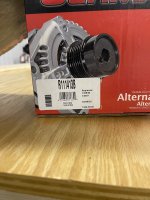
This is the unit I purchased at O’Reilly AP a few years ago. I also added a Monkworkz BU generator.Update,
I pulled the alternator today and it is a NAPA brand not Denso. They would warranty it but it’s not in stock and may not be for many months.
We tried to spin it up at Oreilly but the machine refused to spin it as it said it has an internal failure.
I found what may work for $100 at Oreilly, it comes up as a Nissan Altima alternator.
What automotive alternators are others using?
Attachments
Mconner7
Well Known Member
Did you have to pull the pulley and replace it with a V? How much trouble was that?This is the unit I purchased at O’Reilly AP a few years ago. I also added a Monkworkz BU generator.
Don’t go by the picture, the alternator comes with a V-belt pulley, use the part number.Did you have to pull the pulley and replace it with a V? How much trouble was that?
...and the mystery deepens...
This unit "could be" self exciting, using the ND 126000-0550, -0900 regulator (or one of its clones -- i.e. WAI IR250SE), so apply some caution here.
By any chance can you share a picture of the 3 pin plug that goes into the unit? That will help triangulate what kind of replacement regulator to buy.
This unit "could be" self exciting, using the ND 126000-0550, -0900 regulator (or one of its clones -- i.e. WAI IR250SE), so apply some caution here.
By any chance can you share a picture of the 3 pin plug that goes into the unit? That will help triangulate what kind of replacement regulator to buy.
Mconner7
Well Known Member
I looked it up on Oreilley’s website, I think that’s the unit I have comin in this afternoon.Don’t go by the picture, the alternator comes with a V-belt pulley, use the part number.
Mconner7
Well Known Member
The three pin plug is one horizontal above two vertical spades and only one wire is used. My plane has never had an external regulator, what is the caution you mentioned?...and the mystery deepens...
This unit "could be" self exciting, using the ND 126000-0550, -0900 regulator (or one of its clones -- i.e. WAI IR250SE), so apply some caution here.
By any chance can you share a picture of the 3 pin plug that goes into the unit? That will help triangulate what kind of replacement regulator to buy.
Some of these are "self exciting" and the plug does nothing.The three pin plug is one horizontal above two vertical spades and only one wire is used. My plane has never had an external regulator, what is the caution you mentioned?
Out of curiosity, do you have a picture of the harness/plug available?
Mconner7
Well Known Member
Bearings seemed fine but O’Reilly tried to spin it up and the computer said internal malfunction and wouldn’t spin it.I wasn’t referring to the belt. I meant yank the pulley around to determine the condition of the bearings supporting the main shaft. You can tell pretty easily if there is a problem.
Mconner7
Well Known Member
I bought this exact alternator and it seems to be fine now. I had to add a sense wire as the previous one only needed the field current and sensed internally.This is the unit I purchased at O’Reilly AP a few years ago. I also added a Monkworkz BU generator.
Mconner7
Well Known Member
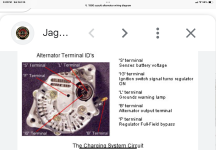
This is the replacement alternator. I had to add a sense wire for the internal regulator to work.Some of these are "self exciting" and the plug does nothing.
Out of curiosity, do you have a picture of the harness/plug available?
Attachments

Mconner7,My 200 hour Denso alternator drops offline line when I am at full RPM. It seems to work fine when I pull the prop below 2500. Ideas?
Belt tension?
It loosens up after use like a guitar string going out of tune.
Daddyman58
What did you do with the original unit? Core exchange?This is the replacement alternator. I had to add a sense wire for the internal regulator to work.
Mconner7
Well Known Member
Yes the old alternator cost me $70 almost three years ago and was worth $40 as a core.What did you do with the original unit? Core exchange?
Mconner7
Well Known Member
That was my first thought. I tightened the belt with experienced mechanics looking on to no avail. I think the Mexican reduilds are of marginal quality.Mconner7,
Belt tension?
It loosens up after use like a guitar string going out of tune.
Daddyman58
Mconner7,
Belt tension?
It loosens up after use like a guitar string going out of tune.
Daddyman58
Mconner7,That was my first thought. I tightened the belt with experienced mechanics looking on to no avail. I think the Mexican reduilds are of marginal quality.
My old -4 had a denso fail, then had a B & C fail after about 100 hours. The new one came with an installation bracket.
That was the culprit. It had a slight bend of about 1/2" mid-way. I think it was taken off a fork-lift?
The belt looked correct, but was side-loading the bearings.
New (and correct straight bracket) along with a fresh alternator did the trick.
Daddyman58
Mconner7
Well Known Member
Update, flew today and the first 10 minutes went fine. The. The voltage rapidly rose to 16 when I shut down the field switch. I tried multiple times and the regulator always went into over volts after a few minutes. I am pretty sure this is an internal regulator failure.
I suspect the Japanese alternators that are rebuilt in Mexico are of poor quality. My next step will be to try and find a new (not rebuilt) alternator. Any one have a good source?
I suspect the Japanese alternators that are rebuilt in Mexico are of poor quality. My next step will be to try and find a new (not rebuilt) alternator. Any one have a good source?
Buy a new regulator -- $30 or so from Zorkos.com (https://www.shopzorkos.com/XrefCategory/VR-1265S/IN250)Update, flew today and the first 10 minutes went fine. The. The voltage rapidly rose to 16 when I shut down the field switch. I tried multiple times and the regulator always went into over volts after a few minutes. I am pretty sure this is an internal regulator failure.
I suspect the Japanese alternators that are rebuilt in Mexico are of poor quality. My next step will be to try and find a new (not rebuilt) alternator. Any one have a good source?
As I advised earlier, make sure it's the correct one for this application (Not Self-exciting, Not Single-wire, Not 18.9V, etc.)
The IN250 has a 14.5V set point which may seem a little "hot". If you want a little lower bus voltage, you can try the IN256; it has a 14.0V set point.
Last edited:
Mconner7
Well Known Member
Two questions..do the regulators offer over voltage protection and how/where do they mount?Buy a new regulator -- $30 or so from Zorkos.com (https://www.shopzorkos.com/XrefCategory/VR-1265S/IN250)
As I advised earlier, make sure it's the correct one for this application (Not Self-exciting, Not Single-wire, Not 18.9V, etc.)
The IN250 has a 14.5V set point which may seem a little "hot". If you want a little lower bus voltage, you can try the IN256; it has a 14.0V set point.
On overvoltage - some do, some don't.Two questions..do the regulators offer over voltage protection and how/where do they mount?
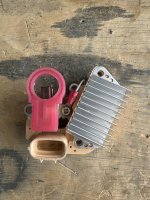
I've found that the overvoltage feature is just an indication and not protection (lamp active vs field disablement or crowbar). The only one that I'm aware of that has OV Protection is the PlanePower/Unipoint YR-6621 variant which is available from A/C Spruce (https://www.aircraftspruce.com/catalog/pnpages/07-17968.php) -- however, this unit uses a different 3-pin plug than what you have.
There are two typical sizes of the ND style internal regulator - 57.5mm and 63.5mm - and they mount on the rear of the alternator with 3 short and 2 longer screws. Three short screws connect the Brush Hi & Lo, B+ output, Field Input, Stator Output and the two longer screws anchor the heatsink corners on regulator to the SRE bracket.
(YR-6621 image attached -- note difference in 3 pin plug shape)
Mconner7
Well Known Member
My gut feeling is that the Mexican rebuilds are of poor quality. While the one I have is warrantied, is adding a new VR to a poor quality alternator worth the effort or do I chalk it up to bad luck and swap the unit…..On overvoltage - some do, some don't.
I've found that the overvoltage feature is just an indication and not protection (lamp active vs field disablement or crowbar). The only one that I'm aware of that has OV Protection is the PlanePower/Unipoint YR-6621 variant which is available from A/C Spruce (https://www.aircraftspruce.com/catalog/pnpages/07-17968.php) -- however, this unit uses a different 3-pin plug than what you have.
There are two typical sizes of the ND style internal regulator - 57.5mm and 63.5mm - and they mount on the rear of the alternator with 3 short and 2 longer screws. Three short screws connect the Brush Hi & Lo, B+ output, Field Input, Stator Output and the two longer screws anchor the heatsink corners on regulator to the SRE bracket.
(YR-6621 image attached -- note difference in 3 pin plug shape)
View attachment 100827
One additional question, I have a three pin plug, one is power in, one is sense for the VR, and the one I didn’t wire is the lamp pin as I assumed that’s just for an idiot light in automotive applications. Is it OK not to put a resistor/lamp on the light pin?
Sorry, can't help you with feelings -- only objective data. What data do you have that suggests "poor quality?"My gut feeling is that the Mexican rebuilds are of poor quality. While the one I have is warrantied, is adding a new VR to a poor quality alternator worth the effort or do I chalk it up to bad luck and swap the unit…..
One additional question, I have a three pin plug, one is power in, one is sense for the VR, and the one I didn’t wire is the lamp pin as I assumed that’s just for an idiot light in automotive applications. Is it OK not to put a resistor/lamp on the light pin?
The LAMP wire doesn't need to be connected to anything.
Mconner7
Well Known Member
Failure of this newly overhauled unit….Thanks for all your input.Sorry, can't help you with feelings -- only objective data. What data do you have that suggests "poor quality?"
The LAMP wire doesn't need to be connected to anything.
Hard to tell from your posts -- what was the "failure" exactly -- Exceedance of 14.4V? Maybe the unit is actually a 14.9V or 15.4 or 18.9V... Or, perhaps the sense wire is connected to some place it shouldn't be, or has excessive resistance? For that matter, perhaps the alternator doesn't have a solid connection to ground (battery [-])Failure of this newly overhauled unit….Thanks for all your input.
Lots of things to verify before throwing good $$$ after bad in any case.
Good luck.
Most alternators do not fail from the core hardware on ND's. It is usually something in the VR module that brian showed or the diode pack. PP is an exception, as they mess with the core hardware. So the core Alt is NOT junk and probably in good shape. The cheap rebuilders will put in the absolute cheapest off shore parts (VR module and diode pack) they can find and therefore fail MUCH sooner than good ones. This is why I try to buy remans direct from ND or at least find a reputable brand, which is difficult in todays world.My gut feeling is that the Mexican rebuilds are of poor quality. While the one I have is warrantied, is adding a new VR to a poor quality alternator worth the effort or do I chalk it up to bad luck and swap the unit…..
Therefore, there is a good chance that replacing the module will address your issue. Or you can scrap it and start fresh with a better quality reman. All that said, a good rebuilder will check the bearings and sometimes replace. If that is done with cheap parts, that also affects longevity.
What "core hardware" do they mess with?Most alternators do not fail from the core hardware on ND's. It is usually something in the VR module that brian showed or the diode pack. PP is an exception, as they mess with the core hardware. So the core Alt is NOT junk and probably in good shape. The cheap rebuilders will put in the absolute cheapest off shore parts (VR module and diode pack) they can find and therefore fail quickly. This is why I try to but remans direct from ND or at least find a reputable brand, which is difficult in todays world.
Therefore, there is a good chance that replacing the module will address your issue. Or you can scrap it and start fresh with a better quality reman.
The bearing retainer.What "core hardware" do they mess with?

@bjdecker
What are your feelings on converting non-aviation alts for use with external VR/OV protection? I saved an article from here showing how to do such. Would seem to be a worthy endeavor for those wanting to go that route. Strongly considered it myself.
Background. I have had an undetected OV condition; Toyota not aircraft with expensive avionics. Killed my POS radio and blew the caps off of the battery and ruined paint on the hood. This is the foundation for my non-acceptance of any aircraft application of any alt without OV protection.
What are your feelings on converting non-aviation alts for use with external VR/OV protection? I saved an article from here showing how to do such. Would seem to be a worthy endeavor for those wanting to go that route. Strongly considered it myself.
Background. I have had an undetected OV condition; Toyota not aircraft with expensive avionics. Killed my POS radio and blew the caps off of the battery and ruined paint on the hood. This is the foundation for my non-acceptance of any aircraft application of any alt without OV protection.
The bearing retainer isn't a part of the design of any of <= ~106MM SRE ND & clones; Plane power doesn't deviate from this. (AL12-EI60, ALT5020)The bearing retainer.
FWIW - The bearing retainer doesn't come into play until the ~118MM SRE's, which Plane Power markets as the AL12-EI70 (70A)...
So, net-net, the belief that Plane Power somehow alters or deviates core hardware isn't based in fact.
What they do modify (or deviate from "standard") is the Pulley (2.75", 11MM, V-groove) and the regulator - it's a Unipoint/Victory YR-6621, which is a discrete component implementation of the Denso 126000-2400 (Transpo IN240) with an SCR and Field Supply/Brush modification to support Overvoltage Crowbar.
...that's how I roll@bjdecker
What are your feelings on converting non-aviation alts for use with external VR/OV protection? I saved an article from here showing how to do such. Would seem to be a worthy endeavor for those wanting to go that route. Strongly considered it myself.
Background. I have had an undetected OV condition; Toyota not aircraft with expensive avionics. Killed my POS radio and blew the caps off of the battery and ruined paint on the hood. This is the foundation for my non-acceptance of any aircraft application of any alt without OV protection.

I am using a Plane Power AL12-EI60 core hardware with a WAI/Transpo IN257 Regulator, modified to allow for absolute Field Supply Control (the @hgerhardt mod), and glass-passivated rectifier (400V/3A) on the field windings for EMF snubbing, and -- most importantly -- the Eric Jones/Perihelion OV module wired on the Alt Field supply.
I also added a blast tube adapter (3D printed) to the SRE cover because I don't believe recirculating 200°F air is as effective as fresh outside air. And, as all the electronics are potted and good to IP67+ I am not worried about water incursion.
I thought i read one of your posts where you took apart a pp and the bore in the case end holding the bearing was so worn that the armature moved out so much that it was wearing away the case. Was that not a pp alternator? I thought that i had read many other posters having similar issues. I defer to your expertise here, as i only know what i read here. Have never owned a pp and likely never will.The bearing retainer isn't a part of the design of any of <= ~106MM SRE ND & clones; Plane power doesn't deviate from this. (AL12-EI60, ALT5020)
FWIW - The bearing retainer doesn't come into play until the ~118MM SRE's, which Plane Power markets as the AL12-EI70 (70A)...
So, net-net, the belief that Plane Power somehow alters or deviates core hardware isn't based in fact.
What they do modify (or deviate from "standard") is the Pulley (2.75", 11MM, V-groove) and the regulator - it's a Unipoint/Victory YR-6621, which is a discrete component implementation of the Denso 126000-2400 (Transpo IN240) with an SCR and Field Supply/Brush modification to support Overvoltage Crowbar.
I thought i read one of your posts where you took apart a pp and the bore in the case end holding the bearing was so worn that the armature moved out so much that it was wearing away the case. Was that not a pp alternator? I thought that i had read many other posters having similar issues. I defer to your expertise here, as i only know what i read here. Have never owned a pp and likely never will.
Yes - it was a PP alternator, the cavity in the SRE was worn, and the bearing had "spun". Root cause was unknown, but speculated to be heat related.
There is/was nothing visibly different in the SRE/bearing assembly or parts between the PlanePower and Genuine ND, WAI/Transpo, B&C or other clones. There is no retention of the rear bearing in these 106MM units -- press fit and wave washer.
It's possible that the aluminum alloy used in the casting is different -- maybe it had a different response to heat (maybe a little more or less of any number of alloys in the mix.)...
