Van's Air Force

The definitive Van's Aircraft support community! Buying, building or flying an RV? Join our exclusive family of mentors and enthusiasts!

Hey, want to see a video of a sick ROTAX 912iS?

LettersFromFlyoverCountry

Well Known Member
Sponsor
Following up on the great fuel leak of 2025, everything is fixed so I figured I'd try to start the Rotax 912iS for another "first engine start" attempt. I didn't expect much; I didn't get much.


I did three attempts; none of them were very good with an inability develop any power. A later reading of the G3X data showed cylinders 2 and 4 are cold. At one point in the second attempt, the engine starts developing power, 2760 RPM for a few seconds. But 2 and 4 were still cold. This is consistent with other attempts (though not with as much RPM) in which the engine seems to come alive for a few seconds. And, like this one, without me touching anything, it gives up the ghost.

Fuel pressure, oil pressure etc., are all good.

My suspicion is clogged injectors. The engine has been sitting for a long time without any treatment other than fogging cylinders with oil. I'll get in touch with Lockwood but for now the plan is just to roll it back into the hangar and come back after I take a Rotax course this winter.

Unless someone offers me money for this project, in which case, sold.
 
Bob,
You are a magnet for challenges! I admire your fortitude and perseverance.

You remind me of Teddy Roosevelt’s quote……”It is not the critic who counts; not the man who points out how the strong man stumbles, or where the doer of deeds could have done them better. The credit belongs to the man who is actually in the arena, whose face is marred by dust and sweat and blood; who strives valiantly; who errs, who comes short again and again, because there is no effort without error and shortcoming; but who does actually strive to do the deeds; who knows great enthusiasms, the great devotions; who spends himself in a worthy cause; who at the best knows in the end the triumph of high achievement, and who at the worst, if he fails, at least fails while daring greatly, so that his place shall never be with those cold and timid souls who neither know victory nor defeat.”
 
Following up on the great fuel leak of 2025, everything is fixed so I figured I'd try to start the Rotax 912iS for another "first engine start" attempt. I didn't expect much; I didn't get much.


I did three attempts; none of them were very good with an inability develop any power. A later reading of the G3X data showed cylinders 2 and 4 are cold. At one point in the second attempt, the engine starts developing power, 2760 RPM for a few seconds. But 2 and 4 were still cold. This is consistent with other attempts (though not with as much RPM) in which the engine seems to come alive for a few seconds. And, like this one, without me touching anything, it gives up the ghost.

Fuel pressure, oil pressure etc., are all good.

My suspicion is clogged injectors. The engine has been sitting for a long time without any treatment other than fogging cylinders with oil. I'll get in touch with Lockwood but for now the plan is just to roll it back into the hangar and come back after I take a Rotax course this winter.

Unless someone offers me money for this project, in which case, sold.
I think you are on the right track with the injectors, but it's worth a second look at the CPS that are removed during engine mounting. Kind of like leaving the AAPTS disconnected, reversed CPS is not uncommon.
 
Neither of those abbreviations is familiar to me
I’m sorry. AAPTS is that air box plug. CPS is the crank position sensor. Marked with a pair or dots or a yellow stripe depending on the vintage of the engine. They are removed and routed around the mount during installation and can be installed reversed.
 
I’m sorry. AAPTS is that air box plug. CPS is the crank position sensor. Marked with a pair or dots or a yellow stripe depending on the vintage of the engine. They are removed and routed around the mount during installation and can be installed reversed.
You know, it was so long ago I don't recall that. Do you have a KAI reference. I can go back and look for a date on it.
 
It’s a bit of work, but you might trying swapping the left and right injectors to see if the problem follows them. And Lockwood told me I could use white lithium grease in place of the KLUEBER ISOFLEX TOPAS lubricant that Rotax specifies.

Also, before you attempt another engine start, you should consider fully charging the battery. Since you never reached 2500 rpm, alternator B never came on line, so you wee running off the battery the whole time.
 

Attachments

  • IMG_2623.jpeg
    IMG_2623.jpeg
    622.8 KB · Views: 32
I had clogged injectors that eventually cleared when i tried to start my engine for the first time. See my previous write up.

Its annoying invasive and unpleasant, but I too would suggested pulling all the injectors and confirming they run, if not clean them and recheck they flow and are Ohm'ing correctly. Rechecking to confirm the spark plugs are good, the wires have no breaks and are gapped correctly. Check the fuse box on the firewall for any blown or unseated fuses.

Having both 2 and 4 failing to fire means, to me, that there might be something upstream of the cylinders that is unhappy. Electrical, fuel, compression for just that side of the engine. Im heavily leaning to the electrical spark distribution to those cylinders.

The ultimate solution here is to attach a BUDS dongle and run the engine with the software. It'll find the problems quickly. Of course that getting your hands on a dongle is easier said than done.


MY only other thought is the K1/K2 relay which is responsible for Gen A and Gen B bus swap on start/2500rpm exceedance. maybe check the fuse box to see the condition of those relays and maybe if there is a way to test them for functionality.
 
I had clogged injectors that eventually cleared when i tried to start my engine for the first time. See my previous write up.

Its annoying invasive and unpleasant, but I too would suggested pulling all the injectors and confirming they run, if not clean them and recheck they flow and are Ohm'ing correctly. Rechecking to confirm the spark plugs are good, the wires have no breaks and are gapped correctly. Check the fuse box on the firewall for any blown or unseated fuses.

Having both 2 and 4 failing to fire means, to me, that there might be something upstream of the cylinders that is unhappy. Electrical, fuel, compression for just that side of the engine. Im heavily leaning to the electrical spark distribution to those cylinders.

The ultimate solution here is to attach a BUDS dongle and run the engine with the software. It'll find the problems quickly. Of course that getting your hands on a dongle is easier said than done.


MY only other thought is the K1/K2 relay which is responsible for Gen A and Gen B bus swap on start/2500rpm exceedance. maybe check the fuse box to see the condition of those relays and maybe if there is a way to test them for functionality.
I think someone mentioned checking your battery voltage. There might be something to that. I asked a Rotax guy at OSH why we are supposed to start on only one pump. He said it's to keep from running the voltage too low. That confuses the ECUs and causes a shaky start and won't run properly.
 
I had a similar problem on my RV-12iS earlier this year and it turned out to be a faulty hydraulic lifter. My engine was also in storage for a couple years, and at first start I had one cylinder that stayed cold and didn't begin firing until a couple minutes after start (and also generated a Lane fault with the error "EGT2 low"). After that the engine ran normally, but the problem repeated every time I started the engine cold. I did a lot of troubleshooting, including removing the fuel injectors and sending them to Lockwood for inspection and cleaning (all were fine). The breakthrough came after I did a compression test, which showed that cylinder #2 had poor compression and you could hear air hissing out of the airbox intake during the test. That suggested a leaking valve, and a borescope revealed that the #2 exhaust valve was not fully closing. After removing the cylinder head and inspecting the valves (which were fine), Lockwood suggested replacing the hydraulic lifter in that valve train (which is not serviceable). That solved the problem. Further research on RotaxOwner.com suggested that faulty lifters are not uncommon on Rotax 912 engines, both new and during service. The problem is that the internal check valve in the lifter can fail, which allows oil to drain out of the lifter after the engine is shut down and can also delay or prevent the lifter from re-filling with oil after the engine starts. That can prevent the intake or exhaust valves from opening and closing properly, leading to poor compression.

So I'd suggest doing a compression test next, and if you find one or more cylinders have low compression, use a borescope to see if your intake and exhaust valves are closing properly. If they are not, it's possible you have one or more faulty lifters. The good news is lifters aren't too expensive ($170 each) and are easy to remove and replace, however, the bad news is you have to pull the cylinder off first to access them.
 
I think someone mentioned checking your battery voltage. There might be something to that. I asked a Rotax guy at OSH why we are supposed to start on only one pump. He said it's to keep from running the voltage too low. That confuses the ECUs and causes a shaky start and won't run properly.
fully charged. 13.9-14 during the short period of the video
 
I had a similar problem on my RV-12iS earlier this year and it turned out to be a faulty hydraulic lifter. My engine was also in storage for a couple years, and at first start I had one cylinder that stayed cold and didn't begin firing until a couple minutes after start (and also generated a Lane fault with the error "EGT2 low"). After that the engine ran normally, but the problem repeated every time I started the engine cold. I did a lot of troubleshooting, including removing the fuel injectors and sending them to Lockwood for inspection and cleaning (all were fine). The breakthrough came after I did a compression test, which showed that cylinder #2 had poor compression and you could hear air hissing out of the airbox intake during the test. That suggested a leaking valve, and a borescope revealed that the #2 exhaust valve was not fully closing. After removing the cylinder head and inspecting the valves (which were fine), Lockwood suggested replacing the hydraulic lifter in that valve train (which is not serviceable). That solved the problem. Further research on RotaxOwner.com suggested that faulty lifters are not uncommon on Rotax 912 engines, both new and during service. The problem is that the internal check valve in the lifter can fail, which allows oil to drain out of the lifter after the engine is shut down and can also delay or prevent the lifter from re-filling with oil after the engine starts. That can prevent the intake or exhaust valves from opening and closing properly, leading to poor compression.

So I'd suggest doing a compression test next, and if you find one or more cylinders have low compression, use a borescope to see if your intake and exhaust valves are closing properly. If they are not, it's possible you have one or more faulty lifters. The good news is lifters aren't too expensive ($170 each) and are easy to remove and replace, however, the bad news is you have to pull the cylinder off first to access them.
I kinda think I'm going to wait until spring and take a Rotax course over the winter. The idea of taking things off the engine without really not knowing what I'm doing seems rife with potential tragedy.
 
I kinda think I'm going to wait until spring and take a Rotax course over the winter. The idea of taking things off the engine without really not knowing what I'm doing seems rife with potential tragedy.
Yes, I totally agree this is not a job for someone without the proper skills. I've taken the 2-day Rotax service course, but that didn't give me the skills required to pull a cylinder so I hired a local Rotax iRMT to do most of this work. You'll need at least the Rotax service + maintenance courses plus some additional experience to really be qualified to do it yourself. I had no problem finding an iRMT locally (even had several to chose from), and the guy I picked was super helpful, charged a very reasonable fee, and let me participate in the work so I could learn. Although it sucked that I was grounded for two months figuring this problem out, in retrospect I have to say it was an exceptional learning experience and taught me a ton about how this engine works. Check out flyrotax.com to find a qualified iRMT near you, or ask around.
 
Have you checked lifter leak down, as per the Rotax manual. Before assuming the worst, especially on an engine that ran at the factory, I’d be giving it a go. It’s not a difficult process, and certainly easier than pulling cylinders.
Just a thought. Hope you can sort it out. Sounds to me like you deserve a bit of a win😉
Cheers DaveH
 
Last edited:
Have you checked lifter leak down, as per the Rotax manual. Before assuming the worst, especially on an engine that ran at the factory, I’d be giving it a go. It’s not a difficult process, and certainly easier than pulling cylinders.
Just a thought. Hope you can sort it out. Sounds to me like you deserve a bit of a win😉
Cheers DaveH
I haven't done anything. I pore through three different manuals and have not found a single spot with any step by step. As I indicated, the ROTAX engine is still a bit of a mystery to me. I have a couple of names of people to contact, one of whom I've asked to take the job of tracking it down but I have not heard back. Other than Lockwood, it's near impossible to find local Rotax experts. I also need to get the whole B.U.D.S thing so that I can give people some decent data rather than just shooting darts. One iRMT declined because he doesn't have enough experience with injected engines.

One thing that would be helpful if when people cite the manual, if they could cite a specific section and page, that would be super great.

The answer may well be just spending the time and money on a good Rotax course but that can't happen until winter, which pushes solving the problem to late spring/early summer next year.

As I mentioned to someone - I think it was here - I'm quickly aging out of this project and if someone made a halfway decent offer, I'd unload this plane in a minute. If I do end up getting it fixed and running, I'll probably sell it the minute it's out of Phase I.
 
I haven’t got the manuals close to hand, but if you google ‘Rotax 912 hydraulic lifter inspection’, you may find something useful. Not saying it’s the solution to your problem, but proper oil purge and lifter check would be the best place to begin a troubleshooting exercise. Don’t forget, it’s just a piece of machinery, it can be made to work.
Best of luck, don’t get discouraged, you built an aeroplane, getting it going is just another step.
Cheers DaveH
 
I have found Brett Lawton at Advanced Powerplant Solutions (formerly Leading Edge Airfoil) very helpful and he's located in Wisconsin between Milwaukee and Oshkosh. He may able to suggest local Rotax trained techs for you. His contact info is 1800-532-3462 or [email protected].

There is a lot of helpful information on RotaxOwner.com but you probably know about that.

Jim Butcher
 
I second the oil system purge. Did my engine and just like the ROTAX video there is a noticeable change in sound as the air is purged from the system. It will make the lifters much happier.
 
I have found Brett Lawton at Advanced Powerplant Solutions (formerly Leading Edge Airfoil) very helpful and he's located in Wisconsin between Milwaukee and Oshkosh. He may able to suggest local Rotax trained techs for you. His contact info is 1800-532-3462 or [email protected].

There is a lot of helpful information on RotaxOwner.com but you probably know about that.

Jim Butcher
Yes, I do. They seem to think the injectors are plugged up good and will need to be replaced or professionally clean, but also believe the ignition coil is a culprit. There are so many things at this point it COULD be the odds of me being able to adequately identify it are infinitesimal.

I'm sending an email to Brett now.
 
Last edited:
I never purge my 912. Funny I just check the oil level before I put my plane to bed after flying👍 I kinda like old school carby’s for the reasons listed amongst these pages👍
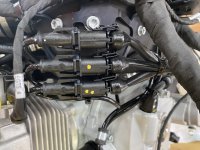
 
Yes, I do. They seem to think the injectors are plugged up good and will need to be replaced or professionally clean, but also believe the ignition coil is a culprit. There are so many things at this point it COULD be the odds of me being able to adequately identify it are infinitesimal.

I'm sending an email to Brett now.
Bob - I’m curious. Wouldn’t this be covered under the Rotax warranty? Including diagnosis and repair?
 
I never purge my 912. Funny I just check the oil level before I put my plane to bed after flying👍 I kinda like old school carby’s for the reasons listed amongst these pages👍
Purging and ‘burping’ are two different things. What you are talking about is the pre flight burping process. Purging is done when first filling the oil system.
Cheers DaveH
 
I haven't done anything. I pore through three different manuals and have not found a single spot with any step by step. As I indicated, the ROTAX engine is still a bit of a mystery to me. I have a couple of names of people to contact, one of whom I've asked to take the job of tracking it down but I have not heard back. Other than Lockwood, it's near impossible to find local Rotax experts. I also need to get the whole B.U.D.S thing so that I can give people some decent data rather than just shooting darts. One iRMT declined because he doesn't have enough experience with injected engines.

One thing that would be helpful if when people cite the manual, if they could cite a specific section and page, that would be super great.

The answer may well be just spending the time and money on a good Rotax course but that can't happen until winter, which pushes solving the problem to late spring/early summer next year.

As I mentioned to someone - I think it was here - I'm quickly aging out of this project and if someone made a halfway decent offer, I'd unload this plane in a minute. If I do end up getting it fixed and running, I'll probably sell it the minute it's out of Phase I.

The Rotax courses are a good idea for anyone that owns the engine. That said, my take is that if you already have reasonable technical skills and know how to use tools the hands-on value is limited. Like a lot of courses you do some disassembly and re-assembly. The real takeaway is how to use the Rotax documentation and buying in to the overall maintenance philosophies. Rotax documentation is incredibly thorough, but it's also spread out of over several different manuals and documents. The training gets you used to digging through those and finding things. This may be helpful to you.

The other important thing to understand is that the Service and Maintenance courses don't teach much in terms of diagnosis. When they say service and maintenance, they mean those terms very specifically as applied to items on services schedules and a selection of common inspection and repair scenarios. If here is diagnostic advice, it's from sidebar type conversations that you could have now by getting the right people on the phone. I'm gad to help find things in the docs for you, probably best done via private message to avoid rabbit holes.

I wish I were closer and could give you a hand. Aside from the BUDS software to download the logs, there is also diagnostics software that is not widely distributed. If you aren't finding someone nearby with IS experience it's unlikely that you will find someone with the diagnostics software because you have to have taken the IS Diag' course to have 'license' for the software. Mainly I want to set the right expectation for you that plugging in the dongle will give you limited information. People typically send that file out to one of the service centers for review which is the best route, but there are a handful of IRMT who have now taken the diag course and can also help. Either way if you don't mind, I'd like to review the files as a learning opportunity.

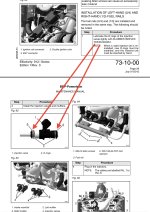
Were you able to do a quick visual check of the crank position sensors? Your engine seems like it's of the same time frame as mine so it probably had the same markings. This is the picture I took before changing the configuration. The number of dots on the two lower connectors are what you look for. Injectors are still a best bet but this is a common install error that is worth ruling out. Swapped connectors giving a rough start with no faults thrown was demonstrated with a running engine in the diag course.

IMG_2903.jpeg
 
The Rotax courses are a good idea for anyone that owns the engine. That said, my take is that if you already have reasonable technical skills and know how to use tools the hands-on value is limited. Like a lot of courses you do some disassembly and re-assembly. The real takeaway is how to use the Rotax documentation and buying in to the overall maintenance philosophies. Rotax documentation is incredibly thorough, but it's also spread out of over several different manuals and documents. The training gets you used to digging through those and finding things. This may be helpful to you.

The other important thing to understand is that the Service and Maintenance courses don't teach much in terms of diagnosis. When they say service and maintenance, they mean those terms very specifically as applied to items on services schedules and a selection of common inspection and repair scenarios. If here is diagnostic advice, it's from sidebar type conversations that you could have now by getting the right people on the phone. I'm gad to help find things in the docs for you, probably best done via private message to avoid rabbit holes.

I wish I were closer and could give you a hand. Aside from the BUDS software to download the logs, there is also diagnostics software that is not widely distributed. If you aren't finding someone nearby with IS experience it's unlikely that you will find someone with the diagnostics software because you have to have taken the IS Diag' course to have 'license' for the software. Mainly I want to set the right expectation for you that plugging in the dongle will give you limited information. People typically send that file out to one of the service centers for review which is the best route, but there are a handful of IRMT who have now taken the diag course and can also help. Either way if you don't mind, I'd like to review the files as a learning opportunity.

Were you able to do a quick visual check of the crank position sensors? Your engine seems like it's of the same time frame as mine so it probably had the same markings. This is the picture I took before changing the configuration. The number of dots on the two lower connectors are what you look for. Injectors are still a best bet but this is a common install error that is worth ruling out. Swapped connectors giving a rough start with no faults thrown was demonstrated with a running engine in the diag course.

View attachment 94213
I have not done that. First I'll need to find how to do that.
 
I have not done that. First I'll need to find how to do that.
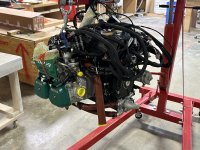
To add some perspective to Nate’s photo, this is my engine just after lifting out of the crate. If you zoom in, you can see the CPS plugs with the yellow dot markers in the center, just in front of the large red coolant hose. Just check to be sure they aren’t connected backwards (they have to be unplugged, then reconnected when hanging the engine (KAI Section 46iS, p. 2).
 

Attachments

  • IMG_3664.jpeg
    IMG_3664.jpeg
    2.5 MB · Views: 94
Bob - I’m curious. Wouldn’t this be covered under the Rotax warranty? Including diagnosis and repair?
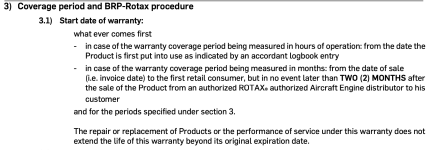
I can find no actually warranty terms other than :

  • For non-certified engines: 18 months or 200 hours, whatever comes first
That, of course, doesn't tell me when the clock begins. At purchase? At first engine start?

One of the things I'm running into is where to turn for professional advice. I haven't been able to get anyone to return my calls or answer my emails. There's Rotax the company, then there's Lockwood. What's their interest ? Did Van's get the engines from them? Do I talk to Van's. It's all very confusing.
 
You should be able to get warranty info from one of the three U.S. distributors: Lockwood (East), Advanced Powerplant Solutions (Central), and Motive Aero (West); all of these are under Kodiak Research, the main distributor for the western hemisphere, based in Nassau, Bahamas (the original shipping sticker on my engine crate was from Kodiak).
 
I can find no actually warranty terms other than :

  • For non-certified engines: 18 months or 200 hours, whatever comes first
That, of course, doesn't tell me when the clock begins. At purchase? At first engine start?

One of the things I'm running into is where to turn for professional advice. I haven't been able to get anyone to return my calls or answer my emails. There's Rotax the company, then there's Lockwood. What's their interest ? Did Van's get the engines from them? Do I talk to Van's. It's all very confusing.

Unfortunately, I think you're going to be out of warranty. See my screen cap below.

John described the distributor structure well. All of the distributors are fairly busy, some (Lockwood) more busy than others. For all of them, it may be difficult to get immediate attention going directly to them. I would not expect Van's to be in a great position to support the engine, and they seem to have a supply chain that is outside the 'Big 3' and I would expect warranty and support to defer to one of them.

It's unfortunate that you can't get a local tech to respond. Your local tech would have been through training and probably has a relationship to leverage for the more difficult questions. I know that if you were local to me and I could be hands on with the engine, I would be able to get through to Motive if there was a need for more support.

Screenshot 2025-08-05 at 1.52.01 PM.png
 
I have messaged you a Rotax mechanics phone # . good luck with the rv. hope he can give you some guidance.
 
Purging and ‘burping’ are two different things. What you are talking about is the pre flight burping process. Purging is done when first filling the oil system.
Cheers DaveH
Yes you’re correct, purge and or burping, the later I don’t do👍
 
I’m sorry. AAPTS is that air box plug. CPS is the crank position sensor. Marked with a pair or dots or a yellow stripe depending on the vintage of the engine. They are removed and routed around the mount during installation and can be installed reversed.
Crankshaft position or Cam position sensor? I'm not familiar with how Rotax does valve position sensing.
 
Crankshaft position or Cam position sensor? I'm not familiar with how Rotax does valve position sensing.
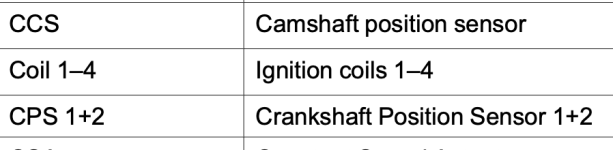
The connectors I am recommending a look at are crankshaft position sensors, CPS. There are two and they are removed during installation. Cam position sensor is referred to as CCS.

Screenshot 2025-08-06 at 1.19.32 PM.png
 
I’m sorry. AAPTS is that air box plug. CPS is the crank position sensor. Marked with a pair or dots or a yellow stripe depending on the vintage of the engine. They are removed and routed around the mount during installation and can be installed reversed.


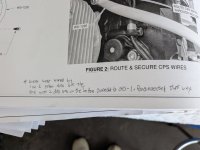
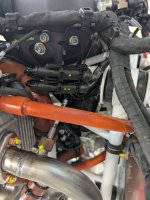
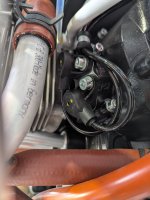
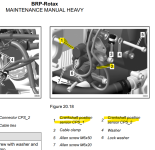
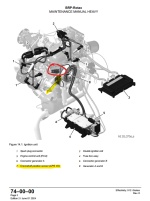
As you can see from my original installation notes, the CPS 1 out of the box was connected to the middle connector as depicted in the Van's figure (which comes from the Heavy Maintenance Manual). BUT, the only yellow mark was a single yellow dot on the wire (not the connector) on the bottom connector. According to the Heavy Maintenance Manual, the yellow dot indicates the connector for CPS 1.

Curiously, my notes seemed to indicate a wire had two dots and THAT was connected to CPS 1. But today I could find no evidence of two dots.

Hmmm, what to do. At the time, I decided to make the connections as they were out of the crate.

Today, I swapped positions and attached the CPS1 to the connector whose wire had a yellow dot.

It made no difference when starting the engine.

Now, I'm not really sure what configuration these wires should have . I'll have to research where these wires go after that connection point and figure out which one is which.
 

Attachments

  • PXL_20250807_165823358.jpg
    PXL_20250807_165823358.jpg
    393.3 KB · Views: 20
Last edited:
Bob,

There are two Crankshaft Position Sensors, they are on the left rear of the engine. You need to check that you reinstalled the connectors to the proper sensor.

CPS Connectors.jpg

CPS in block.jpg

CPS location MMH.png

CPS MMH.png
 
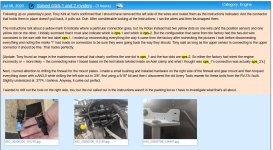
Check out this builder log update from five years ago. I need to start over.

Good that you have notes and this is at least running to ground before going deeper with injectors, etc.

It should not be a big deal, just swap the connectors at the harness end. Aside from loosening the ADEL or clipping a zip tie you should not need to go any further than that.
 
Back
Top