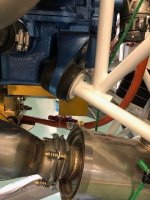
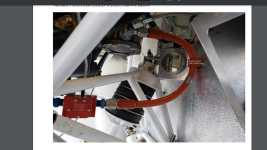
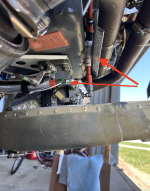
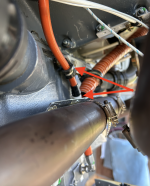
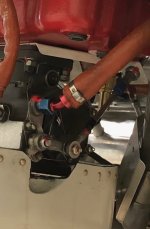
Following this thread if there’s any updates. I’ve been battling the same issue with my RV-8. With the cowling off it’ll idle and run smooth as silk. As soon as I install it, it idles on but still runs slightly rough with an occasional hiccup if you will. I’ve insulated the red cube, I’m close to a point of relocating it with different fuel lines etc. (insulating the red cube was a low cost method that greatly improved but didn’t solve the problem)
Its a work in progress. I've collected data.
RIght now my aircraft is down for modifications. Before I took it down I insulated fuel lines with an alminized heat shield wrap made of fiberglass cloth. I have discovered fuel flows over about 7.5 gph no heat issues exist at OAT of 75F When power is pulled back and fuel slows down then fuel speed slows down and has time to heat up. The fuel heats up in the lines, in the pump and in the fuel servo.
The data shows my cowl aft of the oil filter was 140F. The fuel pump heats up fuel 10-14F. The servo inlet fitting heated up the fuel with a power reduction. At 65% power it was reasonable. When power was reduced it increased from 118F to 132F. I think the high power with high fuel flow and more air flow kept the servo cooler. WHen I reduced power then the cooling force is removed from a hot engine and it takes time to cool. That when I saw some signs of stress.....specifically I saw my fuel flow give bad numbers....impossible numbers. I'm calling it vapor in the paddle wheel.
All these issues cause poor idle. I made progress with insulating the fuel lines. I had a fuel line on my bench and inserted a thermocouple inside of it then put it in my Turkey Roaster at 250F. I saw a 100F temp rise (from 60F to 160F) in 4 minutes. Fuel hose with integral fire sleeve has little insulation value. When I wrapped it with the reflective aluminized wrap it took 11 minutes.
I want
-my cowl cooler.
-my fuel cool enough to be able to climb then pull power back and fly at 5 gph with no signs of stress.
- to pull the power back abeam the numbers and not hear any hot fuel issues when its 90F. I hear other aircraft at my airport, and i think some have similar issues.
I will be
-using more firesleeve to improve insulation value.
-finshing up installing my Ceramic Treated Vetterman Crossover Exhaust. It is a cornerstone culprit to my hot cowl. I removed it to have it treated.
-flying with fabricated parts that will allow direct cool air flow thru a 1" diameter sceet tubing that enshrouds one of the longer fuel lines in my cowl.
-I will not be able to test these changes for another week.
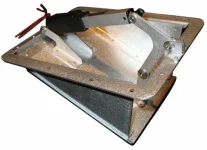
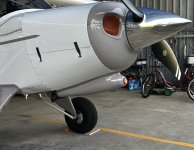
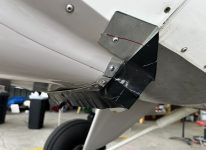
-incorporating cowl exit modifications iaw this thread. See post #9 & #18. (My cowl has the vans lower cowl scoop installed)
Van's has published OP-58, an optional (OP) plan set which describes the installation of lower-cowl louvers in the RV-6/6A. RV-7/7A and RV-9/9A engine cowls (note: this kit does not fit other model cowls). The louvers may be used where additional exit air flow, such as for cooling purposes, is...
vansairforce.net
I wonder about
-cooling down the servo....blow cool air on it, or try to insulate it from the oil sump by installing a piece of phenolic sheet between the two.
-finding where the low pressure areas are on the outside lower cowl and installing louvers there to get more heat out of it.
I glad that others don't have fuel heat issues and glad you asked. This issue is fixable. Its always great to collaborate and brainstorm together.
I reached out to another on this forum and his suggestion was to insulate the lines with a double layer of fire sleeve and install a dual electric fuel pump module (Like SDS) and ditch the engine driven fuel pump. I'd like to take 10-15F degrees of heat out of the system and that would do it.