

Van's Air Force
You are using an out of date browser. It may not display this or other websites correctly.
You should upgrade or use an alternative browser.
You should upgrade or use an alternative browser.
Power settings for Airventure arrival
- Thread starter RNB
- Start date


Smilin' Jack
Well Known Member
I expect this will be my first year flying to Airventure and want to begin working on flying 90 knots.
What power settings work for you in your 10?
And is this for indicated airspeed?
Thank you, I'll take my answer off the air.
I expect this will be my first year flying to Airventure and want to begin working on flying 90 knots.
What power settings work for you in your 10?
And is this for indicated airspeed?
Thank you, I'll take my answer off the air.
Smilin' Jack
Well Known Member
I know I might get some reply's that are negative to the response. But I fly the high arrival at 135 knots. Or I believe is 155 mph.
There is nothing that states you can not fly the higher altitude
It keeps you away from J-3’s and other aircraft that can not go that fast. Plus your at the higher altitude and you generally get the 9-27 runway.
In my 12 years if going to Oshkosh never had an issue with any controllers. Works for me!
There is nothing that states you can not fly the higher altitude
It keeps you away from J-3’s and other aircraft that can not go that fast. Plus your at the higher altitude and you generally get the 9-27 runway.
In my 12 years if going to Oshkosh never had an issue with any controllers. Works for me!
1900 RPM or thereabouts. MP varies a bit as I adjust for spacing - I don’t remember the number, but it s fairly low.. 90 knots indicated for the low arrival stream.

Auburntsts
Well Known Member
True, nothing says you can’t, but per the NOTAM the high arrival @ 135 KTS is for aircraft that can’t comfortably fly at 90 which is definitely not the case for an RV-10.I know I might get some reply's that are negative to the response. But I fly the high arrival at 135 knots. Or I believe is 155 mph.
There is nothing that states you can not fly the higher altitude
It keeps you away from J-3’s and other aircraft that can not go that fast. Plus your at the higher altitude and you generally get the 9-27 runway.
In my 12 years if going to Oshkosh never had an issue with any controllers. Works for me!
For the OP, try 16” and one notch of flaps and see what that gets you. Practice maintaining 1000 AGL and a ground track at 90 KTS. Then find an uncontrolled airport that’s not busy and practice the Osh pattern which is a very tight close in pattern descending from the downwind to a spot landing, ideally at or near the weight you think you’ll be coming to Osh at. But the bottom line is there’s no panacea here- you’ve got to get up and dial all of this in for yourself in the air.
Last edited:
Yep, practice before you get there. The 90knt/105mph speed is easily doable. My RV-4 stalls clean at around 60mph indicated so that's 45mph to play with. You can't fly the approach you fly at home. You need to start your decent on downwind and you will be very close in. About mid field I pull the power and go full flaps and DMMS which for me is 84mph indicated. Roll into a 30 degree bank or more and hold the DMMS until I'm lined up with the runway then go to VREF which is 70mph indicated for me. Use power or slip to adjust touch down point. To maintain level flight a 90knts I am barely off idle. Fly it like you are trying to hit the numbers then stretch it down to where they want you to land with power. To give you an idea of how close in you will be I fly my normal approach with the runway at about my wingtip. At Oshkosh it will be about halfway down the wing. Plan on joining the conga line at Endeavor Bridge to give you some time to get stabilized.
Actually, you want to begin flying at 75-80 knots. Cannot tell you how many times I got stuck flying 80 knots with numerous drops to 75 or less. One year it was 75 knots all the way from portage behind a cub. Actually, it was always moving 70-80 because the cub couldn't hold an altitude and slowed on every climb. The radio was a constant stream of "90 knots man!'. I always go up and fly for 30 minutes at these speeds, including turns, each year as it is not something we get a lot of practicing doing. Some day I hope to go to OSH and fly 90 kts the whole way through the line, but hasn't happened yet. Maybe just bad luck for me.I expect this will be my first year flying to Airventure and want to begin working on flying 90 knots.
What power settings work for you in your 10?
And is this for indicated airspeed?
Thank you, I'll take my answer off the air.
Need to be quick on the throttle at these speeds, so better to practice doing whatever it takes to hold a low spped vs trying to come up with a set and forget power level. Your throttle hand gets a work out trying to hold 70 kts in the convection of a warm August day..
Last edited:
I definitely was in the conga line when they made somebody go to the end of the line because they were flying the high-speed approach in an aircraft that could fly the low-speed approach. Perhaps you can get away with it but at least one person didn't.
On the other hand, with two Oshkosh arrivals in an RV-10 I haven't had any issues flying 70-90kt. Just get half flaps out and it will fly all day at those speeds.
On the other hand, with two Oshkosh arrivals in an RV-10 I haven't had any issues flying 70-90kt. Just get half flaps out and it will fly all day at those speeds.
IMO, an important safety measure is to pre-determine an “I’m outta here” speed. There are times when the inbound line slows to a point where you need to exit the line and rejoin later. In the -6, with half flaps I am good down to about 65 knots, about 70 in the -10. I can fly 10 knots slower in either aircraft, but want to leave some margin for the unexpected.
It doesn't matter what the power setting is. Use whatever power setting leads to 90 kts in level flight.
You are going to witness a lot of very poor flying skills, so be extra careful and fly "defensively".
BTW there are very few airplanes that "need" the 135 knot approach. Any model in the Van's RV series are not those airplanes.
You are going to witness a lot of very poor flying skills, so be extra careful and fly "defensively".
BTW there are very few airplanes that "need" the 135 knot approach. Any model in the Van's RV series are not those airplanes.
I expect this will be my first year flying to Airventure and want to begin working on flying 90 knots.
It's worth mentioning -- it's really nice to have at least one other pilot in the cockpit with you when you do this, especially for your first time.
- From my perspective, the most dangerous part is merging in to the end of the line. It's nice to have two or even three sets of eyes for this. One person flying, one person watching ADS-B traffic, and one looking outside.
- Flying in the line isn't particularly hard depending on what other people do. Again, great to have at least two sets of eyes to keep an eye on ADS-B plus visually.
- There are four terminal procedures for the four runways, but by the time you are in line you'll know which two are in use. It's a good idea to print each of these out and have a second person in the plane who can handle these. Discard the two that aren't being used while in line, and then when you get assigned the runway they can reference the correct procedure for you. Depending on the runway, you may need to make some fairly quick actions after you are assigned a runway and that's not a good time to be reading the procedures.

I know I might get some reply's that are negative to the response. But I fly the high arrival at 135 knots.
Or maybe just a lot of folks quietly thinking "What a ####".

Your post mentions monitoring ADSB more than twice.It's worth mentioning -- it's really nice to have at least one other pilot in the cockpit with you when you do this, especially for your first time.
- From my perspective, the most dangerous part is merging in to the end of the line. It's nice to have two or even three sets of eyes for this. One person flying, one person watching ADS-B traffic, and one looking outside.
- Flying in the line isn't particularly hard depending on what other people do. Again, great to have at least two sets of eyes to keep an eye on ADS-B plus visually.
- There are four terminal procedures for the four runways, but by the time you are in line you'll know which two are in use. It's a good idea to print each of these out and have a second person in the plane who can handle these. Discard the two that aren't being used while in line, and then when you get assigned the runway they can reference the correct procedure for you. Depending on the runway, you may need to make some fairly quick actions after you are assigned a runway and that's not a good time to be reading the procedures.
GMAB! Can you name a more congested airspace with less aircraft that are likely to not have ADSB? IT'S THE EAA... you know, planes without electrical systems flock there.
Everyone in the plane should have eyes outside. Play video games when you get home.

All good advice above, but I would add to practice right traffic pattern turns to final as that is what you will get for 27. Not something I get much around here.Your post mentions monitoring ADSB more than twice.
GMAB! Can you name a more congested airspace with less aircraft that are likely to not have ADSB? IT'S THE EAA... you know, planes without electrical systems flock there.
Everyone in the plane should have eyes outside. Play video games when you get home.
Norman CYYJ
Well Known Member
My best advice to you is to learn how to fly your airplane, before going to KOSH.

Agreement with all above......except for monitoring the ADS-B. You can do that at Portage or Baraboo but NOT in the Conga Line. Here: take a deck of cards.....or two decks and throw them up in the air in your living room. When they land on the floor, that is what your ADS-B will look like as you get closer to OSH . EYES OUT!! Yes, it is a very good thing to have people with you, especially those used to watching for/seeing aircraft, as they will be coming from EVERYwhere! They should also be well-versed at telling you WHERE those airplanes are: 10 o'clock low; 3 o'clock and turning into us. (That means people will have to be familiar with an analog clock......don't get me started.......!) 'I see one over there' and pointing is not helpful. When you are practicing your slow speed, YOU should also be practicing flying and maintaining your 80-90kts WHILE LOOKING FOR TRAFFIC yourself. Some people don't have friends and will be coming to OSH solo! Read this month's SPORT about chasing airspeeds. You should be comfortable with flying slowly and making TURNS while at those speeds. Practice at altitude first. How much flap do you want? What do turns feel like with full flaps, if needed. What happens if you have to slip on final with full flaps? Done that before?
Patterns for all runways are pretty tight, especially 9/27. As stated above, 27 turns will be RIGHT turns downwind to base and base to final. You should be comfortable with that....and from less than 'pattern altitude'. The most worrisome for us Volunteers watching from Vintage is the turn from base to final for 18. That turn is low, slow and TIGHT. You will be low enough after your turn to final it will be 3 potato 4 potato and you will be landing on the Yellow Dot on the runway. Practice those. Practice go-arounds. Not everyone landing at OSH does what they are told and you might hear White RV-10: GO AROUND GO AROUND. You should have practiced that and then have all your PRE LANDING CHECKLIST CHECKED AGAIN as you get back 'in line', which is usually done so as to quickly put you back in the pattern.
Fuel up before you get close, for several reasons: you want to have enough fuel to divert; you want enough to be wandering around Green Lake for multiple laps; fuel at OSH is a monopoly and is a little $$PRICY$$.
EAA has videos about what all this looks like without the OSH traffic. Those are worth watching.
PRACTICE; PRACTICE; PRACTICE! Be comfortable with your airplane in all its phases.
That said, 13,000 airplanes will have done all of the above safely and landed at OSH around and during the time of The Event. That means that YOU can also do all this. All it takes is awareness of what is going to happen and.............what was that other thing??.................................Oh, yeah: PRACTICE!!
See you at OSH! Come down and visit VINTAGE while you are there. We have some pretty cool old airplanes in our area!

. EYES OUT!! Yes, it is a very good thing to have people with you, especially those used to watching for/seeing aircraft, as they will be coming from EVERYwhere! They should also be well-versed at telling you WHERE those airplanes are: 10 o'clock low; 3 o'clock and turning into us. (That means people will have to be familiar with an analog clock......don't get me started.......!) 'I see one over there' and pointing is not helpful. When you are practicing your slow speed, YOU should also be practicing flying and maintaining your 80-90kts WHILE LOOKING FOR TRAFFIC yourself. Some people don't have friends and will be coming to OSH solo! Read this month's SPORT about chasing airspeeds. You should be comfortable with flying slowly and making TURNS while at those speeds. Practice at altitude first. How much flap do you want? What do turns feel like with full flaps, if needed. What happens if you have to slip on final with full flaps? Done that before?Patterns for all runways are pretty tight, especially 9/27. As stated above, 27 turns will be RIGHT turns downwind to base and base to final. You should be comfortable with that....and from less than 'pattern altitude'. The most worrisome for us Volunteers watching from Vintage is the turn from base to final for 18. That turn is low, slow and TIGHT.
You will be low enough after your turn to final it will be 3 potato 4 potato and you will be landing on the Yellow Dot on the runway. Practice those. Practice go-arounds. Not everyone landing at OSH does what they are told and you might hear White RV-10: GO AROUND GO AROUND. You should have practiced that and then have all your PRE LANDING CHECKLIST CHECKED AGAIN as you get back 'in line', which is usually done so as to quickly put you back in the pattern.Fuel up before you get close, for several reasons: you want to have enough fuel to divert; you want enough to be wandering around Green Lake for multiple laps; fuel at OSH is a monopoly and is a little $$PRICY$$.
EAA has videos about what all this looks like without the OSH traffic. Those are worth watching.
PRACTICE; PRACTICE; PRACTICE! Be comfortable with your airplane in all its phases.
That said, 13,000 airplanes will have done all of the above safely and landed at OSH around and during the time of The Event. That means that YOU can also do all this. All it takes is awareness of what is going to happen and.............what was that other thing??.................................Oh, yeah: PRACTICE!!
See you at OSH! Come down and visit VINTAGE while you are there. We have some pretty cool old airplanes in our area!
Last edited:

Every year, like clockwork…

ChiefPilot
Well Known Member
Every year, like clockwork…
You're absolutely correct.
And the sad thing, to me, is that being able to comfortably fly 90kts and maintain altitude while looking outside for traffic shouldn't be viewed as some kind of special skill. Yet, as you point out, every year we hear about people who aren't confident in their ability to do.
Sad, really.

I start getting uncomfortable when my oil temp climbs above 225. Extended flight at 90 knots is exactly what happens on a hot summer day. I sure don’t want to chug along for 30 miles at 90 knots. I’ve never done the Congo line, don’t want to, but if I did, I’d be flying the high arrival. The rules still apply that the pilot in command is is directly responsible for and is the final authority as to the operation of that aircraft.True, nothing says you can’t, but per the NOTAM the high arrival @ 135 KTS is for aircraft that can’t comfortably fly at 90 which is definitely not the case for an RV-10.
For the OP, try 16” and one notch of flaps and see what that gets you. Practice maintaining 1000 AGL and a ground track at 90 KTS. Then find an uncontrolled airport that’s not busy and practice the Osh pattern which is a very tight close in pattern descending from the downwind to a spot landing, ideally at or near the weight you think you’ll be coming to Osh at. But the bottom line is there’s no panacea here- you’ve got to get up and dial all of this in for yourself in the air.
If your oil temps are headed that way, it might be time to take a look at your cooling setup. Neither my -6 or my -10 have a problem flying a lengthy arrival at 90 knots. Yours shouldn't have a problem either.I start getting uncomfortable when my oil temp climbs above 225. Extended flight at 90 knots is exactly what happens on a hot summer day. I sure don’t want to chug along for 30 miles at 90 knots. I’ve never done the Congo line, don’t want to, but if I did, I’d be flying the high arrival. The rules still apply that the pilot in command is is directly responsible for and is the final authority as to the operation of that aircraft.
While I am perfectly fine with 90 knots, I would rather fly 135...If your oil temps are headed that way, it might be time to take a look at your cooling setup. Neither my -6 or my -10 have a problem flying a lengthy arrival at 90 knots. Yours shouldn't have a problem either.
It doesn't matter, though, because I'm not doing either. I much prefer to fly in to a different airport, hangar my -10 and drive the last 35 minutes to osh.
I much prefer to enjoy the show instead of worrying about my -10. Having seen some of the shenanigans in the last couple of years, coupled with the summer storms, well, it would ruin the show for me. No, I am definitely NOT camping under the wing.
Interesting that you comment on that. Based on your comment I am pretty sure you are not flying your 6 with an angle valve engine. Parallel valve engines don’t have this problem as these cylinders are not oil cooled. I’ve built two RV7’s both with angle valve engines and 13 row coolers. I’ve also assisted in the firewall forward install of a 14 with the thunderbolt 390 which is angle valve, and did the phase one flight testing on these aircraft and all three run 185 at normal cruise speeds. Slow down and all three at slow extended periods see temps climb north of 225.If your oil temps are headed that way, it might be time to take a look at your cooling setup. Neither my -6 or my -10 have a problem flying a lengthy arrival at 90 knots. Yours shouldn't have a problem either.
Do those aircraft have cylinder wraps? How about fairings smoothing the exit airflow? Maybe cowl flaps? A cooling plenum? All of those things can help.Interesting that you comment on that. Based on your comment I am pretty sure you are not flying your 6 with an angle valve engine. Parallel valve engines don’t have this problem as these cylinders are not oil cooled. I’ve built two RV7’s both with angle valve engines and 13 row coolers. I’ve also assisted in the firewall forward install of a 14 with the thunderbolt 390 which is angle valve, and did the phase one flight testing on these aircraft and all three run 185 at normal cruise speeds. Slow down and all three at slow extended periods see temps climb north of 225.
I’ve been watching a ton of Airventure/Fisk arrivals on YouTube lately (too soon??? Nah….) and I’m amazed at the number of pilots I see fiddling with all the gizmos they have in their panels and seemingly putting eyes out as a secondary resource. Granted, Adsb is great for maintaining spacing, provided EVERONE in the conga line has in and out and EVERYONE can maintain 90kts. But we all know neither is the case.
If only we could get the eaa to say that in the airventure brochure! Would be so much easier.My best advice to you is to learn how to fly your airplane, before going to KOSH.
PilotjohnS
Well Known Member
I’ve been watching a ton of Airventure/Fisk arrivals on YouTube lately (too soon??? Nah….) and I’m amazed at the number of pilots I see fiddling with all the gizmos they have in their panels and seemingly putting eyes out as a secondary resource. Granted, Adsb is great for maintaining spacing, provided EVERONE in the conga line has in and out and EVERYONE can maintain 90kts. But we all know neither is the case.
This was real easy for me. I was on otto During the arrival. Alt hold was set to altitude in notam. Power was set to keep 1 mile in trail. Heading knob was turned to fly recommended track. Otto on g3x made it really easy.I’ve been watching a ton of Airventure/Fisk arrivals on YouTube lately (too soon??? Nah….) and I’m amazed at the number of pilots I see fiddling with all the gizmos they have in their panels and seemingly putting eyes out as a secondary resource. Granted, Adsb is great for maintaining spacing, provided EVERONE in the conga line has in and out and EVERYONE can maintain 90kts. But we all know neither is the case.
Auburntsts
Well Known Member
What Kyle said. At 90KTS you are at a very reduced power setting not like a Vx climb at full power. I can fly around all day at 90 KTS in my 10 at 1000AGL here in Florida in July and never have oil temps anywhere near 225*.I start getting uncomfortable when my oil temp climbs above 225. Extended flight at 90 knots is exactly what happens on a hot summer day. I sure don’t want to chug along for 30 miles at 90 knots. I’ve never done the Congo line, don’t want to, but if I did, I’d be flying the high arrival. The rules still apply that the pilot in command is is directly responsible for and is the final authority as to the operation of that aircraft.
I agree, I can fly all day long in my friend’s RV10 at 1000 feet and 90 knots. But I don’t own an RV 10. I own an RV7 with an angle valve engine. Report back after you’ve flown a 7 or 14 with angle valve engine for 30 miles at 90 knots at 1000 feet and tell me what your oil temps areWhat Kyle said. At 90KTS you are at a very reduced power setting not like a Vx climb at full power. I can fly around all day at 90 KTS in my 10 at 1000AGL here in Florida in July and never have oil temps anywhere near 225*.

Auburntsts
Well Known Member
Ok chief. The OP flies an RV-10 so the discussion, if you didn’t pick up on it, was centered on that model as was the advice. I make no assertions as to the other models because A. I have no knowledge on them and B. I don’t care.I agree, I can fly all day long in my friend’s RV10 at 1000 feet and 90 knots. But I don’t own an RV 10. I own an RV7 with an angle valve engine. Report back after you’ve flown a 7 or 14 with angle valve engine for 30 miles at 90 knots at 1000 feet and tell me when your oil temps are

225F does not hurt the oil or engine. IIRC, 245F is the max oil temp.
Your post mentions monitoring ADSB more than twice.
GMAB! Can you name a more congested airspace with less aircraft that are likely to not have ADSB? IT'S THE EAA... you know, planes without electrical systems flock there.
Everyone in the plane should have eyes outside. Play video games when you get home.
It's a good point. For my last trip we had three pilots in the plane, and I definitely think it was worthwhile to have one watching ADS-B when trying to merge into the end of the line. There are aircraft coming from all directions and you can adjust your speed/approach to try to arrive with sufficient separation. The other two pilots (in the front seat) had eyes outside. I can't recall how much ADS-B was useful once in line, though.
I fully agree with this. Couple years ago there were about 10+ planes (flight of 3 or 4 in addition to individuals) all trying to join the line around portage at the same time/place. The screen was invaluable in anticipating and finding a slot. Yes, I looked out the window and yes, I know that there are planes not reported on adsb. It is a tool and in this case, a valuable one, as I never would have been able to visually capture and track that many moving targets. I had my son with me (PPL student at the time) and we shared the load. I used the screen to manage things and he looked out the window, 360*, trying to capture any traffic within a mile of our position and call them out.It's a good point. For my last trip we had three pilots in the plane, and I definitely think it was worthwhile to have one watching ADS-B when trying to merge into the end of the line. There are aircraft coming from all directions and you can adjust your speed/approach to try to arrive with sufficient separation. The other two pilots (in the front seat) had eyes outside. I can't recall how much ADS-B was useful once in line, though.
It is also invaluable for finding line cutters that may hit you. Once in the line, it is hard to focus on anything but staying above stall while not hitting the guy in front of you when the line is going 70 kts. On this same trip, the adsb showed a plane setting up to cut in front of me while I worked hard at keeping separation behind the 70kt cub. After about 10 minutes of 65-70 kt flying, I had finally got a reasonable amount of space behind him and apparently that became tempting for some [redacted slang] that was clearly a VIP not required to go to the end of the line. I saw it on ADSB and got on the radio and said "Don't even THINK of cutting in front of me!!" in the loudest voice I could followed by his N number, which I got from adsb. He quickly turned off and this prompted another controller warning about turning back line cutters at fisk.
It can be scarry out there and we should be using all the tools in our bag.
This is not to scare the new guys, but should be a warning of some of the craziness that occurs on Sunday. If this is concerning, don't attempt a Sunday arrival. I have only done Sundays, but I simply can' believe it is like this on the other days.
Last edited:
What goes up must come down.
An aircraft on the high route merges with the low traffic by descending into it, blind. The process is entirely dependent on monitoring by controllers, who are often task saturated. In the big picture, minimizing traffic on the high route is a desirable goal. It becomes more and more desirable as traffic increases.
Dropping into the downwind fast and blind is not safe, but the planners can't eliminate it, as the population does include aircraft who really do require 135 knots for safe operation. A loaded Baron has a published single engine speed of 83 knots. The trusty C-90 King Air has a published Vmca of 90 knots. These and others like them belong on the 135 knot route. It puts them 40 to 50 knots above their minimum speeds.
Typical RV stall speed is around 55 knots. As a fleet, we're sporting lots of excess power, and have zero handling challenges. There are no safety issues in flying any RV at 90, or 80, or even 70. Although 70 may be an irritant, let's be real...we all fly 65, maybe 70 on every approach.
So, let's wise up. Anyone can claim "I'm special", but these days I'm pretty sure society calls that a Karen. Don't be Karen. If you've built an RV incapable of standard performance, stay home, or land at Fond du Lac and take the bus.
An aircraft on the high route merges with the low traffic by descending into it, blind. The process is entirely dependent on monitoring by controllers, who are often task saturated. In the big picture, minimizing traffic on the high route is a desirable goal. It becomes more and more desirable as traffic increases.
Dropping into the downwind fast and blind is not safe, but the planners can't eliminate it, as the population does include aircraft who really do require 135 knots for safe operation. A loaded Baron has a published single engine speed of 83 knots. The trusty C-90 King Air has a published Vmca of 90 knots. These and others like them belong on the 135 knot route. It puts them 40 to 50 knots above their minimum speeds.
Typical RV stall speed is around 55 knots. As a fleet, we're sporting lots of excess power, and have zero handling challenges. There are no safety issues in flying any RV at 90, or 80, or even 70. Although 70 may be an irritant, let's be real...we all fly 65, maybe 70 on every approach.
So, let's wise up. Anyone can claim "I'm special", but these days I'm pretty sure society calls that a Karen. Don't be Karen. If you've built an RV incapable of standard performance, stay home, or land at Fond du Lac and take the bus.
Last edited:
Ok so i went and did some flying.
Right pattern work I think I was too close in , maybe 1500 ft off for downwind. What I measure on google says 3000 is normal for 09/27.
I’m not that worried about 36.
18 the base seems mighty tight. I measured things for my airport and am flying that some, landed ok yesterday.
90 kts more concerning, not using Otto for it yet. Power settings oh so low.
I like the higher altitude idea, hope more weigh in on this.
When do you descend from 2300?
Right pattern work I think I was too close in , maybe 1500 ft off for downwind. What I measure on google says 3000 is normal for 09/27.
I’m not that worried about 36.
18 the base seems mighty tight. I measured things for my airport and am flying that some, landed ok yesterday.
90 kts more concerning, not using Otto for it yet. Power settings oh so low.
I like the higher altitude idea, hope more weigh in on this.
When do you descend from 2300?
Auburntsts
Well Known Member
I concur with your assessment that1500 is a bit tight. What the Fisk controllers will tell you is fly the downwind inside the gravel pit to the North of the airport and off the dep end of 27. You’ll start your decent at about midfield and turn base basically abeam the numbers so it’s gonna look very low and tight to hit the orange dot. Pay close attention to airspeed (don’t get too slow) and don’t be afraid to go around—they’ll simply sequence you back into the downward.Ok so i went and did some flying.
Right pattern work I think I was too close in , maybe 1500 ft off for downwind. What I measure on google says 3000 is normal for 09/27.
I’m not that worried about 36.
18 the base seems mighty tight. I measured things for my airport and am flying that some, landed ok yesterday.
90 kts more concerning, not using Otto for it yet. Power settings oh so low.
I like the higher altitude idea, hope more weigh in on this.
When do you descend from 2300?
I beg you not to go the high route— there’s simply no reason to do it . The 10 flys just fine at 90, especially if you add a notch of flaps to lower the nose.
If you really don’t feel comfortable flying the arrival at 90 and you’re instrument rated another option is to get an IFR arrival reservation via the eSTMP program per the NOTAM and fly in that way. That’s what I’ve been doing these past few years as it greatly simplifies the whole arrival procedure.
Last edited:

Here is a fundamentally important key to be thinking about on the approach for 27 at OSH. At your normal everyday run of the mill approach at any airport you land at, your downwind to base turn will occur approximately 1 mile beyond the end of the runway. At OSH that downwind to base turn will be at the END OF 27! That is what throws many people off their game. Don’t let that throw you! Why? Because that ORANGE dot on 27 is WAYYY down the runway from the end of the runway. RVs (including RV10s) are easily able to make that downwind/to base/to final approach and land on the orange dot. In fact one year our group of around 5 RVs were asked to put it down on the numbers and make the first turn off before the orange dot to expedite our landings to clear an inbound War Bird Island arrival coming in behind us from the East over Lake Winnebago. All 5 of us successfully did so with ease.I concur with your assessment that1500 is a bit tight. What the Fisk controllers will tell you is fly the downwind inside the gravel pit to the North of the airport and off the dep end of 27. You’ll the start your decent at about midfield and turn base basically abeam the numbers so it’s gonna look very low and tight to hit the orange dot. Pay close attention to airspeed (don’t get too slow) and don’t be afraid to go around—they’ll simply sequence you back into the downward.
I beg you not to go the high route— there’s simply no reason to do it . The 10 flys just fine at 90, especially if you add a notch of flaps to lower the nose.
It can be done. It has been done, for many many years, by many many pilots. Those of us who have done it for many many times are the same kind of pilot as you. You can do it! Keep practicing!
Here is a fundamentally important key to be thinking about on the approach for 27 at OSH. At your normal everyday run of the mill approach at any airport you land at, your downwind to base turn will occur approximately 1 mile beyond the end of the runway. At OSH that downwind to base turn will be at the END OF 27! That is what throws many people off their game. Don’t let that throw you! Why? Because that ORANGE dot on 27 is WAYYY down the runway from the end of the runway. RVs (including RV10s) are easily able to make that downwind/to base/to final approach and land on the orange dot. In fact one year our group of around 5 RVs were asked to put it down on the numbers and make the first turn off before the orange dot to expedite our landings to clear an inbound War Bird Island arrival coming in behind us from the East over Lake Winnebago. All 5 of us successfully did so with ease.
It can be done. It has been done, for many many years, by many many pilots. Those of us who have done it for many many times are the same kind of pilot as you. You can do it! Keep practicing!
This confuses me. When I watch videos of approaches the base turn is happening a lot closer to the water.
I am under the impression that the tight turn downwind to final is 18.

18 seems tightest to me. But for 27 base turns over the water are usually happening because the controllers need to extend traffic downwind for spacing, or (more typically) because someone doesn’t follow the rule of beginning their descent while on downwind.This confuses me. When I watch videos of approaches the base turn is happening a lot closer to the water.
I am under the impression that the tight turn downwind to final is 18.
This is the way.You’ll the start your decent at about midfield and turn base basically abeam the numbers
By the way, if you’ve got more than one set of eyes onboard, I think an occasional glance at ADS-B can be helpful. It’s the only warning we got of the 170 who passed us on the right, freeway style, and CLOSE, just short of FISK last time.
 We were trying to do 90, but the guy in front of us had other ideas. He also wasn’t great at holding altitude.
Auburntsts
Well Known Member
This will make it clearer:This confuses me. When I watch videos of approaches the base turn is happening a lot closer to the water.
I am under the impression that the tight turn downwind to final is 18.
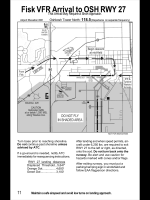
Again watch your speed on that base to final turn. I watched a plane stall and pancake in on that turn one year. Only minor injuries IIRC but it could have been worse.
This will make it clearer:View attachment 82787
Again watch your speed on that base to final turn. I watched a plane stall and pancake in on that turn one year. Only minor injuries IIRC but it could have been worse.
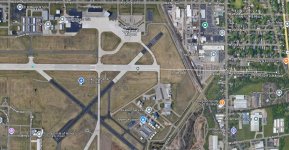
It makes it clearer that I think I understand it the same. Turn base prior to shoreline. See attached for me 3000 ft. It does not say to turn base at the runway like it does for blue dot runway.
Attachments
Auburntsts
Well Known Member
The shoreline is the limit. The controllers will often tell you to bing it to the numbers especially if they want you to land on the green dot. Be prepared. And as you will have started your decent at midfield you will be much lower on base and final so it will look very abnormal. It’s very much akin to an IAP circling approach.It makes it clearer that I think I understand it the same. Turn base prior to shoreline. See attached for me 3000 ft. It does not say to turn base at the runway like it does for blue dot runway.
The controllers will call your base. They will turn you when they need you to turn. Having said that, they do not want the line extending out to the lake so they want tight turns when possible. As was mentioned, if things get bottlenecked on the downwind they will extend some planes further out on downwind but that only adds to the congestion later on.It makes it clearer that I think I understand it the same. Turn base prior to shoreline. See attached for me 3000 ft. It does not say to turn base at the runway like it does for blue dot runway.
What I am saying is practice a tight approach. Expect things outside your normal 1 mile from the end of the runway before turning base. Expect to be descending on downwind. Expect to land 1/4, 1/2, 3/4 of the way down the runway. Expect to turn base abeam the numbers. So, practice those scenarios.
Norman CYYJ
Well Known Member
practice at your home airport if traffic allows by pulling the power to idle mid down wind or abeam the numbers and make all your landings at idle power. This will give you a lot more confidence. Back when I learned to fly i didn't know what a power on approach was till the last couple of hours of my training.

Load your plane up to the payload you’ll be carrying in and figure those settings out for yourself. That’s the only way to properly figure it out. Check your stall speeds out too, loaded down. Practice spot landing too. Also, watch videos on the arrivals to familiarize with it. It’s chaotic to say the least. Good luck. It’s one heck of an adventure. Not sure about the 10,I expect this will be my first year flying to Airventure and want to begin working on flying 90 knots.
What power settings work for you in your 10?
And is this for indicated airspeed?
Thank you, I'll take my answer off the air.
But I have a 4 and had a -7, the CG changes drastically from full tanks to reserves loaded down with gear, more aft CG with just reserves and it lands much differently loaded down with min fuel. Just a little something else to factor in. Be safe and have fun.
Last edited:
Sadly, my daughter and I, along with a few friends, watched a Lanceair Legacy overshoot the centerline, then overbank and stall/spin onto the dirt at the end of 27. No survivors. Again, not an arrival we are generally used to getting. Practice to get confident and proficient. A go-around is always an option.This will make it clearer:View attachment 82787
Again watch your speed on that base to final turn. I watched a plane stall and pancake in on that turn one year. Only minor injuries IIRC but it could have been worse.

This is great advice - I know when I put the little lady in the back, with a couple of her bags, my landings are different than when I'm alone. Throw in the fact that you might be a bit tired, need to use the WC, and coming off the adrenaline of the near-miss you just experienced in the congo line, it's good to practice.Load your plane up to the payload you’ll be carrying in and figure those settings out for yourself. That’s the only way to figure it out. Check your stall speeds out to loaded down. Practice spot landing too. Also, watch videos on the arrivals to familiarize with it. It’s chaotic to say the least. Good luck. It’s one heck of an adventure.
Especially true in the 10. With back seats empty, you are significantly nose down on final. Load it up to gross and you are flat.This is great advice - I know when I put the little lady in the back, with a couple of her bags, my landings are different than when I'm alone. Throw in the fact that you might be a bit tired, need to use the WC, and coming off the adrenaline of the near-miss you just experienced in the congo line, it's good to practice.
18 is the tightest pattern. That is why the tower stays with 36 until absolutely necessary to use 18. There have been several fatal accidents in the distant past base to final and even on the runway on 18.This confuses me. When I watch videos of approaches the base turn is happening a lot closer to the water.
I am under the impression that the tight turn downwind to final is 18.
Many decades ago as a new Commercial Piot I was flying the entire Piper single engine line, the Twin Commanche and Aztec, Beech 18 and Aero Commander 560. In addition to my Wittman Tailwind and a bunch of other airplanes. With the exception of the multi engines I mostly just got in them and checked myself out.
I don't remember ever asking "what power setting do I need to fly 90 knots"
Anyone who asks that question needs additional training.
Children of the magenta line!!!
I don't remember ever asking "what power setting do I need to fly 90 knots"
Anyone who asks that question needs additional training.
Children of the magenta line!!!
Many decades ago as a new Commercial Piot I was flying the entire Piper single engine line, the Twin Commanche and Aztec, Beech 18 and Aero Commander 560. In addition to my Wittman Tailwind and a bunch of other airplanes. With the exception of the multi engines I mostly just got in them and checked myself out.
I don't remember ever asking "what power setting do I need to fly 90 knots"
Anyone who asks that question needs additional training.
Children of the magenta line!!!
I kind of agree.
After I had MANY hours of instrument instruction where I either failed to internalize or had not been taught the importance ofpitch/power settings for various phases of flight it has likely caused a bias towards knowing these numbers before flying. It made a world of difference in my IFR proficiency. It is one of the first things I looked into as I was buying an RV coming from the 172 world.
