Van's Air Force

The definitive Van's Aircraft support community! Buying, building or flying an RV? Join our exclusive family of mentors and enthusiasts!

My Mags are ALIVE!!! All the time… even when switched off…

Beejer

Member
Got an old O-320 engine off of a Cessna (probably) with the dreaded dual mag off of one mechanical output. That’s really not the problem though (though it will be solved in a future update when I try something really dumb… 😉).

The problem is my wiring. Messed up putting my new panel in and wired them to the positive… bad Ben. Now I have them sorted properly to the ground as the great googlie mooglie in the sky intended. BUT they still won’t turn off. I can ground both of them… engine starts. Ground one… engine starts. Turn them both on… engine starts. It’s a good problem I guess that the engine wants to always keep running but it does seem like a safety factor in case I bump into the propeller too hard or something.

Wiring and switches are all continuous and working. Each mag feeds into its own 12v switch and the starter is on a separate push button switch (I lose keys like crazy so nothing in my life has them).

So did I cook them into an always on fail state? Do I have to say some magic words to make them turn off? I’ve said a few words already… they might not be magic ones though.

As a bonus I’ll pre-ask this… can’t get my alternator to energize. It’s wired right now to complete the out and back loop. But if someone has some words to describe the correct wiring as if you were describing it to a small child…

I thank anyone who takes mercy on me in advance.
 
Got an old O-320 engine off of a Cessna (probably) with the dreaded dual mag off of one mechanical output. That’s really not the problem though (though it will be solved in a future update when I try something really dumb… 😉).

The problem is my wiring. Messed up putting my new panel in and wired them to the positive… bad Ben. Now I have them sorted properly to the ground as the great googlie mooglie in the sky intended. BUT they still won’t turn off. I can ground both of them… engine starts. Ground one… engine starts. Turn them both on… engine starts. It’s a good problem I guess that the engine wants to always keep running but it does seem like a safety factor in case I bump into the propeller too hard or something.

Wiring and switches are all continuous and working. Each mag feeds into its own 12v switch and the starter is on a separate push button switch (I lose keys like crazy so nothing in my life has them).

So did I cook them into an always on fail state? Do I have to say some magic words to make them turn off? I’ve said a few words already… they might not be magic ones though.

As a bonus I’ll pre-ask this… can’t get my alternator to energize. It’s wired right now to complete the out and back loop. But if someone has some words to describe the correct wiring as if you were describing it to a small child…

I thank anyone who takes mercy on me in advance.
Is the mag itself grounded? Often done by using the braid on a shielded P lead.
What alternator? Internal or external regulator? Either way, there is usually a ‘field circuit’ that needs to be energized (12 volts) for the alternator to work.
 
The problem is my wiring. Messed up putting my new panel in and wired them to the positive… bad Ben. Now I have them sorted properly to the ground as the great googlie mooglie in the sky intended. BUT they still won’t turn off. I can ground both of them… engine starts. Ground one… engine starts. Turn them both on… engine starts. It’s a good problem I guess that the engine wants to always keep running but it does seem like a safety factor in case I bump into the propeller too hard or something.

If you haven't already, disconnect all the plug leads. This is a serious safety issue on the ground, and there's no need for an engine to be in an operational state while you're trying to fault-find bad magneto wiring.

The path from the p-lead terminal on each magneto to the crank case should be open circuit when the ignition is on, low resistance when the ignition is off.

With all the plug leads disconnected, run a wire to short the p-lead terminal to the crank case. You shouldn't get spark when you turn over the engine on the starter. If you do, your mag probably has an internal fault and should not be used until it's fixed.

You should have a nice hefty ground wire from the engine case to the airframe. The ignition switches probably won't work if the magneto is electrically isolated from the rest of the aircraft: Shorting the p-lead to the earthing block behind the instrument panel isn't going to shut off the mags if the earthing block isn't at the same potential as the engine.

For god's sake, whatever you do, disconnect all the plug leads until this is dealt with. Don't get yourself killed trying to chase a wiring fault.

- mark
 
Scary situation you are describing!
If you think the mags are live, take precautions against accidental engine start.
Stay clear of the prop! Prevent anybody else going near that prop! Solidly secure the plane from moving if it does accidentally start! Put signage on the plane advising all PLANE UNSAFE, KEEP CLEAR!
Sorry for all the exclamation marks but in this case they are warranted.

ASAP- disconnect all spark plug wires till you figure out the P-lead switches.
Sounds like you have 2 toggle switches for your mags, each switch should have a wire (P-lead) going to that terminal on that respective mag, the other wire off the switch should go directly to GROUND.
Mags have nothing to do with 12volt power at all.
 
Got an old O-320 engine off of a Cessna (probably) with the dreaded dual mag off of one mechanical output. That’s really not the problem though (though it will be solved in a future update when I try something really dumb… 😉).

The problem is my wiring. Messed up putting my new panel in and wired them to the positive… bad Ben. Now I have them sorted properly to the ground as the great googlie mooglie in the sky intended. BUT they still won’t turn off. I can ground both of them… engine starts. Ground one… engine starts. Turn them both on… engine starts. It’s a good problem I guess that the engine wants to always keep running but it does seem like a safety factor in case I bump into the propeller too hard or something.
Your mag toggle switches should be mounted "upside down", in other words, when the switch is flipped "up" to turn on the mag the switch is electrically open (actually in the "off" position) so the mag is ungrounded. When the switch is "down" to kill the mag the switch is closed (actually "on") which shorts the P-lead to ground and prevents the mag from firing. This is a HUGE safety issue, be absolutely certain you understand how this system works and should be wired!

I don't understand your "12v" comment........
 
So as to the 12v comment, I meant that they fed into 12 volt rated switches, thinking that maybe they have too much resistance to ground the system. Would this matter?

Okay so dumb question time… the P-leads are the things that come off the back of the mags that are supposed to be grounded to turn off the mags?

And where is the engine supposed to ground from and too? And if I’m just grounding the mags directly, where does that attach to the mags? My mags are attached directly to the engine so I would think the engine ground would ground them but… something is not right somewhere.

As to how to make this safe… disconnecting the battery won’t do it as mags are self energizing? So yes… spark plugs out is the only way correct?

Concerning thing most to me is this is how the airplane came into my possession. I am simply re-hooking old wiring thinking I was safe as I hadn’t changed anything on the engine directly. Guess it really is better to just start from the ground up and build it yourself.

Thanks for the concern and advice. I will endeavor my best not to get dead or un-alive anyone else.
 
So as to the 12v comment, I meant that they fed into 12 volt rated switches, thinking that maybe they have too much resistance to ground the system. Would this matter?
Yes ‘12 volt rated’ switches are fine.
Okay so dumb question time… the P-leads are the things that come off the back of the mags that are supposed to be grounded to turn off the mags?
P-lead is the wire between the back of the mag and mag ignition switch. It is most likely (or should be) wrapped in a wire mesh shield. At the mag, center wire should be connected to the terminal (there should be insulator washers on that terminal to insulate the center wire from the mag case). The mesh shield should be connected to mag housing.
At the switch end, the center wire (P-lead) should be connected to one terminal on the switch & the mesh shield connected to the other terminal.
And where is the engine supposed to ground from and too?
The engine should be grounded to either the engine mount, or firewall, or directly to the negative cable on the battery. It should be at least as thick as the cable going to the starter. It could also be a thick wire mesh strap instead of a cable.
And if I’m just grounding the mags directly, where does that attach to the mags?
There should be a screw on the back of each mag, screws right into the mag case
My mags are attached directly to the engine so I would think the engine ground would ground them but… something is not right somewhere.

As to how to make this safe… disconnecting the battery won’t do it as mags are self energizing? So yes… spark plugs out is the only way correct?
Unplug ALL spark plug wires.
Concerning thing most to me is this is how the airplane came into my possession. I am simply re-hooking old wiring thinking I was safe as I hadn’t changed anything on the engine directly. Guess it really is better to just start from the ground up and build it yourself.
You really need help in checking your work (& maybe the original builders work too). Get friendly with a local builder, or mechanic.
Thanks for the concern and advice. I will endeavor my best not to get dead or un-alive anyone else.
 
So I think you’ve all found the problem. The wires coming off the mags are NOT shielded wires (just normal 18 gauge wire) and I’ve been grounding off the main ground for the panel and not the case of the mag directly.

Next question, can I use the wires coming out of the mag as one leg and add a return wire to the mag case? How important is the wire shielding or is done as an easy way to run both legs of the circuit?

Thank you all again for your help. Invaluable as always.
 
Next question, can I use the wires coming out of the mag as one leg and add a return wire to the mag case? How important is the wire shielding or is done as an easy way to run both legs of the circuit?
If you read the free book here, you will become an expert at this, be able to fix your problems, understand aircraft wiring, and probably use this knowledge to help others.


Worth a read for any pilot, and most certainly for anyone attempting to add or change wiring to an aircraft.
 
There are some pictures of the magneto wiring in here.


View attachment 67560
P-Lead wires from magnetos to switch(s) on instrument panel do NOT need to be shielded, the shield is for noise suppression ONLY. Your #18awg wires WILL function properly as P-Lead grounding wires. As a troubleshooting step - remove your #18awg wires from Magneto's completely, replace with a single wire or clip lead from the P-Lead terminal to the ground terminal ON THE MAG (both Mag's please). In this configuration - if the engine starts then there is an issue with the feed-thru capacitors in the magneto's. You can take the top cover off the magneto's, remove the spade terminal connecting to points - then using an ohm meter check continuity from inside terminal to outside terminal (should be very low impedance (as in a dead short). Another thing to check & verify - there should be a LARGE ground cable from the engine case directly to the firewall structure. This ground wire carries starter & alternator return current as well as grounding all engine mounted sensors etc to aircraft frame - If this wire is missing or corrupt it is possible grounding the P-Leads to the instrument panel would have little to no effect on Mag operation.
Good Luck.
 
Got an old O-320 engine off of a Cessna (probably) with the dreaded dual mag off of one mechanical output. That’s really not the problem though (though it will be solved in a future update when I try something really dumb… 😉).

The problem is my wiring. Messed up putting my new panel in and wired them to the positive… bad Ben. Now I have them sorted properly to the ground as the great googlie mooglie in the sky intended. BUT they still won’t turn off. I can ground both of them… engine starts. Ground one… engine starts. Turn them both on… engine starts. It’s a good problem I guess that the engine wants to always keep running but it does seem like a safety factor in case I bump into the propeller too hard or something.

Wiring and switches are all continuous and working. Each mag feeds into its own 12v switch and the starter is on a separate push button switch (I lose keys like crazy so nothing in my life has them).

So did I cook them into an always on fail state? Do I have to say some magic words to make them turn off? I’ve said a few words already… they might not be magic ones though.

As a bonus I’ll pre-ask this… can’t get my alternator to energize. It’s wired right now to complete the out and back loop. But if someone has some words to describe the correct wiring as if you were describing it to a small child…

I thank anyone who takes mercy on me in advance.
I have a solution for your dual mag. Tried and tested. you'll find some posts from me about 10 years ago, but essentially I modified a standard mag to fit the hole and added EI for the other side. I have a doc if you want it, pm me.
 
So I think you’ve all found the problem. The wires coming off the mags are NOT shielded wires (just normal 18 gauge wire) and I’ve been grounding off the main ground for the panel and not the case of the mag directly.

Next question, can I use the wires coming out of the mag as one leg and add a return wire to the mag case? How important is the wire shielding or is done as an easy way to run both legs of the circuit?

Thank you all again for your help. Invaluable as always.
In the picture posted above of the magneto, it can be slightly mis-leading. the two ring terminals are showing one way to connect your mags. But you DO NOT connect the shield to
one pole of the switch, and the white conductor to the other. that will not ground your mags.

It is recommended to use aircraft Shielded wire. The conductor (white wire) gets a ring terminal on the end connected to the mag, then goes directly to your switch, then another wire directly to ground, as in the ground bus, or direct airframe ground. The shield shown in the pic above gets a ring terminal on one only and is just trimmed back two inches or so, from the end at the switch. The conductor wire is the only thing that really matters to ground the mag. The shield helps reduce radio noise and connecting it only to one end, with the other end being left doing nothing reduces radio noise from electrical interference.

It used to be standard practice to use the shield to connect from the switch, to ground, but in the big picture what matters is having one wire connected to one terminal of the switch and the other end of that wire going to the P-lead (ring terminal or termination to the Magneto) then the other pole or connection point on the switch going to another wire and directly to airframe ground.

in simple terms: Magneto to wire, to one switch pole, other switch pole to ground.

You MUST have a grounding bond wire to the Engine, directly from either the master solenoid, or directly to the Battery negative terminal, which should be the same size wire or bigger, as used for the starter. Size 0, or braided welding ground strap or something.

Effectively, you are "grounding" the mag, by connecting the P-lead indirectly to the battery negative post, to shut it off.

There's lots of ways to do this, but what matters is that the Mag is grounded, otherwise it's hot all the time and a huge liability to anyone around it.

Definitely remove all spark plug leads, until this is solved.

If you need more help sorting this out, I'll give you my number, if you need.


Steve.
 
So as to the 12v comment, I meant that they fed into 12 volt rated switches, thinking that maybe they have too much resistance to ground the system. Would this matter?

Okay so dumb question time… the P-leads are the things that come off the back of the mags that are supposed to be grounded to turn off the mags?

And where is the engine supposed to ground from and too? And if I’m just grounding the mags directly, where does that attach to the mags? My mags are attached directly to the engine so I would think the engine ground would ground them but… something is not right somewhere.

As to how to make this safe… disconnecting the battery won’t do it as mags are self energizing? So yes… spark plugs out is the only way correct?

Concerning thing most to me is this is how the airplane came into my possession. I am simply re-hooking old wiring thinking I was safe as I hadn’t changed anything on the engine directly. Guess it really is better to just start from the ground up and build it yourself.

Thanks for the concern and advice. I will endeavor my best not to get dead or un-alive anyone else.
I'm not trying to be insulting but

I STRONGLY recommend you step away from the aircraft and engage someone who knows what they are doing to help you

This is a recipe for loss of life and/or limb
 
The reasons for not connection g the P-lead shield at both ends include: 1. It's a better RFI shield with only one end grounded. 2. It prevents the starter from using the shield as a return ground path if anything ever causes the heavy-duty engine ground strap to lose continuity - bad enough melting your throttle and mixture cables in this way without also letting the smoke out of the P-lead braid.

Agree you should read Nuckolls' book cover to cover before messing with this. Most of us did the same or equivalent.
 
Okay so more info. As recommended sparks are unplugged. Fuel is shut off and carb is choked out. I can’t stop there from being oxygen in the air but I’ve covered two of the three things that make fire burn.

I understand there could be some fuel in a line somewhere to make it cough over once or twice (how without spark or air?) thus ending my dumb self? Please let me know the danger here so I don’t kill myself. Or am I so dumb I should just set fire to the airplane and walk away?

I understand people are just trying to help and I came here just because I know this is a community that has always been a great support on my flying journey. BUT telling someone to just stop moving is not helpful if they’re standing blind on the edge of a cliff. Telling them that the FALL is going to kill them if they take two steps forward because gravity is a harsh mistress and to NOT die they should take two steps to the right and find the path again is more helpful in my book.

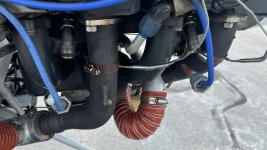
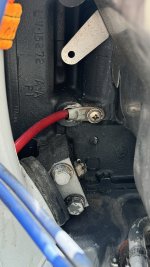
So back to this being a forum to learn and share in. I have pics of everything now. Engine is grounded. Panel is grounded. Both grounds are connected through the engine mount.

My routing for the runs is P-leads come out the back of the mags. They run directly to the cut off switch. The cut off switch has a line running directly to the panel ground. But that doesn’t ground the P-leads somehow and I’m able to start the engine.

My next step is to run the grounding lines out of the switches directly to the mags. I think I’ve found the bolts they’re supposed to attach to on the mag.

And final additional find on the trip to the airport today, the P-leads are able to move in and out in their mounts. Are they not touching something inside the socket that they are supposed to by touching?

Again can’t thank everyone enough for their help. I love learning this stuff and this community is an amazing library of knowledge and experience.

And rest assured there will be an AP checkout before anyone takes this machine anywhere.
IMG_8454.jpeg
 

Attachments

  • IMG_8468.jpeg
    IMG_8468.jpeg
    1.6 MB · Views: 80
  • IMG_8465.jpeg
    IMG_8465.jpeg
    1.5 MB · Views: 85
  • IMG_8464.jpeg
    IMG_8464.jpeg
    1.1 MB · Views: 83
  • IMG_8461.jpeg
    IMG_8461.jpeg
    3.3 MB · Views: 76
  • IMG_8458.jpeg
    IMG_8458.jpeg
    2.7 MB · Views: 77
  • IMG_8459.jpeg
    IMG_8459.jpeg
    2.2 MB · Views: 82
  • IMG_8457.jpeg
    IMG_8457.jpeg
    2 MB · Views: 82
  • IMG_8456.jpeg
    IMG_8456.jpeg
    2.8 MB · Views: 81
  • IMG_8455.jpeg
    IMG_8455.jpeg
    2.8 MB · Views: 74
My routing for the runs is P-leads come out the back of the mags. They run directly to the cut off switch. The cut off switch has a line running directly to the panel ground. But that doesn’t ground the P-leads somehow and I’m able to start the engine.
This tells me that your inst. panel, airframe, and engine do not have a common ground. Something is "floating" somewhere. OR your mags are damaged internally.
 
Take the p lead out of the mag and show us a picture of the end of the wire. You may be missing the insulator.
See this thread- https://vansairforce.net/threads/bendix-p-lead-kit.55988/
Comments after seeing pictures:
1. You have the older style P--Lead connections which screw-on AND it sounds like they may be loose AND/OR not making a solid reliable connection to the magneto.
For an exploded view - follow the link in Jabarr's post #18. Attached here in is a link to adapters typically used when adjusting Mag timing to an engine & the ad also gives you color pictures of what the ends of your P-leads need to look like to make a good solid connection.
Link = https://www.aircraftspruce.com/catalog/eppages/magnetoadapters12-03525.php
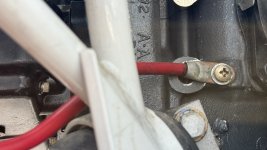
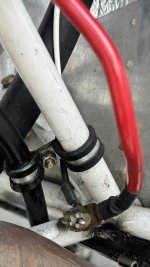
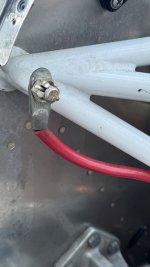
2. Your red engine ground wire is less than optimal in my opinion, it may function but leaves a vast amount of room for improvement.
Hope this helps
 
Last edited:
It is NOT recommended that the engine mount be used for grounding the engine to the firewall. It is OK if the engine mount is grounded. It won't hurt anything. But the engine should be grounded to the firewall using a dedicated ground cable or braided strap independent of the engine mount.
 
I will send pics but it looks like the problem is inside the house! The intruder is inside the house!

Jokes… yeah the p- leads inside look dodgy based on your advice. They look all melted and gross. So that’s gotta be the problem.

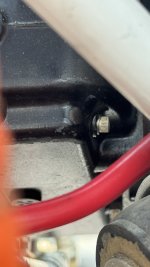
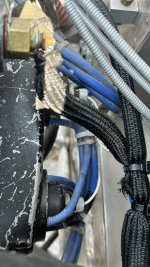
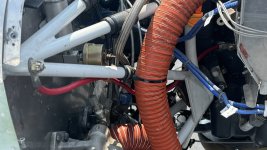
All the grounds are well connected and strong. All are ground to the engine frame. I’m guessing this is non-standard based on the comments. Nothing is grounded to the firewall.

Curious as to why this is bad practice? Has it just not been done? Grounding to steel seems safer as there is no oxidation risk but again I’m am a newbie wandering through the trees…regardless I have good grounds from airframe to engine mount to all grounds attached to the engine mount.

Looks like we found the culprit. You guys are amazing. Thank you again.
 
There is not really anything wrong with grounding to the engine mount. Many airplanes have been done that way. The better way, is to ensure that the bonded ground wire or strap is truly well grounded. I like to use a cotter pinned bolt and nut, in one of the Master Relay mounting bolt holes for my bonding ground, which I take directly from Battery negative, to the bonding bolt location.

grounding to your panel would probably work, as long as the panel is grounded... but there are many better choices.

The P-leads into your mags, the actual connectors...should be an insulator, with a spring and a soldered washer onto the wire if it's the older bayonet style. If that "bayonet" is not seating then the mag could still be hot, when switched off...easy to check with a multi meter...take the connection off the switch that goes to the mag, turn the switch off...and check for continuity to ground, touch one probe to the ring terminal you removed and the other to ground. If not continuous, you found your problem.

I also agree...plug wires off, mixture off...it's not going anywhere.

Using your head is always a good idea....(unless it's in the way of the prop).


Steve.
 
What I don't see in your pictures...is the Bonded ground (red automotive wire) going to BATTERY NEGATIVE, DIRECTLY.

This is muy importante. A BIG wire, needs to go directly from Battery negative post, to a bonding bolt preferably on the firewall, which other ground bonding lines, stem off of.

I don't like using automotive wire anywhere... if it burns it's nasty as hell smelling and makes a mess everywhere...I'd change those out and any other automotive wiring, with aircraft wire.

good job...stick with it...this isn't rocket science and most here are happy to help.

Steve.
 
What I don't see in your pictures...is the Bonded ground (red automotive wire) going to BATTERY NEGATIVE, DIRECTLY.

This is muy importante. A BIG wire, needs to go directly from Battery negative post, to a bonding bolt preferably on the firewall, which other ground bonding lines, stem off of.

I don't like using automotive wire anywhere... if it burns it's nasty as hell smelling and makes a mess everywhere...I'd change those out and any other automotive wiring, with aircraft wire.

good job...stick with it...this isn't rocket science and most here are happy to help.

Steve.
I will send pics but it looks like the problem is inside the house! The intruder is inside the house!

Jokes… yeah the p- leads inside look dodgy based on your advice. They look all melted and gross. So that’s gotta be the problem.

All the grounds are well connected and strong. All are ground to the engine frame. I’m guessing this is non-standard based on the comments. Nothing is grounded to the firewall.

Curious as to why this is bad practice? Has it just not been done? Grounding to steel seems safer as there is no oxidation risk but again I’m am a newbie wandering through the trees…regardless I have good grounds from airframe to engine mount to all grounds attached to the engine mount.

Looks like we found the culprit. You guys are amazing. Thank you again.
you asked a question about should the bayonets move in the sockets...NO...inside the socket the bayonets shouldn't move. in fact...old Bendix, were spring loaded inside, so your bayonet had to contact the spring loaded bullet inside and move it down slightly, or the mag would ground. In other words, if you snipped the mag wire off, and the bayonet stayed seated, you had a live mag, but if you backed the bayonet out, the spring grounded the mag to the case of the magneto itself.

Steve
 
All the grounds are well connected and strong. All are ground to the engine frame. I’m guessing this is non-standard based on the comments. Nothing is grounded to the firewall.
Curious as to why this is bad practice? Has it just not been done? Grounding to steel seems safer as there is no oxidation risk but again I’m am a newbie wandering through the trees…regardless I have good grounds from airframe to engine mount to all grounds attached to the engine mount.
Grounding to the engine mount is not good practice because if the paint/powder-coat is not removed, it can act as an insulator and not allow a good current path.
 
Good info on grounding. Looked like my builder scraped off the powder coat and ground to two bolts on the engine mount. Didn’t picture the panel and battery ground (they’re on the same bolt). But I did check continuity between grounds and also between the grounds and the airframe. All make solid connections. That happy little high pitched beep… who knew that would become such a happy sound in life?

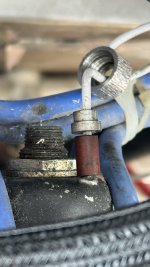
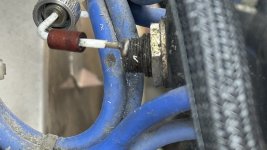
Your addition description of how the inside of the p-leads is basically confirming the problem. They look like melted solder on a stick… and they rattle around in the hole. Gotta be the issue. Again I’ll send photos but it looks like yet another order from Aircraft Spruce. The boss is gonna really be annoyed with the expenditures to that place.

Thanks again. You guys are the best.
 
The boss is gonna really be annoyed with the expenditures to that place.

Thanks again. You guys are the best.
Just remind "The Boss" that safety comes at a price. Spending a little here and there is cheaper than hauling the aircraft out of a pasture. And that's not even mentioning the "bodily harm"aspect!
 
Just remind "The Boss" that safety comes at a price. Spending a little here and there is cheaper than hauling the aircraft out of a pasture. And that's not even mentioning the "bodily harm"aspect!
The real problem is my life insurance policy… I’m worth so much more parted out than as a used vehicle. Any NYC mechanic would say the same thing. 😉

But yes remaining above ground and out of farm fields (not a lot of those in Brooklyn!) is always the goal with all this… $50 seems like the wrong price for 2 cents worth of metal and plastic but if that’s what it takes to keep the spinny thing spinning.
 
Just a reminder that a quality, low-loss ground connection cannot be assured with a typical multimeter - the maximum tolerable resistance is so small that a special circuit such a a Wheatstone bridge is required to measure it accurately. This level of connection quality won't likely be an issue with magneto grounding, but can underlie weak starter motor cranking performance and erratic behavior of the alternator voltage regulator. The "happy little beep" from the continuity checker is not telling you as much as you might think regarding how well the grounding was done by the builder, or what a little surface corrosion may have compromised since day one.

As they say, "It's all in the book..."
 
Good info on grounding. Looked like my builder scraped off the powder coat and ground to two bolts on the engine mount. Didn’t picture the panel and battery ground (they’re on the same bolt). But I did check continuity between grounds and also between the grounds and the airframe. All make solid connections. That happy little high pitched beep… who knew that would become such a happy sound in life?

Your addition description of how the inside of the p-leads is basically confirming the problem. They look like melted solder on a stick… and they rattle around in the hole. Gotta be the issue. Again I’ll send photos but it looks like yet another order from Aircraft Spruce. The boss is gonna really be annoyed with the expenditures to that place.

Thanks again. You guys are the best.
Based on your first post, That's what happens when you connect 12 volt+ to a grounded wire.... the P-lead.... and the smallest wire in the run is sacrificed.
 
So these P-leads don’t looks like the ones I just got from Spruce. Could they be home made?

And now I’ll just ask in case someone wants to weigh in. Best practice to attach the wire to the new leads? They’re the type that thread in and then have a smooth brass post coming out the back. Solder the wire to the post? Thread the post and put a nut to hold the wire on a ring?

I know… I should read the book. Downloaded. Has been started over coffee this morning. I do have some thoughts though…

Despite you guys being awesome and a great source of knowledge, this is not the place I come first when having a problem. I researched this problem for a whole day before I came here asking. Videos, articles, images… this book never came up. Clear answers never came up.

If this is the Fountain of Eternal Wiring Knowledge why is it not the first thing on a search? I’m downloading it off a website that’s giving me flashbacks to downloading pictures of Cathy Ireland on AOL dialup from the 90’s (line by line until you get the whole picture, but if your mom picks up the phone, half of Cathy is digital noise…😢). Good book but it’s hidden in the basement of the internet like the treasure map from Goonies.

If this really is the solution to most aircraft wiring, and from what I’ve read so far it seems to be a great resource, it needs to be easier to find. Especially, as it was pointed out a bunch of times, some moron like myself could get killed not knowing stuff. At very least it should be pinned to the front page of this forum and labeled, “Wiring Help: How to not get electrocuted, fry your expensive airplane boxes or get killed being an idiot”. This is my own two cents… I’m not trying to be insulting (which removes all offense for anything said before, magic phrase).
 

Attachments

  • IMG_8471_Original.jpeg
    IMG_8471_Original.jpeg
    1.4 MB · Views: 96
  • IMG_8473_Original.jpeg
    IMG_8473_Original.jpeg
    1.3 MB · Views: 91
  • IMG_8474_Original.jpeg
    IMG_8474_Original.jpeg
    1.6 MB · Views: 94
That insulator looks too short. You should have to push against the capacitor tab inside the mag to start the p lead threads. That tab will feel like a spring is pushing back. If you got new fittings with a smooth brass post coming out the back, those are not for p lead attachment! Those are strictly for attaching timing light leads. Don’t try to use those with your aircraft wiring.
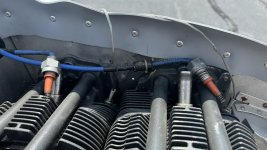
Also, in your first 2 pics, the spark plug lead has been rubbing against the p lead nut- not good.
 
Given the state of your ignition harness...I'd reach out to Maggie Harnesses and just order a brand new one. While no harnesses are cheap these days, I tend to think of them as a life insurance policy.
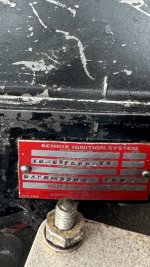
And Jabarr is right on, those are the wrong insulator. Get the number and serial number off each mag, to be sure you get the correct harness for your mags.

Steve
 
I'm not trying to be insulting but

I STRONGLY recommend you step away from the aircraft and engage someone who knows what they are doing to help you

This is a recipe for loss of life and/or limb

Second this. Waaaaay too much learning by trial and error going on here, and it just seems damned dangerous to me.

Get an A&P or someone with experience in RVs to *show* you what the proper methods, tools, components, etc., are, and how to *properly* wire, install, test and use this stuff before doing it based on internet searches, questions on fora and random book reading.

The prop can and will kill you, either because it stops turning when it shouldn't (in flight) or it starts turning when it shouldn't (like when you're working on things and have your head in the prop arc).

This is no place to be self-taught.
 
Thank you RV7A Flyer for your comments. As previously noted there WILL be an AP that comes and checks all this work before ANYONE flies in this aircraft. SAFETY procedures are in place until the mag is sorted (no walking in the arc, spark plugs unplugged).

It won’t turn off even when properly ground. Just wanted to update in case anyone finds this post and wants to sort through to HELP themselves out to a bigger world of knowledge.

I was coming on here to ask a question but I’m just gonna be done. This is such a toxic place.
 
Got an old O-320 engine off of a Cessna (probably) with the dreaded dual mag off of one mechanical output. That’s really not the problem though (though it will be solved in a future update when I try something really dumb… 😉).

The problem is my wiring. Messed up putting my new panel in and wired them to the positive… bad Ben. Now I have them sorted properly to the ground as the great googlie mooglie in the sky intended. BUT they still won’t turn off. I can ground both of them… engine starts. Ground one… engine starts. Turn them both on… engine starts. It’s a good problem I guess that the engine wants to always keep running but it does seem like a safety factor in case I bump into the propeller too hard or something.

Wiring and switches are all continuous and working. Each mag feeds into its own 12v switch and the starter is on a separate push button switch (I lose keys like crazy so nothing in my life has them).

So did I cook them into an always on fail state? Do I have to say some magic words to make them turn off? I’ve said a few words already… they might not be magic ones though.

As a bonus I’ll pre-ask this… can’t get my alternator to energize. It’s wired right now to complete the out and back loop. But if someone has some words to describe the correct wiring as if you were describing it to a small child…

I thank anyone who takes mercy on me in advance.
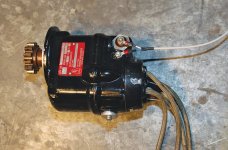
It’s easy enough to test your p leads for continuity. Remove them from the mag, both the p lead center wire and the ground wire, likely the shielding on the wire. Use an ohm meter to see if there is continuity. If not, flip,your mag switch to the opposite position to see if you have continuity. If not, you have a broken p lead wire or it is not correctly wired
actually, you only have to remove the center p lead wire and you can leave the grnd wire attached if you want And test the same way
 
Thank you RV7A Flyer for your comments. As previously noted there WILL be an AP that comes and checks all this work before ANYONE flies in this aircraft. SAFETY procedures are in place until the mag is sorted (no walking in the arc, spark plugs unplugged).

It won’t turn off even when properly ground. Just wanted to update in case anyone finds this post and wants to sort through to HELP themselves out to a bigger world of knowledge.

I was coming on here to ask a question but I’m just gonna be done. This is such a toxic place.
So - Here is a TCM Service document that you may not have (attached) which MAY be generic enough to help you. The P-Leads passes through feed-thru capacitors to the internal points, the caps, as an assembly, provide arc suppression to the points as they open & close AND provide an electrical path from inside to outside the Mag case for grounding the points thus killing the magneto from generating sparks. IF the capacitor "thru" function has failed open, then it would be impossible to inert the magneto using the external P-Lead. Depending on WHERE the open circuit occurred - the capacitor MAY still provide a useful function suppressing arc's inside the magneto thus allowing the magneto to operate normally but with no capability to inert it using the P-lead (in my opinion not a high percentage type failure but possible). Having BOTH L & R side capacitors fail in this manner is statistically improbable, that said - it IS possible that the last person to reassemble the magneto did NOT connect the capacitors to the points internally thus preventing the P-Lead from killing the Mag - but I will honestly say I'm not sure the magneto would work properly without the arc suppressing capacitor since they also store energy to fire the internal coils. If, as you say, the mags are still firing with P-Leads grounded - it IS time to send mag out for a full functional test and repair as required. Hope this helps.
 

Attachments

Back
Top