Van's Air Force

The definitive Van's Aircraft support community! Buying, building or flying an RV? Join our exclusive family of mentors and enthusiasts!

Zener diode for OV protection

Ben Ellis

Well Known Member
Sponsor
I have an externally regulated alternator with crow bar OV protection. Despite their high reliability, they can fail.

I also have an electronically dependent avionics system and I fly IFR. My battery backed up G5 is my last option to get out of the clouds.

If I have an OV event that isn't stopped by the regulator, then I could lose all of avionics, including my G5, and have a dead panel in the clouds and a really bad day.

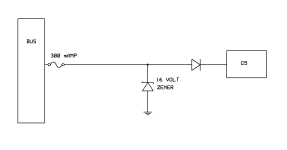
Would splicing a grounded Zener diode with an appropriate breakthrough voltage to the power input of the G5 provide overvoltage protection that would pop the breaker if there was an OV event and save my G5?
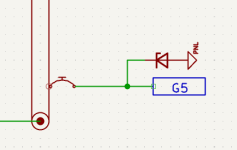
1741490092597.png
 
Don't know the answer to that question, my 69 441 Victor uses a zd for a voltage regulator and the voltage is all over the place. Another thing is if its Garmin you don't need to be to concerned with over voltage.. they can take 40 volts and work fine. I was testing my lectrical system and full fielded the alternator to see how high the voltage would go.. the garmin was showing the voltage, right up to 36 volts and gman was happy as can be. If you have that junk dienon crap you might want to be concerned. GRT should handle an overvolt fine like Garmin will.
 
I suggest you use a relay on the power wire to the G5 and connect the zener diode over the coil on the relay.
If voltage goes above zV the relay will open and the G5 will be powered by the battery. You could ad a reset button if you like.

Good luck
 
If you add a zd only then it is not very robust and you may have quite a few nuisance trip ups due to short votage spikes. Also without a resistor zd will burn in short order leaving you with still the same overvoltage condition likely before the system trips. In case you haven’t seen this, here is a link to aeroelectric crowbar diagram designed to trip the field circuit of an alternator. It should work in your situation too.
 
I have an externally regulated alternator with crow bar OV protection. Despite their high reliability, they can fail.

I also have an electronically dependent avionics system and I fly IFR. My battery backed up G5 is my last option to get out of the clouds.

If I have an OV event that isn't stopped by the regulator, then I could lose all of avionics, including my G5, and have a dead panel in the clouds and a really bad day.

Would splicing a grounded Zener diode with an appropriate breakthrough voltage to the power input of the G5 provide overvoltage protection that would pop the breaker if there was an OV event and save my G5?

View attachment 82460

In order for your G5 to get hurt from overvoltage two things have to happen
1) you have to have an overvoltage event
2) your OVP has to fail.
Just for grins let’s say you have to fly 3000 hours to have an overvoltage condition and that an OVP circuit fails every 3000 hours.
You have to fly 9 million hours to hurt your G5.
 
Fuses and circuit breakers are too slow. A RV6 I was giving transition training in had a OV circuit based on a high current zener and a circuit breaker when the alternator went cattywumpus. The zener blew, breaker remained closed, a few bulbs burned out and radio was damaged.
 
that junk dienon crap you might want to be concerned
ouch this hurts a little bit :ROFLMAO:
good thing I do have a G5 as a backup AI. Also the GDL50 and an IPAD with the Garmin Pilot synthetic vision when things really hit the fan.
 
Last edited:
I don't know how it works, but wouldn't the lightning protection kit for the G5 also protect against overvoltage?
 
What if the zener diode shorts instead of opens? The G5 might already have an input diode. But if not, adding a diode would protect against an input short circuit. A 300 milliampere fuse will blow quickly.
 

Attachments

  • G5.png
    G5.png
    1.3 KB · Views: 8
Last edited:
I've heard of more engine failures/power loss events than I have failures of OVP circuits, or OV events for that matter. Perhaps you might want to consider a second engine as well.
 
In order for your G5 to get hurt from overvoltage two things have to happen
1) you have to have an overvoltage event
2) your OVP has to fail.
Just for grins let’s say you have to fly 3000 hours to have an overvoltage condition and that an OVP circuit fails every 3000 hours.
You have to fly 9 million hours to hurt your G5.
I'm not sure that's the best way to calculate the probability. The OVP could fail or be defective and not be caught. I could be flying along for hundreds/thousands of hours that way, and then have an overvoltage event. Both events don't have to occur for the first time simultaneously. It happens enough that I've come across at least 2 anecdotes on VAF of it happening with an external regulator. For me it's cost benefit. My life is worth a lot more than the $10 in parts I need to buy and install just once.
 
I've heard of more engine failures/power loss events than I have failures of OVP circuits, or OV events for that matter. Perhaps you might want to consider a second engine as well.
By that same logic, why even install overvoltage protection? It's not likely to be an issue right? Why install a boost pump? Your engine pump isn't likely to fail. Why install a backup alternator? You can just pop out of the clouds and land if you lose your alternator.

If it costs very little effort and money to avoid an issue that may be catastrophic at the design phase, why wouldn't you do it?

If my engine fails, I can land the plane as long as I can keep control of it. If I lose all avionics in the clouds, having a working engine doesn't do me much good. Don't they say that the average pilot can keep the plane level for only about 5 seconds when he loses all instruments and ground reference?
 
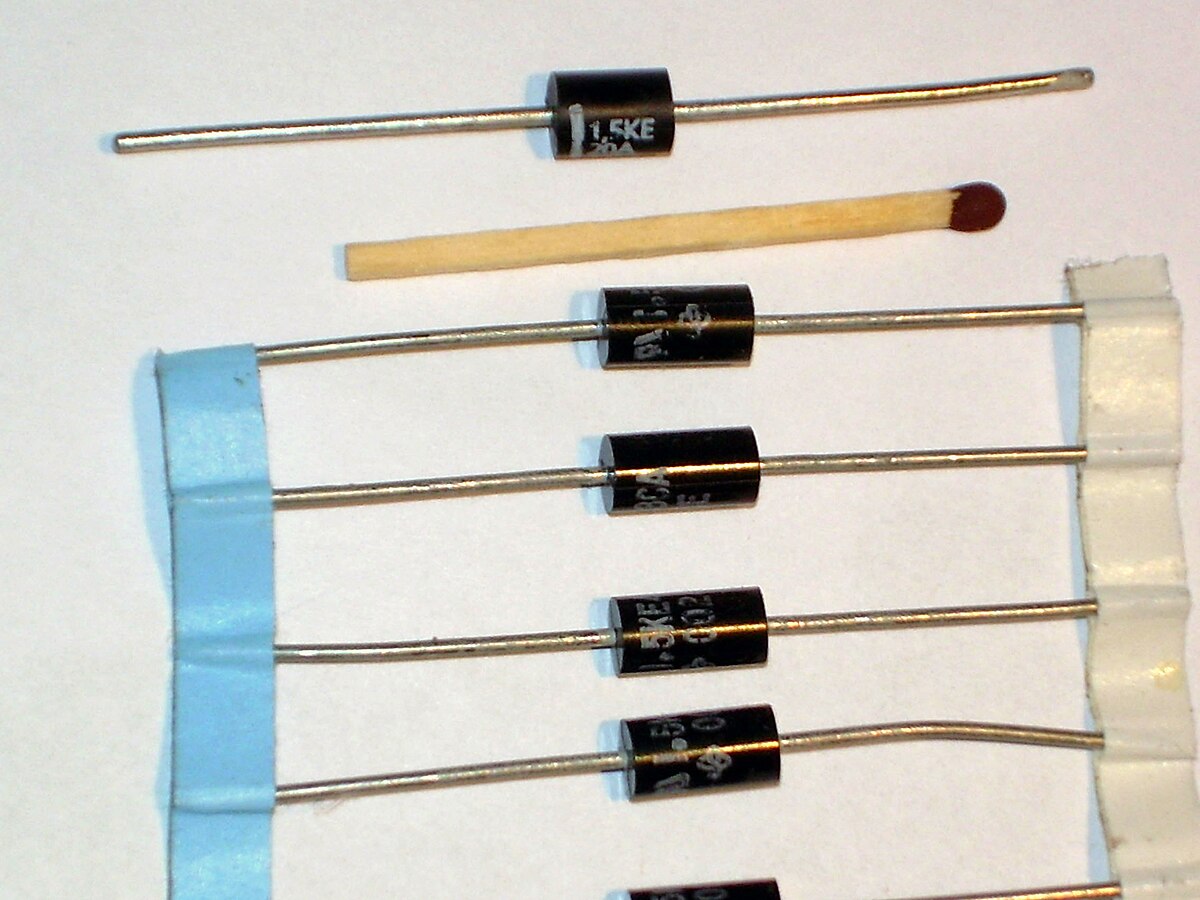
Transient Voltage Suppressors (TVS) might be better choice than a Zener?
They come under different brand or product names. They are robust and their job is to clamp down OV or transient voltages.
What you are doing is called a "CROW BAR", throwing a dead short from Hot to Ground to blow a fuse/CB when voltage exceeds a limit.
There are more elegant circuits with a few semi conductors (fairly simple circuit) vs a single semiconductor (diode alone) that would be even more robust, clamp and then reset if desired,

 
By that same logic, why even install overvoltage protection? It's not likely to be an issue right? Why install a boost pump? Your engine pump isn't likely to fail. Why install a backup alternator? You can just pop out of the clouds and land if you lose your alternator.

If it costs very little effort and money to avoid an issue that may be catastrophic at the design phase, why wouldn't you do it?

If my engine fails, I can land the plane as long as I can keep control of it. If I lose all avionics in the clouds, having a working engine doesn't do me much good. Don't they say that the average pilot can keep the plane level for only about 5 seconds when he loses all instruments and ground reference?

No.

First order risk mitigations are great - we all have them (multiple ignition sources, battery backup on flight instruments, and so on). The crowbar over-voltage protection circuit present in several forms is a salient example. It's there in case the voltage regulator goes nuts, which happens comparatively rarely. Even more rare is the case of a properly designed over voltage protection system failing. As Mikeyb pointed out, if the chance of each of those things failing is 1-in-3000, the chance of both failing at the same time is 1 in 9,000,000. It's *far* more likely you'd lose your engine or suffer some other issue than it would be in having both those issues arise simultaneously.

A proper OVP circuit is pretty straightforward and could be combined with what you already have for multiple levels of OVP redundancy. Properly done, it'd reduce the already negligible risk slightly. Done improperly though, it'll make things worse - and I'd suggest anything that uses just a zener diode plus resistor would fall into that category.

I assume you've performed a failure mode effect analysis (FMEA) for all the risk items you are concerned about? An FMEA will help identify the items that need to have some risk mitigation and also identify those things which are fine as-is.
 
I looked up the weight of zener diodes and TVS devices. Most of them weigh less than one gram and cost less than one dollar. The heaviest zener diode I found weighs 7.5 grams, about the weight of 3 pennies. Mouser
 
I wish OG Dynon Garmin influencers on VAF could find out what the voltage limits actually are for the various components. In my opinion they should be able to provide protection to 65 volts using the power system housekeeping IC’s available.
 
Just did some RTFM and the Dynon HDX system accepts nominal power supply voltage in the range of 10-30V. The manual mentions that there is a "robust" power protection circuit which allows the display and the engine monitor to be active during engine startup. They warn about the contractor/relay diode which must be installed to prevent an up to 100V spike when turning the master off (from the stored energy in the coil). This diode is a pretty standard feature for any relay circuit IIRC but won't hurt to verify/

what kind of over voltage is typical during a runaway 12V alternator event? hopefully it's less than 30V..
 
I'm aware of 1 over voltage event. Club plane, mechanic working on charging system with some wires disconnected. Plane blocked out on the schedule. Student and *CFI* hop in, run up, take off, and get lots of smoke on climb out.
 
What if the zener diode shorts instead of opens? The G5 might already have an input diode. But if not, adding a diode would protect against an input short circuit. A 300 milliampere fuse will blow quickly.
View attachment 82519
Hi Joe, I have a couple of small points. Your zener is drawn upside down, and the series diode protects against wrong polarity, not short circuits. Also, it is nearly impossible to find a zener that would handle the current to cause the fuse to blow. The fusing current is often 10 times the running current. A 50W 16V zener (1N3315) is rated at .780A. An OVP with a SCR would be the best bet.
 
Hi Paul, thanks for commenting. You are right, I just stuck that zener in there without thinking of polarity. I will fix it. The other diode polarity is correct. It protects the G5 backup battery against a shorted zener. I don't understand why zener current would not blow the fuse. The G5 draws 0.2 amps. The fast blow fuse is rated at 0.3 amps. Only 0.15 amps more could blow the fuse and you said the zener can handle 0.78 amps.
 
Hi Paul, thanks for commenting. You are right, I just stuck that zener in there without thinking of polarity. I will fix it. The other diode polarity is correct. It protects the G5 backup battery against a shorted zener. I don't understand why zener current would not blow the fuse. The G5 draws 0.2 amps. The fast blow fuse is rated at 0.3 amps. Only 0.15 amps more could blow the fuse and you said the zener can handle 0.78 amps.
Hi Joe,
What I was talking about with the zener current is that the fuses take about a factor of 10 to blow. The fuse rating is the design current; it can take forever unless you look at some other listings that derate the current the fuse can handle indefinitely. The ambient temperature also affects the current it can handle. You can make an entire career out of trying to size fuses properly. Also, the zeners are designed to work with a resistance in front of them to drop the voltage to the zener rating. It just gets more complicated. That's why I consider the OVP module to be a good choice.

Paul
 
It would probably make more sense to build one of these circuits rather than just adding a single zener diode and hoping it will be able do the crowbar job by itself..

(looks like a little error in the text and the SCR is actually D5 and not D1)

There is also a commercial product likely based on the same idea (Olsen Technologies OVPD) which EarthX recommends
 
Thanks for the information Paul. The OP might consider two OVP, one in parallel with the G5 and one to disable the alternator.
I am not necessarily recommending that, just making suggestions to accomplish his goal.
 
I just put together a home-brew OVM-14 from Bob Nuckoll's old article on crowbar protection; works as advertised, and is super small. Less than $5 in parts and my time to solder it all together on a proto board. I did it to protect the external power connection. But - if your goal is to protect from overvoltage from an alternator source (the only other real place it could come from) then the only correct place to place the crowbar is on the alternator field. High voltage -> field drops out -> high voltage source gone. If your alternator already has that, do you need it twice? Maybe you do I wouldn't bother. But if I felt like the field circuit crowbar was gonna fail I'd just throw another dedicated crowbar on the field circuit.

I'd love it if someone here had little OVM-14 boards either made or Gerber'd.

One or more zener diodes standalone on particular devices is not good electronic design and likely to not work as intended. They are ok as comparator triggers, but will not carry large reverse polarity current without failing. It is more likely that your zener will open than trip your fuse or breaker. In a crowbar circuit a zener comparator just acts as a trigger and an SCR or MOSFET carries the large current needed to trip.

I don't know what the G5 looks like inside, but I imagine that there is a voltage regulator at the source that drops voltage to whatever the G5 runs on and overvoltage isn't a concern because the voltage regulator has a very wide input voltage capability. The specs allow it to take 14 or 28V, so there must be a voltage regulator there at the input. This is probably true for Dynon displays as well. Radios you never know without the schematic because they use more power and voltage regulators can be a design hindrance. That's probably why more radios die in transients.

If you are still laser focused on the G5, make sure it has a battery so when you steal power from it you can still use it! It's worth it to test the G5 battery from time to time too.....
 
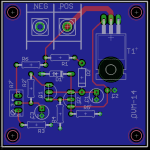
Here's my version of the OVM-14 PCB, copied from http://www.aeroelectric.com/DIY/DIY_Crowbar_OVP_F.pdf. I'm using it for my external power contactor so I didn't put too much effort into shrinking the size. The .zip file has the Eagle project which you can upload to Oshpark and get 3 copies of the PCB for $20. All the parts should be availabe at Mouser. You may need to adjust R3 and R6 if you want a different trip voltage as the range is fairly small with the 500 ohm pot.

1742134557453.png

-Bob
 

Attachments

Here's my version of the OVM-14 PCB, copied from http://www.aeroelectric.com/DIY/DIY_Crowbar_OVP_F.pdf. I'm using it for my external power contactor so I didn't put too much effort into shrinking the size. The .zip file has the Eagle project which you can upload to Oshpark and get 3 copies of the PCB for $20. All the parts should be availabe at Mouser. You may need to adjust R3 and R6 if you want a different trip voltage as the range is fairly small with the 500 ohm pot.


-Bob
Very nice work.

But FWIW as an alternative, B&C Specialty Products will sell you their standalone OVM-14 for about $40. It is not on their online ordering website, but just give them a call.
 
Very nice work.

But FWIW as an alternative, B&C Specialty Products will sell you their standalone OVM-14 for about $40. It is not on their online ordering website, but just give them a call.
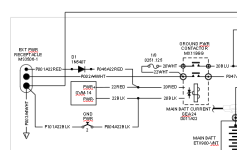
Well shoot, that would have saved me a fair amount of effort. But, I ended up having to change the bias resistors to account for a diode drop from the external power receptacle to the external power contactor (I placed the OVM-14 across the contactor). I suppose there is a potential failure mode with it as wired below - if for some crazy reason pin 1 on the power cart was connected to 12 V but the pin 2 (main power) was connected at 28 V, the OVM would never trip. Hopefully that's an unlikely case.

1742166131751.png
-Bob
 
Well shoot, that would have saved me a fair amount of effort. But, I ended up having to change the bias resistors to account for a diode drop from the external power receptacle to the external power contactor (I placed the OVM-14 across the contactor). I suppose there is a potential failure mode with it as wired below - if for some crazy reason pin 1 on the power cart was connected to 12 V but the pin 2 (main power) was connected at 28 V, the OVM would never trip. Hopefully that's an unlikely case.


-Bob
While the off the shelf alternative serves its purpose ok, I personally envy your work above and the other VAF'er's with skills and knowledge about how to accomplish the same thing from scratch. Kind of like building a prepunched kit airplane, vs a plans-built airplane. Challenges to both, but plans-builders are definitely in the big leagues.
 
I like that the WA2IVD circuit has a sacrificial fuse holder right on the PCB, and seems like he uses fewer parts. It could be the case of simpler is better, especially if protecting only the G5 and related avionics. If this is a chained "backup" OVP i would not want to trip the entire main bus, in case there is false trigger. He does sell the PCB or the full parts kit on his site also
 
A thought about the G5 tolerance to input voltage spikes. I will caveat my comment by saying that I don’t have the G5 environmental qualification form at this moment, but IIRC, the unit is tested to RTCA DO-160 for input voltage and voltage spikes. This is true for modern avionics. From the Garmin ?installation manual, the input power can be 28VDC, and under Section 16, Input Power, the unit would have to sustain 32 VDC on the input for 5 minutes and keep operating without damage. Additionally, under section 17 Voltage Spike, it would have to operate through a 600V spike of about a 4 microseconds. A properly rated zener ( current rating at least 5x the CB) would present a short to ground for the CB in the circuit and the CB should open with a fraction of a second. In a 12 V system with a main battery online, a 16V zener would stand a good chance of tripping the breaker before the voltage exceeded 32 VDC.

The person mentioning the zener that blew (opened) and didn’t trip the breaker, had a zener that that too low a current rating.
 
A properly rated zener ( current rating at least 5x the CB) would present a short to ground for the CB in the circuit and the CB should open with a fraction of a second.
as someone mentioned it's just not a very elegant way to use a zener diode. there will be power loses during normal operation and a potential breakdown *with smoke* depending on the short circuit current and the level of excess voltage it needs to clamp, and on how fast the circuit breaker or the fuse reacts. The SCR in a slightly more complex crowbar circuit can handle hundreds of amps short circuit current without permanent damage. It also consumes no power as long as the input voltage is below the threshold.
 
True, the SCR could carry more current, but as you said, a more complex circuit and that means more failure modes.
 
An SCR based crowbar will be much more reliable in every way than a simple zener circuit. But it’s your plane. Experiment at will!
 
I am curious. Which zener do you plan to select for this application? Most Zener that can carry 10a without destroying themselves are pretty robust and sometimes quite expensive
 
Be careful: a 10A current is the Forward current rating, not the zener current rating. I don't think you'll find a 10A zener current rating. Here is a good article from Texas Instruments explaining how to size a TVS diode for equipment protection. It's still not easy because of the length of time it takes to blow a fuse or a breaker.

Paul
 
True, the SCR could carry more current, but as you said, a more complex circuit and that means more failure modes.

Conversely, misusing a zener diode to save a little complexity over a common, well known, and designed-for use of an SCR seems like bad engineering. And this is all on top of designing for something that is very highly unlikely to occur.
 
Conversely, misusing a zener diode to save a little complexity over a common, well known, and designed-for use of an SCR seems like bad engineering. And this is all on top of designing for something that is very highly unlikely to occur.
Zeners have been used for crowbar circuits for 50 yrs or so.
 
Zeners have been used for crowbar circuits for 50 yrs or so.
Yes, but with a device that can handle high current, like a scr or transistor. I can't find anything that has a high enough current rating.

Paul
 
The intended application from the OP is to handle a bus over voltage with one Zener placed to open one breaker or fuse for the G5 which itself is inherently fault tolerant for this situation. To protect the G5 no matter what. In my opinion:
1. The G5 doesn’t need this and that’s why nobody else ever does this. It is rated for 14 or 28v at the input.
2. The required Zener that can handle this will likely be heavy and/or expensive. Thats why I’m curious what part the OP would select.
3. Using the Zener in breakdown as the sole trip device is not what anyone would typically do. At least it should trip an SCR. Better designs use a comparator to match actual voltage to a Zener reference and trip the SCR or mosfet of voltage is high. There is a Nuckolls post about not using a directly Zener tripped SCR even though that is used on some Mooneys. Just a Zener is bad engineering.
4. Perhaps it works as intended. I think it is more likely to never ever be tripped. Worse case it trips and completely disables the G5 when you really want it. Or burns something up in the process. Imagine if bus voltage does go to 18v. That Zener will dump all the current the alternator gives it and will it burn? Or smoke? Or pop and scare the crap out of you? Does it take out something important next to it? All that risk for something that isn’t needed in the first place.
5. Then again suppose the breaker does trip and the Zener isn’t toast. Your G5 is offline and I suppose on the backup battery?
6. I’d just go focus on dropping the alternator field in an over voltage. But I think you said that protection is already there.
 
Last edited:
Please bench test your solution before you put it in the plane. Wear safety glasses and have a fire extinguisher handy. Simulate the g5 with a selected resistor that can pass an amp or two.
 
The intended application from the OP is to handle a bus over voltage with one Zener placed to open one breaker or fuse for the G5 which itself is inherently fault tolerant for this situation. To protect the G5 no matter what. In my opinion:
1. The G5 doesn’t need this and that’s why nobody else ever does this. It is rated for 14 or 28v at the input.
2. The required Zener that can handle this will likely be heavy and/or expensive. Thats why I’m curious what part the OP would select.
3. Using the Zener in breakdown as the sole trip device is not what anyone would typically do. At least it should trip an SCR. Better designs use a comparator to match actual voltage to a Zener reference and trip the SCR or mosfet of voltage is high. There is a Nickolls post about not using a directly Zener tripped SCR even though that is used on some Mooneys. Just a Zener is bad engineering.
4. Perhaps it works as intended. I think it is more likely to never ever be tripped. Worse case it trips and completely disables the G5 when you really want it. Or burns something up in the process. Imagine if bus voltage does go to 18v. That Zener will dump all the current the alternator gives it and will it burn? Or smoke? Or pop and scare the crap out of you? Does it take out something important next to it? All that risk for something that isn’t needed in the first place.
OP here. I can't speak to good engineering since I'm not an engineer and was just hoping to get some guidance to point me in the right direction. Thankfully there are some very knowledgeable people here. The responses have been helpful and interesting and I very much appreciate them.

Regarding #1, my main concern is using an EarthX battery that goes offline due to an OV event that shuts the battery off before the crowbar kicks in. This is a possibility if you look at the voltage cutoffs for both the battery and the B&C regulator and take into consideration the shutoff margins. My understanding is that in that case the alternator could dump much higher than 28V or even 60V on the bus. Hopefully the crowbar catches it before it fries anything, but it could fail. I've read several anecdotes on VAF of OV events frying avionics even with OV protection in place which leads me to believe that the risk is greater than 1/9,000,000hrs. Yes, I know not all of those were external regulators, but people used to believe (and some still do) that the internal regulators are sufficient protection. Maybe the consensus about external regulators will change as we become more and more electronically dependent.

I have no intentions of putting this in my plane based on the responses and further research, though I may use a B&C OV module. But it would be nice to find a simpler solution that would short the power feed to ground if the voltage exceeded some threshold. Then I would just rely on the G5 battery to get me out of the clouds. I know the risk is very low but the potential outcome could be fatal, so if the cost in time, money and complexity to avoid it is low then it could be a prudent move. I know many would disagree.
 
How about substituting a heavy load in place of a crowbar (GND), for instance a resistance type heater with fan?
The wattage of the electric heater would be matched to the alternator output capability.
The crowbar circuit breaker should be sized to carry the full current output of the alternator.
In case of overvoltage, the crowbar SCR would conduct to the heavy load.
There would be no circuit breaker time delay because the circuit breaker would not trip.
The alternator output voltage would drop to normal due to the heavy load. It would not hurt the alternator to operate at full load capacity for a minute until the pilot collects his thoughts and shuts off the alternator.
I expect that more knowledgeable people will explain why it won't work.
I can think of a couple of disadvantages: weight and complexity. And it might get warm in the cockpit. :)
 
I have an externally regulated alternator with crow bar OV protection. Despite their high reliability, they can fail.

I also have an electronically dependent avionics system and I fly IFR. My battery backed up G5 is my last option to get out of the clouds.

If I have an OV event that isn't stopped by the regulator, then I could lose all of avionics, including my G5, and have a dead panel in the clouds and a really bad day.

Would splicing a grounded Zener diode with an appropriate breakthrough voltage to the power input of the G5 provide overvoltage protection that would pop the breaker if there was an OV event and save my G5?

View attachment 82460
Hi.
In order to protect electrical circuit by Zener Diode, you should consider a huge power on a heatsink Zener Diode! The diode must have enough power to carry at least 1.5 the fuse or circuit breaker protecting the circuit in which the diode is integrated with. So, the power of the diode can be calculated by multiply the voltage with the fuse value by 1.5.
Ariel Arielly
RV8a #80295
4X-OAA
ISRAEL
 
Th G5 has an awesome battery that screws in the back of it that will work for two hours if everything else completely dies.
 
Th G5 has an awesome battery that screws in the back of it that will work for two hours if everything else completely dies.
Yes, that’s what I would rely on if everything else gets zapped, but I think that would only work if the G5 didn’t get zapped as well and that’s why I was thinking about independent OV protection.
 
The wattage of the electric heater would be matched to the alternator output capability.
The crowbar circuit breaker should be sized to carry the full current output of the alternator.

we might need a new thread to go over the design of a 850 watt heat sink 🍿
 
Back
Top