FORANE
Well Known Member
Wrong.This is only for planes with new electronic ignitions right? Those of us with dinosaur magnetos have keep using the $50 plugs?
I run one of these with ngk auto plugs on a slick and one emag with the same auto plugs.


Wrong.This is only for planes with new electronic ignitions right? Those of us with dinosaur magnetos have keep using the $50 plugs?

That's why I asked the question, thanks. So for around $600 a kit you can then save 1/2 price on NGK Iridium Plugs 2743 plugs ($20).Wrong.
I run one of these with ngk auto plugs on a slick and one emag with the same auto plugs.
I have been using the NGK 3961 plugs which are currently running around $3 a plug. When I converted to the g3i system with dual slick mags I noticed it started easier and ran better immediately. At annual there is no checking or cleaning plugs; simply replace plugs with new. It's less than $600 I think; closer to half that.That's why I asked the question, thanks. So for around $600 a kit you can then save 1/2 price on plugs.
So price wise I supposed for someone starting new it would be cheaper than buying all new $50 plugs, but for us who already have everything working fine, what would be the advantage to change to the newer 1/2 priced NGK Iridium Plugs system?
Can the $4/plug Autolite 386 be used with this harness kit?
Ah, inflation...I just added up the price in that list you posted. Kit is around $375 but then you have to buy the end caps at $41 each so I rounded it up to $600. I might give them a call to find out exactly what I would need. Thanks.
I don't think politics have anything to do with it. Things just get more expensive as the years go by, it happens with everything.Ah, inflation...
So my slick harness is shielded, but auto plug wires are not. Any trouble with electrical noise or does the resistor plugs take care of that?Wrong.
I run one of these with ngk auto plugs on a slick and one emag with the same auto plugs.

Don't know about shielding but I didn't have noise trouble when I converted to the g3i and ngk plugs from slick harness.So my slick harness is shielded, but auto plug wires are not. Any trouble with electrical noise or does the resistor plugs take care of that?
Actually, no. You can convert the harness from a Slick Magneto. I do not know if the vendor where I got the kit is an advertiser so I am not sure I can mention them by name but PM me for it. The only part re-used is the cap on the mag so you have a completely new (and much improved) harness which fits automotive plugs. Since you make the harness, the leads can each be custom length and lead on the path you choose. Makes for a much cleaner installation. The new 8MM wire is what is used in high performance car ignition. No radio noise.This is only for planes with new electronic ignitions right? Those of us with dinosaur magnetos have keep using the $50 plugs?

This was okay in bold, but you really should have gone with ALL CAPS to communicate an authentic “curmudgeon who argues with the Post Office” vibe.Why do we continue to bring up problems that were discussed decades ago? How bout saving yourself time and $ by doing a literature search first. I discussed this problem back in Sept, 2010.


I just bought the kit for one mag…$168. You use the cap off your old mag.I just added up the price in that list you posted. Kit is around $375 but then you have to buy the end caps at $41 each so I rounded it up to $600. I might give them a call to find out exactly what I would need. Thanks.

I've thought about adding caps to solve the 18mm non-resistor plug issue but have no experience with them. Might be worth an experiment on one set of plugs to find out if that's a practical solution. Appreciate the kick start to the brain!How about NGK 7909 (https://www.ngk.com/ngk-7909-ab-8-nickel-spark-plug) + resistor caps?
Those are not resistor plugs. Assuming it was, and if it's specs match the heat range appropriate for Pmags, the tips are not solid tips. They are threaded tips. Always use solid tips or else the tips unscrew under aircraft engine vibration.How about NGK 7909 (https://www.ngk.com/ngk-7909-ab-8-nickel-spark-plug) + resistor caps?
Those are not resistor plugs.
Aha. Missed that. Got it now. Thanks for that clarification. As a rule the closer the resistor is to the spark gap the more effective it is for RFI control. Which is the main reason for adding a resistor in the first place. So a resistor plug is more ideal than a resistor cap because it is right at the spark plug air gap. An old rule of thumb about the order of effectiveness for RFI control in the ignition systems is 1. Resistor plugs, 2. Resistor wires (the wires are the noise transmission antennas) and then 3. Resistor caps. Resistor caps came about as a fix for traditional non-shielded ignition systems using solid wire leads. That's why you will find modern resistor caps as an upgrade band aid for lawn equipment and other small engines that can create nuisance noise for neighboring homes and automobiles. But hard to find for larger type modern engines that come from the factory with RFI resistant ignitions. Granted a resistor plug also raises the voltage necessary to jump the spark air gap, thus raising the amount of energy imparted into the spark itself. Very common attribute in modern ignition systems. A resistor cap will also do same just less efficiently. But the main point of added resistance is for RFI noise suppression. On a side note when using legacy magnetos for ignition resistance needs to be watched carefully because that same increase in voltage needed to fire the plug can also cause a spark to jump through the coils and short the secondary wiring. Especially with a very old mag that uses shellac on the coils. One of the reasons that piston aircraft magnetos traditionally come with the shielded high tension leads with screw on caps vs. modern automotive style ignition wire and cap boots.Right, and that’s why he specified use of the resistor caps.
SDS spark plug adapters are $12 each. . Go the link below. Lots of good items on that page, so use the find function, insert "spark plug"True, I'm just pointing out that over $100 for 4 small pieces of brass alloy is not insignificant. Paint me in the camp I want to see more info as to why they don't recommend 18mm.
I wanted to move away from the 386’s due to the heat range. Too chep to shell out hundreds for adapters. Found a good 18mm ngk plug with a heat range i licked, so bought the resistor plugs and tried them. All sorts of noise on the intercom and they were pulled on landing. Unsure why they didn’t work. Finally settled on ngk lr4U or something like that. Better heat range and didn’t rust like the 386s. They are listed as non resistor plugs. However,they are totally noise free and have been using them for 800 trouble free hours. No resistor caps being used. I wonder if they are resistor plugs and the specs are wrong. They do have an r in them. These are fired by an auto coil. Still using aviation plugs on the mag.I've thought about adding caps to solve the 18mm non-resistor plug issue but have no experience with them. Might be worth an experiment on one set of plugs to find out if that's a practical solution. Appreciate the kick start to the brain!

You have to either remove the spark plug adapters, or buy a 14mm extension for the compression tester. https://www.aircraftspruce.com/catalog/topages/compExt14.phpWhen you have plug adapters in, does the standard compression tester still work?

Pmag ships pretty crappy plug wires I believe. Their poor performance does not necessarily require excessively short plug replacement intervals. I use msd plug wires and have had no issues in 1800 hours across two aircraft with them. They don’t fall off the spark plugs and the internal pieces do not break off. I also run plugs (std coppers, not iridium’s) well over 500 hours and never had an issue, though I don’t use pmags. Maybe the pmags have some deficiencies that require brand new plugs every 100 hours. I replace them when i see enough wear to warrant a replacement or they don’t pass a resistance test. Never had one fail yet.I saw a few members stating spark plug use upward of 500 hours. Please be careful. Emag recommends changing the 3961’s every 100 hours and the iridium variant every 125 hours. They’re so cheap there is really no reason not to change them.
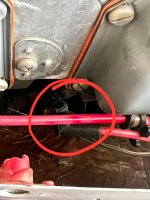
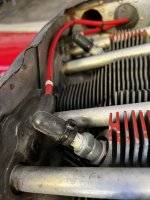
One issue I have experienced. I have had 4 spark plug lead terminals fail on my aircraft. There is a small black steel retainer clip inside the boot that holds tension on the terminal cuff and the spark plug post. This black clip is prone to fatigue and even breaking. I re-terminated 3 leads, ohm checked, etc, all good.
After my condition inspection this year, I had a less than optimal run-up on my left mag. Felt like plug fouling so I ran the plug clearing procedure and things felt fine after that. Shortly after lifting off, I noticed a vibration from the engine I was not used to feeling. After landing I ran another mag check. Left mag dropped 350 rpm, ran quite rough, and I noticed cylinder 4 EGT dropped very quickly to 650F. Pulled the top cowl and immediately noticed bottom lead on cylinder 4 dangling and not at all connected. The black clip on this lead failed and due to it being on a bottom cylinder, the boot was not sufficient to hold the lead on the plug.
A buddy of mine uses zip ties as an extra fail safe to secure the boot to the plug. Changes them every year and inspects the terminals. I will be adopting this zip tie practice!
I would tend to agree as far as lifespan, but when the recommendation was given to me by Emag over the phone, I just kind of went with it. It costs me about $36 to replace all 8 plugs. If it cost hundreds or thousands of dollars I’m sure I’d be asking more questions.Pmag ships pretty crappy plug wires I believe. Their poor performance does not necessarily require excessively short plug replacement intervals. I use msd plug wires and have had no issues in 1800 hours across two aircraft with them. They don’t fall off the spark plugs and the internal pieces do not break off. I also run plugs (std coppers, not iridium’s) well over 500 hours and never had an issue, though I don’t use pmags. Maybe the pmags have some deficiencies that require brand new plugs every 100 hours. I replace them when i see enough wear to warrant a replacement or they don’t pass a resistance test. Never had one fail yet.
You may be shocked to here this, but i go 100,000 miles (roughly 3000 hours) on a set of iridium plugs in my cars. Replacing them at 125 hours just doesn’t make any sense.
Also, your experience with the plug was more likely to have been caused by lead fouling vs a bad plug.
Not suggesting folks don’t follow the mfg guidance, but wanted to clarify that a spark plug can last well over 100 hours.
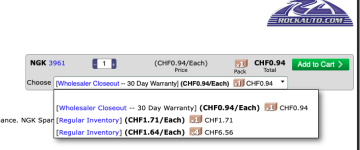
I don't have data, but I have tested almost every plug that will work and could not feel a difference or see any in my engine monitor data, so I settled on the NGK 3961 with the solid terminals. Currently about $1 each from Rock Auto, normal price less than $2 each.Side question. I’m told the iridium plugs burn hotter and cleaner than the standard 3961s. I’ve heard this from multiple people, but I have had just as many say there’s no real difference. I suppose that means no one really has any solid data to support this.
I have a couple Pmag wire harnesses and a couple msd harnesses. I concur with your assessment. The msd connects at the plug with a palpable pop when compared to the Pmag boot which lacks any feedback to confirm it is in proper position. The msd harnesses just appear to be better quality all around.Pmag ships pretty crappy plug wires I believe. I use msd plug wires and have had no issues in 1800 hours across two aircraft with them. They don’t fall off the spark plugs and the internal pieces do not break off.
That is not correct.I would tend to agree as far as lifespan, but when the recommendation was given to me by Emag over the phone, I just kind of went with it. It costs me about $36 to replace all 8 plugs. If it cost hundreds or thousands of dollars I’m sure I’d be asking more questions.
Interesting experience with your MSD leads I may need to try a set. It’s an uneasy feeling when I hesitate to trust connections in my ignition system!
Definitely suspected lead fowling which is why I attempted to clear that first. The second time after my brief flight, it felt so bad my gut was telling me to pull the cowling and have a look around. After addressing the terminal she was back to normal checks and operation.
Side question. I’m told the iridium plugs burn hotter and cleaner than the standard 3961s. I’ve heard this from multiple people, but I have had just as many say there’s no real difference. I suppose that means no one really has any solid data to support this.
You can buy a generic 8 cyl kit which includes everything, but the crimper. Reccomed the 8.8's. You can get a crimper tool from amazon for around $15. Don't try using the little plastic crimper dies. They can work, but are difficult to get good results with. These kits are sold with two different connection types at the coil. Be sure to figure out what the pmag uses. I think it uses the old ford style which is not that common.I have a couple Pmag wire harnesses and a couple msd harnesses. I concur with your assessment. The msd connects at the plug with a palpable pop when compared to the Pmag boot which lacks any feedback to confirm it is in proper position. The msd harnesses just appear to be better quality all around.
Now I need to learn how to make msd harnesses. What msd parts are needed to make wires that fit a Pmag?
I would also love to know part numbers to build MSD harnesses if anyone has them. While zip tying the boots to the plugs may help to keep them from coming completely off, it’s really just a bandaid for an issue I’d rather not have at all. As with anything electrical, a solid connection is going to be the safest.I have a couple Pmag wire harnesses and a couple msd harnesses. I concur with your assessment. The msd connects at the plug with a palpable pop when compared to the Pmag boot which lacks any feedback to confirm it is in proper position. The msd harnesses just appear to be better quality all around.
Now I need to learn how to make msd harnesses. What msd parts are needed to make wires that fit a Pmag?
I figured it was mostly an assumption. The additional research I did late last night falls in line with your statements. Thanks for confirming my suspicion!That is not correct.
The sparking action of a plug produces no meaningfull heat and the metalurgic composition of the electrodes has little to do with how hot they run. All sprkplugs need an appropriate heat shedding capability though and plugs are offered in a wide variety of heat ranges. They need to run hot enough to burn off deposits, but not so hot that they destroy themselves over time. The electrode composition has nothing to do with this. It is all about the design of the metallic shell and ceramic insulator. Differing designs move the heat absorbed to the head (via the threads) at different rates. The key difference with iridium is that the electrodes wear down at a significantly slower rate and therefore last significantly longer.

Not disputing your experience, yet I have been roughing 8 P-Mags (two each on four aircraft) for over fifteen years, and have yet to have a plug wire pop off or a plug wire fail. Wait - I did have one incident where I was getting a very small misfire, and discovered corrosion on the connector at the P-Mag end on two wires…but it was easily cleaned and we went on our way. So…. Some folks have good luck with them. Are there better options? Almost assuredly (as you have found), but I don’t think everyone needs to ditch the P-Mag harnesses out of the box.Pmag ships pretty crappy plug wires I believe. Their poor performance does not necessarily require excessively short plug replacement intervals. I use msd plug wires and have had no issues in 1800 hours across two aircraft with them. They don’t fall off the spark plugs and the internal pieces do not break off. I also run plugs (std coppers, not iridium’s) well over 500 hours and never had an issue, though I don’t use pmags. Maybe the pmags have some deficiencies that require brand new plugs every 100 hours. I replace them when i see enough wear to warrant a replacement or they don’t pass a resistance test. Never had one fail yet.
You may be shocked to here this, but i go 100,000 miles (roughly 3000 hours) on a set of iridium plugs in my cars. Replacing them at 125 hours just doesn’t make any sense.
Also, your experience with the plug was more likely to have been caused by lead fouling vs a bad plug.
Not suggesting folks don’t follow the mfg guidance, but wanted to clarify that a spark plug can last well over 100 hours.

Hi RMarshall, what is the model number of the Autolites you are using? Have you completed the installation with the copper gasket? By opening the gap some, what do you mean in actual gap width change in mm?It’s a good question….I recently bought a set of AutoLite automotive plugs that were recommended here, for my NOS Electro Air electronic ignition system. They weren’t in stock at NAPA but arrived the next day and were cheap. 18mm. Lyc O-360 parallel valve. It was suggested (here) that I removed the cheesy automotive gasket and replace with an aviation grade M674 copper gasket which I’ll be doing and sounds like a good idea. I’ll be opening the gap some and am really happy I won’t be using an adapter to install them.
I don’t have enough experience to throw stones at the pmag products. My only experience is with pmag is what i read here. But i have heard several posts with connectors falling off the coil posts and posts similar to the one above. I don’t advocate people throw out what the have. However, if they do have issues, I believe msd is a quality product. It is the leading supplier in the hot rod world.Not disputing your experience, yet I have been roughing 8 P-Mags (two each on four aircraft) for over fifteen years, and have yet to have a plug wire pop off or a plug wire fail. Wait - I did have one incident where I was getting a very small misfire, and discovered corrosion on the connector at the P-Mag end on two wires…but it was easily cleaned and we went on our way. So…. Some folks have good luck with them. Are there better options? Almost assuredly (as you have found), but I don’t think everyone needs to ditch the P-Mag harnesses out of the box.
I also run the cheap 3961 NGK’s in everything, and replace them at 100-150 hours (rather than cleaning) simply because they are so cheap that the cleaning process takes more time than the plugs cost. I totally agree with you that they would last far longer than that - I just worry about the number of times the “built on” crush gaskets will seal after being torqued. I think that in automotive use, they know that no one will ever re-use them because (as you say) they go 100,000 miles!
One of these days I need to clean up the couple dozen nearly-new aviation plugs I have on hand (removed from nearly new engines to go with P-Mags) and put them up for sale!
I plan on calling Emag and MSD tomorrow to see if I can figure out what components I’d need to order. I find that I really enjoy having all 8 plugs firing!I don’t have enough experience to throw stones at the pmag products. My only experience is with pmag is what i read here. But i have heard several posts with connectors falling off the coil posts and posts similar to the one above. I don’t advocate people throw out what the have. However, if they do have issues, I believe msd is a quality product. It is the leading supplier in the hot rod world.
Larry

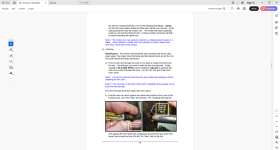
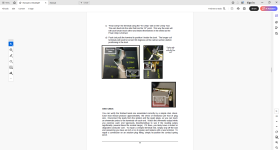
I purchased an E-MAG auto lead kit from Emag years ago. Unfortunately they have discontinued the kits. However, they still maintain the documentation and have a very nice write up in their manual on how to trim, crimp and test new leads. Good DIY video from HollyI plan on calling Emag and MSD tomorrow to see if I can figure out what components I’d need to order. I find that I really enjoy having all 8 plugs firing!
If I can get part numbers I’ll post them here.
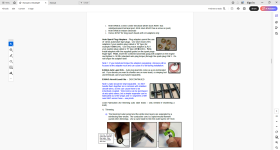
Really? I bought a set from them 11 months ago and they are still listed on their website.I purchased an E-MAG auto lead kit from Emag years ago. Unfortunately they have discontinued the kits.
Discontinued years ago. You can buy a completed harness, but not the kit. The kit consisted of ignition wire, terminals, boots and a crimping tool. You measured to desired length, cut, terminated, installed the boots before installing.Really? I bought a set from them 11 months ago and they are still listed on their website.
NGK & Denso have non resistor 18mm plugs of the correct heat range. Under $5 each. You you will need to use either a resistor end cap or resistor plug wires.Why do we need adapters when using non-aviation plugs? Are there no 18mm plugs available in the proper heat range? Are the 18mm plugs simply more expensive?
Mike,I purchased an E-MAG auto lead kit from Emag years ago. Unfortunately they have discontinued the kits. However, they still maintain the documentation and have a very nice write up in their manual on how to trim, crimp and test new leads. Good DIY video from Holly
View attachment 86293View attachment 86294View attachment 86295
Thanks for the heads up. Link updated. You can view it here:Mike,
Thanks for posting the instructions. Your link for the MSD wire video shows only the parts available and a link to a PDF for installation of the terminals. Maybe they moved the video???
I use the l14-u on my 320. Am happy with the heat range. The specs say non resistor, but completely noise free in my installation. I do not use resistor caps. I speculate that they do have some resistance in them, though maybe not the std 5k, and the spec is wrong.NGK & Denso have non resistor 18mm plugs of the correct heat range. Under $5 each. You you will need to use either a resistor end cap or resistor plug wires.
NGK AB6 [aka 2910]
Denso M17 [crossed over from NGK AB6] & L-14U
The msds use the preferred double crimp terminals..the core likes to ride up, so push it into the area between tabs before crimpingThanks for the heads up. Link updated. You can view it here:
Are you using the Denso L14-Us on an electronic ignition, a magneto or both? What do you gap them to?I use the l14-u on my 320. Am happy with the heat range. The specs say non resistor, but completely noise free in my installation. I do not use resistor caps. I speculate that they do have some resistance in them, though maybe not the std 5k, and the spec is wrong.
Using them with megasquirt based EI. I gap them to .035", but could go larger. My coils are strong enough to handle probably .050" - .060" but don't think I need a stronger spark. If using with mags, it is critical to keep the gaps not much bigger than .018" The coils are small and larger gaps will put a lot of stress on them and prematurely wear them out.Are you using the Denso L14-Us on an electronic ignition, a magneto or both? What do you gap them to?

i also ran the 386's for quite a while. they also worked fine, but they would rust badly. the 14-u's have a better heat range than the 386's and have a nickel coating, so no rust. all around a better plug for the lyc's imho. i also run taylor blue on the 320 that use these plugs. i believe they are the spiro-wrap variety cores. maybe that is what makes it all work. have never tried it with any other wires. on the 540, i splurged and got adapters to run 14mm plugs. it is definately the better way to go.Years ago I had a lot of problems running Autolite 386 plugs on a O-360. One of the RV-7s I do a yearly CI on has been running 386 plugs with Taylor blue wires and the EFII system with no problem. I change the plugs every year but find no signs of distress. 150+ hours per year so not a hangar queen.
Depends on type. Looking at their catalog, bulk resistor wire that's available in blue:i also ran the 386's for quite a while. they also worked fine, but they would rust badly. the 14-u's have a better heat range than the 386's and have a nickel coating, so no rust. all around a better plug for the lyc's imho. i also run taylor blue on the 320 that use these plugs. i believe they are the spiro-wrap variety cores. maybe that is what makes it all work. have never tried it with any other wires. on the 540, i splurged and got adapters to run 14mm plugs. it is definately the better way to go.