

Van's Air Force
You are using an out of date browser. It may not display this or other websites correctly.
You should upgrade or use an alternative browser.
You should upgrade or use an alternative browser.
Why don't we use 18mm spark plugs instead of fooling with spark plug adapters?
- Thread starter FORANE
- Start date


Vern
Well Known Member
I tried some and had poor performance. I actually had a precautionary landing to replace them on a trip because of gaps closing on several.Why do we need adapters when using non-aviation plugs? Are there no 18mm plugs available in the proper heat range? Are the 18mm plugs simply more expensive?

Toobuilder
Well Known Member
Unfortunately, there is not a wide selection of reaches, resistor and heat ranges. Some are happy with the Autolights, some not.Why do we need adapters when using non-aviation plugs? Are there no 18mm plugs available in the proper heat range? Are the 18mm plugs simply more expensive?

I assume you are asking about 18mm non-aviation plugs?
Well...
a) you aren't going to find them in the local auto parts store when you need one on some cross-country
b) I can't think of the last time I saw an 18mm automotive plug. 1936 International pickup truck, maybe?
Well...
a) you aren't going to find them in the local auto parts store when you need one on some cross-country
b) I can't think of the last time I saw an 18mm automotive plug. 1936 International pickup truck, maybe?
rmarshall234
Well Known Member
It’s a good question….I recently bought a set of AutoLite automotive plugs that were recommended here, for my NOS Electro Air electronic ignition system. They weren’t in stock at NAPA but arrived the next day and were cheap. 18mm. Lyc O-360 parallel valve. It was suggested (here) that I removed the cheesy automotive gasket and replace with an aviation grade M674 copper gasket which I’ll be doing and sounds like a good idea. I’ll be opening the gap some and am really happy I won’t be using an adapter to install them.

When Mattituck was building my engine, they asked if I wanted 18mm or 14mm spark plug holes. I specified 18mm even though I knew I would be using an ignition that supported auto plugs. This was a mistake, but I didn't know at the time, obviously.
As others have said, the selection of 18mm plugs is very limited.
As others have said, the selection of 18mm plugs is very limited.
Toobuilder
Well Known Member
I'm guessing these are the Autolite 386. These are a bit hotter than optimal for most, and "I think" the ONLY 18mm resistor plug available today.t’s a good question….I recently bought a set of AutoLite automotive plugs that were recommended here, for my NOS Electro Air electronic ignition system. They weren’t in stock at NAPA but arrived the next day and were cheap. 18mm

FORANE
Well Known Member
Yes. I figured they aren't very common. I think I saw some tractor motors use 18mm.I assume you are asking about 18mm non-aviation plugs?
Well...
a) you aren't going to find them in the local auto parts store when you need one on some cross-country
b) I can't think of the last time I saw an 18mm automotive plug. 1936 International pickup truck, maybe?
FORANE
Well Known Member
My x-340 was built with 14mm plug holes. When I recently had to replace a couple cylinders, the new cylinders I installed were 18mm. So, I have 4 spark plug adapters currently.When Mattituck was building my engine, they asked if I wanted 18mm or 14mm spark plug holes. I specified 18mm even though I knew I would be using an ignition that supported auto plugs. This was a mistake, but I didn't know at the time, obviously.
As others have said, the selection of 18mm plugs is very limited.
I have been using the Autolite 386 plugs in two planes (RV4 and Glasair both with Lycoming 360s) for nearly two thousand hours. They have performed flawlessly. They are available from all four of the auto part store chains near me and all are under $3 each. The nice part of that is my "plug cleaner" doubles as my shop waste bin. To test longevity I ran one set until I got an intermittent miss which occurred at 317 hours. I change them at 100 hours since you can do all eight for less than $20. I have several friends running these plugs as well. I really like not having plug adapters. Just one testimonial but I am very pleased with these 18mm plugs.
rmarshall234
Well Known Member
They are the 386s. There was a second plug that was suggested as well but I never checked availability because I wanted a hotter plug anyway.I'm guessing these are the Autolite 386. These are a bit hotter than optimal for most, and "I think" the ONLY 18mm resistor plug available today.
Toobuilder
Well Known Member
I’m considering running a test set in one side to see how they hold up in my application. Curious what configuration or use case you have that makes a hotter plug more desirable?They are the 386s. There was a second plug that was suggested as well but I never checked availability because I wanted a hotter plug anyway.
PilotjohnS
Well Known Member
do you regap the autolite plugs? and to what value?
rmarshall234
Well Known Member
Curious what configuration or use case you have that makes a hotter plug more desirable?
I have newly OH’d chrome cylinders and am still pushing oil past the rings and there is a slight tendency to foul the lower plugs. This with REM40Es gapped at .016. When I open the gap on those plugs to .019 the situation is much improved but I don’t want to make my mags work that hard.
I have a NOS Ted Rose Electro Air EI system that I’ll be installing with the AutoLite plugs. The manual says I can open the gap to .035 but I’m going with .032 initially. There is some experimentation going on here, that’s for sure.
Toobuilder
Well Known Member
That is probably the only benefit to hot plugs. All other use cases (sustained high power, Lean, ignition advance, leaded fuel, and a host of others) are made worse with hot plugs. Once your oiling clears up, keep a close eye on things!I have newly OH’d chrome cylinders and am still pushing oil past the rings and there is a slight tendency to foul the lower plugs.

RV6_OKLA
Well Known Member
An FYI from E-MAG website.....
18MM Thread Auto Plugs: NOT RECOMMENDED. We hear of customers occasionally using auto plugs that are manufactured with 18mm thread (avoiding the need for spark plug adapters), we have at least two reports from customers who tried 18mm thread plugs – with very poor (near disastrous) results. We recognize there may be a great many plugs that will perform perfectly well in this environment, but we also recognize that some do not. We recommend that most customers stay with plugs that have a known service record. IF you choose to experiment with other plugs (not recommended), do so with caution.
18MM Thread Auto Plugs: NOT RECOMMENDED. We hear of customers occasionally using auto plugs that are manufactured with 18mm thread (avoiding the need for spark plug adapters), we have at least two reports from customers who tried 18mm thread plugs – with very poor (near disastrous) results. We recognize there may be a great many plugs that will perform perfectly well in this environment, but we also recognize that some do not. We recommend that most customers stay with plugs that have a known service record. IF you choose to experiment with other plugs (not recommended), do so with caution.
Toobuilder
Well Known Member
While the instructions from the MFR should be given due consideration, there is a lot of things to question in this statement. For example, does the physical size of the hex wrenching surface define the operating characteristics of the plug? Probably not. If I had to guess, the fact that there is almost no selection of RESISTOR 18mm plugs drove someone to a NON resistor unit and that scrambled the brains of the Pmag (I’ve been there, done that). That OR a user used a Autolte 386, and had jumpers out in an edge case engine, hot day, and suffered pre ignition due to the hotter than optimal heat range of that particular plug., we have at least two reports from customers who tried 18mm thread plugs – with very poor (near disastrous) results
All informed speculation on my part, but a few words from the MFG would go a long way to clear that up. Unfortunately, some of us are like children and don’t like to be told “no” without a good reason - often at our own peril (guilty as charged).
Here's quite a large selection of 18mm plugs. No idea if any are appropriate for our engines. There are lot more there than I would have guessed. Mostly for tractors and "classic" engines.Unfortunately, some of us are like children and don’t like to be told “no” without a good reason - often at our own peril (guilty as charged).
18mm Diameter - The Green Spark Plug Company
Buy 18mm Diameter from The Green Spark Plug Company Online Today for Next Day Delivery.

JimWoo50
Well Known Member
Same here. Autolite 386 plugs for couple hundred hours with no issues.I have been using the Autolite 386 plugs in two planes (RV4 and Glasair both with Lycoming 360s) for nearly two thousand hours. They have performed flawlessly. They are available from all four of the auto part store chains near me and all are under $3 each. The nice part of that is my "plug cleaner" doubles as my shop waste bin. To test longevity I ran one set until I got an intermittent miss which occurred at 317 hours. I change them at 100 hours since you can do all eight for less than $20. I have several friends running these plugs as well. I really like not having plug adapters. Just one testimonial but I am very pleased with these 18mm plugs.
Toobuilder
Well Known Member
Plenty of 18mm plugs. Once you narrow those down to "resistor" the list gets smaller. Narrow it down again to the compatible heat range and seat type, the list gets VERY small.Here's quite a large selection of 18mm plugs

18MM Thread Auto Plugs: NOT RECOMMENDED. We hear of customers occasionally using auto plugs that are manufactured with 18mm thread (avoiding the need for spark plug adapters), we have at least two reports from customers who tried 18mm thread plugs – with very poor (near disastrous) results. We recognize there may be a great many plugs that will perform perfectly well in this environment, but we also recognize that some do not. We recommend that most customers stay with plugs that have a known service record. IF you choose to experiment with other plugs (not recommended), do so with caution.
[/QUOTE]
It would be very helpful, and less likely for one of us experimenters to go rogue, if the MFR would actually explain “not recommended” and “near disastrous“ and not just have those words inserted in parentheses like it is an after thought.
[/QUOTE]
It would be very helpful, and less likely for one of us experimenters to go rogue, if the MFR would actually explain “not recommended” and “near disastrous“ and not just have those words inserted in parentheses like it is an after thought.
It seems obvious that no adapter would be superior but there must be a reason why the smaller size with an adapter is used. Stands to reason that these EI manufacturers would have considered the 18mm from the word go, but did not land there. I doubt their business model relies on adapter sales. Which leaves the fact that these EI manufacturer guys did a lot of testing with their product and despite the obvious advantage of no adapters they still landed on 14mm with adapters. This 18mm auto plug idea sounds like a solution looking for a problem. Keep the big fan up from spinning, you’ll sweat less.

I doubt their business model relies on adapter sales
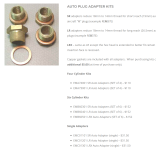
Don't rule the money making on adapters out just yet...
I understand they sell them, but would you honestly think that’s a motivator? You’d be better off adding the cost of adapter to the magneto.
True, I'm just pointing out that over $100 for 4 small pieces of brass alloy is not insignificant. Paint me in the camp I want to see more info as to why they don't recommend 18mm.I understand they sell them, but would you honestly think that’s a motivator? You’d be better off adding the cost of adapter to the magneto.
It’s not a nickel and dime operation like an airline ticket where bags are extra, leg room extra, board early extra etc etc. it’s not a marketing scheme for the ignorant.True, I'm just pointing out that over $100 for 4 small pieces of brass alloy is not insignificant. Paint me in the camp I want to see more info as to why they don't recommend 18mm.
Toobuilder
Well Known Member
We covered that. 18mm plugs are not widely used any longer. Anywhere. There is a VERY limited availability of 18MM plugs that will even physically fit an aircraft head, less that are resistor, and NONE that actually meet the heat range we need.It seems obvious that no adapter would be superior but there must be a reason why the smaller size with an adapter is used...
The plethora of suitable 14mm options makes them only real option for a EI MFR to target.
PilotjohnS
Well Known Member
Please educate me.
What are heat ranges and why do we care so much when running 100LL, lean mixtures, etc?
What are heat ranges and why do we care so much when running 100LL, lean mixtures, etc?
Toobuilder
Well Known Member
Check out the link below for some basics:Please educate me.
What are heat ranges and why do we care so much when running 100LL, lean mixtures, etc?
Last edited:
If you look through some other threads, you will find this topic discussed at length with different plug options. There are several people including the 386's with excellent results, but most 18mm plugs, including the 386's are on the hotter side. I've tried several different 18mm plugs. They work, but YMMV.Why do we need adapters when using non-aviation plugs? Are there no 18mm plugs available in the proper heat range? Are the 18mm plugs simply more expensive?
I ended up going back to 14mm plugs. There are more temp range options in this size. I swapped out the adapters that came with my pmags with adapters sold by Lightspeed made of high-strength aluminum bronze. I install adaptors and torque to 35 - 45 ft-lbs using anti-seize compound and then install the automotive-style spark plugs and torque to 20 ft-lbs. All pursuant to the LightSpeed manual. I prefer the LS adapters to those that came with the pmags.
I'm not a fan of the Autolite spark plug brand. Lots of issues with them being defective right out of the box in the past. Denso [formerly Nippon Denso] makes a much better quality spark plug for the 4 cylinder Lycoming engines. Part number is AB6 [also called 2910] NGK's crossover catalog shows that their M17 spark plug is a replacement for the Denso AB6. Disclaimer: I've never used the M17 spark plugs.
Charlie
Charlie
FORANE
Well Known Member
I've read of failures.Apart from the price, what is so bad about adapters??

Where and when?I've read of failures.
FORANE
Well Known Member
Where and when?
Spark plug blowout after Takeoff
Wondering if anyone else has had this issue. To be fair I have not contacted Emagair as of yet. We replace our auto spark plugs at every condition inspection and reuse the short reach adapters. We have about 4 hours on the plane since the inspection. Taking off on runway 07 I made an...
 vansairforce.net
PilotjohnS
Well Known Member
Time to spill the beans:
For those of you using the automotive 18 mm plugs with lycoming and mags,
1) what plugs are you using with what gap?
2) do they foul more that gazillion dollar aircraft plugs
3) rate your success, any problems?
Dont be shy and save me some money
For those of you using the automotive 18 mm plugs with lycoming and mags,
1) what plugs are you using with what gap?
2) do they foul more that gazillion dollar aircraft plugs
3) rate your success, any problems?
Dont be shy and save me some money
PilotjohnS
Well Known Member
For those of you using 14 mm automotive plugs with adapters, same questions:
1) what plugs and gaps
2) do they foul more than aircraft plugs,?
3) any problems?
1) what plugs and gaps
2) do they foul more than aircraft plugs,?
3) any problems?

swisseagle
Well Known Member
Me and most of my RV buddys fly all dual PMAG planes, all set up exactly as Brad from emagair writes in the manual.
1) NGK Spark Plug BR8ES 2.5mm center electrode. Stock #3961 has a solid terminal tip (preferred). Set plug gaps at 0.030” to 0.035
A few tried other numbers and brands ... all came back to the setup mentioned above, all good!
Handtight adapter onto plug, than plug with adapter and correct torque into cylinder.
Many others are trying to do it different ... and in the end came back to this. It works ... it works good!
2) They do not foul ... if you lean on ground aggresivly.
3) No problem at all
I run them for 120 till 150h, then replace them.
1) NGK Spark Plug BR8ES 2.5mm center electrode. Stock #3961 has a solid terminal tip (preferred). Set plug gaps at 0.030” to 0.035
A few tried other numbers and brands ... all came back to the setup mentioned above, all good!
Handtight adapter onto plug, than plug with adapter and correct torque into cylinder.
Many others are trying to do it different ... and in the end came back to this. It works ... it works good!
2) They do not foul ... if you lean on ground aggresivly.
3) No problem at all
I run them for 120 till 150h, then replace them.
Ngk solid cap iridium plugs, 500+ hours, no fouling whatsoever.For those of you using 14 mm automotive plugs with adapters, same questions:
1) what plugs and gaps
2) do they foul more than aircraft plugs,?
3) any problems?
Zero issue with adapters. EFII naval brass adapters.

Pilot135pd
Well Known Member
I sweat less when the big fan IS spinning.Keep the big fan up from spinning, you’ll sweat less.
I've been using what Lycoming sent with the engine:BGK #3691, no fouling, no issues, just works. I change them every 100 hrs because they are cheap.
Denso #5647 long reach solid tip plugs.
So I have the long reach adapter.
To use the 3691 you must have the short reach adapter. Is there any performance difference between the short and long reach adapters? Any tradeoffs?
The 3691 is way - WAY cheaper. Cheaper enough that maybe I'll get the short reach adapters next spark plug change.
This is what I do and Lightspeed engineering recomends to torque the adapter first at a slightly higher torque setting than what is specified for the plugs.The adapters have never come out when the plugs have been removed.
Adapter bushings stay in until its time for a cylinder overhaul.
One cannot argue with success but this methods seems more prone to removing and installation issues than the set and forget method above.Handtight adapter onto plug, than plug with adapter and correct torque into cylinder.
In either case, we have not heard any evidence of bushing/adapter failures?
Then I found Dan's comment - thanks again Dan. IO-390 requires a long reach setup:I've been using what Lycoming sent with the engine:
Denso #5647 long reach solid tip plugs.
So I have the long reach adapter.
To use the 3691 you must have the short reach adapter. Is there any performance difference between the short and long reach adapters? Any tradeoffs?
The 3691 is way - WAY cheaper. Cheaper enough that maybe I'll get the short reach adapters next spark plug change.
Spark plug adapters- If you?re in need of read below.
I just purchased spark plug adapters from Protek performance, Inc out of California. Extremely prompt courteous service and fast shipping. Machined in house. A package of 8 for $133.00 shipped to my house. Give these guys a try. www.FlyEFII.com 951.317.3473
vansairforce.net
Why do we continue to bring up problems that were discussed decades ago? How bout saving yourself time and $ by doing a literature search first. I discussed this problem back in Sept, 2010.
Search for, Don't waste your time with Autolite 386 plug
Here is the post:
There are some posts that highly recommend the Autolite 386 and others that don't. So I thought I would give it a shot in my Lyc O-235 with 2 P-Mags. I liked the idea of using an 18mm plug without having to deal with removing the brass adapters each time I changed the 14 mm plugs. Fortunately I experimented with only 4 386s and 4 standard NGK BR8ESs. Good mag check, and then took off with full power. When I reached 2000 ft AGL the engine suddenly started to loose power and misfire. Tried all the stuff we are taught to troubleshoot these types of engine problems and nothing worked except to keep the engine speed under 1500 rpm. Called the tower and said I had a poor running engine and requested a straight in approach back to the runway. They asked how many souls on board, I answered 2. Landed without a problem, and a fire truck followed me back to my hanger. I was a little embarrassed about the stir that I caused and mentioned to the firemen that my plugs were misfiring, and thanked them for their assistance, they said, glad to be of service and left. I replaced the 386s with the NGKs, and took off again and flew for an hour without any more problems. On the way back I thanked the folks in the tower for their assistance and for the professional manor that they handled this incident.
This experiment using the Autolite 386 plugs didn't work for me. 386s are used mainly for tractor engines. I think that the heat range for these plugs was too hot for my engine. So don't waste your time or engine using Autolite 386 plugs when the NGK BR8ES or equivalent works fine. Last edited: Sep 24, 2010
Search for, Don't waste your time with Autolite 386 plug
Here is the post:
There are some posts that highly recommend the Autolite 386 and others that don't. So I thought I would give it a shot in my Lyc O-235 with 2 P-Mags. I liked the idea of using an 18mm plug without having to deal with removing the brass adapters each time I changed the 14 mm plugs. Fortunately I experimented with only 4 386s and 4 standard NGK BR8ESs. Good mag check, and then took off with full power. When I reached 2000 ft AGL the engine suddenly started to loose power and misfire. Tried all the stuff we are taught to troubleshoot these types of engine problems and nothing worked except to keep the engine speed under 1500 rpm. Called the tower and said I had a poor running engine and requested a straight in approach back to the runway. They asked how many souls on board, I answered 2. Landed without a problem, and a fire truck followed me back to my hanger. I was a little embarrassed about the stir that I caused and mentioned to the firemen that my plugs were misfiring, and thanked them for their assistance, they said, glad to be of service and left. I replaced the 386s with the NGKs, and took off again and flew for an hour without any more problems. On the way back I thanked the folks in the tower for their assistance and for the professional manor that they handled this incident.
This experiment using the Autolite 386 plugs didn't work for me. 386s are used mainly for tractor engines. I think that the heat range for these plugs was too hot for my engine. So don't waste your time or engine using Autolite 386 plugs when the NGK BR8ES or equivalent works fine. Last edited: Sep 24, 2010
Last edited:

Why do we continue to bring up problems that were discussed decades ago? How bout doing a literature search first. I discussed this problem back in Sept, 2010.
Search for,
Dont waste your time with Autolite 386 plugs
Maybe this is the link you were trying to post?
Don't waste your time with Autolite 386 plug
I suppose there is enough information on the internet and the archives so you would never have to talk or interact with anybody.Why do we continue to bring up problems that were discussed decades ago? How bout saving yourself time and $ by doing a literature search first. I discussed this problem back in Sept, 2010.
Interactions, Q&As, little arguments and disagreements are much more fun and pleasant than sticking your head into the archives
in search of information.
A forum is, after all, a place to socialize with folks who share a common interest and in some cases rehash problems that are old to some of us but
new to others who are less familiar with the history of the archives.

Why do we continue to bring up problems that were discussed decades ago? How bout saving yourself time and $ by doing a literature search first. I discussed this problem back in Sept, 2010.
Because pilots are a notoriously cheap lot. At $50/plug for an REM40E vs $4/plug for an Autolite 386, you're saving almost $400 at a changeover. Even if you changed them at every annual, you'd be ahead in the long run. Kudos to those who are knowledgeable enough to chase down alternatives like this, even if they don't all work out.
Pilot135pd
Well Known Member
This is only for planes with new electronic ignitions right? Those of us with dinosaur magnetos have keep using the $50 plugs?Because pilots are a notoriously cheap lot. At $50/plug for an REM40E vs $4/plug for an Autolite 386, you're saving almost $400 at a changeover. Even if you changed them at every annual, you'd be ahead in the long run. Kudos to those who are knowledgeable enough to chase down alternatives like this, even if they don't all work out.
