Van's Air Force

The definitive Van's Aircraft support community! Buying, building or flying an RV? Join our exclusive family of mentors and enthusiasts!

What did you find at your Annual Inspection/Maintenance ?

riseric

Well Known Member
Patron
4 year old, 144 hours since new.
45 hours since last annual.

This last annual, I found 3 items that needed correction.
I must say that for the last year, I had no apparent reason to remove the engine cowling and I didn't.

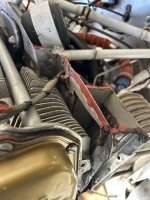
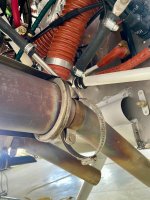
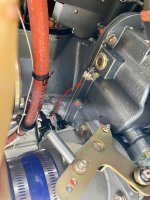
- 1 muffler heat sheild clamp was loose.

- The throttle body safety spring broke (I added that from the get-go since the Fly EFII throttle body has an internal spring closing to idle. The external added spring is stronger and would fully open the throttle in the very unlikely instance that the throttle linkage would seperate from the body. Giving me full power instead of idle in any given flight mode.)

- The # 2 cylinder top spark plug was loose, just finger tight. I have to presume that it could be my mistake at the last inspection, forgot to torque. No photo but there's a little bit of beige blow-by around the spark plug hole. No noticeable performance or vibration issues, on ground, during run-up / testing, or in flight.

In the engine compartment, I found other clamps, big and small that needed a bit of tightening.
I did put a wrench or socket on most nuts, nothing to report.
I double checked the spark plugs...

I plan on getting the cowls off more frenquently between annuals, every 10, 15 hours ??

What do you see or find during your annuals, either small or quirky stuff, even bigger more serious issues ??
It might help other to identify issues before they get disturbing.
 

Attachments

  • IMG_0138.jpg
    IMG_0138.jpg
    1.8 MB · Views: 124
  • IMG_0137.jpg
    IMG_0137.jpg
    2.2 MB · Views: 125
4 year old, 144 hours since new.
45 hours since last annual.

This last annual, I found 3 items that needed correction.
I must say that for the last year, I had no apparent reason to remove the engine cowling and I didn't.

- 1 muffler heat sheild clamp was loose.

- The throttle body safety spring broke (I added that from the get-go since the Fly EFII throttle body has an internal spring closing to idle. The external added spring is stronger and would fully open the throttle in the very unlikely instance that the throttle linkage would seperate from the body. Giving me full power instead of idle in any given flight mode.)

- The # 2 cylinder top spark plug was loose, just finger tight. I have to presume that it could be my mistake at the last inspection, forgot to torque. No photo but there's a little bit of beige blow-by around the spark plug hole. No noticeable performance or vibration issues, on ground, during run-up / testing, or in flight.

In the engine compartment, I found other clamps, big and small that needed a bit of tightening.
I did put a wrench or socket on most nuts, nothing to report.
I double checked the spark plugs...

I plan on getting the cowls off more frenquently between annuals, every 10, 15 hours ??

What do you see or find during your annuals, either small or quirky stuff, even bigger more serious issues ??
It might help other to identify issues before they get disturbing.
When you say “double checked the spark plugs”. I hope you mean cleaned, re-gapped, and tested. I installed new plugs on my certified aircraft. When I checked them as part of my annual, the gap was way out.

A&P
 
Good idea for a thread, Eric! Just going from memory, I've found:
  • baffle screws coming loose - tightened
  • oil leak around dipstick base - replaced gasket
  • spark plug wire with intermittent break - replaced wire
  • pmag with bearing play - replaced with spare pmag
  • loose rivet on bottom cowl skybolt attachment - replaced
  • broken heat shield on exhaust - replaced
  • control stick with loose nut - tightened
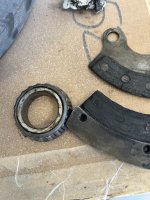
  • brake pads worn - replaced
  • exhaust hanger broken - replaced
I also remove, clean, and grease the tailwheel yoke regularly to avoid the sticking pin. Aircraft has about 450 hours, 5 years.
 
Respect to you Eric and Mickey 🙌🏻
Thing is I actually find little but routine stuff during my annual (condition for the US) inspection. And that is good so.
Of course, worn plugs get replaced, same for the tires and brake pads..
I guess that the mere fact of doing 50h inspections when flying 3-400 hours a year gives one a certain leeway in the way of surprises. Still, vigilance is of first order, lest one wants skip any inspection altogether and just feed on popcorn and beer 🤓
 
When you say “double checked the spark plugs”. I hope you mean cleaned, re-gapped, and tested. I installed new plugs on my certified aircraft. When I checked them as part of my annual, the gap was way out.

A&P
Yes checked as usual the gap, NGK BR8EI, they showed about a 0.01 wear, re-gapped.
Will replace them next year.
They were clean, no residue.
The double-check was the torque in the cylinder head... ;)
 
Last edited:
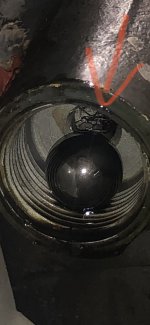
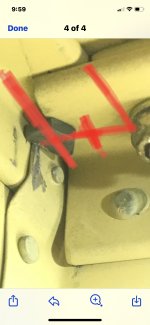
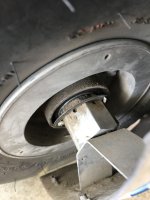
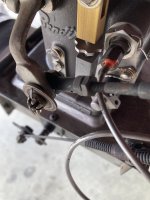
I seen many problems on first flight and annually performed inspections. Here are just a few.

GM
 

Attachments

  • IMG_2811.jpeg
    IMG_2811.jpeg
    1.2 MB · Views: 356
  • IMG_0063.jpeg
    IMG_0063.jpeg
    1.1 MB · Views: 346
  • IMG_1840.jpeg
    IMG_1840.jpeg
    1.6 MB · Views: 287
  • IMG_3049.jpeg
    IMG_3049.jpeg
    2.5 MB · Views: 276
  • IMG_3896.jpeg
    IMG_3896.jpeg
    255 KB · Views: 271
  • IMG_0644.jpeg
    IMG_0644.jpeg
    246.7 KB · Views: 264
  • IMG_0694.jpeg
    IMG_0694.jpeg
    1.4 MB · Views: 269
  • IMG_0028.jpeg
    IMG_0028.jpeg
    1.3 MB · Views: 354
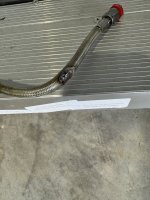
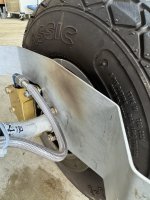
My 1st condition inspection in 2024 found a couple issues that needed immediate attention. Left brake hose was pushing the wheel pant bracket ever so slightly into the brake rotor. Outer cover of hose melts down to metal braid, replaced hose.

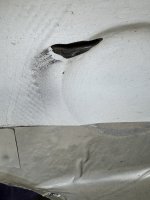
Found that slight engine sag had caused the pulley of the alternator to cut a small groove in the lower cowl. Changed belt to one size smaller and this allowed the alternator to swing up by a half inch or more.

IMG_2967.jpeg
 

Attachments

  • IMG_2972.jpeg
    IMG_2972.jpeg
    2 MB · Views: 114
  • IMG_2968.jpeg
    IMG_2968.jpeg
    1.8 MB · Views: 116
4 year old, 144 hours since new.
45 hours since last annual.

This last annual, I found 3 items that needed correction.
I must say that for the last year, I had no apparent reason to remove the engine cowling and I didn't.

- 1 muffler heat sheild clamp was loose.

- The throttle body safety spring broke (I added that from the get-go since the Fly EFII throttle body has an internal spring closing to idle. The external added spring is stronger and would fully open the throttle in the very unlikely instance that the throttle linkage would seperate from the body. Giving me full power instead of idle in any given flight mode.)

- The # 2 cylinder top spark plug was loose, just finger tight. I have to presume that it could be my mistake at the last inspection, forgot to torque. No photo but there's a little bit of beige blow-by around the spark plug hole. No noticeable performance or vibration issues, on ground, during run-up / testing, or in flight.

In the engine compartment, I found other clamps, big and small that needed a bit of tightening.
I did put a wrench or socket on most nuts, nothing to report.
I double checked the spark plugs...

I plan on getting the cowls off more frenquently between annuals, every 10, 15 hours ??

What do you see or find during your annuals, either small or quirky stuff, even bigger more serious issues ??
It might help other to identify issues before they get disturbing.
It’s pretty amazing how some folks neglect maintenance, for whatever reason.
Recently found a fuel pump with an open drain with no drain line, a FAB that the bottom wore through and the filter was hanging out and starting to saw in half, an alt air door hanging off of the snorkel, throttle control arms that don’t go to the stops and SBs undone for years. Found a 7A with a repaired tank but it was reinstalled without any of the Z bracket bolts. Lots of fuel leaks, especially at the root ribs and the list goes on.
If you are doing CIs without a detailed checklist you are probably missing stuff. Having an IA orAP who isn’t educated in experimentals is also a recipe for a poor inspection, in my opinion. Some of the most neglected RVs I have inspected were following sign offs from IAs who typically only work on certified planes.
(I wonder if the new rules allowing anyone who takes a three week course to inspect and sign off EABs, like an AP, will lead to even more poorly done condition inspections.)
Here’s a few items I’ve seen out of the many I come across.
 

Attachments

  • IMG_4266.jpeg
    IMG_4266.jpeg
    1.8 MB · Views: 258
  • IMG_4269.jpeg
    IMG_4269.jpeg
    2.4 MB · Views: 252
  • IMG_4276.jpeg
    IMG_4276.jpeg
    1.5 MB · Views: 234
  • IMG_4279.jpeg
    IMG_4279.jpeg
    1.3 MB · Views: 257
. Some of the most neglected RVs I have inspected were following sign offs from IAs who typically only work on certified planes.
Have seen a similar trend

(I wonder if the new rules allowing anyone who takes a three week course to inspect and sign off EABs, like an AP, will lead to even more poorly done condition inspections.).
Builder maintained planes generally are much better maintained. Given that a&ps with decades of experience can miss so much, I have to wonder if we will see worse from an owner with a 2 day class. The experts don’t seem to do that good of a job with all sorts of experience. Maybe an owner that cares will find resources, like here, coupled with a desire to get it done right is enough to do better than the otherwise low bar.

Not dumping on a&ps as i know their are great ones out there, but it is absolutely not all of them from what i have seen.
 
and here's an example with a tragic outcome

NTSB: It Just Takes One Loose Nut

Article snippets:
NTSB investigators found that a B-nut fitting on the fuel line leading into the fuel flow divider was more than a half turn loose. Blue dye staining consistent with fuel leakage was found around the fitting.
The airplane had its annual inspection just 10 days earlier and had flown about 2.5 hours since. During that inspection, maintenance personnel installed the engine monitoring system and fuel flow transducer. Even aside from that, though, regulations require inspectors to check engine lines, hoses and fittings for leaks and looseness during annual inspections.
 
This of course should never happen - potential disaster here. I would have replaced, not tightened, the lock nut. Unless I thought it was never torqued to begin with.
Absolutely correct. Embarrassingly, it was not tight. No idea how I missed this, or how I thought it was ok to feel that little bit of slop in the controls. I let a very experienced pilot sit in my airplane and they commented that it was not normal, and I was like "I know it's fine!" but I was wrong, and corrected it during the annual. As I said, embarrassing.
 
regulations require inspectors to check engine lines, hoses and fittings for leaks and looseness during annual inspections.
I like what I read here from the other Dan a while back - "put a wrench on every nut and bolt you can reach." Very good advice.
 
I'm not telling..I never find anything. Actually, I do a progressive, and FWF usually gets a good look over about 3 times a year.
and here's an example with a tragic outcome

NTSB: It Just Takes One Loose Nut

Article snippets:
NTSB investigators found that a B-nut fitting on the fuel line leading into the fuel flow divider was more than a half turn loose. Blue dye staining consistent with fuel leakage was found around the fitting.
The airplane had its annual inspection just 10 days earlier and had flown about 2.5 hours since. During that inspection, maintenance personnel installed the engine monitoring system and fuel flow transducer. Even aside from that, though, regulations require inspectors to check engine lines, hoses and fittings for leaks and looseness during annual inspections.
To elaborate on Dan's post here, I have twice found fuel system lines that only surface a leak when pressurized. As an APIA, I do quite few inspections, both Certified and Experimental. I'm guilty myself of doing inspections of FWF when I'm doing them alone and I didn't check the fuel systems under pressure. The real eye opener for me was a few years back when 3 of us flew from NC to FLA so I could ferry an RV-4 back for a non-qualified pilot. I had finished my look over and walk around of the -4, all looked good for the ferry flight home. The plane had been recently flown, and had been regularly run/flown. The new owner and my Uber pilot that got me to Fla stood by as I started the plane for the journey. As it was cranking both of them started waving their hands to shut-down...something was spewing out the cowl. Nothing I could see or smell from cockpit. After pulling the cowl and turning on boost pump, the fuel pressure hose to the gauge looked like a worn out garden soaker hose, spewing right on the tail pipe. No telling how long this had been going on...sure gave me the gut punch that I could have fire-balled. We capped it off and I flew home, but since then, I pressure check the fuel system while performing the inspection always !!
 
pulling the cowl and turning on boost pump, the fuel pressure hose to the gauge looked like a worn out garden soaker hose, spewing right on the tail pipe
Man, that is a bad one for sure.
Thanks to @riseric for having raised the subject again, maintenance is important, and by coincidence I just read the

Horizontal Stab Pivot Bolt Fell Out In Flight

and watched, or listened to, Mike Busch in his latest vid

Quantifying Maintenance Risk

Many lessons to be taken out of these sources alone. I've been working in aviation for my whole life, of which 20 years in maintenance, and I sure don't thrust myself. So checking, double-checking, having someone else look over my work, and never let off one's vigilance are part of the recipe for safe maintenance.
 
Threads like this are why I log onto this site almost every day, some days more than once. And why I gladly pay for my 'annual subscription'.
 
I always find something broken, loose or missing!

Here's my Phase 2 gallery. This is all of the stuff I've done on my RV-9A since 2014 (almost 1300 hours as of today).

I also have written up my annual condition inspections on my blog every year. More detail there as to what I have found and fixed.

I have been doing the occasional Annual Inspection for other RV's since I got my A&P completed. Some airplanes really suffer from deferred maintenance. Keep up with the maintenance and you will lessen the chances of being AOG.
 
Years ago, a rebuilt Bonanza took off from a soft field with partial flaps (approved in the AFM). About 10 ft in the air one flap suddenly retracted while the other stayed extended. The airplane rolled and hit the ground. It caught fire. The occupants survived the impact but were badly burned. Over the next two weeks, they each died from their burns after much suffering.

The post crash investigaiton indicated that the flap actuator had failed. It failed because a C clip was missing. The groove that held the C clip in place had grime in it indicating that the C clip had been missing for a long time.

Small details matter.

There is value in having the aircraft inspected by different people. When I inspect my aircraft, I do it with with the attitude that it I didn't find something, I didn't look hard enough.
 
To paraphrase, for want of a cotter pin...

A fatal accident occurred at my home field a few years ago when the throttle cable disconnected from the throttle control arm when pulled to idle on approach, most likely because the cotter pin wasn't installed in the castellated nut. This was just 78 hours/2 months post-installation of a new engine.

It's the little things that can bite the hardest.
 
Years ago, a rebuilt Bonanza took off from a soft field with partial flaps (approved in the AFM). About 10 ft in the air one flap suddenly retracted while the other stayed extended. The airplane rolled and hit the ground. It caught fire. The occupants survived the impact but were badly burned. Over the next two weeks, they each died from their burns after much suffering.

The post crash investigaiton indicated that the flap actuator had failed. It failed because a C clip was missing. The groove that held the C clip in place had grime in it indicating that the C clip had been missing for a long time.

Small details matter.

There is value in having the aircraft inspected by different people. When I inspect my aircraft, I do it with with the attitude that it I didn't find something, I didn't look hard enough.
Hard to imagine that a partial flap split can’t be controlled by the ailerons.. even at a slow speed liftoff. Not doubting that it happened, sad indeed..
 
Hard to imagine that a partial flap split can’t be controlled by the ailerons.. even at a slow speed liftoff. Not doubting that it happened, sad indeed..
Its my understanding that asymmetric flap deployment is uncontrollable in many airplanes.
 
Hard to imagine that a partial flap split can’t be controlled by the ailerons.. even at a slow speed liftoff. Not doubting that it happened, sad indeed..
Whether it would be hypothetically controllable or not, If you're just a few feet off the runway and one flap slams up with the other still partially extended I can easily believe the sudden surprise roll could have you in the dirt before you knew what hit you...
 
Back to Condition Inspection finds…..

In the realm of “yes, you really need to look at the structural parts”, a few years ago on the RV-3 we found cracking at the bottom corners of the rudder spar - the corners between the flanges and the web. It made the rudder horn sort of “floppy”. Required a rebuild of the lower part of the spar (approved by Van’s engineering) with doublers and other reinforcements. So you can get cracks and smoking rivets - look carefully!
 
Cracked Step!

My pilot side cracked years ago and was repaired with a gusset - the passenger side went over 3200 hrs, but it happened quickly and was propagating rapidly. Step removed, gusset made, might be welded up by the weekend.

Pro tip: don't even jokingly insinuate that the weight of your 40+ year copilot was a contributing factor. The heat at the hangar is not keeping up with the Minnesota winter where you may be forced to sleep!!
 
Hard to imagine that a partial flap split can’t be controlled by the ailerons.. even at a slow speed liftoff. Not doubting that it happened, sad indeed..
After the accident, a test pilot demonstrated that the airplane was in fact controllable using ailerons with the flap split. However, the test pilot was much more experienced and was expecting the failure.
 
My Cessna type gascolator, that has pull cable had a leak. Could not disassemble the standpipe and replace with another $300 standpipe. It was very stuck. Replaced with a Steve's Gascolator and about time I did that.
 
Back
Top