

Van's Air Force
You are using an out of date browser. It may not display this or other websites correctly.
You should upgrade or use an alternative browser.
You should upgrade or use an alternative browser.
What are the best static connectors? How to locate static system leaks?
- Thread starter FORANE
- Start date

- Status
- Not open for further replies.

I used the 1/4" push to connect fittings and the plastic tubing in the Avery kit.What static system connectors do you think are the least likely to leak?
How are static system leaks located?
Just did my second pitot-static test and no issues.

Nylo....What static system connectors do you think are the least likely to leak?
How are static system leaks located?
Nylo-seal. I have a buddy with an avionics shop in NorCal and asked him the same question. He says Nylo-seal are the best. He says the push-connect fittings dont hold up over time. I figure he has seen a lot of systems and knows what works and what doesnt.Nylo....
For those unfamiliar with the pitot-static system test set adapters, a question:Nylo....
When using Nylo fittings and installing a Nylo T “tap” in the static line behind the panel to simplify connecting the Barfield or other pitot static test set, what connector/size is used at the end for the test set adapter?
Capped metal AN816 series (size)? Or another standard fitting in the Nylo series (capped)?
I had various leaks on both my planes from ptc fittings. Never again. Nylo seal from now on.Nylo-seal. I have a buddy with an avionics shop in NorCal and asked him the same question. He says Nylo-seal are the best. He says the push-connect fittings dont hold up over time. I figure he has seen a lot of systems and knows what works and what doesnt.

Nylo-seal. I have a buddy with an avionics shop in NorCal and asked him the same question. He says Nylo-seal are the best. He says the push-connect fittings dont hold up over time. I figure he has seen a lot of systems and knows what works and what doesnt.
I had various leaks on both my planes from ptc fittings. Never again. Nylo seal from now on.
Bruce, Larry,
...This is how things get a bad rep...
Which push-connect fittings don't hold up over time? There are only a few hundred (ed. thousand?) vendors/variations of PTC out there. This, along with suspect tubing and shite installation methods, makes it problematic to imply that PTC is inferior.
On my builds, going on 30 years now, I've only used ParkerHannefin Legris PTC - PLP. Never had a leak, and never will...
>> Don't use hardware store Ice maker fittings and random clear plastic tubing <<
B
Well I suppose my installation skills were shite, as you say. What would I know about cutting a tube perpindicular and getting rid of any FOD on the cut. I suspect there are better versions of these out there. Many of mine were from Mcmaster, so not off shore crap from Amazon. The disign is simply not tolerant of various issues with materials and installation. You are at the mercy of a tiny oring, with all the challenges they bring. They also can't be installed twice without risk of tearing the oring on the 2nd insertion. With nyloseal fittings, a 6 year old could install them leak free. Though I am sure some folks leave out the internal reinforcement piece and make them leak also. Very little in aviation is immune from human error.Bruce, Larry,
...This is how things get a bad rep...
Which push-connect fittings don't hold up over time? There are only a few hundred (ed. thousand?) vendors/variations of PTC out there. This, along with suspect tubing and shite installation methods, makes it problematic to imply that PTC is inferior.
On my builds, going on 30 years now, I've only used ParkerHannefin Legris PTC - PLP. Never had a leak, and never will...
>> Don't use hardware store Ice maker fittings and random clear plastic tubing <<
B
Last edited:

Larry - I wasn't implying your skills were sub-optimal.Well I suppose my installation skills were shite, as you say. What would I know about cutting a tube perpindicular and getting rid of any FOD on the cut. I suspect there are better versions of these out there. Many of mine were from Mcmaster, so not off shore crap from Amazon. The disign is simply not tolerant of various issues with materials and installation. You are at the mercy of a tiny oring, with all the challenges they bring. They also can't be installed twice without risk of tearing the oring on the 2nd insertion. With nyloseal fittings, a 6 year old could install them leak free. Though I am sure some folks leave out the internal reinforcement piece and make them leak also. Very little in aviation is immune from human error.
McMaster is a fantastic distributor for stuff, unfortunately, there's little information that says their stuff is any different or better than Amazon or Home Depot. It's all mfg'd offshore, inventoried/stored here-there-everywhere, and distributed everywhere.
Throwing shade on ALL PTC connectors was just a bit much. Caveat emptor, and all that..
FWIW, Steinair uses/provides SANG-A and SMC branded PTCs -- maybe @FlyingSquirrel could comment on their reliability, and reusability...
I used Tygon B-44-3 tube (part number 05-00944) with black poly or white nylon barbed fittings from Aircaft Spruce. Easy to install, the tube stays soft and flexible and no leaks after 18 years.
Last edited:

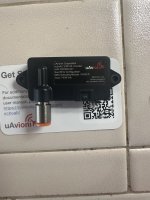
You should be able to get a high quality PTC fitting to work leak free the first time and for a dozen mate cycles. Some of the Avionics components are delivered with built in PTC fittingsWell I suppose my installation skills were shite, as you say. What would I know about cutting a tube perpindicular and getting rid of any FOD on the cut. I suspect there are better versions of these out there. Many of mine were from Mcmaster, so not off shore crap from Amazon. The disign is simply not tolerant of various issues with materials and installation. You are at the mercy of a tiny oring, with all the challenges they bring. They also can't be installed twice without risk of tearing the oring on the 2nd insertion. With nyloseal fittings, a 6 year old could install them leak free. Though I am sure some folks leave out the internal reinforcement piece and make them leak also. Very little in aviation is immune from human error.
Attachments
Last edited:
Disagree. I have reinstalled PTC fittings in my -10 many times, in fact, I even put a tee with a PTC cap in a convenient location for doing the pitot static check. That cap comes off at every check.Well I suppose my installation skills were shite, as you say. What would I know about cutting a tube perpindicular and getting rid of any FOD on the cut. I suspect there are better versions of these out there. Many of mine were from Mcmaster, so not off shore crap from Amazon. The disign is simply not tolerant of various issues with materials and installation. You are at the mercy of a tiny oring, with all the challenges they bring. They also can't be installed twice without risk of tearing the oring on the 2nd insertion. With nyloseal fittings, a 6 year old could install them leak free. Though I am sure some folks leave out the internal reinforcement piece and make them leak also. Very little in aviation is immune from human error.
No leaks and just did the second P/S check two months ago.
Used Avery's kit and supplied tubing, no special tools.
Yes, I suppose it was unfair to imply all ptc fittings are bad. But i can surely say they are not universally good. I have found mcmaster to source most parts from moderate to good suupliers. I firmly disagree that mcmaster stuff is just unbranded off shore junk, like found from low cost online retailers. While the website doesn’t show the brand name, the product does when it shows up. Also, most products today are produced off shore. That doesn’t inherently make them poor quality, especially when a respected brand is doing it. Even the g3x is made somewhere else. No one is calling that offshore junk, are they.Larry - I wasn't implying your skills were sub-optimal.
McMaster is a fantastic distributor for stuff, unfortunately, there's little information that says their stuff is any different or better than Amazon or Home Depot. It's all mfg'd offshore, inventoried/stored here-there-everywhere, and distributed everywhere.
Throwing shade on ALL PTC connectors was just a bit much. Caveat emptor, and all that..
FWIW, Steinair uses/provides SANG-A and SMC branded PTCs -- maybe @FlyingSquirrel could comment on their reliability, and reusability...
I suppose there are different styles out there. On several that i used, there is a sharp metal ring that holds the tube in the fitting. As you pull the tube out, this leaves a-scratch on the tube. You run a risk that this deformity can knick the oring.Disagree. I have reinstalled PTC fittings in my -10 many times, in fact, I even put a tee with a PTC cap in a convenient location for doing the pitot static check. That cap comes off at every check.
No leaks and just did the second P/S check two months ago.
Used Avery's kit and supplied tubing, no special tools.
Again, apologize for condemning all ptc fittings. Just sharing my limited experience with them that was obviously very different from your experience. The fact that it works for you, however, does not mean it is the best solution. Kind of like you saying that you don’t have stuck valves on your lycoming and therefore lycomings can-be counted on to not stick valves. Only pointing out the caution must be exercised to get high quality fittings, asthe average quality ones are not 100% leak free, in my experience.
I discussed this with the guy that does my pitot checks. This all he does for a living. When we had my first leak, he said did you use ptc fittings. I said yes and the look on his face was priceless. He said rip them out, they are not reliable. He carries an assortment of 1000 pieces of nlyo seal and most of his check work on experimentals involves replacing all the ptc to clear leaks. The early shop i used felt the same. When he gets leaks on eab, the first thing he does is rip out all the ptc.. he said we refuse to install and will only replace with nylo.
Your experience may be excellent, but these guys who do this every day feel very differently.
Last edited:

Unless you have a pressurized cabin, there is little differential pressure in the static line, so a small leak would be hard to notice and not much of a problem. However, the pitot line pressure differential is a much different story and needs to be tight. For the pitot leak-down test, I use a large syringe (Amazon has them) with a rubber tube connected to the pitot tube, and I very slowly increase pitot pressure until I reach about 130 knots. I then check for airspeed leak-down, where the airspeed indicator should stay put. You can also test the static system in a similar way by applying negative pressure to one of the static ports while blocking the other with tape. They make suction cups with ports that you can connect your syringe and rubber tube up to. Be carful not to apply positive pressure to your static port.

You would be right.Though I am sure some folks leave out the internal reinforcement piece and make them leak also. Very little in aviation is immune from human error.
 Luckily the guy doing my check quickly determined I was dumb enough to have left one out, and was VERY proficient at finding leaks….
I'd say ANYTHING you can do to make the connections leak free-in the future--is great--not only for the static test, but for the guys like Walt (and others) that have to crawl around looking for AND repairing those leaks.You would be right.

I got a Safe-Air pitot.static kit then sourced additional SAE brake tubing with my desired color. Tools and additional fittings from SteinAir. The only leak I had were two pre treated Garmin fittings on the 650. With lots of pulling and testing I failed to reseat one push fitting. Since the first 2016 official test, it has not a single leak in the last years or 300+ hours. Including 20 min of 10+/10 chop I thought was going to break me or something else. I used a heat gun to shape artfully and compactly route the tubes. . . . that was a building miracle to me. Never damaged a single o-ring or had a seated tube leak.
I use John Guest fittings on RO systems that get a lot of pulsation and never had the trouble found with cheaper designed fittings.
The O-Rings are replaceable too.
I can't say these are better than other systems but, as long as one purchases quality parts, they should meet your high expectations, they do mine.
I use John Guest fittings on RO systems that get a lot of pulsation and never had the trouble found with cheaper designed fittings.
The O-Rings are replaceable too.
I can't say these are better than other systems but, as long as one purchases quality parts, they should meet your high expectations, they do mine.
I think you have that backwards, small leaks in Pitot are not that important in unpressurized aircraft, an unlimited volume of air is available to maintain pressure so the leak would have to be pretty big for you to have an AS error.Unless you have a pressurized cabin, there is little differential pressure in the static line, so a small leak would be hard to notice and not much of a problem. However, the pitot line pressure differential is a much different story and needs to be tight. For the pitot leak-down test, I use a large syringe (Amazon has them) with a rubber tube connected to the pitot tube, and I very slowly increase pitot pressure until I reach about 130 knots. I then check for airspeed leak-down, where the airspeed indicator should stay put. You can also test the static system in a similar way by applying negative pressure to one of the static ports while blocking the other with tape. They make suction cups with ports that you can connect your syringe and rubber tube up to. Be carful not to apply positive pressure to your static port.
On the other hand, static leaks measure the small difference between cabin and outside 'static' pressure and will definitely cause alt and AS errors.

I have an organizer full of generic plastic PTC fittings "described" as rated to 145PSI . After reading this thread, I decided to cut one of the 6mm/0.25" variants lengthwise. The deepest internal part on my version is the O-ring with a width of approx 3mm or 1/8". Everything beyond appears related to support and clamping.
Notably, plumbing Sharkbites appear to be of similar design but also use a tube insert stiffener- however the ODs are much bigger. This makes me wonder though, if a brass compression insert would help(ie ensure roundness and diameter) or make things worse(ie possibly reduced O-ring engagement length, change diameter away from design) on the smaller PTC lines...
Notably, plumbing Sharkbites appear to be of similar design but also use a tube insert stiffener- however the ODs are much bigger. This makes me wonder though, if a brass compression insert would help(ie ensure roundness and diameter) or make things worse(ie possibly reduced O-ring engagement length, change diameter away from design) on the smaller PTC lines...
What you said doesn't make much sense to me -- I was a licensed avionics technician in Greeley Colorado before attending engineering school and doing that for 33-years, so I would have to respectfully disagree with your opinion. However, I did provide techniques for testing both pitot and static systems. I always test both in the 20-year old RV-9A I built and don't allow leaks in either pitot or static systems, but become much more alarmed when I see leak-down in my pitot system!I think you have that backwards, small leaks in Pitot are not that important in unpressurized aircraft, an unlimited volume of air is available to maintain pressure so the leak would have to be pretty big for you to have an AS error.
On the other hand, static leaks measure the small difference between cabin and outside 'static' pressure and will definitely cause alt and AS errors.


Have you tried to crush one of the 1/4" lines that are used with the PTC fittings? I doubt you could do it with your hands. Now kinking it, that is a different story. but if you kinked it you wouldn't use it.I have an organizer full of generic plastic PTC fittings "described" as rated to 145PSI . After reading this thread, I decided to cut one of the 6mm/0.25" variants lengthwise. The deepest internal part on my version is the O-ring with a width of approx 3mm or 1/8". Everything beyond appears related to support and clamping.
Notably, plumbing Sharkbites appear to be of similar design but also use a tube insert stiffener- however the ODs are much bigger. This makes me wonder though, if a brass compression insert would help(ie ensure roundness and diameter) or make things worse(ie possibly reduced O-ring engagement length, change diameter away from design) on the smaller PTC lines...
Then perhaps you should test what I'm saying for yourself. Think of it this way, suppose you had 50psi oil pressure in a hose, if you poke a hole in the hose, you're still going to have 50psi in the hose despite the leak because we have an unlimited supply of oil pressurizing the hose.What you said doesn't make much sense to me -- I was a licensed avionics technician in Greeley Colorado before attending engineering school and doing that for 33-years, so I would have to respectfully disagree with your opinion. However, I did provide techniques for testing both pitot and static systems. I always test both in the 20-year old RV-9A I built and don't allow leaks in either pitot or static systems, but become much more alarmed when I see leak-down in my pitot system!
Garmin had some probes that had leaks years ago, this is what they said after doing some testing on leak rates:
"The guidance for pitot system tests listed in AC 43.13-1B, Section 4 are not directly applicable to this AOA pitot system. However, using it as a reference, it specifies the system shall be tested per the manufacturer’s instructions but further states that if the manufacturer does not provide instructions, the default test is to apply 150 knots pressure to the system and measure the pressure loss over one minute. This loss is not to exceed 10 knots/min. While some GAP 26 probes will pass a test of this type, some may not. Garmin has determined that a leak rate of 250 knots/min or less is allowable and still provides proper functionality."
Wow -- 250 knots/min leak-down seems really high for a primary ASI -- our shop wouldn't have accepted this. Just last year, I discovered my UMA ASI was leaking-down but less than your 250 knots/min. After testing my pitot tubing run and finding it was OK, I sent it back to UMA, where they found it had a 13-knot error. UMA rebuilt the unit and sent it back, where it showed very little leak-down after the repair. And 10-years ago, while performing my pitot ASI leak-down test, I discovered I had a sticking ASI -- it was sticking at 130 knots. UMA replaced the unit for engineering evaluation but had seen only a few like that.Then perhaps you should test what I'm saying for yourself. Think of it this way, suppose you had 50psi oil pressure in a hose, if you poke a hole in the hose, you're still going to have 50psi in the hose despite the leak because we have an unlimited supply of oil pressurizing the hose.
Garmin had some probes that had leaks years ago, this is what they said after doing some testing on leak rates:
"The guidance for pitot system tests listed in AC 43.13-1B, Section 4 are not directly applicable to this AOA pitot system. However, using it as a reference, it specifies the system shall be tested per the manufacturer’s instructions but further states that if the manufacturer does not provide instructions, the default test is to apply 150 knots pressure to the system and measure the pressure loss over one minute. This loss is not to exceed 10 knots/min. While some GAP 26 probes will pass a test of this type, some may not. Garmin has determined that a leak rate of 250 knots/min or less is allowable and still provides proper functionality."
Your 'shop' would have no grounds to fail a 91.411 test based on pitot leak rate unless pressurized aircraft.Wow -- 250 knots/min leak-down seems really high for a primary ASI -- our shop wouldn't have accepted this.
So, your shop wouldn't even investigate this for the primary ASI instrument?Your 'shop' would have no grounds to fail a 91.411 test based on pitot leak rate unless pressurized aircraft.

I would advise the customer of the problem and ask if he wanted us to investigate further and/or repair.So, your shop wouldn't even investigate this for the primary ASI instrument?
But the fact of the matter is there is no "legal" requirement for ASI/pitot system test when doing 91.411 cert..
Stating your shop would not have 'accepted' a pitot leak is their prerogative of course but there is really no basis for it.

So aren't these two the same kind of anecdotal "evidence", and you're just choosing which one to go by?The fact that it works for you, however, does not mean it is the best solution. Kind of like you saying that you don’t have stuck valves on your lycoming and therefore lycomings can-be counted on to not stick valves. ...
I discussed this with the guy that does my pitot checks. This all he does for a living. When we had my first leak, he said did you use ptc fittings. I said yes and the look on his face was priceless. He said rip them out, they are not reliable. He carries an assortment of 1000 pieces of nlyo seal and most of his check work on experimentals involves replacing all the ptc to clear leaks. The early shop i used felt the same. When he gets leaks on eab, the first thing he does is rip out all the ptc.. he said we refuse to install and will only replace with nylo.
A. I've never had one fail, so they must all be okay, vs. B. I've never had one work, so they must all be bad.
So, lets first make sure we're talking about the same thing here. If you were to pressurize a pitot tube to 250 knots, you would accept a full leak-down to Zero in 1-minute? When I test these systems, including my own, I generally see much lower leak-down rate unless there's a problem. There isn't a universally mandated maximum airspeed leak-down number for the "pitot tube" test, but the general guideline has been 10% leak-down per minute. So a 25-knot loss after 1-minute from 250-knots would be acceptable to me?I would advise the customer of the problem and ask if he wanted us to investigate further and/or repair.
But the fact of the matter is there is no "legal" requirement for ASI/pitot system test when doing 91.411 cert..
Stating your shop would not have 'accepted' a pitot leak is their prerogative of course but there is really no basis for it.
Also, to clarify my initial comment on the "static side" now -- static correspondence testing is generally performed on the ground, where you pump-down the static system to some maximum pressure altitude using a test-set. At ground-level, the applied static pressure vs cabin pressure is considerably lower, so a small leak makes a bigger difference on the ground. While flying at this same altitude, the cabin vs outside air-pressure is nearly the same. Thus, a small leak at altitude has much less effect than while testing on the ground. That's why some aircraft (e.g. Cessna) use cabin air-pressure for their emergency static source. However, testing requirements must be followed to certify that your altimeter and altitude encoder are reading correctly and corresponding, but with a less realistic test on the ground. ADS-B data corrected for pressure altitude (for a given flight) is a good way to confirm correspondence between ground checks every 24-calendar months.
Last edited:
You're right two different things here.So, lets first make sure we're talking about the same thing here. If you were to pressurize a pitot tube to 250 knots, you would accept a full leak-down to Zero in 1-minute? When I test these systems, including my own, I generally see much lower leak-down rate unless there's a problem. There isn't a universally mandated maximum airspeed leak-down number for the "pitot tube" test, but the general guideline has been 10% leak-down per minute. So a 25-knot loss after 1-minute from 250-knots would be acceptable to me?
First off why am I hooked to the pitot system? If I'm attempting to use that to keep the ASI from blowing up during a 91.411 check where I'm using the aircraft static system to run the altimeter to 20K ft. then a 250k/min leak would be too much leakage to keep the ASI in check for my test box to handle. If the owner did not want to mess with it, I would just run the items required (altimeter/encoder) and verify their accuracy then do the static leak test. The static system test is 1K ft above airport elevation, so I don't have to hook to the pitot system to do that.
So, I can do a full 91.411 and never touch the pitot tube.
Because there is no "legal limit' for airspeed, or a requirement to test it the first place, I'm back to asking the owner if he wants me to delve in and find out what is leaking, this can often be costly labor wise as there is no easy way to track down leaks. Many owners may want to avoid the expense and either work on it themselves or because they have not noticed any issues elect to leave it.
I have no 'moral' obligation to demand he fix it, it's his airplane.
Typical leaks are like you said 10% at 150k, at that level my test box can drive the AS with the static system and everyone is happy. But again, there is no requirement to test or even hookup to it when doing a 91.411.
As a side note many static systems are unable to run to 20K without excessive leaks so individual testing of components is often necessary.
Okay, I see -- I'm mainly talking about guys insuring that they don't have leaks in either their pitot or static system after completing their airplane -- both really should be checked but NOT at the same time. I test the pitot system independently but not during a static test because I've seen too many badly leaking pitot systems, which can affect airspeed readings -- not sure why you don't agree?? Some day, we should have coffee and talk about this.You're right two different things here.
First off why am I hooked to the pitot system? If I'm attempting to use that to keep the ASI from blowing up during a 91.411 check where I'm using the aircraft static system to run the altimeter to 20K ft. then a 250k/min leak would be too much leakage to keep the ASI in check for my test box to handle. If the owner did not want to mess with it, I would just run the items required (altimeter/encoder) and verify their accuracy then do the static leak test. The static system test is 1K ft above airport elevation, so I don't have to hook to the pitot system to do that.
So, I can do a full 91.411 and never touch the pitot tube.
Because there is no "legal limit' for airspeed, or a requirement to test it the first place, I'm back to asking the owner if he wants me to delve in and find out what is leaking, this can often be costly labor wise as there is no easy way to track down leaks. Many owners may want to avoid the expense and either work on it themselves or because they have not noticed any issues elect to leave it.
I have no 'moral' obligation to demand he fix it, it's his airplane.
Typical leaks are like you said 10% at 150k, at that level my test box can drive the AS with the static system and everyone is happy. But again, there is no requirement to test or even hookup to it when doing a 91.411.
As a side note many static systems are unable to run to 20K without excessive leaks so individual testing of components is often necessary.
I agree that ideally both systems should be leak free, my point is/was that a leak free pitot system is not necessarily a requirement for accurate airspeed indication nor is it a legal requirement during a 91.411 check.Okay, I see -- I'm mainly talking about guys insuring that they don't have leaks in either their pitot or static system after completing their airplane -- both really should be checked but NOT at the same time. I test the pitot system independently but not during a static test because I've seen too many badly leaking pitot systems, which can affect airspeed readings -- not sure why you don't agree?? Some day, we should have coffee and talk about this.
Another example of pitot pressure leaks; my test box can handle pretty large leaks and maintain accurate airspeed despite the leaks, it merely supplies a larger volume of air to accommodate the leak while maintaining the same pressure/airspeed.

Following this thread with interest; Out of curiosity, Walt, which test box are you using?I agree that ideally both systems should be leak free, my point is/was that a leak free pitot system is not necessarily a requirement for accurate airspeed indication nor is it a legal requirement during a 91.411 check.
Another example of pitot pressure leaks; my test box can handle pretty large leaks and maintain accurate airspeed despite the leaks, it merely supplies a larger volume of air to accommodate the leak while maintaining the same pressure/airspeed.
i would say neither my experience nor the other guys were "evidence." just two different experiences. never said there was any evidence either way. though i did mention the experience of other professionals with far more experience than me.So aren't these two the same kind of anecdotal "evidence", and you're just choosing which one to go by?
A. I've never had one fail, so they must all be okay, vs. B. I've never had one work, so they must all be bad.
My whole point was that there are a mix of experiences, good and bad, with ptc, so clearly there are variables in play that make a difference and therefore not all ptc fittings can be trusted completely.
Laversab 6300Following this thread with interest; Out of curiosity, Walt, which test box are you using?

FORANE
Well Known Member
op here. I'm learning, slowly, about these lines and best practices or at least the preferred materials of those in this facet of aviation. I imagine the test box Walt has is way more than the casual owner would want to invest in. A word of caution for the rest of us without specialized test sets who wish to locate leaks on our own...those test sets have crossfeed to manage airspeed when the in hg decreases.
For those of us who may try applying suction to the static system looking for a leak, one has to be really careful in applying suction to the system. Watch that VSI closely; it will peg out almost instantly if you're in the tiniest bit of a hurry, and you could damage the aneroid in it. Let the suction off slowly, too. An inch of vacuum gives you a 1000-foot rise, and it makes the ASI read 162 MPH. You don't want to peg that ASI either.
The process is block off your static ports(s) and connect the vacuum pump to the system, pump it to 1000' and see how fast it leaks. If you want to go above 1000' you'll need to disconnect the airspeed indicator static line and cap it, then you can go higher. If it leaks down right away or you can't get a vacuum to hold, perform a visual and tactile check of all the lines, etc. for something obvious. If you can hold a vacuum, perform a "wiggle" check of the lines, etc. to see if it affects anything. If none of that works, then you'll need to split the system at a convenient place and chase the leak(s).
For those of us who may try applying suction to the static system looking for a leak, one has to be really careful in applying suction to the system. Watch that VSI closely; it will peg out almost instantly if you're in the tiniest bit of a hurry, and you could damage the aneroid in it. Let the suction off slowly, too. An inch of vacuum gives you a 1000-foot rise, and it makes the ASI read 162 MPH. You don't want to peg that ASI either.
The process is block off your static ports(s) and connect the vacuum pump to the system, pump it to 1000' and see how fast it leaks. If you want to go above 1000' you'll need to disconnect the airspeed indicator static line and cap it, then you can go higher. If it leaks down right away or you can't get a vacuum to hold, perform a visual and tactile check of all the lines, etc. for something obvious. If you can hold a vacuum, perform a "wiggle" check of the lines, etc. to see if it affects anything. If none of that works, then you'll need to split the system at a convenient place and chase the leak(s).
Nyloseal is a much more secure connection than the push-to-connect options.

 www.aircraftspruce.com
Nylo-Seal | Aircraft Spruce
Aircraft Spruce is a worldwide distributor of certified and homebuilt aircraft supplies.
Sorry, but that doesn't seem to be your "whole point". Plenty of people, myself included, have PTC fittings (for going on 13 years now, with not a single issue), but your multiple posts discount that and instead opt to believe "the guy that does my pitot checks". That's certainly your right, but unless you have actual hard data to prove it, your "guy that does my pitot checks"'s opinion is no more valid than that of anyone else here.i would say neither my experience nor the other guys were "evidence." just two different experiences. never said there was any evidence either way. though i did mention the experience of other professionals with far more experience than me.
My whole point was that there are a mix of experiences, good and bad, with ptc, so clearly there are variables in play that make a difference and therefore not all ptc fittings can be trusted completely.
This is an internet forum, of course, so anyone can (and everyone does) have an opinion on every topic under the sun.
In God we trust, all others bring data.
Experience is "data" so here's mine:Sorry, but that doesn't seem to be your "whole point". Plenty of people, myself included, have PTC fittings (for going on 13 years now, with not a single issue), but your multiple posts discount that and instead opt to believe "the guy that does my pitot checks". That's certainly your right, but unless you have actual hard data to prove it, your "guy that does my pitot checks"'s opinion is no more valid than that of anyone else here.
This is an internet forum, of course, so anyone can (and everyone does) have an opinion on every topic under the sun.
In God we trust, all others bring data.
I probably do close to 100 IFR certs a year for around the last 10 years with a large percentage of those aircraft being EAB/RV's.
Without a doubt I have seen more trouble with systems that use PTC than those that use standard Nylo. That's not to say they all have issues, but I definitely encounter more problems with PTC than with systems without. Nylo is more tolerant of ham-fisted installations.
Even though it seems simple, PTC takes more care to do it right, high quality fittings, good tubing (Nylo 44N), fresh/smooth tubing with no scratches, large radiuses to avoid side loading the fitting/O ring, etc... I also like to lubricate the tubing to help insertion.
Somehow folk's think their 'data' of 1 airplane has more meaning than a shop that does this stuff for a living?
Last edited:
“…Nylo is more tolerant of ham-fisted installations.”
There you have it; it isn’t that the ptc connectors are worse, it’s that they are less tolerant to installation errors.
There you have it; it isn’t that the ptc connectors are worse, it’s that they are less tolerant to installation errors.
FORANE
Well Known Member
ok, lets talk about nylo-seal fittings. Could be wrong but I believe this is the manufacturer: https://sealpneumatics.com/nyloseal_details.htm Nowhere in that page is a sealant mentioned yet on this site and others I find posters recommending the addition of sealant. What type of sealant? what fittings? Where on the fitting? Is it necessary, helpful, or simply not recommended?
No sealant except on the pipe threads. I use teflon tape or PTFE type sealant.ok, lets talk about nylo-seal fittings. Could be wrong but I believe this is the manufacturer: https://sealpneumatics.com/nyloseal_details.htm Nowhere in that page is a sealant mentioned yet on this site and others I find posters recommending the addition of sealant. What type of sealant? what fittings? Where on the fitting? Is it necessary, helpful, or simply not recommended?
Pipe threads will ALWAYS leak if not sealed.
Why would you advocate teflon tape in an aviation environment?No sealant except on the pipe threads. I use teflon tape or PTFE type sealant.
Pipe threads will ALWAYS leak if not sealed.
Because it's been an industry standard on P-S fittings for decades, there's no fluid flow in a P-S system so it's not the same as a fuel/oil/hyd system.Why would you advocate teflon tape in an aviation environment?
The product used should be appropriate for the application.
Because someone used RTV on a fuel fitting does that mean you should never use RTV?
For the same reason as Walt mentioned above. But for the reason I don't like the way teflon tape shreds, I used one wrap + a small overlap of thin electric tape on pipe fittings going into the instrument. It just needs to be hand snug. Removal of the tape is simple.
This is just what I did because I hate teflon tape. I don't recommend this procedure to anyone.... it just gives you something to think about.
I also use this tape under any zip tie that is used on the motor mount. I don't use adel clamps for wires.... IT'S EXPERIMENTIAL.
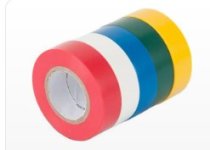
This is just what I did because I hate teflon tape. I don't recommend this procedure to anyone.... it just gives you something to think about.
I also use this tape under any zip tie that is used on the motor mount. I don't use adel clamps for wires.... IT'S EXPERIMENTIAL.
So no chance of pieces of tape getting in the system right? Got it.Because it's been an industry standard on P-S fittings for decades, there's no fluid flow in a P-S system so it's not the same as a fuel/oil/hyd system.
The product used should be appropriate for the application.
Because someone used RTV on a fuel fitting does that mean you should never use RTV?
Applied correctly no more chance than excess thread sealant getting in the systemSo no chance of pieces of tape getting in the system right? Got it.

Correct me if I'm wrong, you built 2 airplanes now you're an expert on instrument installation?
I do the same for wires except I use silicone fusion tape and wrap both the wires and the mount, no need for a bucket load of adel clamps.For the same reason as Walt mentioned above. But for the reason I don't like the way teflon tape shreds, I used one wrap + a small overlap of thin electric tape on pipe fittings going into the instrument. It just needs to be hand snug. Removal of the tape is simple.
This is just what I did because I hate teflon tape. I don't recommend this procedure to anyone.... it just gives you something to think about.
I also use this tape under any zip tie that is used on the motor mount. I don't use adel clamps for wires.... IT'S EXPERIMENTIAL.
View attachment 87871
I would think electrical tape would be too thick on pipe threads though.
Last edited:
- Status
- Not open for further replies.
