Van's Air Force

The definitive Van's Aircraft support community! Buying, building or flying an RV? Join our exclusive family of mentors and enthusiasts!

We may have saved the NTSB some paperwork

seagull

Well Known Member
A good friend bought a RV-12 at the end of last year 2024. He bought it from the original builder who was selling it because of health reasons. The plane was a 2010 kit, first flown in 2011. The plane had a little over 700 hours on it and was well built. I helped with the pre-buy. After the sale it was bought to my hangar and together we went over all the critical areas and fixed some minor details found in the pre-buy. He flew the plane home and has put 10-15 hours on it since. It is now condition inspection time and he asked me to help him out with his first inspection. I know the -12 inside and out so it was nice to be able to share my knowledge with another owner. Along with all the regular conditional inspection items we did a handful of Service Bulletins that had not been done while the plane was sitting for the past year before the sale. We also added a few custom items I have done for my -12, we spent about a week total very thorough all over this plane. Long story short we are on the last day putting all the covers back on and my friend shows up with a SB item to discuss.

SB 04-2-1, inspect fuel tanks, Feb 1 2004. (Note, this SB was issued 6 years before this kit was built).

“Van’s Aircraft, Inc. recently received a report of clear protective plastic sheet having been found inside fuel tanks. In 2000, the color of the applied protective sheeting was changed to a “blue” to minimize the possibility of inadvertently leaving it in place during construction. Prior to this change, the sheeting was clear and more difficult to detect on the skins. It has come to our attention that at least one QuickBuild RV-6 aircraft produced prior to the change has been found with some of the protective sheeting inside the tank”.

We discussed this SB and my feeling was (after spending several weeks working on this plane after the buy, and now for the conditional, thoroughly going over it and finding no “builder errors”, also considering the quality of the build (well built), and the fact this SB was issued way before this kit was manufactured. I really didn’t think there was anything to be concerned about. BUT on an abundance of caution we pulled out the bore cam and fished it down the filler neck, looked left, right, up , down and into the frame a glint of blue, it looked like a small piece of plastic sheet, further investigating was required.

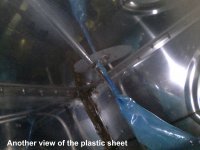
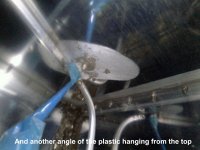
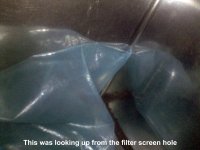
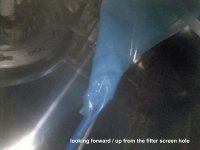
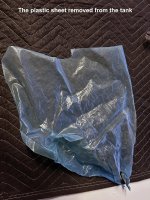
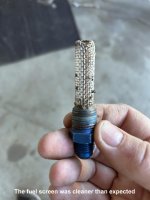
After draining the tank and more exploration with a stiffer camera and the filler neck removed we saw a much bigger piece of plastic. My real goal was to look at the filter screen in the tank, the only easy way was to remove the plumbing from the bottom. The filter screen came out with very little contamination. Next we shoved the camera up that hole to get a better overall pic. Sure enough the protective plastic on the top of the tank had never been removed. It had been cut back where the sections were sealed so there were never any leaks. The camera view showed the protective sheet hanging loose inside the tank. With some creative work tools the 10” x 13” plastic sheet was removed through the tank outlet hole and then the tank was thoroughly inspected again with the bore camera. We gave the tank a passing grade and the plane passed inspection this weekend 2/22/2025.

Possible accident adverted, this pilot and his wife are now flying with more peace of mind.
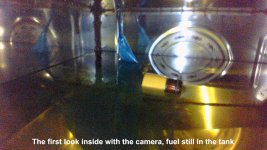

tank plastic 01.JPGtank plastic 02.JPGtank plastic 03.jpgtank plastic 04.JPGtank plastic 05.JPGtank plastic 06.JPGtank plastic 07.jpgtank plastic 08.jpg
 
Last edited:
I wish you people would stop calling it a conditional inspection. It’s not conditional to do a condition inspection. It is required every 12 calendar months and must be endorsed by at minimum an A&P or a repairman certificate if you were named as the builder. In this case since it was bought second hand the condition inspection must be signed off by an A&P or an AI
 
In this case since it was bought second hand the condition inspection must be signed off by an A&P or an AI
This is incorrect, the new owner can take a 16 hour inspection course. "Once the aircraft is listed on your repairman certificate, you are allowed to do the condition inspection each year. You do not have to be the builder".

The purpose of this thread was really about the find, and not the nuts and bolts of the inspection process.
 
This is incorrect, the new owner can take a 16 hour inspection course. "Once the aircraft is listed on your repairman certificate, you are allowed to do the condition inspection each year. You do not have to be the builder".

The purpose of this thread was really about the find, and not the nuts and bolts of the inspection process.
I stand corrected, I missed that it was a RV12. I was being sarcastic as I see so many on and off this forum refer to it as a conditional inspection 😜
 
I wish you people would stop calling it a conditional inspection. It’s not conditional to do a condition inspection. It is required every 12 calendar months and must be endorsed by at minimum an A&P or a repairman certificate if you were named as the builder. In this case since it was bought second hand the condition inspection must be signed off by an A&P or an AI
Along with other errors in this post can we stop with the inconsequential error in phrases, or do we just need to call it a CI? Who are the "you people"?? Relax...you people's intent was spot on!
 
A good friend bought a RV-12 at the end of last year 2024. He bought it from the original builder who was selling it because of health reasons. The plane was a 2010 kit, first flown in 2011. The plane had a little over 700 hours on it and was well built. I helped with the pre-buy. After the sale it was bought to my hangar and together we went over all the critical areas and fixed some minor details found in the pre-buy. He flew the plane home and has put 10-15 hours on it since. It is now condition inspection time and he asked me to help him out with his first inspection. I know the -12 inside and out so it was nice to be able to share my knowledge with another owner. Along with all the regular conditional inspection items we did a handful of Service Bulletins that had not been done while the plane was sitting for the past year before the sale. We also added a few custom items I have done for my -12, we spent about a week total very thorough all over this plane. Long story short we are on the last day putting all the covers back on and my friend shows up with a SB item to discuss.

SB 04-2-1, inspect fuel tanks, Feb 1 2004. (Note, this SB was issued 6 years before this kit was built).

“Van’s Aircraft, Inc. recently received a report of clear protective plastic sheet having been found inside fuel tanks. In 2000, the color of the applied protective sheeting was changed to a “blue” to minimize the possibility of inadvertently leaving it in place during construction. Prior to this change, the sheeting was clear and more difficult to detect on the skins. It has come to our attention that at least one QuickBuild RV-6 aircraft produced prior to the change has been found with some of the protective sheeting inside the tank”.

We discussed this SB and my feeling was (after spending several weeks working on this plane after the buy, and now for the conditional, thoroughly going over it and finding no “builder errors”, also considering the quality of the build (well built), and the fact this SB was issued way before this kit was manufactured. I really didn’t think there was anything to be concerned about. BUT on an abundance of caution we pulled out the bore cam and fished it down the filler neck, looked left, right, up , down and into the frame a glint of blue, it looked like a small piece of plastic sheet, further investigating was required.

After draining the tank and more exploration with a stiffer camera and the filler neck removed we saw a much bigger piece of plastic. My real goal was to look at the filter screen in the tank, the only easy way was to remove the plumbing from the bottom. The filter screen came out with very little contamination. Next we shoved the camera up that hole to get a better overall pic. Sure enough the protective plastic on the top of the tank had never been removed. It had been cut back where the sections were sealed so there were never any leaks. The camera view showed the protective sheet hanging loose inside the tank. With some creative work tools the 10” x 13” plastic sheet was removed through the tank outlet hole and then the tank was thoroughly inspected again with the bore camera. We gave the tank a passing grade and the plane passed inspection this weekend 2/22/2025.

Possible accident adverted, this pilot and his wife are flying with more peace of mind.


View attachment 81507View attachment 81508View attachment 81509View attachment 81510View attachment 81511View attachment 81512View attachment 81513View attachment 81514
Excellent finding this.
 
One more reason NOT to leave the plastic on the aluminum. I just don’t understand why so many people will spend hours cutting away only parts of the plastic coating and leaving the rest. What am I missing here? It traps moisture that encourages corrosion, as well as becoming increasingly difficult to remove over time, and i just don’t see the upside, with the exception of those planning to polish their exterior.
 
I call it an annual about 1/2 the time. Probably gonna fall out of the sky any day now.

I call it an annual too. Yes, I know it's not a FAR 91.409(a)(1) "annual", but it's performed yearly... therefore it's annual, just like my annual performance review at work or my annual credit report.
 
A good friend bought a RV-12 at the end of last year 2024. He bought it from the original builder who was selling it because of health reasons. The plane was a 2010 kit, first flown in 2011. The plane had a little over 700 hours on it and was well built. I helped with the pre-buy. After the sale it was bought to my hangar and together we went over all the critical areas and fixed some minor details found in the pre-buy. He flew the plane home and has put 10-15 hours on it since. It is now condition inspection time and he asked me to help him out with his first inspection. I know the -12 inside and out so it was nice to be able to share my knowledge with another owner. Along with all the regular conditional inspection items we did a handful of Service Bulletins that had not been done while the plane was sitting for the past year before the sale. We also added a few custom items I have done for my -12, we spent about a week total very thorough all over this plane. Long story short we are on the last day putting all the covers back on and my friend shows up with a SB item to discuss.

SB 04-2-1, inspect fuel tanks, Feb 1 2004. (Note, this SB was issued 6 years before this kit was built).

“Van’s Aircraft, Inc. recently received a report of clear protective plastic sheet having been found inside fuel tanks. In 2000, the color of the applied protective sheeting was changed to a “blue” to minimize the possibility of inadvertently leaving it in place during construction. Prior to this change, the sheeting was clear and more difficult to detect on the skins. It has come to our attention that at least one QuickBuild RV-6 aircraft produced prior to the change has been found with some of the protective sheeting inside the tank”.

We discussed this SB and my feeling was (after spending several weeks working on this plane after the buy, and now for the conditional, thoroughly going over it and finding no “builder errors”, also considering the quality of the build (well built), and the fact this SB was issued way before this kit was manufactured. I really didn’t think there was anything to be concerned about. BUT on an abundance of caution we pulled out the bore cam and fished it down the filler neck, looked left, right, up , down and into the frame a glint of blue, it looked like a small piece of plastic sheet, further investigating was required.

After draining the tank and more exploration with a stiffer camera and the filler neck removed we saw a much bigger piece of plastic. My real goal was to look at the filter screen in the tank, the only easy way was to remove the plumbing from the bottom. The filter screen came out with very little contamination. Next we shoved the camera up that hole to get a better overall pic. Sure enough the protective plastic on the top of the tank had never been removed. It had been cut back where the sections were sealed so there were never any leaks. The camera view showed the protective sheet hanging loose inside the tank. With some creative work tools the 10” x 13” plastic sheet was removed through the tank outlet hole and then the tank was thoroughly inspected again with the bore camera. We gave the tank a passing grade and the plane passed inspection this weekend 2/22/2025.

Possible accident adverted, this pilot and his wife are now flying with more peace of mind.
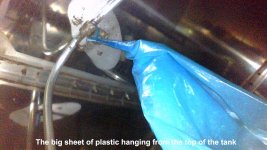

View attachment 81507View attachment 81508View attachment 81509View attachment 81510View attachment 81511View attachment 81512View attachment 81513View attachment 81514
Great find and correct in avert an incident waiting to happen.
 
Do you know if this was a quick build RV12 tank or not? Vans started doing QB tanks for the Rv12 around that time.
 
n
Do you know if this was a quick build RV12 tank or not? Vans started doing QB tanks for the Rv12 around that time.
It could have been a quick build, the timeline from arrival of the kit to flying was 11-12 months. The pro-seal inside the tank was sloppy, which made me think “builder”. I didn’t want to get into those details, the real story was about finding the unthinkable during an inspection.
 
Do you know if this was a quick build RV12 tank or not? Vans started doing QB tanks for the Rv12 around that time.
I don’t see the qb team only cutting off enough plastic to expose the rivet areas. That has builder written all over it.
 
Back
Top