Van's Air Force

The definitive Van's Aircraft support community! Buying, building or flying an RV? Join our exclusive family of mentors and enthusiasts!

UPDATE -- RV-7 engine failure, Emer landing, no damage/injuries

BLittleton

Active Member
Flying from Winslow Az (KINW) to levelland tx KLLN), fat, dumb, and happy at 9500’. Suddenly out of nowhere (and over nowhere) engine rolled back. Mix, prop, throttle forward, aux pump on, and no power. Engine never stopped rotating, so I should have pulled prop aft.

Made the call to center and chose a spot

Elevation is about 8k so almost no glide distance. No power landing on dirt road

Best landing of my life. Perfect dirt road. Engine stopped when I stopped rolling.

No damage or injury.

Somehow by the grace of god had cell service. Acoma police helped me get the plane back to their police station on a trailer.

I dumped the engine data and saw the oil press and fuel press both went to 0 at same time. Fuel press came back when I activated the electronic pump. Still have all my 6 qts of oil in the sump. My first guess is the gear for oil pump and fuel pump gave out??

Stay safe out there, and fly the plane!!
 
Flying from Winslow Az (KINW) to levelland tx KLLN), fat, dumb, and happy at 9500’. Suddenly out of nowhere (and over nowhere) engine rolled back. Mix, prop, throttle forward, aux pump on, and no power. Engine never stopped rotating, so I should have pulled prop aft.

Made the call to center and chose a spot

Elevation is about 8k so almost no glide distance. No power landing on dirt road

Best landing of my life. Perfect dirt road. Engine stopped when I stopped rolling.

No damage or injury.

Somehow by the grace of god had cell service. Acoma police helped me get the plane back to their police station on a trailer.

I dumped the engine data and saw the oil press and fuel press both went to 0 at same time. Fuel press came back when I activated the electronic pump. Still have all my 6 qts of oil in the sump. My first guess is the gear for oil pump and fuel pump gave out??

Stay safe out there, and fly the plane!!
Great job. Crankshaft gear is common to everything else in the accessory case. Dowel pin drives that gear and they do have a minor history of failure. Exactly where are you. I'm not familiar with Acoma.
 
Great job. Crankshaft gear is common to everything else in the accessory case. Dowel pin drives that gear and they do have a minor history of failure. Exactly where are you. I'm not familiar with Acoma.
There is a 'spot' called Acoma on ForeFlight, about 8 NM south of I-40, between KABQ and KGNT. Several miles into the desert ... ??
Well done, and will look forward to all the details! Glad to hear of safety of all.
 
Great job creating a good outcome out of a bad situation.

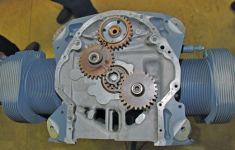
If you lost both oil pressure and fuel pressure, my guess is the crankshaft gear fell off. The pin can break and allow the gear to rotate independently from the crank. Doesn’t happen often, but a known issue. The end of this gear assembly drives the oil pump and it’s gears create rotation of all the accy case gears, one of which drives the fuel pump.
 
If its the crank gear dowel I don't believe the broken part can be removed with the engine on the airplane. I am not even sure an engine shop can remove the broken end. At a minimum it will reauire removal of the accym case and some special tooling top remove the broken end.
 
If its the crank gear dowel I don't believe the broken part can be removed with the engine on the airplane. I am not even sure an engine shop can remove the broken end. At a minimum it will reauire removal of the accym case and some special tooling top remove the broken end.
Ya it involves drilling a hole and filling it with a hydraulic fluid/ oil and hitting it with a punch. Letter also basically says if you hit the crank with the drill bit your screwed. Definitely a specialist task.
 
I don't believe there is any qualified help available in that area. Maybe hangar space at Gallup or Grants but no maintenence. If you have an impulse mag the lack of accy rotation can be confirmed byu lack of the very noticable click of the impulse as the engine is rotated with the starter. Call me tomorrow if you want any further suggestions. 928-208-1470
 
If its the crank gear dowel I don't believe the broken part can be removed with the engine on the airplane. I am not even sure an engine shop can remove the broken end. At a minimum it will reauire removal of the accym case and some special tooling top remove the broken end.
You can remove the gear with just the accy case of. The problem is that this kind of failures requires advanced work for a specialty shop like asi to inspect and likely repair the crank. The are several detailed SIs to be followed and i am told there is often machining work to be done to get it all right. Usually the dowel gets wedged into the bore and getting it out is specialty work.
 
Has the engine ever had a sudden stoppage or prop strike? I think it's the cam gear dowel pin -- Lycoming Service Bulletin No. 475C and AD Note 91-14-22 after a sudden engine stoppage or prop strike. Nice work on the off-field landing!
 
Ya it involves drilling a hole and filling it with a hydraulic fluid/ oil and hitting it with a punch. Letter also basically says if you hit the crank with the drill bit your screwed. Definitely a specialist task.
That requires a special drill jig I'm not sure it will work with broken dowel. There is also a potential issue with small pieces of metal from the dowel. At a minimum it will require a carefuil cleaning of all the accy gears and the accy case.
 
Has the engine ever had a sudden stoppage or prop strike? I think it's the cam gear dowel pin -- Lycoming Service Bulletin No. 475C and AD Note 91-14-22 after a sudden engine stoppage or prop strike. Nice work on the off-field landing!
Not the cam gear. Cam gears for decades have been integral with the cam.
 
Can the valves contact the piston on these engines if the timing was way off? I ask because if the dowel pin actually failed I don't think it would have been wind milling when the cam stopped rotating and pistons started slapping valves. Thoughts?
 
Can the valves contact the piston on these engines if the timing was way off? I ask because if the dowel pin actually failed I don't think it would have been wind milling when the cam stopped rotating and pistons started slapping valves. Thoughts?
Once the cam stops rotating, the piston wil slam into any open valve and bend it or break something. After that, it will happily windmill. Just too much mass /.energy rotating to be stopped by a valve.

I am unsure if the pv lycs are interference design or not. I suspect it is not interference, because if it was, i think we would see bent valves when they stick and i never hear about that, just bent pushrods . Also that is more common with valves that are not perpendicular to the piston head, like the pv lycs.
 
Last edited:
Once the cam stops rotating, the piston wil slam into any open valve and bend it. After that, it will happily windmill.

I am unsure if the pv lycs are interference design or not. I vaguely remember folks talking about bent valves and if that is true, they are interference design.
See my previous comment lr172.
 
Whan the crank dowel pin shears, the entire gear train, including the cam, stops rotating.
I'm curious if the pin failing would be enough by itself to cause it. I had to install a new crank gear on my engine early on and there was definitely a friction fit as well as quite a bit of torque on that bolt. I always wondered how much load the pin took vs the bolt and friction but never got a straight answer from Lycoming.
 
I'm curious if the pin failing would be enough by itself to cause it. I had to install a new crank gear on my engine early on and there was definitely a friction fit as well as quite a bit of torque on that bolt. I always wondered how much load the pin took vs the bolt and friction but never got a straight answer from Lycoming.
Pretty sure that pin is there to take a decent portion of the load. Iirc, it is only a 5/16 or 3/8 bolt holding it on. Not enough torque with such a small bolt and also not alot of surface area for friction to do its thing. Don’t forget that you have a lot of load on the camshaft. You could be right, as you need a pin for indexing, but that doesn’t mean it is not also carrying a lot of the load. I suppose only the designer really knows.

Very few rotational shafts with gear or pulleys on the end to transfer load have only a flat friction fit. It is usually a woodruff key, a dowel pin or a morse taper.

I agree that the broken pin alone wouldn’t do this. It would take time for the forces to eventually loosen the bolt.
 
Last edited:
Whan the crank dowel pin shears, the entire gear train, including the cam, stops rotating or usually does. In the case of the op, we know it did because he lost oil and fuel pressure.
Yes--only one gear in common with the mechanical fuel pump and oil pump--it be the crankshaft gear.

1754716302511.png
 
Congrats on getting down safely! It will be really interesting to find out what caused this to happen - reading this thread is giving me the heebie-jeebies.
 
Pretty sure that pin is there to take a decent portion of the load. Iirc, it is only a 5/16 or 3/8 bolt holding it on. Not enough torque with such a small bolt and also not alot of surface area for friction to do its thing. Don’t forget that you have a lot of load on the camshaft. You could be right, as you need a pin for indexing, but that doesn’t mean it is not also carrying a lot of the load. I suppose only the designer really knows.

Very few rotational shafts with gear or pulleys on the end to transfer load have only a flat friction fit. It is usually a woodruff key, a dowel pin or a morse taper.

I agree that the broken pin alone wouldn’t do this. It would take time for the forces to eventually loosen the bolt.
Forgot to mention that the crank rotates clockwise. Therefore, once the pin breaks, rotational forces will cause the bolt to loosen if the frictional forces are not strong enough. If the designers were planning to use frictional force in an application like this, they would have used a left hand threaded bolt. With pulleys and gears attached without other means of holding, they generally specify threads that will tighten from in use forces.

I could be mistaken, but don't remember that being a left hand thread.
 
Forgot to mention that the crank rotates clockwise. Therefore, once the pin breaks, rotational forces will cause the bolt to loosen if the frictional forces are not strong enough. If the designers were planning to use frictional force in an application like this, they would have used a left hand threaded bolt. With pulleys and gears attached without other means of holding, they generally specify threads that will tighten from in use forces.

I could be mistaken, but don't remember that being a left hand thread.
Ya that's a good point. I too can't remember if it was left hand or not, racking my brain trying to remember. I do remember having to use a very specific anti-seize; in fact I get reminded every time I see the bottle in the hangar. :ROFLMAO:
 
There is a 'spot' called Acoma on ForeFlight, about 8 NM south of I-40, between KABQ and KGNT. Several miles into the desert ... ??
Well done, and will look forward to all the details! Glad to hear of safety of all.
Been there, actually Acoma Pueblo, one of the 19 New Mexico Pueblos. Pretty, nice folks, but very Native American in a good way. Lots of cultural history worth a visit but hopefully planned...Great job of flying and keeping ahead of the plane.
 
That gear on the end of the crank just doesn't fall off if it is safetied and torqued correctly with the tab washer during engine assembly. At any rate the engine has to come off. One can remove a mag and look inside of the accessory case to see what might have happened.
 

Attachments

  • 1754792997607.png
    1754792997607.png
    719.7 KB · Views: 130
That gear on the end of the crank just doesn't fall off if it is safetied and torqued correctly with the tab washer during engine assembly. At any rate the engine has to come off. One can remove a mag and look inside of the accessory case to see what might have happened.
I don’t think i said it fell off. But if the dowel pin breaks, it can spin freely, separate from the crank. I have no idea if the bolt loosens or it also breaks. Just know that it happens sometimes. Got that from ASI who rebuild engine parts for a living. Iirc, it is often in conjunction with a prop strike. Apparently that is one the most common failure points during a prop strike.

I know the broken dowel pin is somewhat common, as I recall a conversation with the ASI guys when i sent in my crank in (prop strike). They commented about all of the challenges in restoring a crank with a broken dowel. They were concerned my crank could have that problem. Apparently it happens where they cannot yellow tag the crank. They said they can save most of them but not all of them.

I do remember there is no safety wire on that bolt. Just the tab washer. Also torquing a bolt to spec is not a universal guarantee that something bad won’t happen.
 
Last edited:
Not true on parallel valve engines. Valve can stay wide open and not hit a piston. Angle-valve engines, out of time valves will contact the piston.
Thanks for clarifying that. I suspected that was the case, but wasn’t sure. Was just responding to a what if by someone.
 
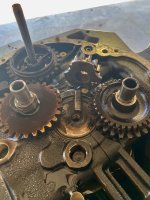
I was finally able to remove the engine. After getting into the accessory case, we found the main crank bolt suffered an apparent fatigue crack as it has sheered completely off, thus the main crank gear no longer spun. We didn't find the head of the bolt yet...probably down in the oil pan. Some minor damage to the main gear teeth and a couple others. From the records, it is unclear if this bolt was replaced when the engine was rebuilt after a prop strike. Also, the case may not have been fully cleaned as it is caked in dark, black, cooked oil.

This will be an excellent "opportunity" to learn how to assemble an engine after all the parts are sent out for inspection.
 

Attachments

  • IMG_1231.jpeg
    IMG_1231.jpeg
    2.3 MB · Views: 563
Last edited:
I was finally able to remove the engine. After getting into the accessory case, we found the main crank bolt suffered an apparent fatigue crack as it has sheered completely off, thus the main crank gear no longer spun. We didn't find the head of the bolt yet...probably down in the oil pan. Some minor damage to the main gear teeth and a couple others. From the records, it is unclear if this bolt was replaced when the engine was rebuilt after a prop strike. Also, the case may not have been fully cleaned as it is caked in dark, black, cooked oil.

This will be an excellent "opportunity" to learn how to assemble an engine after all the parts are sent out for inspection.
Was the dowel pin still there and straight? Guessing the gear just fell off once the bolt sheared. Given the way it failed, there is a risk of fracture on that pin. I would strongly consider sending the crank to asi for inspection and pin replacement. That event could have put a lot of stress on that pin.
 
From Lycoming concerning inspection after a prop strike:

“Some failures resulted from an overstressed crankshaft gear dowel which ultimately sheared. When this part breaks, all power is lost. Because of this, Lycoming Service Bulletin No. 475C and AD Note 91- 14-22 require a mandatory inspection and compliance with repair and reassembly procedures.”

This instruction and the AD requires replacement of the crank gear and bolt after a prop strike, plus inspection (at least) of the crankshaft gear dowel. This happened to me - twice - when my partner in my second RV8 had a prop strike. Gear and bolt replaced, not sure about the dowel, but I imagine that is replaced too. Inspection by ASI in Tulsa was done both times. The first one was not repairable, so new crankshaft that time.

 
Last edited:
Looks to me that the crankshaft is quite deformed on the lip that the gear sits in. Also agree, that pin is likely toast but that's not the bigger problem that needs fixed. :oops:
 
Looks to me that the crankshaft is quite deformed on the lip that the gear sits in. Also agree, that pin is likely toast but that's not the bigger problem that needs fixed. :oops:
Agreed. looks like when the gear let go, it took a nice chunk out of the outer recess wall of the crank. Sadly, I don't believe that is repairable. Send a pic to asi before sending it in for an opinion.
 
Impressive and safe landing, could have been quite different. I would send the crank for inspection as others have said. In the meantime I would start looking for a yellow tagged crank. Even if your original crank is repairable (I have doubts) you will have no trouble selling the one not needed. Down time sucks
 
Two shops have told me the crank is not repairable. Nothing wrong with a second opinion...right?

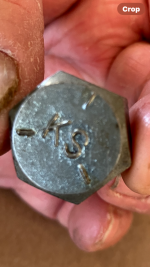
I did find the head of the crank bolt (or at least the "bolt holding on the crank gear") in the oil sump as expected. One of the smart guys hanging around the shop noticed this is NOT an aircraft-grade bolt. It appears whomever built this engine couldn't be bothered to use the proper hardware, and raided the aircraft isle at home depot instead...which is sad. I'm surprised this bolt lasted the 100 hours or so that it did. I also discovered the castellated nut under the cam gear was never even installed.

So far, the cylinders all look good, and all the rings/pistons were intact and looked good. I have high hopes all 4 will pass inspection. All the connecting rods, however showed a bit of play or wabble on the crank...I don't think they should do that. The first look at cam and lifters look ok, but they're still in the case. I should have the case split in the next few days, then off to Tulsa with the bits for the proper examinations and testing by professionals.

I'm looking forward to an engine that I will PERSONALLY know is built right, using the right stuff.
bolt.png
 
Last edited:
Back
Top