

Van's Air Force
You are using an out of date browser. It may not display this or other websites correctly.
You should upgrade or use an alternative browser.
You should upgrade or use an alternative browser.
Tip: Proseal ...The fact and the fiction
- Thread starter Rick6a
- Start date



Proseal
Jerry
I manage a small Google Group of Colorado RV Builders and Owners. If you would like to join, shoot me an e-mail from a G-mail account.
On the proseal side, I kept some fairly good notes. Refer to my blog.
Got a question for all you guys with strong magic. I'm about ready to do the ribs on the fuel tanks this week and have read Rick6A's and everyone else's fantastic posts on pro-seal. Great words/pics. The plan is to do all five ribs at once. What I can't quite figure out is should all the required sealant be mixed up at once or in batches? Also, is it better to apply the sealant to the upper portion of all the ribs/skin (after the nose area is sealed/clecoed) and then cleco them all at one time and then seal the lower portion of the ribs/skin and cleco all of them? I live in Co Springs so the garage will be in the high 50s / low 60s this week when all this takes place so the working time will be around 1+30-ish. Hopefully this makes sense as I still get a bit of a helmet fire on this stuff. Thanks for your support!
Jerry
I manage a small Google Group of Colorado RV Builders and Owners. If you would like to join, shoot me an e-mail from a G-mail account.
On the proseal side, I kept some fairly good notes. Refer to my blog.

For a cheap ?caulking gun?, I used horse syringes from Tractor Supply. I used the largest ones they had and it worked great for neatly applying proseal, even for putting a dab over the shop head of the driven rivet. You can keep filling and reusing the same syringe until the proseal begins to set up. Just pull the plunger out, refill the tube using a wide popsicle stick and keep going. It?s a cheap and easy solution.
rv7charlie
Well Known Member
Another method is quart ziplock style freezer bags. Turn one inside out, weigh the two components (about a golf ball size portion) on the bag itself, turn it right side out & squeeze out the air, seal, and mix with a dowel or short piece of pvc pipe as a roller on the table. Roll the mix to one corner, snip the corner with a razor knife or scissors, and use it like a cake baster. You never need to worry about overcured mix combining with new mix, and supply of dispensers is as close as the nearest convenience store.
Charlie
Charlie

rjcthree
Well Known Member
Number of 3.5oz cartridges?
Due to life, I have an unopened quart that?s about to time out. I?m also having nightmares about the measuring mess.
I?m going to the 3.5 oz cartridges from here. After reading all of the posts, I?ve seen 1g/ linear inch, and that one tube does a back baffle job (6/7/8/9). What does it take to do a whole tank (8). It,s been asked a couple times but never directly answered from experience. I admit it, I?m feeling lazy. Thanks.
Due to life, I have an unopened quart that?s about to time out. I?m also having nightmares about the measuring mess.
I?m going to the 3.5 oz cartridges from here. After reading all of the posts, I?ve seen 1g/ linear inch, and that one tube does a back baffle job (6/7/8/9). What does it take to do a whole tank (8). It,s been asked a couple times but never directly answered from experience. I admit it, I?m feeling lazy. Thanks.

I think I used three or four. You?ll need at least two for the ribs then another to do the back baffle. Keep the quart. You can mix up small batches and reuse the tubes. You?ll need some small jobs here and there anyway. When you?re done with the tubes, squeeze out as much of the remaining material as you can. Let cure for a few days and then take off the nozzle, pop out the ?stinger?, put the nozzle back on and pop out the cured bit with compressed air backwards into the nozzle.
Proseal
I used about 1-1/2 quarts on my 7a tanks. I think the tanks are the same if not really similar in size.
I have a very old quart and use it for small odd jobs. Still sets up just fine.
Keep a sample of every mix as a control. Date it and check before sticking a finger in the tank material.
I used about 1-1/2 quarts on my 7a tanks. I think the tanks are the same if not really similar in size.
I have a very old quart and use it for small odd jobs. Still sets up just fine.
Keep a sample of every mix as a control. Date it and check before sticking a finger in the tank material.
As with Larry, I used about 1.5Q on my 7A tanks too. I actually used slightly more, but still under 2Q and if I were more diligent with my use, could have wasted less.
I was mixing up 15g per rib first and then was able to get it down to 10g. I don't remember how much for the baffle. 60 or 70?
I was mixing up 15g per rib first and then was able to get it down to 10g. I don't remember how much for the baffle. 60 or 70?
rv7charlie
Well Known Member
After some instruction from a skilled 2 time builder, I used a single qt kit to seal both standard -7 tanks, plus two 3-bay leading edge aux tanks (around 13 gallons each).
FWIW, there is *very* little sealant needed for the interior ribs. A tiny 'donut' around each rivet on the faying surface, a match head size dot in the dimple, and a small 'cap' over the shop head is all that's needed to seal an interior rib.
Charlie
FWIW, there is *very* little sealant needed for the interior ribs. A tiny 'donut' around each rivet on the faying surface, a match head size dot in the dimple, and a small 'cap' over the shop head is all that's needed to seal an interior rib.
Charlie
Hi all, being in my location things can get difficult to find so I'm doing an order through SkyGeek and will add tank sealant to spread the large shipping cost over many items. What products have people used and recommend? I plan to use a couple tubes and also quart kits. PR1422 is a great product but it also gets quite expensive.
Thanks!
Thanks!

Check with Hank Cheng?
Chris,
Have you reached out to Hank Cheng (Lots about him on VAF)who built the RV-8 in Hong Kong a few years back? His build was sponsored in part by the HAECO group MRO in Hong Kong,( I work for HAECO Americas in the US), and they use a LOT of Proseal. There may be some local connection or supplier that could assist.
Chris,
Have you reached out to Hank Cheng (Lots about him on VAF)who built the RV-8 in Hong Kong a few years back? His build was sponsored in part by the HAECO group MRO in Hong Kong,( I work for HAECO Americas in the US), and they use a LOT of Proseal. There may be some local connection or supplier that could assist.
Chris,
Have you reached out to Hank Cheng (Lots about him on VAF)who built the RV-8 in Hong Kong a few years back? His build was sponsored in part by the HAECO group MRO in Hong Kong,( I work for HAECO Americas in the US), and they use a LOT of Proseal. There may be some local connection or supplier that could assist.
Hi Bill, thanks. Yes I'm in contact with Hank, we both work for Cathay. Unfortunately local suppliers don't have anything like that around here but I spoke with Van's and they can ship me the tank sealant at a reasonable cost so that problem is solved.
rjcthree
Well Known Member
Clecko dwell time
I don’t know what else to call it, dwell time being the time sealant is applied via the Fay method, the assembly secured with cleckos, and the final riveting with additional rivet sealing and encapsulation. Within this thread, it says overnight is fine, days are fine. As with all great plans, my next tank session was derailed (which would have been two day dwell) and now it looks like the time between doing the fay sealing with cleckos and riveting is going to be ten days. There’s not much I can do except an all nighter tonight, which may not be possible either. Have I gone too far?
** went with a three hour riveting session until about 11pm. Keeping unused mixed portions in the fridge- I’m work8ng from tubes- from curing too fast. Still, today, I’m sore. Anybody else notice the two hour cure stuff sets closer to 90 minutes?
I don’t know what else to call it, dwell time being the time sealant is applied via the Fay method, the assembly secured with cleckos, and the final riveting with additional rivet sealing and encapsulation. Within this thread, it says overnight is fine, days are fine. As with all great plans, my next tank session was derailed (which would have been two day dwell) and now it looks like the time between doing the fay sealing with cleckos and riveting is going to be ten days. There’s not much I can do except an all nighter tonight, which may not be possible either. Have I gone too far?
** went with a three hour riveting session until about 11pm. Keeping unused mixed portions in the fridge- I’m work8ng from tubes- from curing too fast. Still, today, I’m sore. Anybody else notice the two hour cure stuff sets closer to 90 minutes?
Last edited:
Variables
I'm no chemist but there are some variables. Temp of the storage area, mix rate.
Mine sat inside at least 2 days at about 68 degrees. I used 4-40 nuts on 100% clekos. Maybe one of the fay sealing experts can provide better advise but I think they will be fine. If you decide to wait, buy a box of 4-40 nuts and slide one on each cleko on the inside. Provides a little extra grip and tension. Put some clamps accross the baffle end to keep it from spreading open past the last cleko. Not super tight. Just enough to hold dimension.
I'm no chemist but there are some variables. Temp of the storage area, mix rate.
Mine sat inside at least 2 days at about 68 degrees. I used 4-40 nuts on 100% clekos. Maybe one of the fay sealing experts can provide better advise but I think they will be fine. If you decide to wait, buy a box of 4-40 nuts and slide one on each cleko on the inside. Provides a little extra grip and tension. Put some clamps accross the baffle end to keep it from spreading open past the last cleko. Not super tight. Just enough to hold dimension.
Last edited:
Freezer
If you have a big freezer, put it in there..that will stop the cure. Get it out and let it thaw when you are ready to start again. Put it in a bag and get as much air out as possible to prevent moisture...otherwise coffee up and keep shooting!
If you have a big freezer, put it in there..that will stop the cure. Get it out and let it thaw when you are ready to start again. Put it in a bag and get as much air out as possible to prevent moisture...otherwise coffee up and keep shooting!
If the assembly is properly clecoed, it's okay to let the sealant cure before riveting. I did, intentionally.
Caveat - my tanks aren't flying yet.
Dave
Caveat - my tanks aren't flying yet.
Dave

In addition to the type B sealant that we use, type A sealant has the working consistency of honey. It's used as a top-coat of rivets and edges per these pictures:
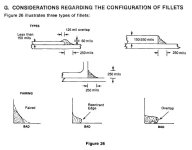
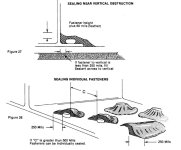
In addition to the type A and B, there's another sealant called "access hatch sealant" which is designed to permit covers and hatches to come off later. AN appropriate use for this one is for the fuel tank sensor cover. It's about the same consistency as type B but is a horrid dirty pink. You won't mistake them.
Van's sells the type B sealant. I got the others from Skygeek.com.
Dave
In addition to the type A and B, there's another sealant called "access hatch sealant" which is designed to permit covers and hatches to come off later. AN appropriate use for this one is for the fuel tank sensor cover. It's about the same consistency as type B but is a horrid dirty pink. You won't mistake them.
Van's sells the type B sealant. I got the others from Skygeek.com.
Dave
I started my tanks today. My intention was to just go the standard route after watching the Van's videos, but after shooting 3 rivets, I decided maybe it was worth trying the "let the proseal cure" method instead. I didn't initially mind bucking rivets covered in proseal, except for the fact that I couldn't really tell the good vs bad results (the 3-3.5 rivets seem a little short too, so I worry about over driving them). Instead of chancing major frustrating and shooting a bunch of subpar rivets, I threw clecos in and decided to try the method from this thread instead. This thread started 15 years ago - any updates or issues anyone who has used this method has noticed in that time? Any reason not to do it or gotchas people have stumbled on?
PM Sent
Let me know.
Mike
Having read through all these excellent posts, one thing I am hoping is someone has copies of rick?s original images? They all don?t seem to work anymore.
Let me know.
Mike

Proseal
If you run Vans conduit through the wings, a little dab is recommended at each rib.
I used a little today to install a heat muff flange on the #1 baffle and used a tiny bit to seal gaps in the Frankensnorkel flange mounts.
All together, maybe two tablespoons since finishing the tanks. Same container probably 6 years old. I patched a Thermorest mattress with it a while back. Before anyone comments, I always mix a test batch to make sure it's still good. Cures every time.
Outside of the tanks, what areas need Proseal and how much is needed?
If you run Vans conduit through the wings, a little dab is recommended at each rib.
I used a little today to install a heat muff flange on the #1 baffle and used a tiny bit to seal gaps in the Frankensnorkel flange mounts.
All together, maybe two tablespoons since finishing the tanks. Same container probably 6 years old. I patched a Thermorest mattress with it a while back. Before anyone comments, I always mix a test batch to make sure it's still good. Cures every time.

Wiley
Well Known Member
Frustrated by proseal dates.
I've always enjoyed working with Van's. That being said, is this reasonable?...
Ordered proseal January 15th 2023. I received a quart manufactured 5/22 with a Van's stocking sticker dated 8/2/22. It shows an expiration of 2/28/23. I can't say I have the ability to build both tanks in that period of time. I put it in the fridge as soon as I received it. I would like to assume it is still OK to use for a while, but not sure I want to risk it.
I've always enjoyed working with Van's. That being said, is this reasonable?...
Ordered proseal January 15th 2023. I received a quart manufactured 5/22 with a Van's stocking sticker dated 8/2/22. It shows an expiration of 2/28/23. I can't say I have the ability to build both tanks in that period of time. I put it in the fridge as soon as I received it. I would like to assume it is still OK to use for a while, but not sure I want to risk it.

The sealant will be fine even if expired as long as it is kept cool.
Before you start on the tanks, mix up a test sample and let it sit for a couple of days to see if it is going to work. I've kept the sealant in the refrigerator for years and it has always set up just fine.
Before you start on the tanks, mix up a test sample and let it sit for a couple of days to see if it is going to work. I've kept the sealant in the refrigerator for years and it has always set up just fine.
Proseal dates
Hi Wiley
I would suggest you return it and request a new can.
It appears to be out of date before you even start.
I have built 26 tanks over the years and never had to use out of date product from Vans. They have been very good at keeping their products current.
It does last after the due date if you freeze it but its not quite as easy to use once thawed.
If this is your first go at the tanks, you want to go slow and not rush things due to an expiry date.
Carr
P.S. always put two gloves on each hand when you start.
Hi Wiley
I would suggest you return it and request a new can.
It appears to be out of date before you even start.
I have built 26 tanks over the years and never had to use out of date product from Vans. They have been very good at keeping their products current.
It does last after the due date if you freeze it but its not quite as easy to use once thawed.
If this is your first go at the tanks, you want to go slow and not rush things due to an expiry date.
Carr
P.S. always put two gloves on each hand when you start.
I won't build tanks with one can that's in my freezer. BUT, it is 29 years old.
Yes, that's right 29 years old and it still sets up just like a new can. I use it to glue things in place like vents etc.
29 year old goop and hardener. The last batch I used 3 months ago set up normally and was looked like good stuff. Go figure.
Art
Yes, that's right 29 years old and it still sets up just like a new can. I use it to glue things in place like vents etc.
29 year old goop and hardener. The last batch I used 3 months ago set up normally and was looked like good stuff. Go figure.
Art
... This thread started 15 years ago - any updates or issues anyone who has used this method has noticed in that time? Any reason not to do it or gotchas people have stumbled on?
Almost 3 years later, I have the same questions. Anyone?
Having read through all these excellent posts, one thing I am hoping is someone has copies of rick?s original images? They all don?t seem to work anymore.
Any luck locating the pictures?
Photos are probably lost to time. I used the "fay seal" process and so far the tanks are happy. I have photos on my blog if you want to review. Shoot me a Google g-mail address and I'll send an invite.Almost 3 years later, I have the same questions. Anyone?
Any luck locating the pictures?
Awesome thread. I read this and did not see ProSeal reapplication addressed. I have a couple of filet spots and rivet heads that I think need more sealant on. The original proseal application is about a week old. What is the procedure for fixing voids etc?
Thanks
Thanks

Not a problem to reapply over cured sealant as long as nothing has happened to cause any surface contamination.Awesome thread. I read this and did not see ProSeal reapplication addressed. I have a couple of filet spots and rivet heads that I think need more sealant on. The original proseal application is about a week old. What is the procedure for fixing voids etc?
Thanks
Probably worth adding these drawings to this thread. I've used the type B sealant between parts (faying surfaces) and the thinner type A as a local top-coat over the joints and rivets. In the drawings, "mils" means .001 inch. So 125 mills is .125 inches or 1/8 inch.
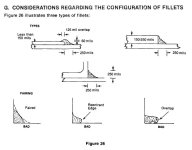
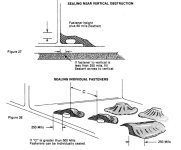
Dave
Dave
Thanks Scott and Dave.
I did the stiffeners so far and looking at Dave’s diagram that I might be light in more areas. I’ll look at that today. I might need to obtain some type A and slather on.
With regards to contamination, I had the tanks covered but not hermetically sealed so some light dust exists. I’d feel better if I could clean this up prior to applying more proseal. What should be used?
Thanks
I did the stiffeners so far and looking at Dave’s diagram that I might be light in more areas. I’ll look at that today. I might need to obtain some type A and slather on.
With regards to contamination, I had the tanks covered but not hermetically sealed so some light dust exists. I’d feel better if I could clean this up prior to applying more proseal. What should be used?
Thanks
Denatured alcohol and a clean cloth should be sufficient ( don’t use plain paper towels).Thanks Scott and Dave.
I did the stiffeners so far and looking at Dave’s diagram that I might be light in more areas. I’ll look at that today. I might need to obtain some type A and slather on.
With regards to contamination, I had the tanks covered but not hermetically sealed so some light dust exists. I’d feel better if I could clean this up prior to applying more proseal. What should be used?
Thanks
A question for Scott or others with more experience with leaking tanks. Working on a leak that is at the fuel pick up location and the leak is thru the NPT thread of the fitting. We have used multiple fittings (some new) with different sealants (Loctite 565, 567 and others) with no luck. Considering the fact that removing the female fitting inside the tank may cause more problems then the small leak we have, I am thinking of using proseal in place of Loctite, knowing well that it will make the removal of the fitting very difficult.Denatured alcohol and a clean cloth should be sufficient ( don’t use plain paper towels).
With that in mind, I was wondering if you have any other suggestions/thoughts in this situation.

aeroaddict
Well Known Member
Great thread. But have a question: bought PRC PR-1422B2 and the color is brown not white (part B,
not mixed) ? Is that ok? I have never seen tank sealant brown, always grey or white (part B unmixed). Part A is black.
not mixed) ? Is that ok? I have never seen tank sealant brown, always grey or white (part B unmixed). Part A is black.
Yep--1422 is brown, and my "go to" tank sealant. I lake to assemble with "B" and topcoat with "A" which is thin and brushes on smooth .Great thread. But have a question: bought PRC PR-1422B2 and the color is brown not white (part B,
not mixed) ? Is that ok? I have never seen tank sealant brown, always grey or white (part B unmixed). Part A is black.
aeroaddict
Well Known Member
Thanks. That's the plan.
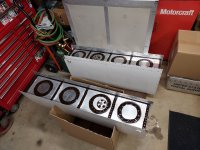
Thes plates are brush topcoated with 1422A 1/2 after they were installed with 1422B1/2. You can see how nicely it flows out.Yep--1422 is brown, and my "go to" tank sealant. I lake to assemble with "B" and topcoat with "A" which is thin and brushes on smooth .
Attachments
If you are referring to the rib flutes (made to straighten the rib flanges) or the spaces between the radius flanges, yes. I seal everything.One last question! When fileting, does one apply a filet over the rib flange reliefs?
Thanks

Probably been posted before but Scott did an excellent video on building RV fuel tanks.
Well worth a watch if you’re about to do it.
Fuel Tank Building
Well worth a watch if you’re about to do it.
Fuel Tank Building
Thanks.Probably been posted before but Scott did an excellent video on building RV fuel tanks.
Well worth a watch if you’re about to do it.
Fuel Tank Building
I dug thru this and other threads and did watch that video (extremely helpful!) and while specific about many things, I did not see details on the fileting. Seemed to me that it would be good to also filet the reliefs (flange cut outs between rivet sections).
I now smell proseal all the time. I think it is wafting thru my skin…. Can’t wait to finish.
@BavafaA question for Scott or others with more experience with leaking tanks. Working on a leak that is at the fuel pick up location and the leak is thru the NPT thread of the fitting. We have used multiple fittings (some new) with different sealants (Loctite 565, 567 and others) with no luck. Considering the fact that removing the female fitting inside the tank may cause more problems then the small leak we have, I am thinking of using proseal in place of Loctite, knowing well that it will make the removal of the fitting very difficult.
With that in mind, I was wondering if you have any other suggestions/thoughts in this situation.
I'm dealing with the same issue. How did the ProSeal work for you? Did you use B1/2 or B2 and how long did you give it to cure before adding gas?
Last edited:
Hi Mark,@Bavafa
I'm dealing with the same issue. How did the ProSeal work for you? Did you use B1/2 or B2 and how long did you give it to cure before adding gas?
The proseal fixed the issue and there has been no sign of any leak anymore. We never confirmed if the fitting that is inside the tank had any cracks or if it was just thru the thread that caused the leaking but adding a dab of proseal on the fitting and threading it in fixed the issue. We let it cure just a few days but as you may know Proseal cures somewhat based on temp and we had really worm temps.
Hope this helps you

