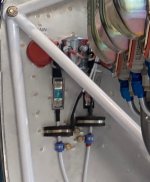
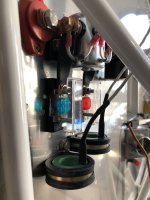
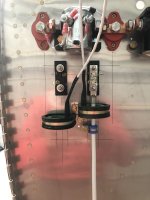
I have been trying to decide whether to use fusible links, or MIDI fuses FWF for my bus feeds, so decided to do some testing. I welcome all comments and insights!
You can see the test and videos here:

 tasrv14.blogspot.com
Some conclusions i have drawn from this testing:
You can see the test and videos here:
Wiring Planning: Fusible Link Testing
A Build Log detailing the build of a Vans RV-14
tasrv14.blogspot.com
Some conclusions i have drawn from this testing:
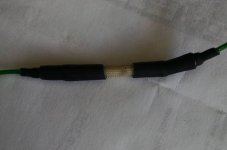
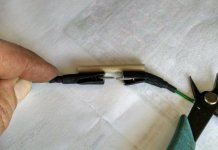
- The silicone wire is a great product for fusible links. The fire and smoke is contained within the insulation totally.
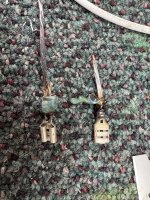
- On the larger gauges, it really does take a considerable amount of time, and generate a considerable amount of heat. So much so that it damages the insulation on the faston/ring terminals, and i question whether it would cause damage to a relay with a plastic body.
- While the fusible link opens the wire, continual shorting and arcing can continue while there is still power available.
- If using silicone wire, the fibreglass / silicone sleeve is not really needed - however, i think i would use it anyway and try and cover the faston/ring terminals at the end as much as i can.
- Tefzel wire is a very bad product for a fusible link - if this is going to be used, then a fibreglass / silicone sleeve is mandatory! It threw molten wire across the driveway in this test.
- A MIDI fuse is so much less energy, but does require holes drilled in the firewall, along with a bit more expense (albeit, but really too much cost involved).