

Van's Air Force
You are using an out of date browser. It may not display this or other websites correctly.
You should upgrade or use an alternative browser.
You should upgrade or use an alternative browser.
Tail Wheel assembly, torque tube vs chains, tire recommendations RV 4????
- Thread starter rick57
- Start date


Sam Buchanan
been here awhile
Might be helpful to tell us why you want to make a change......service issues, controllability, etc??

New to me 4, has single fork now with chains. My experience with tailwheel on my 120 that was single fork with chains was NOT positive. Prefer more response and raising tail a bit.Might be helpful to tell us why you want to make a change......service issues, controllability, etc??
Sam Buchanan
been here awhile
The C120 and the RV-4 are two different puppies as you well know, I wouldn't make decisions about your -4 based on your experience with the 120. I don't think there will be significant differences in tail height between the forks commonly used on RVs and other factors will impact response more than whether or not the fork is single or double.New to me 4, has single fork now with chains. My experience with tailwheel on my 120 that was single fork with chains was NOT positive. Prefer more response and raising tail a bit.
The standard Vans fork is a great option, and we have some RV vendors that also have good options. On my RV-6 (very similar to the RV-4 in regard to the tailwheel) I fly the Bell fork which is still available along with a Rocket link which I think is now orphaned and am pleased with the combination. I'm sure you will get additional opinions from those using different setups. Maybe some vendors will see this thread and jump in with their products.

I have the Bell fork and Aero-Garage Links on my 8, which I have just started flying, installed as per the instructions. Very positive steering control. I had the Screaming Eagle fork on my 7 with the stock Vans chain/spring setup. Worked fine for 800 hrs before selling the plane. The stock Vans fork and chain/spring setup was ok on my 4, although there was not as much ground clearance as with the aftermarket forks and it would sometimes scrape the ground on rough fields. I can not comment on the rod as I have never used one.
For what it's worth I have the Bell tailwheel and the rocket link on my -3, and I fully love it. The response is great, especially in a crosswind. Once the tail is planted on the ground your controllability is positive. From what I hear, they are out of business, which is a shame. Just my $.02.
Sam Buchanan
been here awhile
Here is the Bell fork that has been mentioned:
https://flyboyaccessories.com/products/doug-bell-tailwheel-fork
https://flyboyaccessories.com/products/doug-bell-tailwheel-fork

There’s been some good discussion in this thread as well as others. A lot of it comes down to personal preference, and there’s no better way to see what you like then just trying some alternates out. I produce the aforementioned titanium Lite Links, which I prefer a bit slack. Granted, they can be installed without the slack for a more positive feel as well.
I’m also finally spooling up a production run of the Lite Forks. At only 7 oz with the axle, they’re 10oz lighter than any other option. They’re machined from billet aluminum with a titanium spindle, axle, and top cap. They’ve got increased clearance top and bottom. and have a sleek profile, perfectly nesting a DJM lightweight tailwheel.
They will fit a standard Vans FSTW yoke, or any direct replacement of the OEM yoke. I’ll also be offering a modified version to fit the aviation products yoke, which it sounds like you might already have. Depending on how worn the AP yoke is, it might make sense to replace that while you’re in there.
These will be available on the site next week.
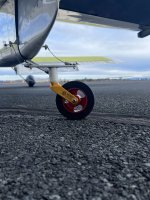
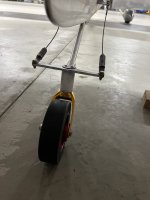
I’m also finally spooling up a production run of the Lite Forks. At only 7 oz with the axle, they’re 10oz lighter than any other option. They’re machined from billet aluminum with a titanium spindle, axle, and top cap. They’ve got increased clearance top and bottom. and have a sleek profile, perfectly nesting a DJM lightweight tailwheel.
They will fit a standard Vans FSTW yoke, or any direct replacement of the OEM yoke. I’ll also be offering a modified version to fit the aviation products yoke, which it sounds like you might already have. Depending on how worn the AP yoke is, it might make sense to replace that while you’re in there.
These will be available on the site next week.
Last edited:

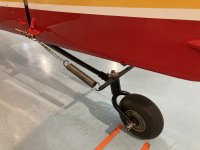
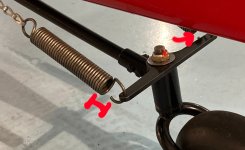

I might suggest adding "I" bolts or clevis to the tailwheel control arm as on the forward connection. As is, the springs will eventually wear into the control arm and require replacement.I have found this tailwheel setup ideal for my -7. The springs are Citabria parts and have just right tension.
View attachment 80197
Last edited:
Please contact me when ready through Vans or a direct message. That is a better idea, better looking and lighter. I like the whole setup. RickThere’s been some good discussion in this thread as well as others. A lot of it comes down to personal preference, and there’s no better way to see what you like then just trying some alternates out. I produce the aforementioned titanium Lite Links, which I prefer a bit slack. Granted, they can be installed without the slack for a more positive feel as well.
I’m also finally spooling up a production run of the Lite Forks. At only 7 oz with the axle, they’re 10oz lighter than any other option. They’re machined from billet aluminum with a titanium spindle, axle, and top cap. They’ve got increased clearance top and bottom. and have a sleek profile, perfectly nesting a DJM lightweight tailwheel.
They will fit a standard Vans FSTW yoke, or any direct replacement of the OEM yoke. I’ll also be offering a modified version to fit the aviation products yoke, which it sounds like you might already have. Depending on how worn the AP yoke is, it might make sense to replace that while you’re in there.
These will be available on the site next week.
View attachment 80176
View attachment 80178
Thanks Rick! Heads up, (and the rest of the guys waiting...)Please contact me when ready through Vans or a direct message. That is a better idea, better looking and lighter. I like the whole setup. Rick
The Lite Fork is now available for pre order! Use the preorder to ensure soonest availability, and to make sure this first batch gets anodized in the colors you want!
Preorders should be shipping the first week of March.

Lightweight Tailwheel Fork — Aero Garage
The lightest available tailwheel fork for RV's and other experimental aircraft. Machined entirely from aluminum and titanium. Manufactured entirely in the USA.
 www.aero-garage.com
I don't have possession yet. Weather in TN or TX isn't cooperating yet. When she gets here, I will contact with appropriate info to get correct parts. I will prefer a 6" tailwheel. Hope you can accomodate that. RickThanks Rick! Heads up, (and the rest of the guys waiting...)
The Lite Fork is now available for pre order! Use the preorder to ensure soonest availability, and to make sure this first batch gets anodized in the colors you want!
Preorders should be shipping the first week of March.
Lightweight Tailwheel Fork — Aero Garage
The lightest available tailwheel fork for RV's and other experimental aircraft. Machined entirely from aluminum and titanium. Manufactured entirely in the USA.

Sounds good Rick.I don't have possession yet. Weather in TN or TX isn't cooperating yet. When she gets here, I will contact with appropriate info to get correct parts. I will prefer a 6" tailwheel. Hope you can accomodate that. Rick
FYI Tailwheels are a bit like dimensional lumber... All the "lightweight 6 inch tailwheels" measure 5.5 in diam.
Sam Buchanan
been here awhile
Wait a second.....you don't have your RV-4 yet? How do you know you need to change the tailwheel? The Vans tailwheel has worked fine for thousands of aircraft. Try flying your new -4 for a bit before making any changes. Enjoy your new ride!I don't have possession yet. Weather in TN or TX isn't cooperating yet. When she gets here, I will contact with appropriate info to get correct parts. I will prefer a 6" tailwheel. Hope you can accomodate that. Rick

Edit; I recall now your new RV-4 doesn't have the standard Vans tailwheel, but I still recommend you take time to get accustomed to the -4 before making changes.
Last edited:
Kinda like the Aggies who were planning to build a barn. Lumber guy asked how long you want your 2x4's? They said a long time, we're building a barn...Sounds good Rick.
FYI Tailwheels are a bit like dimensional lumber... All the "lightweight 6 inch tailwheels" measure 5.5 in diam.
Sam Buchanan
been here awhile
Thanks Sam, it has a single fork tailwheel. I don't like those, had one on my 120 years ago...
I certainly respect your prerogative to use whichever appeals to you.
I'm still pondering the single fork "problem", it seems to me if two tailwheel forks have the same geometry it won't make any difference whether they are single or dual fork........maybe I'm missing something.

vfrazier
Well Known Member
Out of business? Not true!!! Contact Blake at www.flyboyaccessories.comFor what it's worth I have the Bell tailwheel and the rocket link on my -3, and I fully love it. The response is great, especially in a crosswind. Once the tail is planted on the ground your controllability is positive. From what I hear, they are out of business, which is a shame. Just my $.02.
Measurement on single fork is 1/2' diameter and 1 3/4 inches long. Which fork will work? And will rocket link work or will your lightweight cables be better in this application. Thanks, RickKinda like the Aggies who were planning to build a barn. Lumber guy asked how long you want your 2x4's? They said a long time, we're building a barn...
Sam Buchanan
been here awhile
Keep in mind the RV-4 can easily run into an aft CG scenario when loaded with a passenger unless equipped with a constant speed prop. Installing a larger tail wheel will make it more difficult to maintain proper CG.I don't have possession yet. Weather in TN or TX isn't cooperating yet. When she gets here, I will contact with appropriate info to get correct parts. I will prefer a 6" tailwheel. Hope you can accomodate that. Rick
Understand, that's one of the reasons for the switch to a lighter assembly with a double fork. The one from Aero Garage...Keep in mind the RV-4 can easily run into an aft CG scenario when loaded with a passenger unless equipped with a constant speed prop. Installing a larger tail wheel will make it more difficult to maintain proper CG.
Rick, I got your message, are you able to text me or message me a photo of your existing tailwheel yoke? I want to confirm it's the one I'm thinking of.Understand, that's one of the reasons for the switch to a lighter assembly with a double fork. The one from Aero Garage...
And yes, the Lite Fork is compatible with the rigid style links, to say which is better is somewhat personal preference.
I can however say that the Lite Links I offer are the lightest solution available, which is something I prioritize with my RV-4.
I will also consider a three-bladed Catto with a weight to move CG forward. Now, as long as I have half tanks or more, I can safely seat a 215-lb passenger according to the W&B provided with AC. I should lose about 3/4 pound on the tailwheel if I use lightweight assembly and tailwheel. Of course, it would just be simpler to bolt a 20 lb weight on the firewall. Saw that trick with a slick looking LSA from UK. Empty weight is 926 so I have some cushion on gross. Many thanks, RickUnderstand, that's one of the reasons for the switch to a lighter assembly with a double fork. The one from Aero Garage...
Rick, I got your message, are you able to text me or message me a photo of your existing tailwheel yoke? I want to confirm it's the one I'm thinking of.
And yes, the Lite Fork is compatible with the rigid style links, to say which is better is somewhat personal preference.
I can however say that the Lite Links I offer are the lightest solution available, which is something I prioritize with my RV-4.
My guess is Aviation Products? Please advise. Rick DM me with email or cell, I have a better pic on my phone.Rick, I got your message, are you able to text me or message me a photo of your existing tailwheel yoke? I want to confirm it's the one I'm thinking of.
And yes, the Lite Fork is compatible with the rigid style links, to say which is better is somewhat personal preference.
I can however say that the Lite Links I offer are the lightest solution available, which is something I prioritize with my RV-4.
Attachments
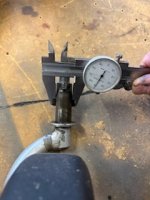
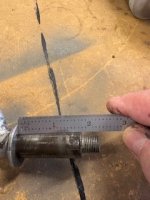
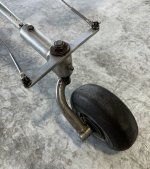

Kinda like the Aggies who were planning to build a barn. Lumber guy asked how long you want your 2x4's? They said a long time, we're building a barn...

 Ah! Good 'ol Texas humor!!!
Many thanks, that was my guess.If the tail wheel is this configuration it is from Aviation Products out of Ojai CA.

Toobuilder
Well Known Member
So, just to be clear... The issue that needs to be solved here is a more desirable CG? The "performance" of the yet to be evaluated single fork tailwheel is no longer the issue?
I have flown the stock Vans tailwheel, single and dual fork AP tailwheels, Maule (single and dual fork), Scott, my own designs, and lastly, the JD Air Parts. With all that experience, I have never noticed a difference in feel that can be attributed to the number of forks. Locking breakout, link tension, spring rate and configuration, tire diameter and composition, sure... But if a single sided arm is sized for the load it sees (as an AP unit on an RV-4 most CERTAINLY is), the pilot will never be able to tell by feel.
I have flown the stock Vans tailwheel, single and dual fork AP tailwheels, Maule (single and dual fork), Scott, my own designs, and lastly, the JD Air Parts. With all that experience, I have never noticed a difference in feel that can be attributed to the number of forks. Locking breakout, link tension, spring rate and configuration, tire diameter and composition, sure... But if a single sided arm is sized for the load it sees (as an AP unit on an RV-4 most CERTAINLY is), the pilot will never be able to tell by feel.

Rick,
Just to let you know. You may find your road to replacement a bit bumpy. The more senior single arm tailwheels were abundant in the 90’s and probably reasonably priced out of ACS although designed and built by Aviation Products. The tube that attaches to the tail spring is designed from block aluminum without bushings that are common in other tailwheel assemblies. After many years of various landings you may find simply replacing the fork alone could allow for some fore and aft play in the replacement fork that hadn’t been noticed before. Which may play into tailwheel movement during landings not encountered before. How the tube was mounted on the spring will play into the equation as well. Is the mounting bolt horizontally or vertically mounted. My personal recommendation is to apply the medical approach of do no harm and take the path of least resistance. Best of luck with your adventure.
Chris
Just to let you know. You may find your road to replacement a bit bumpy. The more senior single arm tailwheels were abundant in the 90’s and probably reasonably priced out of ACS although designed and built by Aviation Products. The tube that attaches to the tail spring is designed from block aluminum without bushings that are common in other tailwheel assemblies. After many years of various landings you may find simply replacing the fork alone could allow for some fore and aft play in the replacement fork that hadn’t been noticed before. Which may play into tailwheel movement during landings not encountered before. How the tube was mounted on the spring will play into the equation as well. Is the mounting bolt horizontally or vertically mounted. My personal recommendation is to apply the medical approach of do no harm and take the path of least resistance. Best of luck with your adventure.
Chris
I ordered the Aero Garage assembly after speaking with Taylor. It will be lighter and tighter than what I am replacing. But it won't make much difference other than I do not trust single-fork tail wheels. My 120 lost a tail wheel assembly on landing once due to a broken bolt. I am very attuned to the condition of the whole assembly and will start with the tailwheel and replace that and spring as well if needed. Thanks for your comment.Rick,
Just to let you know. You may find your road to replacement a bit bumpy. The more senior single arm tailwheels were abundant in the 90’s and probably reasonably priced out of ACS although designed and built by Aviation Products. The tube that attaches to the tail spring is designed from block aluminum without bushings that are common in other tailwheel assemblies. After many years of various landings you may find simply replacing the fork alone could allow for some fore and aft play in the replacement fork that hadn’t been noticed before. Which may play into tailwheel movement during landings not encountered before. How the tube was mounted on the spring will play into the equation as well. Is the mounting bolt horizontally or vertically mounted. My personal recommendation is to apply the medical approach of do no harm and take the path of least resistance. Best of luck with your adventure.
Chris
Thanks for your comments. VAF is an incredible learning platform. I had a Maule tail wheel on my 120 and lost it on landing once due to a broken attach bolt. My local RV guru and A&P both recommended replacement. I will start by replacing the tail wheel and proceed with a spring next if needed. The Aero Garage assembly is considerably lighter so I lose a little weight and have a new, tighter tail wheel. And then I start saving money again for the next improvement to the plane. Many thanks, RickSo, just to be clear... The issue that needs to be solved here is a more desirable CG? The "performance" of the yet to be evaluated single fork tailwheel is no longer the issue?
I have flown the stock Vans tailwheel, single and dual fork AP tailwheels, Maule (single and dual fork), Scott, my own designs, and lastly, the JD Air Parts. With all that experience, I have never noticed a difference in feel that can be attributed to the number of forks. Locking breakout, link tension, spring rate and configuration, tire diameter and composition, sure... But if a single sided arm is sized for the load it sees (as an AP unit on an RV-4 most CERTAINLY is), the pilot will never be able to tell by feel.
Toobuilder
Well Known Member
I had a single arm Maule on my Taylorcraft that I replaced with an AP single arm unit and it transformed the airplane. Nothing inherently wrong with the Maule “design” - it was just worn out in every possible way. Replacement parts are insanely expensive and the AP was the logical choice.Thanks for your comments. VAF is an incredible learning platform. I had a Maule tail wheel on my 120 and lost it on landing once due to a broken attach bolt. My local RV guru and A&P both recommended replacement. I will start by replacing the tail wheel and proceed with a spring next if needed. The Aero Garage assembly is considerably lighter so I lose a little weight and have a new, tighter tail wheel. And then I start saving money again for the next improvement to the plane. Many thanks, Rick
I also appreciate the zeal to go as light as possible for the new unit - not going to fault you for that decision. That Lite Fork is compelling at first blush. That said, take a hard look at the JD Air yoke to go with the Lite Fork. Unlike most of the others, it features true ball and roller bearing wear surfaces. I’m very happy with mine and it’s my new “go to” for all future replacements.
I like the JD Air a lot and it was my choice until I saw the Aero Garage iteration. I will pass along my experience with it as I learn the reason for the RV grin.I had a single arm Maule on my Taylorcraft that I replaced with an AP single arm unit and it transformed the airplane. Nothing inherently wrong with the Maule “design” - it was just worn out in every possible way. Replacement parts are insanely expensive and the AP was the logical choice.
I also appreciate the zeal to go as light as possible for the new unit - not going to fault you for that decision. That Lite Fork is compelling at first blush. That said, take a hard look at the JD Air yoke to go with the Lite Fork. Unlike most of the others, it features true ball and roller bearing wear surfaces. I’m very happy with mine and it’s my new “go to” for all future replacements.
Toobuilder
Well Known Member
What I was suggesting in my post is to combine the best of both. The Aero Garage fork with the JD Air bearing yoke. I believe they are all dimensionally interchangeableI like the JD Air a lot and it was my choice until I saw the Aero Garage iteration. I will pass along my experience with it as I learn the reason for the RV grin.

Pete O Static
Active Member
Hey RickI will also consider a three-bladed Catto with a weight to move CG forward. Now, as long as I have half tanks or more, I can safely seat a 215-lb passenger according to the W&B provided with AC. I should lose about 3/4 pound on the tailwheel if I use lightweight assembly and tailwheel. Of course, it would just be simpler to bolt a 20 lb weight on the firewall. Saw that trick with a slick looking LSA from UK. Empty weight is 926 so I have some cushion on gross. Many thanks, Rick
I did exactly what you are considering. My -4 came with a single arm API tailwheel, which was well built but heavy as an anchor! I went full tilt and replaced it with a much lighter setup and also swapped out the steel tail spring for a titanium one. I ditched the chains for the rod. Love the responsiveness. I have since installed the titanium lite links from Aero Garage for 2 reasons. One, they are lighter and two, they are supported if replacement parts are needed down the road. If I remember correctly, the API wheel had a lot of clearance making it good for rough fields. Will be harder to replicate that but most modern alternatives such as the option from Aero Garage provide ample clearance. I also put a weighted crush plate on my Catto. First, I removed a 15 pound battery and replaced it with a 4 pound EarthX. Then put a 9 pound crush plate on the prop. In total, managed to shave 7 pounds off my empty weight while moving the CG well forward.
Many thanks, that is kinda what I am thinking needs to be done. Where did you get titanium spring? How did you drill holes in it? I have fork coming from Aero with lite tire and his links. Getting JD Air yoke with no holes...Please advise. RickHey Rick
I did exactly what you are considering. My -4 came with a single arm API tailwheel, which was well built but heavy as an anchor! I went full tilt and replaced it with a much lighter setup and also swapped out the steel tail spring for a titanium one. I ditched the chains for the rod. Love the responsiveness. I have since installed the titanium lite links from Aero Garage for 2 reasons. One, they are lighter and two, they are supported if replacement parts are needed down the road. If I remember correctly, the API wheel had a lot of clearance making it good for rough fields. Will be harder to replicate that but most modern alternatives such as the option from Aero Garage provide ample clearance. I also put a weighted crush plate on my Catto. First, I removed a 15 pound battery and replaced it with a 4 pound EarthX. Then put a 9 pound crush plate on the prop. In total, managed to shave 7 pounds off my empty weight while moving the CG well forward.
Toobuilder
Well Known Member
Any sharp drill will go through titanium bar fine. Go with a carbide bit followed by a ream to final press fit for the #10 attach bolts.
Many thanks, will do.Any sharp drill will go through titanium bar fine. Go with a carbide bit followed by a ream to final press fit for the #10 attach bolts.
Toobuilder
Well Known Member
If you go with the Ti bar, suggest you use SS or Ti hardware.
Thinking of Changing Tailwheel Fork
I have the stock tailwheel, with the forward pin (or whatever it’s actually called — the vertical swivel part) very close to the ground. I’m interested in getting one of the aftermarket forks that angle down, lifting the pin a little higher. Also considering a pneumatic tailwheel, as I have a...
vansairforce.net
Pete O Static
Active Member
Hi RickMany thanks, that is kinda what I am thinking needs to be done. Where did you get titanium spring? How did you drill holes in it? I have fork coming from Aero with lite tire and his links. Getting JD Air yoke with no holes...Please advise. Rick
I just bought some titanium round stock from onlinemetals.com Then I had my local machinist taper and match drill it using my existing steel spring as a reference.
Toobuilder
Well Known Member
What was the cost to machine the taper? I usually run them untapered as straight bar, but if the machining cost is reasonable I might reconsider.Hi Rick
I just bought some titanium round stock from onlinemetals.com Then I had my local machinist taper and match drill it using my existing steel spring as a reference.
Pete O Static
Active Member
I honestly can’t remember the cost but it wasn’t crazy or anything. The Ti spring is obviously quite a bit lighter than the steel but also a lot springier. I now have a nice suspension on the tail but with that, one needs to be aware of clearance between the tailwheel nut and lower rudder fairing. I have never had an issue but another reason why I ordered the Aero Garage fork is because that nut is eliminated. A friend of mine who is a mechanical engineer advised me that titanium is prone to cracking if it gets chipped, say from a stone chip. My spring is wrapped in hockey tape to protect it and I unwrap the tape and inspect the spring at each condition inspection.What was the cost to machine the taper? I usually run them untapered as straight bar, but if the machining cost is reasonable I might reconsider.
Here is a pic of the lite links currently installed. Just awaiting the new fork and axle. Amazing how much weight can be reduced from the tail and at such a long moment, it makes a marked difference on the C of G location.
Attachments
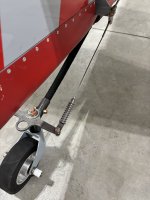

Your friend is correct. Called "Notch Sensitivity" and Titanium is notoriously bad regarding such. Good thing = it's usually more related to fatigue failure vs. ultimate strength type failure. You'd question why it was ever applied on low pressure steam turbine blades where questionable steam quality causes leading edge erosion. You can guess what happened...... A friend of mine who is a mechanical engineer advised me that titanium is prone to cracking if it gets chipped, say from a stone chip. My spring is wrapped in hockey tape to protect it and I unwrap the tape and inspect the spring at each condition inspection.....
All that said, you just need to be conscience of it, IMO. Probably deserves to have its own pre/post flight checklist item.
Last edited:
Which specification of titanium stock should be used?Hi Rick
I just bought some titanium round stock from onlinemetals.com Then I had my local machinist taper and match drill it using my existing steel spring as a reference.
Pete O Static
Active Member
Yeah that was something I had to ask my engineer friend also. OnlineMetals.com carries multiple grades of Ti round stock, sold by the foot. Luckily, they provide all the mechanical details and alloy makeups for each. It was greek to me but I just printed them out and my friend quickly identified which was best for this application.Which specification of titanium stock should be used?
Toobuilder
Well Known Member
Delete
