Van's Air Force

The definitive Van's Aircraft support community! Buying, building or flying an RV? Join our exclusive family of mentors and enthusiasts!

Sudden Fuel Flow Spike.....Red Cube?

scrollF4

Moderator, Asst. Line Boy
Benefactor
Team,
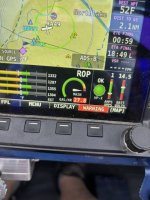
I had an all-new weird thing happen today, twice, each about a minute after takeoff. I launched with the normal high MP and prop RPM, then after turning out of traffic and bringing back the MP and RPM, my fuel flow suddenly jumped from the normal 10-12-ish gals/hour to over 24-25 gals/hour. I saw zero change in the engine's operation, engine ops indications, etc. I went into a left turn to see if maybe I blew a fuel line, but there were no signs of a fuel stream behind the aircraft. I never even smelled fuel. Each time, I throttled back to slow cruise power settings, and everything slowly returned to normal and stayed there.
Has anybody seen this before? If so, did you ID the culprit? Randy "Monk" Richmond suggested I check my electrical lead connections at the Red Cube.

The setup:
Lycoming IO-360 M1B
2x PMags
Hartzell blended airfoil
Skyview HDX EMS
 
Last edited:
Team,
I had an all-new weird thing happen today, twice, each about a minute after takeoff. I launched with the normal high MP and prop RPM, then after turning out of traffic and bringing back the MP and RPM, my fuel flow suddenly jumped from the normal 10-12-ish gals/hour to over 24-25 gals/hour. I saw zero change in the engine's operation, engine ops indications, etc. I went into a left turn to see if maybe I blew a fuel line, but there were no signs of a fuel stream behind the aircraft. I never even smelled fuel. Each time, I throttled back to slow cruise power settings, and everything slowly returned to normal and stayed there.
Has anybody seen this before? If so, did you ID the culprit? Randy "Monk" Richmond suggested I check my electrical lead connections at the Red Cube.

The setup:
Lycoming IO-360 M1B
2x PMags
Hartzell blended airfoil
Skyview HDX EMS
I don’t think it is electrical. That is a transducer that sends square wave voltage signal. Just like your tach signal. No real way for it to read high from poor wiring, only low. Bad signals are hard to interpret, so it counts fewer, not more pulses. I would think it is either the cube going bad or something in your fuel system is causing pulsing or reversions. The cube has a paddle wheel and an optical sensor to count the vanes as they pass. However, it counts every vane whether moving forward or backwards. With pulsing, the wheel can backtrack just a bit and get counted twice, raising the indicated flow. This is why some guys with the cube between pumps see high readings with the boost pump on.
 
It is “pulsed” output, sampled on a rising or falling edge, a “glitchy” ground (Vss) or supply (Vdd/Vcc) is going to cause crappy edge rates on the output, which will be interpreted as more pulses.
 
It is “pulsed” output, sampled on a rising or falling edge, a “glitchy” ground (Vss) or supply (Vdd/Vcc) is going to cause crappy edge rates on the output, which will be interpreted as more pulses.
Possible, but in my experience troubleshhoting problems like this on toothed wheel pickups for EII systems, when the edge becomes poorly defined, in my case from EMI, the logic misses the pulse completely vs multiple counts. I suppose there is variability here based upon the logic in the code and shouldn't be so quick to exclude it.
 
Possible, but in my experience troubleshhoting problems like this on toothed wheel pickups for EII systems, when the edge becomes poorly defined, in my case from EMI, the logic misses the pulse completely vs multiple counts. I suppose there is variability here based upon the logic in the code and shouldn't be so quick to exclude it.
Also, because this is a transducer, it has a processor on board that is observing the optical sensor AND generating the wave itself. Bad supply or ground would take out the processor completely, so nothing there to generate a pulse. Kind of binary here; If the power is good enough to run the processor, it is good enough to read the sensor and produce the square wave. This processor is using an optical sensor, so edges are always clean. The EMS has to read and interpret the wave. but the power used to generate it is binary. I suppose a bad wire on the output wire could be an isdsue, but still contend it will read low, not high.
 
Possible, but in my experience troubleshhoting problems like this on toothed wheel pickups for EII systems, when the edge becomes poorly defined, in my case from EMI, the logic misses the pulse completely vs multiple counts. I suppose there is variability here based upon the logic in the code and shouldn't be so quick to exclude it.
When I wrote the VESA DDC code and bit banged the inputs on certain companies display controllers (M6845) , some multi sync monitors would have very noisy outputs that caused false edges all the time. Of course the data was static and in some cases CRCd or checksummed so it was easy to find/fix the glitches — not so with the Red Cube…
 
I don’t think it is electrical. That is a transducer that sends square wave voltage signal. Just like your tach signal. No real way for it to read high from poor wiring, only low. Bad signals are hard to interpret, so it counts fewer, not more pulses. I would think it is either the cube going bad or something in your fuel system is causing pulsing or reversions. The cube has a paddle wheel and an optical sensor to count the vanes as they pass. However, it counts every vane whether moving forward or backwards. With pulsing, the wheel can backtrack just a bit and get counted twice, raising the indicated flow. This is why some guys with the cube between pumps see high readings with the boost pump on.
Actually, that's not entirely correct - I had this experience with the red cube myself. The square wave pulse is grounded or +12 output, and if you have an intermittent connection on the power or ground or output of the device, it will cause an additional pulse everytime it reconnects. If the red cube is unpowered (interrupted power or ground) when power is restored it sends one pulse then starts looking for the vane movement for additional pulses. If the power or ground is intermittent with vibration, you will get a lot more of those additional single "power reset" pulses.

Most EFIS devices have some sort of "pull-up" resistor in their circuitry so that the free floating voltage on the input pin is somewhere in the 2-3 volt range, this allows the EFIS to rather easily distinguish that floating voltage from either ground or +5 or +12 which are common inputs (the edge trigger discussed above). If the signal wire from the red cube to the EFIS is intermittent with vibration, every time it makes and breaks connection the voltage will change on the input pin to the EFIS, which gets counted as a pulse - that's what happened to me.

In this case however - the description of how/when it occurred sounds much more likely to be temperature and vapor induced actual movement of the vane which produces extra legitimate pulses. If the fuel is warm and starts to make vapor bubbles, those bubbles cause the optical sensor to register as another pulse when they pass, greatly increasing the indicated flow rate.
 
Last edited:
I've seen higher fuel flow from my red cube when conditions are right for vapor lock. This was at idle, where it "jumped" to about 2.5-3.0 GPH when it should have been reading 1.5 GPH. Turning on the boost pump caused the FF to come back down.
 
Actually, that's not entirely correct - I had this experience with the red cube myself. The square wave pulse is grounded or +12 output, and if you have an intermittent connection on the power or ground or output of the device, it will cause an additional pulse everytime it reconnects. If the red cube is unpowered (interrupted power or ground) when power is restored it sends one pulse then starts looking for the vane movement for additional pulses. If the power or ground is intermittent with vibration, you will get a lot more of those additional single "power reset" pulses.

Most EFIS devices have some sort of "pull-up" resistor in their circuitry so that the free floating voltage on the input pin is somewhere in the 2-3 volt range, this allows the EFIS to rather easily distinguish that floating voltage from either ground or +5 or +12 which are common inputs (the edge trigger discussed above). If the signal wire from the red cube to the EFIS is intermittent with vibration, every time it makes and breaks connection the voltage will change on the input pin to the EFIS, which gets counted as a pulse - that's what happened to me.

In this case however - the description of how/when it occurred sounds much more likely to be temperature and vapor induced actual movement of the vane which produces extra legitimate pulses. If the fuel is warm and starts to make vapor bubbles, those bubbles cause the optical sensor to register as another pulse when they pass, greatly increasing the indicated flow rate.
Good points and I get that, but if the problem were intermittent power or ground, the readings should be pretty erratic or at least inconsistent in variation from stable norm. OP said all stable at 12, then all stable at 24, then back to all stable at 12. I just can't see how a bad connection interupted from vibration could create such stable errors, especially since it should up out of the blue and disappeared just as abruptly.. Certainly not saying a red cube can't read high, only that loose wiring doesn't seem to match symptoms here
 
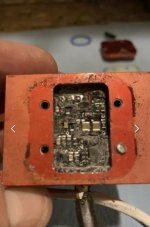
No processor here — Just opto sensor (diodes) and filters (RC).

View attachment 116622
thanks. i thought there had to be something in there to process and create, but as i think about it that makes sense. but that seems to reinforce the fact that intruptions in poiwer or ground would reduce cycle counts not double them. The frequency of the make break would have to be really high to do that, wouldn't it? IIRC, 1 g/hr creates 68,000 pulses per hour or 19 pulses per second. Doubling that would mean the power or grd connection is making/breaking rythmicly at 40 times per second. just seems far too consistent for a vibration related weiring fault to me.
 
Last edited:
Gents, this is all quite helpful. My plan, after decowling the engine:

- Inspect the fuel lines downstream from the cube.
- Inspect and reconnect the Cube’s wiring, from the unit all the way to the SkyView EMS.
- Go fly, watching for any problems. If it persists, I’ll contact the Red Cube folks.
 
Gents, this is all quite helpful. My plan, after decowling the engine:

- Inspect the fuel lines downstream from the cube.
- Inspect and reconnect the Cube’s wiring, from the unit all the way to the SkyView EMS.
- Go fly, watching for any problems. If it persists, I’ll contact the Red Cube folks.
Next time you see the problem, hit the boost pump and see if it goes back to normal. That will be an indication that you are seeing vapor bubbles in the fuel line. The increased pressure from the boost pump will stop the bubbles while it's turned on.
 
Where is, and how did you mount the red cube?

New problem or not?

I've seen the problem on an RV-14 that installed the cube per Van's instructions (that were in conflict with the red cube instructions). Reinstalled following the red cube instructions and all good.

Carl
 
Where is, and how did you mount the red cube?

New problem or not?

I've seen the problem on an RV-14 that installed the cube per Van's instructions (that were in conflict with the red cube instructions). Reinstalled following the red cube instructions and all good.

Carl
New problem after about 1920 tach hours. It’s mounted forward behind the FAB box on the right side of the FI servo, angled per the Red Box instructions.
 
thanks. i thought there had to be something in there to process and create, but as i think about it that makes sense. but that seems to reinforce the fact that intruptions in poiwer or ground would reduce cycle counts not double them. The frequency of the make break would have to be really high to do that, wouldn't it? IIRC, 1 g/hr creates 68,000 pulses per hour or 19 pulses per second. Doubling that would mean the power or grd connection is making/breaking rythmicly at 40 times per second. just seems far too consistent for a vibration related weiring fault to me.
imagine a comb, held upside down (tines down). Each tine represents a pulse from the opto sensor. The top of the tine (base of the comb) is a +5v or 12v state, and the end of the tine is 0v. If the power to the sensor or ground from the sensor is interrupted an extra tine forms because of the pull down on the output wire inside the EFIS/EMS…

As to frequencies, the engine is buzzing along and producing vibratory energy at multiples of engine RPM, power pulses from combustion, etc. You have a wire or wires with a slightly less-than-robust connection that’s resonating at multiples of 90Hz (2700 / 60 * 2 blades
) — @DanH did a post that showed all of the various frequencies that we were being assaulted with…

Anyhow, can’t wait to see what @scrollF4 comes up with.
 
Last edited:
The Big Shakes would be 1st order (generally a rotating imbalance) at RPM/60 = Hz, and 2nd order (firing frequency) at (RPM x #cylinders)/120 = Hz

I don't think either generates enough shake rate to double fuel flow. The K-factor is 68,000 per gallon, so doubling 12 GPH to 24 GPH would require 226 additional pulses per second, (12 x 68000) / 3600. The firing frequency at 2700 is only 90 hz.

I'm just sayin'...
 
Update:
I inspected and found no fuel leak, all the way up to the fuel injectors.
I checked the electrical connections...all secure and dry.
I flew again and had the same problem again. Switching the boost pump on/off had no effect. Once again, there was zero change in how the engine operated, EGTs, manifold pressure, sound note, etc.

I'm thinking this red cube might be toast.

image0 (1).jpeg
 
FWIW - I did a post on the red cube a while ago & suggested a cause of some issues people are having is due to bending, at a big angle but not necessarily 90deg, the sleeved cable coming out of the cube. That action will most likely cause issues as it “stretches” the wire too much resulting in either permanent damage or intermittent ops.
What I do, after having experienced similar issues, is use a heat gun to soften the white cable sleaving prior to then bending it as required. No issues since using that method.
 
Result: New red cube installed, ran perfectly. Only thing left is to monitor totalizer/actual fuel values and adjust the flow rate K-value.
Thanks for the help, Team.

Anybody want to buy a slightly-used (1900+ hours), slightly unhappy Red Cube? Hell I'll just send it to you.
 
Result: New red cube installed, ran perfectly. Only thing left is to monitor totalizer/actual fuel values and adjust the flow rate K-value.
Thanks for the help, Team.

Anybody want to buy a slightly-used (1900+ hours), slightly unhappy Red Cube? Hell I'll just send it to you.
I'll take it if your giving it away.
PM sent.
 
Back
Top