Van's Air Force

The definitive Van's Aircraft support community! Buying, building or flying an RV? Join our exclusive family of mentors and enthusiasts!

RV-9 Cabin Heat, but not so much

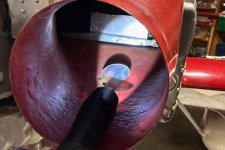
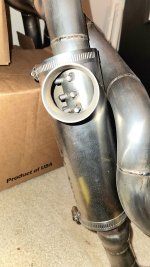
This is what the inside of the turbo muff looks like. They include a restrictor (under the green tape) if you need to slow down the airflow.

You can step drill the restrictor open if you need more airflow.

They’ll make a muff for your exhaust diameter and set it up per your instructions if you need inlets and outlets pointing in different directions.

Heat muffs are simple air to air heat exchangers. The HOT part is the exhaust pipe with the hot air. Those extra tubes are not connected directly to the pipe. They will increase the heat transfer from the MUFF to the air, but the main HOT PART is the exhaust pipe not the muff.

Really no telling how well this fancy Aircraft Spruce one works. It will work but its it worth the primum price they no doubt charge. I will say the welding is top notch.

I had Aircraft Exhaust make my 4 into 1 pipes. They welded heat studs to half the pipe. This will be most effective getting heat transfer from exhaust pipe to air.
5579644952484727246.jpg

Heat muffs are made to be simple, light, compact and good enough. As I posted above there are so many things that makes the cockpit cold and drafty in winter. Big fan of an cockpit air exhaust/vent in low pressure part of the plane in the aft section to draw air in from the heat muff. Leaks that pressurize the cockpit can fight the heat muff. With that said how cold is it? Can you wear warm clothes? gloves, heated suit (have one for winter motorcycle riding.
 
Heat muffs are simple air to air heat exchangers. The HOT part is the exhaust pipe with the hot air. Those extra tubes are not connected directly to the pipe. They will increase the heat transfer from the MUFF to the air, but the main HOT PART is the exhaust pipe not the muff.

Really no telling how well this fancy Aircraft Spruce one works. It will work but its it worth the primum price they no doubt charge. I will say the welding is top notch.

I had Aircraft Exhaust make my 4 into 1 pipes. They welded heat studs to half the pipe. This will be most effective getting heat transfer from exhaust pipe to air.

View attachment 77815

Heat muffs are made to be simple, light, compact and good enough. As I posted above there are so many things that makes the cockpit cold and drafty in winter. Big fan of an cockpit air exhaust/vent in low pressure part of the plane in the aft section to draw air in from the heat muff. Leaks that pressurize the cockpit can fight the heat muff. With that said how cold is it? Can you wear warm clothes? gloves, heated suit (have one for winter motorcycle riding.
My daily driver, a 65 Aircoupe has 2 heat muffs. One for carb heat, and the other for cabin heat. Both sides have 2 long metal springs under tension wound diagonally around the length of pipe to provide good contact with the exhaust pipe and plenty of surface area for heat transfer.

That is what you want. Lots of hot metal with lots of surface area exposed to the air traveling through the muff.
 
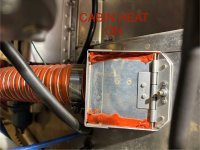
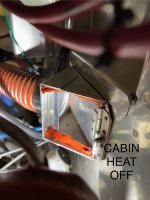
Our -9 is built with the original, now 20 years old, Vans supplied heater On/Off/Regulating valve that’s just inside the firewall. Check that when you are in the Full Heat position, that it seals up well. Ours was made that when you selected Full Heat, there were lots of gaps in the valve that allowed the heated air to escape at the valve. I think this was pretty dramatic since the valve is also positioned in a “Negative Pressure Area” that would help draw the heated air out of the valve which should go into your cockpit. Just sealed the gaps with RTV. We got a big boost in cockpit heat after the sealing up of these gaps.
 
I keep wondering why some have little heat. I have a RV-9 with IO-320 and it will heat you out of the cabin. I also have large leaks in wing roots and canopy that I don't bother sealing since I am in Florida where we want all the ventilation we can get.
I fly often at cold altitudes and will use heat but any more than a 1/16" pull on the cable will toast you.
There must be something different, I just don't know what it is.
View attachment 77041
Mark is your inlet in the front or in the aft of the baffling? Yours looks identical to mine and a few others already mentioned. Not flying yet but nice to hear this config works as well
 
Not sure if you can see it in the picture but it is almost middle of the ramp Port side.

105_0113.JPG
 
I wasnt getting a lot of flow out of my heater so I added a piece of aluminum sticking up about 3/4" to force some of the air coming in to go into the heat muff. I havent given it a try yet - TOO COLD! When it gets a little warmer hope next week I will try it and see how it works.

WiscoMick, do you have any photos of your heater valve from inside both sides of the firewall? I would love to see what you did. Thanks
 

Attachments

  • heat 2.jpeg
    heat 2.jpeg
    30.8 KB · Views: 40
Two pix of my shutoff/regulating valve. Wherever you see the Orange RTV, we had big gaps, especially in the corners. We put clear packing tape on the swinging door so the RTV would release from that surface, closed the door, and then applied the RTV.
 

Attachments

  • IMG_9733.jpeg
    IMG_9733.jpeg
    608.3 KB · Views: 60
  • IMG_9734.jpeg
    IMG_9734.jpeg
    475.6 KB · Views: 60
Two pix of my shutoff/regulating valve. Wherever you see the Orange RTV, we had big gaps, especially in the corners. We put clear packing tape on the swinging door so the RTV would release from that surface, closed the door, and then applied the RTV.
Perfect. Thanks for the pics. I never considered even doing that or understanding small leaks there mattered. I will seal mine up.
 
Back
Top