Van's Air Force

The definitive Van's Aircraft support community! Buying, building or flying an RV? Join our exclusive family of mentors and enthusiasts!

RV-12 battery issues

Dgamble

Well Known Member
I was contacted by the owner-not-builder of S/N #26. It's equipped with a Dynon D-180 with a Garmin 496 GPS - it's all pretty standard except for a standalone ADSB box.

He has had the airplane for four years and has gone through 3 batteries. In comparison, I have had my plane for 8 years and the original battery is still going strong.

He has gotten to the point where he needs to keep a battery tender on it. It seems to be incapable of holding much of a charge.

My best guess is that something in the airplane is drawing power even when the plane is shut down, but I can't find anything that would support that belief.

There are three wires coming off of the positive terminal on the battery: the bigger cable for the main power, a smaller cable that goes to the connector for the battery tender, and a thin fused wire that goes off into a jumble of other wires, so I don't know what's its purpose is, so I'm a bit suspicious of it.

He has also been told by a mechanic that it's normal to need a new battery every year. I'm a lot of suspicious about that theory.

Any ideas?
 
Remove the terminal from the battery, put an amp meter inline. You can use a cheap Harbor Freight meter set on the 10 amp scale works just fine. With the plane “off” you can monitor any current consumed. If you turn on the master have all the high power consuming things, landing light, starter, etc off or you will blow the fuse inside the meter. You should not see any amps used with the master off.

It doesn’t take much drain to kill a battery. A 50 mah, discharge over a weeks time will bring your battery down 50%.
 
Last edited:
As Seagull suggested, hook up a multimeter to look for any devices or circuits stealing current when the Master is OFF. If there is some "dark current" flowing, disconnect (e.g., remove fuse, etc.) individual circuits one at a time until the dark current goes away -- that is your suspect device/circuit. There are numerous videos detailing this procedure on YouTube under "Parasitic Draw". The PC-680 should easily last 5 years or more. I am not a big fan of full-time trickle chargers or maintainers. Regularly flying the aircraft is by far the best way to keep your battery happy.
 
Last edited:
  • Like
Reactions: Mel
__________________
David Heal - Windsor, CA (near Santa Rosa)
EAA #23982 (circa 1965) - EAA Technical Counselor and Flight Advisor; CFI - A&I
RV-12 E-LSA #120496 (SV w/ AP and ADS-B 2020) - N124DH flying since March 2014 - 1,000+ hours (as of Feb 2021)!

David, you keep up that pace and you should meet your TBO about the same time as your 12..........:o
 
On the D180 versions I believe the fused circuit off the battery fed the 12v accessory plugin. I will look at the early electrical schematic to verify. Possible he has something plugged into the port?
 
On the D180 version the wire with the fuse goes to the 12 volt socket between the seats. As you’ve noticed this is an un-switched feed so it’s the only place you can get a parasitic load. Does he have anything plugged into this socket?

The only other possibility I can think of is regulator output. One telltale sign is getting low voltage alarms out of the D180 when you throttle back.
I'll check that if I ever manage to get it started. I know it's at least the second regulator that's been in it.
 
I kept a USB dual port plugged into that receptical between the seats, I then noticed a blue light on the USB staying on so I stopped leaving it plugged in...
 
I always, upon getting back to the hangar, run my engine up to 3000 rpm with brakes on, and watch until the amp meter drops to a 2 amp charge rate with everything turned off except Main A and B. Then I reduce the throttle to idle, switch off B, then A, then main switch.

That tends to leave the battery near a very fully topped off charge state while in storage waiting for the next flight.

I also tend to get the motor started when cold, and idle it for warm up at 2400 to 2500 rpm to maintain a positive 13.7 to 13.8V charge voltage and amperage showing positive. Anything less, and the battery tends to discharge while waiting for warm up temps to do run up.

It's very important to store an AGM lead acid battery fully charged and topped off, to maximize it's service life and prevent sulfation of the cells. The Voltage put out by the Ducati Voltage regulator would probably do a much better job of it if it put out 14.4 V instead of just 14.0 or 14.1V. The John Deere version is probably a lot better about this.
 
Last edited:
I was having similar issues with serial #34. Same configuration. I bought the Odyssey brand battery charger made specifically for the model battery we use and left it on for several weeks during winter non use timeframe. That device reconditioned the battery and it is like brand new. Going on my second year now since I thought it to be dead.
 
Voltage low, battery not charging

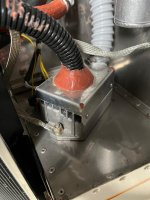
New volt regulator will arrive tomorrow. Photo of install shows the builder must have added an extra cooling duct/hose to the VR. I the smaller black hose and the shield over top of VR a normal installation?
 

Attachments

  • IMG_4917.jpg
    IMG_4917.jpg
    324.2 KB · Views: 95
That was an early iteration, attempting to get more air onto the regulator. Later the regulator was repositioned under the panel. Again trying to get it away from excess heat. The new setup uses a B&C regulator mounted high on the firewall, and has a NACA duct in the top cowl to direct air onto the regulator.
Just a little history.
Cheers DaveH
120485
 
My understanding from talking with the B&C folks is that their VR (which is now Van's standard on new kits) was designed for the PC680/Rotax application i.e. better sensing and charging curves? for the PC680 AGM-type of battery. I don't claim ANY expertise about such things, just relying on my confidence in Vans and B&C (very nice folks). It's a bit more expensive and involved to retrofit, but worth the effort in my view. I do not want a VR failure halfway home again.
2-soon to be 3-cents,
Dave
 
Another Solution...

It appears B&C has this regulator that is designed as plug and play to replace the Ducati. Wouldn't require cutting a duct into the cowling. Here is the link

https://bandc.com/product/avc1-advanced-voltage-controller-14v-homebuilt/#installation-kit

Some thoughts FWIW (again I claim NO/not much expertise in things electrical)...
I bought my new VR directly from B&C just before (naturally) Van's came out with their complete retrofit kit. B&C provided documentation for several generic mounting/connecting options, but I bought the remaining items from Vans to accomplish their retrofit including the NACA duct figuring they must have designed it that way for a reason, probably to maximize cooling air for my new $$ VR. And I'm sure Vans is getting weary of hearing about problems with the VRs, plus the original (meaning very first) VR location and cooling design alway struck me as "kludgy".
So anyway...I understand the "plug and play" aspect and was tempted to just swap my B&C into my "under-shelf" location, then decided to go with the new kit because we can never have too much cooling air for hot electrical stuff :)
3-cents,
Dave
 
It appears B&C has this regulator that is designed as plug and play to replace the Ducati. Wouldn't require cutting a duct into the cowling. Here is the link

https://bandc.com/product/avc1-advanced-voltage-controller-14v-homebuilt/#installation-kit

That’s the one Vans are now using. You’ll find it has a different footprint to the Ducati regulator. So an adapter plate or new holes will be needed. Also the Ducati plug won’t fit, so a bit of fiddling is involved.
Cheers DaveH
 
Mich48041 in above two posts, is giving good advice... The John Deere AM101406 ($20 on Amazon) works very well with Rotax 912ULS and Odyssey PC680 Battery. I have mine mounted in original position on firewall shelf with no additional ventilation. It is mounted on a sub-plate using thermal heat paste. I'm guessing close to 400 hours since install. I carry a spare in the baggage compartment that's never been used....
 
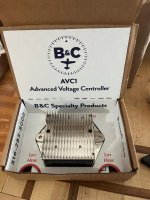
Last week the Amazon voltage regulator arrived and I did not install. It was half the size of the Ducati VR and quality was questionable so I went with the B&C XB100-2. That arrived today and looks exceptionally nice. Was shipped in a presentation quality box as a bonus! Install is almost done, but I forgot to bring my wife's hairdryer for the heat shrink tubing. I will finish up tomorrow, but I am a bit nervous. Changed engine oil and I did not clean the oil tank. I was concerned about removing hoses from the top of tank and then having to purge air from the lines. Lack of experience so I am taking small steps.
 

Attachments

  • IMG_4944.jpg
    IMG_4944.jpg
    351.7 KB · Views: 103
Buttoned up voltage regulator install today and pulled RV out for a run-up. All good! 14.1 volts. B&C bolted in place of original Ducati on the firewall shelf. New connector body fitted as well.
 

Attachments

  • IMG_4946.jpg
    IMG_4946.jpg
    325.4 KB · Views: 75
Isn't the regulator in the photo a B&C AVC1, made specifically for the 912 ULS series engine? That's what the box indicates, and that is what I have in my two 912 ULS-powered aircraft.
Has anyone had any problems with this regulator? A year ago, when I press d the PTT button to transmit the Voltage would start dropping towards 12 volts and the Amps would start climbing and there would be lots of radio noise. Tracing everything down seemed to indicate the AVC1 alternator. I sent it back to B&C to be checked out. They sent me a new one, not saying what was wrong with the old regulator.
It's been working perfectly for about 6 months - and - now I'm suddenly having the same problem again. It can't be a cooling problem as I have outside air blowing drictly onto it.
 
Last week the Amazon voltage regulator arrived and I did not install. It was half the size of the Ducati VR and quality was questionable so I went with the B&C XB100-2. That arrived today and looks exceptionally nice. Was shipped in a presentation quality box as a bonus! Install is almost done, but I forgot to bring my wife's hairdryer for the heat shrink tubing. I will finish up tomorrow, but I am a bit nervous. Changed engine oil and I did not clean the oil tank. I was concerned about removing hoses from the top of tank and then having to purge air from the lines. Lack of experience so I am taking small steps.
I'm confused. You say you went with a B&C XB100-2 VR, but the photo is of a B&C AVC1 regulator?
 
I'm wondering if it's not even a regulator problem, but something else.
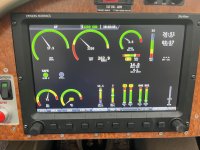
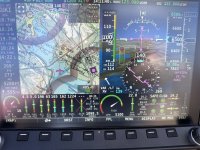
I've exhausted the search for something else causing the regulator problems. Just got a 3rd AVC1 regulator from B&C. Thought something was wrong right off the bat as the regulator showed it was charging at 10 amps. Took it for a 1 hour flight. During that hour the voltage was 14.2 and the amps went down from 10 to 1.
Next day I went out for another flight. The battery before startup showed 12.6 volts - with the previous regulators it had never shown more than 12.4 volts. Flying around, voltage 14.2, amps 1.0, radio use not affecting voltage or amps at all - and then suddenly - pressing the PTT the Voltage would head down towards 12 and the amps would go up to 6. Releasing the PTT button sent voltage and amps back to normal. What The Heck Is Going On Here?


IMG_7307.JPG

IMG_7308.JPG
 
Flying around, voltage 14.2, amps 1.0, radio use not affecting voltage or amps at all
By "radio use", do you mean receiving or transmitting or both?
pressing the PTT the Voltage would head down towards 12 and the amps would go up to 6
You are talking about battery amps, right? Are those 6 amps positive (charging) or negative (discharging) battery amps?
 
Listen to Joe Gores.... He nows aircraft electrical systems and RV-12. He is excellent at troubleshooting if you provide good data...
 
I'm confused. You say you went with a B&C XB100-2 VR, but the photo is of a B&C AVC1 regulator?
XB100-2 in the box. It’s been working as advertised three years!
 

Attachments

  • IMG_4945.jpeg
    IMG_4945.jpeg
    37.6 KB · Views: 17
Back
Top