Van's Air Force

The definitive Van's Aircraft support community! Buying, building or flying an RV? Join our exclusive family of mentors and enthusiasts!

Rotax 912 Oil Filter Installation....

Piper J3

Well Known Member
Rotax requires that you purge air from the oil system if you break loose a hose connection or perhaps changeout the oil cooler radiator. My question is… when changing the oil filter, is it necessary to pre-fill the filter so air is not introduced in the oil system (hydraulic lifters)?
 
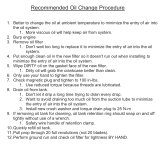
At the Rotax school, Lockwood recommended partially pre filling the filter. Attached are my notes on their recommended oil-change procedure. See step #4. The only thing I do differently is the oil-filter tightening step. Call me anal, but hand tightening just doesn’t seem adequate, so I go with the Rotax recommended 3/4 turn. Lockwood said this process should eliminate the need for purging.
 

Attachments

  • IMG_1737.jpeg
    IMG_1737.jpeg
    529.5 KB · Views: 165
I have done approximately 30 oil changes (50hr in between) on my engine. From reading Bob’s notes I have missed a few things. I always change after a flight so oil is at operating temp. I do let it drip until it stops, 30 min or more. I prefill the filter about 1/2 and let it soak into the element before installing. Hand tight plus 3/4 with wrench. I have never pulled it through afterwards, just start. I am not suggesting this method just what I have done without issues
 
I will add this, before draining oil burp the oil tank so that you get all the oil out of the crank case. Even after shut down there is still some oil that needs to be returned to the tank.
 
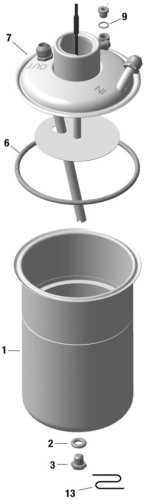
I’m still thinking about this…. The oil reservoir tank has a dip tube for the oil pump feed line. This assures oil is available for the engine even if oil level is low. When you drain the tank, this dip tube also drains and looses it charge of stored oil. When the tank is refilled with fresh oil the dip tube remains empty. What this means is a slug of air approx 8” long travels into the engine oil galleries (hydraulic lifters). Looks like everyone shares this problem during oil changes unless a complete air purge is done. Maybe fear of air-entrapment in the hydraulic lifts is a little over-played….
 

Attachments

  • 2024-07-01 17.11.59.png
    2024-07-01 17.11.59.png
    130.4 KB · Views: 29
I’m still thinking about this…. The oil reservoir tank has a dip tube for the oil pump feed line. This assures oil is available for the engine even if oil level is low. When you drain the tank, this dip tube also drains and looses it charge of stored oil. When the tank is refilled with fresh oil the dip tube remains empty. What this means is a slug of air approx 8” long travels into the engine oil galleries (hydraulic lifters). Looks like everyone shares this problem during oil changes unless a complete air purge is done. Maybe fear of air-entrapment in the hydraulic lifts is a little over-played….
This has really got me as well. In addition to your point about the 8" slug of air coming from the oil pickup, there's no way *not* to inject a huge bubble via the oil filter, as it's impossible to fill and install it so there's no air left once it's tightened down. The service info from Rotax makes it sound like this is a terrifying problem which is guaranteed to happen if even the slightest bubble of air makes its way into the oil system. But if that were truly the case, then there would have to be some very tight controls on every part of the oil change, not just a hand-wavey "Try to prefill your oil filter. Or don't."

I wish I knew more about this. Should we be scared and thus more attentive to even oil changes, or should we look at this the way we do Lycoming's dogged resistance to admitting that LOP operation is a well-proven thing?
 
What I have done after changing out the oil system hoses is to remove the spark plugs and motoring the engine until I see oil pressure for a few seconds, yes I do know that doing this no oil is being returned to the tank because you need piston ring blow by that's why you don't do it for an extended period. I then install plugs, burp the tank then start the engine for leak check keeping an eye on the oil pressure for any fluctuations. If I remember correctly Rotax wants you to run the engine @ 3500rpm to purge the lifters. Done this same routine after hanging a new engine on a SeaRay with a Rotax 912ULS....BTW I have close to 600 hours on my engine and have never had anything more than fuzz on my chip detector.

 
What I have done after changing out the oil system hoses is to remove the spark plugs and motoring the engine until I see oil pressure for a few seconds, yes I do know that doing this no oil is being returned to the tank because you need piston ring blow by that's why you don't do it for an extended period. I then install plugs, burp the tank then start the engine for leak check keeping an eye on the oil pressure for any fluctuations. If I remember correctly Rotax wants you to run the engine @ 3500rpm to purge the lifters. Done this same routine after hanging a new engine on a SeaRay with a Rotax 912ULS....BTW I have close to 600 hours on my engine and have never had anything more than fuzz on my chip detector.

Could you simply turn off/secure the fuel pump/s and with both Lanes ON turn the key thus motoring the engine with no start? it seems like motoring the engine to gain oil PX prior to a full on engine start sequence would help keep things safe right? My understanding was that you only removed the plugs if you wanted to hand turn the engine, otherwise the compression is too hard. Using the actual engine starter would solve this, no?
 
Could you simply turn off/secure the fuel pump/s and with both Lanes ON turn the key thus motoring the engine with no start? it seems like motoring the engine to gain oil PX prior to a full on engine start sequence would help keep things safe right? My understanding was that you only removed the plugs if you wanted to hand turn the engine, otherwise the compression is too hard. Using the actual engine starter would solve this, no?
Removing the plugs allows the engine to turn faster generating more oil pressure and doing so faster
 
Back
Top