Van's Air Force

The definitive Van's Aircraft support community! Buying, building or flying an RV? Join our exclusive family of mentors and enthusiasts!

Reliability of full size Molex connectors

Have you had any problems with the full size Molex connectors in the factory supplied harness?

  • Yes

    Votes: 5 20.0%
  • No

    Votes: 20 80.0%

  • Total voters
    25

bertschb

Where's my engine????
Sponsor
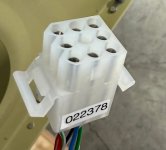
I attended a class recently where the instructor recommended replacing the Molex connecters at the wing root of my RV-14. He said he's seen multiple failures of these connectors. I really like using Deutsch connectors but I don't want to replace the factory Molex connectors (photo in post #3 below) if they work. So, what has your experience been with the full size Molex connectors?
 
Last edited:
I attended a class recently where the instructor recommended replacing the Molex connecters at the wing root of my RV-14. He said he's seen multiple failures of these connectors. I really like using Deutsch connectors but I don't want to replace the factory Molex connectors if they work. So, what has your experience been with the full size Molex connectors?

The question for you is this: what type of Molex connector was the instructor talking about? Molex makes many different styles of connectors. Some use pins/sockets made from plated steel that has been rolled into shape. Others use machined solid material. Both of these are crimped connectors.....but different types of crimps. Without knowing specifically which family of Molex connector we're talking about, it is not really possible to say which is good for our application....and which is bad.
 
The ones that come with the factory supplied harness (at least for the RV-14)...
View attachment 80951

OK, I don't have experience with these particular Molex parts, but I have similar Molex connectors in a few places on my 6A. Assuming the use of the correct crimp tool, and crimping to the correct height, these should work OK. But then.....the crimp tool and crimp height goes for ALL crimped connectors.....not just Molex.

I've seen some very ugly crimps out there where somebody did not use the right tool. "Very ugly" almost always means the crimp will fail.
 
Assuming the use of the correct crimp tool, and crimping to the correct height, these should work OK.
I'm only concerned about the factory crimps and connectors. If I was building my own harness, I'd use Deutsch hands down. I don't like anything about working with the Molex connectors supplied by Vans but I don't want to create more work for myself replacing them if these factory connectors are bullet proof.
 
I'm curious what makes Molex so problematic. I've only used a few in my build, but found crimping to be easy, and seemingly secure. I put zip ties around the male/female connectors so they can't wiggle, and it all feels solid. What's their main type of failure?
 
Last edited:
Not on the airplane, but I worked a very long time with Motorola UHF radios. Every one had a molex. They endured some pretty severe abuse and never failed. Water, coffee, etc. I just prefer one type connector. Since the entire panel was D-sub, it made sense to use them everywhere.
 
I'm a little curious what makes Molex so questionable (genuine question - I just don't know). I've only used a few in my build, but found crimping to be easy, and seemingly as secure as any other connector. I put zip ties around the male/female connectors so they can't wiggle, and it all feels solid.
Bulky and cheap looking. I have only a few in the airplane but worked with thousands in industrial applications. It was rare to have an issue and I would guess those issues were on par with connector failures for any kind of connector.
Folks like to pile on the crowd and if a trusted person doesn’t like them, they’re no good right?
 
I'm a little curious what makes Molex so questionable (genuine question - I just don't know).
Compared to solid D-Sub/Deutsch:
  • More difficult to crimp pins consistently
  • More difficult to de-pin from connector
  • No weather sealing
  • More difficult routing wires with Molex pins (and their barbs) through snap bushings
  • More difficult adding heat shrink labels (again - those barbs)
 
I'm curious what makes Molex so problematic. I've only used a few in my build, but found crimping to be easy, and seemingly secure. I put zip ties around the male/female connectors so they can't wiggle, and it all feels solid. What's their main type of failure?
Cheap tin plated rolled pins/receptacles. Terrible for low voltage/small signal stuff. Not as bad when used for higher voltage/current applications where contact resistance doesn’t really matter. Practically every 14 I’ve worked on had electrical problems as a result of using Molex.
 
Cheap tin plated rolled pins/receptacles. Terrible for low voltage/small signal stuff. Not as bad when used for higher voltage/current applications where contact resistance doesn’t really matter. Practically every 14 I’ve worked on had electrical problems as a result of using Molex.
Wow. I have never considered they would be used for low voltage signal sources. Have always assumed they were only applicable for “power” connectors.
 
Last edited:
Cheap tin plated rolled pins/receptacles. Terrible for low voltage/small signal stuff. Not as bad when used for higher voltage/current applications where contact resistance doesn’t really matter. Practically every 14 I’ve worked on had electrical problems as a result of using Molex.
Walt nails it here. They work, I have some that are 30 years old in the Glasair and still going string. Contact resistance varies with age, as most have some light corrosion on the pins. They tend also to have inconsistent pressure on the pins since they are just a thin stamped pin which can also lead to variability. I wouldn't choose them for a build, but I wouldn't swap them out either if I didn't have a reason to.
 
Walt nails it here. They work, I have some that are 30 years old in the Glasair and still going string. Contact resistance varies with age, as most have some light corrosion on the pins. They tend also to have inconsistent pressure on the pins since they are just a thin stamped pin which can also lead to variability. I wouldn't choose them for a build, but I wouldn't swap them out either if I didn't have a reason to.
Looks like this is going on my "re-do" list. I used them (molex) in my wing connections. :cautious:
 
I'm curious what makes Molex so problematic. I've only used a few in my build, but found crimping to be easy, and seemingly secure. I put zip ties around the male/female connectors so they can't wiggle, and it all feels solid. What's their main type of failure?
My experience with Molex connectors is they do not hold up well when used in an "outdoor" environment, like your wing roots. They will be exposed to rain and dirt. That said, there is an easy trick to greatly improve their durability in this environment. Go to your local auto parts store and buy a tube of Dielectric silicone grease. Unplug the connector. Pack all the cavities with this grease. It resists water and will prevent rust and dirt ingress. I also use this stuff any time I replace a light bulb [14 volt systems]. Coat the socket and the base of the bulb to prevent degradation of the ground connection over time. I agree with Walt. There are much better connectors out there.

See

What is Dielectric Grease and How to Use It
 
Personally I think Molex gets a bad rep/rap.

It's just too easy to grab a pair of Vicegrips and mash the scheiße out of some bargain bin .064" or .093" pins from Fry's and then slap them into the connector...

If the builder/assembler uses the correct crimping tool, and the real Molex pins/sockets/shells, and dielectric grease, there won't be a problem.
 
Cheap tin plated rolled pins/receptacles. Terrible for low voltage/small signal stuff. Not as bad when used for higher voltage/current applications where contact resistance doesn’t really matter. Practically every 14 I’ve worked on had electrical problems as a result of using Molex.
Sounds like I'm 50% ok... I used molex mostly for high power, but did use them on my roll trim and flap position sensor. 😐
 
I used Molex for over 25 years. The only problem I had was working a buddies RV-14 that he wired using Van’s wiring kit. The tiny Molex that connects to the trim servos failed. Those connectors are horrible (and the wiring kit itself is not great).

I use large pin Molex for the few power plugs - never had one go bad. All audio and other small signal stuff is done via D connectors.

Carl
 
27-years going on 28-years (over 3,600 flying hours) using Molex connectors for both low current and higher current connections. ALL my engine monitor connectors use molex or molex style connectors. (Molex style made by AMP.) Have Molex style connectors with 12-gauge wire in the wing root that use to work 100W landing lights. (one on each side) Now the same wires are connected to LED landing lights that draw around 1.1 Amps.

There are some that HATE molex style connectors. They are CHEAP, they work, they are easy to fabricate, remove / replace pins but you need to use good crimpers and workmanship. IF you cannot remove and replace the contacts, you should not use that connector.

Amp (Molex style) and Molex are my go to connectors. Cheap, reliable, and easy to work with. Just like an RV aircraft.

The above info is from a retired person educated as an electrical engineer, worked as electrical engineer, and have done work with all kinds of connectors. I am also an EAA Tech Counselor, ham Amateur Extra, A&P, and retired DAR.

 
27-years going on 28-years (over 3,600 flying hours) using Molex connectors for both low current and higher current connections. ALL my engine monitor connectors use molex or molex style connectors. (Molex style made by AMP.) Have Molex style connectors with 12-gauge wire in the wing root that use to work 100W landing lights. (one on each side) Now the same wires are connected to LED landing lights that draw around 1.1 Amps.

There are some that HATE molex style connectors. They are CHEAP, they work, they are easy to fabricate, remove / replace pins but you need to use good crimpers and workmanship. IF you cannot remove and replace the contacts, you should not use that connector.

Amp (Molex style) and Molex are my go to connectors. Cheap, reliable, and easy to work with. Just like an RV aircraft.

The above info is from a retired person educated as an electrical engineer, worked as electrical engineer, and have done work with all kinds of connectors. I am also an EAA Tech Counselor, ham Amateur Extra, A&P, and retired DAR.

Did you, by chance, work for AMP-Molex?

Sounds like a television commercial...lol
 
The above info is from a retired person educated as an electrical engineer, worked as electrical engineer, and have done work with all kinds of connectors. I am also an EAA Tech Counselor, ham Amateur Extra, A&P, and retired DAR.

Congrats on your extensive college credentials, my experience is merely from a mechanics POV working out in the field fixing stuff.
 
I think it’s the number of mate/demate cycles that cause the problem with tin Molex in hand built circuits. Plus if you stick a meter probe in it you damaged it.
 
Used all the Van's Molex connectors in my 14 build, but didn't like the crimp connections, so put a bit of solder on the wire/pin connection (after crimping) for peace of mind. Never any problems.
 
Used all the Van's Molex connectors in my 14 build, but didn't like the crimp connections, so put a bit of solder on the wire/pin connection (after crimping) for peace of mind....
So you soldered all the Molex pins onto the wires in the factory harness?
 
I attended a class recently where the instructor recommended replacing the Molex connecters at the wing root of my RV-14. He said he's seen multiple failures of these connectors. I really like using Deutsch connectors but I don't want to replace the factory Molex connectors (photo in post #3 below) if they work. So, what has your experience been with the full size Molex connectors?
I sprayed the contacts with ACF-50 before putting the wing root connectors together. Then I put heat shrink over them and then wrapped them with silicone tape. 2-1/2 years so far with no issues.
 
I sprayed the contacts with ACF-50 before putting the wing root connectors together. Then I put heat shrink over them and then wrapped them with silicone tape. 2-1/2 years so far with no issues.
I pinned my Deutsch connectors and snapped them together. Almost 5 years with no issues.
 
I think it’s the number of mate/demate cycles that cause the problem with tin Molex in hand built circuits. Plus if you stick a meter probe in it you damaged it.
^^ This ^^

Molex .093 series are only rated to 25 cycles...
 
Maybe that's why the ones I worked with never failed. Some in service 10+ years. Motorola loved them on the big 30 watt commercial radios. .093 pins. I saw coffee, Dr Pepper, and some things I would rather not remember. Radios in full TX for 8 hours. Mic cords shorted. I also hunted transmitters. Never saw a Molex fail.
 
I started this poll to get a sense for how well the factory Molex connectors used on the Vans harness are working in the field. It sounds like some of the ones that are working are slightly "modified" - either by soldering the pins or adding dielectric grease.

One thing I know for sure even with minutes rather than decades of experience - everything about working with Deutsch pins/connectors is easier, more repeatable and instills far more confidence than working with the factory Molex pins/connectors. Whether or not that makes them more RELIABLE is a different question.
 
I started this poll to get a sense for how well the factory Molex connectors used on the Vans harness are working in the field. It sounds like some of the ones that are working are slightly "modified" - either by soldering the pins or adding dielectric grease.

One thing I know for sure even with minutes rather than decades of experience - everything about working with Deutsch pins/connectors is easier, more repeatable and instills far more confidence than working with the factory Molex pins/connectors. Whether or not that makes them more RELIABLE is a different question.
The good news, as always, that everyone gets to pick their own poison...
 
The good news, as always, that everyone gets to pick their own poison...
Yeah but it's tough for rookie builders to decide which route to go in situations like these. I have enough obstacles to overcome without worrying about chasing down "self inflicted" electrical issues from using potentially problematic connectors.
 
Yeah but it's tough for rookie builders to decide which route to go in situations like these. I have enough obstacles to overcome without worrying about chasing down "self inflicted" electrical issues from using potentially problematic connectors.
Agreed. I found the Deutsch connectors "less problematic"...
 
Crimping a Molex pin...
OK, I need to trim those little bat wing things that crimp the insulation. Did I trim enough? Dang! Too much. Grab another pin. OK, trim the bat wing again. A little more. A teeny bit more. OK, that's good. Insert into crimper. Is that lined up? Facing the right direction? Oops! Pin slipped. Put it in again. Turn it a little. OK, crimp. Does that look OK? I think so.

Crimping a Deutsch pin...
Insert wire. Squeeze. Perfect.
 
Crimping a Molex pin...
OK, I need to trim those little bat wing things that crimp the insulation. Did I trim enough? Dang! Too much. Grab another pin. OK, trim the bat wing again. A little more. A teeny bit more. OK, that's good. Insert into crimper. Is that lined up? Facing the right direction? Oops! Pin slipped. Put it in again. Turn it a little. OK, crimp. Does that look OK? I think so.

Crimping a Deutsch pin...
Insert wire. Squeeze. Perfect.
Is the Deutsch crimper the same as a dsub pin crimper, or does it require yet another specialty crimping tool?
 
There are different sized pins depending on the current rating. Yes you need a crimper.

Quality crimpers have many dies that allow you to crimp many different pins. I purchased a dmc crimper with a box full of dies for a reasonable price on ebay…

There is no substitute for the right tool for the job.
 
There are different sized pins depending on the current rating. Yes you need a crimper.

Quality crimpers have many dies that allow you to crimp many different pins. I purchased a dmc crimper with a box full of dies for a reasonable price on ebay…

There is no substitute for the right tool for the job.
I have a DMC crimper as well, which I love - when I saw the Deutsch pins, that's what made me wonder if that crimper would work. I only have the positioner for standard dsub pins. If it's that simple, I'll find the right die for the Deutsch pins!
 
I have the AF8 with this turret...

 
I have the AF8 with this turret...

I know you know this, but others should be aware that the common DMC AFM8 (the small one) will NOT crimp Deutsch connectors. This turret is only applicable for the larger AF8 crimper. If you only have the AFM8, then yes, you are buying another crimper.

I haven't used Deutsch connectors yet, but have noticed that the DTM is only capable up 20 AWG wire and up to 5 A or so. The larger DT connectors can handle much more current, but the connectors are much larger and lose some of their appeal.
 
I know you know this, but others should be aware that the common DMC AFM8 (the small one) will NOT crimp Deutsch connectors. This turret is only applicable for the larger AF8 crimper. If you only have the AFM8, then yes, you are buying another crimper.

I haven't used Deutsch connectors yet, but have noticed that the DTM is only capable up 20 AWG wire and up to 5 A or so. The larger DT connectors can handle much more current, but the connectors are much larger and lose some of their appeal.
I mainly used the DTM shells; with the correct pins, they are rated at up to 7.5 amps continuous. This suffices for a majority of the wiring. The housings can accept pins for 16-22, 18-20, and 16-18 AWG wires. Obviously the lower amp rating applies with the smaller AWG wires. The good news is you can mix wire sizes within each housing, allowing for multiple circuits.

The DT series is physically not much larger, and is rated for 13 amps continuous, which covers about everything else.

If I get to the workshop tomorrow, I'll take pictures of them side by side and post...
 
I mainly used the DTM shells; with the correct pins, they are rated at up to 7.5 amps continuous. This suffices for a majority of the wiring. The housings can accept pins for 16-22, 18-20, and 16-18 AWG wires. Obviously the lower amp rating applies with the smaller AWG wires. The good news is you can mix wire sizes within each housing, allowing for multiple circuits.

The DT series is physically not much larger, and is rated for 13 amps continuous, which covers about everything else.

If I get to the workshop tomorrow, I'll take pictures of them side by side and post...
OK, good to know, thanks.
 
DTM is only capable up 20 AWG wire and up to 5 A or so. The larger DT connectors can handle much more current, but the connectors are much larger and lose some of their appeal.
The DT connectors are pretty similar in size to the DTM connectors. I'm working on mine now and I'm using DTM for anything with 22AWG wires and DT for anything else. Technically the crimps for the DT (size 16) only support as small as 20AWG.
 
Are you mounting the connectors using the space alloted for the Molex connectors or using some other method?
 
Be careful as Molex makes a large number of different connectors and grades. Aeroleds is shipping a 4 pin 2 row Molex M150L connector with the landing light kit for RV-12is. It's got a wet location rating including a rubber o-ring seal and silicone pass through seal for wires. Uses a positive locking rectangular pin and socket. I think its equivalent to DTM Deutsch styles. Just pointing out that Molex is more than just rectangular white plastic plugs with stamped pins. I know is it facial tissue or Kleenex? Brand is associated with a mindset....
 
Be careful as Molex makes a large number of different connectors and grades.
Thanks for that clarification. In this case, I'm only referring to the large Molex connectors (not the micro-Molex connectors) that Vans supplies with their factory wiring harness. And specifically, at the wing root of the RV-14.

IMG_2365.jpg
 
Last edited:
Compared to solid D-Sub/Deutsch:
  • More difficult to crimp pins consistently
  • More difficult to de-pin from connector
  • No weather sealing
  • More difficult routing wires with Molex pins (and their barbs) through snap bushings
  • More difficult adding heat shrink labels (again - those barbs)
One nice thing about them is that they snap into place that VANS has created for this style connector. Considering this is really a one time routing/setup and you probably will never touch or mess with it, none of those listed above would be a reason for me to change it. Of course I had elected not to use any of the VANS provided harness as they seem more trouble than worth and did not use any other type connector if the location did not warrant disconnecting cables in the future such as in the wing root area.
If you are building your own harness and wiring, why not forgo the connector all together.
 
I bought the matching molex connectors for my self-made fuselage harness to connect to the Vans-supplied wing wiring molex connectors. I've had zero problems with them, and they are secured in such a way that they don't get pulled or pushed on at all. So I'm happy with it. I'm sure not going to cut off and replace a working product. They are also relatively inexpensive.

This is a primer-type question. Answers run from "no connector" to everything you can imagine. They all work.

On my new -8 I have a box full of Deutsch pins and housings that I plan to use. But it's the first install, not a cut off and replace scenario. I also "came by" them at a very, very low cost (zero) so it only makes sense....

Somewhere in here is my old post of my bill of materials I put up for the Molex stuff.
 
One nice thing about them is that they snap into place that VANS has created for this style connector. Considering this is really a one time routing/setup and you probably will never touch or mess with it, none of those listed above would be a reason for me to change it. Of course I had elected not to use any of the VANS provided harness as they seem more trouble than worth and did not use any other type connector if the location did not warrant disconnecting cables in the future such as in the wing root area.
If you are building your own harness and wiring, why not forgo the connector all together.
The main reason for my connectors is to be able to complete all the necessary installation and testing tasks while in the workshop, 70' from my house. The hangar is at best 40 minute drive, it isn't heated or air conditioned, and nearly all the tools are in the workshop.

Reason enough for me...
 
This is a primer-type question. Answers run from "no connector" to everything you can imagine. They all work.
Well, this is the purpose of my poll. There are some very experienced folks who say the factory Molex connectors do NOT work. Of course, this is a VERY unscientific poll but as of right now, 5 out of 10 people say they've had problems with their Molex connectors. I could accept maybe a <5% failure rate but not 33%.

I'm going to wait for a few more folks to chime in and vote but based on what folks are sharing so far, I will likely end up replacing my Molex pins with Deutsch. If I was a wiring genius I wouldn't be sweating this but I need every advantage I can get to minimize the chances of wiring issues.
 
Back
Top