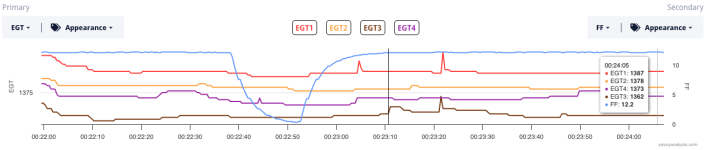
Hey Dan---this is excellent data---especially in your installed location. Somewhat confirms what we already theorized.
It would be more useful to know what it did reach.


Hey Dan---this is excellent data---especially in your installed location. Somewhat confirms what we already theorized.


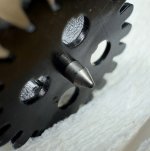
This really doesn't mean anything unless you compare it with a new one. You need to know if it came this way, or did something in your fuel system cause this.With 300hrs on the cube and 2 years since purchase, I decided to buy a new one. The new one is working well currently but I dismantled the old one. The impeller is mounted on a shaft with pointed ends that sit in jewelled bearings - or at least some kind of white coloured material that has a conical indentation. The machining of these pointed ends is terrible, honestly really bad. This photo was taken on an iPhone and shows how poor it is.
View attachment 102274
After a time this seems to gall the bearing surface and so the thing sticks. They offered a replacement at half price but they advertise a 10,000hr life...
When this new cube fails I'll switch to a Floscan 201B.
The new one doesn’t have a sticky impeller (yet). Holding the old and new cube side by side and gently blowing towards them, the impeller on the new one would spin but the old one would not.This really doesn't mean anything unless you compare it with a new one. You need to know if it came this way, or did something in your fuel system cause this.
Do we feel that the flowscan is more reliable? We need some smart guys like you @IO390 to apply the ultrasonic technology to create a better fuel flow meter in a reasonable package for aviation.When this new cube fails I'll switch to a Floscan 201B.
I shudder to think about where those bits of plastic are going - I only have a "last chance" filter in my fuel servo after this fuel flow sensor...not a failure mode that I considered.After a time this seems to gall the bearing surface and so the thing sticks.


Is that impeller shaft plastic? If so, the white conical bearings are probably some plastic also like teflon or Delrin. A sharp tool should be able to leave a dent on the bearings, just to know. I propose that the wear you show is due to vibration. (Probably stating the obvious.) On such a light part, even mounting between pliable hoses are too stiff to offer perfect isolation. Every engine installation has different vibration exposure to the sensor, so my guess as to why people have varying results.With 300hrs on the cube and 2 years since purchase, I decided to buy a new one. The new one is working well currently but I dismantled the old one. The impeller is mounted on a shaft with pointed ends that sit in jewelled bearings - or at least some kind of white coloured material that has a conical indentation. The machining of these pointed ends is terrible, honestly really bad. This photo was taken on an iPhone and shows how poor it is.
View attachment 102274
After a time this seems to gall the bearing surface and so the thing sticks.
I used a small amount of loctite 542 on mine, not sure about the other failed cube here.Curiosity question...any fuel lube (EZ Turn) use in the systems with stuck rotors?
No fuel lube/EZ Turn in my system. I only use it to stick washers and nuts to my finger.Curiosity question...any fuel lube (EZ Turn) use in the systems with stuck rotors?

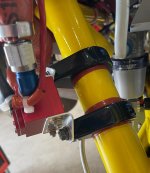
I copied this mounting method after seeing someone doing a similar thing on VAF. No issues so far after > 150 hours... and so I decided to mount this one directly on the engine mount, using some reworked Temu Aviation motorcycle headlights brackets. Will see how long that red cube lasts for...
View attachment 102325